
Your Guide to Health Insurance for Mental Health Conditions and Disabilities

Don’t Let Insurance Stress Stop You: Your First Step to Affordable Mental Health Care
Navigating medical insurance for mentally challenged individuals feels impossible when you’re already exhausted. The stakes are high: you need real treatment, not more red tape. The good news? Clear, legal pathways to affordable care exist if you know where to look.
Quick Answer: Main Insurance Options for Mental Health Disabilities
- Medicaid – State/federal program for low-income individuals; over 9 million qualified based on disability in 2022.
- Medicare – Federal insurance after 24 months of Social Security Disability benefits.
- SSDI – For workers with sufficient work history; leads to Medicare.
- SSI – Needs-based program; leads directly to Medicaid in most states.
- Employer or Marketplace Plans – Protected by the ACA and Mental Health Parity Act.
Around 66% of Americans report stress about health insurance costs. Federal law is on your side: most plans must cover mental health services, and you cannot be denied because of a pre-existing condition.
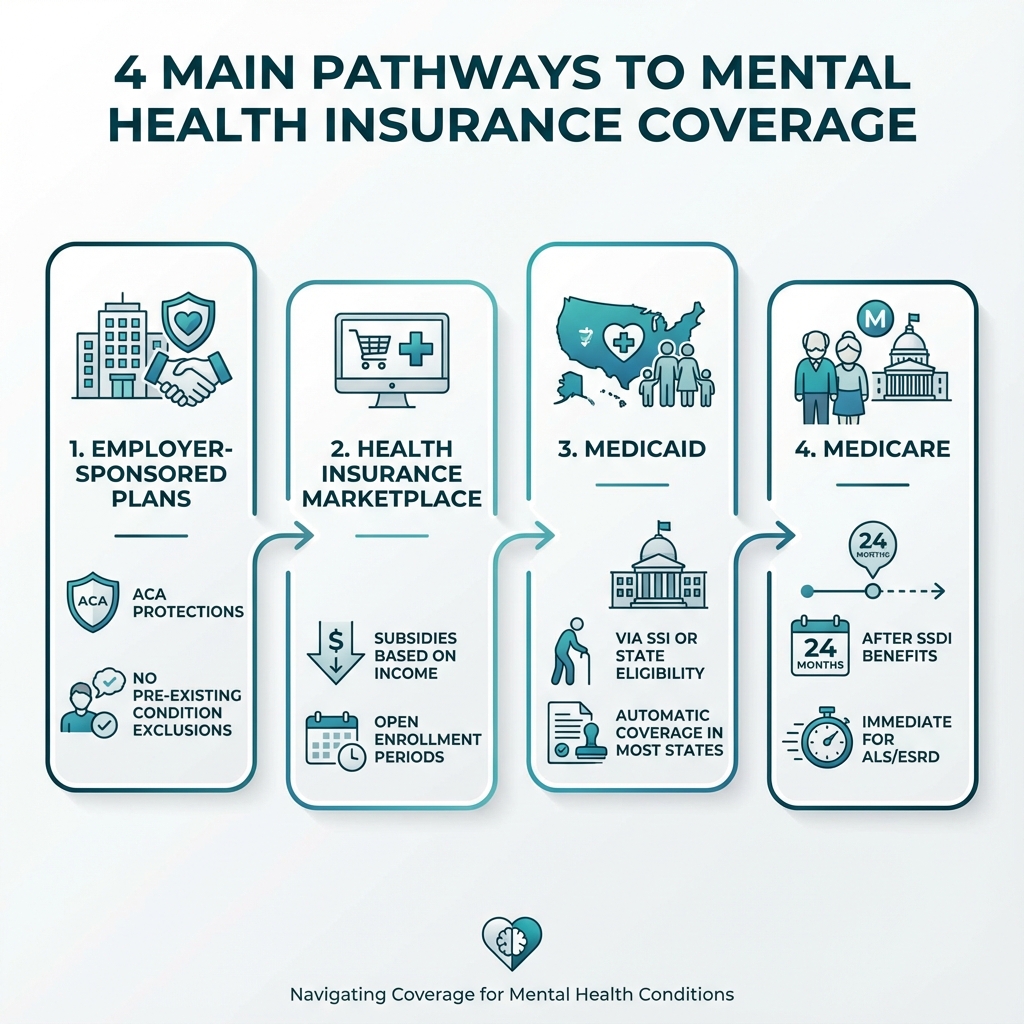
The real challenge? Figuring out which program you qualify for and how to use it. Some qualify through employers or the Health Insurance Marketplace. Others access coverage through disability programs like SSDI or SSI, which open the door to Medicare or Medicaid.
At Thrive Mental Health, we’ve spent over a decade navigating these systems. We routinely help clients in Florida verify insurance with Cigna, Optum/UnitedHealthcare, Aetna, and Florida Blue, then use those benefits for Intensive Outpatient (IOP) and Partial Hospitalization (PHP) programs.
Quick reference links:
- do insurance plans have to offer mental health benefits
- medicaid covered therapy
- how to read mental health insurance benefits
The Law is On Your Side: How the ACA Protects Your Mental Health
Landmark laws ended insurance denials for “pre-existing conditions” and banned “lifetime limits” on mental health care. The Affordable Care Act (ACA) made mental health services essential health benefits that most plans must cover.
The Mental Health Parity and Addiction Equity Act (MHPAEA) requires mental health benefits be no more restrictive than medical/surgical benefits.
For anyone seeking medical insurance for mentally challenged adults, this means:
- No Pre-existing Condition Exclusions: You cannot be denied coverage or charged more.
- No Lifetime or Annual Dollar Limits: Plans cannot cap covered mental health care.
- Essential Health Benefits: Mental health treatment must be covered in most plans.
To understand your rights: Do insurance plans have to offer mental health benefits?.
Finding a Plan: Employer vs. Marketplace
Employer-Sponsored Insurance
If your employer offers health benefits, this is often the fastest route. Many employer plans include strong mental health coverage through Cigna, Optum/UnitedHealthcare, Aetna, Blue Cross plans (including Florida Blue), and others.
When comparing employer plans:
- Check in-network providers for IOP/PHP and psychiatry.
- Look at deductibles, copays, and coinsurance for outpatient mental health.
- Ask if virtual IOP/PHP or telehealth therapy is covered.
Thrive Mental Health is in-network with many major insurers and can quickly verify whether your plan covers our IOP and PHP options.
Health Insurance Marketplace
No employer coverage? The Health Insurance Marketplace (Healthcare.gov or your state exchange) is your next best option. Marketplace plans must:
- Cover mental health and substance use treatment as essential health benefits.
- Follow parity rules so mental health isn’t treated more harshly than medical care.
Key points:
- Open Enrollment: Main period each year to start or change coverage.
- Special Enrollment Period: Qualify outside Open Enrollment if you lose coverage, get married, have a baby, move, or experience another major life change.
- Plan Comparison: Compare premiums, deductibles, out-of-pocket maximums, and mental health benefits side by side.
For help picking a plan that works with IOP or PHP, read: How to Get Health Insurance, then reach out to Thrive to confirm your chosen plan will work with our services.
Opening up Government Benefits: Your Guide to Medical Insurance for Mentally Challenged Individuals

For many with serious mental health conditions or developmental disabilities, government benefits like Medicaid and Medicare are the only realistic way to get consistent care. These programs can fully or largely cover therapy, psychiatry, medications, and higher levels of care such as IOP or PHP—making them critical for medical insurance for mentally challenged adults.
In fiscal year 2022, over 9 million people qualified for Medicaid based on disability alone. If you or a loved one struggles to work because of a mental health condition, these programs may be your fastest path to stable coverage.
Medicaid: State-Funded Coverage for Low-Income Individuals
Medicaid is a joint federal-state program providing health coverage to low-income individuals, including many with mental health disabilities.
Eligibility is based on:
- Income and household size (limits vary by state)
- Disability status
- Sometimes asset limits
A key path to Medicaid is Supplemental Security Income (SSI). In most states, qualifying for SSI automatically qualifies you for Medicaid—a lifeline when you’re unable to work due to mental illness or cognitive disability.
Some states offer “medically needy” or “spend-down” programs, allowing people with higher incomes but high medical bills to qualify. This helps adults needing frequent therapy, hospitalizations, or structured care like IOP/PHP.
In Florida, the Medicaid program covers services like Mental Health Targeted Case Management, helping adults with serious mental illness connect to medical, social, and educational supports. Learn more: Mental Health Targeted Case Management.
For therapy details under these programs: Medicaid Covered Therapy. Also review: Coverage of Behavioral Health Services for Children, Youth, and Young Adults with Significant Mental Health Conditions.
Thrive Mental Health works with Medicaid plans in Florida to help clients access intensive outpatient services.
Medicare: Federal Insurance for Disability Recipients
Medicare is federal health insurance for adults 65+ and people under 65 with disabilities, including serious mental illnesses.
You may qualify if:
- You’ve received Social Security Disability (SSDI) benefits for 24 months, or
- You qualify under specific conditions like ALS or ESRD, which have shorter or no waiting periods.
Medicare typically includes:
- Part A: Inpatient hospital stays, including psychiatric hospitalization.
- Part B: Outpatient services like psychiatrist visits, therapy, partial hospitalization programs, and some IOP-level services.
- Part D: Prescription drug coverage for psychiatric medications.
Many choose Medicare Advantage (Part C) plans from private insurers like Optum/UnitedHealthcare, Cigna, Aetna, or regional Blue plans. These plans:
- Must cover everything Original Medicare covers.
- Often add benefits like dental, vision, transportation, and expanded telehealth.
- Cover pre-existing conditions, including long-standing mental health diagnoses.
Even if you return to work, programs like the Trial Work Period (up to 9 months) and Extended Period of Eligibility (up to 93 months) let you test your ability to work without immediately losing benefits. Learn more: Trial Work Period and Substantial Gainful Activity.
For coverage details: Medicare Mental Health Coverage. Thrive can help you understand if your Medicare or Medicare Advantage plan covers our IOP or PHP programs.
What services are covered?
Because of federal parity rules and state-specific programs, medical insurance for mentally challenged adults usually covers:
- Inpatient Hospitalization: Short-term stays for stabilization and acute treatment.
- Outpatient Therapy: Individual, group, and family therapy. At Thrive, we specialize in IOPs and PHPs—structured treatment more intensive than weekly therapy but less restrictive than inpatient care.
- Psychiatrist Visits: Evaluation, diagnosis, and medication management.
- Prescription Drugs: Coverage for psychiatric medications through Medicare Part D or commercial/Medicaid pharmacy benefits.
- Case Management: Support coordinating medical, social, housing, educational, and vocational services.
- Substance Use Disorder Treatment: Detox, outpatient care, and integrated programs.
- Diagnostic Services: Comprehensive assessments and evaluations.
- Crisis Intervention Services: Emergency assessments and crisis stabilization.
Major insurers like Cigna, Optum/UnitedHealthcare, Aetna, and regional Blue plans often cover Thrive’s IOP and PHP services when medically necessary. Verify your benefits online before you commit—visit our Virtual IOP Insurance page for a fast, no-obligation benefits check.
SSDI vs. SSI: Which Disability Program Opens up Your Health Insurance?
If your mental health condition or cognitive disability makes it hard or impossible to work, choosing the right disability program can determine which health insurance you get. For many families searching for medical insurance for mentally challenged adults, the decision comes down to two programs run by the Social Security Administration (SSA): Social Security Disability Insurance (SSDI) and Supplemental Security Income (SSI).
They sound similar, but they work very differently—and they open the door to different types of coverage.
Social Security Disability Insurance (SSDI): Insurance for Workers
SSDI is essentially an insurance program you have paid into through your work. If you have a solid work history and have paid Social Security taxes, SSDI may be your best path.
Key characteristics of SSDI:
- Work Credits: Eligibility is based on your work history and the Social Security taxes you have paid.
- Higher Benefit Amount: Monthly checks are generally higher than SSI because they are based on your earnings record.
- Leads to Medicare: After receiving SSDI benefits for 24 months, you typically become eligible for Medicare, which can then help pay for therapy, psychiatry, and higher levels of care like PHP in many regions.
If you have a strong work history and your mental health condition now prevents you from maintaining substantial gainful activity, SSDI can provide both income replacement and eventual Medicare coverage. You can explore eligibility here: Social Security Disability Insurance (SSDI).
Supplemental Security Income (SSI): A Needs-Based Program
SSI is very different. It is a needs-based safety net program for people who are aged, blind, or disabled and who have very limited income and resources—whether or not they have ever worked.
Key characteristics of SSI:
- Low Income/Limited Resources: Strict income and asset limits apply.
- No Work History Required: You do not need prior work or Social Security tax contributions to qualify.
- Leads to Medicaid: In most states, being approved for SSI automatically qualifies you for Medicaid, which often has robust mental health benefits.
SSI is often the primary option for:
- Adults who have not been able to work consistently due to early-onset mental illness.
- Adults with intellectual disabilities or developmental conditions.
- Children and young adults who have not yet built a work history.
Learn more about qualifications for Supplemental Security Income (SSI).
Comparing SSDI and SSI
Here is a quick side-by-side look at how SSDI and SSI affect medical insurance for mentally challenged adults and their families:
| Criteria | Social Security Disability Insurance (SSDI) | Supplemental Security Income (SSI) |
|---|---|---|
| Health Insurance | Medicare (usually after 24 months of SSDI benefits) | Medicaid (in most states, often automatic with SSI approval) |
| Work Requirement | Requires sufficient work credits and Social Security taxes | No work history required |
| Income/Asset Limits | No strict limits for eligibility (earnings may affect benefit amount) | Strict income and asset limits apply |
| Benefit Amount | Based on your past earnings; often higher than SSI | Based on federal and state maximums; strictly needs-based |
| Funding Source | Social Security Trust Funds | General U.S. Treasury Funds |
In practical terms:
- If you have a substantial work history, SSDI may provide higher monthly income and eventual Medicare coverage.
- If you have little or no work history and very low resources, SSI may be the pathway that quickly open ups Medicaid—and with it, access to therapy, medications, and in some states IOP/PHP.
Many people eventually qualify for both SSDI and SSI at different points in their journey. Thrive Mental Health regularly works with clients who use Medicaid, Medicare, or commercial plans gained through work while they stabilize in our IOP and PHP programs.
Your Step-by-Step Guide to Applying for Disability Benefits
Applying for disability benefits based on a mental health condition is rarely quick, but it can be life-changing—both for income and for opening medical insurance for mentally challenged adults who cannot work. The Social Security Administration (SSA) evaluates mental and psychological disabilities, including severe depression, bipolar disorder, schizophrenia, PTSD, and anxiety disorders.
Your job: prove two things clearly:
- You have a diagnosed mental health condition.
- That condition makes it impossible to sustain substantial, full-time work.
Step 1: Gather Your Medical Evidence
Strong medical evidence is the backbone of your claim. Without it, even very real suffering can be denied on paper.
You’ll need:
- Formal Diagnosis: Clear diagnosis from a qualified psychiatrist, psychologist, or licensed mental health professional.
- Treatment Records: Detailed notes from therapy sessions, psychiatry visits, hospitalizations, and structured programs like IOP or PHP. Records from programs at Thrive Mental Health or similar providers show severity and persistence of symptoms.
- Medication Lists: Record of all psychiatric medications, including dosages, side effects, and effectiveness.
- Professional Opinions: Written statements from treating clinicians explaining how your condition affects mood, cognition, behavior, social functioning, and ability to work.
- Activities of Daily Living (ADLs) Documentation: Concrete examples of how symptoms affect daily tasks like hygiene, cooking, shopping, driving, relationships, or managing money.
The more clear and consistent your records, the stronger your application. For a detailed checklist: Medical Documents Needed for Disability.
Step 2: Meet the “Blue Book” Criteria for Mental Disorders
The SSA uses the “Blue Book” to decide who meets disability criteria. For mental disorders: Section 12.00 for Mental Disorders.
Common categories:
- Affective Disorders (12.04): Major depression and bipolar disorder.
- Anxiety-Related Disorders (12.06): Generalized anxiety, panic disorder, OCD, and phobias.
- Personality and Impulse-Control Disorders (12.08) and neurodevelopmental conditions like autism spectrum disorder.
To qualify, you must show:
- A medically documented mental impairment, and
- Extreme limitation in one, or marked limitation in two, of these areas:
- Understanding, remembering, or applying information
- Interacting with others
- Concentrating, persisting, or maintaining pace
- Adapting or managing yourself
Work closely with treating providers. Ask them to:
- Review Blue Book criteria with you.
- Document specific examples of how symptoms impact work and daily life.
- Complete SSA forms thoroughly and on time.
This alignment between real-life limitations and official criteria often makes the difference between approval and denial.
Step 3: Submit Your Application
Once documentation is ready, you can apply:
- Apply Online: Start your SSDI application: start your application online.
- Apply by Phone: Call SSA at 1-800-772-1213 to begin or schedule an appointment.
- Apply In-Person: Visit one of 1300+ locations across the US. SSI applications often require an in-person or phone interview.
What to expect:
- Initial Review (3–6 months): Many mental health claims are denied at first, even legitimate ones.
- Appeals: If denied, you can ask for reconsideration and, if needed, a hearing with an administrative law judge. Many are approved at appeal or hearing stage.
- Continuing Disability Reviews (CDRs): If approved, SSA may review your case periodically. Continue treatment and keep records updated.
While navigating this process, you may still access lower-cost mental health care through community clinics, sliding-scale providers, or online therapy. Thrive Mental Health can help you understand whether your current insurance—or new coverage you obtain—will pay for IOP or PHP while your disability claim is pending.
What If You’re Uninsured or Waiting? How to Get Help Now
Securing medical insurance for mentally challenged adults or teens can take months, especially if you are waiting on a disability decision. That does not mean you have to pause treatment or wait for a crisis.
There are practical ways to get help now, even with no insurance or high deductibles.
Finding Affordable Therapy Without Insurance
If finances are blocking you from care, start with these options:
- Community Mental Health Centers (CMHCs): Public or non-profit clinics that often offer therapy, psychiatry, and case management on a sliding-scale based on income. There are CMHCs across Florida.
- University Clinics: Universities with psychology, counseling, or psychiatry programs often run training clinics where supervised students provide therapy at reduced rates.
- Non-Profit Organizations: Local and national mental health organizations may offer support groups, short-term counseling, or connections to low-cost providers.
- Sliding-Scale Therapists: Many private therapists reserve a portion of their caseload for reduced-fee clients. Always ask if sliding-scale spots or payment plans are available.
- Online Therapy Platforms: Online therapy can be more affordable than traditional in-person care and may let you message your therapist between sessions. Research, including a 2017 meta-analysis, found online cognitive behavioral therapy (CBT) effective for conditions like depression, anxiety, and phobias.
Thrive Mental Health also offers virtual intensive outpatient programs that may be covered by insurance even when you cannot afford weekly private-pay therapy. Our team can check your benefits and estimate your out-of-pocket costs before you start.
Why Some Therapists Don’t Accept Insurance
It is common to call providers and hear, “I do not take insurance.” While frustrating, there are reasons for this—and ways to work around it.
Many therapists avoid insurance because of:
- Lower Reimbursement Rates: Insurers often pay less than therapists’ full fees, which can make small practices unsustainable.
- Administrative Burden: Pre-authorizations, claim submissions, and denials take time away from direct client care.
- Treatment Restrictions: Some plans limit session numbers, types of therapy, or require diagnoses that therapists may feel are not clinically appropriate.
If you find a therapist or program that is out-of-network but feels like the right fit:
- Ask if they provide a “superbill”—a detailed receipt you can submit to your insurance company.
- Check your plan’s out-of-network benefits. Many PPO plans will reimburse a percentage of the cost after you meet your deductible.
- Learn how to read mental health insurance benefits so you know exactly what your plan will and will not cover.
Thrive Mental Health works with many major insurers as an in-network provider for IOP and PHP in Florida. If we are out-of-network with your specific plan, we can often still help you use your benefits through out-of-network coverage.
If you are unsure whether you can afford care, reach out—our admissions team will walk through your options, including payment plans and low-cost alternatives in your community.
Frequently Asked Questions about Mental Health Disability Insurance
Can I get disability benefits for anxiety or depression?
Yes. If your anxiety, depression, bipolar disorder, PTSD, or other mental health condition is severe enough to prevent you from working and you have strong medical documentation, you can qualify for Social Security disability benefits. The SSA evaluates these conditions under Section 12.00 of its Blue Book, with specific criteria for symptoms and functional limitations.
How long does it take to get approved for disability?
The initial review usually takes 3 to 6 months. Many valid claims are denied at first. If you appeal, the entire process can extend beyond a year, especially if you go to a hearing. Submitting complete medical records and detailed provider statements from the start can help reduce delays.
Can I work while receiving disability benefits?
Yes, but with strict limits. The SSA’s work incentives—including the Trial Work Period and Extended Period of Eligibility—let you test your ability to work without immediately losing your benefits. However, if you earn over the SSA’s Substantial Gainful Activity (SGA) level for too long, your cash benefits may stop.
What is the difference between Medicaid and Medicare for mental health?
- Medicaid is a state and federal program for low-income people. It often covers a broad range of mental health services, especially if you qualify through SSI or disability. Many Medicaid plans cover therapy, psychiatry, case management, and some higher levels of care.
- Medicare is federal insurance for people 65+ and those under 65 with certain disabilities (usually after 24 months of SSDI benefits). It covers hospital stays (Part A), outpatient mental health and PHP (Part B), and medications (Part D).
Both programs must follow parity rules, but exact coverage and copays differ.
Do Medicare Advantage Plans cover mental health?
Yes. Medicare Advantage (Part C) plans must cover everything Original Medicare covers, including mental health services. Many Advantage plans—offered by companies like Cigna, Optum/UnitedHealthcare, Aetna, and regional Blue plans—also include extra benefits such as expanded telehealth, transportation, or wellness programs. Always check if your plan covers intensive outpatient or partial hospitalization programs.
Does insurance cover Intensive Outpatient (IOP) and Partial Hospitalization (PHP)?
Often, yes. Many commercial plans (through employers or the Marketplace), as well as some Medicaid and Medicare plans, cover IOP and PHP when they are medically necessary. Coverage and copays vary by insurer and state. Thrive Mental Health works with major insurers in Florida to provide covered IOP/PHP services and can verify your benefits before you start.
Your Path to Recovery Starts Here
Securing medical insurance for mentally challenged adults or loved ones is a powerful first step—but it is not the finish line. Once coverage is in place, what you do with it matters.
Government programs like Medicaid and Medicare, opened through SSI or SSDI, can provide a vital safety net. Employer plans and ACA Marketplace policies can open up robust mental health benefits, including higher-intensity options like Intensive Outpatient (IOP) and Partial Hospitalization (PHP). Even if you are uninsured or between plans, there are community and online options to bridge the gap.
Thrive Mental Health is built for the space between once-a-week therapy and inpatient hospitalization. Our evidence-based, virtual and in-person IOP/PHP programs are designed for adults and young professionals who need real structure, real skills, and real outcomes—without pausing school, work, or caregiving.
We serve clients across Florida and work with many major insurers including Cigna, Optum/UnitedHealthcare, Aetna, and regional Blue plans (such as Florida Blue). Our team can explain your benefits in plain language and help you use the coverage you already have.
Ready to see what your insurance can actually do for you? Explore our programs and insurance resources here:
- Learn more about our virtual programs and coverage: Virtual IOP Insurance
- Read more insurance guides on our blog: Explore our insurance-covered programs
Ready for support? Thrive offers virtual and hybrid IOP/PHP programs with evening options. Verify your insurance in 2 minutes (no obligation) → Start benefits check or call 561-203-6085. If you’re in crisis, call/text 988.