
Your Neighborhood Mental Health Heroes: Crisis Services Near Me

Mental Health Crisis Services Near Me: 3 Lifesaving Steps
When Every Second Counts: What You Need to Know Right Now
Mental health crisis services near me exist to save lives. If you or someone you care about is in immediate danger, use this guide to get help in minutes.
Quick Access Guide:
- Life-threatening emergency → Call 911
- Suicidal thoughts or severe distress → Call or text 988 (24/7, free, confidential)
- Need someone to talk to (non-crisis) → Contact a local warmline
- Can’t travel for help → Request a mobile crisis team
- Walk-in support → Find your nearest crisis center or behavioral health urgent care
You don’t need insurance, an appointment, or a reason to deserve help. While wait times for routine mental health care can stretch for months, crisis services don’t make you wait.
This guide breaks down how to find the right support in your Florida community—from Tampa to Miami. As CEO of Thrive Mental Health, I’ve seen how fast access to the right care can mean the difference between despair and recovery. I’m here to help you find that support.
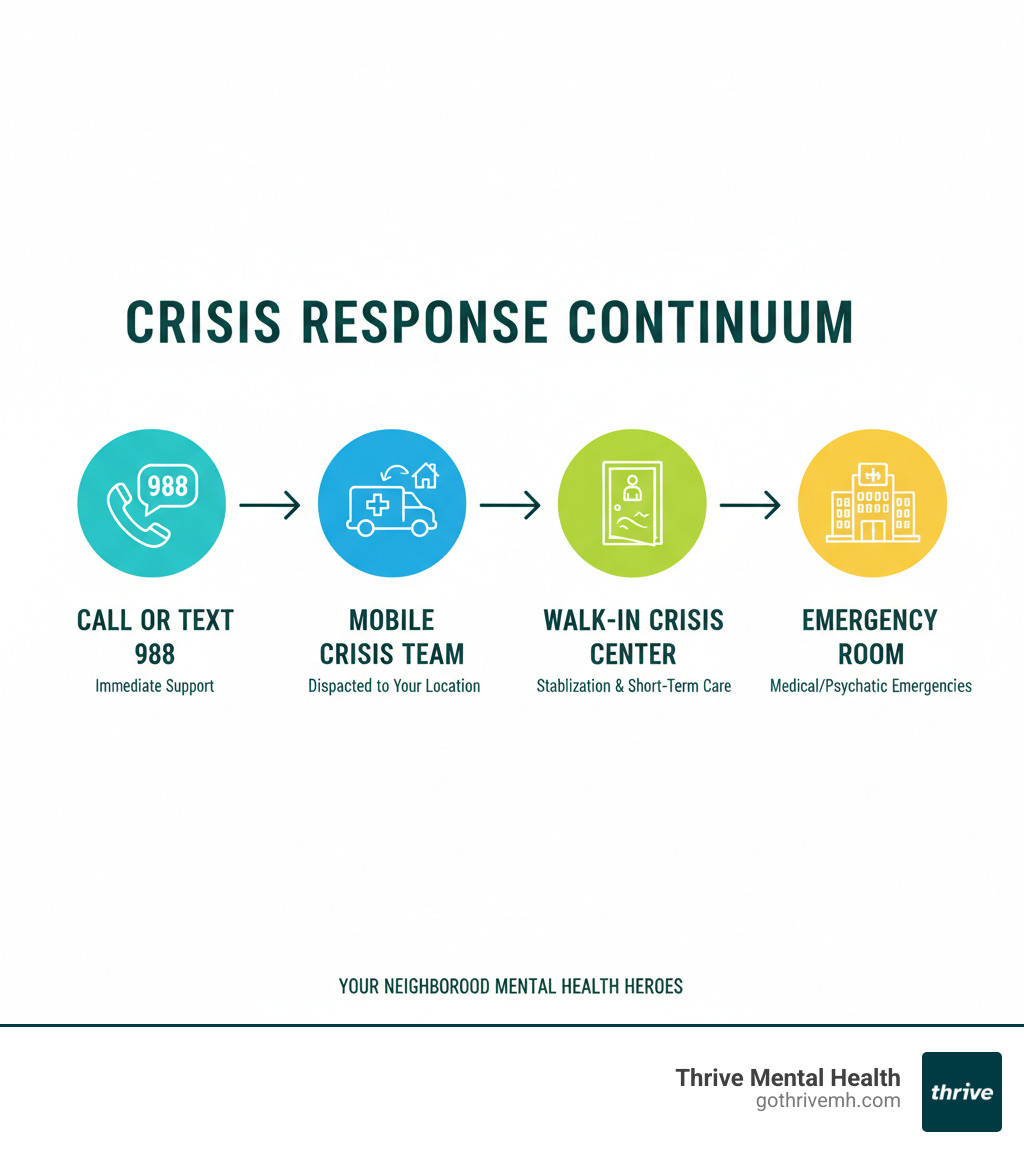
In a Crisis? Your First 3 Steps [Don’t Wait]
When a crisis hits, safety is the only priority. These steps can make all the difference.
CALLOUT BOX: If you are in immediate danger or thinking about suicide, call or text 9-8-8 right now. You will be connected to a trained responder for free, confidential support. You are not alone.
- Assess Immediate Danger: If there’s any threat of physical harm to oneself or others, call 911. For suicidal thoughts or a severe mental health crisis, the 9-8-8 Suicide & Crisis Lifeline is your direct line to a trained responder.
- Find a Safe Space: If possible, remove any means of harm (e.g., weapons, medications). Move to a quiet, calm environment to help de-escalate tension.
- Tell Someone You Trust: Reach out to a friend, family member, or partner. You don’t have to carry this burden alone. Sharing what’s happening can provide crucial support.
For more guidance, explore our resources on Crisis Mental Health Emergency Services.
What is the 9-8-8 Suicide & Crisis Helpline?
The 9-8-8 Suicide & Crisis Lifeline is a nationwide number connecting people in crisis to trained counselors. It’s free, confidential, and available 24/7 by call or text. Responders offer support, de-escalation, and connections to local resources. For more details, visit our page on the 988 Hotline.
What Information Should I Have Ready When I Call?
You don’t need to prepare anything, but if you can, having this information is helpful:
- Your Location: City and state (e.g., “Tampa, Florida”) to connect you to local resources.
- Nature of the Crisis: A brief description of what’s happening (e.g., suicidal thoughts, panic attack).
- Your Name (Optional): You can remain anonymous.
- Contact Number: In case the call drops.
- Immediate Safety Concerns: Are you alone? Is anyone in danger?
Beyond 988: Understanding Your Crisis Service Options

While 988 is a critical first step, it’s the front door to a larger system of care. Many people struggling with mood, anxiety, or substance use disorders don’t know the full spectrum of mental health crisis services near me. The challenge isn’t a lack of services—it’s knowing which one fits your situation.
Beyond a hotline, your options include:
- Warmlines: For non-crisis peer support.
- Mobile Crisis Teams: For professional help that comes to you.
- Walk-In Crisis Centers: For immediate, in-person care in a calm setting.
- Behavioral Health Urgent Care (BHUC): For short-term stabilization.
- Hospital Emergency Rooms: For severe medical or psychiatric emergencies.
Each service is designed to meet you where you are, literally and figuratively.
Hotlines vs. Warmlines: What’s the Difference?
Not every support line is for a crisis. Crisis hotlines like 988 are for acute emergencies: suicidal thoughts, severe panic attacks, or psychosis. You’ll reach trained professionals who can de-escalate the situation and connect you to emergency resources.
Warmlines are for everything else. Run by peers with lived experience, they offer a compassionate ear when you’re feeling lonely, anxious, or just having a rough day. They are a form of preventive care, helping stop a bad day from becoming a crisis. For more on these resources, visit our page on 24-Hour Mental Health Helpline services.
Mobile Crisis Teams: When Help Comes to You
When you’re too overwhelmed to travel, mobile crisis teams bring professional support to your location. These teams, often including social workers or psychiatric nurses, can assess and de-escalate a crisis in your own environment. In some areas, they partner with Crisis Intervention Team (CIT) officers, who are trained in compassionate mental health response.
Their goal is to resolve the crisis safely in the community, avoiding unnecessary ER visits or police involvement. Robust mobile crisis units operate in many counties across Florida, bringing help directly to you.
Walk-In Crisis Centers vs. Hospital ERs
Hospital ERs are chaotic and not designed for mental health crises, often leading to long waits in a stressful environment. Walk-in crisis centers and Behavioral Health Urgent Care (BHUC) facilities are calmer, specialized alternatives.
| Feature | Walk-In Crisis Center | Hospital Emergency Room |
|---|---|---|
| Environment | Calm, quiet, designed to reduce stress. | Loud, bright, chaotic, and overstimulating. |
| Wait Times | Typically shorter, focused on mental health. | Often long, as medical emergencies take priority. |
| Staff | Specialized psychiatric and mental health staff. | General medical staff, with psychiatric consults. |
| Cost | Often free or low-cost, funded by public sources. | Can be extremely expensive, with complex billing. |
BHUCs provide short-term stabilization (often up to 23 hours), while facility-based crisis centers may offer more intensive support like detox. They are a crucial middle ground between a phone call and a hospital stay. Learn more about how these services work at our Crisis Intervention Mental Health Services resource page.
How to Find Mental Health Crisis Services Near Me, Fast
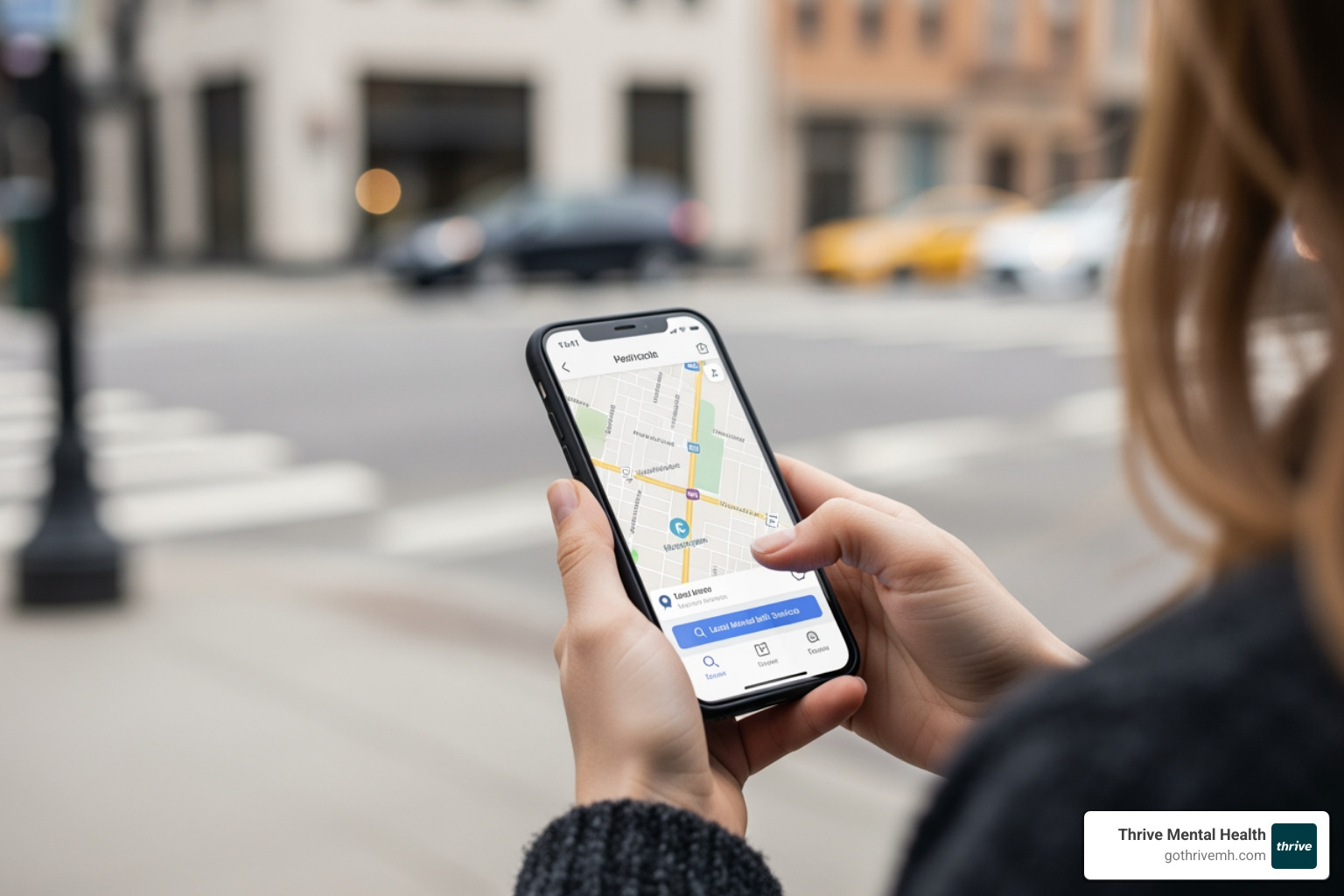
When you’re in crisis, you need answers now. Here’s how to quickly locate mental health crisis services near me in your Florida community, from Tampa and Orlando to Miami and Jacksonville.
Quickest Ways to Find Local Help
- Dial 211: This free, confidential service connects you to local health and human services, including crisis support. It works across the U.S. and is staffed by people who know your area’s resources.
- Use Google Maps: Open the app and search for “crisis center near me,” “behavioral health urgent care,” or “mobile crisis team [your city]”. You’ll get instant locations, numbers, and hours.
- Check State & Local Websites: Florida’s Department of Children and Families has official resource lists. Organizations like the National Alliance on Mental Illness (NAMI) also have local chapters with community-specific guides.
- Use Specific Search Terms: Add “24 hours” or “walk-in” to your search to filter out services that require appointments.
What to Expect When You Use Crisis Services
Reaching out takes courage. Knowing what happens next can make it easier. The process is focused on immediate relief and creating a path forward.
- Intake Assessment: A trained professional will have a conversation with you to understand what’s happening, assess safety, and determine how best to help. It is not an interrogation.
- Safety Planning: You’ll work together to create a personalized plan. This includes identifying coping strategies, warning signs, and people to contact for support in the future.
- Connection to Resources: Crisis services build a bridge to ongoing care. You’ll get referrals to therapists, psychiatrists, support groups, or higher levels of care like our Intensive Outpatient (IOP) or Partial Hospitalization (PHP) programs.
- Short-Term Counseling: You’ll receive in-the-moment support to help stabilize your distress and get you to a safer emotional place.
- A Judgment-Free Space: Crisis responders are trained to listen without judgment and protect your privacy. Your feelings are valid, and you will be treated with respect.
For more details, visit our page on Crisis Intervention Mental Health Services.
Specialized Crisis Support for Diverse Communities

Mental health crises affect everyone, but the path to help isn’t one-size-fits-all. Many communities face unique barriers and require support that understands their lived experience. For example, youth mental health needs are rising, rural access remains a challenge, and suicide rates among some populations are disproportionately high. Fortunately, specialized mental health crisis services near me are available.
Crisis Services for Children, Teens, and Young Adults
Youth-specific services understand the unique pressures young people face, from academic stress to social media anxiety. They provide age-appropriate support and often involve family in the recovery process.
- Youth Wellness Hubs: One-stop shops for mental health, substance use, and other youth services.
- Campus Counseling: Many Florida colleges and universities offer after-hours crisis lines and urgent appointments for students.
While wait times for ongoing therapy can be long, these crisis services respond immediately.
Finding Specialized Mental Health Crisis Services Near Me
Culturally competent support can make all the difference. Here are a few examples of specialized crisis lines:
- For Indigenous Peoples: The Hope for Wellness Helpline provides immediate support from counselors who understand Indigenous cultures and can offer services in some Indigenous languages.
- For LGBTQ+ Individuals: Trans Lifeline connects transgender people in crisis with transgender peer support specialists. Many local LGBTQ+ community centers also offer crisis resources.
- For Black Communities: Culturally relevant services are available that acknowledge the impact of systemic racism and trauma.
- For Veterans: By calling or texting 988 and pressing 1, veterans can reach the Veterans Crisis Line, staffed by responders who understand military culture and the challenges of transitioning to civilian life.
When searching for help, ask about cultural competency and language support. Many crisis centers in Florida offer interpretation services to ensure language is never a barrier to care.
Will I Have to Pay? Costs, Insurance, and Free Options
The fear of cost should never stop you from getting help in a crisis. While ongoing treatment like our Intensive Outpatient (IOP) and Partial Hospitalization (PHP) programs involves insurance (we work with Cigna, Optum, Florida Blue, Aetna, and others), immediate crisis intervention is different. Your safety is the priority; the financial conversation can wait.
Are Crisis Services Free in Canada and the US?
For immediate support, the answer is almost always yes.
- Calling or texting 988 is completely free.
- Community crisis centers and Behavioral Health Urgent Care (BHUC) facilities typically operate on a “no one turned away” basis, providing stabilization regardless of your ability to pay. They are often publicly funded for this exact purpose.
- Mobile crisis teams are also usually funded by county or state budgets, making their services accessible without upfront payment in areas like Tampa, Orlando, and across Florida.
The bottom line: cost is not a barrier to emergency help.
What If I Don’t Have Insurance?
No insurance? You still have options.
- Government-funded crisis centers in Florida are required to serve uninsured individuals.
- Non-profit organizations often provide services for free or on a sliding scale based on income.
- Federally Qualified Health Centers (FQHCs) offer care on a sliding-fee scale and must serve you regardless of your ability to pay.
If follow-up care involves costs, many providers offer payment plans. The goal is to keep you connected to care, not create financial hardship. No crisis service will turn you away because your wallet is empty.
If you’re ready to explore ongoing support after crisis stabilization, we’re here. Thrive offers virtual and hybrid IOP/PHP programs with evening options. Verify your insurance in 2 minutes (no obligation), or call 561-203-6085. If you’re in crisis right now, call or text 988.
Frequently Asked Questions about Crisis Services
Uncertainty can be paralyzing. Here are clear answers to common questions about mental health crisis services near me.
What counts as a mental health crisis?
A mental health crisis is any situation where a person’s emotional state prevents them from functioning or puts them at risk. Trust your instincts—if you’re asking if it’s “bad enough,” it’s time to call. Examples include:
- Suicidal thoughts or plans
- Severe, unrelenting panic attacks
- Psychotic episodes (losing touch with reality)
- Overwhelming depression that makes daily tasks impossible
- Inability to care for oneself (e.g., not eating, poor hygiene)
- Urges to self-harm
Can I force someone to get crisis help?
In most cases, you cannot force an adult to accept help unless they pose an immediate danger to themselves or others. If someone is actively threatening suicide or behaving in a way that could cause serious harm, call 911 or a mobile crisis team. Responders are trained to assess risk and, if necessary, initiate a temporary, involuntary psychiatric hold for evaluation (known as the Baker Act in Florida). The goal is always to keep the person safe and transition to voluntary care.
What happens after the immediate crisis is over?
Stabilization is just the first step. A crisis service will then help build a bridge to ongoing support. This involves creating a safety plan (a roadmap for managing future distress) and providing referrals for follow-up care. This could include outpatient therapy, psychiatry, or more structured programs like an Intensive Outpatient Program (IOP) or Partial Hospitalization Program (PHP). Our IOP and PHP programs at Thrive Mental Health are designed for this exact transition, offering the support needed to build lasting stability.
Ready for support? Thrive offers virtual and hybrid IOP/PHP programs with evening options. Verify your insurance in 2 minutes (no obligation) or call 561-203-6085. If you’re in crisis, call/text 988.
Your Path Forward: From Crisis to Stability
A mental health crisis is a moment, not a life sentence. The immediate help you get from mental health crisis services near me—whether it’s 988, a mobile team, or a walk-in center—is your lifeline. It pulls you to safety. But what happens next is what builds lasting recovery.
Translating a moment of intervention into long-term wellness requires consistent follow-up care. At Thrive Mental Health, we are that bridge. Our Intensive Outpatient (IOP) and Partial Hospitalization (PHP) programs are designed for adults who need more than weekly therapy but don’t require inpatient hospitalization. With virtual, hybrid, and evening options across Florida, we make recovery fit your life.
Summary: When you search for “mental health crisis services near me,” you’re choosing fast, local, judgment-free care—today. Use 988 for immediate support, then step into structured follow-up like IOP/PHP to turn stability into real progress.
If you’re struggling with thoughts that scare you but don’t feel like a full-blown crisis, our article on Passive Suicidal Ideation Meaning can help you understand and address them before they escalate. Recovery is not a straight line, but every step forward matters. You don’t have to figure this out alone.
Ready for support? Thrive offers virtual and hybrid IOP/PHP programs with evening options. Verify your insurance in 2 minutes (no obligation) → Start benefits check or call 561-203-6085. If you’re in crisis, call/text 988.