
Mental Health Recovery Programs Explained: Finding Your Path Forward

[CRISIS CALL-OUT BOX]
If you’re in crisis, call or text 988 right now. You are not alone.
Mental Health Recovery Programs [Guide]: Find the Right PHP, IOP, or Virtual Care
Take Back Control—Your Recovery Journey Starts Now
When life feels overwhelming and you’re struggling to cope, a mental health recovery program can be the lifeline you need. These structured programs go beyond managing symptoms—they help you build the skills, resilience, and support network to create a life you actually want to live.
Think of recovery not as fixing a broken car, but as learning to drive. You’re not returning to a previous version of yourself; you’re developing new capabilities and finding strengths you didn’t know you had.
Mental health recovery programs come in different intensities to meet you where you are. Partial Hospitalization Programs (PHP) provide intensive daily support (20+ hours/week) while you live at home. Intensive Outpatient Programs (IOP) offer 9-12 hours weekly with flexible scheduling, ideal for maintaining work or school. Standard outpatient therapy provides weekly sessions for ongoing support, and virtual programs make these options accessible from anywhere.
According to SAMHSA’s definition of recovery, true healing is “a process of change through which individuals improve their health and wellness, live self-directed lives, and strive to reach their full potential.” It’s not about a quick fix; it’s about building an authentic, meaningful life.
Recovery takes time and finding the right fit. Some people thrive with intensive daily structure, while others do better with weekly check-ins. Understanding The Benefits of Utilizing Mental Health Services is a great first step.
Whether you’re dealing with persistent anxiety, deep depression, or lingering trauma, hope and real change are possible. The right program helps you regain control and build lasting skills for life’s challenges.
I’m Anna Green, LMHC, LPC, Chief Clinical Officer and founder of Thrive Mental Health. After years of developing virtual-first IOP and PHP programs, I’ve learned that the most effective mental health recovery program is one that adapts to your life. When people can get care without turning their lives upside down, they’re more likely to stick with it and see real results.
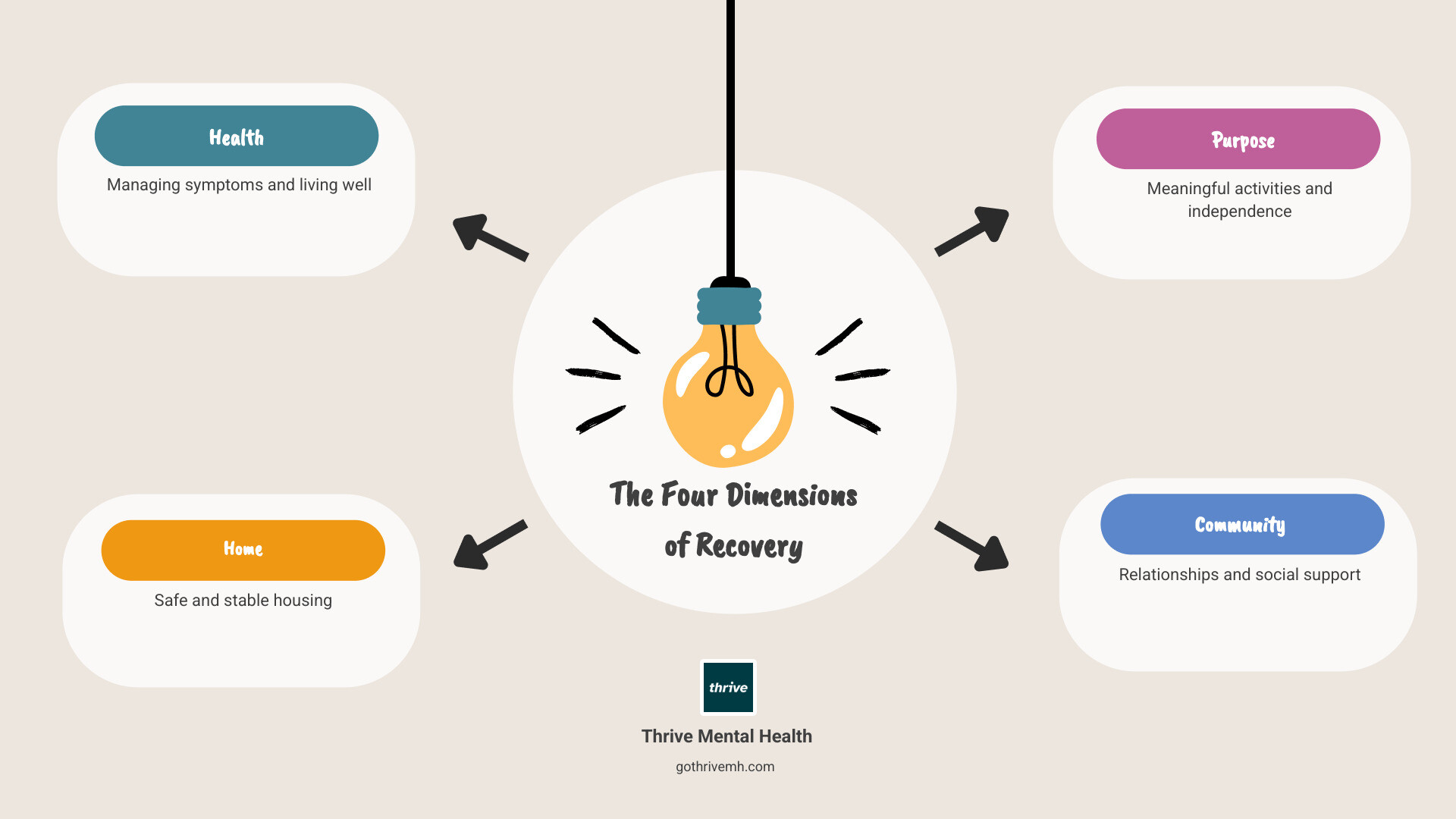
Recovery happens across four key areas: maintaining your health (symptom management, wellness), creating a stable home, finding purpose (meaningful activities), and building community (supportive relationships). When these pieces come together, real change happens.
If you’re ready to explore your options, our team offers 24/7 mental health professional support, expert mental health professionals, and intensive therapy programs online designed to fit your schedule and needs.
7 Warning Signs You Need a Mental Health Recovery Program
Note: If you or someone you know is in crisis or thinking of suicide, please call or text 988 to reach the 988 Suicide & Crisis Lifeline. You are not alone.
Recognizing when you need more support is the first step. If the following warning signs feel familiar, it might be time to consider a mental health recovery program.
- Sleep and appetite changes: You’re either lying awake with racing thoughts or sleeping excessively and still feeling exhausted. Your appetite may vanish, or you might eat to cope with your feelings.
- Mood swings and irritability: You find yourself snapping at loved ones over small things. These aren’t just “bad days”; they’re signs your brain is struggling to regulate emotions.
- Withdrawing from friends and family: You cancel plans, ignore texts, and pull away from people who care. Isolation can feel like a safe choice, but it often deepens the struggle.
- Losing interest in things you used to enjoy: Activities you once loved now feel pointless. This loss of joy, known as anhedonia, is a clear sign that something deeper is going on.
- Trouble at work or school: Concentration feels impossible, your brain is foggy, and deadlines are slipping. Your performance suffers, and others may notice you’re not yourself.
- Using substances to cope: When a glass of wine to unwind becomes a necessary coping tool, it’s a red flag. About half of people with substance use disorders also have a co-occurring mental illness.
- Feelings of hopelessness or being overwhelmed: A persistent sense of hopelessness or overwhelming anxiety becomes your new normal. The future feels bleak, and simple decisions are paralyzing.
These signs are not character flaws; they are your mind’s way of asking for help. Recognizing them is a courageous first step toward finding a mental health recovery program.
Which Mental Health Recovery Program Is Right for You? [Comparison Table]
Finding the right mental health recovery program is about matching the intensity of care to your current needs. At Thrive Mental Health, we offer three main levels of care designed to adapt to your life.
| Program Type | Hours/Week | Living Situation | Intensity | Ideal Candidate |
|---|---|---|---|---|
| PHP | 20+ hours | Home or Supportive Living | Very High | Transition from inpatient, or need intensive daily structure |
| IOP | 9-12 hours | Home | High | Need structured support while maintaining daily life (work/school) |
| Standard Outpatient | 1-3 hours | Home | Low-Moderate | Ongoing maintenance, mild-moderate symptoms, post-IOP/PHP step-down |
Partial Hospitalization Program (PHP)
PHP is ideal if you need daily, structured support without requiring a hospital stay. Often called “day treatment,” this mental health recovery program involves 20+ hours of therapy per week while you return home each evening. It’s an effective step-down from inpatient care or for those who need more than weekly therapy to manage severe symptoms. Think of it as a full-time focus on recovery while still sleeping in your own bed. You can Learn more about PHP at Thrive to see if this intensive approach is right for you.
Intensive Outpatient Program (IOP)

IOP provides 9-12 hours of structured therapy per week, offering significant support while being flexible enough to fit around work, school, or family life. What makes our IOP unique is our curated group matching. We connect you with peers who share similar life experiences (e.g., LGBTQIA+, veterans, new parents) because we know real healing starts with connection. A typical program runs 9-12 weeks and includes individual, group, and family therapy, with flexible scheduling across time zones, including nights and weekends.
Learn more about What to Expect in an IOP or explore our Virtual IOP Programs that bring expert-led care to you.
Standard Outpatient & Virtual Therapy
For ongoing support with less time commitment, standard outpatient therapy is an excellent choice. It typically involves weekly individual sessions and is ideal for managing mild to moderate symptoms, stepping down from a more intensive program, or for long-term maintenance.
Our Mental Health Care Online options remove barriers like commuting and scheduling conflicts. Research shows that online therapy produces the same outcomes as in-person treatment, meaning you get quality care from wherever you feel most comfortable. This mental health recovery program level gives you the flexibility to integrate healing into your life seamlessly.
How to Find and Pay for the Right Mental Health Recovery Program
Finding the right mental health recovery program doesn’t have to be overwhelming. Here’s a simple, step-by-step guide to finding and paying for the care you need.
Step 1: Assess Your Needs

- Assess your symptoms: Honestly evaluate if your challenges are mild, moderate, or severe. This helps determine the right level of care (outpatient, IOP, or PHP).
- Consider your life: Do you need a flexible program that works around your job, school, or family responsibilities?
- Use trusted resources: The SAMHSA National Helpline at 1-800-662-HELP (4357) and Findtreatment.gov offer confidential, free referrals to state-licensed providers.
- Check credentials: Look for accreditation from organizations like The Joint Commission and read patient reviews to ensure you’re choosing a reputable and effective mental health recovery program.
Step 2: Understand Your Insurance & Payment Options
Quality mental health care is more accessible than ever.
- Insurance Accepted: Thrive accepts most major insurance plans, including Cigna, Aetna, Optum, Florida Blue, and TRICARE. We also offer Medicaid coverage for IOP in Florida.
- Payment Options: Understanding your in-network vs. out-of-network benefits is key to managing costs. For those without insurance, we can discuss sliding scale and private pay options in some circumstances.
- Easy Verification: The fastest way to get clarity is to Verify your insurance with Thrive. Our confidential process takes minutes and eliminates financial surprises.
Step 3: Access Care in Florida
Thrive Mental Health offers virtual and hybrid IOP/PHP options across Florida. Our evening and flexible scheduling is designed for working professionals, students, and parents, allowing you to access a high-quality mental health recovery program without putting your life on pause.
Your Recovery Ecosystem: Therapy, Support, and Community
A successful mental health recovery program combines proven therapies with genuine community support. At Thrive, we build an ecosystem around you with evidence-based treatments and the relationships that make healing possible.
Evidence-Based Therapies
Our programs are grounded in rigorously tested therapies delivered by expert mental health professionals who tailor treatment to your unique path.
- Cognitive Behavioral Therapy (CBT): This practical approach helps you identify and change unhelpful thought and behavior patterns. CBT is highly effective for anxiety, depression, and more. Learn more in our guide: How CBT Can Transform Your Mental Health.
- Dialectical Behavior Therapy (DBT): DBT teaches skills for managing intense emotions and improving relationships. It focuses on four key areas: mindfulness, emotion regulation, distress tolerance, and interpersonal effectiveness. Explore the DBT Components.
- Eye Movement Desensitization and Reprocessing (EMDR): For trauma survivors, EMDR helps the brain process traumatic memories, reducing their emotional charge so you can remember without being overwhelmed. Read more about EMDR Therapy: A Pathway to Emotional Wellness.
- Trauma-Informed Care: This is a core principle, not just a therapy. We recognize that trauma often underlies mental health challenges, so we prioritize safety, trust, and empowerment in every aspect of our care.
Peer and Community Support

Connecting with people who truly understand is powerful. Peer support reduces stigma and reminds you that you’re not alone.
- Group Therapy: Our group sessions are carefully curated communities. We match you with peers who share similar challenges and life experiences (e.g., LGBTQIA+, veterans, new parents) to foster a deep sense of connection.
- Family Therapy: Mental health affects the whole family. Family therapy improves communication and helps your loved ones become part of your support system. Family involvement is a strong predictor of success in intensive outpatient programs.
- Community Resources: We also connect you with external resources like the National Alliance on Mental Illness (NAMI). Research on peer support shows that shared experiences improve health outcomes, which is why we champion a holistic, community-focused approach to healing.
Recovery thrives in relationship. While you’ll do the hard work, you don’t have to do it alone.
FAQ: Mental Health Recovery Programs [JSON-LD Schema Suggested]
{
  "@context": "https://schema.org",
  "@type": "FAQPage",
  "mainEntity": [{
    "@type": "Question",
    "name": "What is the main goal of a mental health recovery program?",
    "acceptedAnswer": {
      "@type": "Answer",
      "text": "The main goal of a mental health recovery program is to help you manage symptoms, build resilience, develop healthy coping mechanisms, and ultimately live a self-directed, fulfilling life. It's about empowering you to achieve your full potential beyond symptom reduction."
    }
  },{
    "@type": "Question",
    "name": "How long do mental health recovery programs last?",
    "acceptedAnswer": {
      "@type": "Answer",
      "text": "The duration varies by program type and individual needs. Intensive Outpatient Programs (IOP) typically last 9–12 weeks. Partial Hospitalization Programs (PHP) can last several weeks. Standard outpatient therapy is an ongoing process custom to your long-term goals."
    }
  },{
    "@type": "Question",
    "name": "Can I work or go to school while in a recovery program?",
    "acceptedAnswer": {
      "@type": "Answer",
      "text": "Yes, many mental health recovery programs, especially Intensive Outpatient Programs (IOP) and our virtual programs, are designed with flexibility in mind. Thrive offers evening options for IOP and PHP, allowing you to continue with work, school, or other responsibilities while receiving treatment."
    }
  },{
    "@type": "Question",
    "name": "Does insurance cover mental health recovery programs in Florida?",
    "acceptedAnswer": {
      "@type": "Answer",
      "text": "Yes, most major insurance plans in Florida, including Cigna, Aetna, Optum, Florida Blue, and TRICARE, cover mental health recovery programs. We also offer Medicaid coverage for IOP in Florida. Thrive can verify your specific coverage in minutes."
    }
  },{
    "@type": "Question",
    "name": "What's the first step to getting help?",
    "acceptedAnswer": {
      "@type": "Answer",
      "text": "The first step is to reach out. You can contact us for a confidential assessment to discuss your needs, or use our online tool to verify your insurance. If you are in crisis, please call or text 988 immediately."
    }
  }]
}
Here are answers to the questions we hear most often from people considering a mental health recovery program. If you have others, our team is always here to talk.
Summary: Your Next Step to Recovery Starts Now
Taking the first step toward healing is a sign of incredible strength. A mental health recovery program can help you regain control, find hope, and build a life you love. Whether you need intensive daily support through our PHP program, flexible weekly care with IOP, or the convenience of virtual therapy, the right fit is available.
At Thrive Mental Health, we provide expert-led, evidence-based care custom to your needs in Florida. Our virtual and hybrid IOP/PHP programs offer flexible scheduling—including evening options—so you don’t have to put your life on hold to get help.
Recovery isn’t about returning to who you were before; it’s about becoming who you’re meant to be. Healing is possible with the right support.
Ready for support? Thrive offers virtual and hybrid IOP/PHP with evening options. Verify your insurance in 2 minutes (no obligation) → Start benefits check or call 561-203-6085. If you’re in crisis, call/text 988.
Ready for support?
Thrive offers virtual and hybrid IOP/PHP with evening options. Verify your insurance in 2 minutes (no obligation) → Start benefits check or call 561-203-6085. If you’re in crisis, call/text 988.