


What Makes Personalized Care Plans Different from Standard Treatment
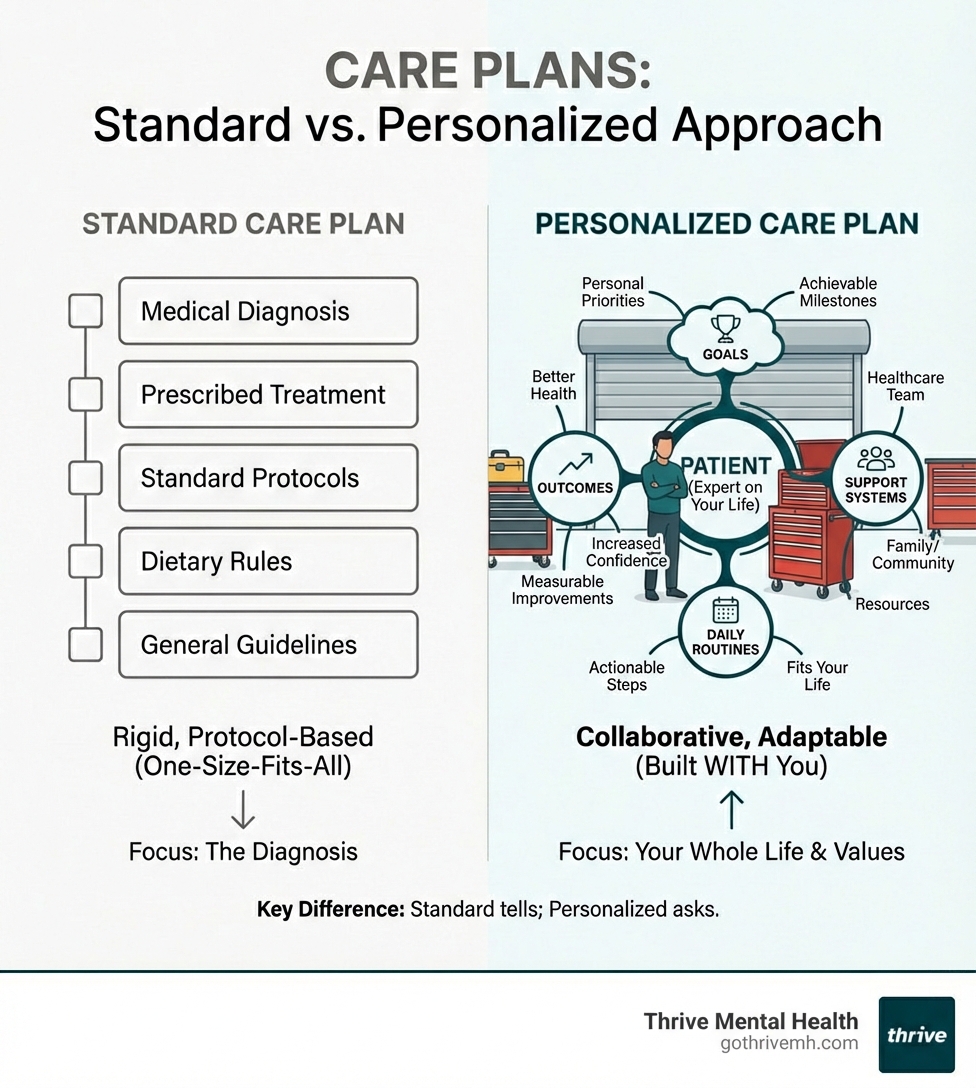
Personalized care plans are changing how people manage chronic conditions and mental health. Unlike standard care plans that follow rigid protocols, personalized care plans are built with you, not for you, focusing on your whole life, not just your diagnosis.
Quick Answer: What is a Personalized Care Plan?
A personalized care plan is a collaborative approach where you and your healthcare team:
- Identify what matters most to you in your daily life
- Set health goals based on your priorities, not just medical targets
- Create actionable steps that fit your routine, resources, and values
- Address mental, social, and physical needs together
- Review and adjust the plan as your life changes
The Key Difference: Standard care plans tell you what to do based on your condition. Personalized care plans ask what you want to achieve, then build treatment around your goals. You’re the expert on your life, the plan adapts to you.
Research shows personalized care planning leads to measurable improvements: better blood sugar control in diabetes, improved lung function in asthma, reduced depression symptoms, and increased confidence in managing your health. While these effects may seem small, they add up to a life that feels more manageable and less overwhelming.
Have you ever walked out of a doctor’s appointment with a list, eat better, exercise more, check your blood sugar, and wondered how you’re supposed to keep up? That’s the problem with one-size-fits-all care. A personalized care plan starts with a different question: What do you need to thrive?
As Nate Raine, CEO of Thrive Mental Health, I’ve spent over a decade at the intersection of clinical care and data science, building systems that integrate personalized care plans into behavioral health treatment for our clients across Florida. At Thrive, we use personalized care planning as the foundation for every virtual IOP program in Florida, ensuring your treatment aligns with what matters most in your life, not just your diagnosis.
Personalized care plans vocab to learn:
Why Your Health Demands More Than a Standard Checklist
Living with a chronic condition or managing mental health challenges can often feel like an uphill battle. Standard care plans, while offering a foundational approach, often miss the mark when it comes to the unique complexities of an individual’s life. This is where personalized care plans step in, offering a custom approach that can make a profound difference.

A personalized care plan is far more than just a medical document; it’s a strategic alliance between you and your healthcare team, designed to empower you with the tools and confidence to steer your health journey. The benefits are extensive, reaching beyond mere symptom management to encompass a holistic improvement in your quality of life.
Research consistently highlights the tangible advantages of this patient-centered approach. A systematic review of randomized controlled trials demonstrated that personalized care planning can lead to small but significant improvements across various health indicators. For individuals with diabetes, this might mean decreases in blood sugar levels and some aspects of blood pressure. Those with asthma could see improved lung function, while people experiencing mental health challenges might benefit from reduced depression symptoms. Crucially, these plans also boost confidence and skills for disease self-management. Scientific research on care plan benefits supports these findings, indicating that no negative side effects were observed.
This custom approach emphasizes holistic support, addressing not just physical ailments but also the crucial mental and social needs that often accompany chronic conditions. By integrating these elements, personalized care plans foster greater independence and dignity, allowing individuals to live more fully and on their own terms.
How personalized care plans boost your confidence
Imagine feeling truly heard by your healthcare team, where your unique concerns and aspirations are at the forefront of every decision. That’s the core of how personalized care plans build confidence. When you take an active role in decisions about your health, it naturally increases your health literacy, your understanding of your condition and how to manage it effectively.
This collaborative approach means setting achievable goals that resonate with your personal life, rather than abstract clinical targets. When you track progress against these realistic goals, you experience a sense of accomplishment, building self-efficacy, your belief in your ability to succeed. Feeling heard and understood by your providers strengthens the patient-provider relationship, fostering trust and open communication. It transforms you from a passive recipient of care into an empowered partner in your own well-being.
The impact on managing chronic conditions
Managing chronic conditions can feel like a constant juggling act. Did I take my medication? When is my next appointment? How do I fit exercise into my busy schedule? Personalized care plans simplify this by providing clear, practical strategies custom to your life.
For instance, a plan might incorporate tools like pill boxes or phone reminders to ensure medication adherence, leading to fewer emergencies and steadier health days. Instead of constantly reacting to symptoms, personalized care encourages a proactive approach, identifying potential challenges and planning interventions before they escalate. As one source notes, Care plans make it easier to stick with medications and appointments, leading to “fewer emergencies and steadier days.” This shift from reactive to proactive care can significantly reduce stress and improve overall stability. Whether it’s swapping a sugary drink for water or exploring chair exercises if outdoor walking feels unsafe, the plan is designed to be adaptable and workable for you.
The Blueprint for Your Health: Core Components of Personalized Care Plans
A personalized care plan isn’t just a collection of medical notes; it’s a dynamic blueprint for your overall well-being. It’s a living document that maps out your health journey, ensuring that every aspect of your life is considered. This is not just a medical document; it’s a life plan.

Here are the key components that should be included in a comprehensive personalized care plan:
- Your Health Goals: These are the heart of the plan. They should be specific, measurable, achievable, relevant, and time-bound (SMART), reflecting what matters most to you. For example, instead of “eat healthier,” a goal might be “swap one soda for water each day.”
- Medical Information: This includes a clear overview of your health conditions, current medications (with dosages and schedules), allergies, and any medical history relevant to your care.
- Actionable Steps: These are the practical, day-to-day tasks or strategies you’ll implement. This could involve dietary changes, exercise routines, stress management techniques, or specific self-monitoring activities.
- Mental & Social Needs: Acknowledging that health is more than just physical, this section addresses emotional well-being, social connections, mental health support, and any social determinants of health that impact your life.
- Care Team Roster: A list of all healthcare providers involved in your care (doctors, specialists, therapists, pharmacists) and their contact information, ensuring seamless coordination.
- Future Wishes & Preferences: This may include advance directives, preferences for future care, and long-term aspirations related to your health and lifestyle.
- Family and Caregiver Support: Details about who in your personal network provides support, their roles, and how they can best assist you. This creates a clear guide for family, caregivers, and providers, helping them support you effectively.
Integrating mental and social needs into your plan
We understand that mental health is not separate from physical health; it is intrinsically linked. The mind-body connection means that chronic stress can exacerbate physical symptoms, and living with a chronic illness can significantly impact mental well-being. This is why addressing mental and social needs is a non-negotiable component of effective personalized care plans.
For many, chronic conditions come with co-occurring mental health challenges like depression or anxiety. A personalized plan proactively addresses these, integrating strategies for managing stress, improving coping mechanisms, and fostering emotional resilience. This might involve access to therapy, support groups, or mindfulness practices.
Social determinants of health, factors like housing, employment, and community support, also play a critical role. A personalized plan considers these broader life circumstances, connecting you with resources and community support systems to address any challenges. For individuals managing complex mental health conditions in Florida, structured support from programs like Intensive Outpatient (IOP) and Partial Hospitalization (PHP) can be invaluable. These programs, offered virtually and in-person throughout Florida, build treatment around your unique needs. Learn more about our comprehensive virtual IOP programs in Florida, which offer flexible scheduling to fit real life.
Building Your Plan: The Roles of You, Your Family, and Your Care Team
A truly effective personalized care plan is a product of collaborative effort. It’s not something dictated by a single medical professional but rather co-created by a dedicated team, with you at its center. This team-based care approach ensures shared responsibility and a holistic understanding of your needs.
 7 Best Virtual Support Strategies for Gender Dysphoria: Finding Care That Meets You Where You AreMental Health
- Your Role: The Central Expert. You are the ultimate authority on your own life, values, and what feels manageable. Your insights, preferences, and goals form the foundation of the plan. Without your active participation, the plan loses its “personalized” essence.
- Healthcare Providers’ Role: Facilitator and Guide. Your doctors, therapists, and other specialists bring clinical expertise, but their primary role in personalized care is to listen, educate, and guide you in setting realistic goals and identifying effective strategies. They help translate medical knowledge into actionable steps that align with your life.
- Family and Caregivers’ Role: Essential Support System. For many, family members and caregivers are vital. They offer practical assistance, emotional support, and crucial insights into your daily life. Including them in the planning process ensures they have a clear guide for family and caregivers, enabling them to support you in the best way possible. This collaborative engagement also helps to reduce caregiver burnout by sharing responsibilities and ensuring everyone is on the same page.
Creating effective personalized care plans with your provider
Taking the initiative in your healthcare starts with preparation. Before your appointments, take some time to reflect:
- What are your current health priorities?
- What aspects of your condition are most challenging?
- What do you hope to achieve in the next few months or year?
- Write down questions you have for your provider.
This preparation will make your conversations with your care team more productive. Many personalized care planning initiatives follow a multi-step process, often involving seven key stages: patient preparation, goal setting, developing an action plan, documenting the process, coordination by the healthcare provider, patient support, and monitoring of progress. The research suggests that plans are most effective when they involve more of these stages, include frequent contact with your healthcare team, and are managed by your usual provider.
Remember to Update your plan regularly, usually during your yearly wellness visit, or whenever there are significant changes in your health or life circumstances. This keeps the plan relevant and adaptable, ensuring it continues to support you effectively.
From Plan to Action: Making It Work [Challenges & Solutions]
A beautifully crafted personalized care plan is only as good as its implementation. The real magic happens when the plan seamlessly integrates into your daily life and routines. This might sound daunting, but with a few strategies, you can turn your plan into consistent action.
Integrating your plan means making it a natural part of your day, not an extra chore. Simple tactics include:
- Using reminders: Set alarms on your phone for medications or exercise.
- Habit stacking: Link new health behaviors to existing routines (e.g., take medicine right after brushing your teeth).
- Breaking down goals: If “exercise more” feels overwhelming, start with “do 10 minutes of chair exercises” if walking outside feels unsafe.
- Regular check-ins: Discuss progress and challenges with your care team, family, or a trusted friend.
While the benefits are clear, implementing personalized care planning in healthcare settings isn’t without its problems. It’s a novel patient-centered practice that can be complicated to implement. However, understanding both the challenges and facilitators can help us steer this path effectively.
| Challenges in Implementation | Facilitators for Implementation |
|---|---|
| Complexity: Requires a cultural shift from disease-focused to patient-centered care. | Team-Based Approach: Engaging all team members (clerks, NAs, RNs, PCPs) in plan development and communication. |
| Provider Engagement: PCPs may have limited time or be minimally engaged in planning. | Clear Framing: Explaining the purpose and benefits of PCP to patients and staff. |
| Communication Gaps: EHR alone is often insufficient for sharing complex goals and context. | Beyond EHR Communication: Using team huddles, direct conversations, and shared documents to ensure shared understanding. |
| Resource Limitations: Time, staffing, and training needs can be significant. | Iterative Process: Allowing for ongoing conversations, plan revisions, and routine follow-up. |
| Patient Preparedness: Patients may be caught off guard by personal questions or unsure how to articulate goals. | Patient Preparation Tools: Offering prompts or forms for patients to reflect on priorities before visits. |
The long-term benefits of personalized care planning extend far beyond immediate health improvements. By actively managing conditions and preventing complications, individuals often experience potential cost-effectiveness through reduced hospitalizations and fewer emergency visits. This proactive approach supports greater independence and dignity, allowing individuals to maintain their preferred lifestyle and functional abilities for longer. The goal is not just to extend life, but to improve the quality of that life, making each day steadier and more fulfilling.
Frequently Asked Questions about Personalized Care Plans
How do I start creating a personalized care plan?
The best first step is to talk to your primary care provider. Ask for a dedicated appointment to discuss your long-term health goals and concerns. It’s helpful to prepare your questions and ideas beforehand. These conversations are often initiated during annual wellness visits, which are excellent opportunities to establish or update your plan.
Is a personalized care plan covered by insurance?
Many aspects of personalized care plans, especially for chronic disease management, are covered by insurance. For example, Chronic Care Management is often covered by Medicare and many private insurers. Programs like virtual Intensive Outpatient (IOP) at Thrive Mental Health, which are built around personalized care plans, are typically covered by major insurance providers like Cigna, Optum, and Florida Blue. Coverage varies by plan, but our programs in Florida are in-network with most major providers. It’s always best to verify your insurance benefits for specific programs.
How is a personalized care plan used in mental health treatment?
In mental health, personalized care plans are central to effective treatment, especially in structured programs like IOP and PHP. They guide your therapy, establish recovery goals (e.g., improving mood, managing anxiety, developing coping skills), and coordinate care among your entire treatment team, including therapists, psychiatrists, and other specialists. This ensures all interventions are aligned with your personal values and life circumstances, particularly in our virtual and in-person programs across Florida.
What if I don’t agree with something in my care plan?
Your personalized care plan is a collaborative, living document created with you. If you don’t agree with a goal or a proposed action, it’s crucial to speak up immediately. Open communication with your care team ensures the plan truly reflects your priorities, capabilities, and preferences. It should be something you feel confident in executing and that genuinely supports your well-being.
Take Control of Your Health Journey Today
A personalized care plan is your roadmap to better health, putting you in the driver’s seat. It moves beyond treating a disease to caring for you as a whole person, empowering you to manage your health with confidence and dignity. For structured mental health support, programs at Thrive Mental Health build treatment around your unique personalized care plan, ensuring your recovery journey is custom to you.
Ready for support? Thrive offers virtual IOP programs with evening options. Verify your insurance in 2 minutes (no obligation) → Start benefits check or call 561-203-6085. If you’re in crisis, call/text 988.

This article is for informational purposes only and is not a substitute for individualized clinical advice or insurance verification.