
Online & On-Demand: Navigating Accessible Mental Health Treatment

Why Remote Mental Health Care Is Changing Access to Treatment
Remote mental health care delivers therapy, psychiatric services, and intensive treatment programs through video, phone, or secure digital platforms—bringing expert support directly to you, wherever you are. It removes the barriers of commute, stigma, and geography while maintaining the same clinical effectiveness as traditional in-person care.
What remote mental health care includes:
- Individual therapy (CBT, DBT, trauma-focused)
- Medication management through telepsychiatry
- Intensive Outpatient Programs (IOP) and Partial Hospitalization Programs (PHP)
- Group therapy and peer support
- Psychiatric assessments and diagnosis
- Crisis support and safety planning
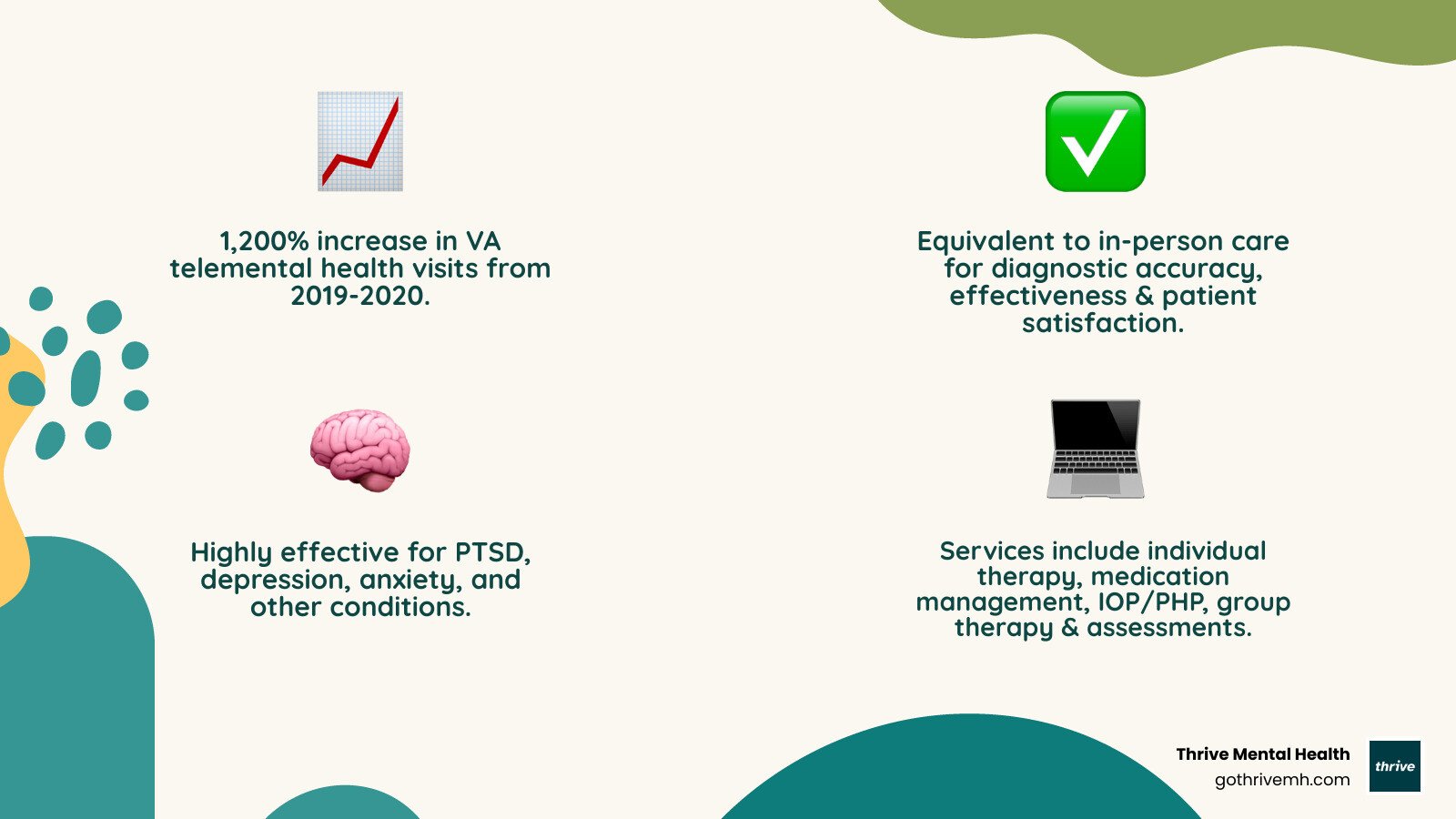
The shift to virtual care accelerated dramatically during the COVID-19 pandemic. The VA alone saw a 1,200% increase in video visits to Veterans’ homes from 2019 to 2020. Telemental health is now the most frequently accessed clinical video service in the VA system. Research shows that telepsychiatry matches in-person care in diagnostic accuracy, treatment effectiveness, quality of care, and patient satisfaction—especially for conditions like PTSD, depression, and anxiety.
For busy professionals, parents juggling schedules, or anyone facing barriers to traditional therapy, remote care offers a lifeline. It’s not a compromise—it’s a modern, evidence-based solution that meets you where you are.
I’m Nate Raine, CEO of Thrive Mental Health, where we’ve scaled access to high-quality behavioral health services by integrating virtual and in-person care in Florida. My decade of leadership at the intersection of mental health, data science, and digital change has shown me how remote mental health care bridges gaps and delivers measurable outcomes for individuals, families, and organizations.
Relevant articles related to remote mental health care:
Does Virtual Therapy Actually Work? The Science Behind Remote Mental Health Care
One of the most common questions we hear is whether virtual therapy is truly as effective as traditional in-person care. The good news is that extensive research, particularly following the rapid expansion of telehealth during the pandemic, overwhelmingly supports its efficacy. Studies have found that telepsychiatry is equivalent to in-person care in diagnostic accuracy, treatment effectiveness, quality of care, and patient satisfaction. This means you can expect the same high standard of care and positive outcomes, even when connecting from afar.
For various mental health conditions, remote care has proven to be a powerful tool. Virtual care can be highly effective for treating anxiety, attention-deficit/hyperactivity disorder (ADHD), bipolar disorder, depression, and post-traumatic stress disorder (PTSD). The U.S. Department of Veterans Affairs (VA), a national leader and early adopter of telehealth, has seen a dramatic increase in its use, with telemental health being their most frequently accessed clinical video telehealth service. This robust adoption underscores the confidence in its effectiveness, particularly for conditions like PTSD that affect many veterans. An evidence brief on the safety and effectiveness of telehealth-delivered mental health care further supports these findings, especially for PTSD, with emerging evidence for depression and anxiety.
So, what types of mental health services are available virtually? The range is comprehensive, mirroring what you’d find in a traditional clinic.
Here’s a list of mental health services commonly available virtually:
- Therapy: Individual, group, and family therapy sessions.
- Medication Management: Psychiatric evaluations, prescription, and monitoring by licensed providers.
- Assessments: Mental health assessments and diagnoses to inform treatment plans.
- Intensive Outpatient Programs (IOP) / Partial Hospitalization Programs (PHP): Structured, comprehensive treatment for more intensive needs.
- Crisis Intervention: Immediate support and safety planning.
- Support Groups: Peer-led or professionally guided groups for various conditions.
- Psychoeducation: Learning about mental health conditions and coping strategies.
What types of therapy are offered remotely?
The therapeutic modalities available through remote mental health care are diverse and evidence-based. These are not watered-down versions of therapy; they are the same powerful interventions adapted for virtual delivery.
Some of the most popular and effective remote therapy types include:
- Cognitive Behavioral Therapy (CBT): This widely-researched therapy helps individuals identify and challenge negative thought patterns and behaviors that contribute to mental health issues like depression and anxiety. CBT is often short-term and results-oriented.
- Dialectical Behavior Therapy (DBT): Often used for more severe conditions like PTSD, borderline personality disorder, self-harm, and eating disorders, DBT teaches crucial behavioral skills such as mindfulness, distress tolerance, interpersonal effectiveness, and emotion regulation. We find it to be incredibly effective in our virtual IOP/PHP programs.
- Prolonged Exposure (PE): A highly effective treatment for PTSD, PE helps individuals gradually confront trauma-related memories, feelings, and situations in a safe environment. Research indicates that PE delivered via telehealth can be just as effective as in-person delivery for PTSD.
- Group therapy: Remote group therapy offers a powerful sense of community and shared experience, allowing individuals to connect with others facing similar challenges.
- Individual counseling: One-on-one sessions with a licensed therapist remain the cornerstone of virtual mental health support.
For those requiring more intensive support, we offer virtual Intensive Outpatient (IOP) and Partial Hospitalization (PHP) programs that incorporate these and other evidence-based therapies.
How effective is remote mental health care for severe conditions?
For individuals struggling with more severe mental health conditions, or those who need a higher level of care than weekly therapy, remote mental health care offers transformative solutions through intensive outpatient (IOP) and partial hospitalization (PHP) programs. These programs provide structured support, multiple therapy sessions per week, and a strong sense of community, all from the comfort and privacy of your home.
At Thrive Mental Health, our virtual IOP and PHP programs are designed for adults and young professionals who need more than once-a-week therapy but less than inpatient care. We’ve seen how effective these virtual programs are in delivering measurable outcomes for conditions such as:
- Substance Use Disorders: Telehealth utilization has been associated with a lower risk of discontinuation of buprenorphine treatment, and telepsychiatry-based medication-assisted treatment for opioid use disorder shows comparable outcomes to face-to-face care.
- Bipolar Disorder: While more research is always beneficial, the structured support and consistent engagement offered by virtual IOPs can be highly beneficial for managing mood swings and maintaining stability.
- Complex Mental Illness: For those with complex mental illness, a comprehensive virtual program can provide the consistent, multi-faceted treatment needed for recovery.
The ability to access these intensive programs virtually breaks down significant barriers, especially for individuals across Florida—from major cities to more rural parts of the state where specialized in-person programs might be scarce. For a deeper dive into the role of remote psychiatric services, you can explore What is Telepsychiatry?.
The Real Pros and Cons of Virtual Therapy You Need to Know
Like any healthcare modality, remote mental health care comes with its own set of advantages and challenges. Understanding both sides helps us make informed decisions about the best path for your healing journey.

The Benefits: Open uping Access and Comfort
The primary benefits of accessing mental health services virtually revolve around unparalleled convenience, flexibility, and accessibility:
- Convenience: Imagine attending your therapy session without battling traffic, finding parking, or taking extended time off work. Virtual care eliminates the commute, making it easier to fit appointments into busy schedules. This is a game-changer for many in sprawling Florida cities like Miami or Orlando.
- Flexibility: With virtual platforms, scheduling becomes much more adaptable. Many providers offer evening and weekend appointments, accommodating diverse lifestyles, especially for parents and busy professionals.
-
Accessibility:
- Geographical Reach: Virtual care extends mental health support to individuals in rural areas or those with limited local options. This is crucial for communities in less populated parts of Florida.
- Reduced Stigma: For some, the idea of walking into a mental health clinic can feel intimidating. Engaging in therapy from the comfort and privacy of your own home can make the initial step less daunting and reduce perceived stigma.
- Physical Limitations: Individuals with mobility issues, chronic illness, or disabilities can access care without the physical challenges of traveling to an office.
- Continuity of Care: If you relocate within Florida, you can often continue with the same provider, ensuring seamless care.
-
Comfort: Being in a familiar environment can help some individuals feel more relaxed and open during sessions, fostering a deeper connection with their therapist.
What are the biggest challenges of remote mental health care?
While the benefits are significant, it’s important to acknowledge the potential drawbacks and challenges that can arise with remote mental health care:
- Technology Access and Issues: Not everyone has reliable internet access or the necessary devices (computer, smartphone, tablet) to participate in virtual sessions. Even with access, technology glitches like poor internet connection, freezing video, or audio problems can disrupt a session and impact the therapeutic flow.
- Digital Literacy: Some individuals, particularly older adults, may struggle with the technical skills required to steer online platforms, join video calls, or manage digital documents.
- Privacy Concerns: While platforms are designed to be secure and HIPAA-compliant, maintaining privacy in a home environment can be challenging. We encourage clients to find a quiet, private space where they won’t be overheard or interrupted, and to be mindful of their surroundings. Overhearing by family members or roommates is a common concern.
- Quality of Connection: The non-verbal cues that are a crucial part of in-person communication (body language, subtle facial expressions) can sometimes be missed or misinterpreted through a screen, potentially impacting the depth of the therapeutic alliance.
- Therapeutic Alliance: While research shows strong alliances can form virtually, some individuals may initially find it harder to build rapport with a therapist they haven’t met in person.
- Emergency Situations: In rare cases of acute crisis during a session, immediate in-person intervention can be more challenging to coordinate remotely. Providers must have clear safety protocols, including emergency contacts and location verification.
We carefully assess each individual’s suitability for virtual care, ensuring these challenges are addressed and mitigated to provide the most effective and supportive environment possible.
Finding Your Fit: How to Choose a Virtual Provider & Understand Costs [2026 Guide]
Choosing the right remote mental health care provider is a critical step towards effective treatment. It’s not just about finding someone available; it’s about finding the right fit for your needs, ensuring their credentials, platform security, and cost align with your expectations and resources.

When selecting a telehealth provider, consider these key factors:
- Provider Credentials and Licensing: Always verify that your provider is licensed in the state where you reside. This is non-negotiable for legal and ethical practice. For instance, if you’re in Miami, Florida, your therapist must be licensed in Florida. Look for licensed therapists (LCSW, LMFT, LPC), psychologists (PhD, PsyD), or psychiatrists (MD). Their credentials should be clearly displayed.
- Experience with Telehealth: While many providers have transitioned to virtual care, some have more extensive experience and specialized training in delivering effective therapy remotely. Ask about their comfort level and approach to virtual sessions.
- Platform Security: Your privacy is paramount. Ensure the platform they use is secure and HIPAA-compliant. This means your data and sessions are encrypted and protected. At Thrive, we prioritize state-of-the-art secure platforms to safeguard your information.
- User Reviews and Testimonials: While not the sole factor, reviews can offer insights into other clients’ experiences with a provider or platform.
- Introductory Sessions: Many providers offer a brief, free introductory session. This is an excellent opportunity to gauge your comfort level with the therapist and the virtual format before committing to full sessions.
Understanding your options for different levels of care, like IOP vs. PHP, can also guide your provider search.
How much does virtual therapy cost and does insurance cover it?
The cost of remote mental health care can vary significantly, but accessibility has improved dramatically with evolving insurance coverage.
- Session Fees: Individual therapy sessions can range from $100 to $250+ per hour, depending on the provider’s qualifications, location, and specialization. For example, a 50-minute initial visit with a psychologist through some platforms might cost around $225.
- Subscription Models: Some online platforms offer subscription-based models, providing access to therapy or messaging services for a flat monthly fee. These can sometimes be more cost-effective for consistent, ongoing support.
- Insurance Coverage: The landscape of insurance coverage for telehealth has expanded considerably.
- Private Insurance: Many private insurance plans now cover remote mental health care services. This includes major providers like Cigna, Optum, and Florida Blue. It’s always best to contact your insurance provider directly to understand your specific benefits, including deductibles, co-pays, and whether they cover virtual services from out-of-network providers.
- State Regulations: Laws governing private payer reimbursement for telehealth exist in 43 states and the District of Columbia. These laws help ensure that virtual care is treated similarly to in-person care for reimbursement purposes.
- Medicaid: All fifty states and Washington, D.C. reimburse for some form of live video telehealth in Medicaid fee-for-service. This is vital for expanding access to underserved populations across Florida.
- Medicare: Medicare has also made permanent changes post-COVID-19, allowing Federally Qualified Health Centers and Rural Health Clinics to serve as distant site providers for behavioral and mental telehealth services, and allowing patients to receive services in their home.
- Out-of-Pocket Costs: If your insurance doesn’t cover virtual care, or you choose an out-of-network provider, you’ll be responsible for the full cost. However, many providers offer sliding scale fees based on income.
At Thrive Mental Health, we believe in transparent pricing and helping you steer insurance. We encourage you to verify your insurance in 2 minutes to understand your benefits for our virtual and hybrid IOP/PHP programs in Florida. There’s no obligation, just clarity.
Who Benefits Most (And Who Might Not) from Virtual Care?
Remote mental health care is a powerful tool, but like any tool, it’s best suited for certain situations and individuals. We’ve seen incredible success stories, but also recognize there are times when in-person care might be more appropriate.
Who Benefits Most?
Virtual care shines for populations facing specific barriers to traditional treatment:
- Busy Professionals: For individuals with demanding careers in places like Tampa or Jacksonville, the flexibility of virtual sessions means no lost time commuting, making it easier to prioritize mental well-being without disrupting work.
- Parents and Caregivers: Juggling family responsibilities makes scheduling in-person appointments a logistical nightmare. Virtual care allows parents to attend sessions from home, often during nap times or after children are asleep, without needing childcare.
- Individuals in Rural Areas: Access to mental health specialists can be severely limited in rural parts of Florida. Virtual care bridges this gap, connecting individuals to expert providers they wouldn’t otherwise reach.
- People with Physical Disabilities or Chronic Illnesses: Mobility challenges or health conditions can make travel difficult or impossible. Virtual care ensures these individuals receive consistent support without added physical strain.
- Healthcare Workers and First Responders: These frontline heroes often face immense stress and trauma. Virtual care offers confidential, convenient access to support, helping them manage their mental health without the added burden of travel or the potential for workplace stigma.
- Those Seeking Anonymity: For some, the privacy of their own home during a session can feel safer and more comfortable than a clinic waiting room, reducing the stigma associated with seeking help.
Is virtual care suitable for everyone?
While remote mental health care has broad applicability, it’s not a one-size-fits-all solution. There are specific circumstances and conditions where it might be less suitable or even contraindicated:
- Severe Psychosis: Individuals experiencing severe psychotic symptoms may require the immediate, immersive, and structured environment of in-person care to ensure their safety and the effectiveness of treatment.
- Active Suicidal Ideation Requiring Inpatient Care: If you are experiencing active thoughts of suicide with a plan and intent, immediate in-person intervention is crucial. We strongly advise calling 911 or going to the nearest emergency department.
*
*If you’re in crisis or having thoughts of suicide, call or text 988 right now. You are not alone.
988 Suicide & Crisis Lifeline
** - Lack of a Safe or Private Home Environment: For therapy to be effective, a client needs a safe and confidential space to open up. If your home environment doesn’t allow for this, virtual care may not be appropriate.
- Technology Aversion or Lack of Access: If you struggle with technology or lack reliable internet and devices, the practical barriers might outweigh the benefits.
- Certain Eating Disorders Requiring Medical Stabilization: While some therapy for eating disorders can be done virtually, conditions requiring medical monitoring or stabilization are best handled in person.
Our clinicians at Thrive Mental Health conduct thorough assessments to determine the most appropriate level and mode of care for each individual, always prioritizing safety and effective outcomes.
How does virtual care support Indigenous communities?
Remote mental health care holds immense potential for supporting Indigenous communities, who often face unique challenges in accessing traditional mental health services. These challenges can include geographical isolation, cultural barriers, historical trauma, and a lack of culturally sensitive providers.
Virtual care can help by:
- Overcoming Geographical Barriers: Many Indigenous communities are located in remote areas with limited access to healthcare facilities and mental health specialists. Telehealth can bring specialized care directly to these communities, reducing the need for long and costly travel.
- Providing Culturally Sensitive Care: Virtual platforms allow individuals to connect with providers who understand and respect Indigenous cultures, traditions, and healing practices, even if those providers are not physically located nearby. This is crucial for building trust and ensuring relevant, effective treatment.
- Enhancing Privacy and Reducing Stigma: Accessing mental health support from within their own community or home environment can reduce the stigma associated with seeking help, making it easier for individuals to engage.
- Specialized Resources: Initiatives like the Hope for Wellness Helpline in Canada offer immediate mental health counseling and crisis intervention for all Indigenous peoples across Canada, including some Indigenous languages. Similarly, Talk 4 Healing provides support for Indigenous women in 14 languages, demonstrating the power of remote services to deliver custom support.
While the research we reviewed primarily focuses on Canadian initiatives, the principles apply broadly, highlighting the potential for similar programs to support Indigenous communities in Florida, where diverse Indigenous populations like the Seminole and Miccosukee tribes reside. Virtual care is not just about convenience; it’s about equity and ensuring everyone has the opportunity to heal.
Frequently Asked Questions about Remote Mental Health Care
Is online therapy as good as face-to-face?
Research shows that for many conditions like depression, anxiety, and PTSD, remote therapy delivered via video is just as effective as in-person sessions. Patient satisfaction is also consistently high, with many appreciating the convenience and accessibility. Studies have found telepsychiatry to be equivalent to in-person care in diagnostic accuracy, treatment effectiveness, quality of care, and patient satisfaction.
How do I know if a remote mental health provider is legitimate?
Check for credentials and state licensing. Legitimate providers will be transparent about their qualifications (e.g., LCSW, PhD, MD). Ensure their platform is HIPAA-compliant to protect your privacy. Look for reviews and ask about their experience with telehealth. Always verify that the provider is licensed in your specific state (e.g., Florida) as licensing requirements vary by jurisdiction.
Can I get prescriptions through remote mental health care?
Yes, telepsychiatry allows licensed psychiatrists and psychiatric nurse practitioners to conduct assessments, manage medications, and issue prescriptions remotely, just as they would in an office setting. They can evaluate your symptoms, monitor your progress, and adjust medications as needed. However, prescriptions for controlled substances may have specific regulations that vary by state and provider.
Your Path to Accessible Support Starts Here
Remote mental health care has revolutionized access to treatment, offering effective, convenient, and flexible options for millions. From weekly therapy to intensive programs, virtual services bridge gaps and bring expert support directly to you. By understanding the benefits, evaluating providers, and knowing your options, you can confidently take the next step toward recovery.
Ready for support? Thrive Mental Health offers virtual and hybrid IOP/PHP programs with evening options. Verify your insurance in 2 minutes (no obligation) or call 561-203-6085. If you’re in crisis, call/text 988.