
The Essential Guide to PHP Outpatient Program (2026)

Feeling overwhelmed by burnout, anxiety, or the sense of being stuck is more common than you might think, especially in fast-paced communities across Florida, California, Indiana, Arizona, and South Carolina. If you are searching for real solutions, understanding the php outpatient program can be a life-changing first step.
This essential guide will walk you through what a php outpatient program is, who benefits most, and how virtual mental health care works—especially for those in California and other states. We will help you overcome common concerns about privacy, time, and insurance, so you can confidently take the next step toward lasting wellness.
Understanding PHP Outpatient Programs: What, Who, and Why
Feeling stuck, overwhelmed by anxiety, or burned out is more common than ever, especially in busy states like Florida, California, Indiana, Arizona, and South Carolina. If you are searching for a path to real relief that fits your life, understanding the php outpatient program could be the turning point.

What is a PHP Outpatient Program?
A php outpatient program is a structured, intensive mental health treatment that provides comprehensive care without requiring an overnight hospital stay. It bridges the gap between traditional outpatient therapy and inpatient hospitalization, offering a high level of support while allowing you to maintain daily routines.
Key features of a php outpatient program include:
- Individual and group therapy sessions led by licensed clinicians
- Medication management and psychiatric oversight
- Evidence-based modalities like CBT, DBT, and mindfulness-based therapies
- Family involvement and education
- Weekly time commitment of approximately 20 hours or more
Below is a quick comparison:
| Feature | Inpatient | PHP Outpatient Program | Intensive Outpatient (IOP) |
|---|---|---|---|
| Overnight Stay | Yes | No | No |
| Weekly Hours | 24/7 | 20+ | 9-15 |
| Therapy Types | All | All | Group, some individual |
| Medication Management | Yes | Yes | Sometimes |
PHP programs are designed for conditions like depression, anxiety, bipolar disorder, and mood disorders. Accredited providers meet strict quality standards, ensuring care is both safe and effective. Demand for the php outpatient program has grown significantly since the pandemic, reflecting its vital role in modern mental health care. For a deeper dive, visit the Partial Hospitalization Program (PHP) overview.
Who Benefits from PHP?
The php outpatient program is ideal for adults, teens, and young professionals who need more than weekly therapy but do not require 24-hour supervision. It is especially helpful for those:
- Transitioning from inpatient hospitalization back to daily life
- Managing dual diagnoses, such as mental health and substance use together
- Facing complex or treatment-resistant symptoms that did not improve with standard outpatient care
Family involvement is encouraged to strengthen support systems. For example, a young professional in California experiencing severe work stress and depression might struggle to function at work or home. A php outpatient program can provide daily structure, therapy, and medication management, helping them regain stability without disrupting their career or education.
Programs also welcome people who feel stuck or isolated, offering a community where participants share experiences and build resilience together.
Why Choose PHP Over Other Options?
Choosing a php outpatient program offers distinct advantages compared to other forms of care. You receive a higher level of clinical support than traditional outpatient therapy, yet you maintain the flexibility to sleep at home and continue with work, school, or family responsibilities.
Benefits include:
- Personalized, structured treatment plans with daily check-ins
- Access to evidence-based therapies proven to address severe symptoms
- Insurance coverage is common, making it a cost-effective alternative to inpatient care
- Confidential, stigma-free environment that respects your privacy
Studies show that participating in a php outpatient program can reduce the risk of rehospitalization by up to 30 percent compared to less intensive care. Many find that this model balances the need for intensive support with the freedom to manage life’s demands.
Worried about time, effectiveness, or privacy? Most programs offer flexible schedules and virtual options, especially in places like California, to meet you where you are. If you are considering the next step for your mental health, exploring a php outpatient program could be your bridge to lasting recovery and well-being.
How Virtual PHP Works in California and Beyond
Feeling overwhelmed, burnt out, or anxious is more common than ever, especially in fast-paced places like California, Florida, Indiana, Arizona, and South Carolina. If you are searching for a flexible way to regain your mental health while balancing work, school, or family, the php outpatient program may be the answer. Virtual care is transforming how people access intensive support, making it easier to get help without leaving home.

The Virtual PHP Model Explained
A virtual php outpatient program brings the structure and support of in-person care directly to your home. This model uses secure telehealth platforms to deliver therapy, medication management, and daily check-ins with licensed clinicians.
Each day, you participate in a mix of individual, group, and family therapy sessions, just as you would in a physical facility. Evidence-based treatments like CBT (Cognitive Behavioral Therapy) and DBT (Dialectical Behavior Therapy) are offered virtually, designed to address anxiety, depression, mood disorders, and more.
Key features include:
- HIPAA-compliant video sessions to protect privacy.
- Flexible scheduling to fit around work or school.
- Access for people in urban, suburban, or rural areas, including across California and beyond.
- Ongoing coordination with your broader care team.
A typical virtual php outpatient program runs five days a week, with about five to six hours of care each day. This setup allows you to maintain daily responsibilities while getting the focused support you need.
Imagine starting your day with a group therapy session, followed by a skills workshop and a one-on-one meeting with your clinician—all from the comfort and privacy of your home. This approach helps reduce commute stress and creates a safe space for healing.
Effectiveness of Virtual Care: What the Research Shows
Many people wonder if a virtual php outpatient program can really deliver the same results as in-person care. Recent studies show that virtual PHPs are highly effective, with outcomes comparable to traditional settings. In fact, research comparing in-person and virtual PHPs found that virtual programs can reduce depression and anxiety symptoms just as well as in-person care, with high patient satisfaction and engagement rates. For a deeper look at these findings, see this Virtual PHP treatment outcomes study.
Key findings include:
- Patients in virtual programs often report equal or greater progress.
- Attendance rates are typically high, as virtual care removes transportation barriers.
- Most insurance plans now recognize and cover virtual php outpatient program participation.
Clinicians use digital tools to track progress, adjust treatment, and communicate with your support network. Even if you have concerns about technology, many providers offer tech support and simple instructions to ensure you can access care.
Success stories from California and other states show that people are returning to work, managing stress, and rebuilding relationships through virtual PHP care. Insurance acceptance continues to grow, making this option accessible for many.
Overcoming Common Concerns: Privacy, Time, and Results
Choosing a php outpatient program—especially a virtual one—comes with questions. Is my privacy safe? Will this fit my busy schedule? Is it effective for serious mental health needs?
Virtual PHPs are designed with confidentiality as a top priority. Sessions use encrypted platforms, and providers guide you in creating a private space at home. Flexible scheduling allows working adults, students, and parents to participate without disrupting daily routines.
For those managing severe or complex conditions, virtual programs offer intensive support, regular check-ins, and real-time adjustments. If distractions at home are a worry, clinicians help you set boundaries and routines for focus.
Insurance coverage is increasingly transparent, with providers offering detailed cost breakdowns and financial support options. Many people in California, Florida, and beyond share that their initial doubts faded as they saw real progress and regained control over their lives.
If you are considering a php outpatient program, reaching out for a confidential eligibility check is the first step. There is no obligation, and care coordinators are ready to answer your questions, support your journey, and help you access the flexible, effective care you deserve.
Step-by-Step: What to Expect in a PHP Outpatient Program
Feeling overwhelmed by burnout, anxiety, or the sense of being stuck is common—especially for busy professionals and families in Florida, California, Indiana, Arizona, and South Carolina. The path to recovery may seem unclear, but knowing what to expect in a php outpatient program can transform uncertainty into hope. Here’s a clear roadmap, step by step, so you can approach this process with confidence.

Step 1: Initial Assessment and Eligibility
Your journey with a php outpatient program begins with a confidential assessment. A licensed clinician will meet with you—either virtually or in person—to understand your mental health history, current symptoms, and treatment goals.
This assessment also includes verifying your insurance coverage and discussing financial options. There is no obligation, and everything you share is kept private. Admission criteria are reviewed, including the severity of symptoms and level of daily impairment.
Most programs, including those in California, offer rapid turnaround. After your assessment, you can typically start your php outpatient program within 24 to 48 hours. For many, the virtual assessment is a relief—no travel required, and you can speak openly from the comfort of home.
Step 2: Personalized Treatment Planning
Once admitted, you will collaborate with your clinical team to design a treatment plan tailored to your needs. In a php outpatient program, this plan addresses your unique challenges, preferences, and schedule.
You’ll set short- and long-term goals together. Therapy types—such as cognitive behavioral therapy, dialectical behavior therapy, or family sessions—are selected based on what works best for you. Your plan may include medication management, and family involvement is encouraged when helpful.
For example, if you are managing anxiety and work stress, your php outpatient program might blend individual therapy, group sessions focused on coping skills, and flexible scheduling to fit around your job. Every step is personalized and designed for real-life success.
Step 3: Daily Programming and Therapy
A typical php outpatient program involves a structured schedule, usually 5 to 6 hours per day, five days a week. This intensity provides a higher level of care than traditional outpatient therapy, giving you daily support while allowing you to sleep at home.
What does a week look like? Here’s a sample schedule:
| Day | Morning | Afternoon |
|---|---|---|
| Monday | Group Therapy (CBT) | Individual Therapy |
| Tuesday | Skills Group (DBT) | Medication Review |
| Wednesday | Family Therapy | Experiential Therapy |
| Thursday | Peer Support Group | Coping Skills Workshop |
| Friday | Progress Review | Community Building |
Sessions include evidence-based therapies, skill-building workshops, and peer support. Virtual options mirror in-person care, using secure platforms for privacy and ease.
To learn more about the types of therapy and modalities available in virtual settings, explore Virtual IOP and PHP treatment modalities for details on CBT, DBT, and more.
You are not alone in these sessions—being part of a community can make the php outpatient program more engaging and effective.
Step 4: Progress Monitoring and Adjustments
Your care team will monitor your progress throughout the php outpatient program with regular check-ins and outcome tracking. Adjustments are made based on your feedback, symptom changes, and evolving needs.
If you are working with other healthcare providers, such as your primary care doctor or psychiatrist, your team will coordinate care for a seamless experience. Families and support systems are kept up to date, with your permission.
A mid-program review ensures that your treatment plan remains relevant and that you are making measurable progress toward your goals.
Step 5: Transition Planning and Aftercare
As you near the end of your php outpatient program, the focus shifts to maintaining your progress. Your team will help you prepare for the next level of care, often stepping down to an Intensive Outpatient Program (IOP) or traditional outpatient therapy.
Relapse prevention strategies are taught, and you’ll receive tools for coping with stress and setbacks. Alumni groups, crisis resources, and ongoing support are available to keep you connected after discharge.
For example, a successful transition might involve moving from daily therapy in the php outpatient program to a few weekly IOP sessions, with continued access to group support. Your discharge plan will include referrals and resources tailored to your needs, so you always know where to turn.
Every step is designed to make your journey smoother and help you build lasting wellness.
Thrive Mental Health: Accredited Virtual & In-Person PHP/IOP in California, Florida, Indiana, Arizona, and South Carolina
Feeling overwhelmed by burnout, anxiety, or the sense of being stuck is all too common today, especially for those balancing work, family, and personal challenges. If you live in Florida, California, Indiana, Arizona, or South Carolina, you might be searching for a solution that offers real support without disrupting your life. A php outpatient program can be the bridge between traditional outpatient therapy and full hospitalization, giving you structure while preserving your daily routine.
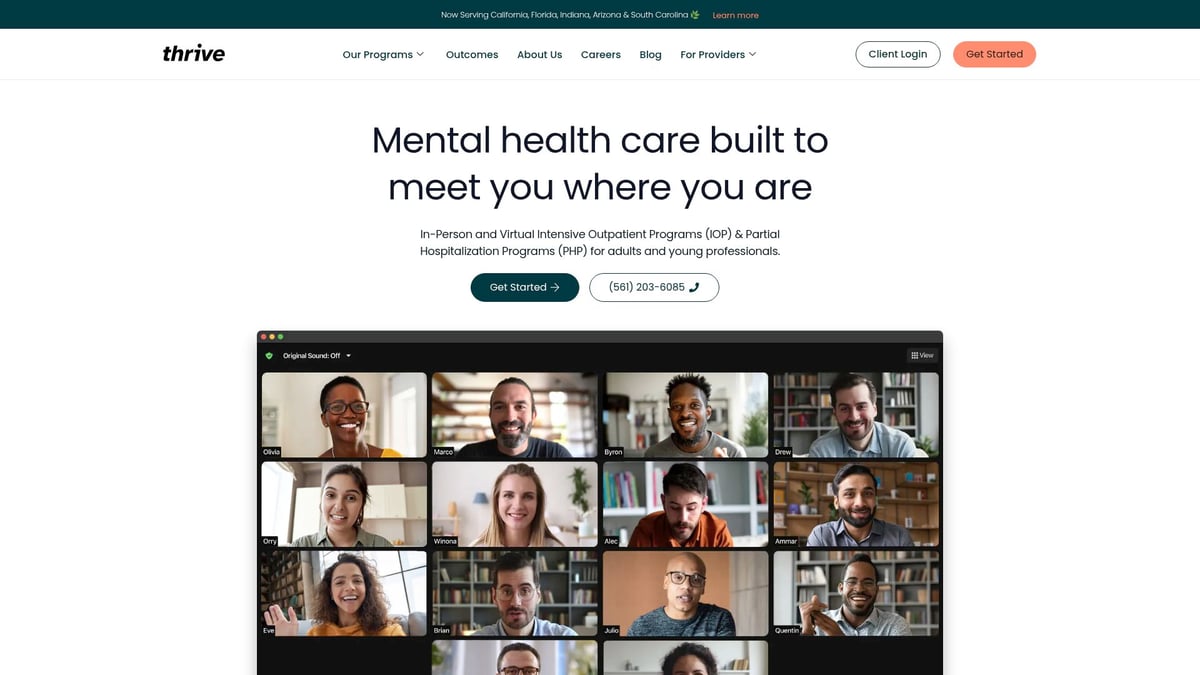
A php outpatient program delivers intensive mental health treatment for adults, teens, and professionals who need more than weekly therapy but do not require overnight care. This approach blends group and individual therapy, skill-building, and medication management. Thrive Mental Health’s programs are Joint Commission-accredited, ensuring the highest clinical standards and evidence-based practices. Whether you are facing depression, anxiety, work-related stress, or dual diagnoses, the right php outpatient program can provide tailored support.
Virtual care has changed the landscape for those seeking a php outpatient program, especially for residents of California and other large states. Thrive’s virtual model mirrors in-person care, offering secure telehealth sessions, access to licensed clinicians, and a structured daily schedule—all from the privacy of your home. This makes mental health IOP and php outpatient program options available to urban, suburban, and rural communities alike.
Worried about time commitment or privacy? Thrive’s php outpatient program is designed for flexibility, with programming that fits around work or school schedules. Confidentiality is a top priority: all sessions are HIPAA-compliant, and your information stays private. Virtual care is proven effective, with outcomes comparable to in-person programs. If you are unsure which level of care fits your needs, Thrive offers a clear comparison between Intensive Outpatient Program vs. PHP to help you make the best decision.
Thrive Mental Health stands out for its rapid access—most clients start their php outpatient program within 24 hours of assessment. The clinical team creates a personalized plan, drawing from evidence-based therapies like CBT and DBT. Family involvement, 24/7 crisis support, and expert medication management are all part of your care. Thrive is in-network with major insurers and helps you navigate coverage, so financial barriers do not prevent you from getting help.
Ready to take the next step? Checking your eligibility or speaking with a care coordinator is confidential and comes with no obligation. Thrive Mental Health is committed to supporting your unique journey, whether you need virtual or in-person care in California, Florida, Indiana, Arizona, or South Carolina.
Navigating Insurance, Accessibility, and Cost for PHP Outpatient Programs
Feeling overwhelmed by the cost, insurance questions, or even where to start with a php outpatient program? You are not alone. Many in Florida, California, Indiana, Arizona, and South Carolina hesitate to seek help because they worry about affordability, privacy, or confusing insurance rules. The good news is that modern mental health IOP and php outpatient program options are more accessible, flexible, and insurance-friendly than ever before.
Insurance Coverage and Eligibility
Navigating insurance for a php outpatient program can feel daunting, especially when you are already managing burnout or anxiety. Most programs accept a wide range of plans, making care more attainable for many.
Here is a quick comparison of insurance types accepted for php outpatient program care:
| Insurance Type | Accepted? | Notes |
|---|---|---|
| Private/Commercial | Yes | Most major providers, employer coverage |
| Medicaid | Yes | State-specific eligibility applies |
| Employer-Sponsored | Yes | Often covers mental health IOP and PHP |
| Self-Pay/Sliding Scale | Sometimes | Financial assistance may be available |
Most providers work with you to check benefits and secure any required pre-authorization. This means you can get a clear picture of coverage and out-of-pocket costs before you start. In states like California and Florida, insurance-friendly providers often offer no-obligation eligibility checks to help you feel confident about your decision.
If you want a detailed breakdown of insurance options, visit this resource on insurance coverage for outpatient mental health. It explains how coverage works, what to expect, and how to get help navigating your plan.
For example, a new client in Florida might begin with a quick phone assessment, followed by a confidential insurance review. If approved, most can access a php outpatient program within 24 to 48 hours.
Accessing Care: Virtual and In-Person Options
Geography is no longer a barrier to quality mental health IOP or php outpatient program access. Virtual programs now reach urban, suburban, and rural communities across California, Indiana, Arizona, South Carolina, and Florida.
You can often choose between:
- Fully virtual programs, accessible from your home
- In-person locations in many states, with transportation support
- Hybrid models combining both for flexibility
Virtual care is especially valuable for those with busy work schedules or limited mobility. Wait times are often short, with many starting virtual php outpatient program care within days. For example, someone living in rural Indiana can now join group therapy and meet with their clinician online, saving time and reducing stress.
If you prefer in-person support, many providers offer local centers with comfortable, private settings. Hybrid models make it easy to switch between virtual and onsite care as your needs change.
Overcoming Barriers: Stigma, Privacy, and Support
Many people put off starting a php outpatient program because of stigma, privacy worries, or fear of work disruption. It helps to know you are not alone and that providers are committed to your confidentiality and support.
Here are some ways programs address common barriers:
- Private, secure telehealth platforms for virtual sessions
- Discreet in-person locations for confidential care
- Employer and family support resources
- Community outreach to reduce stigma and educate
If you are worried about telling your employer or loved ones, many programs can help you navigate these conversations. For example, one client in Arizona was reluctant to seek help due to work concerns, but found that virtual care offered privacy and flexibility, making it possible to recover while keeping their job.
Remember, seeking support is a sign of strength. A php outpatient program provides the structure, expertise, and understanding you need to move forward—no matter where you start.
Taking the Next Step: How to Get Started with PHP Outpatient Care
Feeling overwhelmed, anxious, or stuck is all too common, especially in fast-paced states like Florida, California, Indiana, Arizona, and South Carolina. You are not alone if you find it hard to balance work, family, and self-care while struggling with mental health challenges. Seeking support through a php outpatient program can be the first step toward real change and relief.
What to Expect When You Start
Taking the leap into a php outpatient program begins with a confidential, no-obligation assessment—often available virtually within 24 to 48 hours. During this initial step, experienced clinicians will review your needs, verify insurance, and determine if the program is the right fit.
If eligible, you will collaborate with your care team to build a personalized treatment plan. This includes selecting therapy types, scheduling sessions, and involving family if you wish. For many, the flexibility of virtual care in California and other states makes balancing treatment and daily life much easier.
A typical week involves structured group and individual therapy, medication management, and peer support. Virtual options now offer comparable satisfaction and attendance rates to in-person care. Recent research on Virtual PHP feasibility for adolescents shows high engagement and positive outcomes for young people and their families.
Overcoming Concerns and Taking Action
It is natural to worry about privacy, time commitment, or whether a php outpatient program will truly help. Virtual programs in California and other states use secure, HIPAA-compliant technology to protect your confidentiality. Flexible scheduling helps working adults and students fit care into their routines.
Insurance often covers much of the cost, and care coordinators can help you navigate coverage and financial options. You can expect a supportive environment focused on your goals, with expert guidance every step of the way.
If you are ready to explore if a php outpatient program is right for you, reach out for a confidential eligibility assessment. There is no obligation—just a chance to get answers and support tailored to your unique journey.
If you’re feeling overwhelmed by anxiety, burnout, or just stuck in a rut, you’re not alone—and there are real solutions available. Throughout this guide, we’ve explored how PHP outpatient programs offer structured, evidence-based care you can access virtually or in person, tailored to your unique needs and daily life. At Thrive Mental Health, you’ll find compassionate professionals ready to help you rediscover balance and well-being, with support that fits your schedule and works with your insurance. When you’re ready to take the next step toward lasting change, Get Started Now.