
Feeling Down? How Somatic Therapy Can Help You Reconnect

Somatic Therapy for Depression: Feel Alive 2025
Why Ignoring Your Body Keeps You Stuck in Depression
Most people think depression lives in their head. It doesn’t.
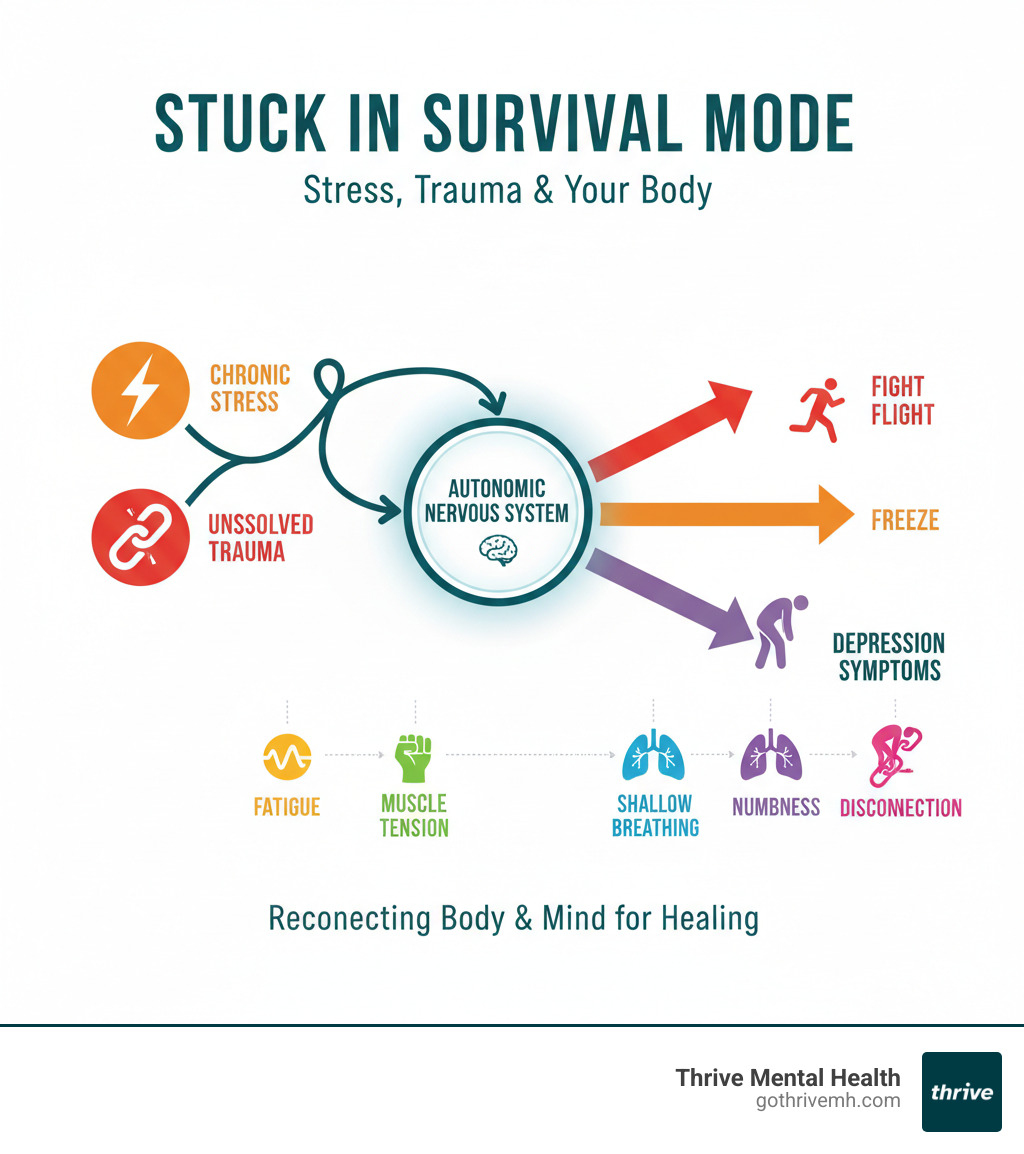
Depression shows up in your body first—the crushing fatigue, the muscle tension you can’t shake, the numbness that makes you feel like you’re watching life through glass. When stress and trauma get “trapped” in your nervous system, your body stays stuck in survival mode. That’s why you can understand your depression intellectually and still feel terrible. Your body is holding the score.
Somatic therapy for depression is a body-based treatment that helps release these trapped emotions and physical tension. Unlike traditional talk therapy, it works by reconnecting you with your body’s signals to regulate your nervous system, reduce numbness, and help you feel alive again.
It’s a different approach because it starts with the body, not the mind, to release tension rather than just changing beliefs. This therapy helps people with depression, PTSD, and anxiety, especially those who feel disconnected from their bodies, by addressing both the mental and physical symptoms.
At Thrive Mental Health, we use somatic therapy as part of our comprehensive IOP and PHP programs in Florida because it addresses the full mind-body connection that traditional approaches often miss, leading to real-world outcomes.
Explore more about somatic therapy for depression:
Why Talk Therapy Alone Isn’t Enough: What Makes Somatic Therapy Different?
Ever spent months in therapy talking about your problems, understanding why you feel depressed, and still waking up exhausted and numb? You’re not broken. The problem is that depression isn’t just a story in your head; it’s a physiological state wired into your nervous system. Your body is holding onto something your mind can’t talk away.
That’s where somatic therapy for depression comes in. The word “somatic” comes from the Greek “soma,” meaning body. Here’s the key difference: traditional talk therapy works from the top down (mind to body), trying to change beliefs to influence feelings. Somatic therapy works from the bottom up (body to mind), addressing physical sensations and nervous system responses first, knowing that shifts in your body will naturally shift your thoughts and emotions.
Cognitive Behavioral Therapy (CBT) helps you identify and change negative thought patterns. But if your body is still holding deep-seated tension from years of stress, it’s like trying to solve a puzzle with half the pieces missing. Somatic therapy doesn’t just help you think differently about tension—it helps you release it, changing your nervous system’s baseline state.
The Core: Your Body Keeps the Score
As Bessel van der Kolk’s book The Body Keeps the Score made clear, trauma doesn’t just live in memories—it lives in your muscles, your breath, and your nervous system. When traumatic events or chronic stress go unresolved, they get “trapped” inside as tension, pain, or numbness.
Your autonomic nervous system (ANS) triggers a fight, flight, or freeze response to threats. In a healthy system, this energy discharges once the danger passes. But when it doesn’t, your nervous system remains on high alert. This chronic nervous system dysregulation is exhausting and directly fuels depressive symptoms like chronic muscle tension, headaches, and shallow breathing. These are your body’s way of saying, “I’m still holding onto something that never got resolved.”
Somatic Therapy vs. Mindfulness and Yoga: What’s the Difference?
While all three emphasize the mind-body connection, they have different goals. Mindfulness helps you observe sensations without judgment, and yoga uses movement to build strength and relaxation. But somatic therapy is specifically designed to release stored trauma and regulate your nervous system with the guidance of a trained professional.
| Feature | Somatic Therapy | Mindfulness Meditation | Yoga |
|---|---|---|---|
| Primary Goal | Release trauma/stored tension, regulate nervous system, process emotions at a bodily level | Cultivate present moment awareness, non-judgmental observation of thoughts/sensations, reduce stress | Physical postures, breathing, meditation for flexibility, strength, relaxation, and spiritual connection |
| Core Mechanism | Guided exploration of bodily sensations to release “stuck” energy and complete physiological responses | Observing thoughts, feelings, and sensations without attachment or reaction | Synchronized movement and breath, physical challenge, and relaxation to balance body and mind |
| Professional Guidance | Typically one-on-one with a trained somatic therapist (e.g., Somatic Experiencing, Sensorimotor Psychotherapy) | Often self-guided or in group settings; guided by meditation teachers | Taught by yoga instructors in classes or privately |
| Trauma-Informed | Inherently trauma-informed, designed to work with the nervous system’s response to trauma | Can be adapted to be trauma-informed, but not all practices are | Can be adapted to be trauma-informed, but not all practices are |
At Thrive, our approach to somatic therapy for depression is deeply trauma-informed. We don’t just help you relax—we help you release what’s been holding you back. Learn more about our Virtual Therapy for Depression programs in Florida.
How Somatic Therapy for Depression Works: Break the Cycle, Feel Alive Again
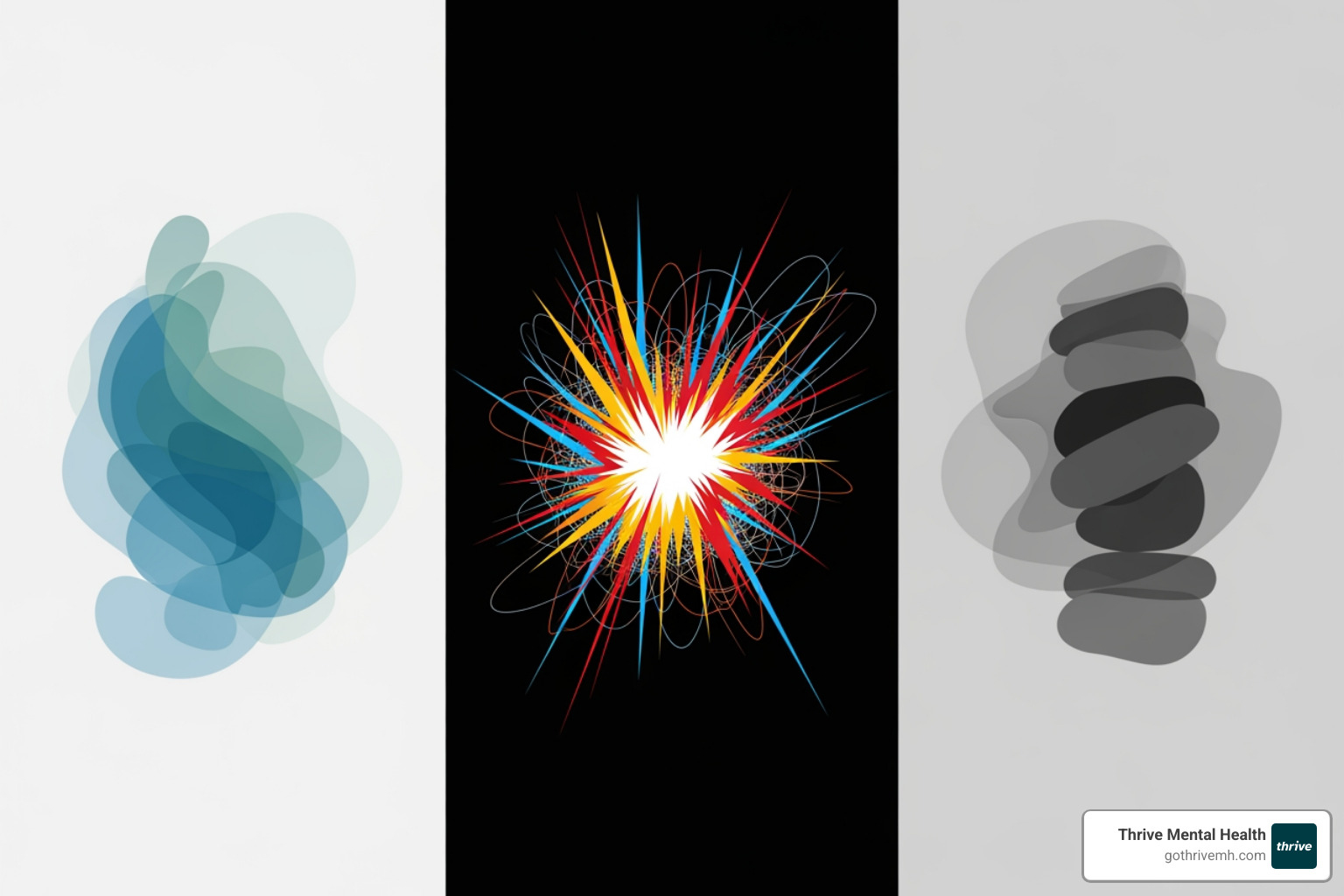
When you’re depressed, your body speaks a language of lethargy, muscle tension, stomach aches, and numbness. These aren’t just side effects—they’re signs your body is stuck in survival mode.
Somatic therapy for depression works by helping you tune into these physical signals. By gently bringing awareness to the knot in your stomach or the tightness in your throat, you begin reconnecting with your body and the emotions it’s holding. Instead of numbing out, you learn to sit with the discomfort, building your capacity to tolerate difficult sensations. As you do, the “stuck” energy begins to discharge, and your nervous system learns it’s safe to regulate itself again.
This is the bridge that talk therapy alone can miss. Somatic therapy helps your body get the memo that it’s safe, allowing you to experience sensations—even joy—more vividly.
How Somatic Therapy Tackles the Physical Side of Depression
Depression is a full-body experience. Chronic pain, relentless fatigue, and sleep disruptions are signs your nervous system is stuck in a “freeze” state. Somatic therapy for depression directly addresses these physical symptoms by helping your body release what it’s been holding onto.
Through specific techniques, a therapist guides you to notice where tension lives, track sensations as they shift, and gently release locked-up energy. As your body lets go, physical discomfort decreases, sleep improves, and your natural energy returns. You move out of freeze and back into life because your body finally feels safe enough to do so.
What You Gain: From Numb to Fully Alive
Numbness is depression’s cruelest trick, taking away both bad and good feelings. Somatic therapy offers a pathway back to feeling. As you become more attuned to your body, you start noticing things again—the warmth of sunlight, the comfort of a deep breath, the relief of releasing tension.
This process rebuilds trust in your body. You learn that you can handle the feelings that have been buried, and that feeling them is what sets you free. The goal isn’t just to feel less depressed—it’s to feel alive again, with more joy, energy, and genuine connection. You gain the capacity to feel everything and engage with life as it is.
Somatic Therapy Techniques & At-Home Exercises (2025 Guide)

Somatic therapy for depression works by gently noticing bodily sensations without judgment. The process always starts with creating safety under the guidance of a trained therapist, who helps you explore at a manageable pace.
Core Somatic Therapy Techniques Used at Thrive
At Thrive Mental Health, our Florida-based therapists use evidence-based somatic approaches to help you regulate your nervous system. Here’s what that looks like in practice:
- Resourcing: Building an internal foundation of safety by recalling moments when you felt strong or connected and noticing the positive physical sensations that arise.
- Titration: Working with small, manageable pieces of overwhelming emotions to prevent getting flooded or shutting down.
- Pendulation: Gently shifting your awareness between an uncomfortable sensation and a neutral or pleasant one, training your nervous system to self-regulate.
- Grounding: Bringing you back to the present moment by focusing on physical sensations, like your feet on the floor or the weight of your body in a chair.
- Boundary development: Learning to notice when something feels like too much and practicing asserting your needs, which builds safety and self-trust.
Simple Somatic Exercises to Try at Home
These simple practices can help you build awareness and release tension on your own.
- Body Scan: Lie down and slowly move your attention from your toes to your head, simply observing any sensations like warmth, tingling, or tightness without trying to change them.
- Conscious Breathing: Place one hand on your chest and one on your belly. Breathe deeply so your belly rises, and make your exhale longer than your inhale to signal your nervous system to relax.
- Grounding Your Weight: Stand or sit with your feet flat on the floor. Feel the contact between your body and the ground, noticing gravity holding you. This reminds your body that you’re here and supported.
- Self-Holding (Butterfly Hug): Place one hand over your heart and the other on your stomach. Gently press or tap in a slow, rhythmic pattern to activate your body’s “rest and digest” mode.
For more ways to bring these principles into your daily life, explore our guide on Somatic Exercises to Improve Your Mental Health.
Is Somatic Therapy for Depression Right for You? [Benefits, Risks, and Who Gets Results]
If talk therapy hasn’t brought relief and your depression shows up more in your body than your thoughts, somatic therapy for depression might be the missing piece.
Who gets the best results?
- People whose depression is tangled with physical symptoms like fatigue, muscle tension, or emotional numbness.
- Individuals with post-traumatic stress disorder (PTSD), anxiety, complicated grief, or self-esteem issues rooted in feeling unsafe in their own skin.
Somatic therapy is not a one-size-fits-all solution. Those experiencing severe dissociation or active psychosis may need a different approach first to ensure safety. A qualified therapist at Thrive can help determine the right path for you. Learn more about our approach to Treatment for Major Depression and Anxiety.

The Evidence: Does Somatic Therapy Really Work?
Yes. While newer than CBT, the evidence for somatic therapy is compelling. A randomized controlled study in the Journal of Traumatic Stress found that somatic therapy significantly reduces both PTSD and depression symptoms. Another study showed that 90% of tsunami survivors experienced significant improvement after somatic therapy.
The American Psychological Association (APA) officially recognizes somatic therapy as “the treatment of mental disorders by physical methods that directly influence the body.” The clinical evidence and patient outcomes show that it works, especially when depression is complicated by trauma.
How to Find a Qualified Somatic Therapist (and Get Insurance to Pay)
Finding the right therapist is crucial. Here’s what to look for:
- Specialized Training: Look for certification in modalities like Somatic Experiencing (SE) or Sensorimotor Psychotherapy.
- Trauma-Informed Care: A trauma-informed therapist prioritizes your safety and moves at your pace.
- Trust Your Gut: You should feel comfortable, understood, and safe. A good somatic therapist helps you listen to your body’s signals, not override them.
- Ask Questions: Inquire about their experience with somatic therapy for depression, the techniques they use, and what a typical session looks like.
Many people assume somatic therapy isn’t covered by insurance, but that’s often untrue. When integrated into treatment plans like the IOP and PHP programs at Thrive, it is frequently covered by major providers.
Thrive Mental Health accepts Cigna, Aetna, Optum, Florida Blue, and UnitedHealthcare, serving clients throughout Florida. We make it simple to Verify your insurance in 2 minutes.
FAQs: Somatic Therapy for Depression—What People Ask Most
How fast does somatic therapy work for depression?
There’s no set timeline. Some people feel shifts in a few sessions, like better sleep or less tension. For depression rooted in deeper trauma, the process may take longer. The focus is on steady, sustainable nervous system regulation, not a quick fix.
Is somatic therapy covered by insurance?
Yes, it often is. When provided by licensed professionals as part of a recognized treatment plan (like an IOP or PHP program), many insurance plans offer coverage. At Thrive Mental Health, we accept major insurers like Cigna, Aetna, Optum, Florida Blue, and UnitedHealthcare. We can Verify your insurance here for free.
Can I do somatic therapy online?
Absolutely. Virtual somatic therapy for depression is highly effective. Core techniques like body scans, breathwork, and grounding translate perfectly to a virtual setting. Being in the comfort of your own home can even make it easier to tune into your body. Thrive offers expert-led virtual sessions across Florida.
What’s the difference between somatic therapy and regular talk therapy?
Talk therapy (like CBT) works “top-down,” focusing on changing your thoughts to change your feelings. Somatic therapy for depression works “bottom-up.” It starts with the body, helping you tune into physical sensations to release the stored tension and trauma that your mind can’t simply talk away.
Is somatic therapy safe for everyone?
For most people, yes, especially with a trained, trauma-informed therapist. If you have a history of severe dissociation or active psychosis, a skilled practitioner will adjust the pace and techniques to ensure the process is empowering, not overwhelming. At Thrive, our therapists are trained to create a safe container for your healing.
Summary: Somatic Therapy for Depression—The Fastest Way to Reconnect and Recover
Somatic therapy for depression is a fundamentally different way of healing. Instead of just analyzing your thoughts, this body-based approach goes straight to the source: the trapped tension and dysregulated nervous system that keep you stuck. By working with your body, you can finally release what’s been holding you back, move out of the “freeze” state, and feel genuinely alive again.
The physical symptoms that have plagued you—fatigue, muscle tension, numbness—aren’t separate from your depression. They are your depression. Somatic therapy addresses all of it, helping you break free from a cycle that talk therapy alone often can’t touch.
At Thrive Mental Health, our virtual and hybrid IOP and PHP programs in Florida integrate somatic approaches with other evidence-based treatments. We offer flexible evening options, accept major insurance plans like Cigna, Aetna, Optum, Florida Blue, and UnitedHealthcare, and serve clients throughout the state. Recovery isn’t just about feeling less depressed—it’s about feeling fully alive.
Ready for support? Thrive offers virtual and hybrid IOP/PHP programs with evening options. Verify your insurance in 2 minutes (no obligation) → Start benefits check or call 561-203-6085. If you’re in crisis, call/text 988.