
Teen Virtual IOP Explained: Therapy That Fits Their Screen Time

Teen Virtual IOP: Urgent 2025 Guide
[988 Disclaimer]
If you or your teen are in crisis or having thoughts of self-harm, call or text the 988 Suicide & Crisis Lifeline immediately. You are not alone.
Why Weekly Therapy Isn’t Enough for Some Teens: The Urgent Case for Virtual IOP
You found a therapist. Your teen goes every week. But they’re not getting better—or maybe they’re getting worse. While weekly therapy is effective for many, an hour a week isn’t enough to break through a mental health crisis. For severe depression, anxiety, trauma, or self-harm, your teen needs more intensive support, now.
This is where a teen virtual IOP (Intensive Outpatient Program) makes a difference. It provides 9–12 hours per week of structured online therapy—more intensive than weekly counseling, but without the disruption of inpatient care. Your teen gets treatment from home, staying in school and maintaining their routine.
Instead of one 50-minute session, a virtual IOP provides a full support team: individual therapy for personalized care, group therapy to connect with peers, family therapy to improve home dynamics, and psychiatry services for medication management. At 3–5 days a week, 3 hours a day, this intensity drives real, fast change.
The results are clear: 94% of teens see improvements in depression, 92% see anxiety drop, and 81% no longer experience suicidal thoughts. These are real outcomes from programs like ours.
Teen virtual IOP is for teens whose symptoms of depression, anxiety, PTSD, OCD, school refusal, self-harm, or substance use aren’t improving with weekly therapy. It’s also an essential step-down from residential treatment or hospitalization, providing structured support to prevent relapse.
Virtual IOP is flexible. With no commute and evening options, your teen can get treatment without missing school or activities. Plus, most major insurance providers—including Cigna, Optum, and Florida Blue—cover virtual IOP, making it an accessible option.
At Thrive Mental Health, our teen virtual IOP programs in Florida deliver this expert care directly to your home, bridging the gap between insufficient support and life-altering disruption.
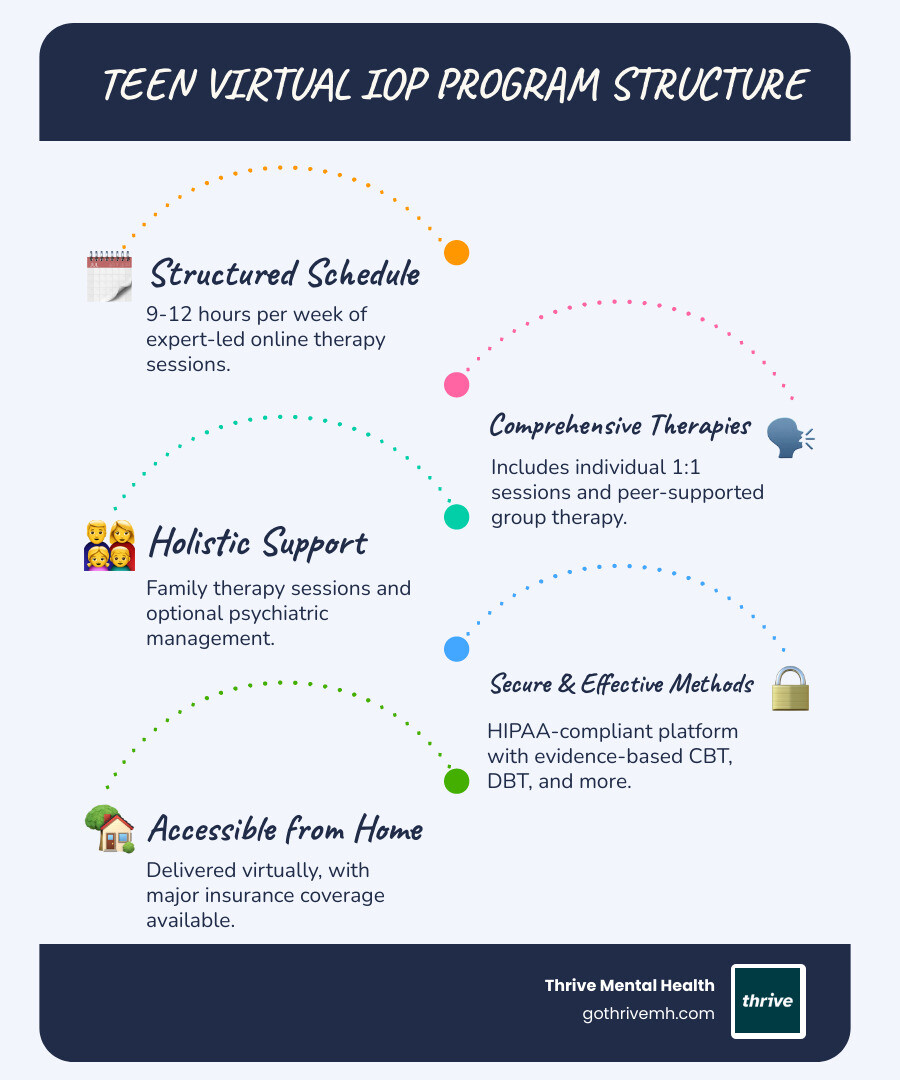
If weekly therapy isn’t enough, you’re not out of options. Virtual IOP is intensive, flexible, and for many teens, it’s what finally helps them turn the corner.
What Is a Teen Virtual IOP? Who Needs ItAnd Why Now?
A teen virtual IOP (Intensive Outpatient Program) is structured, clinical-grade mental health treatment delivered online. It provides 9 to 12 hours of therapy per week, offering more support than weekly counseling without the disruption of inpatient care. Teens heal while living their lives—attending school, participating in activities, and sleeping in their own beds.
Virtual IOP is ideal for teens who are:
- Stepping down from higher care: It provides a crucial bridge from residential or hospital care back to daily life, reinforcing skills and preventing relapse.
- Not improving with weekly therapy: If symptoms of anxiety, depression, or self-harm persist or worsen despite counseling, more intensity is needed.
- In immediate need: With the ability to start within 24 hours of an assessment, virtual IOP provides rapid support when you can’t afford to wait.
At Thrive, we serve families across Florida, providing high-quality virtual care with no geographic barriers.
If you’re in crisis, call/text 988 right now. You are not alone.
What Mental Health Issues Can Virtual IOP Treat?
Teen virtual IOP is designed to treat a wide range of adolescent mental health challenges, often simultaneously. Our programs help teens struggling with:
- Major Depression: Rebuilding emotional regulation and finding purpose.
- Anxiety (Generalized & Social): Learning concrete tools to manage panic and rebuild social confidence.
- Trauma & PTSD: Processing past events and reducing their impact on the present.
- Obsessive-Compulsive Disorder (OCD): Using Exposure and Response Prevention (ERP), the gold standard for OCD treatment.
- Substance Use: Addressing co-occurring substance use driven by underlying mental health conditions.
- Self-Harm & Suicidal Thoughts: Providing safety planning, emotional regulation skills, and a supportive community.
- School Avoidance/Refusal: Identifying triggers and developing strategies to return to school.
- Other conditions: We also treat behavioral challenges, co-occurring ADHD, eating disorders, mood disorders, and provide support for teens navigating gender identity.
A 2022 study in the International Journal of Eating Disorders found that virtual programs for young adults with eating disorders were as effective as in-person treatment, confirming that high-quality online care delivers real results.
Is Your Teen a Good Fit for Virtual IOP?
If you’re reading this, you likely know something needs to change. Key signs that your teen needs a higher level of care include:
- Worsening symptoms despite therapy: They are declining even with weekly counseling.
- Social withdrawal: Isolating from friends and family.
- School problems: Refusing to go to school or a sudden drop in grades.
- Intense mood swings or hopelessness: Constant anger, crying, or expressing feelings of worthlessness.
- Self-harm or suicidal thoughts: An immediate indicator that intensive intervention is required.
- Struggles with daily routines: Difficulty with basic self-care, sleep, or hygiene.
A professional assessment is the best way to know for sure. We offer free consultations to help families in Florida determine if our teen virtual IOP is the right fit. You don’t have to figure it out by yourself.
Inside a Teen Virtual IOP: What to Expect [2025 Guide]

Enrolling in our teen virtual IOP means choosing a comprehensive, structured program that fits into your teen’s life. Here’s how it works.
Program Structure:
- Schedule: 9 to 12 hours of programming each week, spread across 3 to 5 days in 3-hour sessions. Afternoon and evening options are available to fit around school.
- Individual Therapy: Weekly one-on-one sessions with a licensed therapist specializing in adolescent mental health to address your teen’s unique challenges.
- Group Therapy: Multiple weekly sessions with peers matched by age and experience, creating a powerful support network where teens realize they aren’t alone.
- Family Therapy: Weekly or bi-weekly sessions to improve communication, set healthy boundaries, and create a supportive home environment. We also offer parent coaching and support groups.
- Psychiatry: Integrated medication management is available as needed, with our psychiatrists evaluating and prescribing within the program.
All sessions are conducted online, allowing your teen to engage from a private, comfortable space at home. As a parent, your role is to help create a consistent routine and participate actively in family therapy to support their progress.
What Therapy Methods Are Used?
Our programs use evidence-based therapies proven to work for teens:
- Dialectical Behavior Therapy (DBT): Teaches skills to manage intense emotions, tolerate distress, and improve relationships.
- Cognitive Behavioral Therapy (CBT): Helps teens identify and challenge negative thought patterns that fuel anxiety and depression.
- Motivational Interviewing: Builds a teen’s own motivation for change, especially if they are reluctant about treatment.
- Exposure and Response Prevention (ERP): A specialized form of CBT for OCD and severe anxiety that helps teens face their fears.
- Trauma-Focused Therapies: Addresses the emotional and behavioral aftermath of trauma in a structured, compassionate way.
- Experiential & Mindfulness Therapies: We integrate art, music, yoga, and mindfulness to help teens with self-expression and emotional regulation.
How Is Privacy Protected?
Your teen’s privacy is our top priority. All sessions occur on HIPAA-compliant, end-to-end encrypted video platforms. Our clinicians are bound by the same strict legal and ethical confidentiality standards as in-person care. We guide families on creating a secure space at home so your teen can feel safe to open up and focus on healing.
Virtual IOP vs. Weekly Therapy: What’s Best for Your Teen?
Deciding on the right level of care can be confusing. The fundamental difference is this: Weekly therapy offers support. Virtual IOP drives change. An hour a week may be enough for mild issues, but it’s often not enough to stop a crisis.
Here’s a direct comparison:
Weekly Therapy:
- Intensity: Low (1 hour/week). Best for maintenance or mild symptoms.
- Structure: Minimal. One touchpoint per week.
- Components: Typically individual therapy only.
- Progress: Can be slow, taking months to see significant change.
Teen Virtual IOP:
- Intensity: High (9-12 hours/week). Designed for moderate to severe symptoms and crisis intervention.
- Structure: Comprehensive. Multiple touchpoints per week with a full clinical team.
- Components: Includes individual, group, and family therapy, plus psychiatry.
- Progress: Faster results due to intensity and consistent skill-building.
The intensity of a teen virtual IOP allows teens to practice new skills multiple times a week with immediate feedback from therapists and peers. This consistency is what interrupts negative patterns and creates lasting change.
Does Virtual IOP Really Work? The Data Parents Need
The research and our own outcomes confirm that teen virtual IOP is highly effective. As mentioned, our programs show that 94% of teens improve from depression and 92% from anxiety.
Why does it work so well?
- Safety & Comfort: Teens often feel safer and open up more from their own homes.
- Immediate Application: Skills learned in therapy can be practiced in their real-life environment right away.
- Integrated Family Support: Virtual formats make it easier for parents to participate in family therapy, a key predictor of success.
A 2022 study in the International Journal of Eating Disorders also found that virtual programs were as effective as in-person treatment, proving that online care is a powerful, evidence-based option.
Insurance and Costs: What Parents Need to Know
We know cost is a major concern. The good news is that most major insurance plans cover teen virtual IOP because it is a medically necessary level of care.
- In-Network Coverage: We are in-network with providers like Cigna, Optum, Florida Blue, and many others across Florida. This means you typically only pay your plan’s copay or coinsurance.
- Out-of-Network Solutions: If we aren’t in-network with your plan, our team can work to secure a Single Case Agreement (SCA), which allows your teen to receive care at in-network rates.
- Fast, Free Verification: Find out your exact coverage and estimated costs with no obligation. Check your benefits in two minutes or call our admissions team at 561-203-6085.
While weekly therapy may seem cheaper per session, an effective 8-12 week IOP program is often more cost-effective in the long run than months or years of therapy with limited results. The cost of inaction—emotionally and financially—is far greater.
FAQs: Teen Virtual IOP—What Parents Ask Most
How long does a virtual IOP last?
Most teen virtual IOP programs typically last around 9–12 weeks. However, the exact duration is personalized and depends on your teen’s specific needs, their progress in treatment, and the severity of their symptoms. We work with families to determine the best discharge date based on clinical milestones.
What tech do we need?
To participate in our teen virtual IOP, your teen will need a device with internet access, a camera, and a microphone. This could be a laptop, tablet, or even a smartphone. A stable internet connection is essential for smooth sessions. We also recommend a private, quiet space where your teen can attend sessions without interruptions or concerns about privacy.
What happens after IOP ends?
Transitioning out of an IOP is a critical phase. We ensure a smooth step-down by creating a custom aftercare plan for each teen. This plan typically includes recommendations for ongoing outpatient therapy (individual or group), psychiatric follow-ups, and connections to local community resources. Our goal is to equip your teen and family with the tools and support needed for long-term recovery and well-being.
Is virtual IOP as effective as in-person?
Yes, numerous studies and our own clinical outcomes demonstrate that virtual IOP can be just as effective as in-person programs for most teens. The virtual format offers added benefits like comfort, convenience, and reduced logistical barriers, which can actually improve engagement and therapeutic outcomes for many adolescents. The key is the quality of the clinical care and the evidence-based modalities used, which remain consistent across virtual and in-person settings.
How do I know if my insurance covers this?
We are in-network with most major insurance providers in Florida, including Cigna, Optum, and Florida Blue. To get a clear understanding of your specific coverage, you can Verify your insurance in 2 minutes through our secure online form, or simply call us directly at 561-203-6085. Our admissions team is here to help you steer the process.
Don’t Wait—Get Your Teen the Support They Deserve

When your teen is struggling, every day can feel like a battle. You want the best for them, and you need a solution that works—one that respects their need for routine, privacy, and connection. Teen virtual IOP offers exactly that: a powerful, flexible, and effective path to healing that fits their screen time and their life.
We’ve seen the transformative power of our teen virtual IOP programs for families throughout Florida. Families find renewed hope, teens build resilience, and homes become places of peace and understanding once more. Our expert-led, evidence-based care is designed to meet your teen where they are, providing the intensive support they need to thrive.
Don’t let logistics or uncertainty stand in the way of your teen’s well-being. Our teen virtual IOP offers:
- Expert-led, evidence-based care: Delivered by licensed clinicians specializing in adolescent mental health.
- Evening and hybrid options: Flexible scheduling designed to accommodate school and family commitments.
- Covered by major insurance: Making high-quality care accessible and affordable.
- Serving all of Florida: Bringing life-changing treatment directly to your home.
It’s time to equip your teen with the skills, support, and connection they need to steer life’s challenges. Learn more about how our programs can make a difference.
- Learn more about Thrive’s IOP
- Explore PHP options
- Read our guide on choosing the right teen therapy program to make an informed decision for your family
Ready for support? Thrive offers virtual and hybrid IOP/PHP programs with evening options. Verify your insurance in 2 minutes (no obligation) → Start benefits check or call 561-203-6085. If you’re in crisis, call/text 988.