
Teletherapy for Depression: Is Virtual Care Right for You?
Teletherapy for Depression: Is Virtual Care Right for You?
Why Depression Treatment Needs a Faster, Easier Path
Teletherapy for depression is changing how millions of people access mental healthcare—offering the same evidence-based treatments as in-person therapy, delivered wherever you are. If you’re wondering whether virtual care actually works, here’s what you need to know.
Quick Answer: Does Teletherapy Work for Depression?
- Yes, it’s effective. Research shows teletherapy produces outcomes comparable to face-to-face therapy for depression and anxiety.
- Multiple formats available. You can access care through video sessions, phone calls, or even secure messaging with a licensed therapist.
- Medication included. Psychiatrists can evaluate, diagnose, and prescribe antidepressants virtually in most states.
- Works for various levels of care. From weekly therapy to intensive outpatient programs (IOP) and partial hospitalization programs (PHP), teletherapy scales to your needs.
Depression is common and serious. One in five U.S. adults experiences mental illness each year, and the COVID-19 pandemic made things worse—depression and anxiety rates jumped more than 25% in just the first year. Yet the average wait time for mental health services in America is 48 days. That is nearly two months of suffering while waiting for help.
The traditional system is broken. High costs, long waitlists, geographical barriers, and stigma keep people from getting care when they need it most. But teletherapy is rewriting the rules. It is not just a pandemic workaround—it is a proven, accessible way to treat depression with the same therapies, medications, and outcomes as in-person care, minus the commute and the wait.
I’m Nate Raine, CEO of Thrive Mental Health, where we’ve spent over a decade building evidence-based behavioral health programs across Florida. We’ve seen how teletherapy for depression removes barriers and gets people the help they need faster—whether through individual therapy, medication management, or intensive virtual programs like Intensive Outpatient Programs (IOP) and Partial Hospitalization Programs (PHP).
Teletherapy for depression terms to know:
- best online therapy services
- insurance covered online therapy
- telehealth for mental health
- virtual intensive outpatient program (IOP)
- verify your insurance for teletherapy
Why Is Getting Help So Hard? (And How Teletherapy Smashes Barriers)
The mental health crisis is undeniable. Globally, almost one billion people, including 14% of teenagers, live with a mental disorder. In the U.S., 1 in 5 adults experience mental illness annually, with 1 in 20 facing serious mental illness. Fifty percent of all lifetime cases of mental illness begin by age 14, and 75% by age 24. These are not just statistics; they represent lives impacted, potential unfulfilled, and a significant strain on families, communities, and healthcare systems.
So, why aren’t more people getting the help they need? The barriers are many, often complex, and deeply entrenched in our society.
Here are the 4 major barriers teletherapy overcomes:
- Geography: Living in rural or remote areas often means limited access to mental health specialists.
- Cost: Traditional therapy can be expensive, and indirect costs like travel or lost wages add up.
- Stigma: The fear of judgment can prevent people from seeking help or even admitting they need it.
- Scheduling: Rigid appointment times can be impossible for those with demanding jobs, family responsibilities, or limited mobility.
The average wait time for mental health and substance abuse services in the United States is a staggering 48 days. That is 48 days when someone struggling with depression or anxiety might be getting worse, not better. Teletherapy for depression offers a powerful solution, bridging this treatment gap and bringing care directly to you.
Overcoming Geographical and Physical Barriers
Imagine living in a remote part of the Florida Panhandle or a rural town hours away from the nearest mental health specialist. Or perhaps you’re in a busy city like Miami or Orlando, but traffic and parking make attending weekly appointments a nightmare. Teletherapy for depression eliminates these problems.
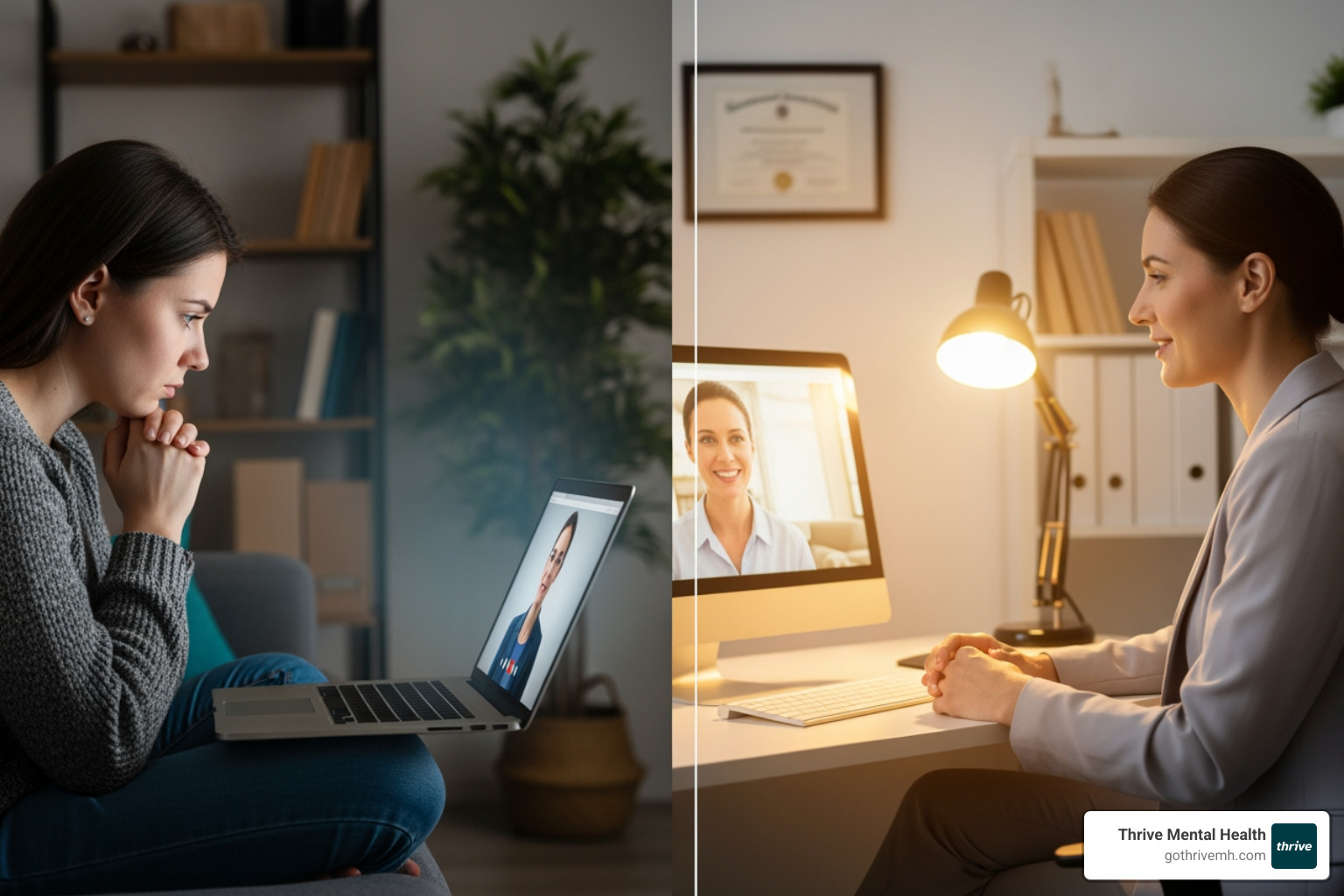
By connecting patients with therapists via video conferencing, phone calls, or secure messaging, teletherapy helps reduce the impact of geographical barriers on access to care. This means you can connect with a licensed mental health professional from the comfort of your home in Florida, regardless of how far you are from a physical clinic.
This flexibility also benefits individuals with limited mobility, chronic illnesses, or those who simply cannot take time off work. The convenience of teletherapy allows you to schedule appointments that fit your life, not the other way around. It is particularly impactful for populations like veterans and active-duty military personnel, who can access specialized treatment regardless of their changing locations, ensuring continuity of care.
If you need more than once-a-week therapy, teletherapy also makes higher levels of care like virtual IOP and PHP accessible from anywhere in Florida.
Reducing Stigma and Increasing Privacy
The stigma associated with mental health problems is a powerful barrier, often discouraging people from seeking assistance. Many fear being judged, misunderstood, or having their struggles exposed. Teletherapy offers a solution by enabling patients to undergo therapy from the comfort and privacy of their own homes.
This increased privacy can help reduce the stigma associated with seeking mental health care. You do not have to worry about running into someone you know in a waiting room or explaining your absence from work. It creates a discreet, less intimidating environment where you can feel safe to open up and explore your feelings without external pressures. This sense of security is crucial for building trust and fostering an effective therapeutic relationship, especially when dealing with sensitive issues like teletherapy for depression.
Is Online Therapy More Affordable?
Cost is a significant factor in accessing mental health care. Traditional therapy often involves not just the session fee, but also travel expenses, parking, and potentially lost wages from taking time off work. Teletherapy has the potential to reduce these associated costs. By eliminating the need for physical office space and travel, it can be more cost-effective for both patients and providers.
Furthermore, the landscape of insurance coverage for teletherapy has rapidly evolved. Many insurance companies now cover teletherapy services, further reducing out-of-pocket expenses. We’ve seen this directly in our operations across Florida, where major providers like Cigna, Optum, Aetna, and Florida Blue often cover virtual mental health services, including IOP and PHP levels of care.
According to federal guidance, many private insurance companies now cover teletherapy services. It is always best to check with your specific insurance provider, but many plans consider teletherapy an eligible expense.
Additionally, subscription plans and medication costs for teletherapy can often be paid for using Health Savings Accounts (HSAs) or Flexible Spending Accounts (FSAs), making care more accessible. We encourage you to verify your insurance benefits and ask how to use your HSA/FSA for your teletherapy for depression treatment.
What Does Teletherapy for Depression Actually Involve? [Services & Providers]
Teletherapy for depression is not just a quick phone call; it is a comprehensive suite of behavioral health services delivered through secure digital platforms. This includes everything from one-on-one therapy to medication management and even intensive virtual programs.

With Thrive Mental Health, teletherapy for depression can include:
- Individual therapy (CBT, DBT-informed, ACT, and other evidence-based approaches)
- Group therapy focused on depression, anxiety, and coping skills
- Family counseling to help loved ones support your recovery
- Psychiatric evaluations and medication management
- Higher-acuity care like Intensive Outpatient Programs (IOP) and Partial Hospitalization Programs (PHP)
Therapists vs. Psychiatrists: Who Does What?
Understanding the roles of different mental health professionals is key to navigating your treatment options. Both therapists and psychiatrists play crucial, often complementary, roles in your mental health journey.
-
Therapists (including Psychologists (PhD/PsyD), Licensed Clinical Social Workers (LCSW), Licensed Marriage and Family Therapists (LMFT), and Licensed Professional Counselors (LPC)): These professionals focus on providing talk therapy and counseling. They work with you to discuss personal challenges, understand your feelings, develop coping strategies, and create a personalized plan for the future. Therapies they might use include:
- Cognitive Behavioral Therapy (CBT): Challenges negative thought patterns to alter unwanted behaviors and treat disorders like depression.
- Dialectical Behavior Therapy (DBT): Teaches behavioral skills like mindfulness and emotion regulation, often used for more severe issues.
- Psychodynamic Therapy: Explores unconscious feelings and past experiences influencing present behavior.
- Acceptance and Commitment Therapy (ACT): Helps you accept difficult thoughts and feelings while committing to actions aligned with your values.
Crucially, therapists cannot prescribe medication.
-
Psychiatrists (MDs) and Psychiatric Nurse Practitioners: These are medical doctors or advanced practice nurses who specialize in mental health. As licensed medical providers, they can diagnose mental health conditions and prescribe and monitor medication to treat symptoms. Their role often involves:
- Conducting psychiatric evaluations
- Providing medication management and follow-up appointments
- Offering psychiatric care services custom to your needs
At Thrive Mental Health, we offer both evidence-based therapy and counseling provided by our licensed therapists, as well as medication evaluation and management by our psychiatrists and psychiatric nurse practitioners. This integrated approach ensures you receive comprehensive care, especially if you are enrolled in our virtual IOP and PHP programs.
The Role of Medication in Teletherapy for Depression
For many individuals struggling with depression, medication can be a vital component of treatment. Within teletherapy, psychiatrists and psychiatric nurse practitioners can conduct virtual evaluations to diagnose conditions and prescribe appropriate medications.
This includes common antidepressants like Selective Serotonin Reuptake Inhibitors (SSRIs) such as escitalopram (Lexapro) and sertraline (Zoloft), Serotonin & Norepinephrine Reuptake Inhibitors (SNRIs) like duloxetine (Cymbalta), and atypical antipsychotics when necessary. These professionals also handle ongoing medication management, including monitoring your response to treatment, adjusting dosages, and addressing any side effects, all through secure virtual platforms.
While many medications can be prescribed virtually, there are limitations. For example, DEA-controlled substances such as stimulants (e.g., Adderall), benzodiazepines (e.g., Xanax), pain medications, and certain substance use medications are typically not prescribed through telehealth services to support patient safety and adherence to regulations. Thrive provides medication services for anxiety, depression, mood disorders, and PTSD, coordinating closely with your therapy plan for a holistic approach.
More Than Weekly Sessions: Virtual IOP and PHP
If you are finding that once-a-week therapy is not enough, but you do not need inpatient hospitalization, higher levels of virtual care can close that gap.
Virtual Intensive Outpatient Programs (IOP) and Partial Hospitalization Programs (PHP) delivered through teletherapy provide structured, comprehensive treatment designed to offer a higher level of support. They typically involve several hours of therapy per day, multiple days a week, including:
- Group therapy: A core component, offering peer support and shared experiences
- Individual therapy: One-on-one sessions with a dedicated therapist
- Psychoeducation: Learning about mental health conditions and coping skills
- Family therapy: Involving loved ones in the recovery process when appropriate
- Medication management: Integrated psychiatric care and close follow-up
At Thrive Mental Health, our virtual IOP and PHP programs combine clinical expertise with flexible scheduling, including evening options, to fit into your busy life. We deliver these evidence-based programs across Florida, making high-quality, structured care accessible right from your home.
You can read more about how our Virtual IOP/PHP Programs work and how they can transform your mental health journey, especially if you live in areas like Tampa, Miami, Orlando, and Jacksonville.
Is Virtual Therapy as Good as In-Person? [Effectiveness & Experience]
One of the most common questions we hear is whether teletherapy is truly as effective as traditional in-person sessions. The answer, backed by extensive research, is yes—particularly for conditions like teletherapy for depression and anxiety.
| Feature | Teletherapy | In-Person Therapy |
|---|---|---|
| Effectiveness | Highly effective for many conditions, including depression and anxiety. Research shows comparable outcomes to in-person care. Message-based therapy can be non-inferior to video-based. | Highly effective, historically considered the gold standard for many conditions. |
| Cost | Often more affordable due to eliminated travel/parking costs. May have lower session fees, and more insurance coverage is available. HSA/FSA eligible. | Can be more expensive due to session fees, travel costs, and time off work. |
| Accessibility | Excellent for remote areas, individuals with limited mobility, or busy schedules. Overcomes geographical barriers and long wait times. | Limited by geographical location, transportation, and physical accessibility. Long wait times are common. |
| Patient Experience | High patient satisfaction, increased engagement due to convenience and privacy. Therapeutic alliance can be strong. Requires reliable technology and a private space. | High patient satisfaction for many. Offers direct non-verbal cues and a dedicated therapeutic space. Can be intimidating for some due to stigma. |
How Effective is Teletherapy for Depression and Anxiety?
The scientific community has rigorously evaluated the efficacy of teletherapy. A systematic review of videoconferencing psychotherapy and depression found promising results, indicating that virtual sessions are a viable and effective approach.
More recent research continues to affirm these findings. Studies comparing message-based psychotherapy to video-based psychotherapy for moderate depression found that message-based therapy led to significant, medium-to-large improvements in depression (d=1.04), anxiety (d=0.61), and functional impairment (d=0.66). Crucially, changes in depression, anxiety, and functional impairment in the message-based condition were noninferior to those in the video-based treatment condition. This suggests that even asynchronous communication can be highly effective.
Teletherapy is not only effective for depression and anxiety but also for a range of other mental health illnesses, including PTSD and substance use disorders. This widespread effectiveness underscores its potential to transform mental healthcare delivery. Our virtual programs leverage these proven modalities, ensuring that patients across Florida receive top-tier care through virtual IOP and PHP when once-a-week therapy is not enough.
If you want to dive deeper into how virtual care works in practice, you can also explore our related guide on telehealth for mental health.
Benefits vs. Limitations: What to Consider
Like any healthcare modality, teletherapy has its advantages and disadvantages. It is about finding the right fit for your needs.
Pros of Teletherapy for Depression:
- Accessibility: Breaks down geographical barriers, especially vital for rural areas of the Florida Panhandle, and makes care available to those with mobility challenges.
- Convenience: Schedule sessions around your life, not the other way around. No commute means more time for you.
- Privacy: Engage in therapy from a comfortable, private space, reducing the stigma associated with seeking mental health support.
- Flexibility: Options for video, phone, or even text-based communication.
- Continuity of care: Maintain therapy even when traveling or relocating within our service areas.
Cons of Teletherapy for Depression:
- Technology issues: Requires a stable internet connection and a private, quiet space, which can be a challenge for some, especially in low-income populations.
- Lack of some non-verbal cues: While video helps, some subtle non-verbal cues might be missed compared to in-person interactions.
- Not for severe crises: Teletherapy is not suitable for immediate, life-threatening emergencies or severe psychiatric conditions requiring inpatient care.
- State licensing laws: Therapists are typically licensed in specific states, meaning you must be located in a state where your therapist is licensed (e.g., a Thrive therapist licensed in Florida can only treat clients located in Florida at the time of session).
- Digital divide: Access to devices and digital literacy can be a barrier for some individuals.
We carefully assess each individual’s needs—including symptom severity, safety, and support system—to determine if teletherapy and our virtual IOP or PHP levels of care are the most appropriate and effective path for their unique situation.
The Future of Mental Healthcare is Here
The rise of teletherapy is not just a temporary trend; it is a fundamental shift in mental healthcare delivery. The COVID-19 pandemic acted as a catalyst, accelerating its adoption and proving its efficacy and necessity. We are now seeing emerging trends that promise to make mental health care even more integrated, personalized, and accessible.
- Blended care models: The future will likely see a blend of virtual and in-person care, offering maximum flexibility and custom approaches. This means you might have some sessions online and others in a physical location, depending on your needs.
- AI-powered tools: Artificial intelligence will play a growing role in personalized treatment plans, predictive analytics for relapse prevention, and even providing initial screenings or support between sessions.
- Virtual Reality (VR) therapy: VR is already being explored for exposure therapy for phobias and PTSD, creating immersive and controlled environments for therapeutic interventions.
- Wearable technology: Devices that monitor biometric data (heart rate, sleep patterns) could provide therapists with objective insights into a patient’s mental state, enhancing treatment effectiveness.
- Data-driven treatment: The collection and analysis of anonymized data will help refine treatment protocols, identify what works best for different individuals, and continuously improve outcomes.
- Increased specialization: As teletherapy expands, we anticipate even more specialized virtual programs, catering to niche needs and complex co-occurring conditions, much like the focused care we provide in our virtual IOP and PHP programs.
Teletherapy is no longer just an alternative; it is becoming a mainstream, evidence-based pillar of mental health treatment. Our mission at Thrive Mental Health is to remain at the forefront of these advancements, ensuring that our patients in Florida benefit from the most effective and accessible care available. We are confident that teletherapy for depression will continue to evolve, offering hope and healing to even more people who need more than weekly therapy but less than inpatient care.
Frequently Asked Questions about Teletherapy for Depression
Can I get an official depression diagnosis online?
Yes. Licensed psychiatrists and some other qualified mental health professionals can diagnose depression through a virtual evaluation. This typically involves a comprehensive assessment of your symptoms, history, and overall mental state conducted via video call. If you need a higher level of care, Thrive can also assess whether a virtual IOP or PHP is appropriate.
Is my information kept private and secure in teletherapy?
Reputable teletherapy platforms are required to be HIPAA-compliant, meaning they use encrypted technology and secure servers to protect your personal health information, just like an in-person clinic. Always verify a provider’s privacy policy and make sure you are joining sessions from a private space.
What if I’m in crisis or feeling suicidal?
If you are in crisis or having thoughts of self-harm, call or text 988 immediately to connect with the 988 Suicide & Crisis Lifeline. Teletherapy is not suitable for immediate, life-threatening emergencies. The 988 Lifeline provides free, confidential support 24/7.
If you are in crisis, call/text 988 right now. You are not alone.
Does insurance like Florida Blue or Cigna cover virtual IOP?
Many major insurance plans, including Cigna, Optum, Aetna, and Florida Blue, now cover virtual mental health services, including more intensive programs like IOP and PHP. Coverage varies by plan, but we are in-network with many major providers in Florida, so it is crucial to verify your specific benefits.
Is teletherapy for depression available where I live?
Thrive Mental Health serves adults and young professionals across Florida through our virtual and hybrid IOP/PHP programs. We provide care to residents in major cities like Tampa, Orlando, Miami, and Jacksonville, as well as smaller communities throughout the state. As long as you are physically located in Florida during your session, our licensed clinicians can work with you.
How quickly can I start teletherapy for depression?
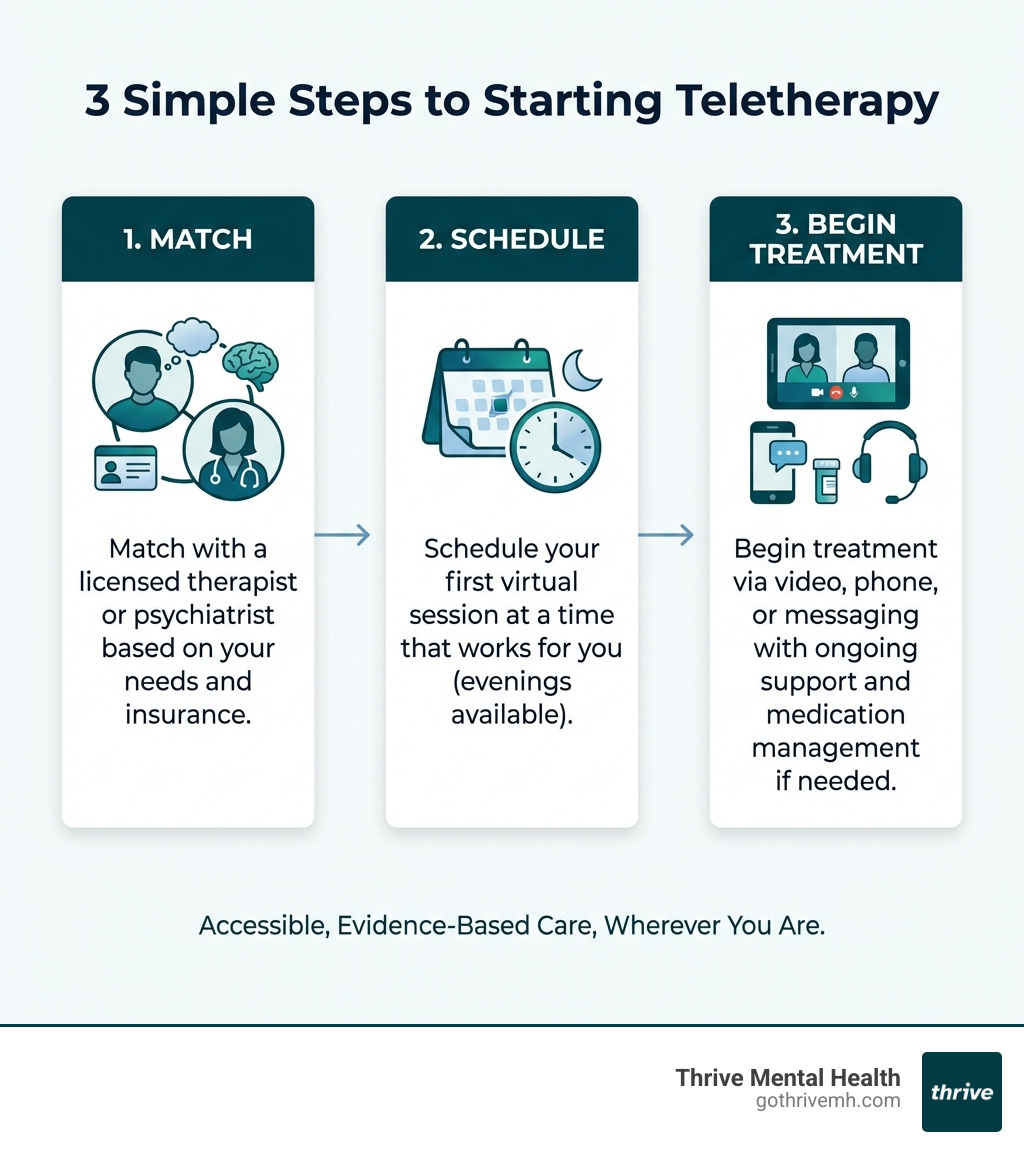
Wait times vary by state and insurance, but virtual care is often much faster than traditional in-person options. After you verify your insurance, our team contacts you to schedule an assessment and, if appropriate, can often enroll you into a virtual IOP or PHP program within days—not weeks.
Ready for Support That Fits Your Life?
Teletherapy for depression has emerged as a powerful, accessible, and effective solution. It removes the traditional barriers of geography, cost, and stigma, bringing high-quality mental healthcare directly to you. From individual therapy and medication management to our intensive virtual IOP and PHP programs, teletherapy offers flexible, evidence-based treatment designed to meet your unique needs.
Our commitment at Thrive Mental Health is to provide you with expert-led virtual programs and trusted in-person centers in Florida. Whether you are in Miami, Tampa, Orlando, Jacksonville, or a smaller town hours from the nearest clinic, you can access structured care that is built for real life—without waiting months for an appointment.
If you want to learn more about how virtual programs work day-to-day, you can also read our in-depth guide on telehealth for mental health.
Ready for support? Thrive offers virtual and hybrid IOP/PHP programs with evening options. Verify your insurance in 2 minutes (no obligation) → Start benefits check or call 561-203-6085. If you’re in crisis, call/text 988.