
The Complete List of Therapy Options Bloomington, IN

Therapy options in Bloomington, Indiana for severe depression. Fast 2025
Struggling with Severe Depression in Bloomington? Here’s How to Get Real Help—Fast
Therapy options in Bloomington, Indiana for severe depression include weekly outpatient sessions, intensive outpatient programs (IOP), partial hospitalization programs (PHP), medication management with psychiatrists, and virtual therapy—all designed to match your symptoms to the right level of care.
Quick Overview: Your Options at a Glance
| Level of Care | Best For | Time Commitment | Available in Bloomington |
|---|---|---|---|
| Weekly Therapy | Mild to moderate depression | 1 hour/week | Local clinics & private practices |
| Intensive Outpatient (IOP) | Severe symptoms, need structure | 9-12 hours/week | Specialized centers, Thrive (virtual) |
| Partial Hospitalization (PHP) | Crisis-level symptoms | 5+ days/week | Local hospitals & treatment centers |
| Medication Management | Biological factors, need prescriptions | Monthly check-ins | Psychiatrists & mental health clinics |
| Virtual Therapy | Busy schedules, need flexibility | Varies | Thrive, local providers |
Indiana’s mental health crisis is real. Approximately 1 in 5 adults in Indiana experience a mental health condition each year, and the state’s suicide rate is higher than the national average. If you’re overwhelmed, stuck, or losing hope, you’re not alone—and you don’t have to wait months for help.
Bloomington offers a range of proven therapy options, from low-cost services at community health centers to intensive programs at specialized facilities. Whether you need weekly sessions to build coping skills or a fast-track intensive program to stabilize quickly, this guide breaks down every option so you can get the right care, right now.
I’m Nate Raine, CEO of Thrive Mental Health. With over a decade leading behavioral health innovation across Florida, California, Arizona, Indiana, and South Carolina, I’ve helped thousands access effective therapy options in Bloomington, Indiana for severe depression through evidence-based, tech-enabled IOP and PHP programs that integrate virtual and in-person care.
Therapy options in Bloomington, Indiana for severe depression. terms you need:
[5 Red Flags] You Need More Than Self-Help for Depression
Sometimes, what feels like “just a bad mood” or “a rough patch” can actually be severe depression crying out for professional help. While everyone experiences sadness, when it starts to disrupt your daily life and joy, it’s time to act. Here are five critical signs that indicate you need more than self-help:
- Persistent sadness or numbness: This isn’t just a fleeting feeling. It’s a pervasive sense of emptiness, hopelessness, or emotional flatness that lasts for weeks or months.
- No interest in things you used to love: Known as anhedonia, this is a core symptom. If your favorite hobbies, friends, or activities no longer bring you pleasure, it’s a major warning sign.
- Major changes in sleep or appetite: You might be sleeping too much or too little, struggling with insomnia, or finding yourself unable to eat, or eating significantly more than usual. These physical changes are often linked to severe depression.
- Crushing fatigue: Even after a full night’s sleep, you feel drained, heavy, and lack the energy for basic tasks. This isn’t just being tired; it’s a profound, persistent exhaustion.
- Thoughts of self-harm or suicide: This is the most urgent red flag. If you’re having recurrent thoughts of death, self-harm, or suicide, it’s a mental health emergency.

If you’re in crisis, call/text 988 right now. You are not alone.
Help Guide: Building Better Mental Health
Bloomington’s Therapy Roadmap: From Weekly Sessions to Intensive Programs
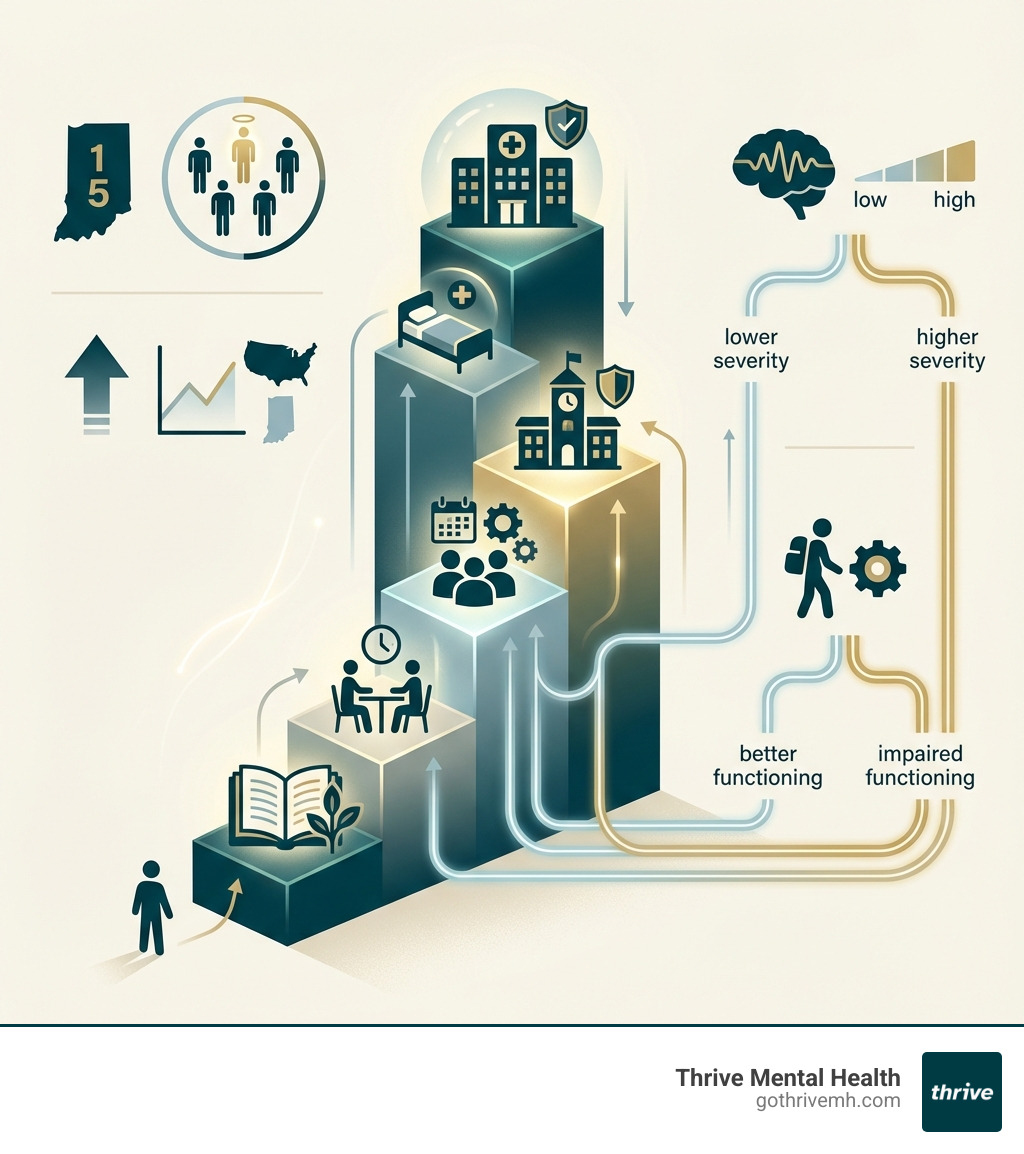
Not all depression is the same, and neither is its treatment. To ensure you get the most effective care without wasting precious time or resources, it’s crucial to understand the “stepped care model.” This approach, used by top providers, starts with less intensive support and escalates as needed, ensuring your treatment matches your needs.
How to Match Your Symptoms to the Right Level of Care
- Self-help & support groups: For mild symptoms or as a complement to formal therapy, self-help resources and peer support groups can be incredibly valuable. National and local mental health organizations offer online resources and local connections. These options can provide coping skills, stress management techniques, and a sense of community.
- Outpatient therapy (weekly or biweekly): This is often the first step for individuals experiencing moderate depression. You meet with a licensed therapist (LCSW, LMHC, Psy.D.) for regular, typically 45-60 minute sessions. In Bloomington, you’ll find numerous private practices and community clinics offering individual and group therapy. This level of care focuses on developing coping mechanisms, processing emotions, and addressing specific challenges.
- Intensive Outpatient Programs (IOP): When weekly therapy isn’t enough, but full hospitalization isn’t necessary, an IOP can be a game-changer. These programs provide a structured environment with multiple hours of therapy per day, several days a week (typically 9-12 hours per week). IOPs combine individual therapy, group therapy, and sometimes family therapy, focusing on skill-building, relapse prevention, and emotional regulation. Local treatment centers in Bloomington offer IOPs. Our virtual IOP programs at Thrive Mental Health offer similar intensive support with the flexibility of online access.
- Partial Hospitalization Programs (PHP): PHPs are the most intensive outpatient option, often serving as a step-down from inpatient care or an alternative to hospitalization for severe symptoms. Patients attend therapy for most of the day, five or more days a week. PHPs offer a highly structured and supportive environment for individuals experiencing acute distress, suicidal ideation without immediate intent, or severe functional impairment due to depression. Local hospitals and specialized centers can provide guidance on PHP and other intensive outpatient programs.
- Virtual and hybrid options for busy schedules: For many, especially students or busy professionals, traditional in-person therapy can be a logistical challenge. Virtual therapy platforms and hybrid IOP/PHP models offer flexibility, allowing you to access quality care from home or a private space. This is where we excel at Thrive Mental Health, delivering intensive, evidence-based programs online, making them accessible across Indiana.
- When to step up to more intensive care: If your symptoms are worsening, you’re struggling to function daily, experiencing suicidal thoughts, or not responding to a lower level of care, it’s a clear signal to consider stepping up. The goal is always to provide the right level of support to stabilize your condition and facilitate lasting recovery.
What Therapy Options Actually Work for Severe Depression in Bloomington?
Effective treatment for severe depression isn’t a one-size-fits-all solution. It requires evidence-based approaches delivered by qualified professionals. In Bloomington, you’ll find therapists specializing in several modalities proven to help individuals steer and overcome severe depression.

- Cognitive Behavioral Therapy (CBT): Change negative thought patterns: CBT is a highly effective, goal-oriented therapy that helps you identify and change unhelpful thinking patterns and behaviors that contribute to depression. Many clinics in Bloomington specialize in this approach, focusing on building skills that can be used for the rest of your life. For severe depression, CBT helps challenge distorted thoughts, improve problem-solving, and develop healthier coping strategies.
- Dialectical Behavior Therapy (DBT): Build emotional resilience: While often associated with Borderline Personality Disorder, DBT is incredibly effective for severe depression, especially when coupled with intense emotional dysregulation, self-harm, or chronic suicidal ideation. DBT teaches skills in four key areas: mindfulness, distress tolerance, emotion regulation, and interpersonal effectiveness. These skills empower you to manage intense emotions, cope with difficult situations, and improve relationships.
- Psychodynamic therapy: Understand root causes: This therapy explores how past experiences, unconscious patterns, and unresolved conflicts impact your current emotional state and relationships. By gaining insight into these underlying dynamics, you can better understand the roots of your depression and develop new ways of relating to yourself and others.
- Skill-building for daily life: A crucial component of treating severe depression, especially in IOP and PHP settings, is practical skill-building. This includes developing healthy coping mechanisms, improving communication, learning stress management techniques, and fostering self-care habits. These skills are vital for regaining energy, restoring hope, and preventing relapse.
- Virtual IOP/PHP: Get intensive support from home: For severe depression, intensive programs like IOP and PHP offer structured, comprehensive care that often includes the modalities mentioned above. Our virtual IOP/PHP programs at Thrive Mental Health provide this high level of support, including individual, group, and family therapy, all from the comfort and convenience of your home in Bloomington. This intensive format can significantly accelerate recovery by providing consistent support and skill development.
- EMDR Therapy: Eye Movement Desensitization and Reprocessing (EMDR) is another specialized treatment often used for trauma, but it can also be effective for severe depression, especially when depression is linked to past traumatic experiences. Many trained therapists in Bloomington offer EMDR therapy, which helps individuals process distressing memories and reduce their emotional impact.
Top therapy goals for severe depression:
- Regain energy and motivation
- Restore hope and a sense of purpose
- Prevent future depressive episodes and relapse
- Improve daily functioning and quality of life
- Develop effective coping skills for stress and emotional challenges
Medication for Severe Depression: Who Prescribes It in Bloomington?
For many individuals struggling with severe depression, medication plays a vital role in treatment. It can help stabilize mood, alleviate intense symptoms, and make therapy more effective by creating a foundation for emotional and cognitive work.
- When medication makes sense: Medication is often considered when depression symptoms are severe, persistent, or significantly impair daily functioning. It can address chemical imbalances in the brain that contribute to depression, providing relief from overwhelming sadness, fatigue, and other debilitating symptoms.
- Who can prescribe: Psychiatrist (MD), Psychiatric Nurse Practitioner (PMHNP): In Bloomington, you can access medication management through several qualified professionals:
- Psychiatrists (MDs): These are medical doctors who specialize in diagnosing and treating mental health conditions, including prescribing and managing medication. They have extensive training in the biological aspects of mental illness. University-affiliated health systems and private psychiatric practices in Bloomington offer psychiatric consultation and medication evaluation. Online directories can also help you find local psychiatrists.
- Psychiatric Mental Health Nurse Practitioners (PMHNPs): PMHNPs are advanced practice registered nurses with specialized training in psychiatric care. They can assess, diagnose, and treat mental health conditions, including prescribing and managing medication, often independently or in collaboration with a physician, depending on state regulations. Many local mental health clinics in Bloomington have PMHNPs on staff who provide medication management with a focus on deep listening and human connection.
- How medication and therapy work together: For severe depression, a combination of medication and therapy (often called “combination therapy”) is frequently the most effective approach. Medication can help alleviate the most debilitating symptoms, making it easier to engage in therapy and apply coping skills. Therapy, in turn, helps address the psychological, behavioral, and situational factors contributing to depression, fostering long-term resilience and preventing relapse.
- Questions to ask your provider: When considering medication, don’t hesitate to ask your provider: What are the potential side effects? How long will I need to take this medication? How will we monitor its effectiveness? What are the alternatives?
- How Thrive’s integrated care model supports you: At Thrive Mental Health, we understand the importance of integrated care. While our IOP and PHP programs focus on intensive therapy, we collaborate closely with your prescribing physician or PMHNP to ensure a cohesive and comprehensive treatment plan. This integrated approach ensures that your medication management and therapeutic journey are aligned for optimal outcomes.
How to Pay for Therapy in Bloomington—Even Without Great Insurance
We know that concerns about cost can be a major barrier to seeking help for severe depression. The good news is that Bloomington offers various options to make therapy accessible, even if you don’t have extensive insurance coverage.
- Typical session costs in Bloomington: The average cost of in-person therapy in the US ranges from $100 to $200 per hour. In Bloomington, prices can vary based on the therapist’s experience, specialization, and credentials. Psychiatrists often charge more, potentially $150-$500 per session, especially for initial evaluations.
- Insurance accepted: Cigna, Optum, Anthem Blue Cross Blue Shield, UnitedHealthcare, Aetna: Many therapists and treatment centers in Bloomington accept a variety of insurance plans. Our programs at Thrive Mental Health are designed to be covered by most major insurance providers, including Cigna, Optum, Anthem Blue Cross Blue Shield, UnitedHealthcare, and Aetna.
- In-network vs. out-of-network: What it means for you:
- In-network: If a provider is in-network, they have a contract with your insurance company, meaning you typically pay a co-pay or co-insurance, and your insurance covers the rest.
- Out-of-network: If a provider is out-of-network, you might pay the full fee upfront, but your insurance plan may reimburse you for a portion of the cost.
- Using superbills for reimbursement: For out-of-network services, many providers can give you a “superbill” – a detailed invoice that you can submit to your insurance company for potential reimbursement. Be sure to ask potential providers if they offer this option.
- Sliding-scale fees and payment plans: Don’t have insurance or have a high deductible? Many clinics and individual therapists offer sliding-scale fees based on your income and household size. Community mental health centers in Bloomington are a great place to start, as they often provide low-cost mental health services on a sliding scale. Always ask if these options are available.
We believe that financial concerns shouldn’t prevent you from getting the help you need.
Verify your insurance in 2 minutes—no obligation →
Virtual and Hybrid IOP/PHP: Fast-Track Your Recovery in Bloomington
For individuals in Bloomington needing more than weekly therapy but less than inpatient care for severe depression, our virtual and hybrid Intensive Outpatient (IOP) and Partial Hospitalization (PHP) programs offer a powerful solution. These programs are designed to deliver intensive, evidence-based treatment with unparalleled flexibility.
- How virtual and hybrid IOP/PHP programs work: Our virtual IOP/PHP programs bring the structure and therapeutic intensity of traditional programs directly to you, wherever you are in Indiana. You participate in live, interactive group therapy sessions, individual counseling, and educational workshops through a secure online platform. Hybrid options combine this virtual flexibility with some in-person components, offering the best of both worlds for those who benefit from a physical presence.
- Evening and flexible scheduling for real life: We understand that life doesn’t stop for treatment. Our programs are designed with flexible scheduling, including evening options, to accommodate work, school, and family commitments. This means you can get the intensive support you need without completely disrupting your daily routine.
- Why intensive programs cut recovery time: IOP and PHP programs provide a concentrated dose of therapy, allowing for rapid skill acquisition and symptom reduction. Instead of waiting a week between sessions, you’re engaged in therapeutic work multiple times a week, building momentum and practicing new coping strategies in real-time. This consistent, immersive approach helps you stabilize faster and develop robust tools for long-term recovery, often cutting recovery time compared to traditional outpatient therapy.
We are committed to making effective treatment accessible and convenient for the Bloomington community.
Learn more about Thrive’s IOP/PHP options →
Explore virtual therapy options →
FAQs: Therapy for Severe Depression in Bloomington, Indiana
What’s the difference between a therapist, psychologist, and psychiatrist?
A therapist (often a Licensed Clinical Social Worker (LCSW) or Licensed Mental Health Counselor (LMHC)) provides talk therapy and counseling. A psychologist (holding a PhD or PsyD) can also provide therapy and conduct psychological testing and assessments. A psychiatrist (an MD) is a medical doctor who specializes in mental health, can prescribe medication, and may also offer therapy.
How long does treatment for severe depression take?
The duration of treatment for severe depression varies greatly depending on the individual, the severity of symptoms, and the type of program. Weekly therapy may last for several months or longer. More intensive programs like IOP or PHP can often lead to significant improvement and stabilization within weeks or a few months, effectively fast-tracking recovery.
Can I be forced into therapy or hospitalization in Indiana?
In Indiana, an individual can only be involuntarily committed to a mental health facility if they are deemed a danger to themselves or others. This typically requires a legal process, often initiated by a mental health professional or concerned family member, and is not a casual decision.
Does insurance cover IOP/PHP or virtual therapy in Bloomington?
Yes, most major insurance plans, including Cigna, Optum, Anthem Blue Cross Blue Shield, UnitedHealthcare, and Aetna, typically cover Intensive Outpatient (IOP) and Partial Hospitalization (PHP) programs, as well as virtual therapy services. Coverage details can vary, so it’s always best to verify your specific benefits.
Check your benefits now →
What if I can’t afford therapy?
If you’re concerned about the cost of therapy, you have several options. Many providers offer sliding-scale fees based on income, and community mental health clinics in Bloomington often provide low-cost care. You can also inquire about payment plans. Additionally, resources like www.in211.org/healthcare-project can help you find financial assistance or steer insurance options.
Summary: Don’t Wait—Get the Right Therapy for Severe Depression in Bloomington, Indiana
Severe depression is a serious condition, but it is absolutely treatable. Bloomington, Indiana, offers a comprehensive range of proven therapy options in Bloomington, Indiana for severe depression—from individual outpatient sessions to highly structured Intensive Outpatient (IOP) and Partial Hospitalization (PHP) programs, as well as crucial medication management services. Whether you need the flexibility of virtual care or the immersive support of an intensive program, the right help is available. The sooner you act, the faster you can start on your journey to recovery and reclaim your life.
Related: “How Virtual IOPs Cut Recovery Time by 50%” →
Start your insurance benefits check now →
Ready for support? Thrive offers virtual and hybrid IOP/PHP programs with evening options. Verify your insurance in 2 minutes (no obligation) → Start benefits check or call 561-203-6085. If you’re in crisis, call/text 988.