
Is Therapy Worth It for Working Adults? An Honest Look at the Data

Therapy for working adults: 5 Critical Career Boosts
Why Most Professionals Wait Too Long to Get Help—And What It’s Costing You
Therapy for working adults isn’t a luxury—it’s a necessity. Yet most professionals wait until they’re on the edge of burnout, struggling with panic attacks, or facing medical leave before they consider getting help.
The data is clear: therapy works, it works fast, and it pays for itself in reduced sick days and better performance.
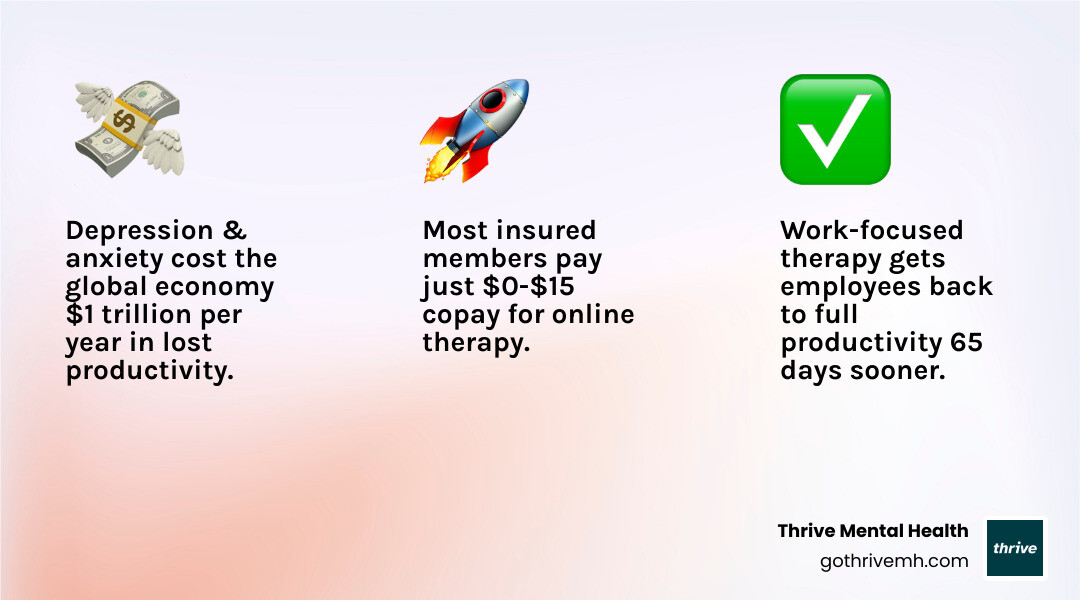
- Depression and anxiety cost the global economy $1 trillion per year in lost productivity.
- Work-focused therapy gets employees back to full productivity an average of 65 days sooner.
- Short-term therapy (10-20 sessions) often improves work ability faster than long-term therapy.
- Most insured members pay a $0-$15 copay for online therapy through major carriers.
But you’re not just dealing with stress. You’re dealing with a system that makes it nearly impossible to get help without missing work, navigating insurance, or waiting months for an appointment.
I’m Nate Raine, CEO of Thrive Mental Health. I’ve spent over a decade helping working adults access evidence-based therapy that fits their lives. Our virtual, hybrid, and evening programs across Florida are designed to provide real results when you need them.
Basic therapy for working adults terms:
- 24/7 mental health professional support
- expert mental health professionals
- intensive therapy program online
Burnout Is Draining Your Paycheck and Health: The Hidden Cost of Ignoring Work Stress
Work stress isn’t just making you miserable—it’s stealing your money, health, and future. When you’re constantly running on fumes or feeling a wave of dread every Sunday night, your body is sending a warning. The World Health Organization reports that 15% of working-age adults have a mental disorder, costing the economy an estimated $1 trillion each year in lost productivity.
Ignoring these signs makes them worse. Manageable stress can spiral into chronic anxiety, physical health problems, and a complete breakdown. Recognizing these challenges early—and getting the right therapy for working adults—can stop this downward spiral.
What Mental Health Issues Hit Professionals Hardest?
High-pressure roles create a perfect storm of mental health challenges that often feed off each other.
- Crushing deadlines keep your nervous system in constant fight-or-flight mode.
- Toxic work culture, from undermining colleagues to a lack of support, can make any job feel like a prison.
- Imposter syndrome is the nagging voice telling you you’re a fraud, paralyzing your career growth.
- Work-life balance has become a joke for many, as remote work blurs every boundary and prevents your brain from resting.
- Career stagnation—feeling stuck while watching others advance—can trigger a deep sense of purposelessness.
These are serious threats to your mental resilience. Understanding what makes a workplace culture healthy can help you identify if your environment is the problem.
Are You Burned Out? [5 Red Flags]
Burnout creeps up slowly. If these signs sound familiar, you’re experiencing a real medical condition that responds to treatment.
- Emotional exhaustion: A bone-deep tiredness where even small tasks feel overwhelming.
- Cynicism and detachment: Mentally checking out and feeling like your work and relationships are pointless.
- Drop in work performance: Making careless mistakes or being unable to focus, despite trying just as hard.
- Physical symptoms: Persistent headaches, stomach problems, trouble sleeping, and getting sick more often.
- Trouble focusing: Your mind feels foggy and slow, and simple decisions feel impossible.
The benefits of mental health services are backed by solid research. Getting help now can prevent years of unnecessary suffering.
Therapy Pays Off: How Mental Health Care Boosts Your Career and Income

Therapy for working adults isn’t just about feeling better—it’s about performing better and earning more. The numbers don’t lie. Research shows employees on sick leave for depression got back to full productivity an average of 65 days sooner with work-focused therapy. That’s two months of your life and income you get back.
Even better, short-term therapy (10-20 sessions) often improves work ability faster than long-term therapy. For busy professionals, this is game-changing. When you’re not battling anxiety or burnout, you make better decisions, communicate more effectively, and have the mental bandwidth to seize opportunities. This translates directly to career advancement and higher earning potential.
Therapy for working adults is a strategic move to address the root causes of stress, not just a Band-Aid. For the research behind these numbers, check out this work-focused therapy study. And to learn more about the broader impact, read about why mental health services matter.
Which Therapy Types Work Best for Job Stress?
You need practical tools, not just insights. Here are the approaches that deliver results for professionals:
- Cognitive Behavioral Therapy (CBT): The gold standard for quickly identifying and changing negative thought patterns that fuel stress.
- Dialectical Behavior Therapy (DBT): Teaches crucial skills for emotional regulation, distress tolerance, and setting boundaries in high-pressure environments.
- Work-life balance coaching: Addresses the deeper patterns—like people-pleasing and perfectionism—that lead to unsustainable work habits.
- EMDR (Eye Movement Desensitization and Reprocessing): Highly effective for processing work-related trauma so it no longer hijacks your nervous system. Learn more about EMDR for work trauma.
- Intensive Outpatient (IOP) & Partial Hospitalization (PHP) Programs: For when weekly therapy isn’t enough, these programs offer comprehensive care without requiring you to quit your job.
For a complete breakdown, see our guide to types of therapy for professionals.
How CBT Rewires Your Brain for Less Stress
Cognitive Behavioral Therapy (CBT) is a structured, goal-oriented therapy that changes how your brain processes stress. It teaches you to catch, challenge, and replace the negative thought spirals that derail your day—like turning one critical comment into “I’m terrible at my job.”
With CBT, you build real coping skills you can use in the moment, like grounding exercises before a tough meeting. This strengthens your emotional control, allowing you to pause and choose your response instead of reacting with panic or anger. CBT is typically short-term (5-20 sessions) and includes practicing skills between appointments to accelerate progress.
Learn more about CBT: What You Need to Know and find techniques in our guide to CBT for Stress Management.
How to Get Therapy That Fits Your 9-to-5 Life—Without Missing Work

One of the biggest reasons therapy for working adults feels impossible is logistics. You shouldn’t have to choose between your mental health and your career. Modern mental health care has evolved to solve this problem.
- Find a licensed therapist fast: Online platforms like Thrive reduce the months-long wait times of traditional practices. We connect you with the right therapist quickly because we know you can’t wait.
- Use your insurance: Major carriers like Cigna, Aetna, Florida Blue, UnitedHealthcare, and Optum cover online therapy, often with copays of just $0 to $15. We work directly with these providers to make care affordable. You can verify your insurance coverage in just 2 minutes.
- Book evening or weekend sessions: Virtual therapy allows you to schedule sessions that fit your life—after work or on weekends—without burning PTO or making excuses.
- Choose virtual or hybrid programs: The flexibility of online therapy means you can choose video calls, live chats, or messaging support. Research shows it’s just as effective as in-person sessions.
For guidance on selecting the right option, check out our article on How to Choose Online Counseling. Our Virtual Therapy programs are designed for busy professionals.
Can I Get Therapy Outside 9–5? [Yes—Here’s How]
Yes, you absolutely can get quality therapy outside of traditional business hours. The mental health field has finally caught up to how people actually live and work.
Online therapy with flexible hours is the game-changer. Many therapists now offer evening and weekend sessions, allowing you to connect from home after your workday ends. For those needing more support, Virtual Intensive Outpatient Programs (VIOP) offer structured treatment without requiring you to take leave from work. Our Virtual IOP at Thrive provides evidence-based group and individual therapy with scheduling options designed for working professionals.
Need More Than Weekly Therapy? Step Up Your Care
When weekly therapy isn’t enough, you need more support—but quitting your job for residential treatment isn’t an option. This is where Intensive Outpatient Programs (IOP) and Partial Hospitalization Programs (PHP) become crucial.
- Intensive Outpatient Programs (IOP): Provide several hours of structured treatment per day, 3-5 days a week. You get comprehensive support, including group and individual therapy, while still going home each night. Our virtual IOPs at Thrive make intensive care accessible from home for professionals across Florida.
- Partial Hospitalization Programs (PHP): Offer a higher level of care, with more hours per day than IOP. PHP is ideal for intensive stabilization when you don’t require 24-hour inpatient care.
Thrive’s stepped-care model allows you to move between levels of care as your needs change, all without starting over with a new provider. Explore IOP vs PHP: What’s Right for You? or learn about our approach in our guide to Intensive Outpatient Programs.
Free and Specialized Mental Health Resources for Working Adults

Accessing mental health support shouldn’t be a privilege. While therapy for working adults through programs like ours is highly effective, other options are available if you’re facing financial or insurance constraints.
Workplace mental health is finally getting attention. The World Health Organization’s WHO: Mental Health at Work guidelines outline how employers can promote well-being. But you don’t have to wait for your employer—you can access resources right now.
Where Can I Find Free or Low-Cost Therapy?
- Employee Assistance Programs (EAPs): One of the most underused workplace benefits. EAPs offer a set number of free, confidential counseling sessions. Your employer never knows you used it. Check with your HR department.
- Dial 211: In Florida, dialing 211 connects you to local community resources, including sliding-scale therapy and support groups.
- Community Mental Health Centers: These government-funded centers provide services based on your ability to pay, making therapy affordable if you’re on a tight budget.
- University Training Clinics: Graduate students, supervised by licensed professionals, offer therapy at significantly reduced rates, often using the latest evidence-based approaches.
Is There Support for High-Stress Professions?
Yes. If you’re a healthcare worker, first responder, or public safety professional, you deserve specialized support that understands your unique challenges.
- Peer Support Groups: Connecting with others who share your experiences is powerful. Many professional organizations for firefighters, police, and healthcare workers offer these networks.
- Confidential Support Lines: These hotlines are staffed by people who understand the unique pressures of your work and can offer immediate, judgment-free support.
- Trauma-Informed Therapy: Standard talk therapy may not be enough. Approaches like EMDR and Cognitive Processing Therapy are designed to help you process distressing memories without being re-traumatized. See our PTSD Treatment Guidelines for more.
- Employer-Sponsored Programs: Some employers offer confidential counseling, stress reduction workshops, and resilience training. Use these resources if they are available.
If you’re in crisis, call/text 988 right now. You are not alone.
FAQs: Therapy for Working Adults
You’ve got questions about therapy for working adults, and you should. It’s a big decision when you’re juggling a career. Here are answers to the most common questions we hear.
How do I know if I need therapy for work stress?
If stress negatively impacts your work, relationships, or health for more than two weeks, it’s time to talk to someone. Warning signs include snapping at loved ones, missing deadlines, constant dread, or poor sleep. Don’t wait until you hit rock bottom—early intervention means a faster recovery.
Will my boss or HR know I’m in therapy?
Absolutely not. Your therapy is 100% confidential and protected by federal HIPAA law. Whether you use an Employee Assistance Program (EAP), your health insurance, or pay out of pocket, your sessions are private. Your therapist cannot share any information with your employer without your explicit written consent.
How much does therapy cost with insurance?
Most insured members pay between $0 and $15 per session for online therapy through major carriers like Cigna, Aetna, Florida Blue, UnitedHealthcare, and Optum. The exact amount depends on your specific plan and deductible. Many plans now cover virtual therapy and intensive programs like IOP. Don’t assume you can’t afford it—check your benefits in 2 minutes to see your exact cost.
Can I get therapy in the evenings or weekends?
Yes. The traditional 9-to-5 therapy model doesn’t work for professionals. That’s why Thrive offers virtual and hybrid IOP/PHP programs with evening options across Florida. You can schedule sessions that fit your life, not the other way around.
What if I need urgent help?
If you are in crisis, call or text 988 immediately. The national Suicide and Crisis Lifeline connects you with trained counselors 24/7. You are not alone. If you’re not in immediate danger but need more than weekly therapy, our Intensive Outpatient Programs provide structured care while you continue to live and work.
Summary: Therapy for Working Adults Is a Smart Investment—Don’t Wait Until You Break
Here’s the truth: therapy for working adults is one of the smartest career moves you can make. The data shows work-focused therapy gets you back to full productivity faster and reduces sick days. Every day you wait is another day you’re operating at half-capacity, costing you money and health.
The old excuses are gone. No time? Virtual therapy with evening and weekend options fits your schedule. Can’t afford it? Most insurance plans (Cigna, Aetna, Florida Blue, UnitedHealthcare, Optum) cover therapy with minimal copays. Worried about privacy? Your therapy is 100% confidential by law.
The cost of doing nothing is far higher than the cost of getting help. Burnout steals your performance, health, and happiness. By the time you think you need help, you’ve likely needed it for months.
Thrive Mental Health serves Florida with evidence-based IOP/PHP and virtual therapy programs designed for working professionals. We’ve helped thousands reclaim their lives without sacrificing their careers. Protect your future—get help today.
Ready for support? Thrive offers virtual and hybrid IOP/PHP programs with evening options. Verify your insurance in 2 minutes (no obligation) or call 561-203-6085. If you’re in crisis, call/text 988.