
Trauma and Your Brain – Understanding the Neurological Impact

Why You Feel “Stuck” After Trauma (It’s Not Just in Your Head)
How does trauma affect the brain? Trauma fundamentally changes three key brain regions: the amygdala (your emotional alarm system), the hippocampus (your memory center), and the prefrontal cortex (your decision-making and impulse control center). These changes can leave you in a constant state of hypervigilance, make it difficult to distinguish past threats from present safety, and impair your ability to regulate emotions and impulses.
Key Brain Changes From Trauma:
| Brain Region | Normal Function | How Trauma Changes It |
|---|---|---|
| Amygdala | Detects real threats | Goes into overdrive, treating safe situations as dangerous |
| Hippocampus | Organizes and stores memories | Becomes 8-12% smaller, leading to fragmented or intrusive memories |
| Prefrontal Cortex | Controls impulses and emotions | Gets suppressed, leaving you stuck in reactive mode |
If you’ve been through trauma, you might notice yourself constantly bracing for something bad to happen. Small triggers—a sudden noise, a crowded room, a certain smell—can send your body into full alert. You might struggle to remember parts of what happened, while other memories feel painfully vivid and won’t leave you alone. You may find yourself avoiding people or places that remind you of the trauma, or feeling anxious in situations that used to feel easy.
These aren’t character flaws or signs of weakness. They’re neurological changes. Your brain shifted into survival mode during the traumatic event, and parts of it haven’t fully shifted back.
The good news? Your brain is remarkably adaptable. Through a process called neuroplasticity, the brain can form new connections and rewire itself. The changes trauma creates aren’t permanent sentences—they’re starting points for healing.
As CEO of Thrive Mental Health, I’ve spent over a decade working at the intersection of behavioral health and data science, helping build systems that make evidence-based trauma treatment more accessible, especially for residents throughout Florida. Understanding how does trauma affect the brain is the foundation for choosing the right path forward—whether that’s intensive outpatient care, targeted therapy, or a combination of approaches custom to your needs.
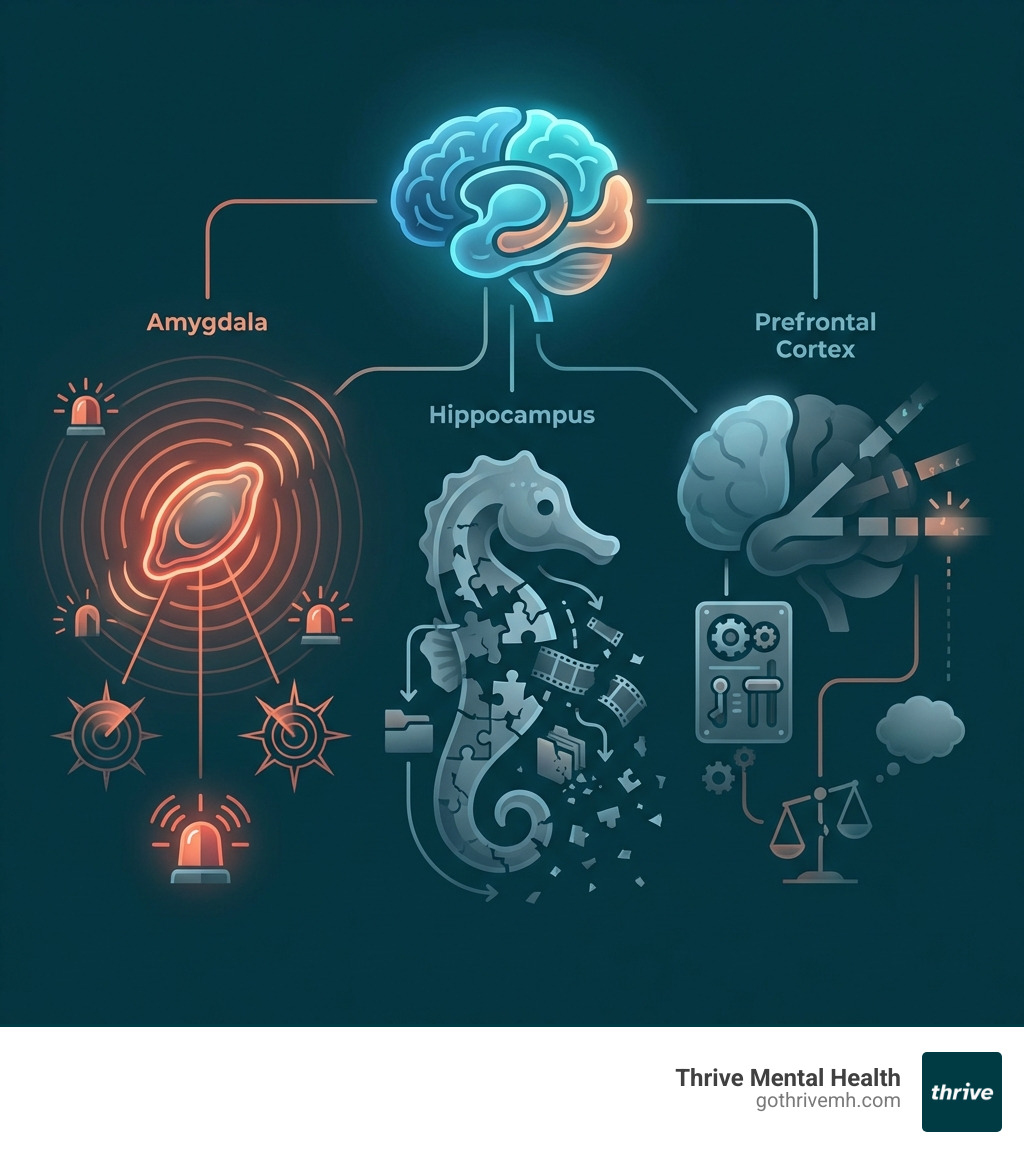
Simple how does trauma affect the brain glossary:
The Brain on High Alert: How Trauma Rewires Your Survival System
When we experience trauma, our brains undergo profound changes, shifting into a perpetual state of alert, often referred to as “survival mode.” This isn’t a conscious choice; it’s a hardwired response designed to protect us from danger. However, in the aftermath of trauma, this protective mechanism can become overactive, causing distress long after the threat has passed. This is a crucial aspect of how trauma affects the brain.
Our research indicates that trauma mainly impacts three critical parts of your brain: the amygdala, the hippocampus, and the prefrontal cortex. These regions, which normally work together to process information and manage our responses, become dysregulated. When you’re reminded of a traumatic experience, your amygdala goes into overdrive, reacting as if the trauma is happening all over again. Simultaneously, your prefrontal cortex, responsible for executive functions like emotional regulation and impulse control, becomes suppressed. This leaves you trapped in a purely reactive state, struggling to control your fear. Scientific research on trauma’s brain effects highlights these lasting changes.
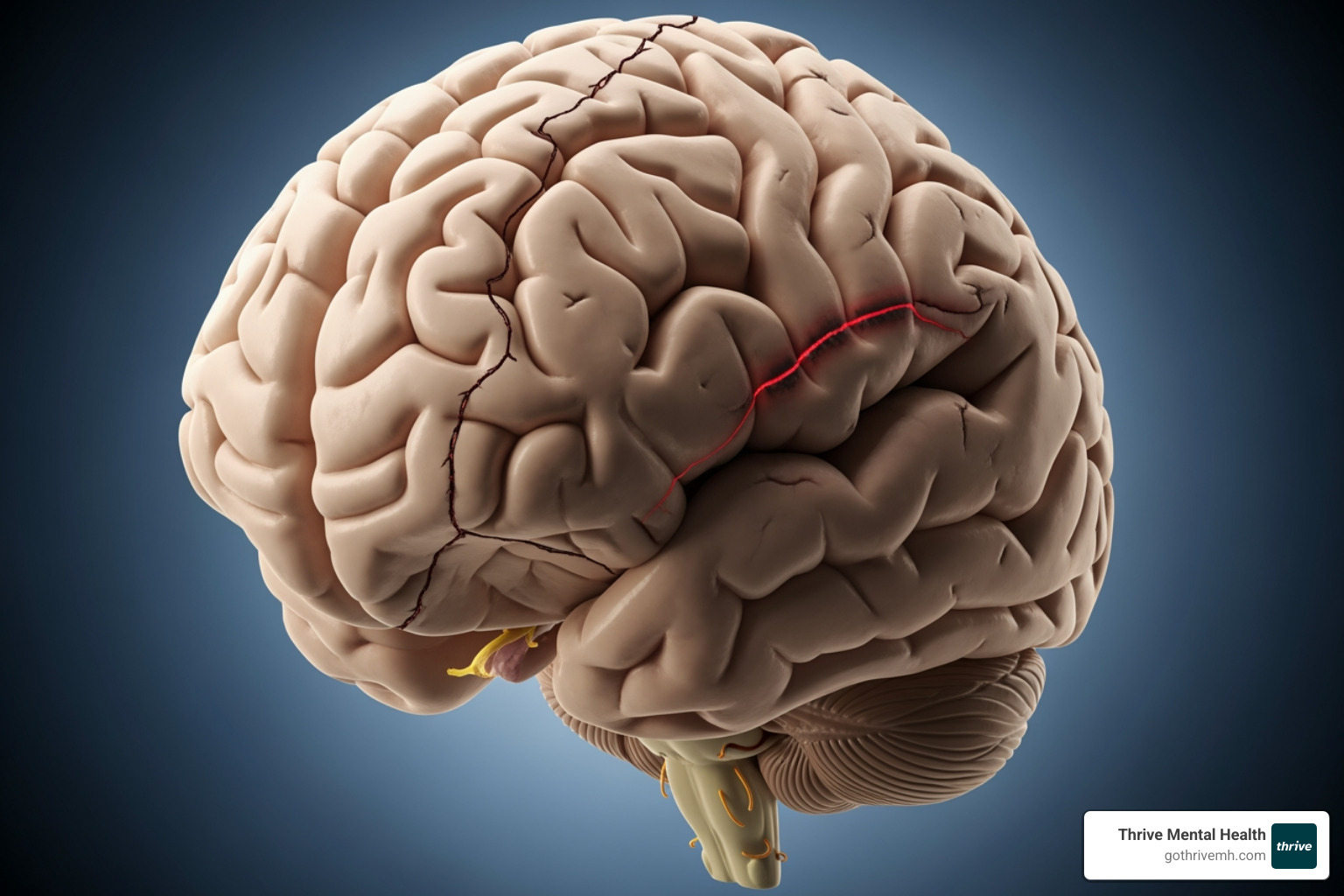
The Amygdala’s False Alarm: Why You Feel Danger Everywhere
Imagine a smoke detector that constantly blares, even when there’s no fire. That’s what happens to the amygdala after trauma. This almond-shaped region, part of your brain’s limbic system, is your primary threat detector. Its job is to rapidly assess incoming information for danger and initiate a survival response.
However, after trauma, the amygdala can become hyperactive, leading to hypervigilance. Even in safe environments, it perceives threats where none exist, making you feel constantly on edge, jumpy, or as if your body is braced for something bad to happen. Small, innocuous stimuli—a sudden noise, a particular smell, a specific facial expression—can trigger an overwhelming emotional reaction, sending you into a full-blown fight, flight, or freeze response. This persistent state of fear is a hallmark of trauma-related disorders like Post-Traumatic Stress Disorder (PTSD), which affects about 8% of Americans at some time in their lives.
The Prefrontal Cortex Goes Offline: Losing Your “Brakes”
While the amygdala is screaming “danger!”, your prefrontal cortex (PFC), located at the front of your brain, is supposed to step in and say, “Hold on, is this really a threat?” The PFC is our brain’s rational control center, responsible for clear thinking, reasoning, impulse control, and regulating emotions. It acts as the “brakes” on our emotional responses.
But when trauma strikes, this vital connection between the PFC and the amygdala weakens. Your prefrontal cortex becomes suppressed, less capable of dampening the amygdala’s alarm signals. This disruption means you’re less able to control your fear, make sound decisions, or regulate your emotional impulses. You might find yourself reacting to minor frustrations, struggling to focus, or feeling overwhelmed by tasks that used to be simple. This impaired function of the prefrontal cortex contributes to the difficulty in returning to a baseline state of calm.
How does trauma affect the brain’s memory and context center?
The hippocampus, another crucial limbic system structure, plays a vital role in memory formation, organization, and distinguishing between past and present experiences. It helps us place memories in their proper context—understanding when and where an event happened.
Trauma disrupts the hippocampus’s ability to perform these functions effectively. Instead of storing traumatic events as coherent narratives, the memories often become fragmented, like scattered puzzle pieces. This can lead to:
- Fragmented memories: Difficulty recalling the full sequence of events or specific details of the trauma.
- Intrusive memories: Vivid, unwanted flashbacks or nightmares that feel as real as the original event, often triggered by sensory cues.
- Memory gaps: Missing periods of time or details surrounding the traumatic experience.
- Difficulty distinguishing past from present: The brain struggles to differentiate between a past threat and current safety, leading to chronic anxiety and re-experiencing symptoms.
Research has shown tangible changes in the hippocampus. For instance, Vietnam veterans with PTSD had an 8% smaller right hippocampal volume, and a separate study revealed a 12% reduction in left hippocampal volume in patients with childhood abuse-related PTSD. Patients with PTSD also show deficits in hippocampal activation during memory tasks, meaning it’s not just the size, but also the function that’s impaired. This profound impact on memory is a core component of how trauma affects the brain.
A Body in Distress: The Physical Toll of Unresolved Trauma
The impact of trauma isn’t confined to our minds; it deeply affects our bodies. Our brains and bodies are intricately connected, and the chronic stress of trauma manifests physically, leading to a host of symptoms that can be confusing and debilitating. This is a critical part of understanding how trauma affects the brain and the entire physiological system.
The autonomic nervous system (ANS) is the conductor of our body’s involuntary functions, including heart rate, breathing, and digestion. It has two main branches: the sympathetic nervous system (our “gas pedal” for fight-or-flight) and the parasympathetic nervous system (our “brakes” for rest-and-digest). In the face of trauma, the sympathetic nervous system kicks into high gear, flooding our bodies with stress hormones like cortisol and norepinephrine. While this is essential for immediate survival, chronic activation due to trauma can lead to lasting dysregulation.

Stuck in “On”: When Your Nervous System Can’t Return to Baseline
One of the most profound effects of trauma is the ANS’s struggle to return to a baseline, calm state. We become “stuck in on,” constantly prepared for danger. This persistent activation can lead to a range of physical symptoms:
- Chronic tension and pain: Muscles remain tensed, leading to headaches, jaw pain, backaches, and generalized muscle stiffness.
- Fatigue: Despite being in a constant state of alert, the body eventually becomes exhausted, leading to overwhelming fatigue even after adequate rest.
- Digestive issues: The gut-brain axis is highly sensitive to stress, resulting in irritable bowel syndrome (IBS), indigestion, nausea, and other gastrointestinal problems.
- Sleep disturbances: Difficulty falling or staying asleep, nightmares, and restless sleep are common as the body remains hyperalert.
- Increased heart rate and blood pressure: The cardiovascular system is under constant strain, increasing the risk of heart-related issues.
This chronic stress is associated with increased cortisol and norepinephrine responses to subsequent stressors, meaning even minor challenges can trigger an exaggerated physical reaction.
The Long-Term Health Consequences of Complex Trauma
When the body remains in a heightened state of alert for prolonged periods, especially due to complex trauma from repeated or ongoing traumatic experiences, it takes a significant toll on physical health. Chronic stress can impair the normal development and functioning of the immune and stress response systems.
This dysregulation contributes to a higher risk of developing chronic conditions, including:
- Inflammation: Persistent stress can lead to chronic inflammation throughout the body, a known contributor to many diseases.
- Autoimmune conditions: The immune system, constantly on alert, may begin to attack healthy tissues.
- Cardiovascular problems: Sustained high blood pressure and heart rate increase the risk of heart disease and stroke.
- Metabolic disorders: Changes in stress hormones can affect metabolism, increasing the risk of conditions like Type 2 diabetes.
Studies like the Adverse Childhood Experiences (ACE) Study have highlighted the profound link between childhood trauma and long-term health outcomes, including increased rates of heart disease, cancer, and other chronic physical conditions in adulthood. The economic burden of child abuse and neglect is staggering, estimated at billions annually in direct and indirect costs, underscoring the widespread impact of unresolved trauma.
The Developing Brain Under Fire: The Unique Impact of Childhood Trauma
Childhood is a critical period for brain development, where experiences profoundly shape our neural architecture. When trauma occurs during these formative years, it can have particularly devastating and lasting effects, impacting everything from how we form relationships to how we regulate our emotions. This highlights a crucial aspect of how trauma affects the brain, especially in its most vulnerable stages.
Children who experience abuse or neglect often adapt by developing coping mechanisms to survive unsafe environments. These adaptations, while necessary for survival, can become maladaptive in adulthood. For example, a child might become overly sensitive to others’ moods to predict behavior, or learn to suppress their own emotions to avoid negative reactions. This can lead to significant challenges with attachment, relationships, and emotional regulation later in life, as they learn they cannot rely on others or perceive the world as an inherently dangerous place.
How does trauma affect the brain’s development in children?
The developing brain is highly plastic, meaning it’s constantly forming and refining connections. Early Adverse Childhood Experiences (ACEs) can disrupt this delicate process, leading to enduring negative effects on brain development. This includes:
- Impaired self-concept: Children may internalize blame, leading to feelings of worthlessness, shame, and guilt. They may view themselves as powerless or “damaged,” which diminishes their sense of competency and ability to envision a positive future.
- Behavioral issues: Trauma can lead to difficulties with self-regulation and impulse control. Children may exhibit behaviors that seem unpredictable, oppositional, or even aggressive. They might also engage in increased risk-taking, including self-harm or unsafe sexual practices, as a way to cope or feel something.
- Learning difficulties: The brain’s resources become focused on survival, making it challenging to concentrate, acquire new skills, or engage in clear thinking and reasoning. This can manifest as problems with sustaining attention, curiosity, and abstract reasoning, often leading to academic struggles.
- Emotional regulation challenges: Traumatized children often struggle to identify, express, and manage their emotions. This can result in unpredictable or explosive emotional responses, difficulties calming down, or emotional numbing, where they “tune out” overwhelming feelings.
Dissociation: The Brain’s Emergency Escape Hatch
One of the most powerful and often misunderstood coping mechanisms in response to overwhelming trauma, especially in childhood, is dissociation. Dissociation is when the mind detaches from reality or from the body, creating a mental separation from unbearable experiences.
For a child experiencing severe or prolonged trauma, dissociation serves as an emergency escape hatch. It allows them to mentally “check out” when physical escape is impossible, protecting them from the full impact of the horror. However, this defense mechanism can become a habitual response, leading to:
- Feeling detached: A sense of being outside of one’s body or observing oneself from a distance.
- Numbness: Emotional or physical numbness, where feelings and sensations are dulled or absent.
- Memory loss for traumatic events: Gaps in memory, or difficulty recalling personal history related to the trauma.
- Altered states of reality: Feeling “spacey,” detached, or out of touch with the present moment.
While dissociation protects in the short term, it can interfere with daily functioning, learning, and the ability to form healthy relationships. Understanding this complex response is vital for effective trauma recovery.
You Can Heal: Rewiring Your Brain for Post-Traumatic Growth
The information about how trauma affects the brain can feel heavy, but there’s a powerful message of hope: your brain is not permanently broken. It possesses an incredible capacity for change and healing, a phenomenon known as neuroplasticity. This means that with the right interventions and support, we can actually rewire our brains, forming new, healthier neural pathways.
How Neuroplasticity Makes Recovery Possible
Neuroplasticity is the brain’s ability to reorganize itself by forming new neural connections throughout life. It allows the brain to adapt, learn from new experiences, and even recover from injury. This is why healing from trauma is not just possible, but a natural capacity of our brains.
Through neuroplasticity, we can:
- Form new connections: We can strengthen neural pathways associated with safety, calm, and healthy emotional regulation.
- Rewire neural pathways: We can weaken the overactive threat responses in the amygdala and rebuild the capacity of the prefrontal cortex to regulate emotions.
- Promote neurogenesis: The brain can generate new neurons, particularly in the hippocampus, which can help restore memory function and emotional balance.
This adaptability offers a pathway for healing and rewiring the brain after trauma. More info about Neuroplasticity is readily available, showcasing the scientific basis for this hopeful perspective.
5 Proven Treatments That Rewire the Brain After Trauma [2026 Guide]
At Thrive Mental Health, we believe in evidence-based trauma treatment that harnesses the brain’s natural ability to heal. Effective therapeutic approaches aim to reinforce the prefrontal cortex, strengthen the hippocampus, and subdue the hyperactive amygdala, helping you move from a reactive survival state to a more regulated and peaceful existence.
Here are some of the most effective treatments:
- Eye Movement Desensitization and Reprocessing (EMDR): This therapy helps individuals process traumatic memories by guiding eye movements (or other bilateral stimulation). EMDR has been shown to reduce the emotional charge of traumatic memories and promote adaptive processing.
- Cognitive Processing Therapy (CPT): CPT helps you identify and challenge unhelpful thoughts and beliefs that developed as a result of trauma, leading to a more balanced and realistic understanding of the event.
- Somatic Experiencing (SE): This body-oriented therapy focuses on releasing trauma-related stress and tension stored in the body, helping the nervous system return to a regulated state.
- Dialectical Behavior Therapy (DBT): Often used for complex trauma, DBT teaches skills in mindfulness, emotional regulation, distress tolerance, and interpersonal effectiveness.
- Medication (e.g., SSRIs): Selective Serotonin Reuptake Inhibitors (SSRIs) are often prescribed for trauma-related disorders like PTSD. Research suggests that SSRIs can influence neurogenesis (the growth of new brain cells) in the hippocampus, potentially contributing to improved memory and mood regulation. Treatments like paroxetine have shown to significantly reduce PTSD symptoms and even increase hippocampal volume.
We offer comprehensive virtual IOP and PHP programs throughout Florida, designed to provide the intensive support needed for significant healing. Our programs combine clinical expertise with flexible scheduling, making evidence-based trauma treatment accessible to adults and young professionals across the state who need more than once-a-week therapy.
Frequently Asked Questions about Trauma and the Brain
Can the brain fully heal from trauma?
Yes, through neuroplasticity, the brain can form new neural pathways and reduce the impact of trauma. While memories of the event may remain, their emotional charge and control over your daily life can be significantly diminished with effective treatment. The goal is not to erase the past, but to integrate it in a way that allows you to live fully in the present.
How long does it take to rewire the brain after trauma?
There is no set timeline for healing from trauma, as it depends on the individual, the nature of the trauma, and the consistency and type of treatment received. Consistent engagement with evidence-based therapies can lead to noticeable changes in weeks to months, but recovery is a deeply personal and ongoing journey. Progress is often gradual, and patience with yourself is key.
What is the first step to healing a traumatized brain?
The absolute first step is creating a sense of safety, both in your environment and within yourself. This often involves finding a safe living situation and connecting with a trusted mental health professional. From there, you can begin to understand your unique trauma responses and learn practical skills to regulate your nervous system and manage triggers. For immediate support, you are not alone.
Ready for Real Support? Your Path to Healing Starts Here.
Understanding how does trauma affect the brain is the first step toward reclaiming your life. At Thrive Mental Health, we provide compassionate, effective care designed to help you steer these complex neurological impacts. Our virtual and in-person Intensive Outpatient (IOP) and Partial Hospitalization (PHP) programs are built on clinical expertise, flexible scheduling, and measurable results. We serve adults and young professionals across Florida (including Tampa Bay, St. Petersburg, Miami, Orlando, Boca Raton, West Palm Beach, Jacksonville, Fort Lauderdale, Naples, and Sarasota).
We work with major insurance providers like Cigna, Optum, and Florida Blue to make quality care accessible.
Ready for support? Thrive offers virtual and hybrid IOP/PHP programs with evening options. Verify your insurance in 2 minutes (no obligation) → Start benefits check or call 561-203-6085. If you’re in crisis, call/text 988.