
Uncover Your Inner World: Art Therapy for Self-Awareness

Why Art Therapy for Self-Awareness Works When Words Don’t
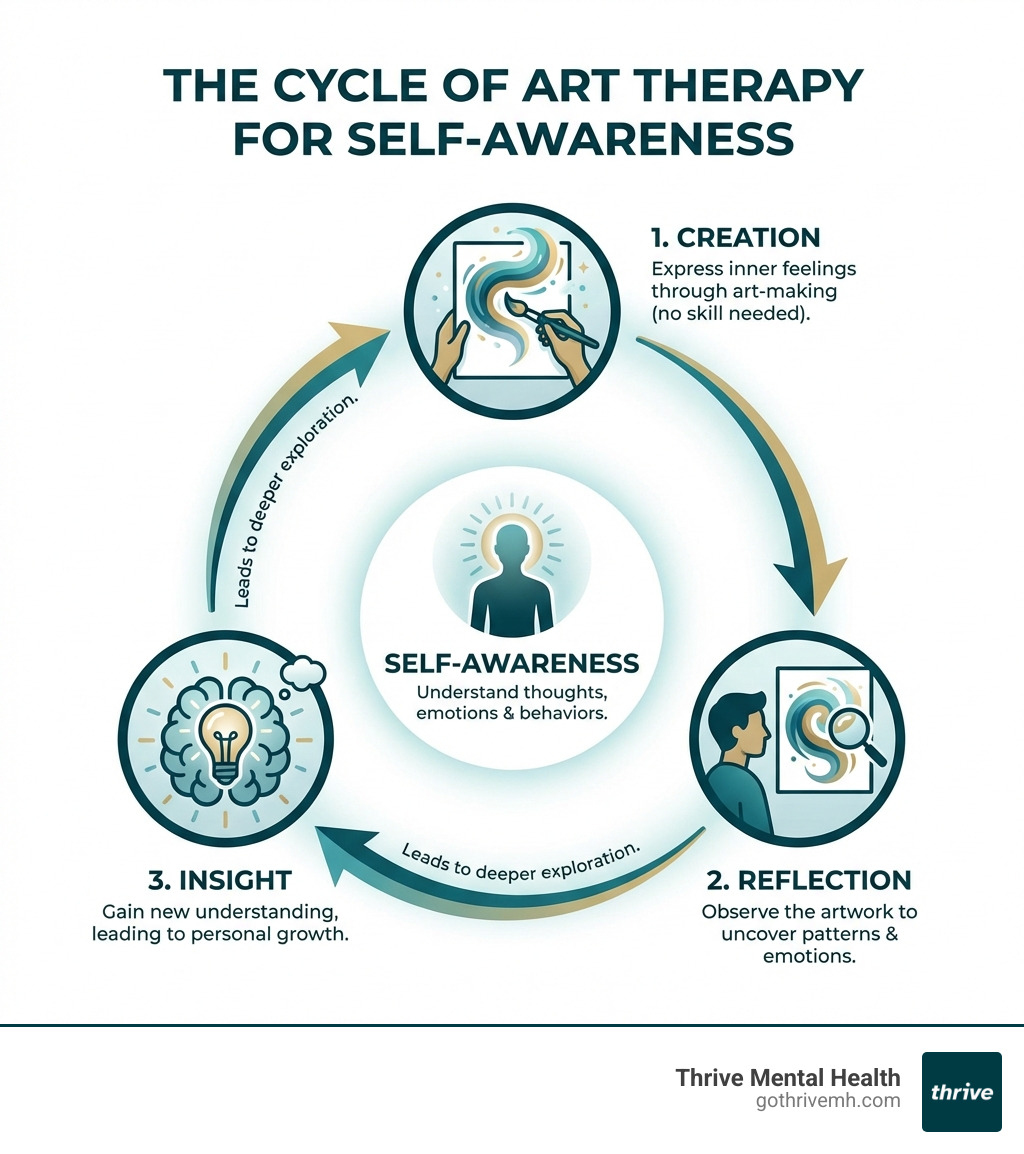
Art therapy for self awareness is a powerful mental health approach that uses creative expression to help you understand your thoughts, emotions, and behaviors. Instead of relying solely on verbal communication, you use painting, drawing, sculpting, or other art forms to explore your inner world—often uncovering feelings and insights that words can’t capture.
Quick Answer: What Is Art Therapy for Self-Awareness?
- What it is: A therapeutic process that combines art-making with psychological guidance to increase self-understanding
- How it works: You create art while a trained therapist helps you reflect on what emerges, revealing patterns, emotions, and beliefs
- Who it’s for: Anyone seeking deeper self-knowledge—no artistic skill required
- Key benefits: Reduces anxiety and depression, builds emotional resilience, improves self-esteem, and develops healthy coping mechanisms
- Where to start: Through structured programs like our IOP/PHP programs in Florida, individual therapy sessions, or guided self-practice
If you’ve ever felt stuck in traditional talk therapy, or if you struggle to put complex feelings into words, art therapy offers a different path. The creative process bypasses your inner critic and accesses parts of your mind that might stay hidden in conversation. You don’t need to be “good at art”—the goal isn’t a beautiful product, but rather the insights you gain through making it.
Research backs this up. Studies show that just 45 minutes of daily art-making can reduce cortisol (your stress hormone), while even viewing art boosts serotonin and increases blood flow to the brain. Creative arts therapies have been proven to increase well-being, self-awareness, and reduce loneliness—particularly for people dealing with anxiety, depression, trauma, or burnout.
I’m Nate Raine, CEO of Thrive Mental Health, and I’ve spent over a decade integrating evidence-based innovations like art therapy for self awareness into accessible mental health care that delivers measurable outcomes. At Thrive, we combine expressive therapies with clinical excellence to help driven professionals and young adults across Florida achieve breakthrough results.
Art Therapy vs. Art Class: Why It’s Not About Being ‘Good at Art’
Many people hesitate to try art therapy because they believe they lack artistic talent. Let’s be clear: art therapy is fundamentally different from an art class. An art class focuses on technique, skill acquisition, and producing an aesthetically pleasing outcome. You’re often graded, critiqued, and expected to master certain methods.
In contrast, art therapy for self awareness prioritizes the process over the product. The goal isn’t to create a masterpiece, but to use art as a tool for self-expression and emotional insight. There’s no judgment, no critique of your “artistic ability,” and certainly no grades. The canvas, clay, or collage becomes a safe space for you to explore your inner world freely. As one expert notes, you don’t need to be a professional artist to reap the benefits, and the activities often require little technique or deep knowledge of a medium. The true value lies in the personal meaning you derive from the creative journey.
The core difference also lies in the presence and role of a trained therapist. While an art teacher focuses on instructing artistic skills, an art therapist is a master-level clinician. They are specifically trained to interpret your creative output, guide your reflection, and help you connect your artistic expressions to your feelings and experiences. According to the American Art Therapy Association, art therapy is a niche within mental healthcare, and only individuals with the required training, certification, and/or state licensure are qualified to practice it. This ensures emotional safety and therapeutic goals are always at the forefront.
Here’s a quick comparison:
| Feature | Art Therapy | Art Class |
|---|---|---|
| Primary Goal | Emotional insight, self-awareness, healing | Technique, skill acquisition, aesthetic outcome |
| Guidance | Guided by a trained, licensed art therapist | Instructed by an art teacher |
| Environment | Safe, non-judgmental, confidential | Focus on evaluation, potential critique |
| Skill Required | None; process over product | Focus on developing artistic skill |
| Outcome | Personal growth, emotional processing | Finished artwork, technical mastery |
The Science of Self-Finding: How Art Rewires Your Brain for Awareness
The connection between art and our brains is not just anecdotal; it’s deeply rooted in neuroscience. Engaging in creative activities, or even just observing art, has measurable effects on our brain chemistry and structure. We are designed to seek novelty and make meaning, and art provides a powerful pathway for this.
For instance, studies have shown that individuals who dedicate at least 45 minutes daily to creating art are more likely to experience reduced cortisol levels—cortisol being the primary stress hormone. This means art can directly combat the physiological effects of stress. Furthermore, simply observing art can boost serotonin, a neurotransmitter associated with feelings of well-being, and increase blood flow to various parts of the brain. This natural connection between art and the brain underscores the profound benefits of art therapy.
A key player in this process is the Default Mode Network (DMN), a network of brain regions that becomes active when we’re not focused on the outside world, such as during daydreaming, introspection, or self-referential thought. When we engage in art-making, especially in a therapeutic context, we activate this network. This allows for deeper self-reflection and the integration of our experiences, contributing to what neuroscientists call “embodied cognition“—the idea that our thoughts and emotions are deeply intertwined with our physical sensations and actions. The self is constantly seeking evidence for its own existence through its activities, and art provides a rich source of this “self-evidencing” process.
Creative Arts Therapies (CATs) are proven to improve well-being, self-awareness, and reduce feelings of loneliness. This happens because art taps into our multisensory systems, helping us connect our internal (interoceptive) and external (exteroceptive) sensory information. This integration is crucial for building a coherent sense of self.
How the creative process facilitates art therapy for self awareness
The very act of creating is a dialogue with yourself. It’s a way to make the unconscious conscious. When we engage in art, we’re not just moving our hands; we’re engaging in symbolic communication. This allows us to externalize emotions and experiences that might be too complex or painful to articulate verbally.
Imagine drawing a tangled mess of lines to represent confusion, or sculpting a heavy, dense form to express grief. These creations become metaphors for our inner states. By giving form to these feelings, we create a distance that allows for reflection. We can look at our art and say, “This is how I feel,” without judgment. This process fosters a sense of agency, as we actively shape and re-narrate our personal stories, even when they feel overwhelming. It’s about problem-solving through metaphor, finding new perspectives on old challenges.
Understanding and processing emotions through art
One of the most powerful aspects of art therapy for self awareness is its ability to help us understand and process our emotions. Many of us carry suppressed emotions, feelings we haven’t fully acknowledged or allowed ourselves to experience. Art provides a safe outlet for these feelings to emerge.
By giving form to feelings—whether through color, shape, texture, or movement—we can identify these hidden emotions. We might notice patterns in our artwork that correspond to recurring emotional states, allowing us to track emotional shifts over time. This visual language can be particularly helpful for those who struggle to find words for their feelings. The act of creating can be cathartic, providing a release for pent-up emotions, and ultimately building emotional resilience. As we learn to express and understand our emotional landscape through art, we develop a richer emotional vocabulary and a stronger capacity to steer life’s challenges.
5 Art Therapy Exercises to Uncover Your True Self [Try These Today]
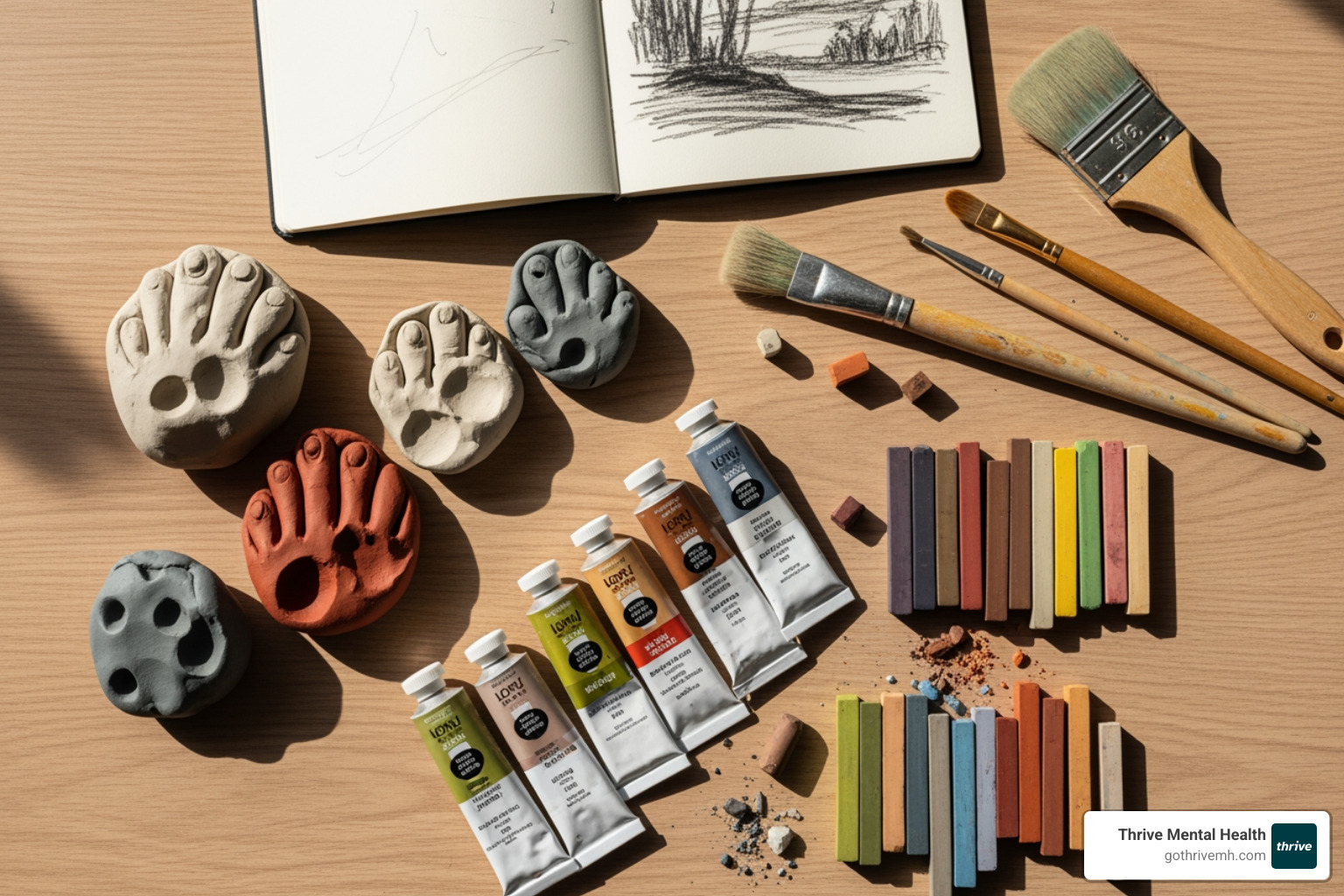
Ready to dip your toes into the transformative power of art therapy for self awareness? These exercises are designed to be accessible, requiring minimal artistic skill and simple materials. The goal is not perfection, but exploration and finding.
1. Mandala Drawing: Charting Your Inner Universe
Mandalas are circular designs that have been used for centuries across cultures as tools for meditation and healing. The symmetry and wholeness of a mandala can be incredibly grounding. By focusing on a central point and expanding outwards, you symbolically represent your inner self and your connection to the world.
- How to do it: Draw a large circle on a piece of paper. Using colors, shapes, and patterns, fill the circle from the center outwards. Allow your intuition to guide you. There are no rules.
- Why it works for self-awareness: The repetitive nature is meditative, helping to calm the mind. The act of containing your feelings within the circle can be comforting, especially when you feel overwhelmed. Studies show that mandala drawing can reduce negative emotions in its creators. It helps you find your own center and explore your inner universe.
2. Clay Sculpting: Giving Shape to Your Feelings
Working with clay offers a tactile and grounding experience that can be incredibly therapeutic. The resistance and malleability of clay allow for a powerful physical expression of emotions.
- How to do it: Take a piece of clay and, without any preconceived ideas, begin to mold and shape it. You might express a feeling like anger by squeezing and pounding, or joy by creating something flowing and expansive. You can also sculpt something that represents yourself, your challenges, or your aspirations.
- Why it works for self-awareness: Clay sculpting can be a powerful metaphor for personal growth and development. It allows you to externalize emotions, giving them a tangible form that you can observe and interact with. This can lead to a sense of control and creation, helping you understand and process complex feelings.
3. Mask Making: Exploring Your Inner and Outer Selves
Mask making is a profound activity for exploring identity, particularly the difference between your public self (how you present to the world) and your private self (how you truly feel).
- How to do it: Obtain a plain mask (you can buy a simple craft mask or make one from paper mache or cardstock). On the outside of the mask, depict how you think others see you or how you wish to be seen. On the inside, illustrate how you truly feel or see yourself.
- Why it works for self-awareness: This exercise provides a safe space to explore different aspects of your personality and identity. The anonymity of the mask can offer freedom of expression, allowing you to reveal truths about yourself that might be difficult to share verbally. It helps integrate different parts of your personality and understand the roles you play. This is a common tactic in therapy.
4. Visual Journaling: A Dialogue with Yourself
A visual journal is a personal space where you combine images and words to explore your emotions, thoughts, and experiences. It’s a forgiving way to make art because everything you create is safely contained within your own personal book.
- How to do it: Dedicate a notebook or sketchbook to be your visual journal. Use drawings, paintings, collages, or even simple doodles on one page, and then write about your thoughts, feelings, or experiences alongside your artwork on the facing page, or directly on the art itself.
- Why it works for self-awareness: This activity creates a direct dialogue between your conscious thoughts and your subconscious expressions. By tracking patterns over time, you can gain deep insights into your emotional landscape and personal growth. It’s a private space for honest reflection, allowing you to process daily events and internal states without pressure for perfection. For more guidance, you can explore how to start an art journal.
5. Mindful Doodling: Drawing Without a Destination
Mindful doodling is a simple, accessible practice that can be done anywhere, anytime. It’s about connecting with physical sensations and releasing the need for control or a specific outcome.
- How to do it: Grab a pen and paper. You can even try this with your eyes closed. Start making simple lines, shapes, or patterns. Don’t try to create anything specific; just let your hand move freely. Focus on the sensation of the pen on the paper, your breathing, and any thoughts or feelings that arise.
- Why it works for self-awareness: This practice helps reduce anxiety by engaging your senses and focusing your attention. It encourages you to release judgment and accept spontaneity, fostering a deeper connection to your intuitive self. It’s a powerful tool for finding calm and present moment awareness, proving that even the simplest marks can hold profound meaning.
The Real-World Benefits of Art Therapy for Self-Awareness
The journey of art therapy for self awareness extends far beyond the canvas or clay. The insights gained and skills developed translate into tangible, real-world benefits that improve overall mental health and well-being.

At its core, art therapy promotes self-awareness and insight, emotional expression, regulation, and growth, self-esteem, and healthy coping mechanisms. It’s a powerful supplement to traditional mental health care, boosting cognitive function, emotional resilience, and self-confidence. We’ve seen it help individuals develop healthier coping mechanisms, empowering them to steer life’s challenges with greater strength.
How art therapy for self awareness helps with anxiety and depression
For individuals struggling with anxiety and depression, the non-verbal nature of art therapy can be revolutionary. When words fail or feel insufficient, art provides an alternative language.
- Externalizing anxious thoughts: Art allows you to take abstract fears and worries and give them a concrete form. By drawing or painting your anxiety, you can externalize it, creating a distance that makes it feel less overwhelming and more manageable.
- Creating symbols of hope: Through art, you can create symbols of hope, resilience, and strength. This positive imagery can act as a powerful counterpoint to depressive thoughts, fostering a sense of optimism and future orientation.
- Processing grief and loss: Art provides a safe container for processing complex emotions like grief and loss, which are often difficult to articulate. It allows for symbolic expression of pain, remembrance, and ultimately, healing.
- Fostering a sense of accomplishment: Completing an artwork, regardless of its artistic merit, provides a sense of accomplishment. This can be particularly beneficial for individuals with depression who often struggle with feelings of worthlessness or lack of motivation.
- Building new neural pathways: Engaging in creative activities stimulates various brain regions, potentially building new neural pathways. This neuroplasticity can contribute to improved mood regulation and cognitive flexibility, directly combating symptoms of anxiety and depression. A study noted art therapy shows promising results in reducing symptoms of anxiety and depression.
The therapist’s role in your self-awareness journey
While self-guided art activities can be beneficial, the true depth of art therapy for self awareness often comes from working with a qualified art therapist. Their role is crucial in creating a safe and supportive environment, helping you steer your inner world, and translate your artistic expressions into meaningful insights.
A therapist acts as a guide, providing gentle prompts or “directives” to help you get started if you feel stuck. They witness your creative process without judgment, offering a compassionate presence as you explore potentially vulnerable emotions. Their expertise lies in guiding reflection with open-ended questions, helping you connect the dots between your art, your feelings, and your life experiences.
This structured support is central to comprehensive mental health programs like our Intensive Outpatient (IOP) and Partial Hospitalization (PHP) programs in Florida. At Thrive Mental Health, art therapy is integrated into a holistic treatment plan, ensuring that your journey of self-awareness is supported by a team of experts dedicated to your healing and growth.
Frequently Asked Questions about Art Therapy
We often hear common questions about art therapy. Here are some of the most frequent ones, answered simply and directly:
Do I need to be an artist to benefit from art therapy?
Absolutely not! We can’t stress this enough. Art therapy for self awareness is about the creative process and the insights you gain, not about producing a gallery-worthy piece. Your therapist is trained to help you use any mark-making, drawing, or sculpting as a tool for self-findy and understanding. The goal is self-expression and insight, not creating a masterpiece.
What if I don’t know what to create?
That’s a completely normal feeling, especially when you’re first starting. An art therapist is skilled at providing gentle prompts or “directives” to get you started. Sometimes, the feeling of being “stuck” or facing a blank page is the most important thing to explore in the session. It can reveal underlying anxieties or resistance that are valuable to your self-awareness journey.
Can art therapy be done virtually?
Yes, virtual art therapy is highly effective and has become a vital part of modern mental healthcare. Clients use their own simple materials at home, while the therapist guides them through the creative process and reflection via secure video conferencing. This accessibility means you can engage in meaningful therapeutic work from the comfort and privacy of your own space. This is a core component of our virtual IOP programs at Thrive Mental Health, making evidence-based treatment accessible to residents throughout Florida.
How much does art therapy cost and is it covered by insurance?
The cost of art therapy can vary. Often, it’s integrated into comprehensive mental health treatment plans like our IOP and PHP programs at Thrive Mental Health. In Florida, many insurance plans, including major providers like Cigna, Optum, and Florida Blue, may cover these programs. To understand your specific coverage, we encourage you to verify your insurance benefits. It’s a quick, no-obligation process that can clarify your financial options.
Who is a good fit for art therapy at Thrive?
Art therapy at Thrive is a great fit for adults and young professionals in Florida dealing with anxiety, depression, work burnout, trauma, or major life transitions. If you need more support than once-a-week therapy but don’t require inpatient care, our virtual and hybrid IOP/PHP programs in Florida can integrate art therapy into a structured plan customized to you.
Your Path to Self-Findy Starts Here
Art therapy for self awareness is a powerful, evidence-based path to understanding your inner world, processing difficult emotions, and building a stronger sense of self. It offers a unique way to bypass words and get to the heart of your experiences, leading to profound personal growth. Whether you try these exercises on your own, explore more resources like our blog on what to expect in an IOP program, or start this journey with a professional, the path of creative self-findy offers transformative healing.
At Thrive Mental Health, we integrate expressive therapies into our IOP and PHP programs in Florida to provide holistic, effective care for adults and young professionals. We are proud to serve communities across Florida, and many of our clients use insurance from Cigna, Optum, Florida Blue, and other major plans to help cover treatment.
Ready for support in Florida? Thrive offers virtual and hybrid IOP/PHP programs with evening options available to residents across the state. Verify your insurance in 2 minutes (no obligation) → Start benefits check or call 561-203-6085. If you’re in crisis, call/text 988.