
Unleash Your Inner Artist: Creative Art Journaling Prompts and Ideas

Your Brain on Art: 50+ Art Therapy Journal Ideas to Beat Anxiety
Art therapy journal ideas combine visual expression with written reflection to create a powerful tool for emotional healing and self-findy. Unlike traditional journaling, which relies solely on words, art therapy journaling engages multiple parts of your brain—activating sensory, symbolic, and narrative pathways that words alone can’t reach.
Quick Start Guide for Art Therapy Journaling:
- Draw your anxiety as a weather pattern, then write what kind of day it represents
- Create a safe space on paper where you feel completely protected
- Use colors to map emotions—paint your current mood without judgment
- Make a gratitude tree with branches representing things you’re thankful for
- Trace your hand and fill it with words about your strengths or dreams
- Draw mandalas to promote calm through repetitive patterns
- Collage your values using magazine cutouts that represent who you are
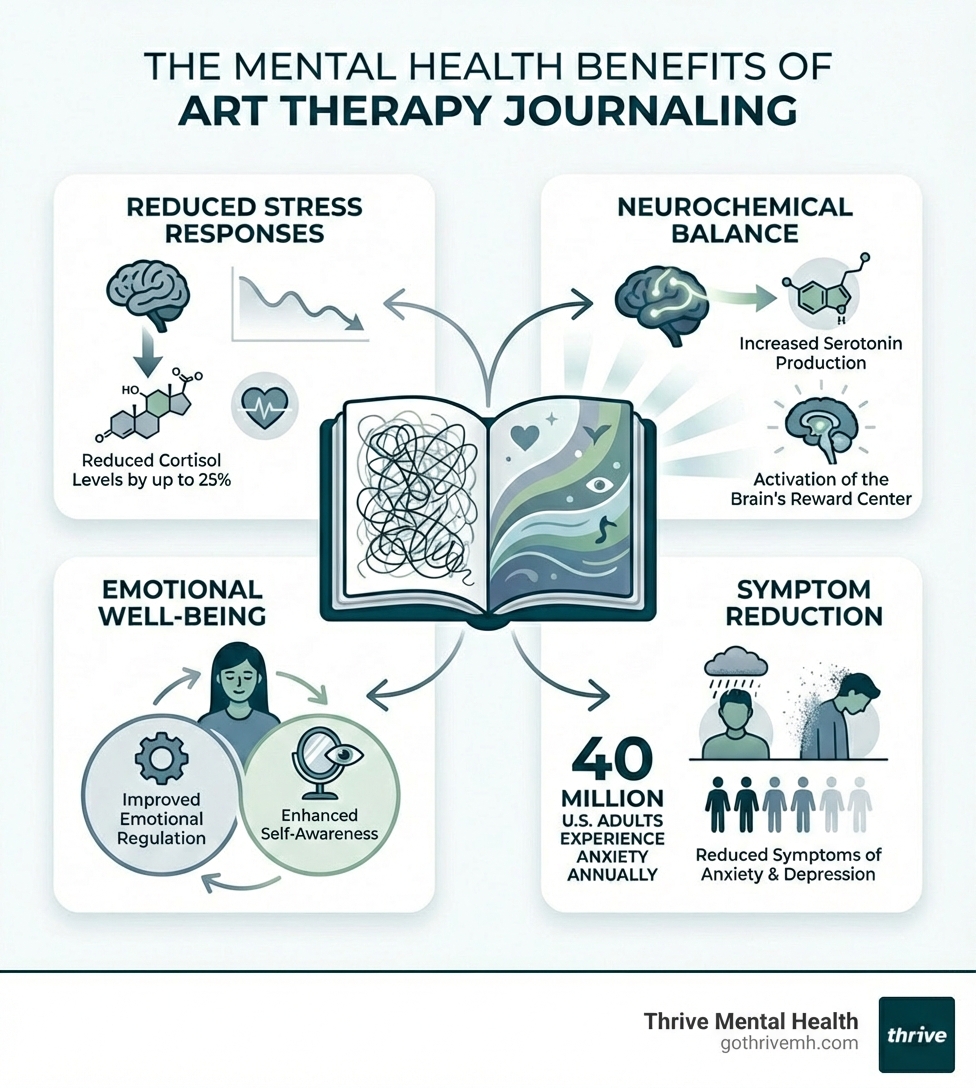
The science backs this up: research shows that creative expression activates your brain’s reward center and reduces cortisol levels—the stress hormone that keeps you anxious. The regular practice of creating via an art journal can reduce your heart rate, increase serotonin flow and immune cells, and decrease stress responses. For the 40 million U.S. adults experiencing anxiety disorders each year, this isn’t just a hobby—it’s a healing tool.
Why art works when words don’t: Sometimes feelings are too big, too messy, or too complex to capture in sentences. Colors, shapes, and images give you a language for the stuff that lives beneath conscious awareness. You don’t need artistic talent—you just need the willingness to let your emotions flow onto paper.
The beauty of art journaling is its flexibility. You can spend 5 minutes scribbling out stress or 30 minutes creating a detailed vision board. You can use expensive watercolors or a ballpoint pen. There’s no right or wrong way—just your way.
As Nate Raine, CEO of Thrive Mental Health, I’ve seen how art therapy journal ideas help clients across Florida process trauma, regulate emotions, and build resilience in our virtual IOP programs. At Thrive, we integrate creative expression into evidence-based treatment because we know that healing happens when clients can express what words can’t capture.
Art therapy journal ideas terms to learn:
- art therapy activities for adolescents
- art therapy activities for grief
- art therapy group activities
Getting Started in 5 Minutes: Your No-Fuss Supply List
Thinking about starting an art journal can feel overwhelming, but it doesn’t have to be. We promise: you don’t need to be an art school graduate or spend a fortune on supplies. Art journaling is one of the most forgiving ways to make art because everything you create is safely contained within your personal book, making it a truly private space for unfiltered expression. The goal is expression, not expensive materials.
What basic supplies are needed to start an art journaling practice? Here’s what you need to begin your journey:
Essential Starter Pack:
- An unlined journal: This is your canvas. A simple sketchbook or a dedicated art journal with thicker pages works best. If you prefer a specific type, an unlined art journal is a great choice.
- Pens and markers: A basic black permanent artist pen and a pencil are perfect for outlines, writing, and doodling. You can also add a gold metallic marker or a white gel pen for highlights and contrast.
- Paint: Acrylics or watercolors are versatile and easy to use. Small sets are inexpensive and last a long time.
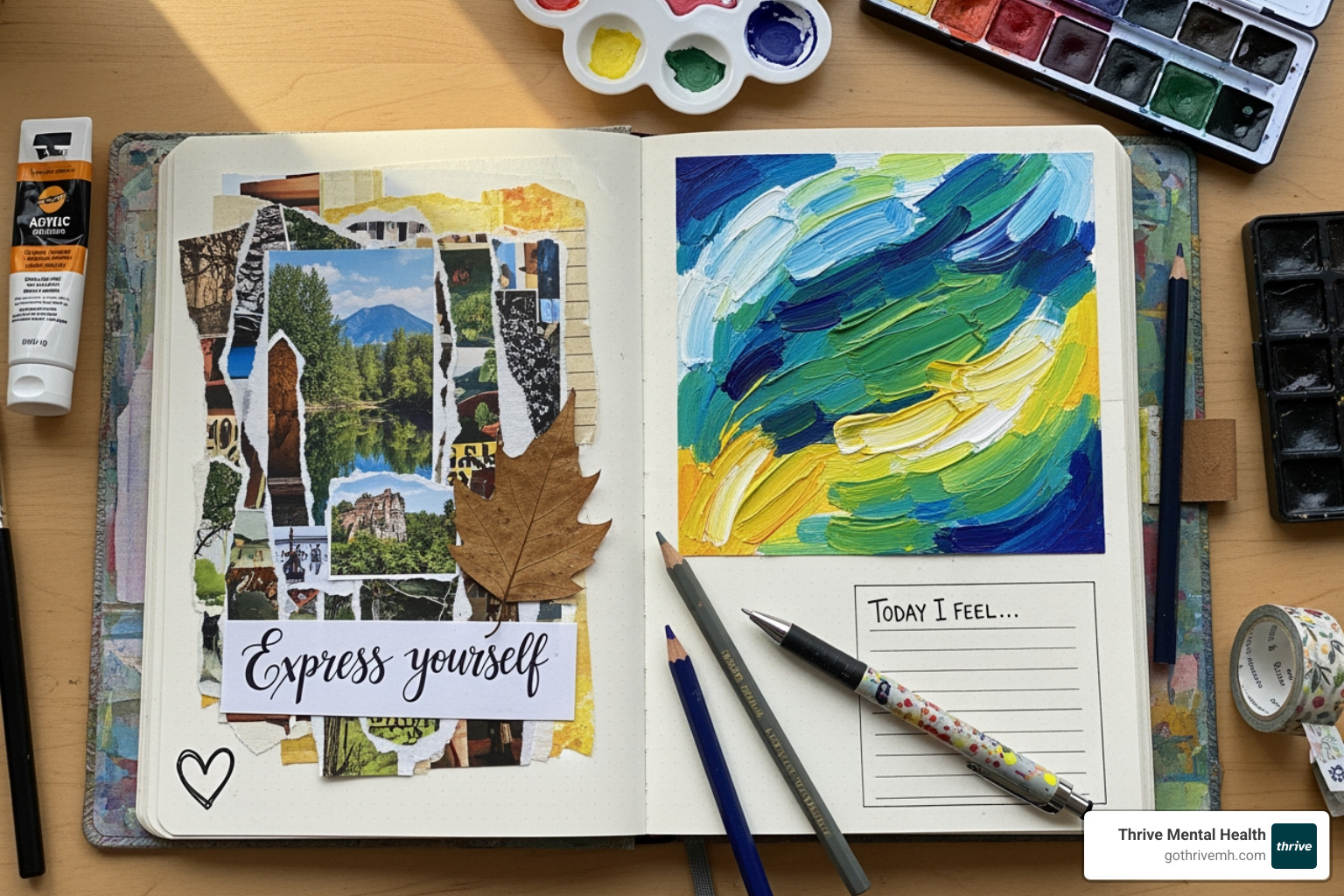
- Collage materials: Old magazines, newspapers, fabric scraps, or even “failed” art pieces from previous projects are excellent for adding texture and imagery.
That’s it! You have everything you need for therapeutic and fun art journaling sessions.
How can art journaling be made both fun and therapeutic?
The key is to set yourself up for success and enjoyment.
- Romanticize your moment: Make your journaling time special. Light a candle, play some calming music, or make a cup of tea. Creating a pleasant atmosphere signals to your brain that this is a safe, enjoyable space.
- No pressure, just create: Approach your journal without judgment. Assume nobody will ever read it—not even you, sometimes. This freedom allows you to write, doodle, and experiment without the burden of perfectionism. As one expert put it, journaling is about “trapping your worries and fears on a page so you can get on with your day.”
- Accept the “messy”: Don’t be afraid to make mistakes. A blank page can be intimidating, so start by making a background with a wash of paint or some scribbles. This immediately breaks the ice and encourages spontaneous creation.
- Collect moments and visuals: Keep an eye out for inspiring images, quotes, or small mementos that resonate with you. These can be incorporated into your journal, making it a rich mix of your experiences and feelings.
The process is what matters most. The act of creating, choosing colors, and seeing your thoughts take visual form is inherently therapeutic.

50+ Art Therapy Journal Ideas to Process Your Feelings [By Category]
Art journaling can be a profound tool for self-findy and emotional processing. This section provides a comprehensive list of prompts designed to address specific emotional needs. These ideas are inspired by proven art therapy techniques and can be adapted for anyone, regardless of artistic skill.
Prompts for Managing Stress and Anxiety
Anxiety affects 40 million adults in the U.S. each year. Art journaling provides a powerful outlet for processing these overwhelming emotions, helping you reduce cortisol levels and find calm.
- Anxiety as Weather Pattern: Draw your anxiety as a type of weather (storm, fog, gentle rain). Write about what kind of day it represents for your feelings.
- My Safe Space: Create a visual representation of a place where you feel completely safe and protected, real or imagined. Include colors, textures, and elements that bring you comfort.
- Grounding Objects: Illustrate three things that make you feel grounded and explain why they bring you stability.
- Coping Skills Rainbow: Draw a rainbow and assign a different coping strategy to each color (e.g., deep breathing, talking to a friend, going for a walk).
- Worry Canvas: Create an image or collage that represents your current worries. Once it’s externalized, decide what you want to do with it—shred it, paint over it, or simply observe it.
- Physical Sensations of Anxiety: Outline your body and color in the areas where you physically feel anxiety. Use lines, shapes, or textures to describe the sensations.
- Triggers Map: Create a visual map of situations, places, or people that tend to heighten your anxiety. Identify any patterns.
- Self-Care Activities: List and illustrate self-care activities that bring you a sense of calm or relaxation.
- Challenging Anxious Thoughts: Divide a page in half. On one side, write an anxious thought. On the other, draw a more balanced perspective or a visual representation of challenging that thought.
- My Support System: Create a visual map or drawing of the people and resources that support you in managing anxiety.
10 Quick Doodle Ideas for Immediate Stress Relief:
- Swirling patterns
- Interlocking shapes
- Abstract lines and curves
- Repetitive dots
- Simple flowers or leaves
- Geometric designs
- Waves or ripples
- Cross-hatching
- Concentric circles
- “Mindless” scribbles that fill the page
For more targeted ways to use art to soothe your mind, explore our Art Therapy Activities for Anxiety.
Prompts for Self-Findy and Personal Growth
Art journaling is a powerful tool for self-findy, helping you access deeper psychological and intuitive understanding. Research shows that expressive writing alone can lead to improved well-being, and combining it with art amplifies these benefits.
- Who Am I? Collage: Collect images, words, and textures from magazines or other sources that represent different aspects of your identity, values, and roles.
- Tree of Strengths: Draw a tree. Its roots represent your core strengths and resilience, while its branches show your dreams and aspirations.
- Road to Wellbeing Map: Create a map of your journey towards authentic well-being. Include roads, roadblocks, scenic routes, and destinations.
- Personal Growth Timeline: Illustrate a timeline of your life, highlighting key moments of growth, challenges overcome, and lessons learned.
- Values Exploration: Choose 3-5 core values and create an image or symbol for each. Write about why these values are important to you.
- Future Self-Portrait: Draw or collage a portrait of yourself one year from now, living with less anxiety and more fulfillment. What does that look like?
- Body Awareness Map: Draw an outline of your body. Color or draw symbols in areas where you hold emotions, tension, or joy.
- Non-Dominant Hand Drawing: Draw a self-portrait or an image representing your current feelings using your non-dominant hand. This can help bypass conscious filters and access deeper insights.
- Dream Journal (Visual): Upon waking, jot down keywords from a dream, then draw the main elements or emotions you remember.
- A Letter to My Pain: Write a letter to a painful memory or emotion, then create an image that expresses how you feel about it. Some say this can even alleviate physical aches. Research shows expressive writing improves well-being and can lead to improved mood and reduced depressive symptoms.
Art therapy journal ideas for mindfulness
Mindfulness is about bringing your full attention to the present moment. Art journaling can be a profound way to practice this, using colors, shapes, and textures to anchor you.
- Drawing Your Breath: Close your eyes and focus on your breath. Then, open your eyes and draw the movement, rhythm, or sensation of your breath using lines, colors, or shapes.
- Mindful Mandalas: Draw a circle on your page. Fill it with repetitive patterns, shapes, and colors, focusing entirely on the process. This can be deeply calming.
- Zentangle Patterns: Create intricate, repetitive patterns (Zentangles) within a shape or across the page. This focused doodling is a form of meditative art. You can replicate Zentangle® designs or make up your own “tangle doodles.
- Drawing Your Five Senses: Divide a page into five sections. In each section, draw or symbolize what you are currently experiencing through one of your five senses (sight, sound, smell, taste, touch).
- Illustrating the Present Moment: Draw exactly what you can see from where you are sitting right now, paying close attention to details, colors, and shadows.
- Blind Contour Drawing: While looking at an object (or your reflection in a mirror), draw its outline without looking at your paper or lifting your pen. This forces you to truly see.
- Nature Walk Collection Art: Go for a walk and collect small natural items (leaves, pebbles, twigs). Bring them back and create a collage or drawing inspired by your findings, reflecting on your connection to nature.
- Sensory Mandala (Eyes Closed): With your eyes closed, move your hand across the paper, making marks based on how your body feels. Open your eyes and see what emerges.
- The 5-Minute Reset: Set a timer for five minutes. Create any spontaneous image—a doodle, pattern, or abstract shape—to externalize a current emotion. This is a quick way to regulate and reset.
- Color Your Sounds: Listen to a piece of music or the sounds around you. Use colors and lines to represent the sounds, their rhythm, and their emotional impact.
Common Mistakes That Kill Creativity (And How to Fix Them)
Starting an art journaling practice is exciting, but it’s easy to fall into common pitfalls that can stifle your creativity and undermine the therapeutic benefits. We want you to succeed, so let’s look at what to avoid and how to overcome these problems.
- The Fear of a Blank Page: Staring at an empty page can be paralyzing.
- Fix: Don’t aim for perfection. Start by simply adding a wash of color, a random scribble, or gluing down a magazine clipping. Just make a mark. This breaks the intimidation barrier.
- Perfectionism and Self-Criticism: Believing your art isn’t “good enough” is a creativity killer.
- Fix: Art journaling is for you. There’s no right or wrong way to express yourself. The process is more important than the product. Let go of the need for aesthetic beauty and focus on honest expression.
- Inconsistency (Not Building a Habit): Starting strong but quickly falling off track.
- Fix: Set aside dedicated time, even just 5-10 minutes each day. Consistency is more important than duration. Find a moment that works best for you—morning or evening—and stick to it. We’ve seen how integrating creative expression into daily routines provides consistent benefits.
- Comparing Your Work to Others: Seeing elaborate journals online and feeling discouraged.
- Fix: Your journey is unique. Your journal is a private space. As one expert suggests, assume nobody will ever read your journal, not even you. This mindset frees you from external validation and allows for authentic self-expression.
- Over-Interpreting Your Art: Trying to find deep symbolic meaning in every mark you make.
- Fix: While art can reveal insights, don’t force interpretations. Instead, reflect on the experience of creating. What emotions came up? What did the colors feel like? Your art therapist can help with deeper interpretation if you seek professional guidance, but for self-journaling, focus on the process.
How to create a consistent and sustainable art journaling habit:
- Start easy: Don’t tackle profound emotional questions on day one. Begin with simple prompts, doodles, or observations from your day. Gradually, you can move towards more introspective topics.
- Integrate it: Find ways to weave journaling into your existing routine. Maybe it’s while your coffee brews, or right before bed.
- Keep supplies accessible: Having your journal and a few basic tools readily available eliminates excuses.
- Celebrate small wins: Acknowledge every time you show up for your journal, no matter how simple the entry. Every mark is progress.
Frequently Asked Questions about Art Therapy Journaling
What’s the difference between art journaling and art therapy?
Art journaling is a self-guided practice of creative expression, often used for personal reflection, stress relief, and self-findy. It’s a fantastic self-care tool. Art therapy, on the other hand, is a clinical mental health profession. A credentialed art therapist guides a client through the creative process to achieve specific therapeutic goals, using psychological theories and clinical interventions. While you can use art therapy activities in your journal, it’s not a substitute for professional therapy with a trained art therapist who can interpret symbolic content within a psychotherapeutic framework.
Do I need to be a good artist to do this?
Absolutely not. The goal is expression, not perfection. In art therapy, the act of creating is more important than the final product. You don’t need artistic skills; the aim is self-expression and self-awareness. Simple doodles, colors, and shapes are just as valid and effective as detailed drawings. Accept the freedom to create without judgment.
How can art journaling help with anxiety?
Creative expression activates the brain’s reward center and can lower levels of the stress hormone cortisol. It provides a non-verbal outlet for complex feelings, helping you process emotions that are hard to put into words. This is especially helpful for the 40 million U.S. adults who experience anxiety annually. By externalizing anxious thoughts and emotions, art journaling can lead to relief, reduce rumination, and help you identify triggers and coping strategies. It’s an evidence-based approach to improving emotional regulation and overall mental well-being.
Start Your Creative Healing Journey Today
Exploring these art therapy journal ideas is an accessible, powerful tool for mental wellness. It offers a private, judgment-free space to explore your emotions, reduce stress, and connect with your inner creativity. Thrive Mental Health recognizes the power of creative expression, incorporating art therapy into our virtual IOP programs for residents throughout Florida. We accept most major insurance, including Cigna, Optum, and Florida Blue, making quality care accessible.
Ready for support? Thrive offers virtual and hybrid IOP/PHP programs with evening options. Verify your insurance in 2 minutes (no obligation) → Start benefits check or call 561-203-6085. If you’re in crisis, call/text 988.