





If you’ve decided that virtual IOP in Florida is the right next step in your mental health treatment, the practical questions become real: what does an actual day look like? How long will it last? What happens in the first week? This guide walks through what to expect from start to finish.
This is informational. Specific program structure varies; verify with your provider.

The basic structure of virtual IOP
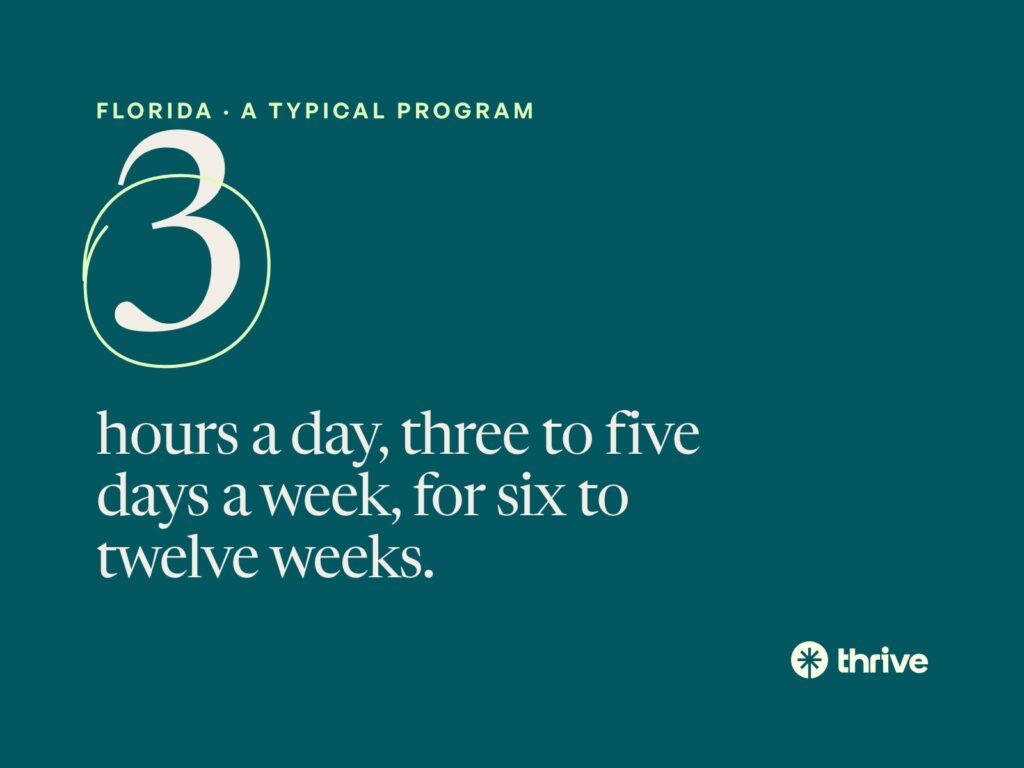
A typical virtual IOP runs three to five days per week, three hours per day, for six to twelve weeks. The core components:
- Group therapy, the program’s primary clinical work
- Individual therapy, once weekly with a licensed clinician
- Psychiatric consultation, when medically indicated
- Skill-building modules, coping skills, distress tolerance, communication
Virtual IOP delivers the same clinical model as in-person IOP, just over secure video. Here’s a primer on what IOP is and who it fits.
What your first week looks like

Day 1 is usually orientation: you meet your clinical team, your group cohort, and learn the platform and schedule. Many people are nervous on day 1; that’s completely normal. The structure is designed to make day 1 manageable.
Days 2-5: actual group sessions begin. Group sizes are typically 6-12 participants, small enough for everyone to participate, large enough to provide diverse perspectives. The first week is largely about getting comfortable with the rhythm, three hours of focused clinical work feels long at first and gets easier.
By the end of week one, most patients have completed their first individual therapy session, started learning the program’s core skills (often DBT or CBT-based), and started building rapport with their cohort.
Insurance and cost in Florida
Most commercial insurance plans cover virtual IOP in Florida when it’s medically necessary. Out-of-pocket cost typically runs $0 to $2,500 for a full course depending on plan tier and where you are in your benefit year.
Major commercial carriers in Florida:
- Florida Blue
- Aetna
- UnitedHealthcare
- Cigna
- Humana commercial
For the full list of carriers Thrive accepts, see our insurance overview.
Tech requirements
You need:
- Stable internet connection (broadband recommended)
- A device with camera and microphone (laptop, tablet, or smartphone)
- A private space where you won’t be interrupted
- Headphones (optional but recommended for privacy)
The program will walk you through tech setup before your first session.
What completion looks like
Most patients complete virtual IOP in 6-12 weeks. The decision about when to step down from IOP to weekly outpatient therapy is made by your clinical team based on your progress on specific treatment goals.
After completion, most patients continue with weekly therapy and possibly psychiatric medication management. Some return for “booster” IOP sessions if symptoms recur. Thrive’s published outcomes data tracks symptom reduction across patients completing treatment.
Common questions about virtual IOP in Florida
Can I do virtual IOP while working full-time?
Yes, most programs offer schedule options that work alongside full-time employment.
What if I need to miss a session?
Most programs allow occasional missed sessions for legitimate reasons. Confirm the policy with your provider before enrolling.
Will my insurance cover virtual IOP?

Most commercial plans cover virtual IOP for behavioral health when medically necessary, under federal MHPAEA law. Specifics depend on your plan tier.
How is privacy maintained over video?
Reputable programs use HIPAA-compliant platforms with end-to-end encryption. Joint Commission accreditation includes a privacy review.
What happens if I’m in crisis during the program?
Programs have crisis protocols. If you’re in immediate crisis right now, call 988.
Modalities you’ll likely encounter in virtual IOP
A serious virtual IOP delivers specific evidence-based modalities, not generic “therapy.” The most common in adult Florida virtual IOP:
- Cognitive Behavioral Therapy (CBT), the most-researched modality for anxiety, depression, and many other concerns. Focuses on the relationship between thoughts, feelings, and behaviors.
- Dialectical Behavior Therapy (DBT), strong evidence for emotion regulation, distress tolerance, and chronic suicidality. Teaches concrete skills you can apply daily.
- Eye Movement Desensitization and Reprocessing (EMDR), evidence-based for trauma and PTSD. Requires specific clinician training; not all IOPs offer it.
- Mentalization-Based Therapy (MBT), for personality disorders, relational difficulties, and improving emotional self-understanding.
- Motivational Interviewing (MI), for substance use, ambivalence about change, and behavior change generally.
- Family Therapy, when the treatment plan involves household members or partners.
- Mindfulness-based interventions, woven through most other modalities; foundational to emotion regulation work.
Group sessions typically use one or two of these modalities as the primary framework. Individual therapy may use a different modality matched to your specific clinical situation. The combination is part of what makes IOP effective, multiple evidence-based approaches reinforcing each other across the week.
Family involvement in virtual IOP
Most virtual IOP programs involve family members, partners, parents, adult children, household members, when the treatment plan calls for it. This typically takes the form of:
- Family education sessions, helping family members understand what you’re working on and how to support recovery without inadvertently reinforcing symptoms
- Couples or family therapy sessions, addressing relational patterns that may have contributed to or been affected by mental health concerns
- Communication skills work, particularly when relationship patterns are a treatment focus
Family involvement is optional in most programs and depends on your preferences and clinical situation. Some patients prefer to work individually; others find family sessions essential to lasting change. The choice is yours, made in consultation with your treatment team.
How privacy is maintained over video
Reputable virtual IOP programs use HIPAA-compliant video platforms with end-to-end encryption. Patient data, including session content, clinical notes, and medical records, is protected under federal HIPAA law identical to in-person treatment.
Joint Commission’s telehealth-specific accreditation includes a privacy and security review covering platform encryption, clinician home-office security, patient identification protocols, and breach response procedures. Programs with this accreditation have been independently audited on these standards.
For your part, you’ll need a private space at home where you won’t be overheard during sessions. Many patients use bedrooms with the door closed, basements, or home offices. Headphones help significantly.
If you want a deeper read on the structure and clinical model, our treatment modalities overview covers what each evidence-based therapy involves.
Next steps

If you’re a Florida resident considering virtual IOP, the most useful first step is a free clinical consultation that includes insurance verification.
Get started with Thrive, free, confidential insurance verification. Most members receive a benefits summary within 24 hours.

This article is for informational purposes only and is not a substitute for individualized clinical advice or insurance verification.