
Ultimate Checklist for Virtual ADHD/ADD Mental Health Services

Stop Wasting Time: Here’s What Actually Works for Adult ADHD
What are the best virtual mental health services for ADD and ADHD adults? The answer depends on what you need most—but here’s the quick breakdown:
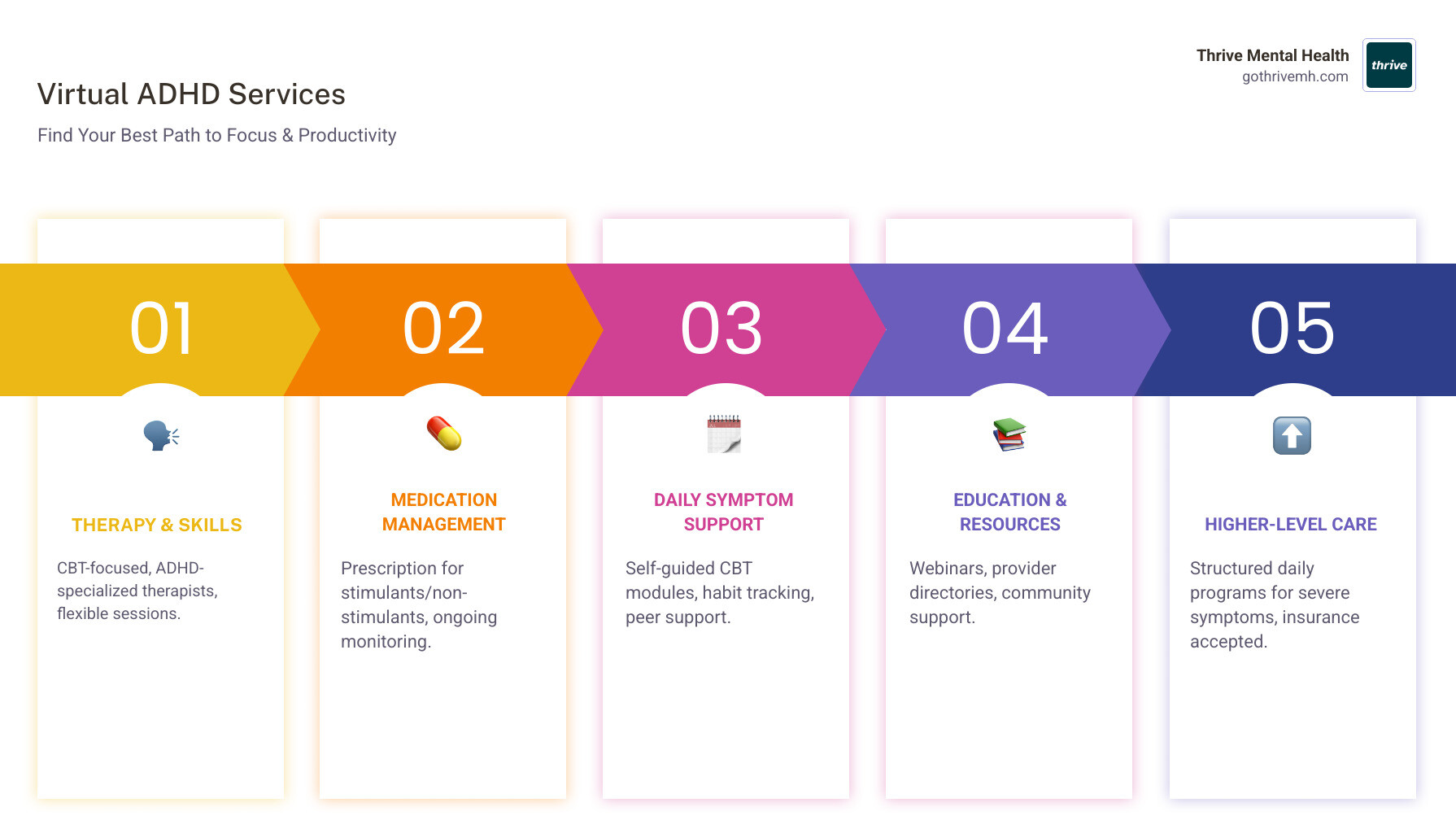
| What You Need | Best Virtual Service Type | Key Features |
|---|---|---|
| Talk therapy & skills | Online therapy platforms | CBT-focused, ADHD-specialized therapists, flexible scheduling |
| Medication management | Virtual psychiatry services | Prescribes stimulants/non-stimulants, 60-min intakes, ongoing monitoring |
| Daily symptom support | ADHD support apps | Self-guided CBT modules, habit tracking, peer support |
| Education & resources | CHADD, ADDitude | Free webinars, provider directories, community support |
| Higher-level care | Virtual IOP/PHP programs | Structured daily support for severe symptoms, insurance accepted |
If you’re an adult with ADHD, you already know the struggle: you understand what you need to do, but your brain won’t cooperate. You lose hours to procrastination. You forget critical deadlines. Your relationships suffer because you interrupt, forget plans, or zone out mid-conversation. And weekly therapy? It’s not cutting it anymore.
Here’s the reality: approximately 15.5 million US adults have been diagnosed with ADHD as of 2023—and many more are undiagnosed. Left untreated, ADHD leads to depression, low self-esteem, job loss, and relationship breakdowns. But here’s the good news: the right virtual mental health service can change everything.
The problem? Most people waste months bouncing between services that don’t specialize in ADHD, can’t prescribe the medication they need, or offer zero structure beyond a weekly chat. This guide eliminates the guesswork. You’ll learn exactly what works, what doesn’t, and how to pick a service that fits your symptoms, budget, and schedule.
The most effective ADHD treatment combines therapy (especially CBT) with medication. Virtual services now make this accessible—if you know where to look. Some platforms offer therapy but can’t prescribe stimulants. Others prescribe medication but skip the skill-building you need to manage daily life. A few do both, but not all accept insurance or specialize in adult ADHD.
I’m Nate Raine, CEO of Thrive Mental Health, where we’ve built virtual and hybrid IOP/PHP programs for adults across Florida who need more than basic therapy—including those navigating what are the best virtual mental health services for ADD and ADHD adults. Over the past decade, I’ve led healthcare initiatives focused on data-driven, outcome-focused behavioral health, and I’ve seen what separates effective ADHD care from services that just take your money.
Basic What are the best virtual mental health services for ADD and ADHD adults? vocab:
- Best virtual mental health programs for young professionals.
- virtual group therapy sessions
- virtual therapy for depression
Therapy vs. Psychiatry: What Gets Results for ADHD? [Don’t Guess—Know]
When tackling ADHD, it’s crucial to understand the distinct roles of therapy and psychiatry. Think of it this way: therapy provides the skills and strategies, while psychiatry offers medication to help your brain function more effectively. Both are powerful tools, and for most adults with ADHD, a combination delivers the best outcomes.
Therapy, led by licensed therapists, focuses on helping you understand your feelings, discuss personal challenges, and develop practical plans for the future. Therapists are experts in guiding you through behavioral changes and coping mechanisms, but they cannot prescribe medication.
Psychiatry, on the other hand, is a medical specialty. Psychiatrists and psychiatric providers are medical doctors who can prescribe and monitor medication to manage mental health symptoms. Their expertise lies in evaluating your biological needs and ensuring medication is optimized for your condition. They provide psychiatric care services and personalized medication management.
How do I know if I need therapy, medication, or both?
The decision to pursue therapy, medication, or a combination for your ADHD is deeply personal and should always be made in consultation with a qualified professional. We encourage you to consider several factors:
- Symptom severity: How significantly do your ADHD symptoms (inattention, hyperactivity, impulsivity) impact your daily life, work, or relationships?
- Daily impact: Are you struggling with organization, time management, emotional regulation, or completing tasks? Untreated ADHD can lead to frustration, low self-esteem, and even depression.
- Personal goals: What do you hope to achieve? Do you primarily want to learn coping skills, or do you feel a biological component needs addressing?
- Co-occurring anxiety or depression: ADHD often co-occurs with conditions like anxiety and depression. Addressing these simultaneously is vital, as they can exacerbate ADHD symptoms. A comprehensive evaluation will help differentiate between overlapping symptoms. For instance, anxiety or depression do not cause ADHD, but they often appear together, making professional diagnosis essential.
- Professional evaluation: This is the most crucial step. A mental health professional can provide an accurate diagnosis, rule out other conditions, and recommend a custom treatment plan.

What therapy actually works for adult ADHD?
While ADHD is not curable, it is highly treatable. Therapy can significantly improve your ability to manage symptoms and thrive. For adults with ADHD, certain therapeutic modalities have proven particularly effective:
- Cognitive Behavioral Therapy (CBT): This is one of the most effective types of therapy for ADHD. CBT helps you identify and change unhelpful thought patterns and behaviors. It’s about learning concrete strategies for time management, organization, and emotional regulation. CBT helps you bridge the gap between knowing what you should do and actually doing it. Treating ADHD in adults through the use of CBT includes four main strategies:
- Changing how you think about and approach things (cognitive modification).
- Changing how you behave while learning effective coping skills (behavior modification).
- Focusing on acceptance and mindfulness (emotional regulation).
- Learning how to self-monitor and self-reinforce new behaviors.
For more on CBT strategies, check out this article: 4 main strategies of CBT for ADHD.
- Mindfulness-Based Cognitive Therapy (MBCT): A type of talk therapy that falls under the CBT umbrella, MBCT combines CBT techniques with mindfulness practices. Recent research suggests MBCT can improve brain function related to emotion regulation and attention control, which are often impaired in adults with ADHD. It can treat symptoms of adult ADHD substantially better than some other types of therapy, helping individuals learn to control behaviors, thoughts, and emotions.
- Skill-Building and Coaching: While not always classified as formal “therapy,” structured skill-building and ADHD coaching can be invaluable. These approaches focus on practical strategies for organization, planning, task initiation, and managing distractions. ADHD coaching is not therapy and coaches are not always held to the same professional standards as licensed therapists.
- Dialectical Behavior Therapy (DBT) skills: Though primarily developed for other conditions, certain DBT skills, particularly those related to emotional regulation and distress tolerance, can be highly beneficial for adults with ADHD who struggle with emotional dysregulation.
A combination of therapy and ADHD medication is often the most effective approach. This dual strategy allows you to build internal coping mechanisms while medication helps regulate brain chemistry.
What Are the Best Virtual Mental Health Services for ADD and ADHD Adults? [2025 Guide]
The landscape of virtual mental health services for ADHD has expanded rapidly, offering unprecedented access to care. But with so many options, how do you choose? We’ve broken down the types of services and what makes them effective for adults with ADHD.

For Building Skills:
Online therapy platforms are excellent for skill-building and talk therapy. They connect you with licensed therapists who can provide Cognitive Behavioral Therapy (CBT), MBCT, and other evidence-based approaches custom for ADHD.
- Live video sessions: These replicate the in-person therapy experience, allowing for real-time interaction and connection.
- Asynchronous messaging: Some platforms offer text-based communication between sessions, providing continuous support and a way to quickly address challenges as they arise.
- Therapist matching: Many services use algorithms or intake questionnaires to match you with a therapist specializing in adult ADHD.
- ADHD specialization: Look for platforms that explicitly state ADHD as a specialty and therapists who are experienced in treating adults with the condition.
- Flexible scheduling: Virtual platforms often provide a wider range of appointment times, making it easier to fit therapy into a busy schedule.
Here’s what to look for when choosing an online therapy platform for ADHD:
- Licensed therapists: Ensure all therapists are licensed and have specific training in ADHD.
- CBT focus: Prioritize platforms that emphasize CBT and MBCT as primary therapeutic approaches for ADHD.
- Flexible scheduling: The ability to book sessions easily and reschedule if needed is key for those with ADHD.
- Communication methods: Consider if you prefer video, phone, or messaging, and choose a platform that offers your preferred format.
For Medical Treatment:
For many adults with ADHD, medication is a critical component of treatment. Virtual psychiatry services have made medication management more accessible, especially for those in Florida.
- Psychiatric evaluation: Reputable services offer thorough initial evaluations, often 60 minutes or longer, to discuss your medical history, symptoms, and treatment goals. This extended time allows for a more informed diagnosis and treatment plan.
- Follow-ups: Regular, shorter follow-up sessions (e.g., 30 minutes) are crucial for monitoring medication effectiveness and managing side effects.
- Prescription management: Online psychiatrists can prescribe both stimulant and non-stimulant medications for ADHD.
- Controlled substance policies: This is a key differentiator. Some virtual psychiatry services can prescribe stimulants (like Adderall or Ritalin), which are controlled substances, after a comprehensive evaluation that may include a live video component. Others may only prescribe non-stimulant options. It’s essential to check a service’s specific policy and ensure they comply with federal and Florida regulations.
- Pharmacy coordination: Look for services that seamlessly coordinate with your local Florida pharmacy or offer mail-order pharmacy partnerships (where available and compliant with state regulations).
For Daily Support:
Beyond formal therapy and medication, self-guided tools and educational resources can provide invaluable daily support for managing ADHD symptoms.
- Self-guided CBT modules: Apps designed for ADHD often incorporate CBT-based exercises and lessons to help you understand your ADHD and develop coping strategies.
- Gamified learning: Some apps make learning and habit formation engaging through gamified elements.
- Community features: Peer support can be incredibly empowering. Look for platforms that offer moderated forums or groups where you can connect with other adults with ADHD.
- Progress tracking: Tools that help you track your mood, productivity, and adherence to new habits can provide valuable insights and motivation.
- Habit tools: Features like reminders, focus timers, and task breakdowns can directly address common ADHD challenges.
- Cost-effectiveness: Many self-guided apps offer monthly or annual subscriptions, which can be a more affordable way to access support compared to weekly therapy, though they are not a replacement for professional care.
For educational materials and webinars, organizations like CHADD and ADDitude offer a wealth of free resources. CHADD provides extensive educational materials, peer support groups, and a provider directory. ADDitude offers free webinars, articles, and expert advice, making them excellent resources for understanding ADHD and staying informed.
7-Point Checklist: Don’t Get Burned by Bad Virtual ADHD Services
Choosing the right virtual ADHD service can feel overwhelming, but it doesn’t have to be. Use this checklist to ensure you’re making an informed decision that truly addresses your needs.
- Clinical Focus:
- Do they specialize in adult ADHD? A general mental health provider might miss the nuances of adult ADHD, which often presents differently than in children. Look for clinicians with specific training and experience in ADHD. Ask about their credentials and how they handle common co-occurring conditions like anxiety and depression.
- Treatment Approach:
- Is it evidence-based? Effective ADHD treatment relies on proven methods. Prioritize services that offer Cognitive Behavioral Therapy (CBT) and Mindfulness-Based Cognitive Therapy (MBCT), which are highly effective for ADHD. Understand the difference between coaching (which can be helpful but isn’t therapy) and licensed therapy. A personalized plan should be a cornerstone of their approach.
- Medication Policy:
- Can they prescribe what you need? If medication is part of your plan, clarify whether the service provides stimulant or non-stimulant options. Crucially, ask about their controlled substance policy, especially if you anticipate needing stimulants. Ensure they can coordinate prescriptions with pharmacies in Florida.
- Real Cost & Insurance:
- What will you pay? Costs vary widely. Some services are subscription-based, while others charge per session. Understand if they are in-network with your insurance (e.g., Cigna, Aetna, Optum, Florida Blue) or if they provide superbills for out-of-network reimbursement. Always verify your benefits directly with your insurance provider before starting treatment.
- Platform & Accessibility:
- Is it ADHD-friendly? For individuals with ADHD, a cluttered or confusing platform can be a barrier to consistent engagement. Look for a clean, intuitive user interface, minimal distractions, and clear navigation. Some platforms even offer an ADHD-friendly web experience with features like extra white space and no autoplay videos. Flexible session formats (video, phone) and easy scheduling are also crucial.
- Diagnosis & Onboarding:
- How thorough is their evaluation? A proper ADHD diagnosis in adults requires a comprehensive assessment. This usually involves an initial screening, followed by in-depth interviews, a review of your medical and family history, and standardized diagnostic tools. The goal is not just to confirm ADHD but also to rule out other conditions that might mimic symptoms. A thorough intake session, often 60 minutes or more, is a good sign.
- Dual Diagnosis Care:
- Best for ADHD with anxiety or depression? ADHD rarely travels alone. Many adults with ADHD also experience anxiety or depression. Look for services that offer integrated treatment plans, with therapists and psychiatrists who are experienced in dual diagnosis care. This ensures a holistic approach where all your conditions are addressed collaboratively, rather than in silos.
FAQs: Virtual ADHD Treatment—What You Need to Know
Can you get an official ADHD diagnosis online?
Yes. Licensed psychiatrists, psychologists, and other qualified mental health professionals can diagnose ADHD virtually. The process typically involves comprehensive interviews, standardized questionnaires, and a thorough review of your history, similar to an in-person assessment. The quality of assessment can vary between platforms, so ensure the service emphasizes a robust diagnostic process.
Can you get stimulants like Adderall prescribed online?
Sometimes. The ability to prescribe controlled substances like Adderall or Ritalin online is subject to federal and state regulations, including the Ryan Haight Act. Some virtual psychiatry services can prescribe these medications after a live video evaluation, and some may require an in-person component. Other services may only prescribe non-stimulant medications for ADHD. Always verify the service’s specific prescribing policies and ensure they comply with regulations in Florida.
Is online therapy effective for adult ADHD?
Yes. Research indicates that evidence-based therapies like Cognitive Behavioral Therapy (CBT) are highly effective for managing ADHD symptoms in adults. Virtual delivery of these therapies has been shown to be as effective as in-person care, provided you are working with a qualified therapist who specializes in adult ADHD. The convenience and accessibility of virtual therapy can also improve treatment adherence for individuals with ADHD.
Does insurance cover virtual ADHD treatment?
Many insurance plans do cover virtual ADHD treatment, including major providers like Cigna, Aetna, Optum, and Florida Blue. However, coverage can vary based on your specific plan. We always recommend verifying your benefits directly with your insurance provider to understand your co-pays, deductibles, and any limitations for care in Florida. You can easily Verify your insurance with Thrive to understand your coverage options.
What if weekly therapy isn’t enough?
If your ADHD symptoms are significantly impacting your daily life, causing consistent distress, or if you’re not seeing sufficient progress with weekly therapy, you may benefit from a higher level of care. Thrive Mental Health offers virtual and hybrid Intensive Outpatient Programs (IOP) and Partial Hospitalization Programs (PHP) for adults needing more structured support. These programs provide more frequent and intensive therapy than traditional outpatient care, focusing on skill-building, symptom management, and relapse prevention.
When Weekly Therapy Isn’t Enough: Step Up to Real Results
If you’re stuck, overwhelmed, or not getting better with basic therapy, it’s time for a higher level of care. We understand that ADHD can be relentless, and sometimes, a weekly session just doesn’t provide the intensity or structure needed to create lasting change. Thrive Mental Health delivers virtual and hybrid IOP/PHP programs for adults who need more than once-a-week support. Our programs are designed for people who need more than once-a-week therapy but less than inpatient care, offering a robust framework for managing ADHD and co-occurring conditions like anxiety and depression. We offer evening options, accept insurance (Cigna, Aetna, Optum, Florida Blue, and many more), and provide fast onboarding in Florida (Tampa Bay, St. Petersburg, Miami, Orlando, Boca Raton, West Palm Beach, Jacksonville, Fort Lauderdale, Naples, Sarasota).
Learn more about Thrive’s IOP program | Virtual Therapy at Thrive
Related reading: How Virtual IOPs Cut Recovery Time by 50%
Ready for support? Thrive offers virtual and hybrid IOP/PHP programs with evening options. Verify your insurance in 2 minutes (no obligation) → Start benefits check or call 561-203-6085. If you’re in crisis, call/text 988.
If you’re in crisis, call/text 988 right now. You are not alone.