A Comprehensive Guide to Virtual Mental Health Services for Startups

Why Mental Health Is the Most Overlooked Startup Investment
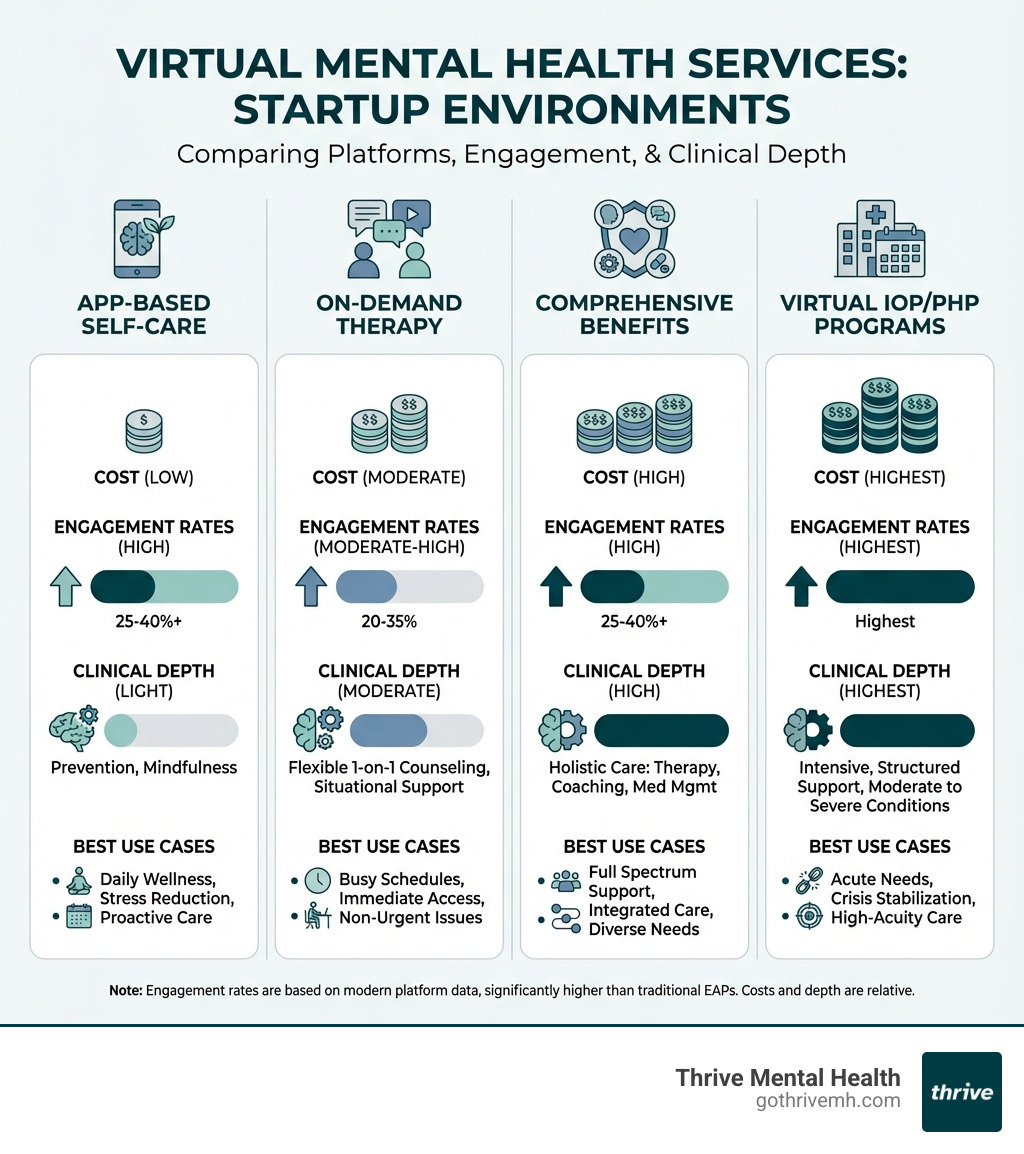
What are the best virtual mental health services for startup environments? The answer depends on your team’s needs, but the most effective options include:
- App-Based Self-Care Platforms – Best for prevention, mindfulness, and daily mental fitness
- On-Demand Virtual Therapy – Best for flexible 1-on-1 counseling that fits busy schedules
- Comprehensive Mental Health Benefits – Best for holistic care including therapy, coaching, and medication management
- Specialized Virtual IOP/PHP Programs (Thrive Mental Health) – Best for employees needing intensive, structured support for moderate to severe conditions
Your startup team is working 60-hour weeks. Your founder hasn’t slept properly in months. Your best engineer just quit—burnout, they said.
Here’s what most startup leaders miss: mental health isn’t a perk. It’s infrastructure.
The data is brutal. 83% of US workers suffer from work-related stress. Depression and anxiety cost the global economy over $1 trillion each year in lost productivity. And in startups—where the pressure is higher, the hours longer, and the stakes feel existential—those numbers get worse.
But there’s good news. Virtual mental health services have evolved dramatically. Traditional Employee Assistance Programs (EAPs) see engagement rates as low as 5%. Modern digital platforms? 25-40% engagement. That’s not a marginal improvement. That’s a complete shift in what’s possible.
The challenge is knowing which platform fits your startup’s unique environment—the rapid growth, the limited budgets, the “always on” culture, the founder who won’t admit they’re struggling.
I’m Nate Raine, CEO of Thrive Mental Health, and I’ve spent over a decade building tech-enabled behavioral health solutions that integrate clinical care with real-world operational demands, particularly within Florida’s dynamic startup ecosystem. Understanding what are the best virtual mental health services for startup environments means knowing which tools actually get used, which drive measurable outcomes, and which meet your team where they are—not where a corporate HR playbook thinks they should be.
The Unspoken Cost of Startup Culture: Why Your Team is Burning Out
Startup life is often romanticized, but beneath the veneer of innovation and rapid growth lies a high-pressure environment that can take a severe toll on mental well-being. This isn’t just about feeling a bit stressed; it’s about systemic issues that lead to burnout, anxiety, and depression among dedicated employees. We see it every day in Florida’s vibrant startup hubs – the relentless pace, the blurred lines between work and personal life, and the constant pressure to perform can push even the most resilient individuals to their breaking point.
Consider the numbers: 83% of US workers suffer from work-related stress. In the tech industry, where many startups reside, this figure is often even higher, with tech workers reporting the highest rates of burnout across all industries. This isn’t just an individual problem; it’s a profound organizational challenge. When your team is constantly operating under extreme stress, their ability to innovate, collaborate, and execute suffers. We’ve seen how unaddressed mental health issues can stifle creativity and lead to costly mistakes.
Beyond the immediate impact on individuals, there’s a staggering economic cost. Depression and anxiety cost the global economy over $1 trillion each year in lost productivity. For a startup, where every dollar and every hour counts, this translates into a significant drain on resources. Your team’s mental health isn’t a soft skill; it’s a hard metric that impacts your bottom line. Ignoring it is like ignoring critical bugs in your core product—eventually, it will lead to system failure.

Why Your Startup Can’t Afford to Ignore Mental Health
The costs of neglecting mental health in a startup environment extend far beyond individual suffering. They directly impact your operational efficiency, financial stability, and long-term viability. We believe that investing in mental health is not merely a compassionate choice, but a strategic imperative.
Here’s why:
- The Financial Drain of Burnout: Burnout leads to decreased productivity, increased errors, and extended sick leave. When your team is running on empty, their output diminishes, and the quality of their work can decline. This directly impacts project timelines, product development, and customer satisfaction.
- High Employee Turnover Costs: Startup environments often boast tight-knit teams, making every departure particularly disruptive. The cost of replacing an employee can range from tens of thousands to well over a hundred thousand dollars, factoring in recruitment, onboarding, and lost productivity during the transition. If employees are leaving due to burnout and stress, you’re facing a revolving door that hemorrhages talent and capital.
- Lost Productivity: As noted, depression and anxiety cost the global economy over $1 trillion each year in lost productivity. For startups, this translates to missed deadlines, stalled innovation, and a general drag on momentum. When employees report that their mental health impacts their productivity (a common sentiment), your startup’s potential is capped.
- Founder Mental Health: The pressure on founders is immense. They often bear the heaviest emotional and financial burdens, facing isolation, imposter syndrome, and chronic stress. Neglecting founder mental health can lead to poor decision-making, team instability, and ultimately, the failure of the venture. Supporting founder well-being is paramount for sustainable leadership.
- Attracting and Retaining Top Talent: In today’s competitive talent market, especially in Florida’s burgeoning tech scene, mental health benefits are no longer a luxury—they’re an expectation. A robust mental health program signals to prospective hires that you prioritize their well-being, making your startup a more attractive place to work. It also builds loyalty among existing employees, reducing turnover.
- Building a Resilient Company Culture: A culture that openly supports mental health fosters psychological safety, encourages open communication, and builds trust. This resilience is critical for navigating the inevitable ups and downs of startup life, from funding rounds to market shifts. A team that feels supported is a team that can adapt and thrive.
Investing in mental health isn’t just about being a “good” employer; it’s about building a stronger, more sustainable, and ultimately more successful startup.
Crisis Support: If you or someone you know is in crisis or having thoughts of self-harm, call or text the 988 Suicide & Crisis Lifeline at 988. You are not alone.
What are the best virtual mental health services for startup environments?
The question of what are the best virtual mental health services for startup environments is complex, as the “best” solution is always custom to specific needs. However, we’ve identified several effective models that offer scalability, affordability, accessibility, and on-demand support, all crucial for addressing the unique challenges faced by startups. The digital mental health market is booming, set to grow from $23.63 billion in 2024 to $50.45 billion by 2029, reflecting a global shift towards accessible, tech-driven mental wellness. This growth means more options than ever for startups.
App-Based Self-Care & Mindfulness Platforms
These platforms represent an excellent, low-cost entry point for startups looking to support their team’s mental well-being. They focus on prevention and building daily mental fitness habits.
- Key Features: Guided meditation, mood tracking, Cognitive Behavioral Therapy (CBT) exercises, stress reduction techniques, and sleep support. They offer short, engaging activities that can be easily integrated into a busy schedule, like a quick mindfulness exercise between meetings or a sleep story before bed.
- Benefits for Startups: They are highly accessible (over 70% of people already use digital tools for mental health), confidential, and empower employees to manage their stress proactively. They can boost focus, reduce stress, and improve overall well-being, helping individuals handle daily challenges with greater clarity.
- Best Use Case: Ideal for fostering a culture of proactive self-care and providing universal access to tools that can mitigate everyday stress and improve focus.
On-Demand Virtual Therapy & Counseling
For employees needing more personalized, consistent support, on-demand virtual therapy platforms offer flexible access to licensed therapists. This model addresses the common barriers of scheduling and location, which are particularly relevant for remote or hybrid startup teams across Florida.
- Key Features: Text, video, or phone sessions, asynchronous messaging, and sophisticated matching algorithms to connect users with therapists specializing in their specific needs. Many platforms allow users to send messages or schedule live video sessions at their convenience.
- Benefits for Startups: They provide accessible, private care without the limitations of in-person appointments. About 60% of people prefer online therapy over face-to-face sessions, and 79% prefer virtual therapy over in-person visits, highlighting its popularity and convenience. This flexibility is crucial for startup employees juggling demanding schedules.
- Best Use Case: Perfect for individuals who need one-on-one professional guidance for anxiety, depression, relationship issues, or work-related stress, but require the flexibility to fit sessions into their demanding work-life balance.
Comprehensive Mental Health Benefits Platforms
These platforms offer a holistic care model that integrates various services, often replacing traditional EAPs with significantly higher engagement rates. They provide a spectrum of care from self-guided tools to crisis support.
- Key Features: Therapy, coaching, medication management, specialized care pathways, and AI-powered personalization. They often include tools for mood tracking, mindfulness, and self-guided programs, alongside access to a network of providers.
- Benefits for Startups: These platforms offer a “no wrong door” approach to mental health, ensuring employees get the right level of care at the right time. AI-powered mental health solutions boast usage rates between 25–40%, a stark contrast to legacy EAPs with engagement rates as low as 5%. This higher engagement translates to better outcomes and a stronger ROI for the startup. Some platforms have even shown a $2.39 ROI for every $1 invested, primarily through reduced healthcare costs.
- Best Use Case: Ideal for startups looking for an all-encompassing solution that can support a diverse workforce with varying mental health needs, from preventive care to ongoing treatment, with measurable outcomes.
Specialized Virtual Care for Acute Needs (IOP/PHP)
For team members who need more intensive support than weekly therapy, but less than inpatient care, specialized virtual Intensive Outpatient Programs (IOP) and Partial Hospitalization Programs (PHP) are critical. This is where Thrive Mental Health excels.
- Key Features: Structured group and individual therapy sessions, often several hours a day, multiple days a week. These programs address moderate to severe conditions like depression, anxiety, trauma, and substance use disorders. Our programs at Thrive Mental Health combine clinical expertise, flexible scheduling, and measurable results, delivered through expert-led virtual formats. We offer virtual IOP/PHP programs with evening options to accommodate busy schedules.
- Benefits for Startups: These programs provide a vital safety net for employees experiencing significant mental health challenges, helping them stabilize and recover without having to step away from their lives entirely. Virtual IOP/PHP allows employees across Florida to access high-quality, evidence-based treatment from the comfort and privacy of their homes. This reduces barriers to access and promotes faster recovery.
- Best Use Case: Essential for startups whose employees are struggling with conditions that require a higher level of care. Offering this level of support demonstrates a deep commitment to employee well-being and can be life-changing for those in need. Learn more about our telehealth IOP program.
How to Choose & Implement a Platform That Actually Gets Used
Choosing the right virtual mental health platform for your startup isn’t a one-size-fits-all decision. It requires careful vetting, a thoughtful implementation strategy, and genuine leadership buy-in. The goal isn’t just to offer a benefit, but to ensure it actually gets used and makes a tangible difference.

What are the key features to demand in a virtual mental health platform?
When evaluating options, we recommend focusing on these non-negotiable features:
- Clinical Quality: Ensure the platform employs licensed, credentialed professionals (therapists, coaches, psychiatrists) with diverse specializations. Look for evidence-based approaches (e.g., CBT, DBT).
- HIPAA Compliance & Data Security: This is paramount. The platform must adhere to strict privacy regulations to protect sensitive employee health information. We cannot stress enough the importance of robust data security and privacy protocols.
- User-Friendly Interface: If it’s not intuitive and easy to steer, employees won’t use it. The platform should be accessible across devices (mobile, desktop) and offer a seamless experience.
- Reporting and Analytics (Aggregated & Anonymized): For HR leaders, access to anonymized data on engagement rates, common issues, and overall impact is crucial for measuring ROI and refining your strategy. However, this must always respect individual privacy.
- Scalable Pricing Models: Startups often have fluctuating headcounts. Look for flexible pricing (e.g., per-employee-per-month or usage-based) that can grow with you.
- Support for Diverse Needs: Ensure the platform offers culturally competent care, multilingual support, and a wide range of specialties to serve your diverse workforce across Florida.
- Integration Capabilities: Can it integrate with your existing HR systems or employee benefits platforms to streamline enrollment and communication?
How can startups measure the ROI and effectiveness of these platforms?
Measuring the return on investment (ROI) of mental health initiatives is vital for demonstrating their value and securing ongoing budget. While some benefits are qualitative, many can be quantified:
- Employee Engagement Rates: Track platform utilization, session completion rates, and active user numbers. Higher engagement correlates with better outcomes.
- Reduced Absenteeism: Monitor sick days and unplanned absences. Improved mental health often leads to fewer days missed.
- Productivity Metrics: While harder to directly link, look for improvements in team output, project completion rates, and overall efficiency. 70% of employees report that their mental health impacts their productivity.
- Employee Satisfaction Surveys (eNPS): Include questions about mental health support and overall well-being. Positive trends indicate a healthier, happier workforce.
- Lower Healthcare Costs: Comprehensive platforms have demonstrated significant ROI through reduced medical claims. For example, one third-party analysis showed a $2.39 ROI for every $1 invested, with 60% of savings coming from supporting employees with moderate mental health needs.
- Improved Employee Retention Rates: A supportive culture and accessible mental health resources can significantly reduce turnover, saving your startup substantial recruitment and training costs.
Frequently Asked Questions about Virtual Mental Health for Startups
What is the typical cost of virtual mental health services for a startup?
Costs can vary widely depending on the model and the comprehensiveness of the services. App-based self-care platforms are generally the most affordable, often with per-employee-per-month (PEPM) fees that can range from a few dollars to $10-$20. On-demand virtual therapy and comprehensive benefits platforms will have higher PEPM costs, potentially ranging from $30-$100+, offering a broader spectrum of services. Specialized virtual IOP/PHP programs like ours at Thrive Mental Health represent a higher investment per employee but are designed for acute needs and often lead to significant long-term savings by preventing more costly inpatient care. Many of these services, including our IOP and PHP programs, are covered by major insurance providers such as Cigna, Optum, and Florida Blue, making them more accessible for employees.
Are virtual mental health services as effective as in-person therapy?
Yes, for many conditions, virtual mental health services are proven to be as effective as in-person therapy. Research indicates that approximately 60% of people prefer online therapy, and 79% of individuals prefer virtual therapy over in-person visits. A 2021 study specifically found that therapy delivered via video conferencing is no less effective than in-person psychotherapy, especially when using Cognitive Behavioural Therapy (CBT) for conditions like anxiety, depression, or PTSD. The convenience and accessibility of virtual care often mean individuals are more likely to start and consistently attend sessions, leading to better outcomes. The “best” model ultimately depends on the individual’s needs, the severity of their condition, and their personal preferences.
How can we ensure our team across Florida gets consistent care?
To ensure consistent care for your team members located across Florida, from Miami to Tampa Bay to Jacksonville, it’s crucial to choose a provider with a robust statewide network of licensed therapists and programs. Verify that the platform’s professionals are licensed to practice in Florida. For example, our programs at Thrive Mental Health are designed to offer consistent, expert-led virtual care to all eligible individuals within the state. This ensures that your entire Florida-based team receives the same high standard of care and support, regardless of their specific location. Always confirm the provider’s licensing and geographic coverage before committing.
The Smartest Investment You’ll Make: Your Team’s Well-Being
Investing in your team’s mental health isn’t just a compassionate gesture; it’s a strategic business decision that drives resilience, innovation, and sustainable growth. In the high-pressure world of Florida’s startup scene, providing accessible, confidential support is paramount. The right virtual mental health platform meets your team where they are, offering tools and professional guidance that seamlessly integrate into their demanding lives.
For team members who need more intensive support—those struggling with significant anxiety, depression, or even substance use challenges—higher levels of care like our virtual IOP and PHP programs in Florida are critical. These programs offer structured, evidence-based treatment that can prevent crises and facilitate profound recovery. At Thrive Mental Health, we provide expert-led virtual programs designed for busy professionals and young professionals across Florida. Our programs combine clinical expertise, flexible scheduling, and measurable results, all custom to help individuals thrive.
By prioritizing mental health, you’re not just mitigating risks; you’re cultivating a culture of strength, innovation, and unwavering support. It’s an investment that pays dividends in every aspect of your startup’s journey.
Ready for support? Thrive offers virtual and hybrid IOP/PHP programs with evening options. Verify your insurance in 2 minutes (no obligation) or call 561-203-6085. If you’re in crisis, call/text 988.