
Heal Your Past: Is EMDR the Right Therapy for You?

What is EMDR primarily used for: 8 Phases to Freedom
Stuck in a Memory? How EMDR Can Help You Move Forward
What is EMDR primarily used for? Eye Movement Desensitization and Reprocessing (EMDR) is a powerful therapy used to treat Post-Traumatic Stress Disorder (PTSD) and other trauma-related conditions. It helps the brain reprocess distressing memories that have become “stuck,” causing ongoing emotional pain, flashbacks, and anxiety.
Quick Answer: Primary Uses of EMDR Therapy
- PTSD and trauma disorders (most common and well-researched application)
- Anxiety disorders including panic attacks and phobias
- Depression linked to past traumatic experiences
- Grief and loss that feels unresolved
- Chronic pain with psychological roots
- Substance abuse and addiction tied to trauma
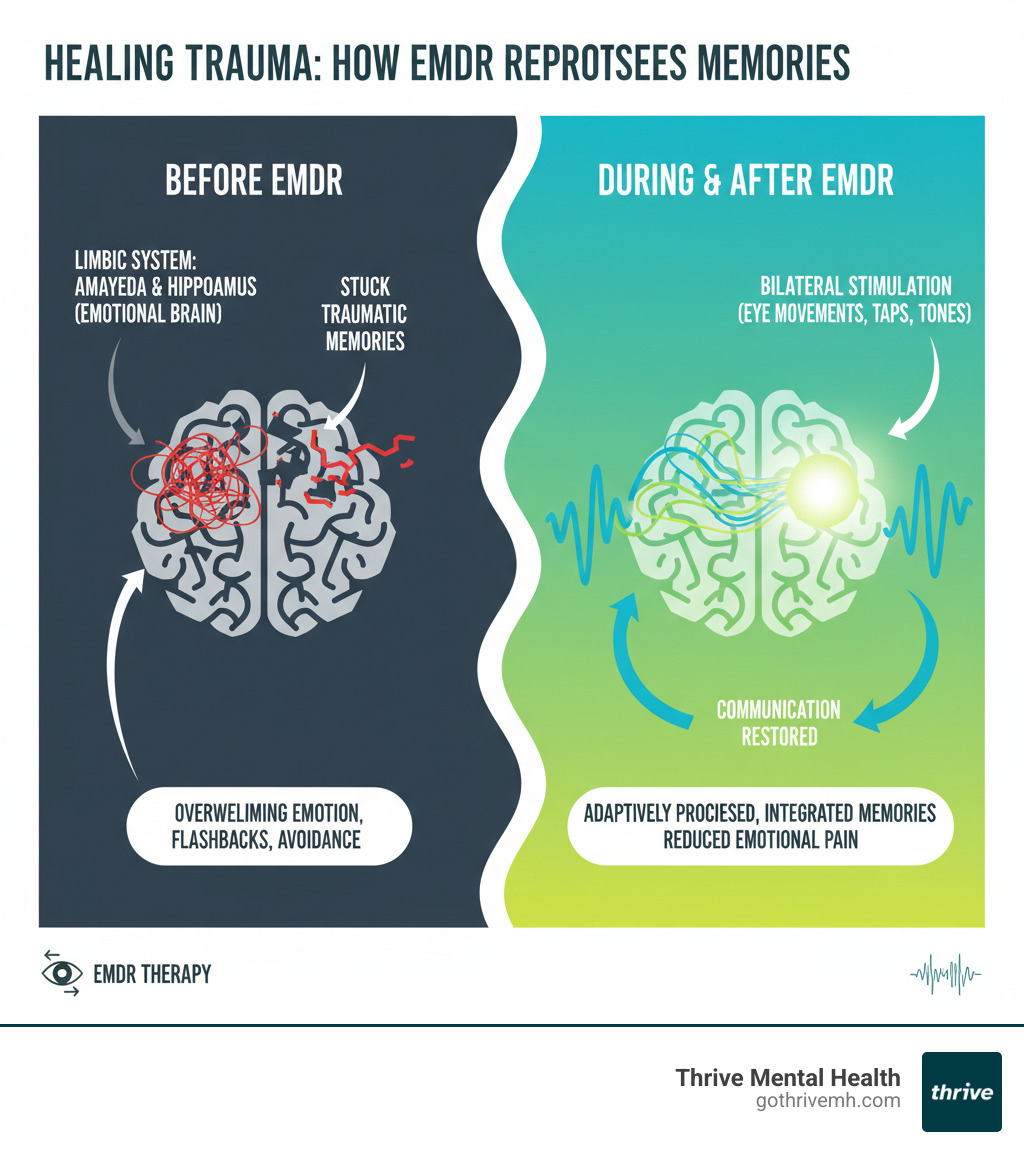
If you feel haunted by the past—stuck reliving painful moments or avoiding triggers—you’re not alone. Trauma gets stored in the brain in a way that keeps you locked in a painful cycle. EMDR works differently than talk therapy by using bilateral stimulation (guided eye movements, tapping, or tones) to help your brain finally process these memories.
The results are compelling: studies show 84-90% of single-trauma victims no longer have PTSD after just three 90-minute sessions. Developed by Dr. Francine Shapiro, EMDR is now a gold-standard treatment recognized by the World Health Organization and the American Psychiatric Association. It helps anyone whose past is interfering with their present, from veterans to individuals dealing with anxiety, depression, or performance issues.
As CEO of Thrive Mental Health, I’ve seen how EMDR provides rapid, lasting relief. Our programs in Florida are built on evidence-based care that gets results.
So, What is EMDR Primarily Used For? [Beyond Just PTSD]
When people ask what is EMDR primarily used for, the answer always starts with Post-Traumatic Stress Disorder (PTSD). This is where EMDR built its reputation, offering remarkable results for those who felt trapped by their past. Research shows that 84%-90% of single-trauma victims no longer meet PTSD criteria after just three 90-minute sessions. For combat veterans, 77% became free of PTSD in 12 sessions. These aren’t just numbers—they represent lives reclaimed.
This success has earned EMDR endorsements from the American Psychiatric Association, the World Health Organization (WHO), and the U.S. Department of Veterans Affairs as a top-tier treatment for PTSD. You can explore the scientific research on EMDR for PTSD directly from the American Psychological Association.
How EMDR Treats PTSD Symptoms
Traumatic memories get stuck. Instead of being filed away as a past event, the memory stays raw and emotionally charged, making you feel like the trauma is happening right now. This is what fuels PTSD symptoms.
EMDR uses bilateral stimulation (eye movements, tapping, or tones) to help your brain’s natural processing system get unstuck. As the memory is reprocessed, its power fades. The vividness, emotional distress, flashbacks, and nightmares begin to decrease. The constant state of high alert (hypervigilance) eases, and you no longer feel the need to avoid people, places, or things that remind you of the trauma. The memory becomes part of your story, not your present reality. To understand more about this healing approach, read our guide on Trauma-Informed Care.
Beyond trauma, what is EMDR primarily used for?
While PTSD put EMDR on the map, its principles apply to a wide range of issues rooted in distressing past experiences. So what is EMDR primarily used for besides trauma?
- Anxiety Disorders: Targets the root memories fueling panic attacks, phobias, and generalized anxiety.
- Depression: Helps process past events or chronic stress contributing to depressive symptoms.
- Grief and Loss: Assists in moving through complicated grief when the mourning process feels stuck.
- Performance Anxiety: Addresses past failures or humiliating moments that create blocks for athletes, speakers, and professionals.
- Chronic Pain: Can reduce pain sensations by reprocessing traumatic memories associated with an injury or illness.
- Substance Abuse: Addresses the underlying trauma that often drives addiction, supporting long-term recovery.
- Other Conditions: Shows promise for eating disorders, dissociative disorders, and OCD by targeting the distressing memories and thoughts that fuel them.

Whether you’re dealing with a major “Big T” trauma or the cumulative impact of smaller “small t” traumas, EMDR can help you release the past’s grip on your present.
The 8-Phase EMDR Process: Your Roadmap to Healing
EMDR isn’t a vague approach; it’s a structured, eight-phase process built on the Adaptive Information Processing (AIP) model. This model assumes your brain has a natural ability to heal from psychological wounds, but trauma can disrupt this process. EMDR helps your brain get back on track.
Patient safety is the priority. Before any deep work begins, your therapist focuses on building trust and teaching you coping skills. You’ll learn grounding exercises to manage any distress that comes up, ensuring you feel in control throughout the therapy. The famous bilateral stimulation (eye movements, tapping, or tones) is just one part of this comprehensive plan.

Phases 1-3: Preparation and Assessment
These initial phases are about building a safe foundation.
- Phase 1 (History-Taking): Your therapist learns your story to identify the specific memories or beliefs causing your current struggles and creates a custom treatment plan.
- Phase 2 (Preparation): You learn about the EMDR process and are equipped with calming techniques (resource installation). This ensures you have the tools to stay grounded during and between sessions.
- Phase 3 (Assessment): You and your therapist select a specific “target” memory to work on. You’ll identify the disturbing image, the negative belief it created (e.g., “I’m not safe”), and a positive belief you’d prefer (e.g., “I am safe now”).
Phases 4-8: Reprocessing and Integration
This is where the core healing work happens.
- Phase 4 (Desensitization): While holding the target memory in mind, your therapist guides you through sets of bilateral stimulation (BLS). You simply notice what comes up without judgment. This continues until the memory’s emotional charge significantly decreases.
- Phase 5 (Installation): The focus shifts to strengthening your desired positive belief. More sets of BLS are used to help this new, healthier belief feel true.
- Phase 6 (Body Scan): You scan your body for any lingering physical tension related to the memory. If any is found, more BLS is used until your body feels calm.
- Phase 7 (Closure): Every session ends with you feeling stable. Your therapist uses relaxation techniques to ensure you leave feeling grounded, even if a memory isn’t fully processed.
- Phase 8 (Reevaluation): The next session begins by checking on your progress. This ensures the healing is lasting before moving on to the next target.
This systematic approach is what makes EMDR so effective. At Thrive Mental Health, we integrate EMDR into our comprehensive Virtual IOP programs in Florida, making evidence-based trauma therapy accessible and effective for residents across the state.
EMDR vs. Other Therapies: What Makes It Different?
When considering trauma therapy, you’ve likely heard of Cognitive Behavioral Therapy (CBT) and Trauma-Focused CBT (TF-CBT). While effective, EMDR offers a fundamentally different experience.
The biggest difference? EMDR doesn’t require you to talk in detail about the trauma. Instead of spending sessions verbally recounting painful events, EMDR uses bilateral stimulation (eye movements, tapping, or tones) to help your brain reprocess the memory internally. This can be a massive relief for those who find it difficult or re-traumatizing to speak about their experiences.
TF-CBT, in contrast, often involves structured verbal exposure to the traumatic narrative and homework assignments to challenge dysfunctional thoughts. EMDR has minimal to no homework, as the focus is on the processing that happens within the session.
Here’s a quick comparison:
| Feature | EMDR Therapy | Trauma-Focused CBT (TF-CBT) |
|---|---|---|
| Primary Focus | Reprocessing “stuck” traumatic memories to facilitate adaptive resolution. | Identifying and challenging dysfunctional thoughts and behaviors related to trauma. |
| Approach to Trauma | Less emphasis on detailed verbal recounting. Focus is on internal processing during bilateral stimulation. | Often involves detailed verbal exposure to the traumatic narrative and real-life exposure to reminders. |
| “Talk” Component | Less “talk,” more internal noticing. | Significant “talk” component, focusing on cognitive restructuring and psychoeducation. |
| Homework | Minimal to no homework beyond practicing coping skills. | Often involves structured homework like journaling or exposure exercises. |
| Speed of Results | Often more rapid, with relief reported in as few as 3-6 sessions for single-trauma PTSD. | Effective, but can be a more gradual process over 12-16+ sessions. |
| Client Control | High client control; processing can be paused at any time. The process is gentler for many. | Can be highly distressing for some due to the direct confrontation with traumatic details. |
Many clients report that EMDR works faster than traditional talk therapy. For single-trauma PTSD, resolution can occur in just 3-6 sessions. Another key factor is client control. With EMDR, you can pause or stop at any time, making the process feel safer and less overwhelming than direct exposure therapy.
Both EMDR and TF-CBT are gold-standard treatments. The best choice depends on your personal preference. At Thrive Mental Health, we integrate EMDR into our comprehensive Partial Hospitalization Programs (PHP) in Florida to provide the right fit for your healing journey. Learn about our Florida PHP options and how we tailor treatment to your needs.
The Science of EMDR: Evidence, Benefits, and What to Expect
When people ask what is EMDR primarily used for, they also want to know: Does it actually work? The answer is a definitive yes, backed by extensive scientific research.
EMDR is supported by over 24 randomized controlled trials demonstrating its effectiveness. This robust evidence has earned it endorsements from the world’s top mental health authorities, including:
- The World Health Organization (WHO)
- The American Psychiatric Association (APA)
- The U.S. Department of Veterans Affairs
WHO goes so far as to state that EMDR and trauma-focused CBT are the only psychotherapies they recommend for children, adolescents, and adults with PTSD. This global consensus confirms that EMDR delivers real, measurable results.
How EMDR Changes Your Brain
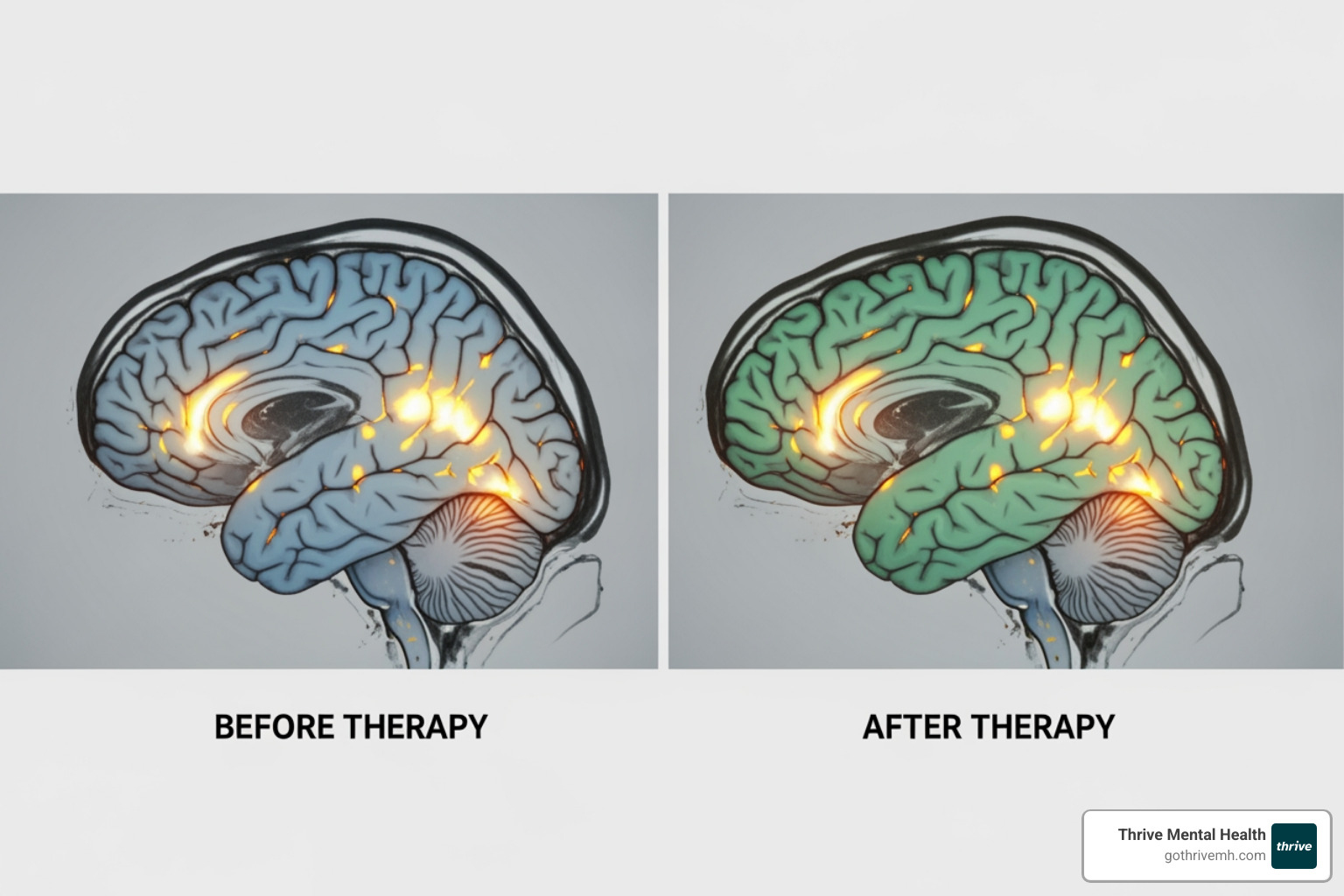
The leading theory, the Adaptive Information Processing (AIP) model, suggests EMDR works by tapping into the same natural healing process that occurs during REM sleep. When trauma overwhelms this system, the memory gets stuck. EMDR’s bilateral stimulation helps reactivate this process, allowing the brain to properly file the memory away.
This does two key things:
- It calms the brain’s alarm center. Brain imaging shows EMDR reduces hyperactivity in the amygdala, so the memory no longer triggers an intense fear response.
- It reconnects key brain regions. It strengthens the link between your emotional brain and your rational brain (the prefrontal cortex), allowing you to think about the memory without being overwhelmed by emotion.
The memory doesn’t disappear, but it no longer controls you. Clients often report significant benefits beyond symptom reduction, including improved sleep, less anxiety, a greater sense of self-worth, and better focus.
It’s important to know that you may feel a temporary increase in distress during a session as memories are activated. This is a normal part of the healing process, not re-traumatization. Your therapist will guide you safely through it, and the discomfort is temporary, while the relief is lasting.
Frequently Asked Questions about EMDR Therapy
It’s normal to have questions about EMDR. Here are straightforward answers to the most common ones we hear at Thrive Mental Health.
How long does EMDR therapy take to work?
It varies. For a single traumatic event, you could see significant relief in just 3 to 6 sessions. For more complex or multiple traumas, it may take 8 to 12 sessions or more. Sessions are typically 60-90 minutes. Many clients find EMDR works faster than traditional talk therapy.
Is EMDR a recognized and legitimate therapy?
Yes, absolutely. EMDR is a highly researched, evidence-based treatment for PTSD. It is officially recommended by the American Psychiatric Association, the World Health Organization (WHO), and the U.S. Department of Veterans Affairs. This legitimacy means it is often covered by insurance plans, including Cigna, Optum, and Florida Blue.
Who is a good candidate for EMDR?
You are likely a good candidate if you feel “stuck” by past events, whether from a major trauma or an accumulation of smaller painful experiences. It is effective for adults and adolescents dealing with PTSD, anxiety, depression, or phobias rooted in the past. If you’ve tried other therapies without success, EMDR offers a different and powerful path to healing.
Ready to Reprocess and Reclaim Your Life?
Carrying the weight of unprocessed trauma doesn’t have to be your future. What is EMDR primarily used for? Healing. While it’s a gold-standard treatment for PTSD, its power extends to anxiety, depression, grief, and so much more. It offers a proven path to process what’s been holding you back without having to rehash every painful detail, often in fewer sessions than you’d expect.
At Thrive Mental Health, we believe expert care should fit your life. Our virtual and hybrid Intensive Outpatient (IOP) and Partial Hospitalization (PHP) programs in Florida are designed for adults and young professionals, with flexible evening options available. We provide evidence-based EMDR therapy throughout the state, and we work with major insurance providers like Cigna, Optum, and Florida Blue to make care accessible.
You don’t have to live with the past controlling your present. Healing is possible.
Ready for support? Thrive offers virtual and hybrid IOP/PHP programs for Florida residents, with evening options available. Verify your insurance in 2 minutes (no obligation) → Start benefits check or call 561-203-6085. If you’re in crisis, call/text 988.