
Tech Industry Mental Health Treatments 101

The Hidden Cost of Innovation: Why Tech’s Best Minds Are Burning Out
What mental health treatment options work best for tech industry professionals? The most effective approaches combine digital-first accessibility with evidence-based therapies like Cognitive Behavioral Therapy (CBT), Mindfulness-Based Stress Reduction (MBSR), and stress management interventions. For those needing more than weekly therapy, Intensive Outpatient Programs (IOP) and Partial Hospitalization Programs (PHP) offer structured, flexible support that fits around demanding work schedules.
Quick Answer: Top Treatment Options for Tech Professionals
| Treatment Type | Best For | Key Advantage |
|---|---|---|
| Digital Therapy & Apps | Daily stress management, mild anxiety | 24/7 access, private, fits any schedule |
| Virtual Therapy (1-on-1) | Moderate depression/anxiety, burnout | Personalized care without commute time |
| IOP (Intensive Outpatient) | Severe burnout, clinical depression/anxiety | 9+ hours/week of structured support, evening options available |
| PHP (Partial Hospitalization) | Crisis-level symptoms affecting work | 20+ hours/week, highest level of outpatient care |
The tech industry’s “move fast and break things” culture isn’t just breaking code—it’s breaking people. 2 in 5 tech workers show high burnout risk, with 56% of IT professionals reporting they feel physically and emotionally drained. The constant pressure to innovate, ship faster, and outpace competitors creates a perfect storm: long hours, performance anxiety, imposter syndrome, and the expectation that you’ll solve every problem yourself.
Traditional Employee Assistance Programs (EAPs) aren’t cutting it. Engagement rates hover around 5%—often because they’re stigmatized, hard to access, or feel like checking a corporate box. Meanwhile, depression and anxiety cost the global economy $1 trillion per year in lost productivity.
But here’s the truth: effective mental health treatment exists, and it’s designed for your life. The best solutions aren’t one-size-fits-all. They’re digital-first when you need privacy and flexibility. They’re evidence-based when you need real results. And they’re intensive when weekly therapy isn’t enough to pull you out of the hole.
This guide breaks down what actually works—from apps and virtual therapy to structured IOP/PHP programs—so you can find the right level of care without sacrificing your career or waiting months for an appointment.
I’m Nate Raine, CEO of Thrive Mental Health, and over the past decade, I’ve led healthcare innovation focused on closing the gap between clinical care and real-world access. Understanding what mental health treatment options work best for tech industry professionals has been central to building Thrive’s virtual and hybrid programs—designed specifically for people who need flexibility, evidence-based care, and results that fit their demanding schedules.
Quick What mental health treatment options work best for tech industry professionals? definitions:
- Best virtual mental health programs for young professionals.
- What are my options for mental health treatment that’s more intensive than weekly therapy but doesn’t require living at a facility?
- online therapy for stress
The “Move Fast and Break Things” Culture is Breaking People: Why Tech Professionals Suffer
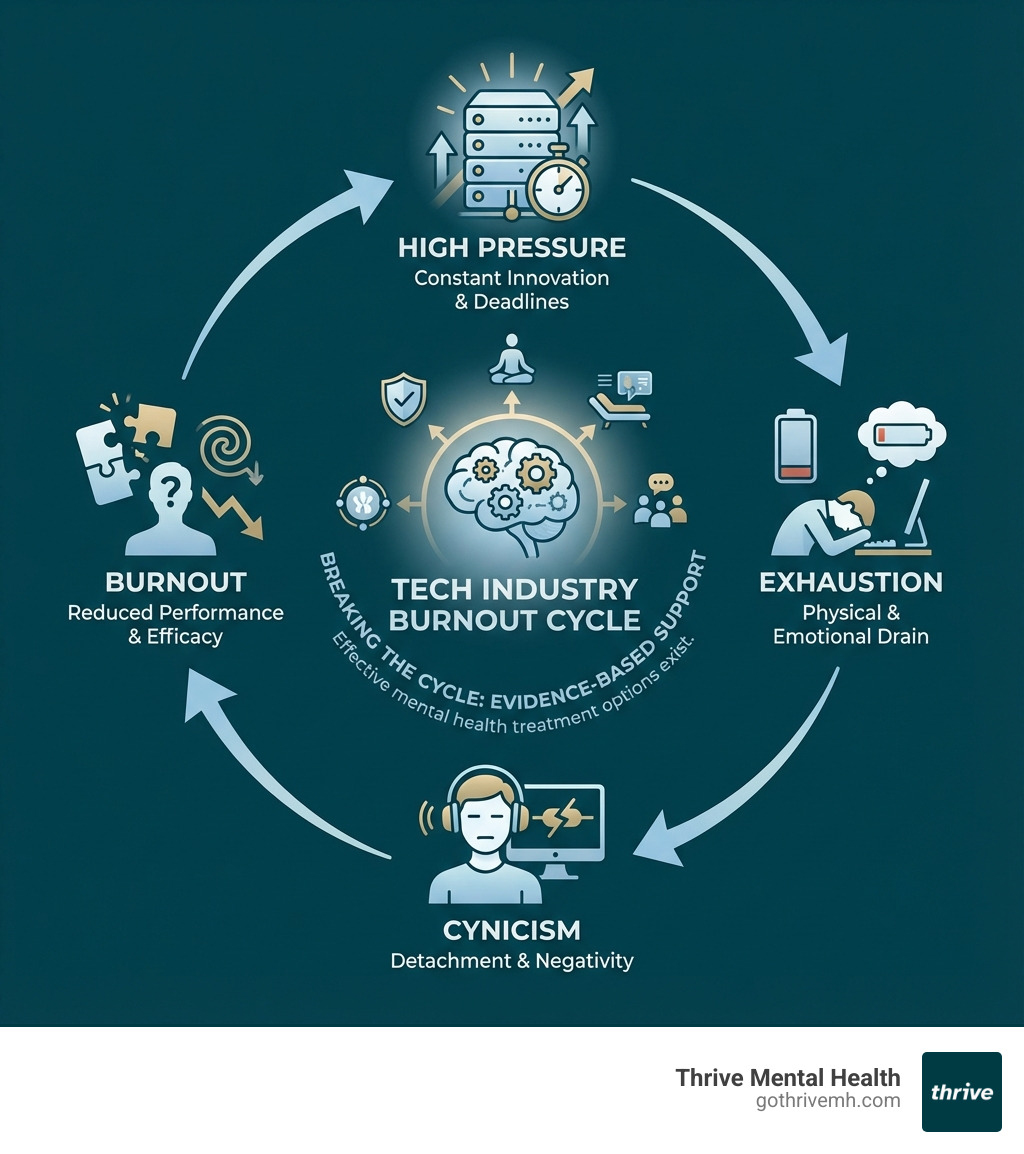
The tech industry, often characterized as , high-energy, and unrelenting, presents a unique crucible for mental health challenges. It’s an environment where the demand for constant innovation and rapid deployment can push even the most resilient individuals to their limits. This isn’t just about long hours; it’s about the pervasive culture of chronic workplace stress that, when unmanaged, leads directly to burnout.

Burnout isn’t just feeling tired; it’s a profound state of physical and emotional exhaustion, marked by reduced efficacy, cynicism, and depersonalization. According to The State of Burnout in Tech 2022, a staggering 56% of IT professionals with high burnout report feeling physically and emotionally drained. This isn’t a gender-neutral issue either, with 69% of women feeling run down compared to 56% of men. These numbers are alarming, indicating that 2 in 5 workers are at high risk of burnout.
Beyond burnout, tech professionals frequently grapple with:
- Imposter Syndrome: The persistent feeling of being a fraud despite evidence of success, often exacerbated by the rapid pace of technological change and the pressure to always be learning.
- Anxiety: Fueled by tight deadlines, high-stakes projects, and the fear of failure in a competitive landscape.
- Depression: A common outcome of prolonged stress, isolation (especially in remote or hybrid models), and a lack of work-life balance.
- Performance Pressure: The relentless expectation to deliver groundbreaking results, often with limited resources and aggressive timelines.
- Long Work Hours: The norm in many tech companies, blurring the lines between work and personal life and hindering recovery.
These stressors don’t just impact individual well-being; they have a significant ripple effect. An estimated one in five U.S. adults lives with a mental illness, and 70% of employees report that their mental health directly impacts their productivity. The global economy loses over $1 trillion each year due to depression and anxiety, underscoring the critical need for effective mental health solutions that address the specific pain points of the tech industry.
What Mental Health Treatment Options Work Best for Tech Industry Professionals?
When it comes to what mental health treatment options work best for tech industry professionals, we’ve learned that a “one-size-fits-all” approach simply doesn’t cut it. The ideal solutions blend digital-first accessibility, evidence-based therapies, and scalable intensive support, all while prioritizing personalization, privacy, and flexibility.
Digital-First Solutions: Why Apps & Virtual Care Win for Techies
Tech professionals live and breathe digital. It’s no surprise, then, that digital mental health solutions often resonate most strongly with this demographic. They offer unparalleled accessibility, privacy, and flexibilitycrucial factors for individuals with demanding schedules and a preference for technology-driven interactions.
Digital solutions are accessible at any time and from anywhere, providing help on demand without the long waits often associated with in-person therapy. They are convenient, easy to use, and, perhaps most importantly, anonymous. This anonymity can significantly reduce the stigma many feel about seeking mental health support, allowing them to engage early before issues become acute.
Consider the data: while traditional Employee Assistance Programs (EAPs) often suffer from underutilization, with engagement rates as low as 5%, AI-powered mental health solutions and mobile mental health tools boast usage rates between 25-40%. This drastic difference highlights a clear preference and a greater comfort level with digital modalities.
Online therapy, including text-based or video sessions, has proven to be as effective, if not more effective, than face-to-face therapy for many conditions. For instance, asynchronous text therapy can lead to clinically significant improvements in depression and anxiety symptoms. This flexibility allows tech professionals throughout Florida to integrate mental health care seamlessly into their busy lives, from the tech hubs of Miami and Tampa to remote workers across the state.
However, it’s crucial to acknowledge potential limitations. While digital tools like mood trackers are popular, some research suggests they may have a low probability of benefit and could even be detrimental, potentially exacerbating anxiety and stress by causing individuals to over-focus on negative emotions or feel pressure to constantly track their mood. The key is careful implementation and ensuring that participation is always voluntary and data confidential.
For those seeking effective digital solutions, our Virtual Therapy programs at Thrive Mental Health offer a flexible and private way to access licensed mental health professionals, designed to fit your schedule.
If you need more than weekly sessions, our higher-level care optionsIntensive Outpatient (IOP) and Partial Hospitalization (PHP)are available virtually and in-person across Florida.
What evidence-based therapies get the best results for burnout and anxiety?
Effective mental health treatment relies on evidence-based therapies. For tech professionals, specific modalities have shown significant promise, particularly when integrated into digital or personalized care plans.
| Therapy Type | Best For | Method | Format |
|---|---|---|---|
| Cognitive Behavioral Therapy (CBT) | Identifying and changing negative thought patterns, anxiety, depression | Structured, goal-oriented; challenges cognitive distortions | Digital apps, virtual 1-on-1, IOP/PHP |
| Mindfulness-Based Stress Reduction (MBSR) | Reducing stress, improving emotional regulation, present-moment awareness | Meditation, body scans, mindful movement | Digital apps, virtual groups, 1-on-1 |
| Stress Management Interventions | Targeted stress reduction, coping skills, preventing burnout | Practical techniques for managing stressors, relaxation exercises | Digital apps, virtual coaching, workshops |
- Cognitive Behavioral Therapy (CBT): CBT helps individuals identify and challenge unhelpful thought patterns and behaviors contributing to their distress. While some studies suggest purely digital, unguided CBT interventions might show minimal benefits in general workplace settings compared to other digital modalities, it remains a foundational therapy. For tech professionals, CBT is particularly effective for managing the anxiety and imposter syndrome often linked to performance pressure.
- Mindfulness-Based Stress Reduction (MBSR): Mindfulness focuses on cultivating present-moment awareness and non-judgmental acceptance. Research consistently shows that mindfulness-based interventions have positive and often moderately large effects on anxiety and depression symptoms, and can significantly improve generic well-being across all employee populations. This can be a powerful tool for tech professionals to counteract the constant mental noise and future-oriented stress of their jobs.
- Stress Management Interventions: These interventions provide practical tools and techniques for managing stress. They are highly effective for targeted groups (those already experiencing high stress) and can lead to significant reductions in stress, depression, and anxiety. However, some research cautions against delivering general stress management to unselected populations, as it could potentially increase anxiety. Personalized care plans are crucial here, ensuring the right intervention reaches the right person.
The power of personalized care plans and AI-driven insights cannot be overstated. AI and machine learning have the potential to personalize interventions, tailor content, and even enable early detection of mental health issues. By adapting content and feedback based on individual employee input, these technologies ensure that interventions are relevant and engaging, leading to better outcomes. This custom approach, as highlighted in a systematic review on custom digital health interventions, shows promising results for improving presenteeism, sleep, and stress levels in the workplace.
If you want a deeper dive into how custom programs work for young professionals in tech, explore our related guide: Best virtual mental health programs for young professionals.
Beyond Weekly Therapy: When You Need More Intensive Support (IOP/PHP)
Sometimes, weekly therapy, while valuable, isn’t enough to address significant mental health challenges like severe burnout, clinical depression, or pervasive anxiety that’s impacting daily functioning and career. This is where more structured, intensive support comes into play.
Intensive Outpatient Programs (IOP) and Partial Hospitalization Programs (PHP) are designed to bridge the gap between traditional outpatient therapy and inpatient care. They provide a higher level of clinical support without requiring you to step away from your life entirely.
- Intensive Outpatient Programs (IOP): IOPs typically involve 9-19 hours of structured therapy per week. They offer a blend of group therapy, individual counseling, and skill-building sessions. For tech professionals, our IOP programs at Thrive Mental Health often include flexible evening options, allowing you to maintain your work schedule while receiving comprehensive care. We offer both virtual and in-person IOPs across our locations in Florida.
- Partial Hospitalization Programs (PHP): PHPs provide the highest level of outpatient care, typically involving 20+ hours of therapy per week. They are ideal for individuals experiencing acute symptoms or who need more intensive support than an IOP can provide but do not require 24/7 hospitalization. Like IOPs, our PHP programs at Thrive are designed with the working professional in mind, offering a structured environment for healing and recovery.
These programs are particularly effective because they offer:
- Structured Support: A consistent schedule of therapeutic activities provides stability and a clear path to recovery.
- Group Therapy: Offers a powerful sense of community and shared experience, reducing feelings of isolation and normalizing struggles.
- Individual Counseling: Provides personalized attention and a safe space to explore deeper issues.
- Skill-Building: Teaches practical coping mechanisms, emotional regulation techniques, and strategies for managing work-related stress.
Many tech professionals in Florida’s growing tech hubs like Miami, Tampa Bay, Orlando, and Jacksonville also use their commercial insurance (including Cigna, Optum, Florida Blue, and others) to offset the cost of IOP and PHP.
You can see what your plan covers in about two minutes here: Start benefits check.
If you or someone you know is struggling or having thoughts of suicide, call or text the 988 Suicide and Crisis Lifeline at 988 or chat at 988lifeline.org. In life-threatening situations, call 911.
For HR & Leadership: How to Build a Mental Health Program That Actually Gets Used
Building a mental health program that genuinely impacts your tech workforce goes beyond ticking a box. It requires strategic leadership buy-in, continuous employee feedback, and a commitment to overcoming stigma. When done right, it fosters a supportive environment where innovation thrives, and people don’t just “move fast” but also “recover well.”

Ditching the Underused EAP: Key Features of a Modern Mental Health Solution
Traditional EAPs are often underused, with engagement rates as low as 5%. This is a direct consequence of being outdated, difficult to access, and stigmatized. Modern tech companies, however, are shifting towards solutions that prioritize accessibility, privacy, and tangible results.
Here’s what to look for in a mental health solution that actually gets used:
- Fast Access to Care: Tech professionals operate at high speed. They need mental health support that can match that pace. Solutions offering quick matching to providers or immediate access to resources are crucial.
- Diverse Provider Network: A wide range of licensed professionals, including therapists and psychiatrists, ensures that employees can find a provider who understands their unique needs and background.
- Care Navigation: Dedicated support to guide employees through the process, from initial assessment to finding the right therapist or program, can significantly boost engagement and adherence.
- Data Privacy (HIPAA Compliant): Trust is paramount. Employees must feel confident that their personal health information is secure and confidential. Any solution must be fully HIPAA compliant.
- Insurance Integration: Seamless integration with major insurance providers like Cigna, Optum, and Florida Blue makes accessing care straightforward and affordable. Employees shouldn’t have to jump through hoops to use their benefits.
- Measurable Outcomes: For HR and leadership, understanding the impact of their investment is key. Modern solutions provide data-driven insights into utilization, engagement, and clinical improvements (while maintaining individual privacy).
- Localized Support: For companies with employees across Florida, ensuring providers are licensed and services are available in-state is essential.
Implementing and promoting these solutions effectively requires a multi-pronged approach. Leaders must frequently communicate about available benefits, and openly sharing personal experiences can help destigmatize mental health support. Offer a variety of options, from self-guided apps to intensive programs, recognizing that not every employee will want the same type of support. Partnering with a provider that can deliver virtual IOP/PHP across Florida makes it easier to offer a consistent standard of care to distributed engineering and product teams.
The ROI of Mental Wellness: What are the measurable outcomes for tech companies?
Investing in employee mental health isn’t just the right thing to do; it’s a smart business decision with a significant return on investment (ROI). Depression and anxiety alone cost the global economy over $1 trillion each year in lost productivity. In the U.S., an estimated one in five adults lives with a mental illness, and mental ill-health costs employers billions annually.
For tech companies, the measurable outcomes of robust mental health support include:
- Reduced Absenteeism: When employees receive effective care, they are less likely to miss work due to mental health challenges. This directly translates to more consistent productivity.
- Increased Productivity: Studies show that effective mental health support can significantly improve productivity. For example, some programs report recovering an average of 2.1 hours of lost productivity per member each week. Overall, 61% of members improve their functionality.
- Lower Employee Turnover: A supportive work environment that prioritizes mental well-being leads to higher employee satisfaction and loyalty, reducing the costly cycle of recruitment and training.
- Improved Clinical Outcomes: Programs report impressive results, with 86% of members showing improvement in anxiety and depression. Furthermore, 72% of members with multiple therapy appointments stay with the same therapist, indicating effective, sustained care.
- Healthcare Cost Savings: By addressing mental health proactively, companies can mitigate more severe and costly health crises down the line.
These metrics demonstrate a clear link between investing in mental wellness and a healthier, more productive, and more engaged workforce. It’s an investment in your most valuable asset: your people.
If you’re exploring options for your teams in Florida tech hubs like Orlando, Miami, Tampa, or Jacksonville, you can learn how Thrive’s virtual programs fit alongside existing benefits here: remote mental health support.
Frequently Asked Questions about Mental Health Support in Tech
What is the first step to getting mental health help in the tech industry?
The first step is a confidential assessment to understand your needs. This can be through a digital platform, an EAP, or directly with a provider. The key is to find a starting point that feels private and accessible, allowing you to explore options without immediate commitment. At Thrive, you can begin with a quick, no-obligation benefits and program check.
Are mental health apps enough to treat burnout?
While apps are excellent for building coping skills, managing daily stress, and practicing mindfulness, they are often not sufficient to treat clinical burnout, anxiety, or depression. They work best as part of a comprehensive care plan that may include therapy or more intensive programs such as IOP or PHP.
How can I talk to my manager about my mental health?
Focus the conversation on your work-related needs, not a diagnosis. You can say, “I’m dealing with a health issue that’s affecting my focus. I’d like to discuss adjusting my workload or using my benefits to get support.” Frame it as a proactive step to maintain your performance.
What if weekly therapy isn’t helping enough?
If symptoms are still disrupting your sleep, focus, or ability to work even after consistent weekly therapy, it may be time to step up to a higher level of care. Programs like Intensive Outpatient (IOP) and Partial Hospitalization (PHP) offer 9–20+ hours of support per week without requiring you to live at a facility.
Does insurance cover virtual IOP/PHP for tech professionals?
In many cases, yes. Thrive works with major insurers such as Cigna, Optum, Florida Blue, and others for our programs in Florida. Coverage varies by plan, so the fastest way to know your costs is to start a benefits check.
Your Next Step: Finding a Treatment That Fits Your Life
The tech industry’s demands require mental health solutions that are just as flexible and innovative. A one-size-fits-all approach fails; effective treatment combines accessibility, evidence-based methods like CBT, and the right level of carefrom self-guided apps to structured programs. For those needing more than once-a-week therapy, virtual IOP and PHP programs offer a path to recovery without pausing your career. Thrive Mental Health provides these specialized, flexible programs designed for busy professionals across Florida.
If you’re a software engineer in Orlando, a product manager in Miami, a founder in Tampa, or a data scientist in Jacksonville, you don’t have to choose between your career and your mental health. Virtual and hybrid care mean you can attend sessions before work, after standups, or in the eveningwith insurance-friendly options through plans like Cigna, Optum, Florida Blue, and more.
Ready for support? Thrive offers virtual and hybrid IOP/PHP programs with evening options. Verify your insurance in 2 minutes (no obligation) Start benefits check or call 561-203-6085. If you’re in crisis, call/text 988.