
The Ins and Outs of Best Mental Health PHP for Adults with Depression

Why Choosing the Right PHP Could Cut Your Depression Recovery Time in Half
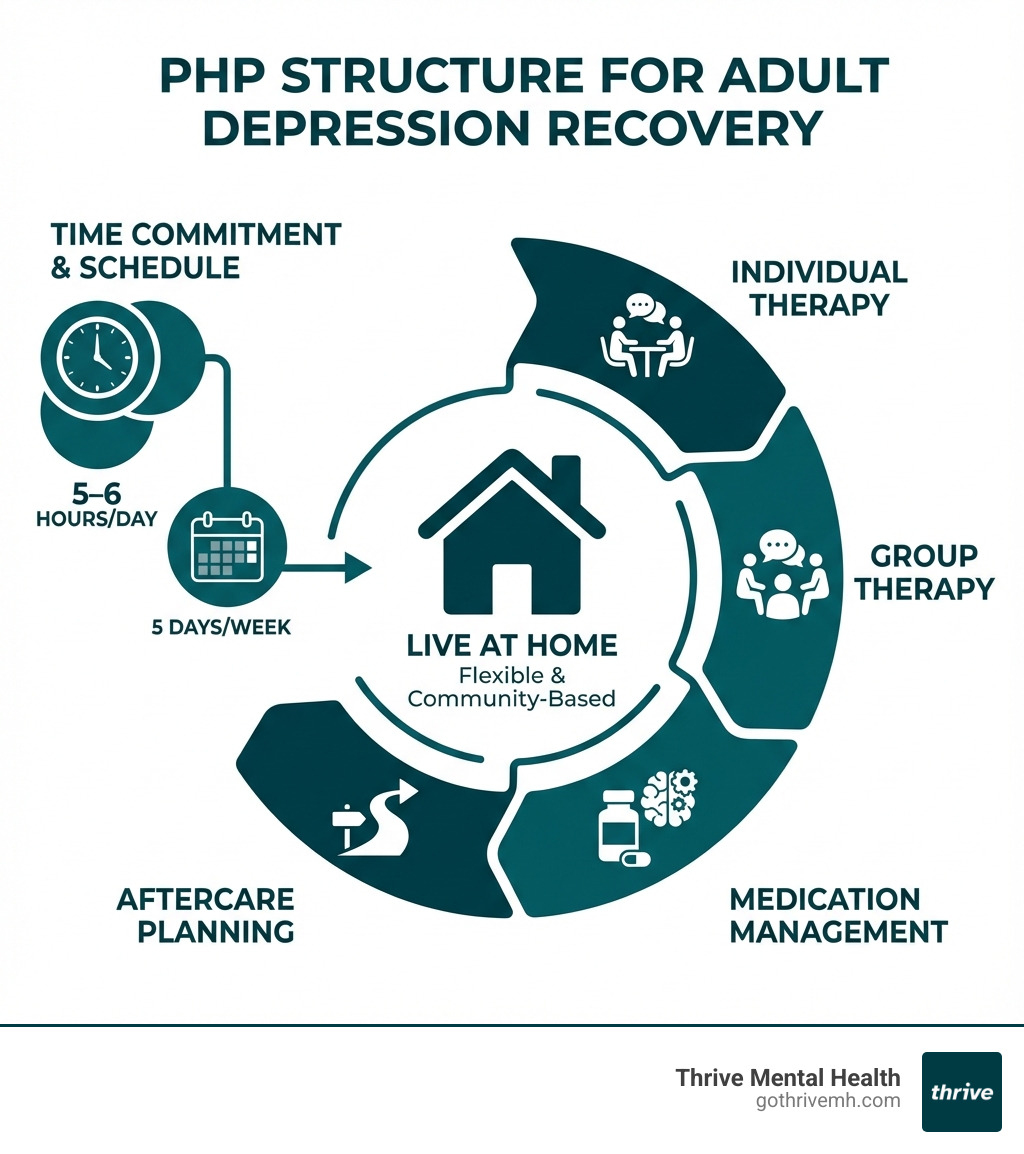
What’s the best mental health PHP for adults with depression? The best Partial Hospitalization Program (PHP) for adults with depression delivers intensive, evidence-based therapy 5–6 hours/day, 5 days/week while you live at home. It combines individual therapy, group therapy, medication management, and peer support through a multidisciplinary team. Key factors include accreditation, personalized care plans, proven therapies like CBT and DBT, insurance coverage, and a clear aftercare plan to prevent relapse.
Quick Answer: What Makes a PHP “Best” for Depression?
- Intensity: 25–30 hours/week of structured treatment
- Evidence-Based: CBT, DBT, ACT, IPT, mindfulness
- Expert Team: Psychiatrists, therapists, case managers
- Medication Management: SSRIs, SNRIs, dose adjustments
- Personalized Plans: Custom to your symptoms and goals
- Insurance Accepted: Cigna, Optum, Florida Blue, and more
- Aftercare Built-In: Step-down to IOP, relapse prevention
If you’re reading this, you’ve probably tried weekly therapy. Maybe you’ve been on antidepressants for months. But you’re still struggling to get out of bed, focus at work, or feel like yourself.
You need more than one hour a week. But you don’t need a hospital.
That’s where PHP comes in. It’s the middle ground between outpatient therapy and inpatient care—intensive enough to create real change, flexible enough to let you sleep in your own bed.
The problem? Not all PHPs are created equal. Some are just glorified group therapy. Others lack the medication expertise or aftercare planning that keeps you stable long-term.
This guide shows you exactly what to look for in the best mental health PHP for adults with depression—and how to spot the red flags before you commit.
I’m Nate Raine, CEO of Thrive Mental Health, where we’ve built IOP and PHP programs across Florida. Over the past decade, I’ve seen what works and what doesn’t when it comes to What’s the best mental health PHP for adults with depression—and I’m here to help you make the right choice for your recovery.
Explore More on Mental Wellness:
- Art Therapy for Adults
- The Connection Between Art and Mental Health
- Somatic Exercises for Mental Health
PHP vs. Inpatient vs. IOP: Which Level of Care Gets You Better, Faster?
If you’re in crisis or having thoughts of self-harm, call or text 988 now. You are not alone.
When depression weighs heavily, navigating treatment options can feel overwhelming. Understanding the different levels of care is crucial to finding what’s the best mental health PHP for adults with depression and your unique needs. We often hear about inpatient, outpatient, and intensive outpatient programs (IOPs), but where does a Partial Hospitalization Program (PHP) fit in?
-
Partial Hospitalization Program (PHP): Imagine a highly structured, intensive daily treatment program that runs for several hours a day, typically 5 days a week. The key difference? You return home each evening. This allows you to integrate new coping skills into your daily life and maintain some routines, offering a vital bridge between acute care and less intensive support. PHPs provide comprehensive care, including individual and group therapy, medication management, and skills training, all without requiring an overnight stay.
-
Inpatient Care: This is the most intensive level of care, involving a 24/7 hospital stay. Inpatient care is reserved for individuals in crisis who require constant supervision for their immediate safety, such as those at high risk of self-harm or experiencing severe psychosis. The focus here is on stabilization and ensuring safety before transitioning to a lower level of care like a PHP.
-
Intensive Outpatient Program (IOP): Less intensive than a PHP, an IOP typically involves fewer hours per day and fewer days per week (e.g., 3 hours/day, 3-4 days/week). IOPs are often a step-down from a PHP, providing continued structured support while allowing even greater flexibility for work, school, or other responsibilities.
-
Step-down/Step-up: PHPs are uniquely positioned as the “middle ground” or bridge in the mental health treatment continuum. They can serve as a “step-down” from inpatient hospitalization, easing the transition back into daily life with robust support. Conversely, a PHP can be a “step-up” for individuals whose symptoms are too severe for traditional weekly outpatient therapy but don’t warrant 24-hour inpatient care. This flexibility ensures that you receive the precise level of care needed to foster recovery and prevent relapse.
Here’s a quick comparison:
| Level of Care | Hours/Week | Live at Home? | Supervision | Best For |
|---|---|---|---|---|
| Inpatient | 24/7 | No | Constant | Crisis, safety risk |
| PHP | 25–30 | Yes | Daily | Severe symptoms, not in crisis |
| IOP | 9–12 | Yes | Several days/week | Moderate symptoms, step-down |
What Makes a PHP Actually Work for Depression?
The effectiveness of a PHP for adults with depression lies in its unique blend of intensive structure and real-world flexibility. Unlike inpatient care, which removes you from your environment, a PHP allows you to practice new skills in your daily life, making recovery more sustainable. Studies consistently show that structured programs like PHPs, which use evidence-based therapies, are highly effective in reducing symptoms of depression, improving overall functioning, and decreasing the need for future hospitalization. Our own research outcomes at Thrive Mental Health demonstrate that patients participating in our programs experience significant symptom reduction, improved functioning, and a better quality of life.
H3: How a PHP Is Structured for Real Results
A PHP is designed for impact. Here’s what you can expect from a typical program:
- 5–6 hours/day, 5 days/week: This full-day commitment ensures consistent engagement with therapeutic modalities, creating momentum for change. The intensity helps stabilize mood, teach coping mechanisms, and process emotions more effectively than weekly sessions.
- Live at home, keep your routines: This is a game-changer. You get to sleep in your own bed, maintain connections with family and friends, and manage your personal responsibilities. This real-world integration is crucial for practicing skills learned in therapy, like emotional regulation and distress tolerance, in the very environment where they’ll be needed most.
- 2–4 week average duration: While the length of a PHP can vary based on individual needs and progress, many programs, like ours at Thrive, aim for an average duration that allows for significant symptom reduction and skill acquisition. This collaborative approach between patients, families, and treatment teams determines the ideal length for individual progress.
- Structured, supportive environment: PHPs provide a safe, therapeutic space where you’re surrounded by peers facing similar challenges and supported by a multidisciplinary team. This structured routine is particularly beneficial for individuals whose daily lives have been disrupted by depression, helping to re-establish a sense of normalcy and purpose.
- Learn more about Thrive’s PHP program
H3: Who Should Choose a PHP?
A Partial Hospitalization Program is not for everyone, but for many adults struggling with depression, it’s the ideal treatment bridge. Consider a PHP if you are:
- Adults with moderate to severe depression: This program is specifically designed for individuals experiencing significant depressive symptoms that impair daily functioning, but who do not require 24-hour supervision.
- Struggling to function at work, home, or school: If your depression has made it difficult to maintain your responsibilities, attend classes, or engage in household tasks, a PHP can provide the intensive support needed to regain stability and improve your ability to function. Many of our patients are professionals or students in Florida who’ve experienced an interruption in their daily roles.
- Not actively suicidal or a danger to others: While PHPs can address suicidal ideation, they are generally for individuals who are medically stable and can maintain their safety outside of program hours. If you are in crisis, inpatient care is the immediate priority.
- Need more than weekly therapy, but not 24/7 care: This is the sweet spot for PHPs. You’ve recognized that traditional outpatient therapy isn’t enough to make meaningful progress, but you don’t need the constant supervision of an inpatient facility.
- Stable home environment: Having a supportive and safe home environment is important, as you will be returning there each day. This allows for continuity of care and the opportunity to apply new skills in a familiar setting.
Anatomy of the Best Mental Health PHP for Adults with Depression
Finding what’s the best mental health PHP for adults with depression means looking beyond basic offerings. A truly effective program is built on several foundational pillars that ensure comprehensive, personalized, and lasting recovery. At Thrive Mental Health, we integrate these essentials into our programs across Florida.
H3: Demand These 5 Essentials from Any PHP
- Multidisciplinary Team: The backbone of any excellent PHP is a team of diverse mental health professionals working in concert. This typically includes psychiatrists, licensed therapists (psychologists, social workers, counselors), case managers, and sometimes expressive art therapists. This team collaborates to create a holistic treatment plan, ensuring all aspects of your mental health are addressed. For example, a psychiatrist might manage medication, while therapists lead group and individual sessions, and case managers coordinate care and aftercare planning.
- Evidence-Based Therapies: Effective PHPs don’t just offer “talk therapy”; they use therapeutic modalities with proven efficacy in treating depression. These include:
- Cognitive Behavioral Therapy (CBT)
- Dialectical Behavior Therapy (DBT)
- Acceptance and Commitment Therapy (ACT)
- Interpersonal Psychotherapy (IPT)
- Mindfulness-Based Cognitive Therapy (MBCT)
These therapies are designed to help you understand and change unhelpful thought patterns, manage intense emotions, improve relationships, and develop effective coping strategies.
- Personalized Care Plans: No two experiences with depression are identical. The best PHPs recognize this, moving beyond a one-size-fits-all approach. A thorough initial assessment should lead to an individualized treatment plan custom to your specific symptoms, history, co-occurring conditions, and life goals. This plan should be regularly reviewed and adjusted based on your progress.
- Medication Management: For many adults with depression, medication plays a crucial role in recovery. A top-tier PHP will include psychiatric evaluation and ongoing medication management by a qualified psychiatrist or psychiatric nurse practitioner. This involves careful monitoring of antidepressant adjustments (SSRIs, SNRIs, NDRIs), managing side effects, and ensuring medication works synergistically with therapy. The APA’s Clinical Practice Guideline recommends second-generation antidepressants alongside psychotherapy for effective treatment.
- Aftercare Planning: Recovery is a journey, not a destination. A critical component of any effective PHP is robust aftercare planning. This involves preparing you for the transition out of the intensive program, whether it’s stepping down to an IOP, traditional outpatient therapy, or connecting with community resources. Aftercare plans focus on relapse prevention, skill maintenance, and ensuring ongoing support to sustain your progress.
What Therapies and Skills Will You Actually Get?
Beyond the structure, the core of what’s the best mental health PHP for adults with depression lies in the specific therapies and skills you acquire. These aren’t just abstract concepts; they’re practical tools you’ll use daily to manage your depression and build a more fulfilling life.
- CBT (Cognitive Behavioral Therapy): This powerhouse therapy helps you identify and change negative thinking patterns that fuel depression. You’ll learn to challenge distorted thoughts and replace them with more balanced, realistic ones. CBT is proven to be highly effective in treating depression, often yielding fast results by focusing on the present.
- DBT (Dialectical Behavior Therapy): Developed to help individuals manage intense emotions, DBT is incredibly valuable for depression, especially when co-occurring with anxiety or personality disorders. You’ll master skills in four key areas: mindfulness, distress tolerance, emotional regulation, and interpersonal effectiveness. This helps you steer difficult feelings without resorting to unhelpful coping mechanisms.
- ACT (Acceptance and Commitment Therapy): ACT focuses on building psychological flexibility. Instead of fighting painful thoughts and feelings, you learn to accept them and commit to actions aligned with your values. This therapy can be particularly empowering for chronic depression, shifting the focus from symptom eradication to living a rich and meaningful life despite discomfort.
- Group Therapy: This is a cornerstone of PHP and a powerful antidote to the isolation often experienced with depression. In group settings, you’ll connect with peers, share experiences, and receive support, reducing feelings of loneliness and stigma. Group therapy provides a safe space to practice new social skills, learn from diverse perspectives, and give and receive feedback. Research shows that group therapy can be just as effective as individual therapy for many mental health conditions, including depression. It helps normalize experiences and builds a sense of belonging.
- Medication: For many, medication is a vital component of depression treatment. Within a PHP, medication management involves expert oversight. Commonly prescribed antidepressants include Selective Serotonin Reuptake Inhibitors (SSRIs), Serotonin-Norepinephrine Reuptake Inhibitors (SNRIs), and Norepinephrine/Dopamine Reuptake Inhibitors (NDRIs). These medications help regulate neurotransmitters in the brain, improving mood and energy levels. Your psychiatric provider will carefully monitor your dosage, manage side effects, and adjust your regimen as needed. The APA’s Clinical Practice Guideline recommends these second-generation antidepressants for adult depression. Importantly, research indicates that combining medication with psychotherapy often leads to the best results, with a higher success rate than either treatment alone.
APA’s Clinical Practice Guideline for depression
Research: Medication + therapy = best results
Why group therapy works
How to Find the Best Mental Health PHP for Adults with Depression [4-Point Checklist]
Choosing the right PHP is a critical step in your recovery journey. With so many options available, particularly across our service areas in Florida, it is essential to know what to look for. Use this checklist to guide your decision and ensure you find what’s the best mental health PHP for adults with depression for you.

1. Check Clinical Quality and Accreditation
This is non-negotiable. Quality clinical care is the foundation of effective treatment.
- JCAHO accreditation, state licensure: Look for programs that are accredited by reputable bodies like the Joint Commission (JCAHO) and hold proper state licensure in Florida. This signifies adherence to high standards of patient care and safety.
- Evidence-based therapies only: Confirm that the PHP uses therapies proven to work for depression, such as CBT, DBT, ACT, IPT, and MBCT. Ask for details on their therapeutic approach and how it’s custom to depression.
- Licensed, experienced staff: Ensure the team consists of licensed and experienced professionals in their respective fields (psychiatrists, psychologists, social workers, counselors). Their expertise is vital for effective treatment.
- Low patient-to-staff ratio: A lower ratio means more individualized attention and support. This allows for more personalized care plans and deeper therapeutic engagement, which is crucial for complex conditions like depression.
2. Match Program Structure to Your Life
The “best” program is one that fits your needs and lifestyle, allowing you to maintain commitments while healing.
- Flexible scheduling (virtual, in-person, hybrid): Consider if the program offers options that suit you. Thrive Mental Health, for instance, offers virtual and hybrid IOP/PHP programs with evening options, making intensive treatment accessible for busy adults and young professionals in Florida. This flexibility is vital for those who need to balance treatment with work or family obligations.
- Treatment for co-occurring anxiety or substance use: Depression often co-occurs with other mental health disorders like anxiety or substance use. The best PHPs will offer integrated treatment plans that address all conditions simultaneously through a multidisciplinary team approach.
- Family involvement options: Family can be a crucial part of the recovery process. Inquire about family therapy, educational workshops for loved ones, or opportunities for family involvement in treatment planning, with your permission.
- Aftercare and relapse prevention: A strong PHP will have a clear plan for what happens after you complete the program. This includes step-down options to less intensive care, strategies for relapse prevention, and ongoing support to maintain your progress.
- Explore Thrive’s virtual and hybrid PHP/IOP
3. Confirm Insurance and Costs Upfront
Financial considerations are a real concern. Don’t let uncertainty add to your stress.
- In-network with Cigna, Optum, Florida Blue, and more: Verify that the PHP accepts your insurance. At Thrive Mental Health, we are in-network with many major insurance providers, including Cigna, Optum, and Florida Blue, to make treatment accessible. This is a crucial step to avoid unexpected out-of-pocket expenses.
- Transparent out-of-pocket costs, payment plans: Ask for a clear breakdown of all costs, including any co-pays, deductibles, or out-of-pocket maximums. Inquire about payment plans or financial assistance options if needed.
- Verify your insurance in 2 minutes
4. Understand the Admission and Treatment Process
Knowing what to expect can ease anxiety and ensure a smooth start to your recovery.
- Fast, confidential assessment: A reputable PHP will offer a prompt and confidential assessment process to determine if the program is the right fit for your needs.
- Clear referral and intake steps: Ask about the steps for referral and intake. This should be a straightforward process, often involving a call to an admissions coordinator.
- Individualized treatment plan: Confirm how your personalized treatment plan will be developed, who will be involved, and how often it will be reviewed and adjusted.
- Typical program length and step-down options: Understand the expected duration of the PHP and the available options for transitioning to a lower level of care, such as an IOP or traditional outpatient therapy. This ensures continuity and prepares you for long-term recovery.
Does PHP Really Work for Depression? [Data & Results]
The question isn’t just “What’s the best mental health PHP for adults with depression?”, but “Does it actually make a difference?” The answer, backed by extensive research and our own clinical outcomes at Thrive Mental Health, is a resounding yes.
- 60–70% see major symptom reduction in 4 weeks: Studies and clinical experience demonstrate that PHPs are highly effective. Patients frequently experience significant symptom reduction within a few weeks of starting a program. This intensive, structured approach creates rapid progress compared to less frequent therapy sessions. Our clients at Thrive Mental Health, for example, have reported 60% fewer depressive symptoms after treatment.
- Improved daily functioning, less need for hospitalization: Beyond symptom reduction, PHPs help individuals regain their ability to function in their daily lives. This includes improving performance at work or school, re-engaging in social activities, and managing household responsibilities. By providing this intensive support, PHPs effectively reduce the need for future inpatient hospitalizations, serving as a crucial preventative measure.
- Skills for long-term recovery: PHPs are not just about crisis management; they are about building resilience. You’ll acquire concrete skills in emotional regulation, distress tolerance, cognitive restructuring (challenging negative thoughts), and fostering social connection. These are the tools you’ll carry forward to manage future stressors and prevent relapse.
- Aftercare is key to lasting results: The benefits of a PHP extend far beyond the program’s duration, especially when combined with a robust aftercare plan. Transitioning to an IOP or ongoing outpatient therapy, as recommended by your treatment team, helps solidify the gains made and provides continued support as you reintegrate into your full daily life. This continuity of care is vital for sustainable recovery and preventing depressive episodes from returning.
FAQs: Best Mental Health PHP for Adults with Depression
What’s the difference between PHP and IOP for depression?
PHP (Partial Hospitalization Program) is more intensive, typically involving 25–30 hours of structured therapy per week. It’s best for severe depression that doesn’t require 24/7 inpatient care. IOP (Intensive Outpatient Program) is less intensive, usually 9–12 hours per week, and is often used as a step-down from PHP or for moderate depression.
Can I keep working or going to school during PHP?
Due to the demanding daily schedule (5–6 hours/day, 5 days/week), working full-time during a traditional PHP can be challenging. However, many programs, including Thrive Mental Health, offer virtual and evening PHP options in Florida that can provide more flexibility to accommodate work or school commitments.
What happens after I finish PHP?
After completing a PHP, you’ll transition to a lower level of care, typically an IOP or regular outpatient therapy. Your treatment team will create a personalized aftercare plan focused on maintaining your progress, practicing coping skills, and preventing relapse. This ensures a smooth transition and continued support.
Does insurance cover PHP for depression?
Yes, most major insurance plans, including Cigna, Optum, and Florida Blue, provide coverage for Partial Hospitalization Programs for depression. Coverage details can vary, so it’s always best to verify your specific benefits directly with your provider or through the treatment center.
How fast can I start a PHP?
At Thrive Mental Health, we understand the urgency of getting support. We strive to make our admission process efficient, and you can often start a PHP within days of your initial assessment in Florida.
Summary—What’s the Best Mental Health PHP for Adults with Depression?
Finding what’s the best mental health PHP for adults with depression is about making an informed choice for your well-being. The ideal program is one that’s clinically proven, accredited, and seamlessly integrates into your life. It offers expert-led, evidence-based therapies, real medication management, and a clear, actionable path to lasting recovery. Don’t settle for less than comprehensive care that empowers you with the skills to thrive. Use the checklist above to compare programs, ask the tough questions, and choose a PHP that truly gets you back to living your life.
Related: “How Virtual IOPs Cut Recovery Time by 50%”
Ready for support? Thrive offers virtual and hybrid IOP/PHP programs with evening options. Verify your insurance in 2 minutes (no obligation) → Start benefits check or call 561-203-6085. If you’re in crisis, call/text 988.