
Beginner’s Guide to IOP & PHP Mental Health Treatment Differences

Are You Choosing the Wrong Program? [IOP vs. PHP—What’s at Stake]
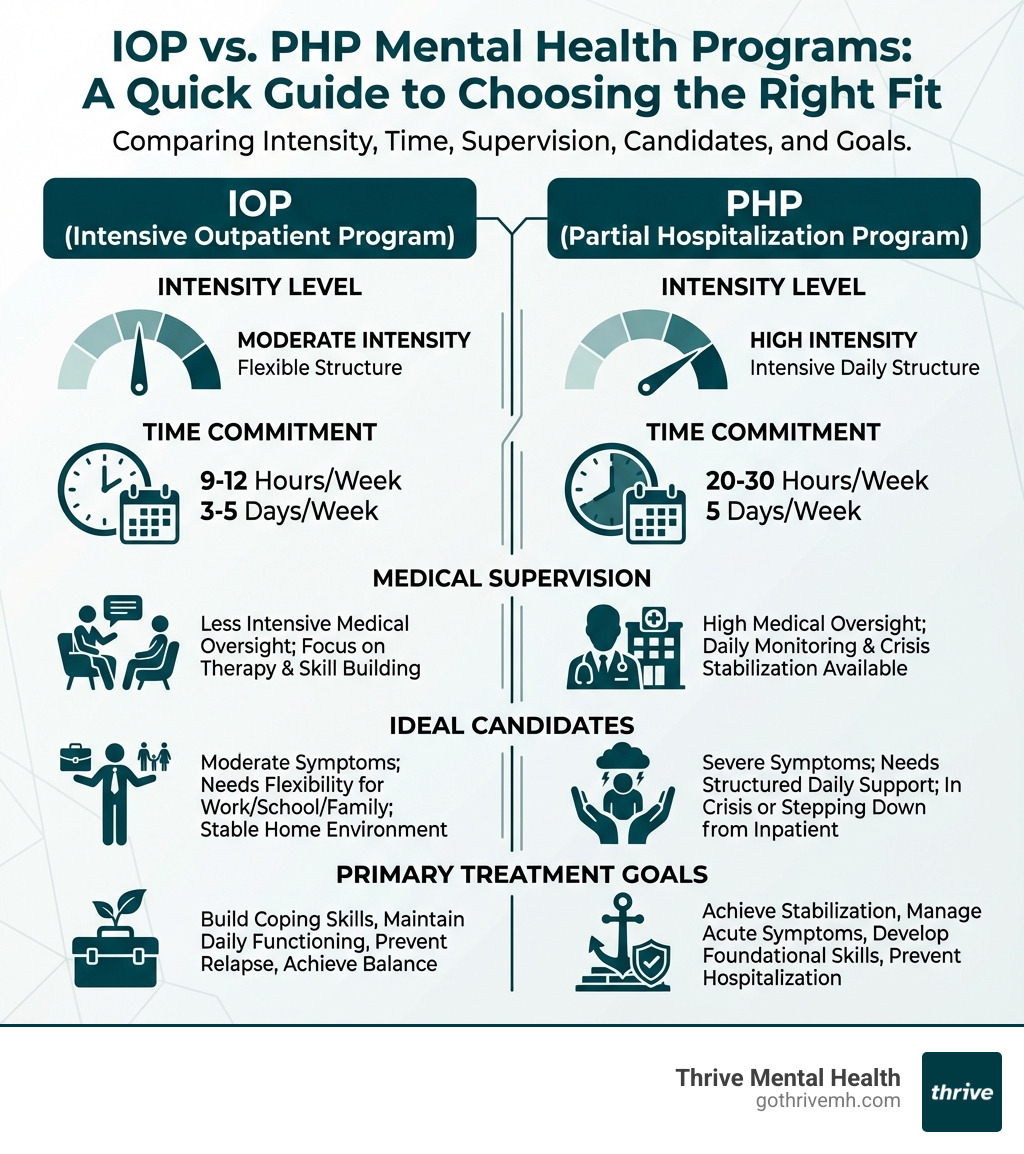
What’s the difference between IOP and PHP for mental health treatment? The core difference is intensity: PHP (Partial Hospitalization Program) requires 20-30 hours per week over 5 days and offers high medical oversight for severe symptoms, while IOP (Intensive Outpatient Program) involves 9-12 hours per week over 3-5 days with more flexibility to maintain work or school.
Quick Comparison:
| Program | Hours/Week | Days/Week | Best For | Key Feature |
|---|---|---|---|---|
| PHP | 20-30 | 5 | Severe symptoms, need medical supervision | Day treatment with crisis stabilization |
| IOP | 9-12 | 3-5 | Moderate symptoms, need flexibility | Balance recovery with daily life |
When you’re ready to step up from weekly therapy but not sure which path leads to faster recovery, choosing wrong costs you time, money, and momentum. PHP delivers intensive medical oversight for those in crisis or stepping down from inpatient care. You attend most of the day, five days a week, then go home at night. IOP gives you structured support while you keep working, studying, or managing family responsibilities. Sessions run a few hours, several times weekly.
Most people waste weeks in the wrong program because they guess instead of assess. Research shows both IOP and PHP work as well as residential care for sustained recovery—but only if you match your needs to the right intensity. If your symptoms disrupt daily functioning or you lack a stable home environment, PHP’s structure and medical monitoring can stabilize you fast. If you’re managing moderate symptoms with a solid support system, IOP’s flexibility helps you build coping skills without putting life on hold.
Insurance typically covers both programs through major carriers like Cigna, Optum, Florida Blue, and Aetna—especially in Florida, where Thrive Mental Health provides both in-person and virtual care. Virtual options expand access even further, delivering the same results without travel barriers.
I’m Nate Raine, CEO of Thrive Mental Health, and I’ve spent over a decade at the intersection of mental health innovation and evidence-based care, helping thousands steer the differences between IOP and PHP to find the right fit. Here’s what you need to know to choose confidently and start recovering faster.
What Are PHP and IOP? [No-Nonsense Definitions]
Understanding the core definitions of Partial Hospitalization Programs (PHP) and Intensive Outpatient Programs (IOP) is the first step to making an informed decision about your mental health journey. These programs offer a crucial middle ground for individuals who need more support than traditional once-a-week therapy but do not require the 24/7 supervision of inpatient hospitalization. We’ll break down each program, who it’s for, and the typical time commitment—so you can compare fast and avoid wasting precious time.
What is a Partial Hospitalization Program (PHP)?
A Partial Hospitalization Program (PHP) is a highly structured mental health treatment option that often serves as a “day treatment” program. It’s designed for individuals experiencing significant mental health challenges that require intensive daily support and monitoring, but who are stable enough to return home at night. Think of it as a bridge between inpatient care and less intensive outpatient programs.
In a PHP, patients typically engage in treatment for approximately 20 to 30 hours per week, attending sessions five days a week. This comprehensive approach includes a variety of therapeutic modalities aimed at stabilizing acute symptoms, developing coping skills, and preventing a return to inpatient care. PHPs often provide extensive medical and psychiatric oversight, making them suitable for those with severe symptoms or those transitioning from a crisis situation. The goal is to provide a safe, structured environment where individuals can receive intensive therapy and support while maintaining some connection to their home environment.
What is an Intensive Outpatient Program (IOP)?
An Intensive Outpatient Program (IOP) offers a flexible yet robust treatment option for individuals who need more support than traditional outpatient therapy but don’t require the full-day commitment of a PHP. IOPs are designed to provide structured, focused treatment while allowing participants to maintain their daily responsibilities, such as work, school, or family commitments.
Typically, an IOP involves attending therapeutic sessions for 9 to 12 hours per week, spread across three to five days. This schedule allows for a balance between receiving essential mental health care and integrating newly learned skills into everyday life. IOPs focus heavily on skill-building, relapse prevention, and developing effective coping strategies to manage mental health conditions. They are ideal for individuals with moderate symptoms who have a stable home environment and a strong desire to continue their recovery journey with significant professional guidance. Many of our clients at Thrive in Florida benefit from Virtual Intensive Outpatient Programs which offer the same high-quality care with added convenience.
PHP vs. IOP [2025]: What’s the Real Difference for Your Mental Health?
Choosing between a PHP and an IOP can feel like navigating a maze, but understanding the precise differences can save you from wasting time or money on the wrong level of care. We’ll provide a direct, head-to-head comparison to clarify exactly what each program entails.
| Feature | Partial Hospitalization Program (PHP) | Intensive Outpatient Program (IOP) |
|---|---|---|
| Time Commitment | 20-30 hours/week, 5 days/week (full days) | 9-12 hours/week, 3-5 days/week (few hours/day) |
| Structure | Highly structured, comprehensive, clinic-based | Structured yet flexible, allows daily responsibilities |
| Medical Supervision | High, includes psychiatrists, nurses, medication management | Moderate, includes medication management, less immediate medical oversight |
| Ideal Candidate | Severe symptoms, stepping down from inpatient, unstable home, high medical needs | Moderate symptoms, stable home, maintaining work/school, stepping down from PHP |
| Primary Goal | Acute symptom stabilization, crisis prevention, intensive therapy | Skill-building, relapse prevention, community integration, sustained recovery |
IOP vs. PHP: Intensity, Structure, and Flexibility
The most significant distinction between IOP and PHP lies in their intensity, daily schedule, and overall program duration. PHPs are considerably more intensive, often running for several weeks to a few months, with patients attending for the majority of the workday, five days a week. This intensive schedule provides a highly structured environment crucial for individuals who need consistent support and supervision to manage severe symptoms. It’s a stepping stone from inpatient care, offering a robust daily routine that mimics the structure of a residential program but allows you to return home each evening.
In contrast, IOPs offer more flexibility. While still structured, they are designed to fit around your existing life commitments. Programs typically last for one to three months, with sessions lasting a few hours per day, three to five days a week. This allows for greater community integration, enabling you to apply coping skills and strategies learned in therapy directly into your daily routine, whether it’s work, school, or family life. This balance of structured therapy and personal freedom is key for long-term recovery. Effective treatment data for IOPs shows they significantly reduce alcohol and drug use and improve mental health among people struggling with substance use disorder (SUD).
Supervision and Medical Oversight: How Much Support Do You Get?
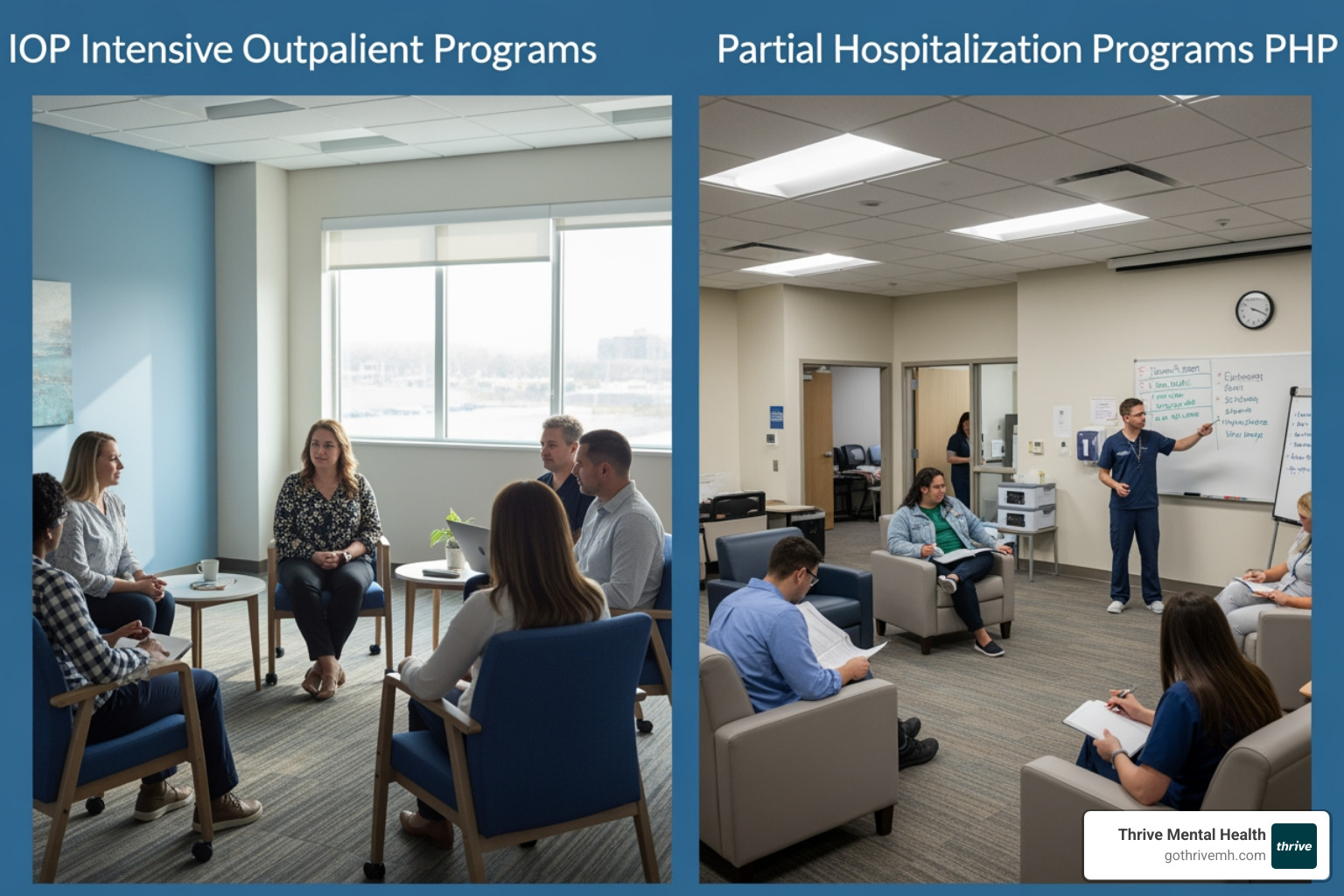
The level of supervision and medical oversight also varies significantly, a key difference between IOP and PHP for mental health treatment. PHPs offer a higher degree of medical supervision. This includes regular access to psychiatrists and nurses who can provide immediate support, manage medication, and address any acute medical or psychiatric needs that may arise during treatment hours. For individuals whose conditions require close monitoring and frequent adjustments to medication, this higher level of oversight in a PHP can be critical for stabilization and safety. PHPs are a cost-effective option for many patients who need more intensive care, especially in improving social functioning without entirely disrupting a patient’s environment. A review of PHPs found them to be a cost-effective option for improving social functioning.
IOPs, while providing robust therapeutic support, typically involve less frequent direct medical oversight. While Psychiatry Medication Management is often a component of IOPs, direct access to a psychiatrist or nurse may not be as immediate or constant as in a PHP. This makes IOPs suitable for individuals who are stable enough to manage their symptoms with less continuous medical supervision and who have a stable support system outside of program hours. The focus here shifts more towards therapeutic interventions and skill application rather than acute medical stabilization.
Cost and Insurance: What Will You Actually Pay?
The financial aspect is a crucial consideration for many. Generally, PHPs are more expensive than IOPs due to the higher intensity, longer daily hours, and greater medical oversight. However, both programs are typically covered by major health insurance providers.
At Thrive Mental Health, we understand that navigating insurance can be complex. That’s why we work with a wide range of insurance providers, including Cigna, Optum, Florida Blue, and Aetna, to ensure our programs are accessible to you. Whether you’re in Florida or seeking virtual care, we help you understand your benefits and minimize out-of-pocket expenses. We encourage everyone to check their Virtual IOP Insurance coverage to understand the specifics of their plan. Many insurance plans recognize the value of these intensive outpatient options, which can be a more cost-effective alternative to inpatient care while still providing a high level of treatment.
Who Should Choose PHP or IOP? [Match Your Needs—Don’t Gamble with Recovery]
Choosing the right level of care is paramount to effective mental health recovery. It’s not about guessing; it’s about matching the program to your specific needs to ensure lasting change. We help you understand who benefits most from each program, so you don’t gamble with your recovery.
Who Needs PHP? [Don’t Wait for a Crisis]
If you’re struggling with severe mental health symptoms that significantly impair your daily functioning, a Partial Hospitalization Program (PHP) might be your lifeline. PHPs are ideal for individuals who:
- Experience severe symptoms: You might be struggling with intense depression, anxiety, mood swings, or other mental health conditions that make it difficult to function independently.
- Require close medical oversight: If your condition necessitates frequent monitoring, medication adjustments, or you’re at risk of a crisis, the higher level of medical and psychiatric supervision in a PHP is crucial.
- Have an unstable home environment: While you return home nightly, the structured daily program provides a necessary buffer if your home life lacks consistent support.
- Are stepping down from residential care: A PHP is often the next logical step after inpatient treatment, providing continued intensive support as you transition back to daily life. This helps prevent relapse and solidifies the progress made in a more restrictive setting.
Our Guide to Partial Hospitalization Programs offers more in-depth information. PHPs are a powerful tool for stabilization and preventing the need for inpatient readmission, providing a comprehensive, therapeutic environment during the day.

Is IOP Right for You? [Balance Life and Recovery]
For those with moderate mental health symptoms who need substantial support without disrupting their entire life, an Intensive Outpatient Program (IOP) offers the perfect balance. IOPs are well-suited for individuals who:
- Have moderate symptoms: Your symptoms are disruptive but don’t require the constant, acute stabilization provided by a PHP. You can manage your daily life with significant therapeutic support.
- Possess a stable home environment: A supportive home life is beneficial, as you’ll be spending a significant amount of time there, integrating skills and coping mechanisms.
- Need to maintain work or school: The flexible schedule of an IOP allows you to continue with your job, education, or family responsibilities, making recovery a part of your life, not a pause from it.
- Are transitioning from PHP: Many individuals step down from a PHP to an IOP as their symptoms improve, allowing for continued growth and skill application in a less intensive setting.
- Are focused on building coping skills and relapse prevention: IOPs are excellent for developing practical tools to manage stress, regulate emotions, and prevent a return to unhealthy patterns.
The Benefits of an Intensive Outpatient Program include gaining independence while still having access to expert guidance and peer support.
What Therapies Will You Get? [Real Tools, Real Change]
Both PHP and IOP programs at Thrive Mental Health use a range of evidence-based therapeutic modalities to ensure real change and lasting recovery. These therapies are delivered through individual, group, and family sessions, custom to meet your unique needs. Some of the primary modalities we employ include:
- Cognitive Behavioral Therapy (CBT): This therapy helps you identify and challenge unhelpful thought patterns and behaviors, replacing them with healthier ones. It’s highly effective for conditions like depression, anxiety, and PTSD.
- Dialectical Behavior Therapy (DBT): Focusing on mindfulness, distress tolerance, emotion regulation, and interpersonal effectiveness, DBT is particularly beneficial for individuals struggling with intense emotions, impulsivity, and relationship difficulties.
- Eye Movement Desensitization and Reprocessing (EMDR): This powerful therapy is used to process traumatic memories and reduce their emotional impact, helping individuals find relief from PTSD and other trauma-related conditions.
- Group Therapy: A cornerstone of both PHP and IOP, group sessions provide a supportive community where you can share experiences, learn from peers, and practice new skills in a safe environment. Research shows group therapy can be just as effective as individual therapy for many mental health conditions.
- Individual Therapy: One-on-one sessions with a dedicated therapist allow for personalized attention, deeper exploration of personal issues, and custom strategies for your recovery.
- Family Therapy: Involving family members in the treatment process can significantly improve outcomes, helping to improve communication, resolve conflicts, and build a stronger support system at home.
Understanding the distinctions between these approaches, such as CBT vs DBT vs EMDR, can help you appreciate the comprehensive nature of our programs.
FAQs: IOP vs. PHP—What People Like You Ask Most
Can I work or go to school during PHP or IOP?
Yes, but with different levels of ease. IOP is specifically designed to allow you to maintain your daily responsibilities. Most people continue working or attending school while in an IOP due to its flexible scheduling (a few hours, a few days a week). PHP, being more intensive (full days, five days a week), often requires individuals to take time off from work or school. However, some PHP programs, particularly virtual ones like ours, may offer more flexible or evening options to accommodate certain schedules, especially for young professionals.
How do I know which level of care I need?
The best way to determine the right level of care for your unique situation is through a professional assessment. We don’t expect you to guess. A Thrive clinician will conduct a thorough evaluation of your symptoms, current functioning, personal history, and available support system. This assessment allows us to recommend the most appropriate program—whether it’s PHP or IOP—that aligns with your needs and recovery goals. We offer these assessments for our clients in Florida and through our virtual platform.
Are virtual IOP and PHP programs as effective as in-person?
Absolutely. Research shows virtual and in-person programs work equally well for many mental health conditions and substance use disorders. Virtual care offers significant benefits, including increased accessibility (especially for those in rural areas or with mobility challenges), reduced travel time and costs, and the comfort of receiving treatment from your own home. At Thrive, our virtual IOP and PHP programs deliver the same evidence-based therapies and expert clinical care as our in-person options, ensuring comparable outcomes and a seamless recovery experience.
Does insurance cover IOP and PHP?
Yes, most major health insurance plans typically cover both IOP and PHP programs. We work with a variety of providers, including Cigna, Optum, Florida Blue, and Aetna, to make our services accessible. Coverage details can vary based on your specific plan, especially for residents of Florida. We highly recommend verifying your benefits to understand your coverage, potential out-of-pocket expenses, and any prior authorization requirements. You can easily Verify your insurance in 2 minutes through our website—with no obligation.
Summary: Don’t Guess—Choose the Right Level of Care and Take Control
Navigating the landscape of mental health treatment can be daunting, but understanding what’s the difference between IOP and PHP for mental health treatment is your first step towards effective recovery. We’ve seen how choosing the right level of care can make or break your progress. IOP offers essential flexibility, allowing you to manage moderate symptoms and integrate recovery into your daily life. PHP provides a more intensive, structured environment with higher medical oversight, ideal for stabilizing severe symptoms or transitioning from inpatient care.
The good news is that both programs are proven effective and are typically covered by major insurance providers like Cigna, Optum, Florida Blue, and Aetna across our locations in Florida. Don’t risk your progress by guessing. Get a professional assessment from a Thrive clinician to ensure you start on the right program for your unique needs. Take control of your mental health journey today.
Ready for support? Thrive offers virtual and hybrid IOP/PHP programs with evening options. Verify your insurance in 2 minutes (no obligation) or call 561-203-6085. If you’re in crisis, call/text 988.
If you’re in crisis, call/text 988 right now. You are not alone.