
Buyer’s Guide: Best Betrayal Trauma Therapists in CA

Where to Find Betrayal Trauma Therapy CA: Fast Help 2025
You’re Not Broken—You’re Injured. Here’s How to Find Real Help Fast.
Where can I find a therapist specializing in betrayal trauma in Florida? You can find qualified therapists through:
- Online therapist directories: Use sites like Psychology Today or GoodTherapy and filter by “betrayal trauma” and “Florida.”
- Intensive outpatient programs (IOP/PHP): Thrive Mental Health offers virtual programs with statewide access for more intensive care.
- Key qualifications to demand: Look for a licensed professional (LMFT, LCSW, PhD) with specific trauma training (EMDR, CBT, IFS) and experience in betrayal-specific issues.
Infidelity. Hidden addictions. Financial lies. When the person you trusted most shatters your world, you’re not just heartbroken—you’re wounded. Your body won’t sleep. Your mind replays the betrayal. You feel anxious, angry, and doubt everything, including yourself.
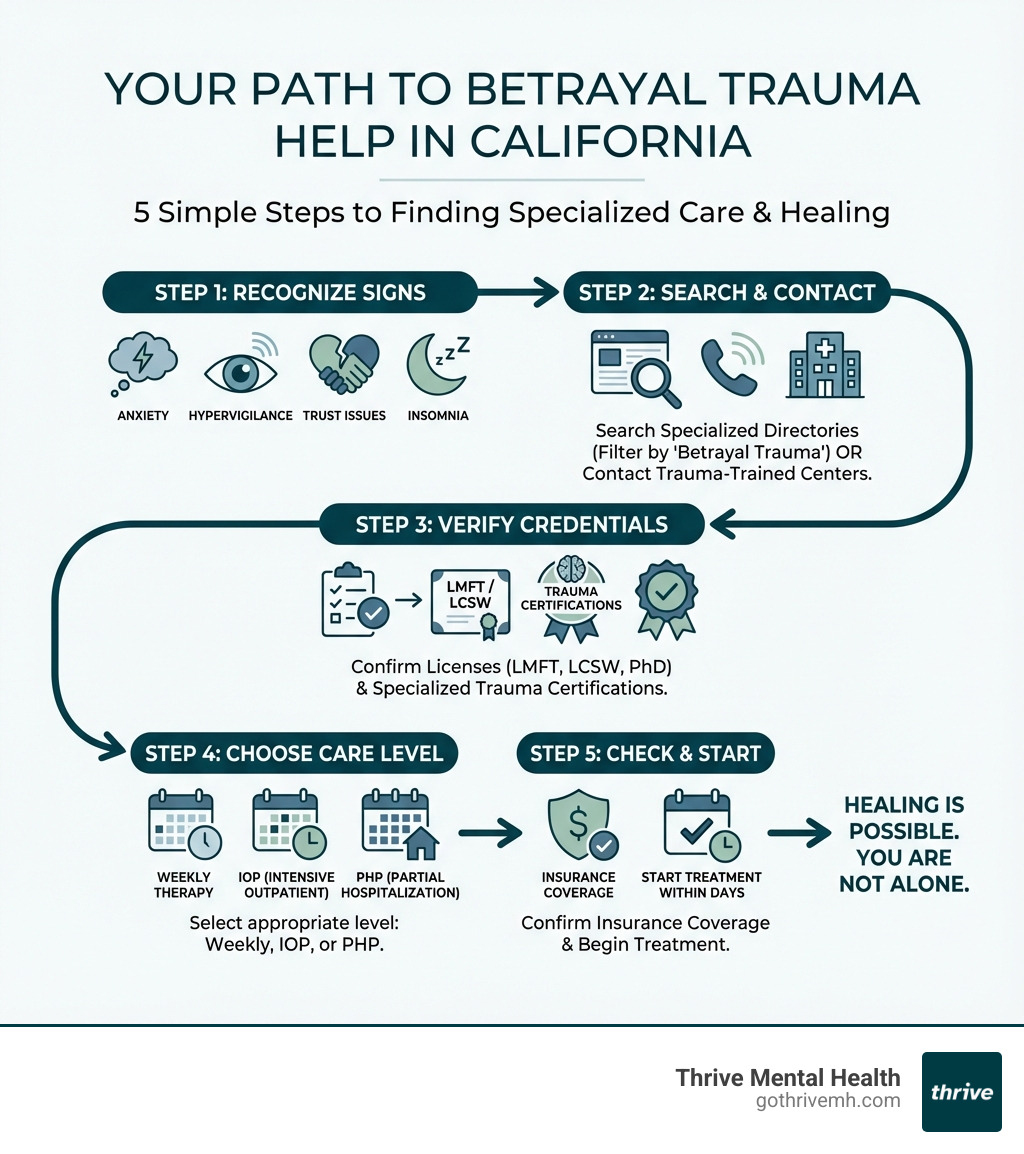
This isn’t weakness. It’s betrayal trauma, an injury with symptoms that can mirror PTSD: hypervigilance, intrusive thoughts, and a total loss of safety. Traditional weekly therapy can take years to heal this wound. You need specialized help, and you need it now.
This guide cuts through the noise. You’ll learn exactly how to find a trauma-trained therapist in Florida, what credentials matter, and how intensive care can cut your recovery time in half. No fluff. Just the truth about healing—and how to start today.
What Is Betrayal Trauma? Why It’s More Than Heartbreak
Betrayal trauma is a profound psychological injury, not just the sadness of a relationship ending. Coined by psychologist Jennifer Freyd, it occurs when a person or institution you depend on for safety violates your trust. The injury comes from a trusted figure—a partner, family member, or institution—shattering your fundamental sense of stability and identity.
Common causes of betrayal trauma include:
- Partner Infidelity: Physical or emotional affairs and secret relationships.
- Hidden Addictions: A partner’s secret substance abuse, gambling, or sex/porn addiction. The deception is often as damaging as the addiction itself.
- Financial Deception: Secret debts or manipulation of shared finances by a trusted partner.
- Emotional Abuse: Chronic gaslighting, manipulation, or emotional neglect.
This intimate violation can lead to anxiety, fear, depression, and self-doubt, with a mental health toll similar to Post-Traumatic Stress Disorder (PTSD). Healing isn’t just “getting over it”—it’s recovering from a deep wound.

Signs You Need Specialized Help
Your body and mind send powerful signals when you’ve been betrayed. Ignoring these red flags can entrench the trauma further.
Psychological and emotional symptoms:
- Emotional Chaos: Intense mood swings, anger, profound sadness, anxiety, and confusion.
- Cognitive Disruption: Difficulty thinking clearly, persistent doubt, and intrusive thoughts that replay the betrayal.
- Hypervigilance: A state of constant alertness, scanning for threats and making it impossible to relax.
- Avoidance: Avoiding people, places, or emotions that remind you of the trauma, leading to numbness.
- Shame and Self-Blame: Internalizing blame for the betrayal, leading to a loss of self-esteem and identity.
Physical symptoms:
- Physiological Distress: The psychological stress often manifests physically. Research confirms this can lead to insomnia, chronic headaches, stomachaches, and other unexplained aches and pains.
If these symptoms persist, it’s a clear sign you need professional help from a therapist specializing in betrayal trauma. This is a profound injury that requires expert care.
What Makes a Great Betrayal Trauma Therapist? Credentials That Matter
When you’re reeling from betrayal, you don’t just need any therapist—you need a trauma-informed expert. Not all therapists are equipped to handle this specific wound, so choosing the right professional is critical for your healing.
Must-Have Qualifications
An effective betrayal trauma therapist in Florida will have a combination of licenses, specialized training, and direct experience.
- Licensed Mental Health Professional: Ensure your therapist is licensed in Florida (e.g., LMFT, LCSW, PsyD, PhD). These credentials guarantee a high level of education and supervised clinical experience.
- Advanced Trauma Training: General therapy is not enough. Look for certifications or advanced training in evidence-based trauma modalities, such as:
- EMDR (Eye Movement Desensitization and Reprocessing): Highly effective for processing traumatic memories.
- IFS (Internal Family Systems): Helps heal the parts of you affected by trauma.
- Somatic Experiencing (SE): Focuses on releasing trauma stored in the body.
- Trauma-Focused Cognitive Behavioral Therapy (TF-CBT): Combines CBT with trauma-sensitive techniques.
- Certified Partner Trauma Therapist (CPTT): A specialized certification for working with partners of addicts who have experienced betrayal.
- Specific Experience with Betrayal Trauma: A specialist understands concepts like “betrayal blindness” (unconsciously ignoring betrayals) and “attachment ambivalence” (the conflict of wanting to stay connected while needing to pull away). Ask about their direct experience with infidelity, hidden addictions, or financial betrayal.
What Works: Evidence-Based Approaches
Healing from betrayal requires targeted interventions that address both psychological and physiological wounds.

- EMDR (Eye Movement Desensitization and Reprocessing): Helps reprocess distressing memories associated with the betrayal, reducing their emotional charge. It can be administered effectively online.
- CBT (Cognitive Behavioral Therapy): Focuses on identifying and changing negative thought patterns and distorted beliefs that arise from the trauma.
- Mindfulness and Somatic Therapies: Betrayal trauma is stored in the body. These therapies help release physical tension and regulate your nervous system, alleviating symptoms like chronic pain or digestive issues.
- Dialectical Behavior Therapy (DBT) Skills: DBT provides practical skills for managing intense emotions, tolerating distress, and setting healthy boundaries.
At Thrive Mental Health, we integrate these evidence-based modalities into our trauma-informed PTSD treatment options. Our virtual IOP and PHP programs provide comprehensive care designed to address the roots of your pain.
How to Find a Betrayal Trauma Therapist in Florida—Step-by-Step
Finding the right therapist while in distress can feel overwhelming. This clear, step-by-step guide helps you connect with the support you need quickly.
1. Search Smart—Use the Right Keywords
To find qualified professionals, use specific search terms in search engines and therapist directories:
- “Betrayal trauma therapist Florida”
- “Therapy for infidelity FL”
- “Virtual betrayal trauma IOP Florida”
- “CSAT Florida” or “CPTT Florida” (for addiction-related betrayal)
- “EMDR therapy for betrayal trauma”
On sites like Psychology Today, filter by specialization (“betrayal trauma,” “infidelity”), location (e.g., Miami, Orlando, Tampa), and therapy type.
2. Vet for Experience—Ask These Questions
During an initial consultation, ask direct questions to ensure the right fit:
- “What is your specific experience with betrayal trauma?”
- “Which trauma therapies do you use, and how do you apply them to betrayal?”
- “Do you offer intensive programs like IOP or PHP?”
- “What is your approach to rebuilding trust and setting boundaries?”
3. Choose the Right Level of Care
The intensity of your trauma dictates the level of care you need. Traditional weekly therapy is often not enough for a deep betrayal wound.
- Weekly Therapy: A common starting point, but can be a slow process for complex trauma.
- Intensive Outpatient Programs (IOP): Offer multiple hours of therapy per week, combining individual and group sessions for faster progress and more consistent support. Thrive Mental Health offers virtual IOPs across Florida.
- Partial Hospitalization Programs (PHP): The most structured outpatient care (several hours a day, five days a week), ideal for severe symptoms that impair daily functioning.
Choosing an IOP or PHP can accelerate your healing. Compare Thrive’s IOP and PHP options to see which fits your needs.
4. In-Person vs. Virtual Therapy—Which Is Best?
In a large state like Florida, virtual therapy offers unparalleled access to specialized care.
| Feature | In-Person | Virtual (Thrive) |
|---|---|---|
| Accessibility | Limited by location (e.g., only in Miami, Orlando) | Statewide, flexible, accessible from anywhere in Florida |
| Privacy | May encounter others in waiting rooms | 100% private in the comfort of your own home |
| Cost | Often higher due to overhead, travel costs | Lower, no commute, potentially more affordable |
| Insurance | Varies widely by provider and plan | Thrive accepts Cigna, Optum, Florida Blue, Medicaid, TRICARE, and more |
| Effectiveness | Equal if trauma-trained | Equal or better with IOP/PHP structure and consistent engagement |
| Convenience | Requires travel, fixed schedule | Flexible scheduling, no travel time, fits busy lives |
Virtual therapy eliminates the stress of traffic and travel, allowing you to focus on healing. Thrive Mental Health specializes in virtual IOP and PHP programs across Florida, from Miami to Jacksonville. Explore Thrive’s virtual therapy options to see how we can support you.
What Does Betrayal Trauma Therapy Cost in Florida? Insurance, Rates, and Savings
Understanding the financial aspect of therapy is a crucial step. In Florida, costs vary, but there are ways to make specialized betrayal trauma treatment manageable.
- Session Rates: Individual therapy in Florida typically ranges from $150 to $250+ per hour. Specialists with advanced certifications (EMDR, CPTT) may be at the higher end.
- Intensive Programs: While the upfront cost of an IOP or PHP is higher than weekly therapy, they often lead to faster results, potentially saving you money long-term by shortening the overall treatment duration.
- Insurance: Thrive Mental Health is committed to accessibility and partners with many major insurance providers, including Cigna, Optum, Florida Blue, Medicaid, and TRICARE. This allows many Floridians to cover our virtual IOP and PHP programs.
- Out-of-Network Benefits: If we are not in-network with your plan, many PPO insurance plans offer out-of-network benefits. We can provide a “superbill” for you to submit for reimbursement.
- Sliding Scale: Some individual therapists adjust fees based on income. It’s always worth asking if this is an option.
Don’t let cost deter you from getting help. We encourage you to verify your insurance coverageit takes just two minutes with no obligation. Start your benefits check here to see what your plan covers.
How Long Does Betrayal Trauma Therapy Take? What to Expect
The healing journey is not a race, but you don’t want to prolong it unnecessarily. The duration of therapy depends on the severity of the trauma, your coping mechanisms, and the intensity of your treatment.
Healing typically unfolds in phases:
- Stabilization (Weeks to Months): The initial focus is on establishing safety and managing acute symptoms like anxiety, insomnia, and intrusive thoughts. The goal is to regain a sense of control.
- Processing (Months): Once stable, you’ll work on processing the trauma itself using modalities like EMDR or CBT. This involves exploring the betrayal’s impact and reprocessing traumatic memories.
- Rebuilding (Ongoing): This final phase is about reclaiming your life. You’ll focus on restoring trust (in yourself and others), rebuilding your identity, and setting firm boundaries.
While there is no fixed timeline, intensive programs (IOP/PHP) can cut recovery time by 50% or more compared to weekly therapy. A higher level of care provides more frequent and comprehensive support, allowing for deeper work in a shorter period. This focused approach helps you move forward with your life much faster.
Can Couples Therapy Help Betrayal Trauma? Read This First
The question of couples therapy after betrayal is complex. Rushing into it too soon or with the wrong therapist can be counterproductive or even harmful.
- Individual Therapy First: It is crucial for the betrayed partner to engage in individual therapy first. The primary focus must be on your safety, stabilization, and processing your own trauma in a space free from pressure or blame.
- Couples Therapy with a Specialist: If and only if the betrayed partner feels stable and both partners are committed, couples therapy can be considered. It must be led by a therapist specifically trained in betrayal trauma and infidelity recovery. A general couples therapist may inadvertently cause more harm by pushing for premature forgiveness.
- The Goal is Accountability: The aim of couples therapy is not to “fix” the betrayed partner. It is to facilitate a process where the betrayer takes full accountability, demonstrates remorse, and works to rebuild trust through transparency. The therapist helps establish clear boundaries and communication skills.
The betrayed partner needs individual therapy to process complex emotions and make empowered decisions. The partner who cheated needs therapy to understand their actions and prevent future betrayals. For more on this, read our article: Should You Try Couples Therapy After Betrayal?
FAQ: Betrayal Trauma Therapy in Florida
Is betrayal trauma a real diagnosis?
No, “betrayal trauma” is not a formal diagnosis in the DSM-5. However, it is a widely recognized clinical framework. The symptoms often overlap with diagnoses like PTSD, anxiety, and depression, and specialists treat it with proven trauma-informed approaches.
Can you fully recover from betrayal trauma?
Yes. While the memory may remain, you can fully heal from the traumatic impact. With specialized therapy, you can process the pain, reduce symptoms like hypervigilance, rebuild your sense of self and safety, and learn to trust again.
How do I know if it’s betrayal trauma or just heartbreak?
Heartbreak is grief and sadness from a loss. Betrayal trauma is a deeper psychological injury with PTSD-like symptoms: hypervigilance, intrusive thoughts, a shattered sense of safety, and physical symptoms like insomnia. It’s a fundamental disruption of your worldview.
Does insurance cover betrayal trauma therapy?
Yes, many insurance plans cover therapy for conditions stemming from betrayal trauma (like PTSD or anxiety). Thrive Mental Health partners with major providers like Cigna, Optum, and Florida Blue, as well as Medicaid and TRICARE. We make it easy to verify your coverage.
How fast can I start therapy?
At Thrive Mental Health, we prioritize getting you support quickly. You can typically start our virtual IOP or PHP programs within days of your initial assessment. We offer evening options to fit your schedule, ensuring care is always accessible.
Summary: Where Can I Find a Therapist Specializing in Betrayal Trauma in Florida?
Betrayal trauma is a real and treatable injury that demands specialized care. It’s more than heartbreak—it’s a violation of trust that can leave you with PTSD-like symptoms. This guide has shown you where to find a therapist specializing in betrayal trauma in Florida, emphasizing the need for licensed, trauma-trained professionals.
The fastest path to healing is often through an intensive program like Thrive’s virtual IOP or PHP, which can significantly cut recovery time. Virtual care offers accessibility and privacy across Florida, and insurance often covers these vital services. Don’t wait to reclaim your life—your healing journey can start today.
Ready for support? Thrive offers virtual and hybrid IOP/PHP programs with evening options. Verify your insurance in 2 minutes (no obligation) or call 561-203-6085. If you’re in crisis, call or text 988.