
All About Comprehensive Mood Disorder Care Programs

[988 Disclaimer]
If you’re in crisis or having thoughts of self-harm, call or text the 988 Suicide & Crisis Lifeline right now. You are not alone.
All About Comprehensive Mood Disorder Care Programs
Why Most People Never Get the Mood Disorder Treatment They Actually Need
Which mental health programs provide comprehensive mood disorder care? Programs that offer comprehensive mood disorder care include Intensive Outpatient Programs (IOP) and Partial Hospitalization Programs (PHP), which provide structured, multi-layered treatment combining individual therapy, group sessions, medication management, and family support—all delivered by specialized mental health teams. These programs fill the critical gap between weekly therapy and inpatient hospitalization for people who need more than standard outpatient care.
Quick Answer: The 3 Program Types That Provide Comprehensive Mood Disorder Care
- Intensive Outpatient Programs (IOP) – 9-12 hours/week of structured therapy, ideal for moderate symptoms
- Partial Hospitalization Programs (PHP) – 20-30 hours/week of daily treatment, for severe symptoms or step-down from higher care
- Specialized Mood Disorder Clinics – Research-integrated centers offering advanced treatments for treatment-resistant cases
Here’s the reality: over 20 million Americans struggle with depression or bipolar disorder right now. The World Health Organization calls depression the leading cause of disability worldwide. Yet most people only have access to weekly therapy—which often isn’t enough when you’re dealing with a serious mood disorder.
If you’ve been in therapy for months without real progress, you’re not failing. The system is. Weekly sessions work for some people. But if your symptoms are moderate to severe, you likely need a higher level of care—something structured, intensive, and proven to work.
That’s where comprehensive mood disorder programs come in. These aren’t your typical therapy appointments. They’re multi-disciplinary treatment programs that combine medication management, evidence-based therapy (like CBT and DBT), group support, and personalized care plans—all coordinated by a team of psychiatrists, therapists, and case managers.
Around 6.9% of adults in the UK report experiencing a mood disorder in any given week. In the U.S., that’s roughly 3.8 million people. Many of them need more than weekly therapy, but they don’t know where to turn.
This guide breaks down which mental health programs provide comprehensive mood disorder care, how they work, and how to access them—including insurance coverage options in Florida.
I’m Nate Raine, CEO of Thrive Mental Health, and I’ve spent over a decade building mental health programs that integrate clinical care with evidence-based outcomes—including IOP and PHP programs designed specifically for people asking which mental health programs provide comprehensive mood disorder care. My focus is making high-quality, accessible treatment available to people who need more than standard outpatient therapy.
Which mental health programs provide comprehensive mood disorder care? terminology:
- I need mental health treatment that’s more intensive than weekly therapy but less than inpatient care. What are my options in Miami, FL?
- Mental health treatment centers in Tampa Bay, Florida.
Do You Need More Than Therapy? How to Know If You Have a Mood Disorder
This section helps you spot the signs, understand the causes, and know when to get help—before things get worse.
Mood disorders are more than just “feeling sad.” They are persistent or recurring disturbances in mood that significantly impact your daily life, relationships, and ability to function. They’re characterized by changes in mood that don’t have the usual connection with what is occurring in a person’s life, and they rarely improve without professional intervention. Understanding the specific type of mood disorder you’re facing is the first step toward effective treatment.
6 Most Common Mood Disorders (And How They Show Up)
- Major Depressive Disorder (MDD): Often called clinical depression, MDD is characterized by persistent sadness, a profound loss of interest or pleasure in activities you once enjoyed (anhedonia), and a range of emotional and physical symptoms. These can include feelings of guilt or worthlessness, fatigue, changes in appetite or sleep patterns, difficulty concentrating, and thoughts of self-harm or suicide. If these symptoms last for two weeks or more, it’s crucial to seek professional help.
- Bipolar Disorder (I & II): This condition involves extreme mood swings that include episodes of intense mania (liftd mood, high energy, impulsivity, decreased need for sleep) and episodes of deep depression. Bipolar I often features full-blown manic episodes, while Bipolar II involves less severe hypomanic episodes alternating with depressive phases. Maintaining stability is crucial for individuals with Bipolar Disorder, as consistent management strategies can help reduce the risk of more severe episodes.
- Persistent Depressive Disorder (Dysthymia): Formerly known as Dysthymia, this is a long-term, chronic form of depression where symptoms are less intense but much more enduring, lasting for at least two years. Individuals often describe it as a constant low-grade sadness, fatigue, and irritability, which can become so ingrained that they view it as their “normal” state. Proper treatment can substantially improve quality of life.
- Cyclothymic Disorder: A milder, yet still disruptive, form of bipolar-like mood fluctuation. People with cyclothymic disorder experience numerous periods of hypomanic symptoms and numerous periods of depressive symptoms for at least two years, but these do not meet the full criteria for manic, hypomanic, or major depressive episodes. It’s often overlooked due to its less dramatic swings, but it still significantly impairs daily functioning.
- Seasonal Affective Disorder (SAD): A type of depression that typically occurs during specific seasons—most commonly winter—due to reduced natural sunlight. Symptoms can include low energy, increased sleep, carbohydrate cravings, and social withdrawal. Light therapy, outdoor physical activity, and vitamin D supplementation, alongside traditional psychotherapy, can be effective.
- Premenstrual Dysphoric Disorder (PMDD): This is a severe form of premenstrual syndrome (PMS), characterized by significant mood shifts, irritability, depression, or anxiety that occur in the week or two before a woman’s period and improve shortly after menstruation begins. PMDD can be debilitating and significantly impact quality of life.
Why You? The Real Causes and Risk Factors
Mood disorders are complex. They don’t just happen because of one thing. Instead, they arise from a complex interplay of genetic, biological, environmental, and psychosocial factors. Understanding these factors can help us tailor a more effective treatment plan.
- Genetics: If you have a family history of mood disorders, your risk can be higher. Genetic predispositions mean you might be more vulnerable, but it doesn’t guarantee you’ll develop a condition.
- Brain chemistry (serotonin, dopamine): Neurochemical imbalances play a significant role. Key neurotransmitters like serotonin, dopamine, and norepinephrine are crucial for mood regulation. Imbalances can disrupt brain function and contribute to mood disorder symptoms.
- Trauma or chronic stress: Traumatic experiences, adverse childhood events, or prolonged periods of chronic stress can profoundly impact brain development and function, making individuals more susceptible to mood disorders.
- Major life changes: Significant life transitions such as job loss, divorce, grief, or the birth of a child (as seen in postnatal depression) can trigger or exacerbate mood disorder symptoms.
- Medical conditions: Certain medical conditions, including chronic illnesses, neurological disorders, and hormonal imbalances, can increase the risk of developing mood disorders.
- Substance use: Substance abuse can both trigger and worsen mood disorders, creating a vicious cycle that requires integrated treatment for both conditions.
Red Flags: Symptoms You Can’t Ignore
It’s easy to dismiss persistent feelings of sadness or irritability, but certain signs warrant professional attention. Early diagnosis and intervention are crucial in mitigating risk and facilitating access to appropriate mental health resources.
[Callout Box] If you’re in crisis, call/text 988 right now. You are not alone.
Watch for these red flags:
- Emotional: Persistent feelings of sadness, hopelessness, or irritability that don’t go away. A notable loss of interest or pleasure in activities you once enjoyed. Feelings of guilt or worthlessness.
- Physical: Significant changes in appetite or weight (either increase or decrease). Sleep disturbances (insomnia or sleeping too much). Chronic fatigue or low energy levels, even after rest.
- Behavioral: Social withdrawal, avoiding friends and family. A noticeable decrease in motivation or productivity. Increased use of substances.
- Cognitive: Difficulty concentrating, making decisions, or remembering things. Feeling restless or agitated.
- Suicidal thoughts: Any thoughts of self-harm, suicide, or wishing you weren’t alive are serious and require immediate professional help. If you or someone you know is experiencing these, please reach out to the 988 Suicide & Crisis Lifeline immediately.
Early diagnosis can prevent complications, improve treatment efficacy, reduce the risk of additional mental health problems, minimize disruption to life, and allow for the creation of a strong support network. If you notice these signs in yourself or a loved one, especially in our communities across Florida, it’s time to seek help.
What Does a Comprehensive Mood Disorder Program Actually Include?

Not all programs are created equal. A truly comprehensive program offers a holistic approach that goes far beyond weekly therapy. It’s designed to provide the intensive support needed to stabilize symptoms, develop coping skills, and build a foundation for long-term recovery. Here’s what sets real, results-driven care apart.
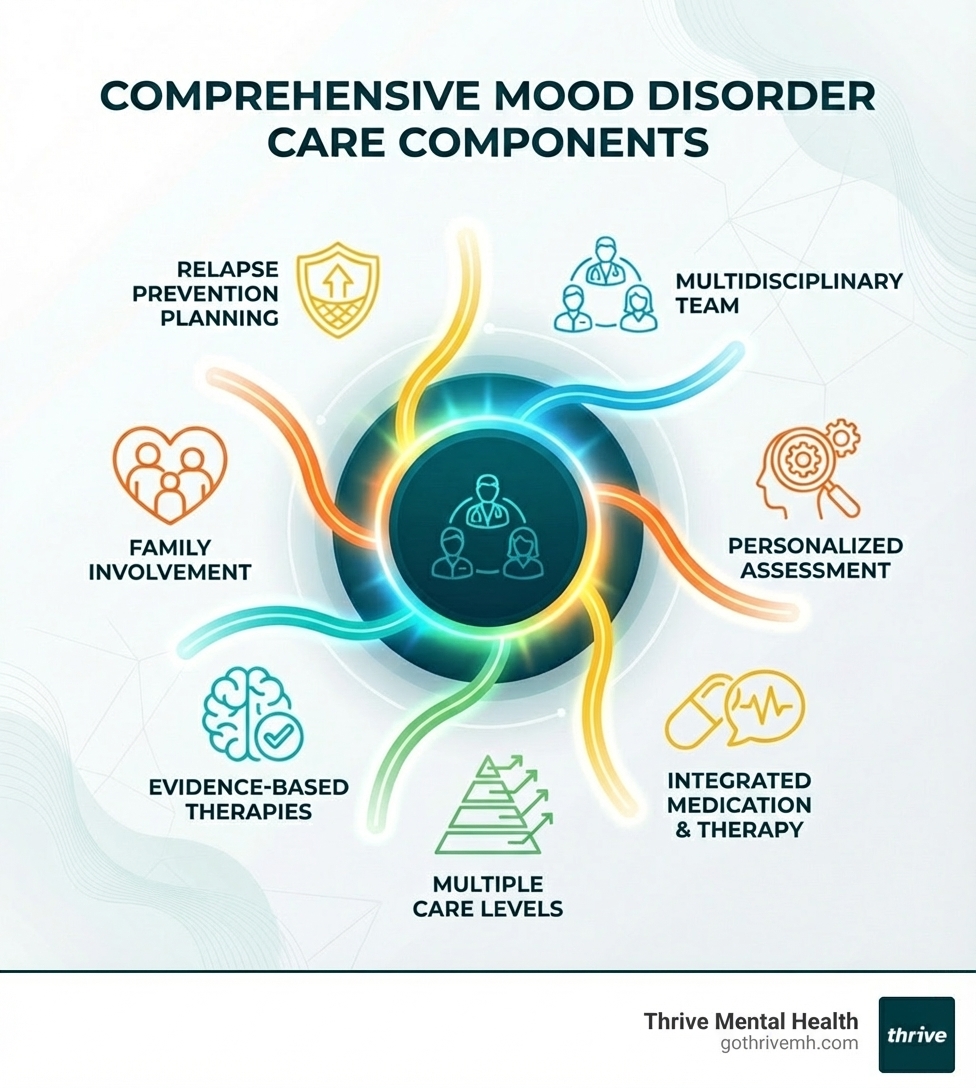
The 7 Pillars of Comprehensive Mood Disorder Care
When we talk about which mental health programs provide comprehensive mood disorder care, we’re looking for programs built on these essential pillars:
- Multidisciplinary Team (Psychiatrists, Therapists, Case Managers): Comprehensive care means a collaborative approach. Our teams typically include psychiatrists for medication management, psychologists and licensed therapists for individual and group therapy, and case managers to coordinate care and provide practical support. This multispecialty team approach ensures every aspect of your well-being is addressed.
- Personalized Assessment & Diagnosis: Effective treatment starts with an accurate diagnosis. We conduct comprehensive assessments that consider your unique history, symptoms, and co-occurring conditions. This personalized approach allows us to tailor interventions precisely to your needs, rather than a one-size-fits-all solution.
- Integrated Treatment (Medication + Therapy): The most effective management of mood disorders often requires a combination of medication and psychotherapy. Our programs seamlessly integrate these approaches. Psychiatrists carefully tailor medication selection and dosing, while therapists provide evidence-based psychological interventions. Continuous communication between your doctors and therapists is key to finding the most effective treatment with the fewest side effects.
- Multiple Levels of Care (IOP, PHP): Comprehensive care isn’t a single treatment, but a continuum. We offer Intensive Outpatient Programs (IOP) and Partial Hospitalization Programs (PHP) which provide structured, intensive care without requiring an overnight stay. These programs bridge the gap between weekly therapy and inpatient hospitalization, offering varying levels of support based on individual needs.
- Evidence-Based Therapies (CBT, DBT, IPT): We prioritize therapies proven to work. This includes:
- Cognitive Behavioral Therapy (CBT): Helps you identify and change negative thought patterns and behaviors contributing to mood symptoms.
- Dialectical Behavior Therapy (DBT): Focuses on emotional regulation, distress tolerance, interpersonal effectiveness, and mindfulness.
- Interpersonal Therapy (IPT): Addresses how your relationships and social interactions impact your mood.
These therapies provide practical tools to handle stress, manage triggers, and build resilience.
- Family Involvement & Education: Mood disorders affect the whole family. Comprehensive programs recognize this by offering family therapy and educational programs. Family involvement is an essential part of the treatment process, helping to create a supportive home environment and equipping loved ones with tools to understand and support recovery.
- Relapse Prevention & Aftercare Planning: Recovery is an ongoing journey. Our programs equip you with tools and coping strategies to manage symptoms and prevent future episodes. This includes developing personalized relapse prevention plans, identifying early warning signs, and connecting you with ongoing support resources to ensure long-term stability and well-being.
Which Program Is Right for You? Compare Outpatient, IOP, and PHP
Choosing the right level of care is critical for effective treatment. We understand that one size does not fit all. Here’s a comparison to help you understand where different programs fit into the spectrum of comprehensive mood disorder care:
| Level of Care | Time Commitment | Structure | Best For | Example Activities |
|---|---|---|---|---|
| Outpatient | 1 hour/week | Flexible, individual sessions | Mild symptoms, maintenance, or as a step-down from more intensive care. Suitable for those with stable support and minimal functional impairment. | Weekly individual therapy, occasional medication management appointments. |
| Intensive Outpatient (IOP) | 9-12 hours/week | Structured, group & individual | Moderate symptoms, not improving with weekly therapy, stepping down from PHP or inpatient care, or needing more intensive support while living at home. | Multiple group therapy sessions per week, individual therapy, medication management, family sessions, skill-building workshops. |
| Partial Hospitalization (PHP) | 20-30 hours/week | Highly structured, daily | Severe symptoms, as a direct alternative to inpatient hospitalization, or a step-down from inpatient care. Requires significant daily commitment. | Daily therapeutic programming (group, individual, family), psychiatric oversight, medication management, crisis planning. |
At Thrive Mental Health, we specialize in IOP and PHP programs because we know that many individuals need more than once-a-week therapy to achieve lasting recovery. Our virtual and in-person programs across Florida are designed for people who need this higher level of structured support.
How Thrive Uses Research to Deliver Better Outcomes
We don’t guess when it comes to your mental health. Our approach to comprehensive mood disorder care is rooted in the latest scientific research and evidence-based practices. This commitment to research integration means:
- Evidence-based practices only: We rigorously select therapeutic modalities like CBT, DBT, and IPT because they have been extensively studied and proven effective for mood disorders. We’re constantly reviewing new research to ensure our programs offer the most effective interventions.
- Medication guided by latest science: Our psychiatric team stays current with advancements in psychopharmacology. This includes understanding the nuances of different medications, potential interactions, and even exploring pharmacogenomic typing to personalize medication selection for better outcomes.
- Personalized care plans: While research provides the framework, your care plan is uniquely yours. We integrate your personal history, preferences, and goals with scientific insights to create a treatment path that truly fits.
- Progress tracked and adjusted for results: We believe in measurable results. We continuously track your progress, identify what’s working and what isn’t, and adjust your treatment plan accordingly. This iterative process, informed by clinical data, ensures you’re always on the most effective path to recovery. Our outcomes show that over 91% of our clients see significant improvements in their most severe mental health symptoms.
This focus on integrating research with clinical care allows us to provide cutting-edge treatment that is both effective and custom to the individual.
How to Get Into the Right Program—Step-by-Step
Accessing specialized care can feel overwhelming, especially when you’re struggling. We’ve streamlined the process to make it as straightforward as possible, ensuring you can access the comprehensive mood disorder care you need.
What If Nothing Has Worked? Treatment-Resistant Mood Disorders
For some, traditional treatments like therapy and initial medications may not yield the desired results. This is known as Treatment-Resistant Depression (TRD) or difficult-to-treat depression (DTD), and it represents a significant challenge in mental health care. If you’ve tried at least two different treatments (e.g., therapy and one medication, or two different medications) without significant improvement, you might be dealing with a treatment-resistant mood disorder.
At Thrive, we understand the frustration and despair that can come with TRD. Our comprehensive programs are designed to support individuals with complex and persistent mood disorders. While we focus on intensive psychotherapy and medication management within our IOP and PHP settings, we also:
- Provide advanced medication adjustments: Our psychiatrists are experts in optimizing pharmacotherapy, exploring different medication combinations, dosages, and augmentation strategies to find what works best for you.
- Offer specialized therapy tracks: We integrate advanced therapeutic techniques and highly specialized programs within our IOP and PHP models to address the unique challenges of complex cases.
- Support for complex cases: We work with you to develop a robust, individualized treatment plan, often coordinating with other specialists if advanced interventional psychiatry services (like ECT, TMS, or Ketamine/Esketamine treatments) are considered appropriate outside of our direct offerings. Our goal is to ensure you receive the most effective, integrated care possible.
Will Insurance Cover It? How to Find a Program That Accepts Your Plan
The question of cost and insurance coverage is often a major barrier to accessing mental health care. We believe that financial concerns shouldn’t prevent you from getting the help you need.
- Self-referral vs. professional referral: You can often self-refer to our programs, meaning you can contact us directly to begin the intake process. Alternatively, your current therapist, doctor, or another healthcare professional can refer you.
- Insurance verification: We work with many major insurance providers, including Cigna, Aetna, Optum, Florida Blue, and more. Our team is here to help you steer your benefits. We can verify your insurance coverage quickly and confidentially, so you know exactly what to expect.
- Thrive programs available in Florida: We offer comprehensive IOP and PHP programs, both virtual and in-person, across Florida. This means you can access high-quality care whether you’re in Miami, Tampa Bay, or any of our other locations throughout the state.
- Verify your insurance in 2 minutes (no obligation) – it’s a quick, confidential process that gives you clarity on your benefits.
How to Vet a Program Before You Commit
Choosing the right program is a significant decision. To ensure you find the mental health programs that provide comprehensive mood disorder care that truly meets your needs, here’s what to consider:
- Questions to ask: Inquire about the staff’s credentials and experience, the specific evidence-based therapies offered (like CBT, DBT, IPT), and how they measure patient progress and outcomes. Ask about their approach to personalized care.
- What a daily/weekly schedule looks like: Understand the time commitment. For IOP, expect 9-12 hours per week, and for PHP, 20-30 hours per week. A structured schedule, including group therapy, individual sessions, and educational workshops, is a hallmark of comprehensive care.
- Integration with your life: Consider how the program fits into your daily routine. Thrive offers virtual and hybrid options, often with evening sessions, to provide maximum flexibility and allow you to continue with work, school, or family responsibilities while receiving intensive treatment.
- Related: “How to Choose the Right IOP for You” – This article offers more detailed insights into making an informed choice.
FAQs: People Also Ask
What’s the difference between a mood disorder and just feeling down?
Mood disorders are persistent, severe, and disrupt daily life, impacting your ability to work, maintain relationships, and find joy. Feeling down is temporary, usually passes on its own, and doesn’t significantly impair your functioning.
Can mood disorders be cured?
There’s no “cure” in the sense of a one-time fix, but with the right comprehensive program, most people achieve long-term remission, learn effective coping strategies, and get their life back. Many individuals lead fulfilling lives while managing their mood disorder.
How long do IOP or PHP programs last?
Most IOP and PHP programs last several weeks to a few months, depending on your individual needs and progress. The goal is to stabilize symptoms, equip you with lasting coping skills, and transition you to a lower level of care when appropriate.
Does insurance cover IOP or PHP?
Yes, most major insurance plans (like Cigna, Optum, Aetna, and Florida Blue) cover Intensive Outpatient (IOP) and Partial Hospitalization (PHP) programs, recognizing them as essential levels of mental health care. We can help you verify your benefits.
Can I do IOP or PHP virtually?
Absolutely! Thrive offers virtual and hybrid options for both IOP and PHP, including evening sessions. This flexibility makes comprehensive mood disorder care accessible from the comfort of your home in Florida.
Summary: Don’t Settle for “Just OK”—Get Comprehensive Mood Disorder Care That Works
If you’re stuck, feeling like weekly therapy isn’t enough, or struggling with persistent mood symptoms, don’t wait. The answer to which mental health programs provide comprehensive mood disorder care lies in structured, multi-disciplinary treatment that addresses all facets of your well-being. This means a dedicated team, a personalized plan, and a commitment to real, measurable results.
Thrive Mental Health delivers virtual and hybrid IOP/PHP programs with expert support, flexible scheduling, and insurance options across Florida. Our programs are designed to help you reclaim a balanced, fulfilling life, even when previous treatments haven’t worked.
Ready for support? Thrive offers virtual and hybrid IOP/PHP programs with evening options. Verify your insurance in 2 minutes (no obligation) → Start benefits check or call 561-203-6085. If you’re in crisis, call/text 988.