
5 Quick & Easy Ways to Find Culturally Sensitive Care

Editor’s Note: This article discusses topics that may be sensitive for some readers, including trauma and suicide. If you or someone you know is in crisis or needs immediate support, please call or text 988 to reach the Suicide & Crisis Lifeline.
Which Mental Health Services Offer Culturally Sensitive Care? [5 Ways to Find Them Fast]
Which mental health services offer culturally sensitive care? Look for providers with specialized cultural competency training, community-based health centers (like Aboriginal Health Access Centres or Federally Qualified Health Clinics), directories for specific communities (National Queer & Trans Therapists of Color Network, Therapy for Black Girls, Asian Mental Health Collective), virtual therapy platforms with robust matching systems, and programs explicitly committed to anti-racism and anti-oppression frameworks. Organizations like Thrive Mental Health integrate cultural sensitivity into IOP/PHP programs across Florida.
Quick Answer: 5 Ways to Find Culturally Sensitive Mental Health Care
- Specialized Directories – Search National Queer & Trans Therapists of Color Network, Therapy for Black Girls, Asian Mental Health Collective, Indigenous mental health registries
- Community Health Centers – Aboriginal Health Access Centres (Canada), Friendship Centres, Federally Qualified Health Clinics (U.S.)
- Insurance Provider Networks – Filter by language, cultural background, and specialty (Cigna, Optum, Florida Blue often have cultural filters)
- Virtual/Hybrid Programs – Platforms like Thrive offer evening IOP/PHP with culturally competent matching
- Trusted Referrals – Ask family, faith leaders, cultural organizations, or your primary care doctor
Finding mental health care that actually gets you shouldn’t feel like translating your pain into someone else’s language.
But for too many Black, Indigenous, People of Color, immigrant, refugee, LGBTQ+, and other marginalized communities, that’s exactly what it feels like. You walk into a therapist’s office and immediately wonder: Will they understand why I don’t talk about mental health with my family? Will they dismiss my fears about discrimination as “just anxiety”? Will they even pronounce my name right?
Your culture isn’t a complication—it’s the foundation of who you are. Your beliefs, values, language, spirituality, and family dynamics shape how you experience distress, how you describe symptoms, and what healing looks like. Research shows that culturally competent care improves trust, engagement, and outcomes. Yet over 80% of the U.S. psychology workforce is white, and 56% of white providers report zero cultural competency training.
That gap isn’t just frustrating—it’s dangerous. It leads to misdiagnosis, dropout, delayed recovery, and a mental health system that feels more like a barrier than a bridge.
But here’s the good news: culturally sensitive mental health services exist—and you can find them fast if you know where to look.
Whether you need a therapist who speaks your language, understands intergenerational trauma, respects your spiritual practices, or simply sees you without bias, this guide will show you exactly how to get there. We’ll cover trusted directories, smart vetting questions, insurance navigation, virtual care options, and community resources that honor your identity.
I’m Nate Raine, CEO of Thrive Mental Health, and over the past decade I’ve worked at the intersection of mental health innovation, data science, and healthcare strategy. At Thrive, we’ve built virtual and hybrid IOP/PHP programs grounded in the belief that which mental health services offer culturally sensitive care isn’t just a question—it’s a commitment to equity, representation, and real recovery.
Let’s get you connected to care that honors who you are.
Quick look at Which mental health services offer culturally sensitive care?:
Why Your Background Changes Everything in Mental Health
Your culture isn’t just a part of you; it’s the lens through which you perceive the world, including your mental health. Our cultural backgrounds, beliefs, sexual identities, values, race, and language all profoundly affect how we experience and express mental health conditions. This means that a standard, one-size-fits-all approach to mental health care often falls short, leading to feelings of being misunderstood or even dismissed.
Consider how your culture might influence:
- Perception of mental health conditions: In some cultures, mental health struggles might be viewed as a personal failing, a spiritual imbalance, or a family secret, leading to significant stigma.
- Symptom expression: You might express distress through physical symptoms (somatic complaints) rather than emotional ones, which could be misinterpreted by a clinician unfamiliar with your cultural norms.
- Communication style: Directness, eye contact, and even silence can carry different meanings across cultures, impacting the therapeutic dialogue.
- Treatment response: What motivates one person to engage in treatment might be irrelevant or even counterproductive for another, depending on their cultural values.
- Family roles and community support: The role of family members, community hierarchies, and spiritual leaders can be crucial in your healing journey. Ignoring these can undermine treatment.
- Spirituality and religious beliefs: For many, spirituality provides a framework for understanding life’s challenges and a source of strength. A culturally sensitive therapist respects these beliefs, integrating them into care when appropriate.
When a therapist understands these nuances, it builds trust—a key factor in any effective therapeutic relationship. Without it, you might face misdiagnosis, receive poorer quality care due to lack of cultural competence, or simply drop out of treatment because you don’t feel seen or heard. This is particularly true for racialized groups who often face additional barriers like higher levels of stigma, fewer mental health professionals in their area, and fewer providers with similar backgrounds or who speak their language.
What Is Culturally Competent Care? (And Why It’s Non-Negotiable)
Culturally competent care is more than just being “nice” to people from different backgrounds. It’s a fundamental approach to mental health services that recognizes and respects the profound impact of culture on an individual’s well-being and healing process.

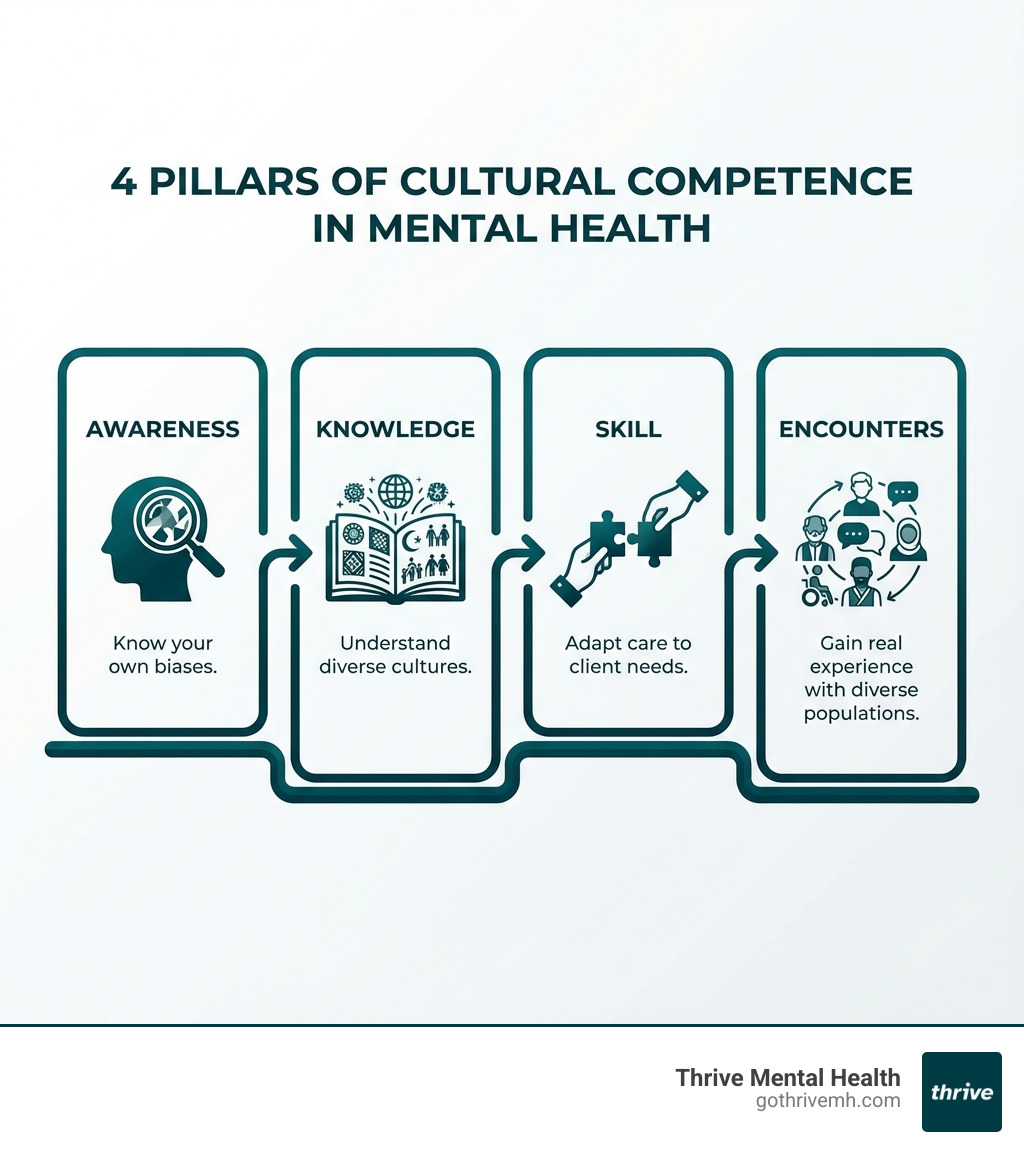
At its core, cultural competence refers to the behaviors, attitudes, and skills that allow a health care provider to work effectively with different cultural groups. It means understanding that culture plays an essential role in life and health, and therefore, cultural beliefs, values, practices, and attitudes must be integrated into care to meet unique needs.
This involves:
- Anti-racism and Anti-oppression frameworks: Services like Across Boundaries actively work within these frameworks to address the negative impact of racism and discrimination on mental health. This acknowledges that societal structures, not just individual factors, contribute to mental health challenges.
- Holistic wellness: Unlike some mainstream models that focus solely on individual pathology, culturally sensitive care often accepts a holistic view of wellness—connecting mind, emotions, body, and spirit. This is particularly evident in Indigenous wellness philosophies, which emphasize balance, harmony, and connection to family, community, and nature.
- Mainstream vs. culture-based approaches: While mainstream services are designed for the general population, culture-based services are specifically custom to the unique needs of a particular group. For example, Anishnawbe Health Toronto integrates traditional Indigenous healing practices like ceremonies and talking circles with modern mental health services. This blend allows for a richer, more relevant healing experience.
The American Psychological Association’s (APA) Guidelines for Providers of Services to Ethnic, Linguistic, and Culturally Diverse Populations emphasize that psychologists must:
- Educate clients about the intervention process in their language.
- Recognize how ethnicity and culture impact behavior.
- Acknowledge their own biases and continuously seek training.
- Respect the roles of family members, community structures, hierarchies, values, and beliefs within the client’s culture.
- Recognize and work to eliminate discriminatory practices.
Culturally competent services help people feel better understood, fostering a sense of safety and belonging that is critical for effective healing.
What Makes a Mental Health Service Truly Culturally Sensitive?
A truly culturally sensitive mental health service goes beyond surface-level diversity. It’s woven into the fabric of how care is delivered. Here’s what to look for:
- Meets Social and Cultural Needs: The service should actively engage with the community it serves, understanding its unique social dynamics and cultural norms. This means tailoring programs to specific demographics, like youth, seniors, or immigrant populations.
- Language Access is Paramount: Effective communication is fundamental. Services should offer care in the client’s preferred language, not just English. This might involve bilingual therapists or qualified translators who understand cultural nuances, not just literal translations. Problems arise when linguistic skills don’t match, potentially leading to misdiagnosis or ineffective treatment.
- Understands Historical Context: A critical component, especially for marginalized groups, is recognizing the impact of historical events. For example, a therapist working with Indigenous individuals must be knowledgeable about the generational trauma and systemic discrimination caused by the residential school system. This historical awareness helps prevent misinterpretations of client behavior and fosters a more empathetic approach.
- Addresses Generational Trauma: Many communities carry the weight of collective trauma across generations due to colonization, slavery, discrimination, or conflict. Culturally sensitive services acknowledge and integrate this understanding into therapeutic approaches, recognizing its profound impact on mental health.
- Builds Trust and Safety: Due to historical mistreatment and systemic inequities, many racialized groups harbor a deep mistrust of healthcare systems. A culturally sensitive service actively works to build trust by demonstrating respect, transparency, and a genuine commitment to the community’s well-being. This creates a safe and supportive environment where individuals feel comfortable sharing their experiences.
- Integrates Traditional Healing: For many cultures, traditional healing practices (like ceremonies, spiritual rituals, or community gatherings) are central to wellness. Culturally sensitive services respect these practices and, where appropriate and desired by the client, integrate them or facilitate connections with traditional healers.
- Focuses on Strengths: Rather than solely focusing on deficits or weaknesses, culturally sensitive care often emphasizes an individual’s and community’s inherent strengths, resilience, and cultural assets as resources for healing.
Which Mental Health Services Offer Culturally Sensitive Care? [5 Proven Steps]
Finding mental health care that resonates with your unique background can feel like searching for a needle in a haystack. But it doesn’t have to be. We’ve identified 5 proven steps to help you connect with which mental health services offer culturally sensitive care, ensuring your healing journey is as effective and affirming as possible.

Step 1: Tap Into Trusted Directories & Community Resources
Start your search where cultural understanding is already prioritized. These resources often list providers who specialize in working with specific communities.
Top Resources for Culturally Sensitive Mental Health Care
- Thrive’s Virtual Therapy and IOP/PHP programs: We are committed to making evidence-based treatment accessible and culturally sensitive. Our virtual and hybrid programs across Florida are designed to match you with therapists who understand diverse backgrounds and can integrate cultural considerations into your care.
- Local health centers: Community health centers often have a deep understanding of the local population’s needs and may offer culturally specific programs or bilingual staff. For example, many Federally Qualified Health Clinics (FQHCs) in Florida serve diverse populations and strive for cultural competence.
- Community advocacy groups: Organizations dedicated to specific racial, ethnic, or LGBTQ+ groups frequently maintain lists of culturally competent providers.
- Faith-based organizations: Churches, mosques, temples, and other faith communities often have internal counseling services or can provide referrals to mental health professionals who share or respect your spiritual beliefs.
- Cultural community centers: These centers are hubs for cultural identity and support. They can be invaluable resources for referrals to therapists who understand your specific cultural context.
- For BIPOC individuals: Resources like the National Queer & Trans Therapists of Color Network, Therapy for Black Girls, Asian Mental Health Collective, and Therapy for Latinx are invaluable. Mental Health America also offers a national resource center for BIPOC individuals online.
- For LGBTQI individuals: Rainbow Health Ontario (though Canadian, similar organizations exist in our states) maintains databases of queer-friendly and gender-affirming services.
- For Indigenous/Native communities: While many resources are Canada-specific, the principles of seeking out community-led organizations that incorporate traditional healing are universal. Look for similar tribal health services or Native American community centers in Florida, such as those supporting the Seminole or Miccosukee communities.
Step 2: Ask These 8 Questions Before You Choose a Therapist
Once you have a list of potential providers, don’t be afraid to interview them. You are seeking a partner in your healing, and find someone who “gets it.”
- What’s your experience with my community? Ask for specifics. Have they worked with individuals from your cultural background, or who share your sexual identity or religious beliefs?
- What cultural competence training have you completed? Look for providers who prioritize ongoing education in cultural sensitivity, anti-racism, and anti-oppression frameworks.
- How do you integrate cultural values into care? Do they understand the importance of family, community, or spirituality in your life, and how would they incorporate these into your treatment plan?
- How do you address racism or bias? A culturally sensitive therapist should be able to acknowledge and discuss the impact of systemic racism, discrimination, or microaggressions on your mental health without dismissing your experiences. They should also be aware of how their own cultural background/experiences, attitudes, values, and biases influence psychological processes.
- Are you comfortable discussing spirituality? If your spiritual or religious beliefs are important to you, ensure they are open to discussing them and respect their role in your well-being.
- What languages do you speak? If English isn’t your first language, or you prefer to communicate in another, this is a critical question.
- How do you handle family involvement? Understand their approach to family dynamics, especially if your culture values collective decision-making or family support in healing.
- Can you share examples of adapting care for different backgrounds? This helps you gauge their practical application of cultural competence, not just theoretical understanding.
Step 3: Use Your Insurance & Search Smart
Navigating insurance can be a barrier, but it’s a crucial step. Many culturally sensitive services, including therapy, IOP, and PHP, are covered by insurance.
- Check your insurance provider’s directory: Major insurers like Cigna, Optum, and Florida Blue often allow you to filter providers by language, cultural background, or specialty. This can be a great starting point for finding in-network options in Florida.
- Search for “culturally sensitive therapist Florida” or “Spanish-speaking therapist Miami”: Use specific keywords in your online searches. Include your location (e.g., “culturally sensitive therapist Miami”, “BIPOC mental health Orlando”, “LGBTQ+ friendly therapy Tampa”).
- Look for “in-network” and “virtual” options for faster access: Virtual care can significantly broaden your options, allowing you to connect with specialists who match your needs, even if they aren’t in your immediate vicinity.
- Verify your insurance in 2 minutes: Our quick online tool allows you to check your benefits with no obligation, helping you understand your coverage for our virtual and hybrid IOP/PHP programs.
Step 4: Try Virtual & Hybrid Mental Health Programs
Remote mental health solutions have revolutionized access to specialized, culturally sensitive care, especially for those in remote areas or with limited local options.
- Virtual therapy and IOP/PHP explained: Virtual Intensive Outpatient Programs (IOP) and Partial Hospitalization Programs (PHP) offer structured, comprehensive mental health support through secure videoconferencing. In fact, this flexible model can be highly effective; studies show virtual IOPs can cut recovery time by 50%. This can be particularly beneficial for BIPOC individuals or those in the LGBTQ+ community, who might find more identity-affirming providers through a broader virtual network.
- Evening and flexible scheduling: Our virtual programs at Thrive Mental Health offer evening options, making it easier to fit treatment into your schedule without disrupting work or family commitments.
- Access from anywhere in Florida: This geographical flexibility means you’re not limited to therapists in your immediate zip code. You can find specialists who genuinely match your cultural needs and preferences.
- Find specialists who match your needs, not just your zip code: Online platforms often have a larger pool of diverse therapists, increasing your chances of finding someone with the specific cultural competence you require. This is especially important given that the majority of the U.S. psychology workforce is white, and many lack cultural competency training.
Step 5: Get Referrals from People You Trust
Sometimes, the best recommendations come from within your own trusted circles.
- Ask family, friends, community leaders, or your primary care doctor: People who know you and your community best can often point you to providers who have a reputation for culturally sensitive care. A warm introduction can significantly build trust and comfort before your first appointment.
- Faith leaders and cultural organizations can help: As mentioned in Step 1, these community pillars often have deep networks and can connect you with mental health professionals who align with your values.
- A warm introduction builds trust and comfort: Building a trusting therapeutic relationship is essential for effective care. A referral from a trusted source can jumpstart this process, making you feel more secure and understood from the outset.
How to Break Through Systemic Barriers to Care
Even with the best intentions, systemic barriers can make accessing culturally sensitive mental health services incredibly challenging. We live in a racialized society where race profoundly impacts relationships, opportunities, and access to services.
Disparities in access for racialized groups are stark:
- Higher stigma: Within some communities, seeking mental health care carries a heavy stigma.
- Fewer providers: There are often fewer mental health professionals in their immediate areas, and even fewer with a similar background or who speak the same language.
- Insurance gaps: Many racialized individuals are overrepresented in professions that do not offer health insurance, or they face discrimination and disparate treatment even when they have coverage.
- Misdiagnosis and poorer quality care: Lack of cultural competence, language barriers, bias, and inadequate resources can lead to misdiagnosis, treatment dropout, and delayed recovery.
As an individual or caregiver, don’t be afraid to advocate for yourself or your loved one. Finding the right provider is essential to ensure that culture and language do not get in the way of healing or recovery. Instead, shared community values, faith, spirituality, resilience, family bonds, and cultural pride should become sources of strength and support.
The CLAS Standards for Culturally and Linguistically Appropriate Services, developed by the U.S. Department of Health and Human Services, provide a framework for organizations to deliver effective, equitable, understandable, and respectful quality care. Advocating for these standards can help improve the system for everyone.
The Hidden Weight: How Historical Trauma Impacts Mental Health
For many Indigenous and marginalized communities, mental health challenges are not just individual struggles but are deeply intertwined with historical injustices. This is particularly evident in the concept of intergenerational trauma.
The generational trauma and systemic discrimination caused by events like the residential school system (in Canada, with similar historical traumas in the U.S. for Native American communities), slavery, and other forms of oppression have had disastrous and detrimental effects. This trauma manifests in:
- High suicide rates: Many communities impacted by historical trauma face disproportionately high suicide rates.
- Substance use: Difficulties with substance abuse are often a coping mechanism for unresolved pain and trauma.
- Family violence: Cycles of violence can become entrenched, impacting family structures and community well-being.
- Chronic stress and mental health conditions: The constant burden of systemic discrimination, microaggressions, and racial bias contributes to conditions like anxiety, depression, and PTSD.
If you or someone you know is in crisis or needs immediate support, please call or text 988 to reach the Suicide & Crisis Lifeline. You are not alone.
Why context matters in therapy: A counsellor who is knowledgeable about Indigenous history, traditions, and culture, or the history of other racialized groups, can provide a safe and supportive environment. They understand that a client’s “problem” might stem from racism or bias in others, rather than being solely an individual failing. This historical and systemic understanding is critical for building a trusting therapeutic relationship and for designing interventions that are truly healing and affirming.
FAQs: Culturally Sensitive Mental Health Services
What is a culturally competent therapist?
A culturally competent therapist has real training, understands your background, and adapts care to your values, beliefs, and language. They see your culture as a strength, not a problem. They are aware of their own biases, knowledgeable about diverse cultural groups, and skilled at integrating cultural context into treatment.
How do I know if a service is truly culturally sensitive?
Look for clear anti-racism and cultural responsiveness on their website. Ask how they adapt care for different backgrounds. A real provider will answer with specifics, discussing language access, integration of cultural values, and their understanding of historical and systemic factors that impact your community. They should also respect your religious and/or spiritual beliefs.
Are culturally sensitive services covered by insurance?
Yes—therapy, IOP, and PHP are often covered by insurance (Cigna, Optum, Florida Blue, etc.). Always check if your provider is in-network and verify your benefits first. Many services, especially those offered through community health centers or virtual platforms, aim to be affordable or offer financial aid.
Can I get culturally sensitive care virtually?
Absolutely. Virtual and hybrid programs (like Thrive’s) connect you with culturally competent therapists across Florida. This expands your access to a more diverse pool of providers who can meet your specific cultural and linguistic needs, regardless of your physical location.
What if I’m in crisis or need help now?
If you’re in crisis, call/text 988 right now. You are not alone. This national helpline offers free, confidential support 24/7.
Summary: Don’t Settle—Get Mental Health Care That Honors You
Which mental health services offer culturally sensitive care? The answer lies in seeking out providers and programs that actively integrate cultural understanding, respect, and responsiveness into every aspect of their service. Culturally sensitive care isn’t a luxury—it’s the key to real healing, fostering trust, and achieving lasting recovery. Use trusted directories, ask direct questions, and explore virtual options to find a provider who respects your identity and empowers your recovery. Our culture, beliefs, sexual identity, values, race, and language all affect how we perceive and experience mental health conditions, and your mental health care should reflect that.
Thrive offers virtual and hybrid IOP/PHP programs with evening options in Florida. Verify your insurance in 2 minutes to get started. If you’re in crisis, call/text 988.
Ready for support? Thrive offers virtual and hybrid IOP/PHP programs with evening options. Verify your insurance in 2 minutes (no obligation) → Start benefits check or call 561-203-6085. If you’re in crisis, call/text 988.
Related reading: How Virtual IOPs Cut Recovery Time by 50%