
Buyer’s Guide: Best Integrated Care PHPs for 2026

Which Partial Hospitalization Programs Offer Integrated Care? [2026 Guide]
When you’re looking for a Partial Hospitalization Program (PHP), finding one with a true integrated care model is crucial. Thrive Mental Health’s PHPs are built on this foundation, coordinating mental health, medical, and social support through a dedicated multidisciplinary team. Our programs combine psychiatry, therapy, medication management, family support, and case management to address the whole person, not just the symptoms. We offer these comprehensive services through virtual and hybrid programs across Florida.
Most people don’t realize that traditional PHPs treat symptoms, but integrated care PHPs treat the person. That means coordinating your mental health care with medical needs, family dynamics, substance use, trauma history, and real-world challenges—all at once.
If you’ve tried weekly therapy without progress, or you’re stepping down from inpatient care and scared of relapse, an integrated care PHP gives you the structure, accountability, and expert team you need to heal faster and stay well longer.
I’m Nate Raine, CEO of Thrive Mental Health, and I’ve spent over a decade building tech-enabled, evidence-based behavioral health solutions that integrate clinical care with measurable outcomes. My work focuses on identifying which partial hospitalization programs offer integrated care models that deliver real results—so you can choose the right level of support, fast.
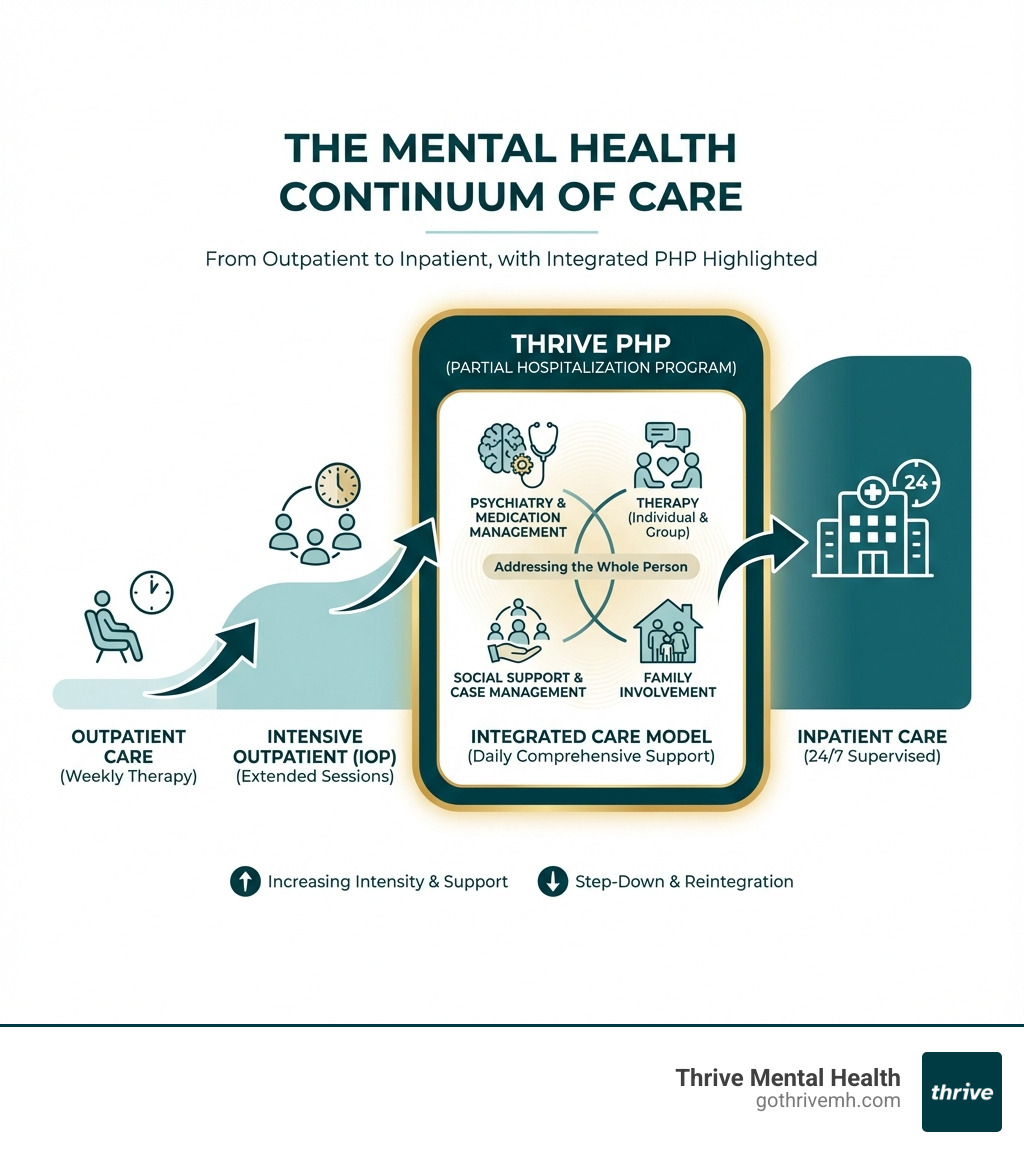
The mental health continuum of care is a spectrum of treatment options, ranging from once-weekly therapy to 24/7 inpatient care. Partial Hospitalization Programs (PHPs) fit right in the middle, offering more intensive support than standard outpatient therapy but less restriction than inpatient hospitalization. This means you get comprehensive daily treatment while still returning home each evening. It’s an ideal choice for those who need significant support but can maintain some aspects of their daily lives.
Why is integrated care the new gold standard for real recovery? Because your mental health doesn’t exist in a vacuum. It’s connected to your physical health, your relationships, your past experiences, and your future goals. An integrated care model recognizes this interconnectedness and builds a treatment plan that addresses every facet of your well-being.
What Is “Integrated Care” in a PHP—and Why Does It Matter for Your Recovery?
Integrated care in a Partial Hospitalization Program is a comprehensive, whole-person approach to treatment. Instead of focusing solely on mental health symptoms, it addresses all aspects of a patient’s well-being: mental, physical, social, and even spiritual. This model is built on the recognition that effective treatment must address the whole person, not just the symptoms of their condition.

At its core, an integrated care model brings together a multidisciplinary team of experts—psychiatrists, therapists, medical doctors, psychiatric nurse practitioners, counselors, and case managers—who work collaboratively to create a unified treatment plan. This approach ensures that patients receive coordinated care for co-occurring disorders, such as substance use alongside depression or anxiety, addressing all challenges simultaneously. It’s about treating the root causes, not just the visible symptoms, leading to more sustainable recovery.
The coordination of care is seamless. Our team regularly communicates, shares insights, and adjusts your treatment plan as needed. This means fewer gaps in care, a more consistent therapeutic experience, and a stronger foundation for lasting healing. Case management is also a critical component, helping you steer resources, connect with external support, and manage practical aspects of your recovery journey.
How Thrive’s Integrated PHPs Deliver Real Results
At Thrive Mental Health, we pride ourselves on building PHPs that deliver tangible outcomes. Our integrated care model is designed to support you every step of the way:
- Mental health and physical health coordination: We understand that physical ailments can impact mental well-being, and vice-versa. Our teams collaborate to ensure both aspects of your health are monitored and addressed.
- Social support and family involvement: We believe recovery is a journey best traveled with support. Our programs actively involve families (with patient consent) through therapy sessions and educational workshops to foster a supportive home environment.
- Substance use and trauma-informed care: Many individuals struggle with co-occurring substance use disorders or past trauma. Our integrated approach provides specialized care for these complex issues, ensuring you receive comprehensive and sensitive treatment.
- Personalized treatment plans that adapt as you heal: Your journey is unique. We create individualized treatment plans that evolve with your progress, ensuring you always receive the most relevant and effective care.
The Team Approach: How Thrive’s Experts Work Together for You
The backbone of an integrated care PHP is its multidisciplinary team. At Thrive, our team comprises highly skilled professionals, including:
- Psychiatrists for medication management and psychiatric evaluation.
- Therapists (LCSWs, LMFTs) for individual and group therapy, specializing in evidence-based modalities.
- Medical doctors to address any physical health concerns that impact your mental well-being.
- Case managers to coordinate services, help you steer resources, and plan for your transition back to daily life.
- Psychiatric nurse practitioners who bring a blend of psychiatric and medical expertise.
Our team members hold regular meetings to discuss your progress, ensuring a holistic view of your care. Shared electronic records keep everyone informed, and clear communication protocols prevent misunderstandings, keeping your care on track and consistent. This collaborative environment is designed to maximize your chances of success.
5 Must-Have Features of a High-Quality Integrated PHP
When searching for a PHP in Florida, it’s crucial to look beyond basic offerings. A truly integrated program will showcase these five features:

1. Multidisciplinary Team of Licensed Experts
A robust integrated PHP isn’t just about having a few therapists; it’s about a diverse team working in concert. This includes:
- Psychiatric nurse practitioners who can prescribe and manage medication.
- Licensed Clinical Social Workers (LCSWs) and Licensed Marriage and Family Therapists (LMFTs) for individual, group, and family therapy.
- Medical doctors for general health oversight.
- Case managers for care coordination.
- Occupational therapists who help patients reconnect with meaningful life activities, such as creative crafts, “adulting” tasks like paying bills, or exploring job opportunities.
- Specialists for co-occurring conditions like substance use, eating disorders, or chronic pain, ensuring comprehensive treatment.
This wealth of experience and expertise ensures all aspects of your health are considered.
2. Proven, Evidence-Based Therapies That Work
Integrated care isn’t just about who’s on the team, but what therapeutic modalities they employ. High-quality PHPs use approaches with a strong track record of success:
- Cognitive Behavioral Therapy (CBT): A cornerstone for anxiety disorders and PTSD, CBT helps you identify and change negative thought patterns.
- Dialectical Behavior Therapy (DBT): Often used for individuals with intense emotional dysregulation, DBT teaches mindfulness, emotion regulation, distress tolerance, and interpersonal effectiveness. High-quality programs ground their group therapy in mindfulness and acceptance, utilizing these powerful techniques.
- Acceptance and Commitment Therapy (ACT): Focuses on accepting difficult thoughts and feelings while committing to actions that align with your values.
- Mindfulness-based practices: These help increase your ability to be present, reduce stress, and improve emotional regulation.
- Experiential and group therapy: Group therapy can be just as effective as individual therapy for many conditions and provides invaluable peer support and community.
- Individual therapy: One-on-one sessions with a therapist to address personal feelings, past traumas, and conflicts.
3. Real Support for Co-Occurring Conditions
Many individuals entering a PHP struggle with more than one condition. Integrated programs excel at treating:
- Dual diagnosis: The simultaneous treatment of substance use disorders and mental health conditions. Our programs, for example, are often abstinence-based and provide comprehensive support for both.
- Chronic pain + depression: Addressing the psychological impact of physical pain.
- Eating disorders + anxiety: Providing specialized interventions for both.
Integrated screening and assessment ensure that all your conditions are identified and incorporated into your treatment plan from day one.
4. Family Involvement That Drives Recovery
Family support can significantly improve recovery. A strong integrated PHP will offer:
- Family therapy sessions: To improve communication and address family dynamics.
- Educational workshops: To help families understand mental health conditions and how to support their loved one.
- Communication skill-building: For healthier interactions within the family unit.
Programs like ours recognize the importance of building a supportive home environment, encouraging family involvement to strengthen the patient’s recovery network.
5. Aftercare Planning for Long-Term Success
Recovery doesn’t end when you complete a PHP. A top-tier integrated program will provide robust aftercare planning:
- Relapse prevention strategies: Equipping you with tools and coping mechanisms to maintain your progress.
- Step-down to Thrive Intensive Outpatient (IOP): This is a common and effective transition, moving from the intensive PHP to a still-structured but less time-consuming IOP.
- Community resource connection: Helping you find ongoing support groups, therapists, and other services in your local Florida community.
- Alumni support groups: Many programs offer these to foster continued connection and support.
How to Spot a True Integrated Care PHP [2026 Checklist]
Finding the right partial hospitalization program that offers integrated care models can feel like a daunting task. Here’s a checklist to help you evaluate programs and ensure you’re choosing one that truly prioritizes your holistic recovery.
What to Look For—And What to Avoid
When you’re researching PHPs, particularly in Florida cities like Miami, Orlando, Tampa, or Jacksonville, keep an eye out for these key indicators:
- “Multidisciplinary team” explicitly mentioned in the program description, with specific roles listed (e.g., psychiatrist, therapist, case manager).
- “Dual diagnosis” or “co-occurring conditions” treatment highlighted as a specialty, not just an afterthought.
- Coordination with primary care physicians and other external healthcare providers, demonstrating a commitment to your overall health.
- Case management services that help you steer resources and plan for your future.
- A range of evidence-based therapies (CBT, DBT, ACT, mindfulness), not just one or two.
Avoid programs that seem vague about their team, don’t mention co-occurring care, or focus solely on mental health symptoms without acknowledging the broader picture of your life.
Who Should Choose an Integrated PHP?
If you’re in crisis or having thoughts of self-harm, call or text the 988 Suicide & Crisis Lifeline immediately. You are not alone.
An integrated PHP is often the best choice if:
- You’re stepping down from inpatient care and need a structured bridge back to daily life.
- Weekly therapy isn’t enough to manage your symptoms, but you don’t require 24/7 supervision.
- Your symptoms are getting worse (e.g., increased isolation, deepening depression, or anxiety) and you need intensive intervention.
- You’re struggling with substance use and mental health challenges simultaneously.
- You need structured support to build coping skills and practice them in a real-world setting.
Key Questions to Ask Before You Enroll
Before committing to a PHP, ask these critical questions to ensure it’s the right fit for you:
- How does your team collaborate on my care? Look for answers that describe regular team meetings, shared treatment plans, and clear communication channels.
- What does family involvement look like? Understand if family therapy, educational sessions, or communication skill-building are part of the program.
- How do you create an aftercare plan? A good program will have a clear process for transitioning you to lower levels of care and connecting you with community resources.
- How do you measure patient outcomes? Look for programs that track progress and use data to refine their approach.
- What’s a typical day’s schedule? Ask for a sample schedule to understand the time commitment and variety of activities.
Regarding insurance coverage, most major plans, including Cigna, Optum, and Florida Blue (especially relevant in our Florida locations like Tampa Bay, Orlando, or Jacksonville), typically cover PHPs. We always recommend verifying your specific benefits to understand your coverage.
Why Integrated Care PHPs Deliver Faster Recovery and Lower Relapse Rates
The evidence is clear: integrated care models lead to better outcomes. By addressing the whole person—mental, physical, and social—we see patients make faster progress and sustain their recovery longer.
Integrated care means:
- Better outcomes, faster progress: When all specialists work together, treatment is more efficient and effective. This holistic approach ensures that underlying issues, which might be missed in a fragmented system, are identified and addressed. A whole-person model recognizes that effective treatment must address more than just symptoms.
- Lower relapse rates: By equipping patients with comprehensive coping strategies, a strong support network, and coordinated care for all their needs, integrated PHPs significantly reduce the risk of relapse. When you learn to manage your mental health, physical health, and social life in harmony, you build resilience that lasts.
- Long-term recovery and resilience: The skills learned in an integrated PHP are designed for real-world application. You practice new coping mechanisms, improve interpersonal skills, and build a foundation for sustained well-being, leading to a more fulfilling and independent life.
- Challenges: While immensely beneficial, implementing integrated care models isn’t without its challenges. These can include the cost of coordinating multiple specialists, ensuring seamless communication across disciplines, and the initial complexity of structuring such comprehensive programs. However, the long-term payoff in patient well-being and reduced readmissions far outweighs these problems.
Frequently Asked Questions: Integrated Care PHPs
How long does a Partial Hospitalization Program last?
Most PHPs last 2–6 weeks, with sessions 5 days a week for several hours. The duration is always customized to your individual needs and progress before you step down to an Intensive Outpatient Program (IOP).
Is a virtual PHP as effective as in-person?
Yes. Studies show that virtual PHPs offer the same level of patient satisfaction and effectiveness as in-person care. For individuals throughout Florida, virtual programs offer flexible access to high-quality treatment, removing geographical barriers and often fitting more easily into busy schedules.
How is a PHP different from an IOP?
PHPs are more intensive, typically requiring 20–30 hours per week of structured therapy and group sessions. They serve as a direct alternative to inpatient care. IOPs are a step-down level of care, usually involving 9–12 hours per week, designed to support your return to daily life with continued structure and therapeutic support.
Does insurance cover integrated PHPs?
Most major insurance plans, including Cigna, Optum, and Florida Blue, cover Partial Hospitalization Programs. We always recommend verifying your specific benefits to understand your coverage. You can easily verify your insurance in 2 minutes with us, with no obligation.
Can I switch from in-person to virtual care?
Yes. At Thrive Mental Health, we offer flexible virtual and hybrid options to fit your schedule and needs. This adaptability ensures continuity of care, whether you’re in a major Florida city like Miami or a more rural part of the state.
Summary: Choose an Integrated Care PHP for Real, Lasting Recovery
If you want more than symptom management, choose a PHP with a true integrated care model. Thrive Mental Health’s virtual and in-person PHPs combine expert teams, proven therapies, and robust support—so you heal faster and stay well longer. We are dedicated to providing evidence-based treatment accessible anywhere, anytime through expert-led virtual programs and trusted in-person centers across Florida.
Learn more about Thrive’s PHP | Explore IOP options | Virtual Therapy
Ready for support? Thrive offers virtual and hybrid IOP/PHP programs with evening options. Verify your insurance in 2 minutes (no obligation) → Start benefits check or call 561-203-6085. If you’re in crisis, call/text 988.
Related reading: How Virtual IOPs Cut Recovery Time by 50%