
How Premier Evening IOPs Can Help You Find the Right Fit

Why Waiting for Recovery Feels Impossible When You Can’t Afford to Stop
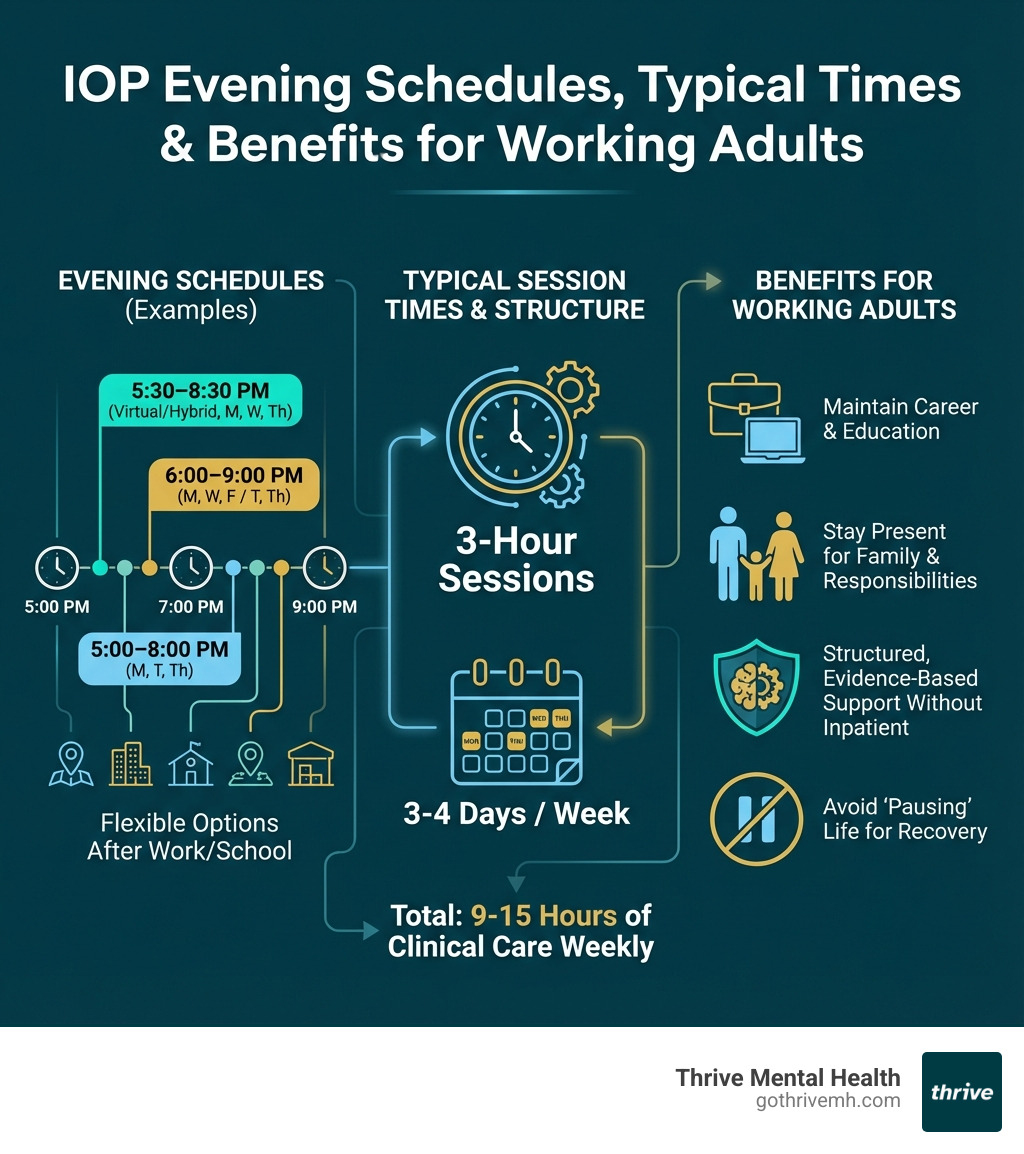
Which premier intensive outpatient programs offer evening schedules? Many top-tier programs, particularly in Florida, now offer evening IOPs to fit the lives of busy professionals, students, and parents. These programs typically offer sessions a few nights a week for about three hours, often with flexible start dates. For example, Thrive Mental Health provides virtual and hybrid evening programs across Florida, with sessions running from 5:30 PM to 8:30 PM and rolling admissions to ensure you can start right away.
You’re stuck. You know you need help—anxiety is crushing you at work, depression makes every day feel impossible, or trauma keeps replaying in your head. But taking time off? That’s not an option. You’ve got bills, a career, responsibilities. Weekly therapy isn’t cutting it anymore, but the idea of checking into inpatient treatment feels like hitting pause on your entire life.
This is exactly why evening IOPs exist.
They give you the structured, evidence-based support you need—without forcing you to choose between recovery and everything else. Evening intensive outpatient programs are designed for people like you: driven professionals, college students, parents, and caregivers who need more than weekly therapy but can’t afford to disappear for 30 days.
And here’s the truth: waiting costs more than starting. Every week you push through without real support, the problem gets harder to fix. Evening IOPs let you get 9-15 hours of clinical care each week, after work or school, so you can finally make progress without blowing up your life.
As Nate Raine, CEO of Thrive Mental Health, I’ve spent over a decade building systems that make mental health care accessible and effective—especially for people asking which premier intensive outpatient programs offer evening schedules? At Thrive, we’ve seen thousands of clients recover while keeping their jobs, staying in school, and showing up for their families, because evening IOPs remove the impossible choice between treatment and life.
Learn more about Which premier intensive outpatient programs offer evening schedules?:
- intensive outpatient mental health program near me
- intensive outpatient programs for depression and anxiety near me
- dbt intensive outpatient programs near me
What Is an Evening Intensive Outpatient Program (IOP) and Who Needs One?
An Intensive Outpatient Program (IOP) is a structured yet flexible treatment option for individuals who require more intensive support than traditional outpatient therapy but do not need the 24-hour supervision of inpatient or residential care. Think of it as the sweet spot between weekly therapy and living at a treatment facility.
Evening IOPs specifically provide this crucial support during the late afternoon and evening hours, allowing participants to return home at the end of each session. This ingenious scheduling means you can engage in vital therapy and skill-building without sacrificing your daytime responsibilities like work, school, or family commitments. It’s a game-changer for those who previously felt treatment was out of reach.
For many, an IOP helps reinforce therapies and ideas learned in inpatient or partial hospitalization treatment, acting as a critical bridge back into daily life. It’s also a powerful entry point for those managing milder mental health disorders or addiction, providing the structure needed to prevent escalation.
What Sets a Premier Evening IOP Apart?
Not all IOPs are created equal. A premier evening Intensive Outpatient Program distinguishes itself through several key features:
- Comprehensive Therapeutic Services: This includes a robust mix of individual therapy, group therapy, and family counseling. Premier programs often offer specialized tracks, like an Adult Dual Diagnosis IOP with group sessions designed to address both mental health and substance use disorders.
- Evidence-Based Treatment Modalities: Premier programs rely on therapies proven to work, such as Cognitive Behavioral Therapy (CBT), Dialectical Behavior Therapy (DBT), and Acceptance and Commitment Therapy (ACT). These aren’t just buzzwords; they’re the tools that create lasting change.
- Expert-Led Sessions: You’ll find licensed, experienced therapists, counselors, and medical professionals leading your sessions. Their expertise ensures you receive the highest quality of care and personalized attention.
- Structured Skill-Building: Beyond just talking, premier IOPs focus on teaching practical, real-world skills for coping, emotional regulation, distress tolerance, and interpersonal effectiveness.
- Flexible Scheduling & Accessibility: Evening programs are inherently flexible, but premier options go further by offering rolling admissions, telehealth options, and sometimes even Saturday sessions for clinical assessments, as noted by some providers. This ensures treatment fits into your life, not the other way around.
- Holistic Approach: Many premier programs integrate holistic therapies like mindfulness, stress reduction techniques, and even art therapy, recognizing that true healing addresses the whole person.
- Dual Diagnosis Expertise: A significant number of individuals struggle with co-occurring mental health and substance use disorders. Premier evening IOPs are equipped to address both simultaneously, providing integrated care that fosters long-term recovery and prevents relapse.
Who Gets the Most Out of Evening IOPs?
Evening IOPs are explicitly designed for individuals who need significant therapeutic support but cannot disengage from their daily lives. Our experience at Thrive Mental Health shows us that these programs are particularly beneficial for:
- Professionals Who Can’t Miss Work: If your job demands your presence during the day, an evening IOP allows you to maintain your career, income, and sense of stability while diligently working on your mental health or addiction recovery.
- College Students with Packed Schedules: Balancing classes, homework, and social life is tough enough. An evening program means you can continue your education without interruption, gaining critical coping skills to manage academic stress and mental health challenges.
- Parents and Caregivers: The responsibilities of raising children or caring for elderly family members don’t stop. Evening IOPs provide a lifeline, offering essential support after the kids are in bed or other family members are settled.
- People Stepping Down from Higher Levels of Care: For those transitioning from inpatient treatment or a Partial Hospitalization Program (PHP), an evening IOP offers a structured step-down, reinforcing newly learned skills and providing ongoing support as you reintegrate into daily life.
- Those with a Stable Home Environment: If you have a safe and supportive living situation, an evening IOP can provide the intensive therapy you need without requiring you to move away from your support network.
Essentially, if you need more than weekly therapy but don’t require 24/7 supervision, and you have daytime commitments that make traditional treatment impossible, an evening IOP could be your most effective path forward. We believe everyone deserves access to transformative care, regardless of their schedule.
[Internal link: [Intensive Outpatient Program (IOP) Overview](https://gothrivemh.com/a-comprehensive-guide-to-intensive-outpatient-programs/)]
[Internal link: [Benefits of Intensive Outpatient Programs](https://gothrivemh.com/the-benefits-of-an-intensive-outpatient-program/)]
[Internal link: IOP for Young Adults]
Which Premier Intensive Outpatient Programs Offer Evening Schedules? [2025 List]
Finding the right program can feel overwhelming, but knowing what to look for simplifies the process. When searching for a premier evening IOP in Florida, where Thrive Mental Health operates, consider these crucial factors:
- Accreditation: Look for programs with accreditations from reputable bodies like the Joint Commission. This signifies a commitment to high standards of care and patient safety.
- Licensed Therapists: Ensure the program employs a team of qualified and licensed mental health professionals.
- Evidence-Based Curriculum: A premier program will use therapeutic approaches backed by scientific research, such as CBT, DBT, and ACT.
- Dual Diagnosis Support: Given that many individuals experience co-occurring mental health and substance use disorders, integrated dual diagnosis treatment is a hallmark of quality care. Many premier programs offer a dedicated Adult Dual Diagnosis IOP.
- Flexible Scheduling: Beyond just offering evening hours, look for programs with rolling admissions, allowing you to start when you’re ready, and various days of the week to fit your unique schedule.
- Virtual and In-Person Options: The rise of telehealth has made virtual IOPs highly effective and accessible. Thrive Mental Health, for instance, offers both virtual and hybrid programs, making quality care accessible across Florida.
Here’s a closer look at some types of premier evening IOPs and what their schedules often entail:

What Does a Top Evening IOP Schedule Look Like?
Evening IOP schedules are designed with your busy life in mind, typically involving 3-5 sessions per week, with each session lasting around three hours. This structure ensures you receive intensive support without compromising your daytime commitments.
- Typical Session Times: Most evening IOPs run between 5:00 PM and 9:00 PM. For example, a program might offer sessions on Mondays, Wednesdays, and Thursdays from 5:30 PM to 8:30 PM, or on Tuesdays and Thursdays from 6:00 PM to 9:00 PM.
- Session Duration: Each session usually lasts three hours, providing ample time for group therapy, skill-building, and processing. Most IOP programs consist of three group sessions per week, each lasting three hours.
- Days Per Week: Programs typically meet 3–5 days a week. This frequency provides the intensive support needed for significant progress.
- Rolling Admissions: Many premier programs, including ours at Thrive Mental Health, offer rolling admissions. This means you don’t have to wait for a cohort to begin; you can start your journey toward recovery as soon as you’re ready.
- In-Person and Virtual Formats: With advancements in telehealth, many premier IOPs now offer virtual options, providing the same high-quality care from the comfort and convenience of your home. This is particularly beneficial for those throughout Florida, from major cities to more rural areas.
[Internal link: Virtual Intensive Outpatient Programs]
What Conditions Do Evening IOPs Treat After Hours?
Evening IOPs are versatile and equipped to treat a wide range of mental health conditions and substance use disorders, making them an invaluable resource for many. The flexibility of evening schedules ensures that individuals struggling with these challenges can access the care they need without further disrupting their lives.
Common conditions and disorders addressed in premier evening IOPs include:
- Anxiety Disorders: From generalized anxiety to panic disorder, IOPs provide tools and strategies to manage symptoms, reduce worry, and improve daily functioning.
- Depression: Whether it’s major depressive disorder or persistent depressive disorder, evening IOPs offer therapeutic interventions to lift mood, increase motivation, and foster a sense of hope.
- Bipolar Disorder: Programs help individuals manage mood swings, develop coping mechanisms for manic and depressive episodes, and maintain stability.
- PTSD/Trauma: Trauma-informed care is a cornerstone of many premier IOPs, providing a safe space to process traumatic experiences and develop healthy coping strategies for post-traumatic stress disorder (PTSD).
- Substance Use Disorders: These programs are a critical step in addiction recovery, offering intensive support for individuals working towards sobriety or maintaining long-term recovery.
- Dual Diagnosis (Co-occurring Disorders): A significant number of people experience both a mental health disorder and a substance use disorder. Evening IOPs are specifically designed to treat these co-occurring conditions simultaneously, providing integrated and holistic care. Many premier programs, for example, offer a dedicated Adult Dual Diagnosis IOP.
- Obsessive-Compulsive Disorder (OCD): Specialized therapies within IOPs can help individuals manage obsessions and compulsions, improving their quality of life.
- Personality Disorders: Programs offer support for personality disorders, helping individuals develop healthier relationship patterns and coping skills.
By addressing these conditions in a structured, supportive environment, evening IOPs empower individuals to regain control over their lives and build a foundation for lasting wellness.
[Internal link: Dual Diagnosis Virtual IOP]
Inside the Evening IOP: What Actually Happens?
Stepping into an evening IOP means entering a dynamic and supportive environment focused on healing and growth. It’s not just about attending sessions; it’s about actively engaging in a process that empowers you to transform your life.

During your time in an evening IOP, you can expect a rich blend of therapeutic activities:
- Evidence-Based Therapy: The core of any premier IOP is its commitment to therapies proven effective by research. You’ll participate in individual counseling, where you work one-on-one with a therapist to address personal challenges, and group therapy, which provides a powerful sense of community and shared experience. These sessions are led by licensed professionals who guide discussions and facilitate healing.
- Real-World Skills for Stress, Relationships, and Relapse Prevention: This is where the rubber meets the road. Evening IOPs teach practical skills you can immediately apply to your daily life. This includes strategies for managing stress and anxiety, improving communication in relationships, developing emotional regulation, and building robust relapse prevention plans. You’ll learn to identify triggers, manage cravings, and steer high-risk situations, ensuring you’re equipped to handle life’s challenges outside of treatment hours.
- Peer Support and Accountability: One of the most potent aspects of group therapy is the connection with peers who are facing similar struggles. You’ll find a supportive community where you can share experiences, receive empathy, and offer encouragement. This shared journey fosters a sense of belonging and reduces feelings of isolation, providing invaluable accountability as you progress.
Which Therapies Drive Results in Evening IOPs?
Premier evening IOPs integrate a variety of evidence-based therapeutic modalities to ensure comprehensive and effective treatment. These therapies are chosen for their proven ability to foster lasting change:
- Cognitive Behavioral Therapy (CBT): A cornerstone of many IOPs, CBT helps you identify and challenge negative thought patterns and behaviors that contribute to mental health issues or addiction. By reframing your thoughts, you can change your emotional responses and actions.
- Dialectical Behavior Therapy (DBT): Often used for individuals with intense emotional dysregulation, DBT focuses on teaching skills in four key areas: mindfulness, distress tolerance, emotion regulation, and interpersonal effectiveness. Many premier programs highlight the use of DBT in their treatment tracks.
- Acceptance and Commitment Therapy (ACT): This therapy encourages you to accept difficult thoughts and feelings rather than fighting them, while committing to actions that align with your values. It is often used to treat co-occurring mental health issues.
- Eye Movement Desensitization and Reprocessing (EMDR): For those dealing with trauma, EMDR is a specialized therapy that helps process distressing memories and reduce their emotional impact.
- Mindfulness-Based Practices: Incorporating mindfulness helps you stay present, observe thoughts and feelings without judgment, and reduce stress. Many programs emphasize mindfulness and stress reduction.
These therapies, combined with the supportive structure of an evening IOP, provide a powerful pathway to recovery and well-being.
[Internal link: [Cognitive Behavioral Therapy](https://gothrivemh.com/cognitive-behavioral-therapy/)]
[Internal link: Dialectical Behavior Therapy]
How Do Evening IOPs Handle Dual Diagnosis?
Dual diagnosis, or co-occurring disorders, refers to the presence of both a mental health disorder (like depression or anxiety) and a substance use disorder. This is a common and complex challenge, affecting millions of Americans. According to the Substance Abuse and Mental Health Services Administration, an estimated 48.5 million people aged 12 and older struggled with a substance use disorder, and 57 million people with a mental health condition in recent years. Premier evening IOPs are specifically designed to address this intricacy with an integrated approach:
- Integrated Care: Rather than treating each condition separately, dual diagnosis programs provide holistic, integrated care that addresses both mental health and substance use disorders simultaneously. This ensures that underlying issues contributing to addiction are treated, and mental health symptoms are managed effectively.
- Relapse Prevention Strategies: For individuals with dual diagnosis, relapse prevention is particularly crucial. IOPs equip participants with custom strategies to identify triggers for both substance use and mental health crises, develop healthy coping mechanisms, and build a strong support network to prevent relapse.
- Holistic, Whole-Person Support: These programs understand that recovery is about more than just abstinence or symptom reduction. They foster overall well-being by integrating various therapies, life skills training, and peer support to help individuals build a fulfilling life in recovery. Offering a dedicated Adult Dual Diagnosis IOP is one way programs demonstrate this specialized focus.
By providing comprehensive care for dual diagnosis, evening IOPs offer a powerful path to long-term healing for those navigating complex mental health and addiction challenges.
[Internal link: Outpatient Drug Rehab and Addiction Treatment]
How to Find and Pay for the Right Evening IOP
Choosing the right evening IOP is a critical step toward lasting recovery. With so many options, how do you ensure you’re picking a program that truly meets your needs?
How to Choose a Premier Evening IOP:
When evaluating which premier intensive outpatient programs offer evening schedules, consider these factors:
- Accreditation and Licensing: As mentioned, look for nationally recognized accreditations (like the Joint Commission) and ensure all therapists and medical staff are fully licensed in your state (e.g., Florida).
- Evidence-Based Curriculum: A top-tier program will clearly outline the evidence-based therapies they use (CBT, DBT, ACT, EMDR, etc.) and how they’re integrated into the program.
- Specialization: Does the program specialize in the conditions you need help with? For example, if you have a dual diagnosis, ensure they have a dedicated track or integrated approach.
- Low Client-to-Therapist Ratio: Smaller group sizes often mean more personalized attention and a stronger therapeutic connection.
- Positive Reviews and Testimonials: Look for real-world feedback from previous clients on independent platforms like Google. Positive reviews can offer insight into the program’s effectiveness and client experience.
- Proven Outcomes: While harder to find publically, asking about a program’s success rates or how they measure client progress can be insightful.
- Flexibility and Accessibility: Beyond evening hours, consider if they offer virtual options (like Thrive Mental Health), rolling admissions, and diverse scheduling to truly fit your life.
- Aftercare Planning: A premier program understands that recovery is a marathon, not a sprint. They will have a robust aftercare plan to support your transition post-IOP.
We believe in making this process transparent and supportive. Our goal at Thrive Mental Health is to provide exceptional, accessible care, whether through our virtual programs or trusted in-person centers.
[Internal link: Why Choose Thrive for IOP/PHP]
How to Check Insurance for Evening IOPs (Cigna, Optum, Florida Blue, More)
The good news is that mental health and addiction treatment are increasingly covered by insurance. The Affordable Care Act (ACA) mandates that behavioral health treatment is an essential health benefit, meaning most health plans must cover these treatments. This includes IOPs.
However, coverage details can vary significantly. Here’s how to steer the insurance landscape:
- ACA Mandates: The Patient Protection and Affordable Care Act requires all health plans to cover behavioral and mental health treatments, including counseling, therapy, and inpatient/outpatient mental health and addiction treatment. This is a huge win for accessibility.
- In-Network vs. Out-of-Network: Your out-of-pocket costs will be lower if the program is “in-network” with your insurance provider. “Out-of-network” coverage might still exist but typically involves higher deductibles or a smaller percentage of costs covered.
- Deductibles and Copays: Understand your plan’s deductible (how much you pay before insurance starts covering costs) and copays (a fixed amount you pay for a service after your deductible is met).
- Prior Authorization: Some plans require prior approval from your primary care physician or the insurance company before starting an IOP. Make sure to check this to avoid unexpected costs.
- Contact Your Provider: The most direct way to verify coverage is to call your insurance company directly. Ask specific questions about Intensive Outpatient Programs, evening schedules, and any co-occurring disorder coverage.
- Use Thrive’s Online Benefits Check: To simplify this process, we offer an easy, no-obligation insurance verification tool. You can verify your benefits in just two minutes, giving you clarity on what your plan covers. We work with a wide range of major insurance providers, including:
- Aetna
- Cigna
- Blue Cross Blue Shield (Florida Blue)
- UnitedHealthcare (Optum)
- Ambetter
- Evernorth
Don’t let concerns about cost deter you from seeking help. Many programs, including ours, offer flexible payment plans and financial assistance options to ensure treatment remains accessible.
[Internal link: [Virtual IOP Insurance](https://gothrivemh.com/virtual-iop-insurance/)]
[Internal link: How to Read Mental Health Insurance Benefits]
FAQs: Evening IOPs [2025]
Can I keep my job or go to school while in an evening IOP?
Yes. Evening IOPs are specifically designed for people with daytime responsibilities. Sessions are scheduled after typical work or school hours, usually 3–5 days a week, allowing you to maintain your commitments.
Are virtual evening IOPs as effective as in-person?
Yes. Research and our experience at Thrive Mental Health show that virtual IOPs can deliver the same positive results for most people, with the added benefits of convenience, reduced travel time, and comfort from your own home. This is especially true for individuals seeking care throughout Florida.
How is an evening IOP different from weekly therapy?
An evening IOP offers a much higher level of care than traditional weekly therapy. While weekly therapy typically involves one 60-minute session, an IOP provides at least 9–15 hours of structured clinical care per week, including group therapy, individual counseling, and intensive skill-building sessions. It’s for people who need more support to make significant progress.
What insurance covers evening IOPs?
Most major insurance plans, including Cigna, Optum (UnitedHealthcare), Florida Blue (Blue Cross Blue Shield), Aetna, and Ambetter, offer coverage for Intensive Outpatient Programs. However, coverage details, deductibles, and copays vary, so it’s always best to verify your specific benefits directly with your insurance provider or through the program’s admissions team.
How fast can I start?
Many premier evening IOP programs, including Thrive Mental Health, offer rolling admissions. This means you can often complete an assessment and begin your treatment within days of your initial inquiry, rather than waiting for a specific start date.
Summary: Don’t Wait—Evening IOPs Make Recovery Possible Without Sacrificing Your Life
The question of which premier intensive outpatient programs offer evening schedules? is vital for anyone balancing recovery with real-world responsibilities. Evening IOPs are not just a convenient option; they are a life-changing solution that empowers you to address your mental health or addiction challenges without hitting pause on your career, education, or family life. They provide structured, evidence-based care, flexible scheduling, and integrated support for complex issues like dual diagnosis.
By choosing a premier evening IOP, you’re investing in a program that offers expert-led sessions, proven therapeutic modalities, and a supportive community, all designed to fit into your busy schedule. Don’t let the impossible choice between treatment and life hold you back any longer. If you’re in Florida, Thrive Mental Health offers virtual and hybrid IOP/PHP programs with evening options, making transformative care accessible on your terms.
[Internal link: Remote Mental Health Support]
Ready for support? Thrive offers virtual and hybrid IOP/PHP programs with evening options. Verify your insurance in 2 minutes (no obligation) → Start benefits check or call 561-203-6085. If you’re in crisis, call/text 988.