
An Essential Guide to Therapies for Adult Complex Trauma

Understanding the Path Forward: What Treatment Options Actually Work
Which treatment approaches assist adults with complex trauma? The most effective treatments use a multi-component approach combining phase-based care (safety first), trauma-focused therapies (like EMDR and CPT), and skills-building modalities (like DBT and IFS). Unlike single-event PTSD, complex trauma requires a longer-term strategy that addresses emotional regulation, identity, and relationships—not just flashbacks.
Quick Answer: Top Treatment Approaches for Complex Trauma
| Treatment Type | Best For | Key Feature |
|---|---|---|
| Phase-Based Therapy (STAIR/MPE) | Building skills before processing trauma | Stabilization first, then exposure |
| EMDR Therapy | Reprocessing traumatic memories | Bilateral stimulation reduces distress |
| Dialectical Behavior Therapy (DBT) | Emotion regulation & self-harm | Teaches distress tolerance and mindfulness |
| Cognitive Processing Therapy (CPT) | Changing trauma-related beliefs | Challenges “stuck points” about self and world |
| Internal Family Systems (IFS) | Healing fragmented identity | Works with wounded “parts” of the self |
Complex trauma, or Complex PTSD (C-PTSD), stems from prolonged, repeated harm like childhood abuse or domestic violence, not a single event. It creates deep struggles with emotional dysregulation, a shattered sense of self, and difficulty trusting others. Standard PTSD treatments can even be harmful if applied too early. The right approach is a three-phase model: 1) establish safety and skills, 2) process traumatic memories, and 3) integrate and rebuild. This flexible, layered approach is essential, as most survivors also face co-occurring conditions like depression or dissociation.
At Thrive Mental Health, our Florida-based treatment centers build personalized, phased programs combining proven modalities like DBT, EMDR, and IFS to help adults reclaim their lives from complex trauma.
Handy Which treatment approaches assist adults with complex trauma? terms:
- bilateral stimulation exercises for trauma
- Why Betrayal Trauma Feels Like PTSD (And What You Can Do About It)
- betrayal trauma recovery stages
What is Complex Trauma and How Is It Different from PTSD?
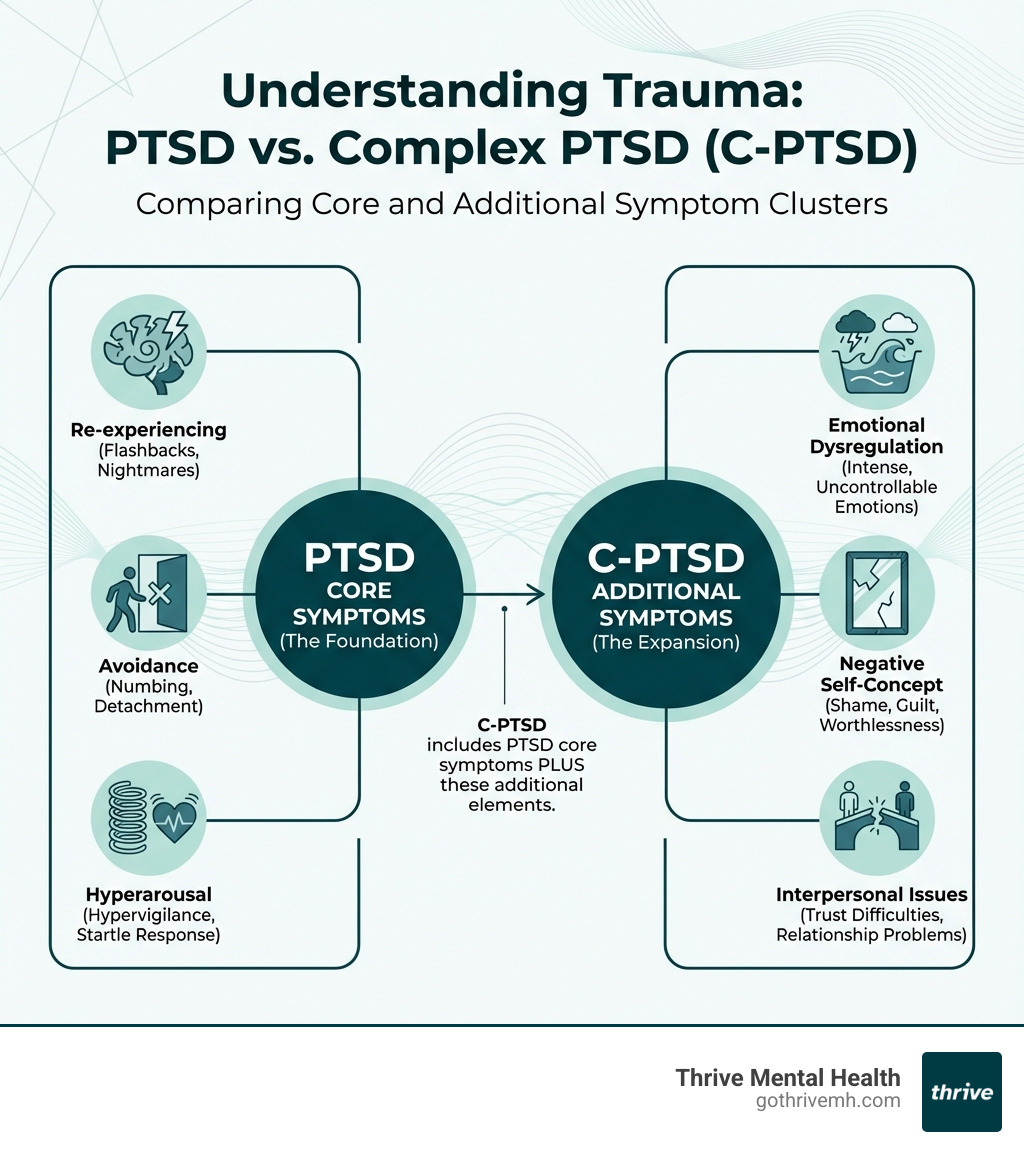
While Post-Traumatic Stress Disorder (PTSD) usually follows a single event, Complex PTSD (C-PTSD) results from chronic, interpersonal trauma that shapes a person’s development. The World Health Organization (WHO) distinguishes C-PTSD by its “Disturbances in Self-Organization” (DSO), which include:
- Severe emotion dysregulation (e.g., extreme mood swings)
- Negative self-concept (e.g., pervasive shame or worthlessness)
- Persistent relationship difficulties (e.g., inability to trust)
This distinction is critical because C-PTSD requires therapies that address identity, relationships, and emotional regulation, not just traumatic memories. Learn more about this condition on our page about Complex Post Traumatic Stress Disorder.
The Hidden Scars: Core Symptoms and Daily Challenges
Living with C-PTSD involves profound daily struggles that go beyond typical trauma responses:
- Emotional Flashbacks: Sudden, intense emotional states (fear, shame, rage) that mirror the trauma, often without a clear memory.
- Chronic Shame and Worthlessness: An internalized belief of being fundamentally broken, making it hard to accept love or feel valuable.
- Unstable Relationships: A pattern of insecure attachments, fear of intimacy, or pushing others away due to shattered trust.
- Dissociation and Memory Gaps: Mentally “checking out” to cope with pain, leading to detachment or significant memory loss. Learn more here: Can Trauma Cause Memory Loss?.
- Physical Symptoms: Chronic stress manifests as pain, digestive issues, fatigue, and other physical ailments. The body keeps the score.
Addressing these hidden scars is central to determining which treatment approaches assist adults with complex trauma effectively.
Which treatment approaches assist adults with complex trauma? [The 3-Phase Framework]

Effective C-PTSD treatment follows a structured phase-based approach, pioneered by Dr. Judith Herman. This model ensures healing is safe and sustainable by building a foundation before addressing painful memories. At Thrive Mental Health, we integrate this framework into all our Florida-based programs.
- Phase 1: Safety and Stabilization: Establish physical and emotional security, develop coping skills, and build a trusting therapeutic relationship. This is the non-negotiable first step.
- Phase 2: Trauma Processing: Once stable, gently confront and make sense of traumatic memories to reduce their emotional charge and integrate the past.
- Phase 3: Integration and Reconnection: Move forward by developing a healthier sense of self, building secure relationships, and creating a meaningful future.
This phased approach is a core component of Evidence-Based Trauma Treatment.
Phase 1: Building a Foundation of Safety and Skills
Before confronting the past, you need tools to stay grounded in the present. This foundational phase is often longer for C-PTSD survivors and is a critical part of which treatment approaches assist adults with complex trauma.
Key skills include:
- Establishing Safety: Creating a secure therapeutic environment and building safety in daily life through boundaries and stability.
- Emotion Regulation: Learning to identify, understand, and manage intense emotions without being overwhelmed.
- Grounding Techniques: Using practical exercises to stay connected to the present moment and combat dissociation.
- Building a Therapeutic Alliance: Developing a safe, consistent relationship with a therapist, which is a core tenet of Trauma-Informed Care.
- Distress Tolerance: Increasing your capacity to handle difficult emotions without resorting to harmful coping mechanisms.
Phase 2: Gently Processing Traumatic Memories
With a foundation of safety, you can begin processing traumatic memories in a controlled way. The goal is not to relive trauma, but to reduce its power over your present.
This phase focuses on:
- Controlled Confrontation: Approaching memories in a titrated manner, using the skills learned in Phase 1.
- Making Sense of the Past: Creating a coherent narrative and challenging distorted beliefs about the trauma.
- Grieving Losses: Acknowledging and mourning the loss of safety, innocence, and a healthy sense of self.
- Reducing Emotional Charge: The aim is to remember what happened without being re-traumatized by the memory. For more insights, see our Expert Tips on Coping with Trauma for Better Mental Health.
Phase 3: Reclaiming Your Life and Identity
This final, empowering phase is about translating your hard work into a life you choose to live. It’s where you move from surviving to thriving.
Focus areas include:
- Developing a New Sense of Self: Cultivating self-compassion and embracing an identity beyond the trauma.
- Building Healthy Relationships: Using new skills to foster secure, authentic connections.
- Finding Meaning and Purpose: Actively creating a life that feels meaningful and aligned with your values.
- Creating a Future: Envisioning and working towards a future filled with hope, agency, and continued growth.
Top Evidence-Based Therapies for Complex Trauma [2025 Guide]

When considering which treatment approaches assist adults with complex trauma, several evidence-based therapies stand out. These modalities are designed to work within the phase-based model, addressing the deep impact of chronic trauma. At Thrive Mental Health, our Florida-based clinicians tailor these proven techniques in our Evidence-Based Therapy programs.
Top modalities for C-PTSD include:
- Phase-Oriented Therapies (e.g., STAIR/MPE): Integrate skill-building with gradual trauma processing.
- Trauma-Processing Therapies (e.g., EMDR, CPT): Reduce distress from traumatic memories and challenge harmful beliefs.
- Somatic & Relational Therapies (e.g., DBT, IFS, Somatic Experiencing): Address emotional dysregulation, relational patterns, and the body’s trauma response.
Which treatment approaches assist adults with complex trauma using Cognitive & Behavioral Methods?
These therapies help change the thought patterns and behaviors that keep you stuck.
Cognitive Processing Therapy (CPT)
CPT is a form of CBT that targets “stuck points”—unhelpful beliefs born from trauma (e.g., “It was my fault,” “I can’t trust anyone”). By examining evidence, you develop more balanced perspectives, reducing the trauma’s emotional impact. It’s a key part of How CBT Can Transform Your Mental Health: A Comprehensive Guide.
STAIR/MPE (Skills Training in Affect and Interpersonal Regulation + Modified Prolonged Exposure)
This two-phase therapy is designed for C-PTSD. The first phase, STAIR, builds essential emotion regulation and interpersonal skills. The second, MPE, uses a gradual and supportive form of exposure to help you safely process trauma memories without being overwhelmed. Research supports its effectiveness for complex trauma.
Which treatment approaches assist adults with complex trauma through Reprocessing and Integration?
These therapies target how traumatic memories are stored in the brain and help integrate a fragmented sense of self.
Eye Movement Desensitization and Reprocessing (EMDR)
EMDR helps the brain reprocess “stuck” traumatic memories using bilateral stimulation (e.g., eye movements or tapping). It reduces the emotional charge and vividness of distressing memories without requiring you to recount the trauma in detail. Many of our clients across Florida find profound relief with EMDR. Learn more about What is EMDR and How Does It Work?.
Internal Family Systems (IFS)
IFS views the mind as having various “parts” that took on extreme roles (e.g., a “critic” or “people-pleaser”) to protect you from pain. Therapy involves accessing your core “Self”—a source of calm, compassion, and wisdom—to heal these wounded parts and resolve internal conflicts. IFS is powerful for addressing the identity fragmentation common in C-PTSD.
How Somatic and Relational Therapies Address Deep-Seated Wounds
Complex trauma lives in the body and damages our ability to connect. These therapies are essential for healing at this deep level.
Dialectical Behavior Therapy (DBT)
DBT is highly effective for C-PTSD because it directly targets emotion dysregulation and relationship difficulties. It teaches practical skills in four key areas: Mindfulness, Distress Tolerance, Emotion Regulation, and Interpersonal Effectiveness. Our Florida-based IOP/PHP programs integrate DBT to empower clients. Learn How Does Dialectical Behavioral Therapy Work?.
Somatic Experiencing (SE)
Developed by Dr. Peter Levine, SE helps release trauma trapped in the nervous system. It works by gently guiding your awareness to bodily sensations, allowing your body to complete its natural fight, flight, or freeze responses and restore regulation. This physiological approach helps you move out of a chronic state of survival. Explore related Somatic Exercises to Improve Your Mental Health.
Practical Steps: Structuring Your Recovery for Lasting Success
Knowing which treatment approaches assist adults with complex trauma is the first step. Structuring your recovery involves understanding practicalities like treatment duration and level of care.
- Treatment Duration: Healing from C-PTSD is a long-term process, often lasting a year or more. Unlike single-event PTSD, it involves deep developmental wounds requiring sustained therapy. Patience is key, as the initial stabilization phase alone can take months.
- Role of Medication (SSRIs): While therapy is the primary treatment, medication like SSRIs can help manage severe symptoms of depression or anxiety. Medication is a supportive tool, not a standalone solution, and should be discussed with a medical provider.
- Specific Populations: Effective treatment must be culturally sensitive. For example, refugees face unique stressors, while survivors of childhood abuse require a focus on attachment and identity.
- When to Consider Intensive Treatment: If weekly therapy isn’t enough to manage symptoms or make progress, a more structured program may be necessary.
Finding the Right Level of Care: IOP and PHP Programs
For those who are overwhelmed or struggling to function, weekly therapy may not be enough. Thrive Mental Health specializes in Intensive Outpatient Programs (IOP) and Partial Hospitalization Programs (PHP) for Florida residents—a crucial middle ground between weekly sessions and inpatient care.
- Why Choose IOP/PHP? These programs offer several hours of therapy multiple days a week, providing the structure and intensity needed for rapid skill-building and deeper therapeutic work. They are ideal if you feel stuck or need more support.
- What to Expect: Our programs combine individual therapy for personalized work with group therapy to reduce isolation and practice new interpersonal skills in a safe environment.
- Learn more about our Intensive Outpatient Programs (IOP).
- Explore our Partial Hospitalization Programs (PHP).
- Insurance Coverage: We make our programs accessible by working with major insurance providers like Aetna, Florida Blue, Cigna, and UnitedHealthcare. Our team can help you verify benefits for our services in Florida.
Frequently Asked Questions about Complex Trauma Treatment
How is C-PTSD different from Borderline Personality Disorder (BPD)?
While symptoms overlap, C-PTSD is rooted in chronic trauma, leading to a negative self-concept and relational difficulties. BPD is primarily characterized by an intense fear of abandonment and an unstable sense of identity. A trauma-informed clinician can provide an accurate diagnosis, which is crucial as treatment approaches differ.
How long does therapy for complex trauma take?
Treatment is typically long-term, often a year or more, because C-PTSD affects core aspects of personality and attachment. The initial stabilization phase can take several months. Progress depends on the individual, trauma severity, and treatment consistency. Patience is essential.
Can you fully recover from complex trauma?
Yes, recovery is possible. It doesn’t mean erasing the past, but integrating it so it no longer controls your present. The goal is to manage symptoms, build healthy relationships, and lead a meaningful life—moving from surviving to thriving with a renewed sense of safety and empowerment.
Take Control of Your Healing Journey Today
Healing from complex trauma is a courageous journey that requires specialized, compassionate care. While standard PTSD treatments can be helpful, the most effective approaches for C-PTSD are phased, trauma-informed, and address the deep wounds to your sense of self, your ability to regulate emotions, and your capacity for connection. By combining modalities like DBT for skills, EMDR for processing, and somatic work for bodily release, you can build a stable foundation for lasting recovery. At Thrive Mental Health, our expert-led virtual and in-person programs in Florida are designed to provide this exact level of comprehensive support.
Ready for support? Thrive offers virtual and hybrid IOP/PHP programs with evening options. Verify your insurance in 2 minutes (no obligation) → Start benefits check or call 561-203-6085. If you’re in crisis, call/text 988.