
Why Betrayal Trauma Feels Like PTSD: 7 Steps to Thrive
Why Betrayal Trauma Feels Like PTSD (And What You Can Do About It) is a question rooted in biology. Your brain doesn’t distinguish between physical danger and the emotional devastation of betrayal. When a trusted partner, parent, or friend violates that trust, your nervous system responds as if you’re under attack. The racing heart, sleepless nights, and constant replay of events aren’t weakness—they’re survival responses.
Quick Answer: Why Does Betrayal Feel Like PTSD?
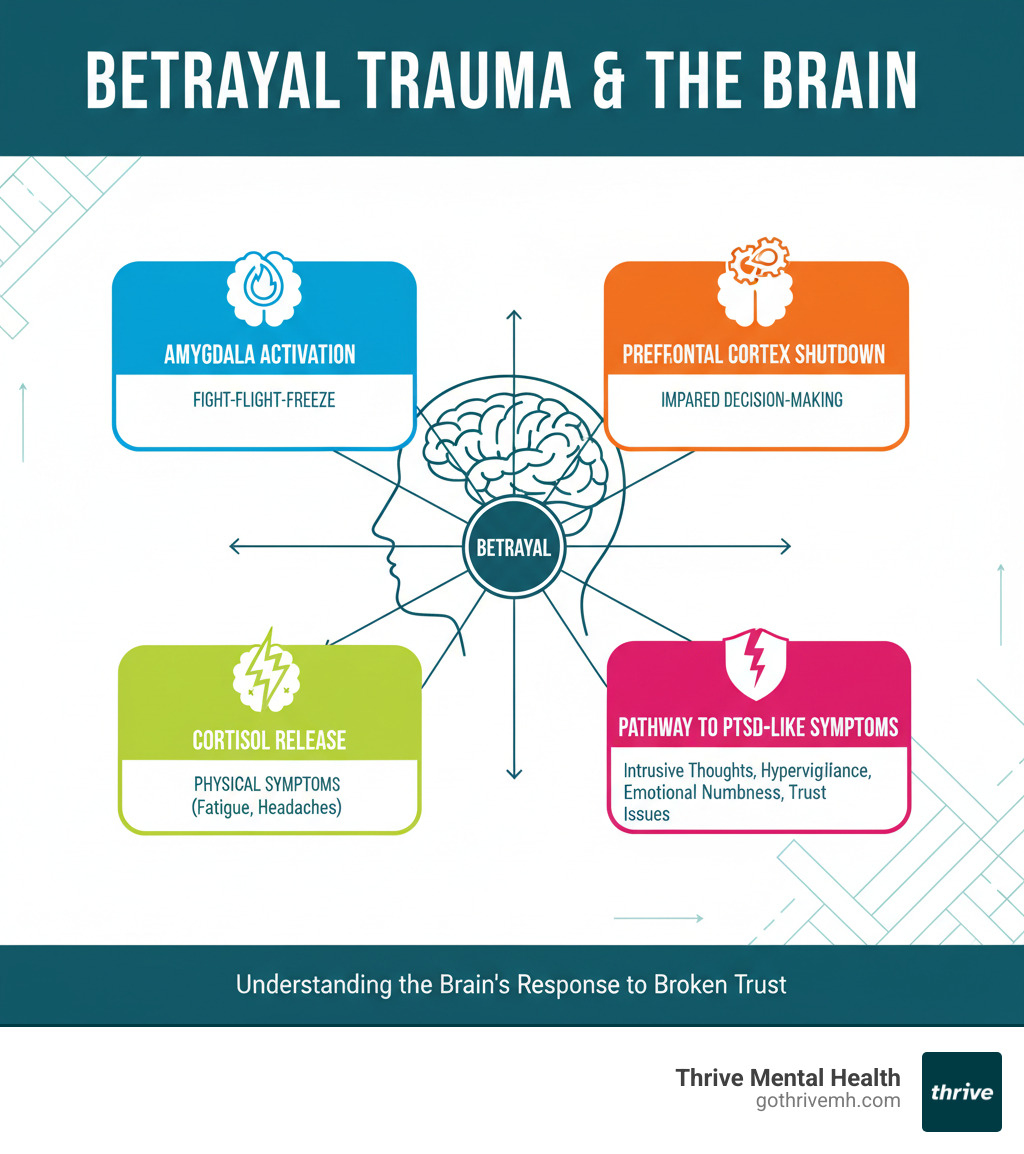
- Survival Mode: Your brain’s fear center (amygdala) goes into overdrive while the logic center (prefrontal cortex) shuts down.
- Trauma Symptoms: You experience intrusive thoughts, hypervigilance, flashbacks, and emotional numbness.
- High Alert: Cortisol floods your system, causing fatigue, headaches, and panic.
- Shattered Trust: Your core beliefs about safety and relationships are destroyed.
- Research Confirms: Studies show 30-60% of people who experience infidelity develop PTSD-like symptoms.
What You Can Do:
- Acknowledge the trauma.
- Regulate your nervous system with grounding techniques.
- Seek trauma-informed help like EMDR or CBT.
- Build a support network.
- Consider intensive treatment (IOP/PHP) for structured healing.
Betrayal trauma is a fundamental violation of safety that triggers neurobiological changes similar to combat trauma. Jennifer Freyd’s betrayal trauma theory explains this unique psychological injury. Healing is possible with the right support, like the specialized care available through our Florida betrayal trauma programs. This article provides a science-backed, actionable roadmap for recovery.
Why Betrayal Trauma Feels Like PTSD: Your Brain on High Alert
When someone you depend on betrays you, your brain screams danger. It can’t distinguish between a physical threat and the emotional devastation of broken trust. This is exactly Why Betrayal Trauma Feels Like PTSD—neurologically, your brain responds as if your life is threatened.
Your amygdala (the brain’s alarm system) blares, flooding your body with stress hormones like cortisol to prepare you for fight, flight, or freeze. Meanwhile, your prefrontal cortex (the rational, decision-making center) goes offline. This isn’t weakness; it’s your survival system stuck in high-alert mode. You become hypervigilant, constantly scanning for danger and unable to relax.
This chronic state of alert leads to exhaustion, poor sleep, and difficulty concentrating. Research shows that trauma is linked to serious physical health issues, including heart disease and a weakened immune system. Betrayal is uniquely devastating because it shatters your core beliefs about reality and trust, making you question everything and everyone.
The Neurobiology Behind the Pain
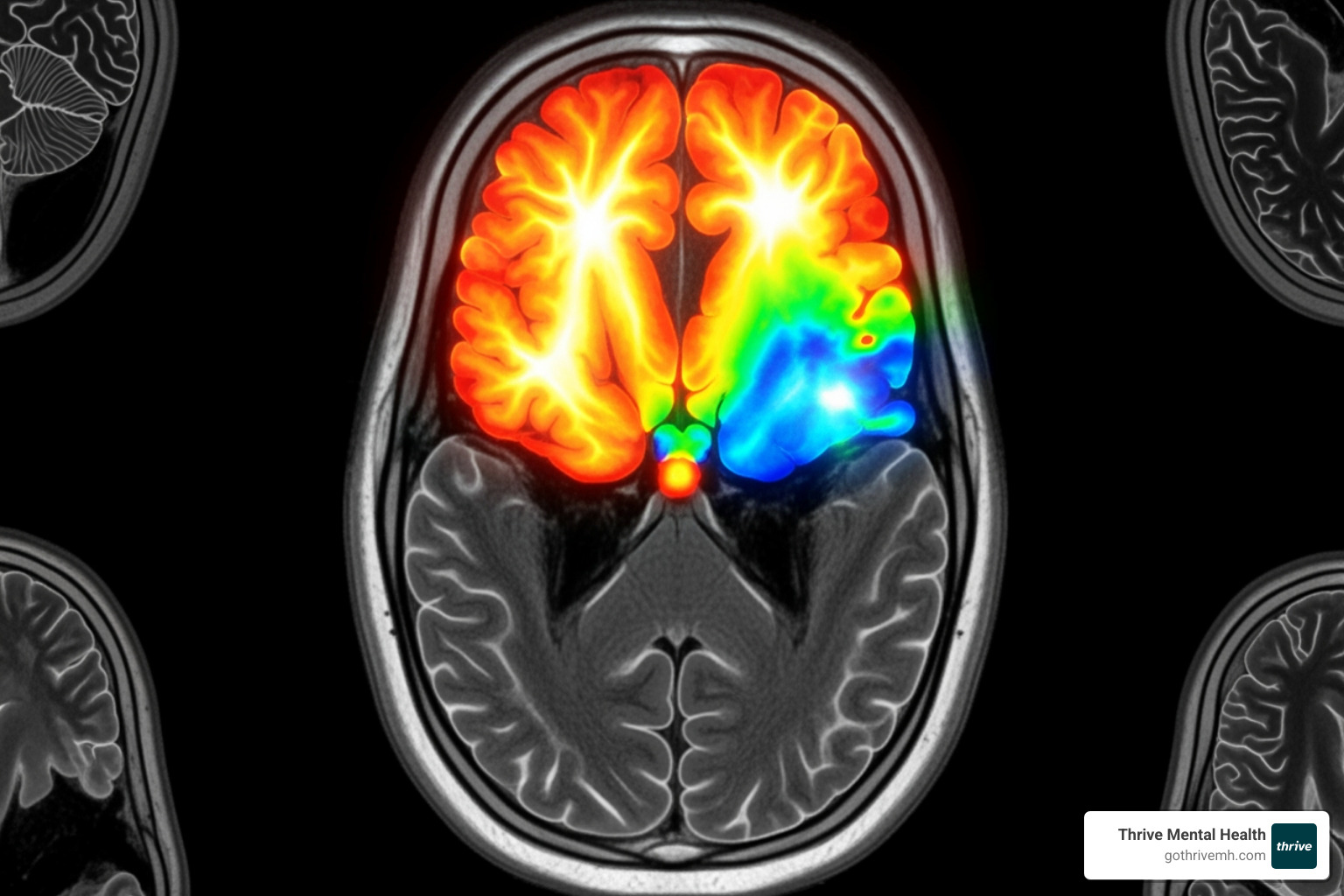
Brain imaging studies show betrayal trauma physically alters brain function, explaining why you might feel out of control.
- Hyperactive Amygdala: Your fear center works overtime, causing heightened anxiety and panic in response to everyday triggers. An unanswered text can feel like a catastrophe.
- Reduced Prefrontal Cortex Activity: Your logic center struggles, impairing concentration, decision-making, and emotional regulation. This can lead to brain fog and impulsive choices.
- Impaired Hippocampus: The memory-processing center takes a hit, leading to fragmented memories or dissociation—a coping mechanism where you mentally detach from overwhelming pain. This can feel like you’re in a fog or watching your life from the outside.
Psychologist Jennifer Freyd’s betrayal trauma theory explains that this trauma is most severe when the betrayer is someone you depend on for support (like a spouse or parent). This dependency can lead to “betrayal blindness,” where you unconsciously block awareness of the betrayal to preserve a necessary relationship.
Post-Infidelity Stress Disorder (PISD): Naming the Experience
The fallout from infidelity is so severe it’s often called Post-Infidelity Stress Disorder (PISD). While not an official DSM diagnosis, the term validates the experience and acknowledges its severity.
PISD symptoms mirror classic PTSD, which is Why Betrayal Trauma Feels Like PTSD. These include:
- Intrusive Thoughts: Unwanted, recurring images or memories of the betrayal.
- Flashbacks: Feeling as if the betrayal is happening again, triggered by a song, scent, or place.
- Nightmares: Robbing you of restorative sleep and leaving you exhausted.
- Hypervigilance: Constantly checking phones, monitoring behavior, and analyzing every word for signs of deception.
- Emotional Numbness: An inability to feel joy, leaving you feeling disconnected and sad.
A 2021 study found that 30% to 60% of people who experience infidelity develop symptoms of PTSD, anxiety, and depression. You are not overreacting; you are having a normal response to a traumatic event. With the right support, like the virtual therapy options we offer in Florida, healing is entirely possible.
Spotting the Red Flags: 15 Signs You’re Suffering from Betrayal Trauma
Betrayal trauma doesn’t arrive with a neat label. It shows up as sleepless nights, sudden panic when your phone buzzes, and exhaustion that rest can’t fix. These are not signs of weakness; they are symptoms of a nervous system processing a profound violation of trust. They are also remarkably similar to PTSD symptoms, which is Why Betrayal Trauma Feels Like PTSD.
Emotional & Cognitive Symptoms: The Invisible Wounds
The invisible wounds are often the deepest. Look for these signs:
- Intrusive Thoughts & Flashbacks: Reliving the moment of betrayal over and over.
- Hypervigilance: Constantly scanning for signs of deception, unable to trust anyone.
- Emotional Numbness or Volatility: Feeling detached and empty, or swinging between intense anger, sadness, and anxiety.
- Questioning Reality: Doubting your own judgment, memories, and the reality of your relationship.
- Loss of Self-Worth: Internalizing the betrayal as a reflection of your own inadequacy, leading to shame and self-blame.
- Difficulty Concentrating: Brain fog, memory gaps, and an inability to focus on simple tasks.
- Social Withdrawal: Pulling away from friends and family because it feels safer to be alone.
Physical Symptoms: How Trauma Lives in Your Body
Your body keeps the score. Trauma manifests physically through:
- Chronic Fatigue: A bone-deep exhaustion from a nervous system stuck on high alert.
- Sleep Disturbances: Insomnia due to a racing mind or nightmares about the betrayal.
- Panic Attacks: Sudden waves of terror with physical symptoms like a racing heart, shortness of breath, and dizziness.
- Digestive Issues: Nausea, stomach pain, and changes in appetite due to the gut-brain connection.
- Lowered Immunity: Getting sick more often as chronic stress weakens your immune system.
- Unexplained Aches: Headaches and muscle pain from holding constant tension.
The overlap with classic PTSD is undeniable.
| Betrayal Trauma Symptoms | Classic PTSD Symptoms |
|---|---|
| Intrusive thoughts about betrayal | Intrusive thoughts about traumatic event |
| Flashbacks of betrayal incidents | Flashbacks of traumatic event |
| Hypervigilance in relationships | Hypervigilance for threats |
| Difficulty trusting partners/others | Difficulty trusting people/situations |
| Emotional numbness/detachment | Emotional numbness/detachment |
| Self-blame for betrayal | Self-blame for traumatic event |
| Anxiety & depression related to relationship | General anxiety & depression |
| Sleep disturbances (e.g., nightmares about infidelity) | Sleep disturbances (e.g., nightmares about trauma) |
| Avoidance of places/people related to betrayer | Avoidance of reminders of traumatic event |
| Irritability/anger towards betrayer | Irritability/anger |
If these symptoms resonate, you’re experiencing a legitimate trauma response that requires proper care, like the trauma-informed therapy we provide to clients throughout Florida.
Your 7-Step Action Plan for Healing from Betrayal Trauma
Healing from betrayal trauma is a process, but it is absolutely possible. It requires patience, self-compassion, and a commitment to rebuilding. You are not broken; you are injured, and injuries heal with the right care.

Step 1: Acknowledge the Trauma (Stop Minimizing Your Pain)
The first and most critical step is to stop minimizing your pain. Phrases like “it’s just a breakup” or “I should be over this” keep you stuck. Betrayal trauma is real and valid. It’s a profound violation of safety that shatters your sense of reality. Give yourself permission to grieve the loss of trust, the relationship you thought you had, and the future you imagined.
Step 2: Create a Safe Space to Regulate Your Nervous System
Your nervous system is stuck in survival mode. Creating physical and emotional safety is essential for healing.
- Grounding Techniques: When anxiety spikes, plant your feet on the floor. Name 5 things you see, 4 you touch, 3 you hear, 2 you smell, and 1 you taste. This interrupts the panic loop.
- Deep Breathing: Try the 4-7-8 method: inhale for 4 counts, hold for 7, exhale for 8. This activates your body’s natural calm-down signal.
- Establish a Routine: Predictable sleep times, meals, and daily rituals provide a sense of control and safety for your nervous system.
- Limit Triggers: Muting social media accounts or avoiding certain places isn’t avoidance; it’s creating space to heal.
Step 3: Build Your Support Network (You Can’t Do This Alone)
Isolation is the enemy of healing. You need connection now more than ever.
- Reach out to trusted friends and family who can offer non-judgmental support.
- Consider a support group to connect with others who truly understand your experience.
- Seek professional help. Our virtual therapy options provide a safe, confidential space for Florida residents to build coping strategies.
- Set clear boundaries with the person who betrayed you. Your healing must come first.
Step 4: Process, Don’t Repress (Feel to Heal)
The only way out is through. Pushing down feelings of anger, sadness, or fear only buries them, allowing them to fester.
- Allow yourself to feel your emotions. They are information, telling you that something important was lost.
- Schedule “worry time.” Dedicate 15-30 minutes daily to process thoughts about the betrayal. This helps contain rumination.
- Avoid self-medication with alcohol or drugs. Unaddressed trauma can lead to addiction.
- Be patient. Healing isn’t linear. You will have good days and bad days. This is the normal rhythm of recovery.
Step 5: Reconnect With Yourself and Rebuild Your Identity
Betrayal can shatter your sense of self. Reconnecting with who you are is a vital part of healing.
- Refind your hobbies and passions. What brought you joy before this happened? Start there.
- Rebuild self-esteem. Actively challenge negative self-talk. List your strengths and accomplishments.
- Listen to your intuition. Betrayal may have taught you to doubt your gut feelings. Learning to trust them again is part of healing.
- Define your values post-trauma. What matters to you now? What are your non-negotiable boundaries?
Step 6: Learn About Trauma-Informed Professional Help
Self-help is important, but betrayal trauma often requires professional intervention from a specialist who knows Why Betrayal Trauma Feels Like PTSD. Standard weekly therapy may not be enough. Our Florida-based Intensive Outpatient Programs (IOP) offer multiple sessions per week for more structured, effective healing. With evening options and acceptance of major insurance like Cigna, Optum, and Florida Blue, expert care is accessible.
Step 7: Explore Advanced Therapeutic Modalities
Specialized therapies are designed to rewire how your brain processes traumatic memories.
- Eye Movement Desensitization and Reprocessing (EMDR): Helps your brain reprocess traumatic memories, so they lose their emotional charge and are filed away as past events.
- Cognitive Behavioral Therapy (CBT): Helps you identify and challenge the distorted thought patterns created by betrayal, such as “I’ll never trust anyone again.”
- Somatic Experiencing: A body-oriented therapy that helps release the physical tension and hypervigilance stored in your body.
- Narrative Therapy: Empowers you to reframe your story from one of a victim to one of a survivor who is growing and healing.
Our Partial Hospitalization Programs (PHP) in Florida integrate these advanced therapies for comprehensive, structured treatment, available virtually or in-person.
Frequently Asked Questions about Betrayal Trauma and PTSD
Can you get PTSD from being cheated on?
Yes. The findy of infidelity is a psychologically traumatic event that shatters your sense of safety. Research shows that 30-60% of people who have been cheated on develop symptoms of PTSD, anxiety, and depression. The hypervigilance, intrusive thoughts, and emotional dysregulation are hallmark signs that show Why Betrayal Trauma Feels Like PTSD. It is a legitimate trauma response, not oversensitivity.
How long does betrayal trauma last?
There is no set timeline for healing. For some, acute symptoms may lessen within a few months with proper support. For others, especially those with a history of trauma, it can take longer. The goal is not to forget, but to integrate the experience so it no longer controls your life. Intensive treatment like our Florida-based Intensive Outpatient Programs (IOP) can significantly accelerate recovery by providing structured, frequent support.
How do you calm betrayal trauma anxiety?
Calming this type of anxiety requires regulating your nervous system on a physical level.
- Grounding: When anxiety spikes, plant your feet on the floor and name 5 things you can see. This brings you back to the present.
- Breathing: Use the 4-7-8 technique (inhale 4, hold 7, exhale 8) to activate your body’s relaxation response.
- Routine: A predictable daily schedule for sleep, meals, and activity restores a sense of control.
- Professional Help: A trauma-informed therapist can teach you personalized coping strategies. Our virtual therapy options connect you with specialists throughout Florida.
Reclaim Your Life from Betrayal Trauma

You now understand Why Betrayal Trauma Feels Like PTSD (And What You Can Do About It). Your response is not weakness; it’s a survival instinct. The hypervigilance, intrusive thoughts, and exhaustion are evidence that you endured something devastating.
Healing isn’t about forgetting. It’s about integrating the experience so it no longer controls your life. This journey requires more than just time; it requires expert support. At Thrive Mental Health, our trauma-informed professionals across Florida provide evidence-based care to help you recover faster. Our Intensive Outpatient Programs and Partial Hospitalization Programs offer structured, compassionate treatment designed for those who need more than weekly therapy.
Ready for support? Thrive offers virtual and hybrid IOP/PHP programs with evening options. Verify your insurance in 2 minutes (no obligation) → Start benefits check or call 561-203-6085. If you’re in crisis, call/text 988.