
Why Center-Based ABA Therapy is Effective for Teens and Young Adults

The Power of Peers: Why a Center-Based Setting Opens Up Growth
Center based aba therapy for teens and young adults is a specialized treatment approach that helps older individuals with autism develop the practical skills they need for independence, employment, and meaningful relationships. Unlike programs designed for young children, these programs focus on real-world application—preparing teens and young adults for college, careers, and independent living.
Quick Overview: What Center-Based ABA Offers Teens and Young Adults
- Focus: Independence, vocational skills, social nuance, and self-advocacy
- Setting: Dedicated center with peers, not just home or school
- Age Range: Typically 13-21+ years old
- Key Skills: Job readiness, budgeting, relationships, emotional regulation, community navigation
- Duration: Individualized, often 2+ years with flexible scheduling
- Approach: Positive reinforcement, trauma-informed, neurodiverse-affirming
The transition from adolescence to adulthood is challenging for anyone. For teens and young adults on the autism spectrum, it can feel overwhelming. Traditional support often fades after childhood, leaving families wondering where to turn when their teen needs help with job interviews, managing money, or navigating college social life.
That’s where center-based programs shine. They offer structured peer interaction that you simply can’t replicate at home. Research shows that 63-88% of teens with ASD show measurable improvements across communication, social, and adaptive behavior outcomes through ABA interventions. But effectiveness depends on how therapy is delivered—and for this age group, the center environment creates unique advantages.
I’m Nate Raine, CEO of Thrive Mental Health, and I’ve spent over a decade at the intersection of behavioral health innovation and evidence-based care. At Thrive, we’ve seen how center based aba therapy for teens and young adults in Florida creates the structure and social context needed to build skills that actually transfer to real life—from job sites to friendships to independent living.
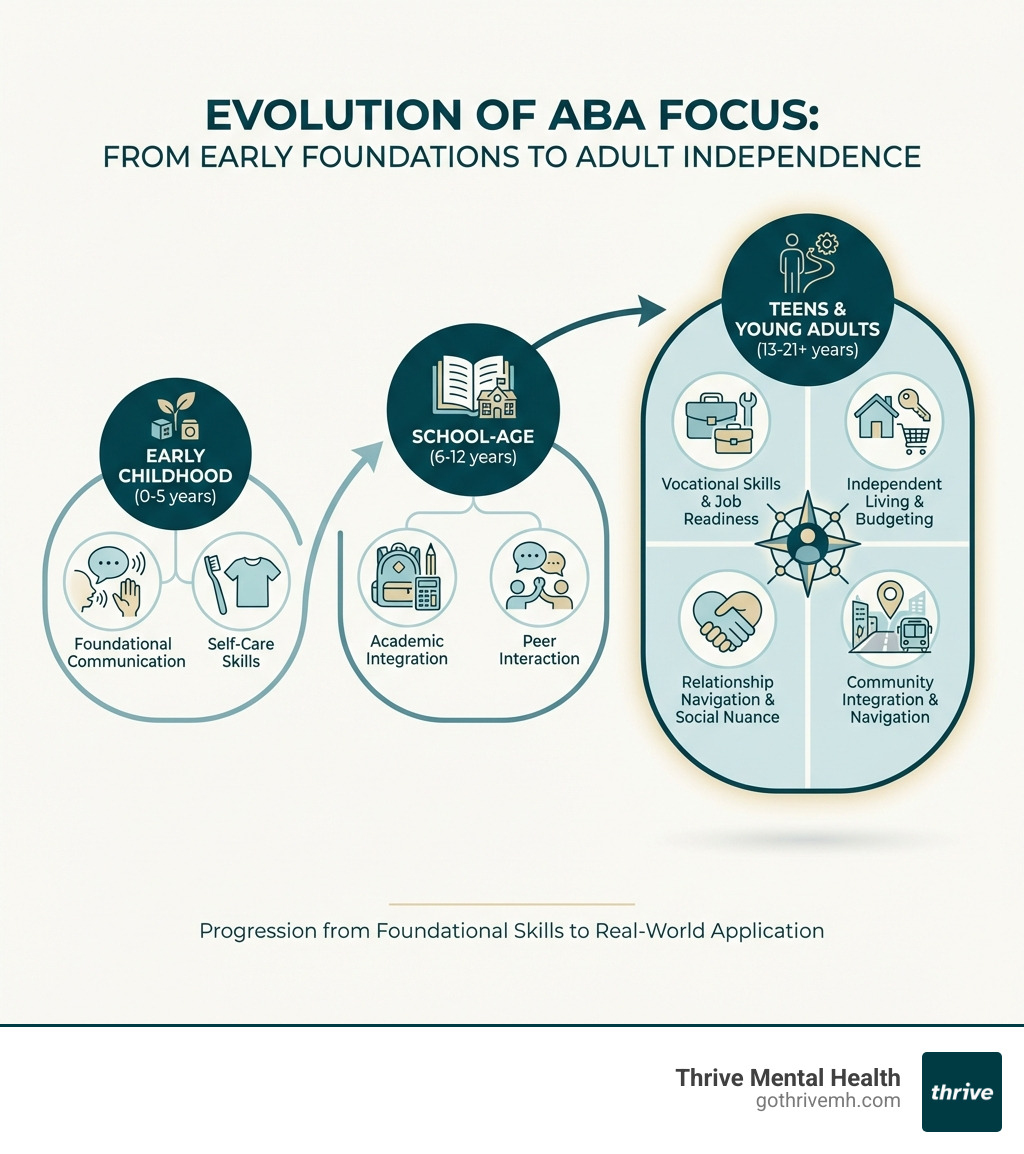
Center based aba therapy for teens and young adults terms to remember:
When we talk about center based aba therapy for teens and young adults, one of the most compelling advantages is the environment itself. A dedicated center offers a dynamic, controlled, and rich social ecosystem that simply can’t be fully replicated in a home or school setting. It’s a place where individuals can learn, practice, and generalize skills within a supportive community of peers and expert staff.
Imagine a space specifically designed for skill acquisition, where every interaction is an opportunity for growth. This is the essence of a high-quality ABA center. It provides structured social opportunities, allowing teens and young adults to engage with peers who share similar experiences and goals. This is crucial for developing social competence, as it fosters peer modeling—learning by observing and imitating others—and reduces the isolation many individuals on the autism spectrum can experience.
A center also boasts dedicated resources and equipment custom to various learning objectives, from simulated work environments to independent living stations. It’s a safe space for practice, allowing individuals to try new behaviors and social strategies without the high stakes of unfamiliar real-world situations. This controlled environment helps in the generalization of skills, ensuring that what’s learned in therapy can be applied effectively in broader community contexts.
How a Center Simulates the Real World
One of the standout features of center based aba therapy for teens and young adults is its ability to simulate real-world scenarios. We understand that learning skills in isolation isn’t enough; they need to be practiced in contexts that mirror daily life. Centers often feature:
- Simulated work environments: These can include mock offices, retail spaces, or even vocational workshops where teens and young adults can practice job-related tasks, follow instructions, and interact with “colleagues.” This helps build essential vocational skills like task completion, workplace etiquette, and effective communication with supervisors.
- Group project settings: Working collaboratively on projects teaches teamwork, compromise, and problem-solving—skills vital for both academic and professional success.
- Community outing preparation: Centers might have areas designed to mimic public transport, grocery stores, or even cafes, where individuals can practice navigating these spaces, making purchases, and interacting with strangers in a safe, guided manner. This directly prepares them for independent living and community integration.
- Navigating shared spaces: From common areas to kitchens and recreation rooms, center environments naturally provide opportunities to practice sharing, respecting personal space, and resolving minor conflicts with peers.
- Learning from same-age peers: This is invaluable. Peers provide relatable social cues, offer different perspectives, and create a natural incentive for social engagement that can be more motivating than adult-led instruction alone. As we emphasize in our adult autism support services, real-world application and peer support are key to successful transitions.
The Social Advantage Over In-Home Therapy
While in-home ABA therapy offers comfort and familiarity, it often falls short in providing the rich social landscape crucial for teens and young adults. Center based aba therapy for teens and young adults excels here by fostering:
- Spontaneous social interactions: Unlike planned interactions, centers allow for impromptu conversations, shared laughter, and unexpected moments that build genuine social fluency.
- Building genuine friendships: Thoughtfully paired participants in group settings are shown to cultivate genuine friendships that can extend beyond therapy, combating isolation and fostering a sense of belonging.
- Navigating group dynamics: Learning to understand social hierarchies, managing peer pressure, and advocating for oneself within a group are complex skills best learned through direct experience.
- Practicing conversation skills in a natural context: This includes understanding non-verbal cues, taking turns, asking relevant questions, and initiating conversations—all practiced in real-time with peers. Research shows that ABA helps teens across the spectrum by providing these opportunities for practical skill development.
| Feature | Center-Based ABA for Teens/Young Adults | In-Home ABA for Teens/Young Adults |
|---|---|---|
| Peer Interaction | High: Structured and spontaneous social opportunities with same-age peers. | Low: Primarily 1:1 with therapist; limited peer interaction. |
| Environment | Diverse, simulating work, community, and social settings; dedicated resources. | Familiar home environment; limited naturalistic social settings. |
| Generalization | Strong: Skills practiced in varied, realistic contexts, promoting transfer. | Moderate: Requires conscious effort to generalize skills outside home. |
| Resources/Equipment | Specialized vocational tools, group activity spaces, technology (e.g., BEAM). | Limited to home resources; may require external trips for specific skills. |
| Structured Support | Consistent schedule, multidisciplinary team, immediate access to diverse expertise. | Flexible, but may lack immediate access to a full team or specialized environments. |
| Sense of Community | High: Fosters belonging, shared experiences, and lasting friendships. | Lower: Focus is on individual and family unit; less peer community. |
From Daily Routines to Dream Jobs: Core Skills for a Thriving Future

The beauty of center based aba therapy for teens and young adults in Florida lies in its forward-thinking approach. We’re not just addressing immediate behaviors; we’re building a robust foundation for a lifetime of independence and fulfillment. This section details the practical, life-changing skills targeted in these programs, moving beyond basic behaviors to focus on long-term quality of life.
Key Skill Development Areas
-
Independence & Life Skills: For teens and young adults, mastering daily living skills is paramount for true independence. Our programs break down complex tasks into manageable steps, focusing on:
- Budgeting and Financial Literacy: Understanding money, managing accounts, making purchases, and planning for future expenses.
- Cooking and Nutrition: Meal planning, food preparation, and healthy eating habits.
- Time Management: Scheduling appointments, managing deadlines, and prioritizing tasks for school, work, and personal life.
- Public Transportation and Navigation: Learning routes, using public transit independently, and navigating new environments.
- Personal Hygiene and Self-Care: Establishing routines for grooming, health, and wellness.
- Household Management: Cleaning, organizing, and maintaining a living space.
-
Vocational & Pre-Vocational Skills: Preparing for the workforce is a key component. We help individuals explore interests, develop essential job skills, and steer the professional world:
- Resume Building and Interview Practice: Crafting effective resumes and cover letters, practicing interview techniques, and understanding common interview questions.
- Workplace Etiquette: Professional communication, understanding workplace rules, and interacting appropriately with colleagues and supervisors.
- Task Completion and Productivity: Staying on task, meeting deadlines, and managing workload effectively.
- Exploring Career Interests: Identifying strengths and passions to guide career choices.
- Supported Employment: Programs like “Stepping Forward” specifically target building pathways to supported employment and community living.
-
Advanced Social & Communication Skills: Social interactions become increasingly complex during adolescence and young adulthood. Our programs dig into nuanced social skills, often incorporating role-playing and real-world practice:
- Understanding Sarcasm and Nuance: Interpreting non-literal language and subtle social cues.
- Perspective-Taking: Understanding others’ thoughts, feelings, and intentions.
- Conflict Resolution: Learning to manage disagreements respectfully and effectively.
- Dating and Relationships: Navigating the complexities of romantic and platonic relationships.
- Self-Advocacy: Expressing needs, wants, and boundaries effectively and respectfully.
- It’s important to note that modern ABA acknowledges that Autistic individuals may communicate effectively with other Autistic people, challenging traditional views on social skills improvement in therapy and focusing on authentic connection.
-
Emotional Regulation & Coping: The emotional landscape of adolescence can be tumultuous. We equip individuals with strategies to manage their feelings and steer challenges:
- Managing Anxiety and Stress: Identifying triggers and implementing coping mechanisms.
- Handling Frustration and Disappointment: Developing resilience and problem-solving skills.
- Developing Healthy Coping Mechanisms: Exploring constructive ways to deal with stress, such as mindfulness or physical activity.
- Dealing with Peer Pressure: Building confidence to make independent choices.
- For more on this, explore Finding Clarity Autism Counseling and Coping Mechanisms.
A Look Inside a Center-Based ABA Therapy Program for Teens and Young Adults
A well-designed center based aba therapy for teens and young adults program is a hub of structured learning and dynamic interaction. Our Florida-based programs, for instance, are carefully crafted to provide comprehensive support, often ranging from ages 13 up to 21 or beyond, specifically addressing the unique developmental needs of this demographic.
The typical program structure involves a blend of individualized attention and group activities. Session frequency and duration are custom to each person’s needs, often involving several hours a day, multiple days a week, for a sustained period (sometimes two or more years). This intensive yet flexible approach ensures consistent learning and skill generalization.
Individualized treatment plans are the cornerstone of effective ABA. These plans are developed from a comprehensive strength and needs assessment, identifying specific goals across social, emotional, behavioral, language/communication, academic, and adaptive/life skills. Progress is carefully tracked through data-driven methods, ensuring that interventions are effective and adjusted as needed.
Parents and caregivers play a crucial role, often receiving training to integrate learned techniques into daily routines at home, fostering consistency and maximizing outcomes. Collaboration with schools and other providers (like speech-language pathologists or occupational therapists) is also key to a holistic approach.

What Does a Typical Session Look Like?
A session in center based aba therapy for teens and young adults is far from monotonous. It’s a vibrant mix of activities designed to engage and educate:
- Mix of 1:1 Instruction: Individualized teaching targets specific skills or behaviors, allowing for focused attention and immediate feedback from a Board Certified Behavior Analyst (BCBA) or Registered Behavior Technician (RBT).
- Group Activities: These are vital for practicing social skills in a natural context. Activities might include cooperative games, group discussions, or collaborative projects. Some centers even use interactive projectors (like BEAM) to boost engagement and teach skills like turn-taking and sportsmanship.
- Role-Playing Scenarios: Practicing real-life situations, such as job interviews, ordering food at a restaurant, or initiating conversations, helps teens and young adults build confidence and refine their responses.
- Community-Based Instruction: Our Florida programs incorporate outings to local stores, libraries, or recreational facilities to practice skills in authentic community settings. This might involve learning public transit, making purchases, or navigating social interactions in public.
- Natural Environment Teaching (NET): This approach integrates learning opportunities into everyday activities and interests, making skill acquisition more natural and enjoyable. For instance, a teen interested in cooking might learn sequencing and safety skills while preparing a meal.
- Use of Technology: Apps, telehealth platforms, and even virtual reality are increasingly used to improve engagement, track progress, and provide safe spaces for practicing social interactions.
These varied interventions ensure that skills are not just learned but deeply integrated and generalized across different environments. Our neurodivergent intensive outpatient treatment programs also leverage these diverse approaches to support comprehensive skill development. For more details, see our page on neurodivergent intensive outpatient treatment.
How is Progress Measured and Communicated?
Transparency and accountability are paramount in effective center based aba therapy for teens and young adults. We ensure that families are always informed about their loved one’s progress through a systematic approach:
- Initial Assessment: Every journey begins with a comprehensive practical functional assessment (PFA) to establish a baseline of skills and behaviors. This helps us understand the individual’s strengths and areas for growth, and to identify the ‘intent’ behind behaviors, which is a key step in ABA.
- Data Collection During Sessions: Therapists carefully collect data during each session, tracking skill acquisition, behavior reduction, and generalization. This continuous data stream allows for real-time adjustments to the treatment plan. As research highlights, analysis is carried out at all levels of the treatment process.
- Regular Progress Reports: Families receive regular, detailed reports summarizing progress toward goals, highlighting achievements, and outlining next steps.
- Parent-Therapist Meetings: Scheduled meetings provide opportunities for in-depth discussions, questions, and collaborative planning. This ensures that parents are active participants and can reinforce learned behaviors at home.
- Goal Adjustments Based on Performance: ABA is dynamic. If a goal isn’t being met, or if new needs arise, the treatment plan is adjusted based on the collected data and discussions with the family.
- Focus on Measurable Outcomes: We prioritize clear, measurable outcomes, demonstrating the tangible impact of the therapy on the individual’s independence and quality of life. Targeted outcomes can include significant reductions in challenging behaviors and increases in functional replacement behaviors and coping strategies.
Finding the Right Fit: How to Choose a High-Quality Program
Choosing the right center based aba therapy for teens and young adults is a significant decision. While the benefits are clear, it’s crucial to find a program that aligns with your family’s values and your loved one’s unique needs.
One potential challenge for teens, in particular, can be buy-in or assent. Adolescents naturally seek independence, and therapy can sometimes feel forced. A high-quality program will prioritize the teen’s voice, involving them in goal setting and ensuring the therapy is meaningful and motivating to them. This neurodiversity-affirming approach respects the individual’s identity and focuses on skills they want to learn, rather than forcing conformity to neurotypical standards. We also look for a trauma-informed approach, recognizing that past experiences, even with ABA, can impact current engagement.
When considering programs in Florida, it’s also important to inquire about insurance coverage. Many major providers, including Cigna, Optum, and Florida Blue, recognize ABA therapy as a medically necessary treatment for autism, but coverage specifics can vary.
What Qualifications Should a Provider Have?
To ensure your teen or young adult receives the highest quality care, look for providers with these key qualifications:
- Board Certified Behavior Analyst (BCBA): The program should be overseen by qualified BCBAs who design and supervise the treatment plans. They should have specific experience working with adolescents and young adults.
- Experience with Teens and Young Adults: The principles of ABA are universal, but their application for this age group requires specialized knowledge and techniques different from those used with young children. Look for therapists who understand adolescent development, social complexities, and vocational readiness.
- Individualized Approach: ABA should never be a one-size-fits-all model. The program must demonstrate a commitment to creating highly customized treatment plans based on comprehensive assessments and the individual’s specific goals and interests.
- Parent Training and Involvement: Effective programs recognize that parents and caregivers are integral to success. They should offer training and support to help families reinforce skills at home and generalize learning across environments.
- A Focus on Dignity and Respect: The program’s philosophy should be rooted in respect for neurodiversity, promoting self-advocacy and fostering skills that improve the individual’s quality of life and personal fulfillment. It should emphasize positive reinforcement and ethical practices.
To find the right support, consider exploring resources like Discover the Best Autistic Therapist Near You.
Key Questions to Ask a Potential Center-Based ABA Therapy Provider for Teens and Young Adults
When evaluating programs, don’t hesitate to ask detailed questions to ensure a good fit:
- What are your typical staff-to-client ratios for teens and young adults?
- How do you group individuals, and what strategies do you use for peer grouping to foster genuine friendships and learning?
- What is your approach to challenging behaviors, and how do you ensure it is trauma-informed and neurodiversity-affirming?
- What is the role of parents and caregivers in the therapy process, and what training or support do you provide?
- How do you involve the teen or young adult in setting their own goals and ensuring their assent to treatment?
- Can you provide examples of how you prepare teens and young adults for post-secondary education, employment, or independent living?
- What is your process for transition planning when an individual is ready to move on from the program?
- How do you measure and communicate progress to families?
- What specialized programs do you offer for different needs (e.g., mild vs. severe autism, specific skill deficits)?
- What are your policies regarding insurance coverage, and can you help us verify our benefits (e.g., Cigna, Optum, Florida Blue)?
Frequently Asked Questions about ABA for Teens
Is my teen “too old” for ABA therapy?
Absolutely not. While ABA is often associated with early intervention for young children, it is a scientifically proven method that can be highly beneficial at any age, including for teens and young adults. Research and extensive clinical experience show that ABA helps individuals across the autism spectrum, from mildly to severely affected, throughout their lifespan. For older individuals, center based aba therapy for teens and young adults is not about teaching foundational skills like eye contact, but rather about age-appropriate goals such as vocational training, advanced social nuances, independent living skills, and navigating relationships. It’s never too late to start, and significant progress can still be made.
How is this different from the ABA I’ve heard negative things about?
It’s true that ABA has faced criticism in the past, particularly regarding older methods that sometimes emphasized compliance over individuality or used aversive techniques. However, modern, high-quality ABA, especially in a center-based setting for teens and young adults, has evolved significantly. Today’s best practices are:
- Neurodiversity-Affirming: We respect autism as a form of neurodiversity and focus on enhancing quality of life, not “curing” or “fixing” an individual.
- Trauma-Informed: We understand past experiences and prioritize creating a safe, supportive environment, avoiding any aversive methods.
- Client-Centered: We actively involve the teen or young adult in setting goals, ensuring the therapy aligns with their desires and motivations.
- Positive Reinforcement Focused: We emphasize building desired behaviors through positive reinforcement, making learning engaging and empowering.
The goal is to equip individuals with the skills they need to thrive in a neurotypical world while celebrating their unique strengths and identity.
Will my insurance cover center-based ABA therapy?
Many insurance plans, including major providers like Cigna, Optum, and Florida Blue, offer coverage for ABA therapy as a medically necessary treatment for autism. However, coverage can vary widely depending on your specific plan, your location within Florida, and the specific services provided. We strongly recommend verifying your benefits directly with your insurance provider or asking the center to assist you with a benefits check. This will help you understand your out-of-network benefits, cost-sharing obligations, and any authorization requirements.
Your Partner in the Transition to Adulthood
Center based aba therapy for teens and young adults in Florida offers a unique, powerful environment for building the complex skills needed for independence. By combining expert guidance with the invaluable experience of peer interaction, these programs prepare individuals for the social, vocational, and personal challenges of adulthood. While ABA provides a foundational framework, some individuals may need more comprehensive mental health support to address co-occurring conditions like anxiety or depression.
Ready for support? Thrive offers virtual and hybrid IOP/PHP programs with evening options, including specialized tracks for neurodivergent individuals. Verify your insurance in 2 minutes (no obligation) → Start benefits check or call 561-203-6085. If you’re in crisis, call/text 988.