





Find Autism Diagnosis & Treatment for Adults in SC: 7 Key Steps
Stop Wasting Time: Find Providers for Autism Diagnosis and Treatment for Adults in SC, Now
Trying to find providers for autism diagnosis and treatment for adults in South Carolina can feel like hitting a wall. Most adults with autism in South Carolina face a frustrating reality: providers who don’t understand masking, waitlists stretching months, and evaluations that cost thousands out-of-pocket.
If you need answers now, here’s where to start:
- Thrive Mental Health, Virtual autism assessments covered by insurance, available statewide
- SC Department of Health and Human Services (SCDHHS), Medicaid provider search tool
- South Carolina Autism Society, Free information, referrals, and support groups
- Psychology Today Directory, 54+ providers treating autism in SC
- University-affiliated clinics, USC and Clemson training programs with lower costs
- Thrive’s Comprehensive Mental Health Centers, Integrated care for co-occurring conditions via virtual IOP
- Thrive’s Neurodiversity-Affirming Private Practice Network, Access clinicians who understand masking and lived experience
The biggest barrier? Most professionals were trained to spot autism in children, not adults who’ve spent decades masking. Women, people of color, and LGBTQIA+ individuals are especially likely to be missed or misdiagnosed with anxiety, depression, or personality disorders instead.
Here’s what makes adult autism diagnosis different: you need a comprehensive psychological assessment from a licensed psychologist, licensed psychoeducational specialist (LPES), or developmental pediatrician. A medical diagnosis (not just a school label) open ups insurance coverage, workplace accommodations, and access to real treatment.
The good news? Virtual evaluations have changed everything. Providers like Thrive now offer neurodiversity-affirming assessments via telehealth, often covered by insurance like Cigna, Optum, and Aetna. No more driving hours to find a specialist.
I’m Nate Raine, CEO of Thrive Mental Health, where we’ve built virtual and hybrid programs specifically for adults navigating autism, ADHD, and co-occurring mental health challenges across South Carolina and four other states. Through our work helping adults find providers for autism diagnosis and treatment for adults in South Carolina, we’ve seen how the right assessment and support can transform someone’s understanding of themselves, and their path forward.
Why Most Adults in South Carolina Can’t Get an Autism Diagnosis, And How to Break Through
The journey to find providers for autism diagnosis and treatment for adults in South Carolina is often fraught with unique challenges. While awareness of autism has grown significantly, the diagnostic criteria and understanding have historically focused on childhood presentations. This leaves many adults struggling to get an accurate diagnosis, often after years of feeling “different” or misdiagnosed with other conditions.
One of the biggest problems is masking. Autistic adults, especially women and those from marginalized groups (people of color, LGBTQIA+), often develop sophisticated coping mechanisms to blend in with neurotypical society. This “camouflaging” can make traditional diagnostic tools, designed to spot overt autistic traits, ineffective. The result is often misdiagnosis with conditions like anxiety, depression, OCD, mood disorders, or even personality disorders. We understand that these co-occurring conditions are common for individuals with autism, but they shouldn’t overshadow an underlying autism diagnosis. In fact, co-occurring conditions like chronic constipation, low muscle tone, pain, pica, seizures, sensory problems, and sleep challenges are common among individuals with autism. Addressing these alongside an autism diagnosis is crucial for comprehensive care.
Another significant barrier is the shortage of adult-trained specialists. Many professionals are well-versed in pediatric autism, but fewer have extensive experience diagnosing adults, particularly those who have masked for decades. This means finding a qualified professional who understands the nuances of adult autism, including how it presents differently in various individuals, can feel like searching for a needle in a haystack.
We believe that gaining a deeper understanding of yourself is the first step toward a higher quality of life. An adult autism assessment can provide clarity, validate years of unique experiences, and open doors to the support you deserve. To learn more about how autism can manifest in adults, consider exploring our guide on Understanding Functioning Autism Symptoms in Adults.
Medical Diagnosis vs. School Label: What South Carolina Adults Must Know
When you’re trying to find providers for autism diagnosis and treatment for adults in South Carolina, it’s crucial to understand the difference between a medical diagnosis and an educational determination. For adults, this distinction is particularly important for accessing services and accommodations.
A medical diagnosis of Autism Spectrum Disorder (ASD) is made by a qualified healthcare professional, such as a psychologist, developmental pediatrician, neurologist, or psychiatrist. This diagnosis is based on the criteria outlined in the Diagnostic and Statistical Manual of Mental Disorders (DSM-5). The DSM-5 criteria require individuals to show persistent deficits in social communication and interaction, as well as restricted, repetitive patterns of behavior or interests. These symptoms must have been present from early development, cause significant impairment in daily life, and not be better explained by another condition. You can dig deeper into the specific criteria by reviewing the DSM-5 criteria for ASD.
A medical diagnosis is what typically qualifies you for insurance coverage for therapy and support services outside of school settings. It’s also often required for workplace accommodations under disability laws, allowing you to advocate for the support you need to thrive professionally.
An educational determination, on the other hand, is made by a school team to qualify a student for special education and related services under the Individuals with Disabilities Education Act (IDEA). While it provides support within school settings for children, it does not function as a medical diagnosis for adults seeking healthcare services or workplace accommodations. For adults, a medical diagnosis is the gold standard for open uping the support system you deserve.
Step-by-Step: How to Get an Adult Autism Diagnosis in South Carolina
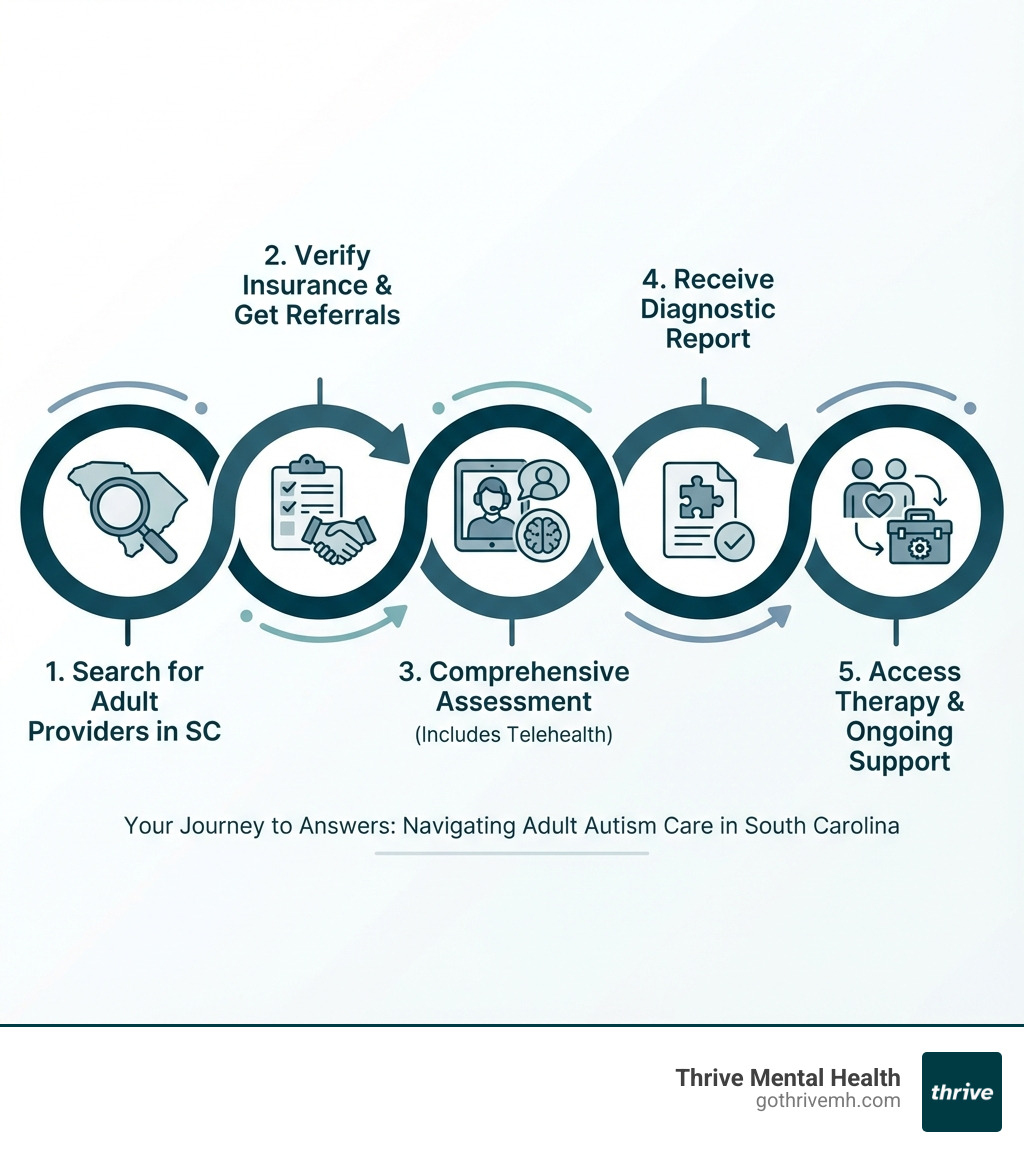
Navigating the process to find providers for autism diagnosis and treatment for adults in South Carolina might seem daunting, but breaking it down into steps can make it more manageable.
- Start with Your Primary Care Provider (PCP): Your PCP is your first point of contact. Discuss your concerns and why you suspect you might be autistic. They can help rule out other medical conditions and, if appropriate, provide a referral to a specialist. This initial step is vital as some insurance plans require a referral.
- Get a Specialist Referral: Your PCP may refer you to an adult neuropsychologist, adult neurologist, adult psychiatrist, or an adult clinical psychologist. It’s essential to find a provider with experience in diagnosing adults, as their understanding of masking and varied presentations will be crucial.
- Prepare Your Personal History: Before your evaluation, gather as much information as possible about your developmental history. This includes childhood memories, school reports, anecdotes from family members (parents, older siblings, or close relatives who knew you growing up), and any previous diagnoses or mental health records. This information is invaluable for the psychologist to understand lifelong patterns.
- The Evaluation Interview: This is typically a comprehensive discussion about your life experiences, social interactions, communication styles, interests, sensory sensitivities, and any repetitive behaviors. Your clinician will ask questions about your background, behavior, and communication style. For high-masking individuals, clinicians trained in adult autism will use specific interview techniques and behavior-coding protocols sensitive to subtle social-communication differences, focusing on patterns of thought and behavior documented in research.
- Standardized Testing: The evaluation will likely include a battery of standardized tests and questionnaires. These might be self-report forms and forms for people who know you well (with your permission). These tools help the psychologist gather objective data and compare your experiences to diagnostic criteria.
- Diagnostic Report and Feedback Session: Once the evaluation is complete, the psychologist will compile their findings into an official diagnostic report. You’ll then have a feedback session to discuss the results, receive your diagnosis (if applicable), and get recommendations for next steps and support. This report is yours to use for accommodations, therapy, and further understanding.
The process is designed to be thorough, ensuring an accurate diagnosis that can be truly life-changing. If you’re questioning whether you might be autistic, we encourage you to explore our page: Am I Autistic?.
7 Fastest Resources to Find Autism Diagnosis & Treatment for Adults in South Carolina

Finding the right support when you need it can feel overwhelming. We’ve compiled a list of the most effective resources to help you find providers for autism diagnosis and treatment for adults in South Carolina.
1. Thrive Mental Health: Virtual Autism Assessment & Therapy for Adults
We offer specialized, virtual, and insurance-covered adult autism evaluations and ongoing support. Our neurodiversity-affirming approach means we understand and validate your unique experiences, especially if you’ve been masking for years. Our services are accessible anywhere in South Carolina, as well as Florida, California, Indiana, and Arizona, bringing expert care directly to you. We also offer flexible evening and hybrid options, ensuring that support fits into your life. For comprehensive support services custom to adults, visit our Adult Autism Support Services page. If you need more intensive support, our Virtual IOP is designed for you.
2. State Resources: SCDHHS & DDSN
The South Carolina Department of Health and Human Services (SCDHHS) provides valuable resources. While much of their autism information focuses on individuals under 21, their provider search tool can still be a starting point. You can use the SCDHHS provider search tool to find Medicaid-enrolled providers. For individuals aged 0-21, a diagnosis from a licensed psychologist, LPES, or developmental pediatrician is required to meet medical necessity for services. The South Carolina Department of Disabilities and Special Needs (DDSN) also has an Autism Division that offers eligibility evaluations and resource identification for individuals aged 3 years and older.
3. The South Carolina Autism Society
This non-profit organization is a cornerstone for individuals and families affected by autism in the state. They provide crucial information and referral services, helping to connect adults with appropriate diagnostic and treatment providers. The South Carolina Autism Society is dedicated to advocacy and offers a directory of support groups, fostering a sense of community and shared experience. Finding a local support group can be incredibly beneficial for navigating your journey; explore your options at Find local support groups.
4. Thrive’s Online Provider Directory
While Thrive specializes in virtual services, we understand the need for a broad range of options. Online directories like Psychology Today list many providers in South Carolina who treat autism, including psychiatrists and psychiatric nurse practitioners. When using these directories, you can filter by location (e.g., Charleston, Columbia, Greenville), specialty, insurance accepted, and even specific therapy types. Always verify the provider’s experience with adult autism and their specific approach. For more information on finding specialists, including psychiatrists, in South Carolina, refer to our Find Autism Psychiatrists in South Carolina page.
5. Thrive’s Neurodiversity-Affirming Private Practice Network
We pride ourselves on our network of neurodiversity-affirming private practices. These clinicians prioritize your lived experience, understanding the complexities of masking and how it can impact diagnostic accuracy. Their approach is rooted in affirming evaluations, which means they use assessments to affirm autistic experience rather than testing to ‘fail’ neurotypical expectations. This individualized approach ensures that your unique presentation of autism is recognized and respected, leading to a more accurate and empowering diagnosis. We also offer Neurodiversity-Affirming Therapy Techniques through our network.
6. Comprehensive Mental Health Centers (Thrive)
For adults with autism who also experience co-occurring mental health conditions like depression, anxiety, or ADHD, comprehensive mental health centers like Thrive offer integrated care. Our virtual Intensive Outpatient Programs (IOP) are designed for individuals who need more than weekly therapy but less than inpatient care. We address both autism-related challenges and co-occurring conditions, providing a holistic and coordinated treatment plan. Our Neurodivergent Intensive Outpatient Treatment specifically caters to these integrated needs.

7. University-Affiliated Psychology Clinics
University clinics, such as those associated with the University of South Carolina and Clemson University, can be excellent resources. These training clinics often offer lower-cost evaluations and therapy services compared to private practices, as they are part of academic programs. They provide access to academic experts who are often involved in cutting-edge research, and you might even have opportunities to participate in studies, contributing to a better understanding of adult autism.
What Does an Adult Autism Evaluation Cost in South Carolina? [2025 Breakdown]

The cost of an adult autism evaluation in South Carolina can vary significantly, often ranging from $800 to over $1,100 for a comprehensive assessment. This cost typically covers initial consultations, extensive interviews, standardized testing, a detailed diagnostic report, and a feedback session. For a combined autism and ADHD assessment, the cost might be slightly higher.
Here’s a breakdown of what to consider:
- Private Pay: If you pay out-of-pocket, the full cost will be your responsibility. Some providers offer payment plans, which can help manage the expense.
- Insurance Coverage: Many insurance plans, including Cigna, Optum, Aetna, and Florida Blue, may cover a portion or all of the costs for autism diagnosis and treatment. However, coverage varies widely depending on your specific plan and deductible. It’s crucial to verify your benefits before scheduling an evaluation. We make this easy with a quick, no-obligation insurance check process.
- Telehealth Services: Utilizing in-network telehealth providers, like Thrive, can often make evaluations more accessible and potentially reduce out-of-pocket costs, as virtual services can sometimes be more cost-effective and eliminate travel expenses. Our specialized assessments for autistic adults are provided via telehealth and are often covered by insurance.
- State Resources: For individuals under 21, the South Carolina Medicaid system (Healthy Connections) covers autism diagnosis and treatment services if medical necessity is met. While this doesn’t directly apply to adults over 21, it highlights the state’s recognition of the need for these services.
Before committing to an evaluation, always ask for a clear cost estimate and understand what your insurance will cover. Don’t be afraid to ask about payment plans or sliding scale fees if available.
After Diagnosis: How to Get Real Autism Support as an Adult in SC
Receiving an autism diagnosis as an adult can be profoundly validating, bringing clarity to a lifetime of experiences. But the diagnosis is just the beginning. The next crucial step is finding effective autism treatment for adults in South Carolina.
It’s important to distinguish between therapy and treatment. Therapy often refers to ongoing counseling and support sessions, while treatment encompasses a broader range of interventions aimed at improving daily functioning and quality of life.
Here are some specific services available for adults:
- Autism Counseling for Adults: Custom therapy can help adults with autism steer social challenges, manage sensory sensitivities, cope with anxiety and depression, and develop self-advocacy skills. Cognitive Behavioral Therapy (CBT) and Acceptance and Commitment Therapy (ACT) are often effective for managing co-occurring conditions and developing coping strategies. Our Autism Counseling for Adults services focus on these needs.
- Skills Training: This can include executive function coaching, social skills training (often in individual or group settings), and daily living skills support. The goal is to build practical abilities that improve independence and well-being.
- Support for Co-occurring Conditions: Many autistic adults experience other mental health challenges. Integrated treatment that addresses both autism and conditions like depression, anxiety, or ADHD is vital. For those dealing with both autism and depression, finding specialized care is key. You can learn more about Best treatment centers for adults with autism and depression.
- Intensive Outpatient Programs (IOP) and Partial Hospitalization Programs (PHP): For adults needing more structured support, especially when managing significant co-occurring conditions, IOP and PHP programs offer comprehensive care. These programs provide a higher level of therapy and support than traditional outpatient counseling, but less than inpatient care. Thrive offers virtual IOP programs designed for adults with neurodivergent needs.
- Peer Support Groups: Connecting with other autistic adults can be incredibly empowering. These groups provide a safe space to share experiences, strategies, and build community, reducing feelings of isolation. The South Carolina Autism Society and other local organizations often host or can direct you to these invaluable resources.
Unlike child services which often focus heavily on Applied Behavior Analysis (ABA) for developmental skills, adult services typically emphasize therapeutic approaches that foster self-understanding, emotional regulation, social navigation, and independent living. The focus shifts from “fixing” to “supporting” and “empowering” the autistic individual to thrive on their own terms.
FAQs: Adult Autism Diagnosis in South Carolina, What People Ask Most
How much does an adult autism diagnosis cost in South Carolina?
Private evaluations usually cost $800, $2,000. Thrive and other telehealth providers that accept insurance may offer lower out-of-pocket costs. Always verify your insurance benefits first.
Can I get an autism diagnosis online in South Carolina?
Yes. Thrive offers comprehensive adult autism evaluations via telehealth. These are valid for a medical diagnosis and often covered by insurance.
What’s the first step to getting an adult autism diagnosis in SC?
Start by talking to your primary care provider (PCP). They can rule out other issues and refer you to a qualified specialist.
Does insurance cover adult autism diagnosis and treatment in SC?
Many plans (Cigna, Optum, Aetna, Florida Blue) cover evaluation and therapy. Always check your benefits before booking.
What happens after I get diagnosed?
You’ll get a written report. Next steps: therapy, skills training, support groups, and, if needed, IOP/PHP programs for co-occurring conditions.
Summary: Find Providers for Autism Diagnosis and Treatment for Adults in South Carolina, Your Next Step
The search to find providers for autism diagnosis and treatment for adults in South Carolina is hard, but you don’t have to do it alone. Use these 7 proven resources to get answers, support, and real treatment, fast. Thrive Mental Health offers virtual IOP programs, insurance verification, and neurodiversity-affirming care for adults with autism and co-occurring conditions.
Ready for support? Thrive offers virtual IOP programs with evening options. Verify your insurance in 2 minutes (no obligation) -> Start benefits check or call 561-203-6085. If you’re in crisis, call/text 988.

This article is for informational purposes only and is not a substitute for individualized clinical advice or insurance verification.