


Online Therapy Platforms: Ultimate 2025 Guide
Why Online Therapy Platforms Are Changing Mental Healthcare
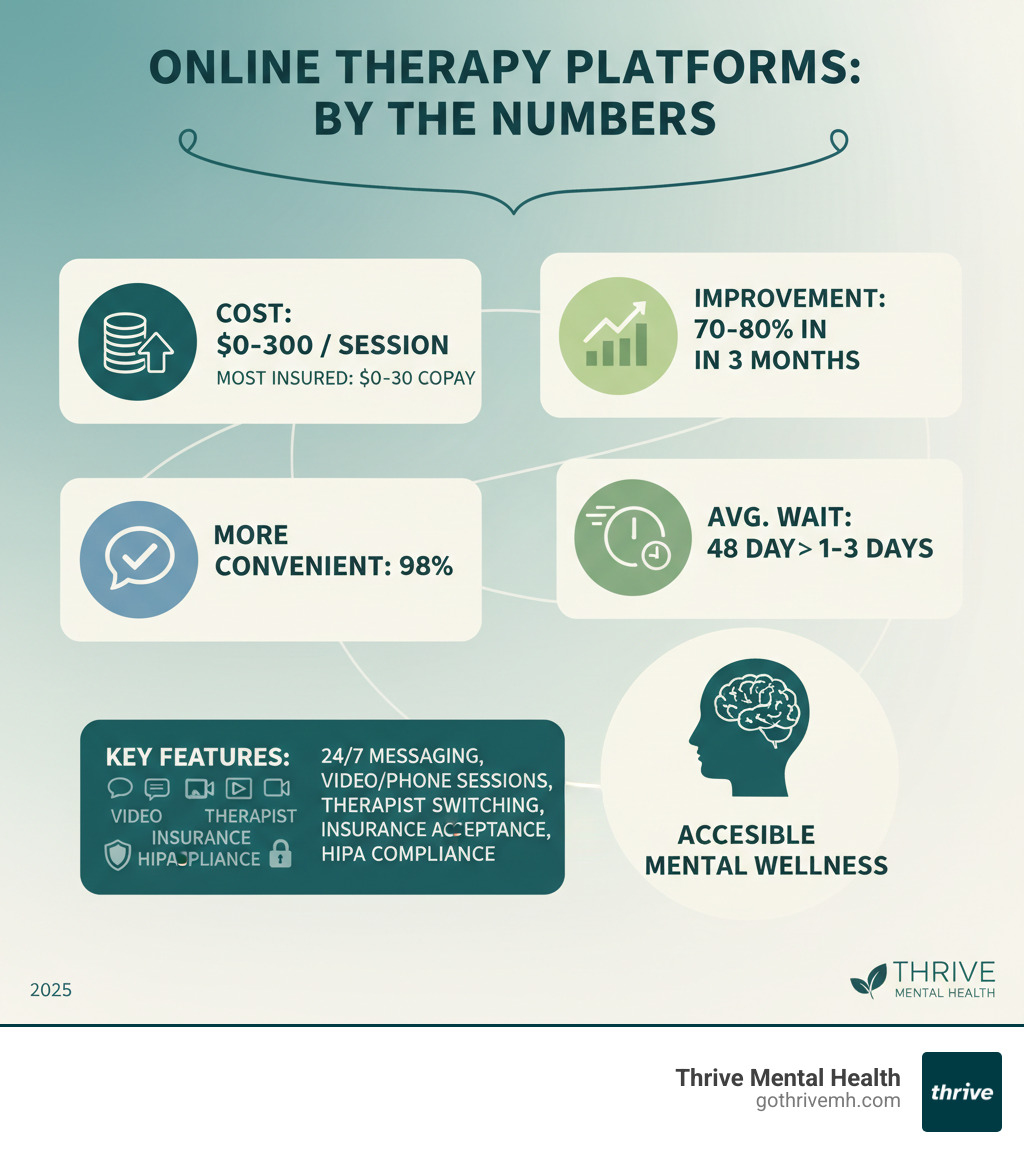
Online therapy platforms connect you with licensed therapists via video, phone, or messaging, without the commute, waitlists, or rigid schedules of traditional care. Here’s what you need to know:
| What You Get | Key Details |
|---|---|
| Access | 24/7 messaging, same-day or next-day appointments |
| Cost | $70, $100/week (subscription) or $55, $300/session (pay-per-session) |
| Insurance | Many platforms accept major insurers; copays often $0, $30 |
| Effectiveness | 70-80% of users report symptom improvement within 3 months |
| Privacy | HIPAA-compliant encryption and confidentiality |
If you’re struggling with anxiety, depression, or burnout, and weekly therapy hasn’t been enough, online platforms offer a faster, more flexible path forward. But not all services are equal. Some specialize in CBT, others in couples therapy or medication management. Some take your insurance; others don’t. And while virtual care works for most people, severe conditions or active crises require higher levels of support.
The bottom line: Online therapy platforms break down barriers to care. They’re affordable, private, and proven to work. But choosing the right one means understanding how they operate, what they cost, and whether they fit your needs.
I’m Nate Raine, CEO of Thrive Mental Health, and I’ve spent over a decade building tech-enabled behavioral health solutions that scale access to evidence-based care. At Thrive, we’ve seen how online therapy platforms transform lives, but also where they fall short, and when structured programs like virtual IOP or PHP deliver better outcomes.
Important online therapy platforms terms:
How Do Online Therapy Platforms Actually Work? [2025 Guide]
Mental healthcare used to mean waiting weeks for an appointment, driving across town, and hoping your schedule aligned with a therapist’s office hours. Online therapy platforms flipped that script. Today, you can connect with a licensed therapist from your couch, your car during lunch break, or anywhere with an internet connection.
But how do these platforms actually function? And what should you expect when you sign up?
Most online therapy platforms operate on one of two pricing structures. Subscription models charge a weekly or monthly fee, typically $70 to $100 per week, and often include unlimited messaging with your therapist between scheduled sessions. This works well if you want consistent, ongoing support and prefer knowing your costs upfront. Pay-per-session models, on the other hand, let you book individual appointments as needed. You might pay $55 to $300 per session depending on the therapist’s credentials and your insurance coverage. This approach gives you more control over frequency and budget, especially if you only need occasional check-ins.
Communication happens in three main ways. Video sessions are the closest thing to sitting in a therapist’s office, you get face-to-face interaction, body language, and real-time conversation through secure, HIPAA-compliant video tools. Messaging therapy lets you text your therapist throughout the week, which offers flexibility but lacks the immediacy and non-verbal cues that make deeper work possible. Phone sessions split the difference: you get real-time dialogue without needing to be on camera, which some people find less intimidating.
The therapist matching process is where platforms really shine. You start by filling out a questionnaire about your symptoms, goals, and preferences, things like your therapist’s gender, specialty, or therapeutic approach. The platform uses this information to suggest matches from their network of licensed providers. Most also let you browse therapist profiles, read bios, and check reviews. And here’s the game-changer: if your first match doesn’t click, you can switch to a new therapist without starting from scratch or paying extra fees. That flexibility removes one of the biggest barriers in traditional therapy.
Technology is the engine behind all of this. It handles secure communication, scheduling, payments, and often provides extras like digital worksheets, mood trackers, and self-help modules. The result? Mental health support that’s not just accessible, but genuinely convenient. For more on how virtual care delivers results, check out our guide on Virtual Therapy: A Convenient and Effective Approach to Counseling and explore our Online Therapy for Adults Guide.
What Services Are Typically Offered?
Online therapy platforms aren’t just for one type of problem or person. They’re built to serve a wide range of needs, from general stress to specific diagnoses, from individuals to couples to teens.
Individual therapy is the backbone of most platforms. You meet one-on-one with a licensed therapist to work through personal challenges, mental health conditions, or goals like building confidence or improving relationships. It’s private, focused, and custom to what you’re dealing with right now.
Couples counseling is increasingly common online. These sessions involve both partners and a therapist working to improve communication, resolve conflicts, or rebuild trust. Some platforms even offer separate logins and shared chat rooms so both people can stay connected between sessions.
Teen therapy addresses the unique pressures adolescents face, anxiety, depression, social stress, academic pressure, identity questions. Platforms offering this service typically work with teens aged 13 to 17 and often involve parents in the treatment plan when appropriate.
If you need more than talk therapy, many platforms integrate psychiatry and medication management. Online psychiatrists can diagnose conditions, prescribe medication (though some controlled substances have state-specific restrictions), and monitor your progress. Research consistently shows that combining therapy with medication delivers the best outcomes for most mental health conditions.
Group therapy is less common but growing. Virtual group sessions let you share experiences and learn coping strategies alongside others facing similar challenges. At Thrive Mental Health, we’ve seen how group learning helps clients feel more prepared and less alone.
Specialized programs are where platforms really differentiate themselves. Some focus on Cognitive Behavioral Therapy (CBT) for anxiety, depression, OCD, or addiction. Others offer trauma-focused care for PTSD, relationship counseling, eating disorder support, or affirming therapy for LGBTQIA+ individuals. If you’re dealing with a specific issue, look for platforms that specialize in your needs. We’ve written detailed guides on Online Depression Therapy and Remote Therapy for Anxiety to help you steer those options.
How Do You Find the Right Therapist?

The right therapist makes all the difference. You need someone you trust, someone who understands your situation, and someone whose approach actually works for you. Credentials matter, but so does chemistry.
Online therapy platforms make this search easier than traditional therapy ever did. Most start with an initial questionnaire that asks about your symptoms, goals, and preferences. Do you want someone who specializes in anxiety? Do you prefer a therapist who’s direct or more reflective? Do gender, age, or cultural background matter to you? These aren’t superficial questions, they help the platform’s matching algorithm narrow down providers who fit your needs.
Once you get potential matches, you can filter by specialty, gender, and therapeutic approach. If you’re looking for CBT specifically, or you know you respond better to a male therapist, you can refine your search. The more specific you are, the faster you’ll find a good match.
Reading therapist bios and reviews is your next step. Profiles typically include qualifications (LCSW, PhD, PsyD), years of experience, areas of focus, and a bit about their philosophy. User reviews offer real insight into communication style and effectiveness. Some platforms even offer free introductory calls so you can gauge rapport before committing.
And here’s the part that makes online therapy so much better than the traditional model: you can switch therapists without drama, extra fees, or starting over. If your first match doesn’t feel right, and that’s completely normal, you can request a new provider. No awkward breakup conversation, no insurance hassle, no lost progress. This flexibility removes one of the biggest reasons people give up on therapy.
The goal is simple: find someone who creates a safe space where you can be honest, explore your feelings, and actually make progress. For more guidance on making this choice, read our Key Considerations in Choosing a Mental Healthcare Provider.
Are Virtual Platforms as Effective as In-Person Therapy?
Here’s the truth: online therapy platforms work. And they work just as well as traditional in-person therapy for most people dealing with mild to moderate mental health challenges. We hear this question constantly at Thrive Mental Health, and the research backs it up.
The numbers are compelling. Studies show that 70% of people using online therapy see real improvement in anxiety or depression symptoms within three months. Even more striking, 80% report that virtual sessions are as effective, or more effective, than face-to-face therapy. And nearly everyone (98%) finds it more convenient. This isn’t just academic research; we see it every day. Our clients at Thrive typically experience a 25% clinical improvement in just three sessions. If you want to dig into the science behind these outcomes, check out this scientific research on telemental health effectiveness.

Why does virtual therapy work so well? Convenience drives consistency, and consistency drives results. When you can log into a session from your couch in Tampa, your kitchen in Miami, or a quiet office in Orlando, without fighting traffic or rearranging your entire day, you’re more likely to show up. You can fit therapy into your lunch break, after the kids go to bed, or between work meetings. That flexibility removes the friction that often derails treatment.
But let’s be honest about the limitations. Some people miss the in-person connection, the subtle body language, the feeling of sitting in the same room with someone who truly gets it. And yes, technology can be frustrating. A spotty internet connection or a frozen screen can disrupt the flow of a session, though these issues are becoming less common as platforms improve.
More importantly, online therapy platforms aren’t the right fit for everyone. If you’re in crisis, dealing with severe mental health conditions, or struggling with issues that require intensive daily support, weekly video sessions may not be enough. That’s when higher levels of care like Intensive Outpatient Programs (IOP) or Partial Hospitalization Programs (PHP) become essential. These structured programs offer multiple sessions per week, group therapy, skill-building, and coordinated care, all designed for people who need more than traditional therapy can provide. And the good news? These programs can be virtual too. Learn more about The Benefits of a Virtual Intensive Outpatient Program (VIOP) and whether it might be the right next step.
The bottom line: online therapy platforms are proven, effective, and accessible, but they’re one tool in a broader toolkit. Knowing when they work best, and when you need something more, is key to getting the support that actually moves the needle.
Comparing Online Therapy Platforms: Costs, Insurance, and Privacy
Let’s talk about what really matters when you’re choosing an online therapy platform: what it costs, whether your insurance will cover it, and if your private conversations will actually stay private. These three factors can make or break your decision, and understanding them upfront saves you from surprises later.

Decoding the Costs: Subscription vs. Per-Session Pricing
Money shouldn’t be the reason you skip therapy, but let’s be honest, it’s often the first thing we worry about. The good news is that online therapy platforms have made mental health care more affordable than ever, though the pricing models can vary quite a bit.
Subscription models are the most common approach. You’ll typically pay $70-$100 per week, billed monthly. What you get for that price varies by platform, some include one live video session per week plus unlimited messaging with your therapist between sessions. Others might offer additional resources like worksheets or journaling tools. This predictable monthly cost makes budgeting easier, and the unlimited messaging can be a lifeline when you’re struggling between sessions.
Pay-per-session pricing works differently. You’re charged for each individual appointment, with fees ranging from $55 to $300 depending on the therapist’s credentials, your location, and the platform’s overhead. This model makes sense if you only need occasional support or want to try different therapists without committing to a subscription. It’s also helpful if your mental health needs fluctuate throughout the year.
For those facing financial hardship, some free or low-cost directories and platforms exist. These may offer free emotional support from trained listeners (who are not licensed therapists) or connect you with therapists who offer sessions at a reduced rate through special programs. Some platforms also offer financial aid if you qualify.
Without insurance, most people pay between $200 and $450 monthly for online therapy. But here’s where it gets interesting: with insurance, your copay might drop to $20 or less per visit, sometimes even $0. For a complete breakdown of what you can expect to pay and how to manage costs, check out our Online Therapy Pricing Complete Guide.
 5 Benefits of Mental Health Therapy You Should KnowMental Health
Does Insurance Cover Online Therapy Platforms?
The insurance landscape for online therapy platforms has improved dramatically. Most major insurers now treat telehealth the same way they treat in-person visits, which means your mental health benefits likely cover virtual care.
The key distinction you need to understand is in-network versus out-of-network coverage. When a platform is in-network with your insurance plan, you’ll pay the standard copay, often $0 to $30 per session. If the platform is out-of-network, you might need to pay upfront and then submit a claim for reimbursement. The amount you get back depends on your plan’s out-of-network benefits, which are usually less generous than in-network coverage.
Before you book your first session, verify your coverage. This step takes just a few minutes and can save you from unexpected bills. Many platforms have built-in insurance checkers that tell you instantly whether you’re covered. You can also call your insurance company directly with the platform’s tax ID number to confirm your benefits.
At Thrive Mental Health, we work extensively with major insurers like Florida Blue, Cigna, Aetna, and UnitedHealthcare to provide services across Florida. These same insurers frequently cover online therapy platforms as well. If you’re in Tampa with Cigna or in Jacksonville with Aetna, there’s a good chance your plan includes virtual mental health benefits. To dive deeper into how insurance works for virtual care, explore our guides on Insurance Covered Online Therapy and United Healthcare Virtual Therapy.
Is Your Data Safe? Privacy and Security on Online Therapy Platforms
When you share your deepest struggles with a therapist online, you need absolute confidence that your information stays private. This isn’t just about preference, it’s protected by law, and reputable online therapy platforms take it seriously.
HIPAA compliance is the foundation of privacy protection. The Health Insurance Portability and Accountability Act requires platforms to protect your Protected Health Information (PHI) from unauthorized disclosure. This means your therapy sessions, messages, and records are legally protected. Platforms cannot sell or use your PHI for marketing without your explicit permission, thanks to additional protections under the HITECH Act. To understand your specific rights, review Your Rights Under HIPAA.
Data encryption is how platforms actually secure your information. Reputable services use end-to-end encryption for video calls and messages, meaning your conversations are scrambled into unreadable code that only you and your therapist can access. They also store your records on secure servers with multiple layers of protection. When evaluating a platform, look for clear statements about their encryption methods, if they’re vague about security, that’s a red flag.
Confidentiality has limits, and you should know what they are. Your therapist is legally required to break confidentiality if they believe you’re at risk of harming yourself or others, or if child abuse is suspected. This isn’t a loophole, it’s an ethical and legal obligation designed to protect lives. Your therapist should explain these limits during your first session.
Here’s where things get murkier: not all your data falls under HIPAA protection. Some platforms have faced serious scrutiny for sharing Personally Identifiable Information (PII), like your email address, IP address, or browsing habits, with advertisers. One major platform settled with the FTC for $7.8 million over allegations that they shared sensitive user data without proper consent. While your actual therapy content is protected, other information you provide during signup might not be.
Our advice? Read the privacy policy carefully before signing up. Look for clear opt-out options for marketing and data sharing. Choose platforms that explicitly state they don’t share your information with third parties. And if privacy is a major concern, our resource on HIPAA Compliant Online Therapy can help you steer these issues with confidence.
Frequently Asked Questions about Online Therapy
We know you have questions, and we’re here to provide clear, direct answers about online therapy platforms. These are the concerns we hear most often at Thrive Mental Health, and they matter because finding the right care starts with understanding what you’re getting into.
How do I know if the therapists are qualified?
This is the first question you should ask, and reputable online therapy platforms take it seriously. You’re not just talking to someone with good intentions, you’re working with licensed professionals who’ve met strict requirements.
Every therapist on a legitimate platform holds a valid state license. That means they’re a Licensed Clinical Social Worker (LCSW), Licensed Professional Counselor (LPC), Licensed Marriage and Family Therapist (LMFT), or Psychologist (PhD or PsyD). These credentials require years of graduate education, thousands of hours of supervised clinical work, and passing rigorous state exams.
Here’s what matters: state-specific licensing. A therapist must be licensed in Florida to treat you if you live in the state. For example, whether you’re in Miami, Orlando, or Tampa, your therapist must hold a valid Florida license. Online platforms verify these licenses with state boards to ensure therapists are in good standing and legally able to practice.
Beyond state requirements, many platforms add their own credentialing processes, background checks, degree verification, interviews, and often a requirement for 3+ years of experience and 1,000+ hours of clinical work. You should be able to view a therapist’s credentials, specialties, and approach before your first session. If a platform isn’t transparent about qualifications, that’s a red flag.
What if I don’t connect with my matched therapist?
It happens, and it’s okay. The relationship between you and your therapist, what we call the therapeutic alliance, is one of the strongest predictors of success in therapy. If it’s not there, you’re not stuck.
Most platforms allow you to switch therapists at no additional cost. This is one of the biggest advantages of online therapy platforms over traditional care, where changing therapists often means starting from scratch with phone calls, waitlists, and new intake appointments.
The process is usually simple. You can request a new therapist through the platform’s messaging system or settings, and you’ll often be asked a few questions about what didn’t work, not to judge you, but to help find a better match. Maybe you need someone more direct, or someone who specializes in trauma, or just a different communication style. That feedback helps.
Don’t feel guilty about switching. Your comfort and progress are the priority. If something feels off after a session or two, trust your gut. The right therapist is out there, and these platforms are designed to help you find them without the hassle.
Is online therapy suitable for severe mental health conditions?
Here’s the honest answer: online therapy platforms work incredibly well for mild to moderate mental health conditions, anxiety, depression, stress, relationship issues, and navigating life transitions. But they’re not designed for everyone, and knowing the limits is critical.
If you’re dealing with active suicidal ideation, self-harm, severe psychotic disorders, serious addictions requiring detox, or conditions that need close medical supervision, weekly online therapy isn’t enough. These situations require a higher level of care, something more structured, more intensive, and often with in-person medical oversight.
That’s where Intensive Outpatient Programs (IOP) or Partial Hospitalization Programs (PHP) come in. These programs offer multiple therapy sessions per week, group support, psychiatric care, and skill-building, all while allowing you to live at home and maintain parts of your routine. They’re designed for people who need more than weekly therapy but less than inpatient hospitalization. To understand when these programs are the right fit and how they differ, check out our guide on IOP vs PHP.
If you’re in crisis right now, call or text 988. You are not alone. The 988 Suicide & Crisis Lifeline is available 24/7, and trained counselors are ready to help.
Online therapy is powerful, but it’s not a one-size-fits-all solution. Knowing when you need something more isn’t a failure, it’s taking your mental health seriously.
Conclusion: Is an Online Platform Right for You?
So, where does all this leave you? Online therapy platforms have genuinely transformed how we access mental health support. They’ve torn down walls, long wait times, inflexible schedules, geographic barriers, that kept too many people from getting help. For many struggling with anxiety, depression, relationship stress, or life transitions, these platforms offer a lifeline that’s convenient, private, and often more affordable than traditional care.
The advantages are real. You can connect with a licensed therapist from your couch in Tampa, your kitchen table in Miami, or a quiet moment during your lunch break in Orlando. You get to choose how you communicate, video, phone, or messaging, and if your first therapist isn’t the right fit, you can switch without the awkwardness or hassle that often comes with traditional settings. For mild to moderate mental health concerns, the data shows these platforms work. 70-80% of users see real improvement, and they keep showing up because it fits their lives.
But here’s the truth we need to say clearly: online therapy platforms aren’t the answer for everyone or every situation. If you’re in active crisis, struggling with severe symptoms, or finding that weekly sessions just aren’t enough to move the needle, you likely need something more structured. That’s not a failure on your part, it’s just a signal that your needs require a different level of care.
That’s where programs like Intensive Outpatient (IOP) or Partial Hospitalization (PHP) come in. These aren’t your typical once-a-week sessions. They’re designed for people who need more, more time with clinicians, more structured support, more intensive skill-building, but who don’t need to be in a hospital. At Thrive Mental Health, we’ve built our virtual IOP and PHP programs specifically for this gap. We serve adults and young professionals across Florida, from the Panhandle to the Keys, who are ready to do the work but need a program that meets them where they are, including evening options for those juggling jobs, families, or school. Learn more about how a structured virtual program might be the right next step: Virtual Intensive Outpatient Program Near Me (VIOP).
The decision comes down to matching your needs with the right level of care. Take stock of where you are. Are you managing day-to-day but need consistent support? An online platform might be perfect. Are you feeling stuck, overwhelmed, or like weekly therapy isn’t cutting it anymore? It might be time to explore something more intensive. And if you’re in crisis right now, please, don’t wait. Reach out immediately.
You deserve support that works. Whether that’s through an online platform or a more comprehensive program, the most important step is taking action today.
Ready for support? Thrive offers virtual IOP programs with evening options. Verify your insurance in 2 minutes (no obligation) → Start benefits check or call 561-203-6085. If you’re in crisis, call/text 988.

This article is for informational purposes only and is not a substitute for individualized clinical advice or insurance verification.