





Why Young Adult Mental Health Is at a Breaking Point in 2025
What’s the best online mental health care for young adults in 2025? Here’s the fast answer:
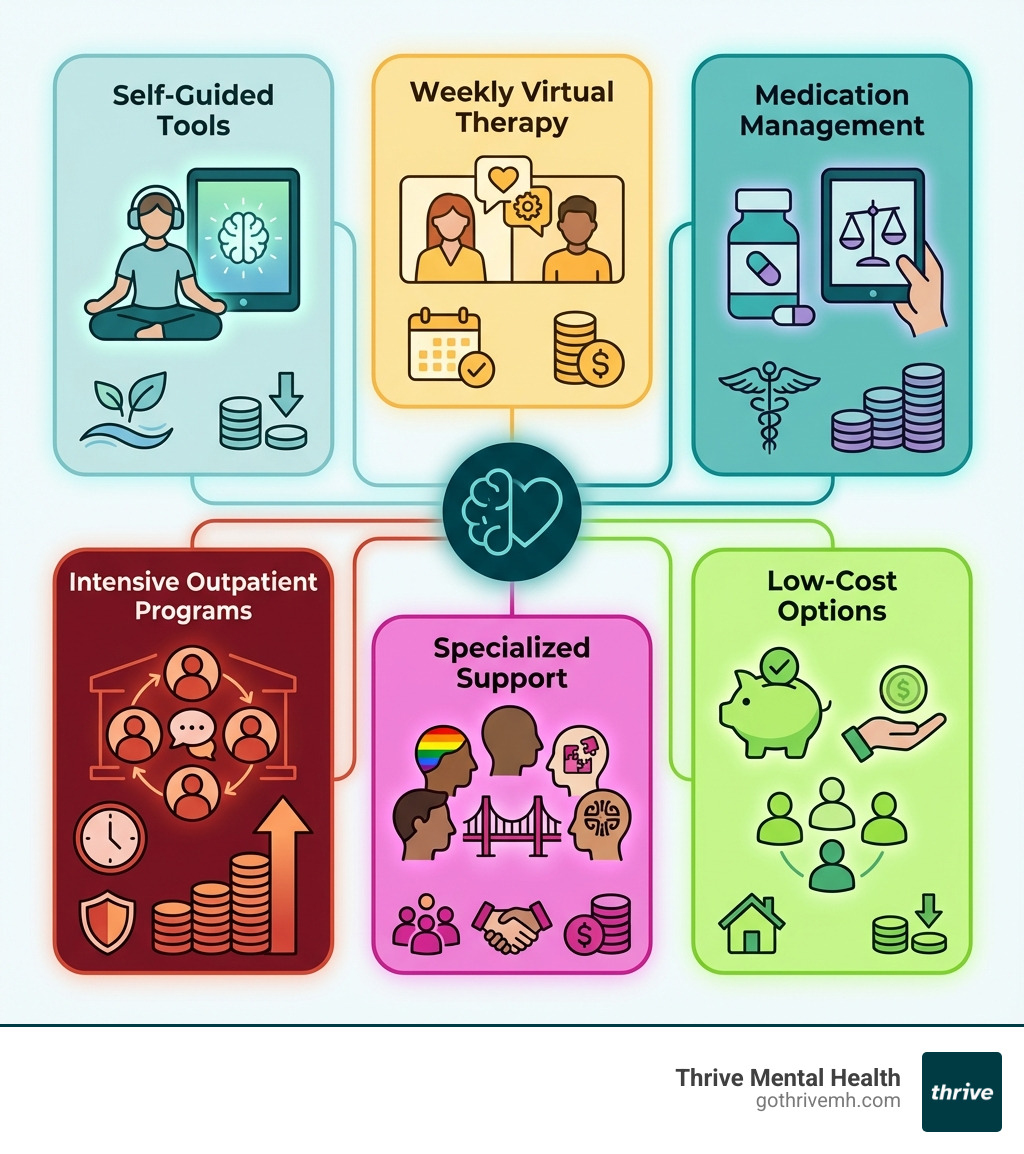
Top Options by Need:
- Self-Guided Tools, Best for stress and mindfulness (free, $15/month): Popular mindfulness and CBT-based apps.
- Weekly Virtual Therapy, Best for ongoing support ($260, $400/month): Leading online therapy platforms.
- Medication Management, Best for psychiatric care: Telepsychiatry services for evaluation and prescriptions.
- Intensive Outpatient Programs (IOP), Best for acute symptoms and crisis stabilization: Thrive Mental Health (often covered by insurance).
- Specialized Support, Best for LGBTQIA+, BIPOC, neurodivergent: Directories for culturally competent therapists.
- Low-Cost Options, Best for tight budgets: Sliding-scale therapy collectives and free peer support networks.
The numbers don’t lie. Over 18% of young adults now meet diagnostic criteria for anxiety, mood, or substance use disorders. Half seek help. One in three say their needs aren’t met.
You’re not imagining it, young adult mental health is at a breaking point in 2025.
Academic pressure. Career uncertainty. Social media overload. Economic stress. Identity struggles. Climate anxiety. Burnout. Relationship drama. Digital isolation.
The old model, weekly therapy, long waitlists, expensive out-of-pocket costs, doesn’t work for most young adults anymore. You need flexibility, speed, and care that fits your life.
That’s where online mental health care comes in. Virtual therapy platforms, telepsychiatry, intensive outpatient programs, and mental health apps have exploded in popularity since the pandemic. Research shows online therapy is just as effective as in-person care for anxiety, depression, insomnia, and more.
But here’s the problem: not all online mental health care is created equal. Some platforms are better for mild stress. Others are built for crisis stabilization. Some accept insurance. Others charge $400 a month out of pocket. Some are HIPAA-compliant. Others sell your data.
You deserve to know the difference.
As Nate Raine, CEO of Thrive Mental Health, I’ve spent over a decade building evidence-based, tech-enabled behavioral health solutions that integrate virtual and in-person care for young adults. I’ve seen what’s the best online mental health care for young adults in 2025, and what to avoid.
This guide will show you exactly how to choose the right level of care, vet providers, protect your privacy, and get the support you need, whether that’s a weekly therapy session or a full intensive outpatient program.
What’s the best online mental health care for young adults in 2025? terms to know:
- What are my options for mental health treatment that’s more intensive than weekly therapy but doesn’t require living at a facility?
- confidential mental health support
- virtual group therapy sessions
[ALERT] If You’re in Crisis, Read This First
[CALLOUT BOX] If you’re in crisis or having thoughts of suicide, call or text 988 right now. You are not alone.
988 Suicide & Crisis Lifeline | SAMHSA National Helpline | Domestic Violence Hotline
The Pressures Crushing Young Adults Right Now
Young adulthood is a period of immense change and findy, but also unique stressors. In 2025, these pressures are amplified by a world that feels increasingly complex and demanding. We see this reflected in the rising rates of anxiety, depression, and burnout among young people in Florida.
- Economic stress: The burden of student loan debt, rising living costs, and an unpredictable job market creates significant financial anxiety. Young adults often feel immense pressure to achieve financial independence, leading to stress and feelings of inadequacy.
- Climate anxiety: The looming threat of climate change and environmental degradation is a constant source of worry for many young adults, contributing to feelings of helplessness and despair.
- Digital isolation: While social media connects us, it can also foster loneliness and comparison. The curated perfection seen online often leads to feelings of inadequacy and a sense of missing out, despite being constantly “connected.”
- Identity struggles: Navigating personal, gender, sexual, and cultural identity is a core part of young adulthood. These journeys can be challenging, especially when faced with societal expectations or a lack of understanding from others.
- Life transitions: Moving away for college, starting a first job, navigating new relationships, or experiencing significant life events like parental divorce or the loss of a loved one can all trigger mental health challenges. These transitions often mean leaving behind established support systems and building new ones.
These combined factors paint a clear picture: young adults need robust, accessible, and effective mental health support more than ever.
What Level of Online Mental Health Care Do You Actually Need? [Stop Wasting Time]
Choosing the right type of online mental health care is like choosing the right shoes for a hike, you wouldn’t wear flip-flops for a mountain climb, just as you wouldn’t need heavy hiking boots for a stroll in the park. The best online mental health care for young adults in 2025 depends entirely on your specific needs. Are you dealing with mild stress, or is something more serious impacting your daily life?
Options:
- Self-guided tools: These include apps offering guided meditations, breathing exercises, and journaling prompts. They’re excellent for building resilience, managing daily stress, and practicing mindfulness. Some apps use CBT principles for anxiety tracking. Mental health apps are usually free to download, with premium subscriptions typically costing $12-$15 per month.
- Weekly virtual therapy: This involves regular sessions (usually once a week) with a licensed therapist via video, phone, or text. Online therapy platforms connect you with professionals for ongoing support. This is ideal for managing moderate symptoms of anxiety, depression, relationship issues, or specific life transitions. These services typically average $60-$100+ per week, often billed monthly.
- Medication management: For those who may benefit from psychiatric medication, many telepsychiatry platforms offer services where licensed psychiatric providers can evaluate, prescribe, and monitor medication. This often works in conjunction with therapy for a comprehensive approach.
- Intensive Outpatient Programs (IOP) & Partial Hospitalization Programs (PHP): These are higher levels of care for more significant mental health challenges, offering multiple hours of therapy per week, including group and individual sessions, and often psychiatric oversight. Thrive Mental Health specializes in these programs, providing structured, evidence-based care for those who need more than weekly therapy but less than inpatient hospitalization. These programs are often covered by insurance.
[TABLE] Compare Online Mental Health Support Levels
| Feature | Self-Guided Tools | Weekly Virtual Therapy | Virtual IOP (Thrive) |
|---|---|---|---|
| Best For | Stress, mindfulness, skill-building | Ongoing support, moderate symptoms | Acute symptoms, crisis stabilization, post-hospitalization |
| Structure | On-demand, no therapist | 1 session/week + messaging | Multiple hours/week, group & individual therapy |
| Clinical Level | Non-clinical | Licensed therapist | Clinical team, psychiatrist oversight |
| Cost | Free, $15/month | $260, $400+/month | Often covered by insurance |
When You Need More Than Once-a-Week Therapy
Sometimes, weekly therapy isn’t enough to make meaningful progress, especially if you’re experiencing:
- Severe depression or anxiety: If symptoms are significantly impairing your daily functioning, work, or school, a more intensive approach can provide the structure and support needed to stabilize.
- Unmanaged symptoms: When symptoms persist or worsen despite regular outpatient therapy, it might be time to step up your care.
- Post-hospitalization step-down: After a hospital stay for mental health, an IOP or PHP provides a crucial bridge back to daily life, offering continued support and symptom management.
- Need for structure and accountability: If you struggle with consistency or need more intensive guidance to implement coping skills, these programs offer a higher level of engagement and support.
Our virtual IOP programs at Thrive Mental Health are specifically designed for young adults in Florida who need this elevated level of care. We combine clinical expertise with flexible scheduling, helping you get back on track without disrupting your entire life.
Learn about Thrive’s Virtual IOP
How to Choose the Best Online Mental Health Care for Young Adults in 2025 [7-Point Checklist]
Navigating the landscape of online mental health care can feel like a maze, but armed with the right checklist, you can confidently find what’s the best online mental health care for young adults in 2025 for your unique situation.
1. Get Clear on Your Goals
Before you even start browsing platforms, take a moment to understand what you want to achieve. What are your specific needs for therapy? What are your main goals?
- Anxiety relief: Are you looking to manage panic attacks, social anxiety, or generalized worry?
- Depression support: Do you need help lifting your mood, increasing energy, or finding motivation?
- Relationship help: Are you struggling with friendships, family dynamics, or romantic relationships?
- LGBTQIA+ affirming care: Do you need a therapist who understands and supports your identity and experiences?
- Trauma recovery: Are you seeking support to process past traumatic events or abuse?
- ADHD/OCD management: Do you need strategies for focus, organization, intrusive thoughts, or compulsive behaviors?
Identifying these goals will help you narrow down platforms and find specialists who align with your needs.
2. Vet the Platform & Provider
This is where your inner detective comes out. Not all platforms are created equal, and neither are all providers. We empower you to be an informed consumer.
- Licensed therapists: Always confirm that providers are licensed psychologists, licensed marriage and family therapists (LMFTs), licensed clinical social workers (LCSWs), or licensed professional counselors (LPCs). They should hold relevant academic degrees and have significant experience.
- State licensure: Ensure the therapist is licensed to practice in Florida. This is crucial for legal and ethical practice.
- HIPAA compliance: This federal law protects your health information. A platform should explicitly state its HIPAA compliance.
- Transparent privacy policy: Read the privacy policy carefully. Be wary of any provider that isn’t crystal clear about how your data is used and protected, and especially if they might sell patient data.
- Real user reviews: While anecdotal, reviews can offer insights into user experience and therapist effectiveness.
For more helpful guidance on ensuring your online therapy is secure, the American Psychological Association offers revisions on telepsychology security.
3. Know the Therapy Style, Does It Fit You?
Beyond just “talk therapy,” many online services offer different modalities custom to your needs. The therapeutic relationship is critical, accounting for nearly 10 percent of therapy outcomes. Finding the right approach is key.
- CBT (Cognitive Behavioral Therapy): Great for addressing anxiety, depression, and unhelpful thought patterns by identifying and changing negative thinking.
- DBT (Dialectical Behavior Therapy): Often used for emotional regulation, distress tolerance, and interpersonal effectiveness.
- Mindfulness-based approaches: Focus on present moment awareness to reduce stress and improve emotional well-being.
- Talk therapy: A broad term for various approaches where you discuss issues with a therapist to gain insight and develop coping strategies.
Understanding these can help you look for therapists with specific training.
 Understanding Partial Hospitalization Coverage with United HealthcareMental Health
4. Test the User Experience
Online mental health care should be easy, not another source of stress.
- Easy sign-up: A straightforward intake process that gathers your mental health history and current status without being overly long is a good sign.
- Therapist matching: How does the platform match you? Do they use a thorough questionnaire, or do they offer a care coordinator? Can you preview therapist profiles?
- Flexible scheduling: Young adults often have busy, unpredictable schedules. Look for platforms offering early morning, late evening, or weekend appointments.
- Video, text, or phone options: Some prefer face-to-face video, others prefer the flexibility of text messaging between sessions. Choose what suits your communication style.
- Simple therapist switching: If the first therapist isn’t a good fit (and it happens!), how easy is it to switch? A good platform makes this process seamless.
5. Is It Secure? (Don’t Risk Your Privacy)
Your sensitive personal information deserves the highest level of protection. The boom in telehealth means security is more important than ever.
- Data encryption: Ensure the platform uses robust encryption for all communications and data storage.
- Informed consent: You should always receive and understand an informed consent form detailing the limits of confidentiality in an online setting.
- Clear privacy settings: Can you control who sees your information? Are you comfortable with the platform’s data handling practices?
- No shady data sharing: As we mentioned, be wary of any platform that isn’t transparent about how it uses or shares your data. We believe your privacy is paramount.
6. Find Specialized Support for Your Identity
Mental health care should be as diverse as the individuals it serves. For many young adults, finding a therapist who understands their unique identity and lived experiences is crucial.
- Culturally responsive care: Look for therapists who are trained in and sensitive to different cultural backgrounds.
- BIPOC and LGBTQIA+ affirming therapists: Some platforms and directories specifically center these communities, focusing on social justice and liberation. This means therapists found there are committed to culturally competent and affirming care.
- Neurodivergent support: If you’re neurodivergent (e.g., ADHD, autism spectrum), finding a therapist experienced in these areas can make a significant difference.
7. Is the Platform Innovative?
The mental health tech space is constantly evolving. The best online mental health care for young adults in 2025 leverages these innovations to improve care.
- AI-powered tools: AI-powered chatbots can provide immediate support and exercises based on CBT for anxiety, depression, mood tracking, and stress management.
- Gamified mental health apps: Gamified apps help teens and young adults improve their mental health through daily tasks, using principles from CBT, meditation, and mindfulness to build resilience through game-like challenges.
- Virtual Reality (VR) therapy: While still emerging, VR is being explored for exposure therapy and relaxation techniques, offering immersive experiences.
- Integrated care (therapy + psychiatry): Platforms that offer both therapy and medication management under one roof can provide a more seamless and comprehensive treatment experience. This “one-stop shop” approach ensures better coordination of your care.
The Real Cost of Online Mental Health Care in 2025 [Don’t Overpay]
Let’s talk money. The cost of mental health care is a significant barrier for many young adults. While online options can be more affordable than traditional in-person sessions, pricing varies wildly.
- Self-guided apps: Free to download, with premium features typically costing $12-$15 per month.
- Weekly virtual therapy: Ranges from approximately $260 to $400+ per month, often billed weekly or monthly.
- Virtual IOP/PHP: While more intensive, these programs are often covered by major health insurance plans.
Using Insurance for Online Care in Florida
For many, using health insurance is the key to affordable mental health care. Thrive Mental Health works with major insurance providers across Florida.
- In-network providers: We partner with leading insurance companies like Cigna, Aetna, Florida Blue, Optum, and more, making our IOP programs accessible.
- Verify your benefits in 2 minutes: Understanding your specific coverage can be confusing. That’s why we’ve made it easy to quickly Check your insurance now on our website, no obligation, just clarity.
- Co-pays, deductibles, and reimbursement tips: Our team can help you understand your co-pays, deductibles, and out-of-pocket maximums. For some services, you might pay upfront and seek reimbursement from your insurance provider.
Low-Cost and Free Options
Don’t have insurance or a large budget? There are still excellent options available:
- Sliding-scale rates: Many therapists and platforms offer fees based on your income. Some therapy collectives, for example, offer sessions for as low as $30-$60 after a one-time membership fee.
- University counseling centers: If you’re a student, your university likely offers free or low-cost counseling services.
- Community clinics: Local mental health clinics often provide services on a sliding scale or for free, supported by government funding.
- Free peer support groups: Some platforms provide chat messaging for emotional support through trained volunteers, while others offer 24/7 online peer support communities with trained counselors available. These are fantastic for feeling less isolated and sharing experiences.
FAQs: Online Mental Health Care for Young Adults [2025]
Is online therapy as effective as in-person?
Yes. For most young adults with anxiety or depression, online therapy works just as well as in-person. Research consistently shows that internet-delivered CBT, for example, is just as effective as traditional treatment for anxiety, depression, insomnia, and more. The key: find the right therapist and program for your needs.
How much does online therapy cost in 2025?
Self-guided tools: free, $20/month. Weekly virtual therapy: $260, $400+/month. Virtual IOP/PHP: often covered by insurance. Some sliding-scale options start at $30, $60/session.
Can I get medication online?
Yes. Licensed psychiatrists and nurse practitioners can evaluate and prescribe medication virtually through secure platforms. This often involves an initial assessment followed by ongoing check-ins and medication management.
Does Thrive Mental Health accept my insurance?
Thrive works with Cigna, Aetna, Florida Blue, Optum, and more in Florida. Verify your insurance in 2 minutes to understand your benefits.
What if I need more than weekly therapy?
If you need more intensive support, Thrive’s Virtual IOP programs offer multiple sessions per week, including group and individual therapy, and psychiatric support. These programs are designed for individuals who need a higher level of care to stabilize symptoms and build lasting coping skills. Learn more about IOP | PHP details
Summary: The Best Online Mental Health Care for Young Adults in 2025, What You Need to Know
The best online mental health care for young adults in 2025 is flexible, secure, and custom to your needs. It’s about finding the right fit, whether that’s a self-guided app for daily stress, weekly virtual therapy for ongoing support, or an intensive outpatient program for more acute challenges. We’ve seen how crucial it is to vet platforms, understand therapy styles, prioritize privacy, and seek specialized care that affirms your identity.
Don’t let cost be a barrier; explore insurance options, sliding scales, and free resources. Whether you need weekly therapy or intensive support, Thrive Mental Health offers virtual IOP programs covered by major insurance plans in Florida. Don’t wait, your recovery starts with the right support.
Related: “How Virtual IOPs Cut Recovery Time by 50%”
Ready for support? Thrive offers virtual IOP programs with evening options. Verify your insurance in 2 minutes (no obligation) → Start benefits check or call 561-203-6085. If you’re in crisis, call/text 988.

This article is for informational purposes only and is not a substitute for individualized clinical advice or insurance verification.