





Why Your Depression Treatment Isn’t Working (And What to Do Now)
Disclaimer: If you are in a suicidal crisis or emotional distress, please call or text 988 to reach the 988 Suicide & Crisis Lifeline. You are not alone.
What treatment strategies work best for individuals with treatment-resistant depression? The most effective approaches include:
- Medication optimization, Switching antidepressant classes, increasing doses, or adding augmentation agents (aripiprazole, lithium, thyroid hormone)
- Evidence-based psychotherapy, Cognitive Behavioral Therapy (CBT), Dialectical Behavior Therapy (DBT), and Cognitive Behavioral Analysis System of Psychotherapy (CBASP)
- Brain stimulation therapies, Electroconvulsive Therapy (ECT), repetitive Transcranial Magnetic Stimulation (rTMS), and Theta-Burst Stimulation (TBS)
- Rapid-acting medications, Ketamine infusions or esketamine (Spravato) nasal spray
- Intensive treatment programs, Intensive Outpatient Programs (IOP) or Partial Hospitalization Programs (PHP) that combine multiple approaches
The data is clear: About 30% of people with major depression don’t respond adequately to their first antidepressant. After two or more medication trials, roughly half still won’t achieve full remission. But here’s what matters, you have options beyond the medication you’ve already tried.
Treatment-resistant depression (TRD) isn’t a life sentence. It’s a signal that you need a different approach, not that recovery is impossible. The most successful outcomes happen when people combine multiple strategies: optimized medications, structured therapy, lifestyle changes, and sometimes advanced interventions like brain stimulation.
You’re not failing treatment. Treatment is failing you, and that means it’s time to change the strategy.
I’m Nate Raine, CEO of Thrive Mental Health, and over the past decade I’ve led initiatives integrating clinical care, data science, and evidence-based innovation to improve outcomes for people with complex mental health conditions. Understanding what treatment strategies work best for individuals with treatment-resistant depression is central to our mission of changing access to effective, personalized care.
This guide breaks down exactly what works, what the research shows, and how to build a treatment plan that actually delivers results.

Explore more about What treatment strategies work best for individuals with treatment-resistant depression?:
What is Treatment-Resistant Depression (And Why Isn’t My Medication Working)?
When depression symptoms persist despite trying several conventional treatments, it’s often categorized as treatment-resistant depression (TRD). While there’s no single, universally agreed-upon definition, many experts consider it to be when a major depressive episode doesn’t respond satisfactorily after two trials of antidepressant monotherapy at sufficient doses for a sufficient duration. The term also encompasses depression that hasn’t responded to other standard therapies, including psychotherapy or neuromodulation.
This can be incredibly frustrating, leaving individuals feeling hopeless and questioning why their medication isn’t working. We understand this feeling. It’s important to know that you are not alone; TRD affects about 30% of people diagnosed with major depressive disorder, and some estimates suggest it occurs in approximately 50% of depressed patients.
Often, what seems like treatment resistance can sometimes be “pseudo-resistance.” This means that the treatment might not have been given a fair chance due to suboptimal dosing, stopping medication too early, or unaddressed co-occurring conditions. For instance, antidepressants typically take four to eight weeks to become fully effective, and some individuals may stop before reaching this therapeutic threshold.
A comprehensive evaluation is crucial to differentiate true resistance from other factors. This involves ruling out underlying medical conditions, other mental health diagnoses, and ensuring previous treatments were adequate.

The Telltale Signs of TRD
How do you know if you might be experiencing TRD? If you find yourself nodding along to these points, it might be time to explore advanced strategies:
- Persistent sadness or low mood: Despite medication and therapy, your core depressive symptoms remain.
- Lack of significant response to medication: You’ve tried two or more antidepressants, at appropriate doses and for enough time (typically 6-8 weeks each), without substantial improvement.
- Partial improvement: You might feel slightly better, but your symptoms are still significantly impacting your daily life.
- Worsening side effects: You’ve experienced unpleasant side effects that make continuing medication difficult, without corresponding benefits.
- Feeling hopeless about treatment: The cycle of trying and failing treatments can lead to profound despair.
- Co-occurring conditions: The presence of other issues like generalized anxiety disorder, panic disorder, obsessive-compulsive disorder, substance use disorder, or chronic pain can complicate depression and make it harder to treat. Personality disorders can also influence treatment outcomes.
Why a Specialist is Your First, Best Move
If your primary care doctor’s prescribed antidepressants aren’t bringing relief, we highly recommend seeking a referral to a mental health specialist, such as a psychiatrist or psychiatric nurse practitioner. These specialists possess the in-depth knowledge and experience needed to steer the complexities of TRD.
A specialist can:
- Provide an accurate diagnosis: They can rule out other conditions that might mimic depression or complicate its treatment, such as bipolar disorder or thyroid issues.
- Offer advanced medication management: This includes expertise in augmentation strategies, switching different classes of antidepressants, and dose adjustments.
- Access to procedural treatments: Specialists are equipped to discuss and implement advanced options like rTMS, ketamine, or ECT, which are typically beyond the scope of general practitioners.
- Create a personalized plan: They will consider your unique history, symptoms, and potential co-occurring conditions to tailor a multi-modal treatment strategy.
The journey to finding the right treatment can be complex, but with the right guidance, it becomes a clear path toward recovery. Seeking out specialized care is often the key to open uping effective, personalized solutions that a general practitioner may not be equipped to provide. A specialist-led approach ensures you have access to the full spectrum of evidence-based treatments for TRD.
Level Up Your Treatment: Core Strategies for TRD
Callout Box: If you’re in crisis, call or text 988 right now. You are not alone.
When initial treatments don’t yield the desired results, it’s not a dead end. Instead, it’s an opportunity to “level up” your approach, focusing on optimizing existing care and exploring additional, more intensive strategies. Our goal at Thrive Mental Health is always remission, a state of no or very few symptoms, not just a partial response. This often means building a strong foundation with a combination of medication and therapy.
Medication Optimization: Switching, Augmenting, and Dosing
Medication strategies for TRD involve a careful and systematic approach to find what works best for you. This can include:
- Dose Adjustment: Sometimes, the initial dose of an antidepressant might not be high enough to achieve a therapeutic effect. Under the guidance of a specialist, increasing the medication dose can sometimes lead to improvement. It’s crucial not to change medication doses on your own, as antidepressants and other medications typically take four to eight weeks to become fully effective, and for side effects to ease.
- Switching Antidepressant Classes: If a medication isn’t working, your doctor might suggest switching to a different antidepressant. Research indicates that switching to a medication from a different class (e.g., from an SSRI to an SNRI or a tricyclic antidepressant) is often more effective than switching within the same class. For highly resistant cases, older antidepressants like Monoamine Oxidase Inhibitors (MAOIs) can be effective, though they require strict dietary restrictions.
-
Augmentation Strategies: This involves adding a second medication to your current antidepressant to improve its effects. Augmentation is generally preferred as an initial approach for TRD. Common augmentation agents include:
- Second-Generation Antipsychotics (SGAs): Medications like aripiprazole (Abilify), quetiapine (Seroquel), and risperidone (Risperdal) have strong evidence as augmentation agents. A meta-analysis of 28 trials found that response was 40% greater with add-on second-generation antipsychotics than placebo, representing an 8.3% absolute risk reduction.
- Lithium: While effective and strongly recommended by guidelines, lithium is often under-used. It can significantly reduce suicide risk in recurrent major depressive disorder.
- Thyroid Hormone (T3): Triiodothyronine (T3) is another viable augmentation strategy that is generally well-tolerated.
- Stimulants: In some cases, psychostimulants like lisdexamfetamine (Vyvanse) or modafinil can be added to address residual symptoms like fatigue or lack of concentration.
-
Pharmacogenetic Testing: We can use pharmacogenetic testing to provide clues for treatment selection, especially for individuals experiencing significant side effects or poor results with certain medications. This testing analyzes how your genes might influence your body’s response to specific drugs, helping to guide more personalized medication choices. However, coverage for this testing can vary by insurance provider.
Why Therapy is Non-Negotiable for Treatment-Resistant Depression
While medication plays a crucial role, psychotherapy is equally vital, especially for TRD. It’s not just about symptom reduction; it’s about building resilience, developing coping skills, and addressing the underlying patterns that contribute to depression. Psychotherapy is a durable treatment, equipping individuals with lifelong skills that can last indefinitely after treatment ends.

Specific types of psychotherapy beneficial for TRD include:
- Cognitive Behavioral Therapy (CBT): This therapy helps identify and change negative thought patterns and behaviors that contribute to depression. It’s highly effective for TRD, with studies showing lasting improvements in functioning years after treatment.
- Dialectical Behavior Therapy (DBT): Often used for complex emotional dysregulation, DBT teaches skills in mindfulness, distress tolerance, emotion regulation, and interpersonal effectiveness. Learn more about Dialectical Behavior Therapy and How Dialectical Behavior Therapy (DBT) Can Improve Mental Health.
- Acceptance and Commitment Therapy (ACT): ACT helps individuals accept difficult thoughts and feelings, and commit to actions that align with their values.
- Interpersonal Psychotherapy (IPT): IPT focuses on improving interpersonal relationships and social functioning, which can be significantly impacted by depression.
- Cognitive Behavioral Analysis System of Psychotherapy (CBASP): Developed specifically for chronic depression, CBASP helps patients understand how their behaviors impact their environment and relationships.
- Mindfulness-Based Cognitive Therapy (MBCT): This approach combines mindfulness practices with CBT techniques to help individuals relate differently to depressive thoughts and prevent relapse.
For many with TRD, standard once-a-week therapy might not be enough. This is where more intensive support comes in. Our virtual Intensive Outpatient Programs (IOPs), available to residents throughout Florida, offer structured, evidence-based therapy several days a week. This allows for deeper engagement with therapeutic techniques and provides a robust support system, integrating various modalities like individual therapy, group therapy, and skill-building sessions. You can explore our IOP for Depression and our guide to partial hospitalization programs (PHP) for more details.
What Treatment Strategies Work Best for Individuals with Treatment-Resistant Depression? [Advanced Options]
When optimized medications and psychotherapy haven’t fully alleviated symptoms, we turn to advanced interventions. These treatments offer renewed hope for individuals with severe and persistent depression.
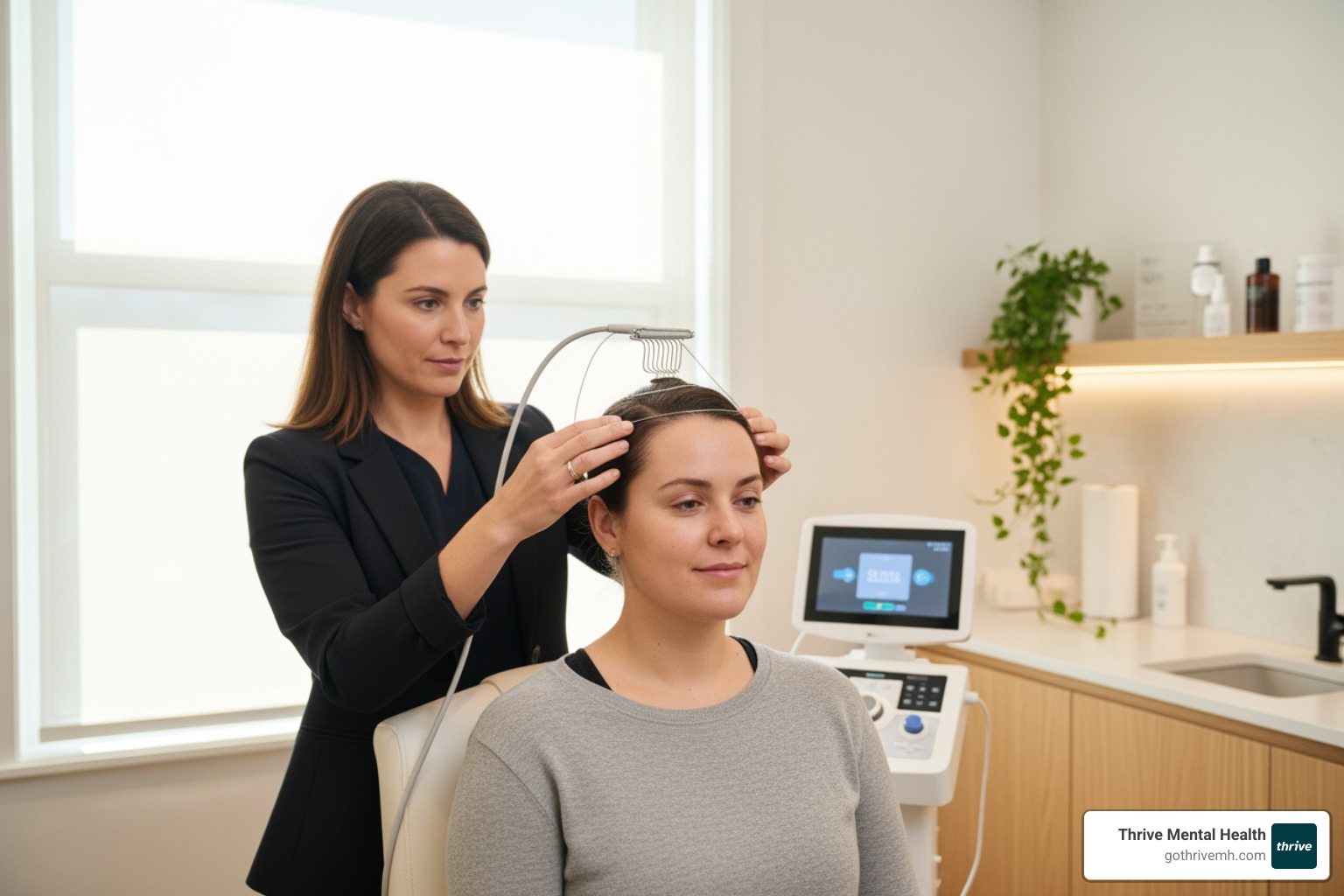
Brain Stimulation: Directly Targeting Depression Circuits
Brain stimulation therapies work by directly affecting brain activity. They are increasingly recognized as effective strategies for TRD.
- Electroconvulsive Therapy (ECT): Often considered the “gold standard” for severe depression, particularly when other treatments have failed, or in cases with psychotic features or severe suicidal ideation. ECT involves passing small electric currents through the brain to trigger a brief seizure, which can lead to significant improvements in mood. Despite historical stigma, modern ECT is generally safe and highly effective, with over 50% of patients who failed antidepressant trials responding to it. However, it can cause temporary confusion or memory loss.
- Repetitive Transcranial Magnetic Stimulation (rTMS): This non-invasive procedure uses magnetic pulses to stimulate specific areas of the brain involved in mood regulation. It’s FDA-approved for TRD and is well-tolerated. Various protocols exist, including high-frequency rTMS, deep TMS, and newer, more efficient methods like Theta-Burst Stimulation (TBS). TBS, in particular, delivers the same therapeutic effect in a fraction of the time (10 minutes vs. 30-40 minutes for traditional rTMS). Research supports the effectiveness of rTMS, with a meta-analysis finding that active rTMS was five times more likely to help TRD patients achieve remission than sham treatment. Find out more about its effectiveness here: Scientific research on rTMS effectiveness.
- Vagus Nerve Stimulation (VNS): VNS involves surgically implanting a device, similar to a pacemaker, that sends regular electrical pulses to the vagus nerve in the neck. This nerve connects to areas of the brain involved in mood. VNS is generally considered after other brain stimulation therapies have been unsuccessful, typically for patients who haven’t responded to four or more different medications.
What Treatment Strategies Work Best for Individuals with Treatment-Resistant Depression? [Rapid-Acting Treatments]
For those needing faster relief, especially when symptoms are severe, rapid-acting treatments offer a new frontier in TRD care.
- Ketamine and Esketamine (Spravato): Unlike traditional antidepressants that target monoamines, ketamine works on the glutamate system and NMDA receptors, leading to rapid antidepressant effects, often within hours or days.
- Intravenous (IV) Ketamine: Administered in a clinical setting, IV ketamine has shown significant efficacy in TRD. Its primary limitation, however, is the short duration of effect (typically 3-7 days after a single infusion), necessitating ongoing maintenance.
- Esketamine (Spravato) Nasal Spray: A derivative of ketamine, esketamine is FDA-approved for TRD and suicidal ideation, and is typically used in conjunction with an oral antidepressant. It’s administered in certified clinical settings. Both ketamine and esketamine require careful monitoring due to potential dissociative effects during treatment. Many of our Thrive Mental Health locations across Florida can help coordinate access to Spravato treatment where appropriate.
- Psilocybin-Assisted Therapy: While still investigational and not yet FDA-approved for mental disorders, psilocybin (the psychoactive compound in “magic mushrooms”) is showing promising results in controlled studies for TRD. It is typically administered in a highly supported clinical environment alongside psychotherapy. This emerging treatment represents a novel approach to addressing severe depression.
Build Your Resilience: Lifestyle Changes That Actually Work
While clinical treatments form the backbone of managing TRD, complementary lifestyle factors and self-care strategies are incredibly powerful in supporting recovery and enhancing overall well-being. These aren’t just “nice-to-haves” but essential components that can significantly impact what treatment strategies work best for individuals with treatment-resistant depression.
Daily Habits That Support Recovery
- Exercise: Regular physical activity has a direct positive impact on mood. Aim for at least 30 minutes of moderate activity most days of the week. Even light activities like walking or gardening can make a difference. Exercise can improve symptoms and contribute to the durability of treatment gains.
- Anti-inflammatory Diet: Emerging research suggests a link between inflammation and depression. Incorporating an anti-inflammatory diet rich in fruits, vegetables, and omega-3 fatty acids (found in fish, flaxseed) can support brain health.
- Sleep Hygiene: Sleep disturbances are a hallmark of depression. Establishing a consistent sleep schedule, creating a relaxing bedtime routine, and optimizing your sleep environment can significantly improve mood regulation. Seek professional advice if you continue to experience sleep difficulties.
- Mindfulness and Meditation: Practices like mindfulness and meditation can reduce stress, improve emotional regulation, and help you relate differently to distressing thoughts. These techniques are often integrated into psychotherapies like MBCT.
- Stress Reduction Techniques: Chronic stress can exacerbate depression. Techniques such as yoga, tai chi, progressive muscle relaxation, or journaling can help manage stress levels.
- Building a Support System: Connecting with others who understand what you’re going through can provide invaluable emotional support and reduce feelings of isolation. Organizations like the National Alliance on Mental Illness (NAMI) at www.nami.org and the Depression and Bipolar Support Alliance (DBSA) at www.dbsalliance.org offer peer-led support groups and educational resources.
- Psychoeducation: Understanding your condition, the rationale behind your treatment plan, and managing expectations are critical. Being informed empowers you to actively participate in your recovery journey. We offer comprehensive psychoeducation within our programs to ensure you have the knowledge and tools you need. Read more about understanding your mental health on our blog.
Frequently Asked Questions About Treating TRD
How long does it take to find the right treatment for TRD?
Finding the right treatment for TRD is often a process of trial and error, requiring patience and persistence. It can take several months, or even longer, to find the most effective combination of strategies. Working closely with a dedicated psychiatrist or mental health specialist is key to navigating this journey.
Does insurance cover advanced treatments like ketamine or TMS?
Insurance coverage for advanced treatments like ketamine or rTMS is increasing, but it varies significantly by plan. In Florida, many major insurers, including Cigna, Optum, and Florida Blue, offer coverage for these treatments, particularly for FDA-approved modalities like rTMS and esketamine (Spravato). Pre-authorization is almost always required, so it’s crucial to verify your benefits with your provider before beginning treatment.
Can treatment-resistant depression ever be “cured”?
While we often talk about “remission” rather than a “cure” for TRD, achieving a state of no or very few symptoms and a return to functional well-being is absolutely possible. For many, TRD is a chronic condition that requires ongoing management, much like other chronic health conditions. However, with the right combination of strategies and consistent maintenance, long-term recovery and a fulfilling life are within reach.
Ready for Relief? Your Next Step Starts Here.
We understand that navigating treatment-resistant depression can feel overwhelming, but we want you to know that hope and effective options exist. Finding specialized care that offers a comprehensive and integrated approach is crucial for achieving lasting relief.
At Thrive Mental Health, we are dedicated to providing evidence-based virtual Intensive Outpatient (IOP) programs designed for adults and young professionals. Our programs combine clinical expertise, flexible scheduling, and measurable results, all custom to help you find what treatment strategies work best for individuals with treatment-resistant depression. We offer both virtual and in-person centers across Florida, with locations in Tampa Bay, St. Petersburg, Miami, Orlando, Boca Raton, West Palm Beach, Jacksonville, Fort Lauderdale, Naples, and Sarasota. Our mission is to make effective treatment accessible, anytime, anywhere.
Ready for support? Thrive offers virtual IOP programs with evening options. Verify your insurance in 2 minutes (no obligation) → Start benefits check or call 561-203-6085. If you’re in crisis, call/text 988.

This article is for informational purposes only and is not a substitute for individualized clinical advice or insurance verification.