





Psychotherapy: Unlock a Better You in 2025
Psychotherapy [2025]: What It Is, Who It Helps, and Why 75% See Results
Psychotherapy, or talk therapy, is a collaborative treatment that uses psychological methods to help you overcome mental health challenges, develop healthier coping skills, and improve your overall well-being. It involves regular sessions with a licensed mental health professional who helps you understand your thoughts, emotions, and behaviors.
Quick Answer: What is psychotherapy?
- Definition: A form of treatment using conversation and psychological techniques.
- Purpose: To treat mental health conditions and improve emotional well-being.
- Providers: Licensed psychologists, psychiatrists, social workers, and counselors.
- Effectiveness: About 75% of people who try psychotherapy show improvement.
- Format: Individual, group, family, or couples sessions.
- Duration: Can be short-term (weeks) or long-term (months to years).
Research shows psychotherapy creates positive changes in the brain and body, similar to medication. People in therapy often experience fewer sick days, better work satisfaction, and stronger relationships. You don’t need a diagnosed mental illness to benefit; many use it to cope with stress, life changes, or for personal growth.
As Anna Green, LMHC, LPC, I’ve seen how evidence-based approaches like psychodynamic psychotherapy and EMDR empower people to break free from patterns that hold them back. Therapy provides a safe space to process your experiences and learn new skills.
Key psychotherapy vocabulary:
Types of Psychotherapy: Which Approach Fits You Best?
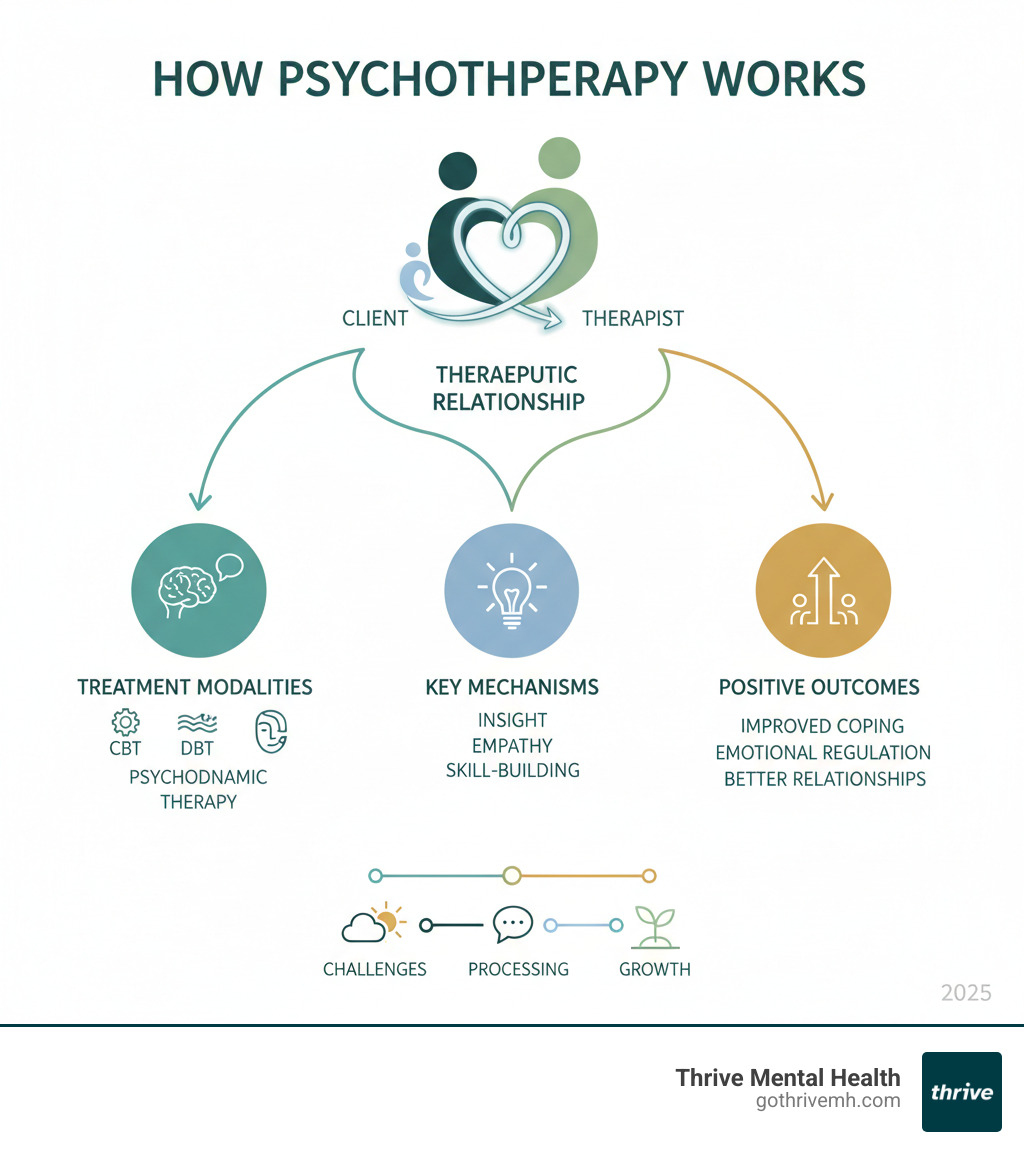
Choosing the right type of psychotherapy can feel overwhelming, but here’s what matters most: the therapeutic relationship you build with your therapist. Research shows this connection accounts for more of therapy’s success than the specific technique used. Finding someone you trust is more important than the exact method they use.
That said, understanding different approaches helps you find a good fit. Psychotherapy offers evidence-based treatments proven to reduce symptoms by 50-80% for conditions like anxiety and depression, according to the American Psychological Association.
Cognitive Behavioral Therapy (CBT) & Related Methods
Cognitive Behavioral Therapy (CBT) teaches you to identify and change negative thought patterns. It’s a structured, goal-focused approach that provides practical coping skills for conditions like anxiety disorders, depression, and mood disorders. For more, see our guide on How CBT Can Transform Mental Health.
- Dialectical Behavior Therapy (DBT) builds on CBT, teaching skills in mindfulness, distress tolerance, emotion regulation, and interpersonal effectiveness. It’s especially helpful for intense emotions and self-harm. Learn about DBT Components.
- Acceptance and Commitment Therapy (ACT) teaches you to accept difficult thoughts and feelings while committing to actions aligned with your values.
- Exposure and Response Prevention (ERP) is a highly effective, specialized treatment for OCD and phobias. Our Quick Start Guide to ERP Therapy explains how it works.
Psychodynamic & Insight-Oriented Therapies
Psychodynamic therapy explores how past experiences, especially from childhood, influence your current behaviors and relationships. It focuses on gaining self-awareness about unconscious patterns. This approach helps you understand yourself more deeply, leading to healthier choices, and is particularly useful for relationship issues, depression, and processing trauma.
Humanistic & Supportive Therapies
Humanistic therapies operate on the belief that you have the inner resources to heal. The therapist provides a safe, non-judgmental environment for your growth.
- Person-centered therapy focuses on empathy and unconditional positive regard, helping you find your authentic self.
- Gestalt therapy emphasizes awareness of your thoughts and feelings in the present moment.
- Supportive therapy offers a safe space to process life stressors and build coping skills.
Therapy Formats: What to Expect
Psychotherapy is offered in various formats to fit your needs:
- Individual therapy provides one-on-one attention.
- Group therapy connects you with others facing similar challenges.
- Family and couples therapy address relationship dynamics.
- Intensive Outpatient Programs (IOP) offer structured therapy for several hours a week while you maintain your daily life. Learn more in our Complete Guide to IOP.
- Partial Hospitalization Programs (PHP) provide more intensive daily support for those who can return home in the evenings. See PHP vs. IOP to understand the differences.
- Virtual therapy makes quality care accessible from anywhere. Explore our Online Therapy and Virtual IOP Program.
Who Benefits from Psychotherapy? Real People, Real Results

Psychotherapy isn’t just for severe mental health diagnoses. Many people use it to feel better, manage stress, or steer life transitions like a new job, divorce, or loss. Think of it as essential maintenance for your emotional well-being, just like seeing a doctor for your physical health.
Therapy meets you where you are, whether you’re functioning well but feel anxious inside, or you’re stuck in negative thought loops. If something is interfering with your relationships, work, or ability to enjoy life, psychotherapy can help.
Common conditions that respond well to psychotherapy include:
- Anxiety disorders (generalized anxiety, panic disorder, social anxiety, OCD). Wondering Do I Have OCD?
- Depression and mood disorders. We offer comprehensive Treatment for Major Depression and Anxiety.
- Addictions (substance or behavioral).
- Eating disorders (anorexia, bulimia, binge-eating).
- Personality disorders, like BPD, which responds well to specialized therapies. Explore Effective BPD Therapy Treatment Options.
- Trauma-related conditions like PTSD. Learn more about Understanding PTSD.
- Neurodevelopmental conditions like autism, where therapy can support social skills and emotional regulation. Gain Essential Insights for Understanding the Autism Spectrum.
The bottom line is you don’t need a crisis or a formal diagnosis to start, just the desire for things to be better.
Therapy vs. Medication: What Works Best?
When starting a mental health journey, many wonder if psychotherapy or medication is better. For most people, the combination of both creates the strongest foundation for lasting change.
Think of it like a broken leg: you need a cast (medication) to stabilize the injury and physical therapy (psychotherapy) to regain strength. Medication can provide crucial symptom relief, while psychotherapy teaches you the skills to build resilience.
Brain imaging studies show that both psychotherapy and medication change brain structure and function. For mild to moderate depression, psychotherapy can be as effective as antidepressants, with the added benefit of providing lasting coping skills.
Medication is particularly helpful when symptoms are severe enough to interfere with daily life, such as in cases of schizophrenia, severe bipolar disorder, or debilitating anxiety. It can provide the stability needed to engage effectively in therapy.
A team approach is often best, with a psychiatrist managing medication and a psychotherapist helping you develop coping strategies. At Thrive Mental Health, our virtual IOP can work alongside our medication management services to give you comprehensive, coordinated support.
Benefits and Risks: What You Need to Know
Starting psychotherapy is a significant decision. Understanding both the benefits and potential challenges helps you make an informed choice about your mental health care.
If you’re in crisis, call/text 988 right now. You are not alone.
The Life-Changing Benefits of Psychotherapy
- Emotional Regulation: Learn to understand and manage intense emotions instead of being overwhelmed by them.
- Coping Skills: Build a toolkit of sustainable strategies to handle stress, conflict, and unexpected challenges with more confidence.
- Improved Relationships: As you understand your own patterns, your interactions with others often become more authentic and fulfilling.
- Positive Brain Changes: Research shows therapy creates neurological shifts that contribute to better concentration, motivation, and overall daily functioning.
What to Consider Before Starting
- Emotional Discomfort: Therapy involves exploring feelings that can be painful. A skilled therapist will guide you through this process safely.
- Financial Cost: This can be a concern, but many insurance plans cover therapy. We’ll discuss affordable options in the next section.
- Finding the Right Fit: The connection with your therapist is key. It may take time to find someone you click with, and that’s okay.
- Progress Isn’t Always Linear: While psychotherapy helps about 75% of people, some experience a temporary worsening of symptoms as they work through difficult issues. Open communication with your therapist is essential.
At Thrive Mental Health, we minimize these risks by connecting you with qualified, licensed therapists who prioritize your safety and well-being.
Starting Your Therapy Journey: Step-by-Step Guide
Taking the first step toward psychotherapy is an empowering decision. Here’s how to begin your journey with confidence.

How to Find a Qualified Psychotherapist
Finding the right therapist means looking for someone qualified, experienced, and who makes you feel comfortable. Many types of professionals provide excellent therapy:
- Psychiatrists: Medical doctors (MDs) who can prescribe medication and provide therapy.
- Psychologists: Hold doctoral degrees (PhD/PsyD) with extensive training in assessment and therapy.
- Licensed Clinical Social Workers (LCSWs): Focus on how your environment impacts mental health and connect you to resources.
- Licensed Professional Counselors (LPCs/LMHCs): Provide individual, group, and couples therapy.
- Licensed Marriage and Family Therapists (LMFTs): Specialize in relationship and family dynamics.
Always check a therapist’s credentials and licensing. During an initial consultation, ask about their experience with your concerns and their therapeutic approach. For more information, the American Psychological Association offers resources on understanding psychotherapy. Trust your instincts, the therapeutic relationship is crucial for success.
 Engaging Art Therapy Activities for Teens and AdultsMental Health
Ready to start? You can Find a Thrive therapist or Verify your insurance in 2 minutes.
What Happens in Your First Session?
Your first psychotherapy session is a collaborative planning meeting. You’ll likely complete intake paperwork and discuss your background, current challenges, and what brought you to therapy. Together, you and your therapist will begin setting meaningful treatment goals. This is also your chance to ask questions and see if the therapist is a good fit. Your active participation is just as important as your therapist’s expertise.
How to Tell If Therapy Is Working
Progress in psychotherapy isn’t always linear. Key signs that it’s helping include:
- Feeling heard and understood by your therapist.
- Gaining insight into your thoughts, feelings, and behaviors.
- Using new coping skills in your daily life.
- Noticing fewer symptoms and improved daily functioning.
If therapy doesn’t seem to be helping, discuss it with your therapist. It might mean adjusting the approach or that you need a different therapist whose style is a better match. Don’t be discouraged, your mental health is worth the effort to find the right fit.
Costs, Insurance, and Access: Making Therapy Work for You
Figuring out how to afford psychotherapy shouldn’t be another source of stress. At Thrive Mental Health, we believe quality mental health care should be accessible.
How Much Does Psychotherapy Cost?
While sessions can cost $100-$200, your insurance likely covers more than you think. The Mental Health Parity and Addiction Equity Act of 2008 requires most health plans to cover mental health services at the same level as physical health services. Many therapists also offer sliding scale fees based on income.
We work with major insurance providers like Cigna, Optum, Florida Blue, Aetna, and UnitedHealthcare to make care affordable. Whether you’re in Florida, from Miami and Fort Lauderdale to Orlando and Tampa, we’re committed to helping you access support. Understanding in-network vs. out-of-network benefits is key; in-network providers usually mean lower costs for you.
Want to know what your plan covers? Our insurance verification tool gives you clear answers in just 2 minutes.
Your Privacy in Therapy: What’s Confidential?
Your psychotherapy sessions are protected by strict confidentiality laws, including HIPAA (Health Insurance Portability and Accountability Act). What you say in therapy stays in therapy. Your therapist cannot share your information without your written permission.
There are a few exceptions designed for safety: your therapist must break confidentiality if there is an immediate danger of harm to yourself or others, or in cases of reported child or elder abuse. In rare cases, a court order may require them to share information. These limits will be explained in your first session, ensuring a foundation of trust.
Virtual Therapy: Modern Care, Anywhere
Virtual therapy brings expert mental health care to you, wherever you feel most comfortable. Our sessions use secure, encrypted video platforms to protect your privacy.
Virtual care removes barriers like transportation, geography, and rigid schedules. Research consistently shows that online therapy is just as effective as in-person therapy for treating anxiety, depression, and many other conditions. Internet-based CBT (iCBT) has shown particularly promising results.
At Thrive, our virtual IOP programs provide intensive, expert-led support from anywhere. Whether you need Remote Therapy for Anxiety or could benefit from our approach in How Online DBT is Revolutionizing Mental Health Care, we make it work for your life. Learn more about Thrive’s virtual IOP programs.
Frequently Asked Questions about Psychotherapy
It’s natural to have questions when considering psychotherapy. Here are answers to some of the most common ones.
What is the main goal of psychotherapy?
The primary goal is to help you understand your inner world, feelings, thoughts, and behaviors, so you can create meaningful change. It’s about building coping skills, improving relationships, and finding more satisfaction in life, whether you’re dealing with anxiety, depression, or simply want to grow.
What’s the difference between a psychologist and a psychotherapist?
Psychotherapist is an umbrella term for any professional trained to provide talk therapy, including psychologists, psychiatrists, social workers, and licensed counselors. Psychologists hold doctoral degrees (PhD or PsyD) and have extensive training in psychological assessment in addition to therapy. The most important factor is finding a licensed professional who is a good fit for you.
How long does psychotherapy take?
There’s no one-size-fits-all answer. The timeline depends on your goals, the severity of your symptoms, and how actively you engage in the process. Some people find relief in a few sessions for a specific issue, while others benefit from longer-term support for complex trauma or long-standing patterns. Most people notice positive changes within the first few months.
Can I do psychotherapy without a mental health diagnosis?
Absolutely. Psychotherapy isn’t just for diagnosed conditions. Many people seek therapy for personal growth, stress management, relationship improvement, or help navigating life transitions like divorce or career changes. Think of it as an investment in your overall well-being.
Does insurance cover psychotherapy in Florida?
Yes. The Mental Health Parity and Addiction Equity Act ensures most insurance plans cover mental health services. We work with major providers like Cigna, Optum, Florida Blue, Aetna, and UnitedHealthcare, with services available throughout Florida. Since coverage varies by plan, you can verify your insurance in 2 minutes to understand your specific benefits.
{
  "@context": "https://schema.org",
  "@type": "FAQPage",
  "mainEntity": [{
    "@type": "Question",
    "name": "What is the main goal of psychotherapy?",
    "acceptedAnswer": {
      "@type": "Answer",
      "text": "To help you understand your feelings, thoughts, and behaviors so you can improve your mental health, build coping skills, and live better."
    }
  },{
    "@type": "Question",
    "name": "What’s the difference between a psychologist and a psychotherapist?",
    "acceptedAnswer": {
      "@type": "Answer",
      "text": "A psychotherapist is anyone trained to provide talk therapy (psychologists, psychiatrists, social workers, counselors). Psychologists have doctoral degrees and can do testing and research as well as therapy."
    }
  },{
    "@type": "Question",
    "name": "How long does psychotherapy take?",
    "acceptedAnswer": {
      "@type": "Answer",
      "text": "It depends, some people need just a few sessions, others benefit from longer-term support. Your goals and needs shape the timeline."
    }
  },{
    "@type": "Question",
    "name": "Can I do psychotherapy without a mental health diagnosis?",
    "acceptedAnswer": {
      "@type": "Answer",
      "text": "Yes! Many people use therapy for personal growth, stress, or relationship help, not just for diagnosed conditions."
    }
  },{
    "@type": "Question",
    "name": "Does insurance cover psychotherapy in Florida?",
    "acceptedAnswer": {
      "@type": "Answer",
      "text": "Yes, many plans (Cigna, Optum, Florida Blue, and others) cover therapy in Florida. We help patients across the state access affordable care. Check your benefits now at https://gothrivemh.com/services/verify-insurance."
    }
  }]
}
Conclusion: Take the First Step Toward Feeling Better
Psychotherapy is a proven, empowering tool that can transform your mental health and quality of life. It’s a personal journey of learning new skills, understanding your patterns, and building the resilience to thrive.
Whether you’re dealing with anxiety, depression, relationship challenges, or simply want to grow, therapy offers a safe space to heal and create lasting change. The power of psychotherapy lies in the collaborative relationship you build with a skilled therapist. Research shows that about 75% of people who try therapy see meaningful improvement.
Seeking help is a sign of strength. At Thrive Mental Health, we make starting therapy as accessible as possible. Our virtual IOP programs are designed to fit your life, with evening options available. Our expert-led, evidence-based care meets you where you are, with virtual and hybrid programs available throughout Florida.
Ready for support? Thrive offers virtual IOP with evening options. Verify your insurance in 2 minutes (no obligation) → Start benefits check or call 561-203-6085. If you’re in crisis, call/text 988.

This article is for informational purposes only and is not a substitute for individualized clinical advice or insurance verification.