





Stop Suffering in Silence: Get Real Relief, Fast
Which mental health services provide comprehensive care for mood disorders? Here’s what you need to know right now:
Services that provide comprehensive care for mood disorders include:
- Intensive Outpatient Programs (IOP), 9-12 hours/week of structured therapy while you work or attend school.
- Partial Hospitalization Programs (PHP), 20-30 hours/week of full-day support without overnight stays.
- Specialized mood disorder clinics, Expert teams focused exclusively on depression and bipolar disorders.
- Integrated outpatient services, Therapy, medication management, and holistic support in one place.
- Virtual mental health programs, Evidence-based care from home, covered by most insurance.
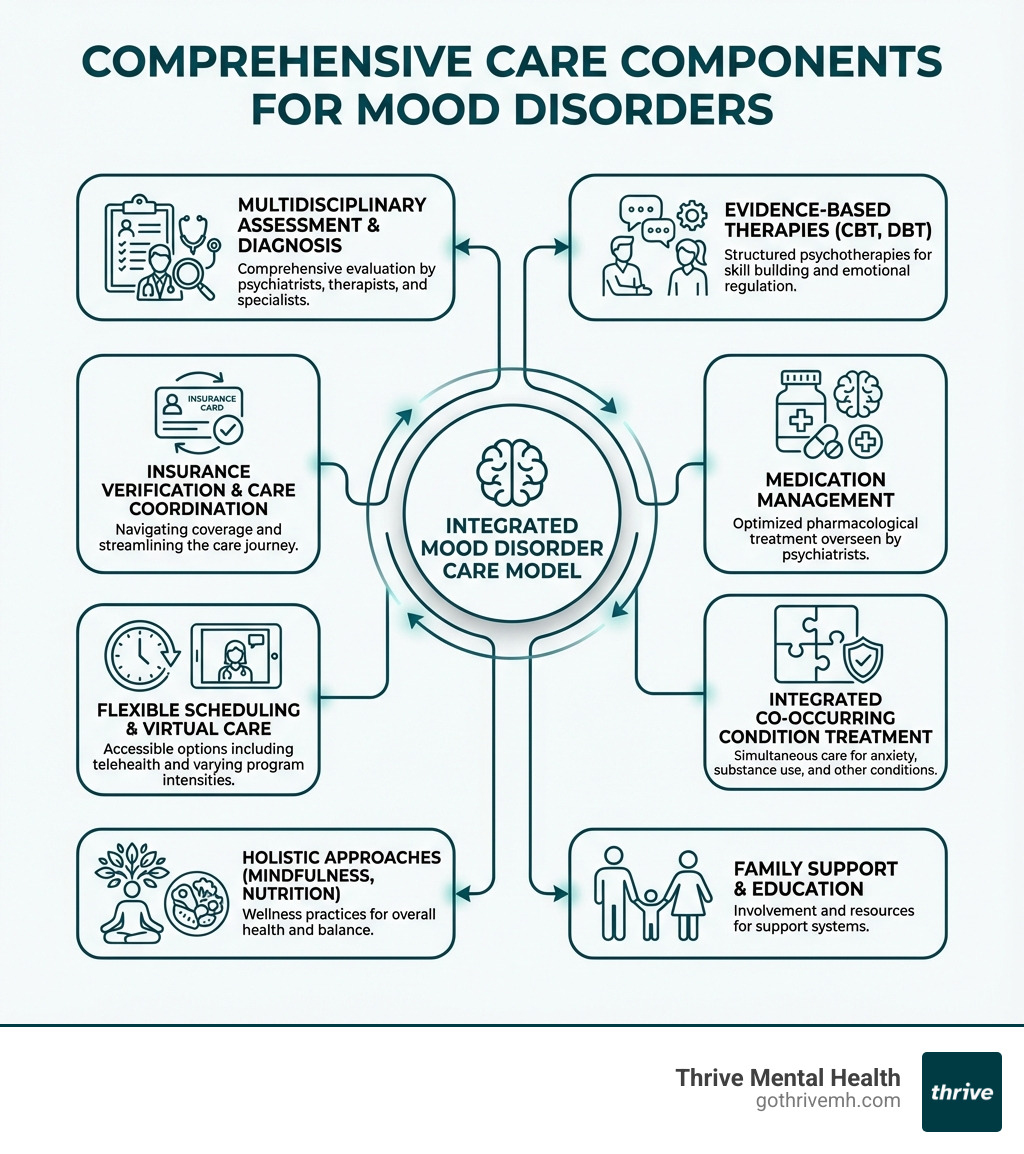
The best programs offer a multidisciplinary team (psychiatrists, therapists), evidence-based treatments (CBT, DBT), and integrated care for co-occurring conditions like anxiety or substance use.
Over 20 million Americans suffer from depression or bipolar disorder. Many struggle for years because they can’t find care that treats the whole person, not just symptoms. You don’t have to settle for weekly therapy that barely moves the needle or wait months for an appointment.
Comprehensive care means treating your brain chemistry, thought patterns, and daily habits with a coordinated team of experts. This guide breaks down exactly which services provide this level of care, how to access them, and what to demand from any program.
As Nate Raine, CEO of Thrive Mental Health, I’ve seen how the right comprehensive care transforms outcomes. At Thrive, we’ve built virtual IOP programs specifically designed to deliver the coordinated, intensive support that helps people recover faster, without putting their lives on hold.
Must-know Which mental health services provide comprehensive care for mood disorders? terms:
- I need mental health treatment that’s more intensive than weekly therapy but less than inpatient care. What are my options in Miami, FL?
- Mental health treatment centers in Tampa Bay, Florida.
What Are Mood Disorders? Why Most People Never Get the Right Help
Mood disorders are serious mental health conditions characterized by significant changes in a person’s emotional state that interfere with their ability to function. The World Health Organization cites depression as the leading cause of disability worldwide, underscoring their profound impact.
What counts as a mood disorder?
A mood disorder involves a significant change in a person’s emotional and physical state, manifesting as extreme sadness, loss of interest, irritability, or excessive energy.
The most common mood disorders include:
- Major Depressive Disorder (MDD): A persistent sad, anxious, or empty mood, loss of interest, fatigue, and difficulty concentrating that lasts at least two weeks. Learn more about Depression Symptoms.
- Bipolar Disorder: Characterized by dramatic shifts in mood, energy, and activity levels, involving episodes of intense “highs” (mania) and “lows” (depression). Explore Bipolar Disorder Symptoms.
- Persistent Depressive Disorder (Dysthymia): A chronic, milder form of depression where symptoms last for at least two years.
- Cyclothymic Disorder: A milder form of bipolar disorder with numerous periods of hypomanic and depressive symptoms lasting at least two years.
For a comprehensive understanding, refer to our guide on Decoding Bipolar and Depression: Comprehensive Definitions.
Symptoms: emotional, physical, and what most doctors miss
While emotional symptoms like sadness are often recognized, physical and cognitive symptoms are frequently missed.
- Emotional: Persistent sadness, anxiety, hopelessness, guilt, irritability, or euphoria.
- Physical: Chronic fatigue, changes in appetite or sleep, unexplained aches, and digestive issues.
- Cognitive: Difficulty concentrating, remembering details, or making decisions.
- Behavioral: Social withdrawal, loss of interest in hobbies, impulsivity, or substance use.
Many people suffer for years because their symptoms are dismissed. A comprehensive approach looks at the full picture of how a mood disorder impacts your life.
Why “comprehensive care” beats quick fixes, treating the whole person, not just symptoms
“Quick fixes” like a single medication often fail because mood disorders are complex, stemming from a mix of genetic, biological, and environmental factors. Effective treatment must address all these layers.
Comprehensive care means creating an integrated treatment plan with a multidisciplinary team, using evidence-based therapies, and addressing co-occurring conditions. This integrated approach leads to more sustainable recovery by treating the whole person, not just the diagnosis.
The Spectrum of Care: Which Program Fits Your Life (and Budget)?
Understanding the different levels of mental health care is crucial to finding the right fit. Services are often structured along a “stepped-care model,” where care intensity increases with need. This ensures you get the right level of support, avoiding both under-treatment and unnecessary costs.
When 24/7 Safety Is Non-Negotiable: Inpatient & Residential Options
If you’re in crisis, call/text 988 right now. You are not alone.
Crisis Disclaimer: If you or someone you know is in immediate danger or having thoughts of suicide, call or text the 988 Suicide and Crisis Lifeline at 988 or chat at 988lifeline.org. In life-threatening situations, call 911.
Inpatient care provides 24/7 medical and psychiatric monitoring in a hospital for acute stabilization and safety. It’s reserved for individuals in crisis, those with severe symptoms, suicidal thoughts, or a total loss of function. The goal is crisis resolution and preparing for a step-down to a lower level of care like PHP or IOP. For more information, see our Comprehensive Guide to Local Mental Health Facilities and Inpatient Care.
Outpatient Programs [PHP & IOP]: Real Recovery Without Putting Life on Hold
For many, the sweet spot for comprehensive care lies in Partial Hospitalization Programs (PHP) and Intensive Outpatient Programs (IOP). These options offer structured, multi-modal treatment without requiring you to live at a facility.
Partial Hospitalization (PHP) vs. Intensive Outpatient (IOP): hours, structure, who qualifies
PHP and IOP are for individuals who need more support than weekly therapy but don’t require 24/7 inpatient care. They are an effective step-down from inpatient treatment or a step-up from traditional therapy.
| Feature | Partial Hospitalization Program (PHP) | Intensive Outpatient Program (IOP) |
|---|---|---|
| Hours/Week | 20-30 hours (5-6 hours/day, 5 days/week) | 9-12 hours (3 hours/day, 3-4 days/week) |
| Structure | Full-day programming, highly structured, group and individual therapy, medication management | Part-day programming, structured, group and individual therapy, medication management |
| Ideal Candidate | Stepping down from inpatient, needing significant daily support | Needing more than weekly therapy while maintaining work/school commitments |
| Flexibility | Less flexible, full-day commitment | More flexible, allows for work, school, and other responsibilities |
| Insurance Coverage | Typically covered by major insurance plans | Typically covered by major insurance plans |
Choosing between PHP and IOP depends on your symptoms and daily responsibilities. We offer virtual IOP programs designed for adults and young professionals. Learn more in our PHP vs IOP guide and explore our Virtual Intensive Outpatient Programs.
How to Access Comprehensive Mood Disorder Care, Step by Step
Navigating mental health services can feel overwhelming, but we’ve streamlined the process for residents across Florida.
- Referral: Self-referral is often the fastest route. Many services, including Thrive Mental Health, allow you to contact them directly for a confidential assessment, cutting out delays.
- Insurance Verification: Most major plans (Cigna, Optum, Florida Blue, Aetna, UnitedHealthcare) cover IOP and PHP. We make it easy to Verify your insurance in just 2 minutes, so you know your coverage upfront.
- In-Network Options: Our virtual and hybrid programs are available to residents across Florida, removing geographic barriers and making it easier to find high-quality care in cities like Miami, Tampa, and Orlando. Our team can help you with Navigating Mental Health Support with Aetna and UnitedHealthcare and other providers.
What Does “Comprehensive Care” for Mood Disorders Actually Include?

When we talk about Which mental health services provide comprehensive care for mood disorders?, we mean a coordinated strategy for lasting recovery. It goes far beyond traditional, siloed treatments.
Integrated treatment planning: why one-size-fits-all fails
Mood disorders are highly individual, which is why a “one-size-fits-all” approach fails. Integrated treatment planning customizes your care through a holistic assessment and collaboration with your care team to set meaningful goals. Your plan evolves as you progress, ensuring it remains effective. This personalized approach is a cornerstone of effective care, as explored in our article on The Benefits of Utilizing Mental Health Services.
The Multidisciplinary Team: Your Recovery Dream Team
Comprehensive care relies on a multidisciplinary team working together to support your well-being.
- Psychiatrists: Medical doctors who diagnose, prescribe, and manage medications. See our guide on Psychiatry Medication Management.
- Psychologists & Licensed Therapists (LCSW, LMFT): Provide evidence-based therapies like CBT and DBT in individual, group, and family settings.
- Case Managers/Care Coordinators: Help coordinate your care and connect you with resources.
- Dietitians/Nutritionists: Address the link between nutrition and mental health.
This collaborative approach, embodied by our Expert Mental Health Professionals, ensures all your needs are met and accelerates recovery.
 Virtual IOP vs PHP in Arizona: Choosing the Right Level of CareIntensive Outpatient Program
Core Treatments That Work, And What to Demand
Demand access to these evidence-based approaches:
- Psychotherapy: Talk therapy is a cornerstone. Key types include:
- Medication Management: For many, medication is vital. A psychiatrist will work with you to find the most effective medication with the fewest side effects, often in combination with psychotherapy.
- Holistic Approaches: Practices like mindfulness, balanced nutrition, and good sleep hygiene are crucial for mood stability and complement traditional therapies.
For more information, the National Institute of Mental Health (NIMH) provides comprehensive resources on NIMH on Depression Treatments.
Why Thrive’s Specialized Clinics and Virtual Programs Are Changing the Game
Our approach at Thrive Mental Health is designed to address the gaps in traditional care.
- Benefits of Specialization: Our clinicians’ deep expertise in mood disorders leads to more precise interventions, faster results, and fewer relapses.
- Virtual IOPs: Access, Convenience, Privacy: Our virtual programs offer top-tier care from home, flexible scheduling, and a private setting. This is a game-changer for adults and young professionals across Florida, providing accessible, high-quality care from the Panhandle to the Keys. More than 91% of clients see improvements in their most severe symptoms in programs like ours.
Explore our Areas of Care: Virtual IOP: Mood Disorders to see how our virtual programs can support your recovery.

Treating the Whole Person: The Secret to Long-Term Recovery
Effective treatment acknowledges that mental health is interconnected with physical health, past experiences, and current life circumstances. This integrated approach leads to more resilient and long-lasting recovery.
Integrated care for co-occurring conditions: anxiety, trauma, substance use
It’s common for mood disorders to co-exist with other challenges. An integrated approach is essential.
- Dual Diagnosis: This refers to having both a mental health disorder and a substance use disorder. Integrated care treats both simultaneously to prevent relapse. Learn more at Areas of Care: Virtual IOP: Dual Diagnosis.
- Anxiety and Trauma: Unresolved trauma can fuel depression and anxiety. Comprehensive services incorporate trauma-informed care. Our Post-Traumatic Stress Disorder Treatment Guide offers more insights.
By addressing these interconnected issues, we treat the whole person, not just isolated symptoms.
Family & Caregiver Support: Don’t Go It Alone
A mood disorder impacts the entire support system. Comprehensive care extends support to family and caregivers to improve communication, reduce conflict, and prevent burnout.
- Family Therapy and Education: Involving family members in therapy and educating them about the mood disorder helps them provide constructive support.
- Support for Caregivers: Caregivers are encouraged to set boundaries, seek their own support, and practice self-care to avoid exhaustion and stress.
We believe strong family support is a powerful force in recovery. Resources like Parenting Neurodivergent Children: Essential Tips and Advice can offer broader insights.
Advanced Options for Tough-to-Treat Mood Disorders
If first-line treatments like therapy and standard medications fail, it’s time to explore other options. This doesn’t mean recovery is impossible.
- What to do: Work with a psychiatrist to optimize medication or consider interventional treatments like ECT, TMS, or Ketamine. The higher intensity of an IOP or PHP can also provide a breakthrough.
- How Thrive approaches complex cases: Our expert team uses deep clinical expertise and integrated care planning to handle treatment-resistant mood disorders. We stay current on the latest research and work collaboratively with you to find a path forward.
- Clinical trials: For some, clinical trials offer access to cutting-edge therapies. Your care team can discuss if this is a suitable option.
We prioritize Evidence-Based Therapy in all our programs to ensure you have access to the most effective treatments available.
FAQs: Mood Disorder Treatment, What People Like You Ask Most
What’s the fastest way to get help for a mood disorder?
Start with a comprehensive assessment from a licensed mental health professional. You can self-refer or ask your doctor for a referral. Thrive offers quick, confidential assessments, start here.
How do I know if I need IOP, PHP, or inpatient care?
If you’re in crisis or unsafe, inpatient is best. If you need more than weekly therapy but want to keep working or going to school, IOP or PHP is ideal. Compare options here.
Does insurance cover IOP, PHP, or virtual therapy for mood disorders?
Yes, most plans (Cigna, Optum, Florida Blue, Aetna, UnitedHealthcare) cover these services. Verify your insurance in 2 minutes.
Can mood disorders be cured?
There’s no “cure,” but with the right care, most people achieve long-term recovery and get their lives back.
Summary: Which Mental Health Services Provide Comprehensive Care for Mood Disorders?
Which mental health services provide comprehensive care for mood disorders? The answer lies in programs that offer an integrated, multidisciplinary, and evidence-based approach. This includes a team of experts, personalized treatment plans, a range of therapeutic modalities, medication management, and support for co-occurring conditions and family members. Services like Intensive Outpatient Programs (IOP) and Partial Hospitalization Programs (PHP) provide the structured, intensive support many need without requiring inpatient stays.
Thrive Mental Health delivers this level of comprehensive care through virtual IOP programs, designed for adults and young professionals. Our programs combine clinical expertise, flexible scheduling, and measurable results, ensuring you get the intensive support needed to reclaim your life. We are proud to offer these services, covered by major insurance providers like Cigna, Optum, Florida Blue, Aetna, and UnitedHealthcare, to residents throughout Florida. Don’t settle for less, get the care that works.
Ready for support? Thrive offers virtual IOP programs with evening options. Verify your insurance in 2 minutes (no obligation) → Start benefits check or call 561-203-6085. If you’re in crisis, call/text 988.

This article is for informational purposes only and is not a substitute for individualized clinical advice or insurance verification.