
Why Grief Counseling Can Make All the Difference for Teens

When Loss Hits During the Most Vulnerable Years
Grief counseling teens need looks fundamentally different from adult grief support—and understanding why can determine whether your teen heals or struggles for years. When adolescents lose someone they love, they’re processing that trauma through a brain still under construction, within a social world that often doesn’t know how to respond, and at a developmental stage where identity itself is already fragile.
What grief counseling for teens provides:
- A safe space to express complicated emotions without judgment
- Evidence-based coping strategies custom to adolescent development
- Professional guidance to distinguish normal grief from warning signs of depression or trauma
- Peer support options that reduce the isolation many grieving teens feel
- Family therapy components to help the whole household steer loss together
The statistics are stark: approximately 1 in 8 adolescents will experience the death of a parent, sibling, or close friend before age 18. Nearly 80% of people who lost a parent during childhood say it was the most difficult thing they’ve ever experienced. Yet over 70% of teenagers report they didn’t know how to express their feelings or share what they were going through when grieving.
Grief doesn’t follow a timeline. It doesn’t come with a manual. And for teens—who are already navigating identity formation, peer pressure, and hormonal changes—loss can derail development in ways that ripple for decades if left unaddressed.
The good news: Professional grief counseling gives teens the tools, language, and support to integrate loss into their lives rather than being defined by it. It can prevent academic decline, reduce the risk of substance abuse, and help young people find meaning even in devastating circumstances.
I’m Nate Raine, CEO of Thrive Mental Health, and I’ve spent over a decade working at the intersection of behavioral health, evidence-based treatment, and access innovation—including developing programs that address grief counseling teens and young adults need when weekly therapy isn’t enough. With a strong focus on supporting families in Florida, this guide will show you exactly how to recognize when your teen needs help, what effective grief counseling looks like, and how to support them through one of life’s hardest experiences.
Find more about grief counseling teens:
Why is Teen Grief a Unique Storm? What Parents Must Understand
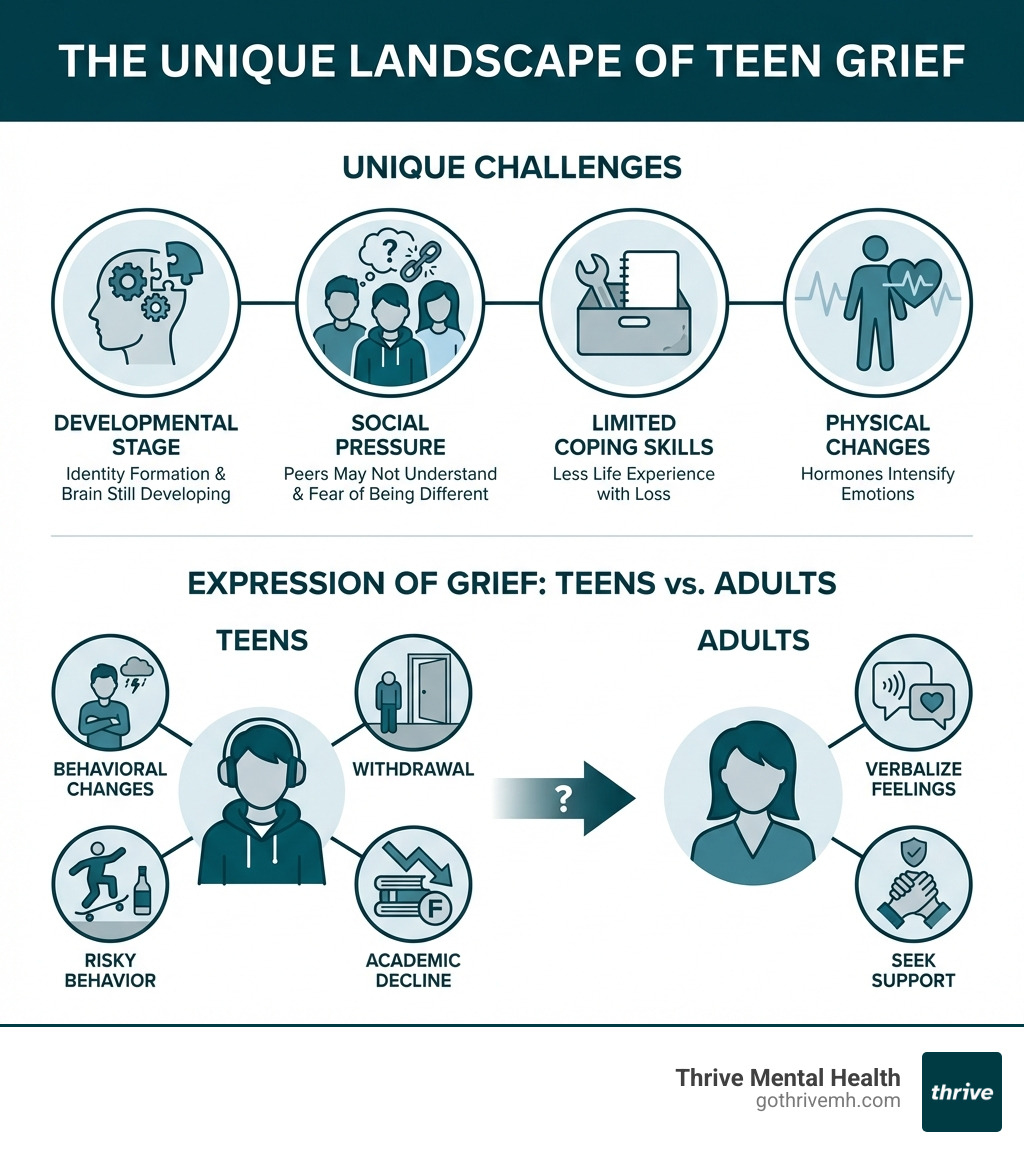
When a teenager experiences loss, it’s not just a sad event; it’s a profound disruption to their rapidly developing world. Their unique challenges stem from a combination of developmental, social, and emotional factors that differentiate their grief from that of adults. While adults often have a more developed sense of identity and a wider range of coping mechanisms, teens are still figuring out who they are and how the world works.
Adolescence is a period of intense change, second only to infancy. Teens are focused on forming their identity, establishing independence, and navigating complex social hierarchies. A significant loss—like the death of a parent, sibling, or close friend—hits during this vulnerable phase, impacting their sense of security and altering their trajectory. Nearly 80% of people who lost a parent during childhood describe it as the most difficult experience of their lives.

Unlike adults who might verbalize their feelings or seek out direct support, teens often express grief through behavioral changes, academic difficulties, social withdrawal, and even risk-taking behaviors. This is partly because their brains are still maturing, especially the prefrontal cortex responsible for emotional regulation and impulse control. Hormonal changes also intensify their emotional responses, making the waves of grief feel even more overwhelming.
The type of loss also matters. Grief is a complex experience influenced by the nature of the death (e.g., suicide, murder, illness) and the relationship to the person who died. For example, the death of a parent is particularly devastating, impacting a teen’s identity development and sense of security. Suicide bereavement, in particular, adds layers of shock, guilt, anger, blame, and shame, making the grieving process even more complicated.
The Pressure to Be “Fine”
One of the most insidious challenges for grieving teens is the immense pressure to appear “fine.” Their peers, who may not have experienced similar losses, often don’t know how to respond, leading to discomfort or avoidance. This leaves many teens feeling isolated and misunderstood. Our research shows that over 70% of teenagers didn’t know how to express their feelings or share what they were going through when they were grieving.
This societal expectation to “be strong” and “carry on” can hinder a teen’s natural grieving process. They might hide their emotions, fearing judgment or appearing weak. This emotional suppression can manifest as social withdrawal, where they seclude themselves from others and avoid activities they once enjoyed. The absence of a safe space to process these intense emotions can lead to a deepening sense of loneliness and an inability to adapt to their new reality. Resources like the Dougy Center offer specific guidance for teens to steer these feelings, emphasizing that they are not alone.
How Grief Hijacks Teen Development
The impact of grief on a teen’s development can be profound and far-reaching. Adolescence is a time of striving for independence, questioning the future, and solidifying personal values. A significant loss can interrupt this process, leading to:
- Impact on independence: Teens may regress, becoming more dependent on caregivers, or conversely, push away aggressively in a misguided attempt to assert control.
- Questioning the future: The loss can shatter their worldview, leading to existential questions about life, death, and suffering. This can manifest as anxiety about their own mortality or the safety of others.
- Strained family dynamics: Family members often grieve differently, which can create tension. Teens may feel like they need to care for a surviving parent, adding immense pressure.
- Search for meaning: They may grapple with why the loss occurred, seeking meaning in a seemingly senseless event. This search can lead to profound personal growth if supported, or deep despair if left unaddressed.
- Existential questions: “Why me?” “What’s the point?” These questions are normal but can be overwhelming without guidance.
Allowing teens to ask these difficult questions and providing a space for exploration, rather than immediate answers, is crucial. Their emotional maturity doesn’t always match their physical development, making this period particularly challenging for both the teen and their caregivers.
Red Flags [2025]: 7 Behavioral and 7 Emotional Signs Your Teen Needs Professional Grief Support
IN CRISIS? If you or your teen are having thoughts of suicide or self-harm, call or text the 988 Suicide & Crisis Lifeline immediately. You are not alone, and help is available 24/7.
It’s natural for teens to struggle after a loss, but how do you know when their grief has crossed into territory that requires professional intervention? While there’s no fixed timeline for grief, certain persistent behaviors and emotional states can signal that your teen needs more support than family and friends can provide. Recognizing these red flags early can prevent potential long-term impacts of unresolved grief.

Behavioral and Social Warning Signs
These signs often manifest externally and can be easier for parents and caregivers to observe:
- Sudden anger or irritability: Frequent mood changes are expected, but persistent, uncontrolled anger or aggression, especially if uncharacteristic, can be a sign.
- Withdrawal from friends and family: While some solitude is normal, prolonged social isolation, avoiding previously enjoyed activities, and secluding themselves can be concerning. Over 70% of teenagers say they didn’t know how to express their feelings or share what they were going through when they were grieving, often leading to withdrawal.
- Loss of interest in hobbies: A significant and sustained disinterest in activities they once loved, from sports to creative pursuits, suggests a deeper struggle.
- Risky behaviors (substance use, recklessness): Acting out or engaging in risky behaviors can be an expression of pain and confusion. Several studies indicate that teens who lost a parent had an increased risk of alcohol and substance abuse. This can also include reckless driving or unprotected sexual activity.
- Changes in peer relationships: Deterioration of friendships or seeking out a new, less healthy peer group.
- Self-harm or suicidal ideation: Any mention or indication of self-harm or suicidal thoughts requires immediate professional attention.
- Denying pain while acting overly strong: While resilience is good, a complete refusal to acknowledge pain or an exaggerated display of strength can mask deep internal suffering.
Academic and Emotional Red Flags
These signs often relate to a teen’s internal state and performance in structured environments:
- Plummeting grades: It’s not uncommon for grieving teens to experience a drop in grades or attendance. A staggering 87% of teachers say their students have difficulty concentrating after losing a parent.
- Difficulty concentrating: An inability to focus in school or during tasks at home, often accompanied by forgetfulness.
- Persistent sadness or depression: While sadness is normal, a prolonged state of hopelessness, anhedonia (inability to feel pleasure), or pervasive low mood could indicate depression. Family bereavement is associated with poor mental health in up to 25% of children with psychological concerns.
- Extreme mood swings: Beyond typical adolescent moodiness, rapid and intense shifts in mood that are difficult to predict or manage.
- Changes in sleep or eating: Significant disturbances in sleep patterns (insomnia, excessive sleeping) or eating habits (loss of appetite, overeating).
- Physical complaints (headaches, stomachaches): Frequent, unexplained physical symptoms that have no clear medical cause can be stress-related.
- Anxiety: Increased worry, panic attacks, or an inability to relax.
If you observe several of these signs over an extended period, it’s a strong indicator that professional grief counseling teens need could make a critical difference. For families in Florida, specialized support is available to prevent the long-term impacts of unresolved grief, which can include depression, anxiety, and post-traumatic stress disorder (PTSD), and can impact future relationships and overall well-being.
What Does Grief Counseling for Teens Actually Involve?
Grief counseling teens receive is a specialized form of therapy designed to meet them where they are developmentally, emotionally, and socially. It’s not about “getting over” the loss, but about integrating it into their lives in a healthy way, helping them understand their reactions, develop coping skills, and find a path forward. The benefits are profound: a safe, confidential space to express raw emotions, professional guidance to steer complex feelings, and tools to build resilience.
Finding the Right Approach to Grief Counseling for Teens
Effective grief counseling teens need often involves a blend of therapeutic approaches custom to the individual. Here are some common and effective modalities:
- Individual Therapy: Provides a one-on-one confidential setting where a teen can explore their grief without feeling judged or having to protect family members. The therapist acts as a guide, helping them process emotions, challenge negative thoughts, and develop personal coping strategies.
- Family Therapy: When a loss impacts the entire family system, family therapy can be invaluable. It helps improve communication, allows family members to understand each other’s grieving styles, and rebuilds connection during a difficult time. This can be especially helpful in situations where parents are also grieving and may struggle to support their teen effectively.
- Cognitive Behavioral Therapy (CBT): While not exclusively a grief therapy, CBT is highly effective in helping teens identify and reframe negative thought patterns associated with their loss. It teaches practical skills to manage intense emotions, reduce anxiety, and combat depressive symptoms.
- Trauma-Focused CBT (TF-CBT): This approach is particularly relevant when a loss is experienced as traumatic. It addresses both the trauma (e.g., the circumstances of the death) and the grief. A TF-CBT workbook for teens, like the one from the National Center for Child Traumatic Stress, helps adolescents process traumatic memories and then work through their grief in a structured manner. TF-CBT has shown effectiveness in helping teens cope with grief, especially after sudden or violent deaths.
A qualified grief counselor will assess your teen’s specific needs and tailor a treatment plan, potentially combining these approaches for the most comprehensive support.
Beyond Talk: Creative & Peer Support in Grief Counseling for Teens
Sometimes, words aren’t enough, or they simply don’t come easily for teens. This is where creative therapies and peer support groups can make an incredible difference in grief counseling teens receive:
- Art Therapy: Drawing, painting, sculpting, or collage-making provides a non-verbal outlet for expressing complex emotions that might be too difficult to articulate. It can help teens externalize their feelings, gain insight, and create meaningful tributes to their loved ones.
- Music Therapy: Music can be a powerful emotional release. Listening to, writing, or playing music can help teens process feelings, reduce anxiety, and build coping skills. As one source notes, finding a voice through music can help kids reduce anxiety and process their grief.
- Journaling for mental health: Writing down thoughts and feelings can be a powerful form of self-care. It allows teens to untangle complex emotions, track their progress, and reflect on their journey without judgment. Research supports journaling as a tool for improving mental distress and well-being.
- The Power of Peer Support Groups: Many teens feel isolated in their grief because their peers may not understand or know how to support them. Peer support groups create a safe space where teens can connect with others who have experienced similar losses. Sharing stories, realizing they are not alone, and learning from each other’s coping strategies can be incredibly validating and healing. Websites like Hope Again offer platforms for young people to connect and share experiences, emphasizing the power of peer connection.
These alternative and complementary approaches ensure that teens have multiple avenues to process their grief, catering to different personalities and comfort levels.
Addressing Traumatic Grief: When Loss is Sudden or Violent
IN CRISIS? If you or your teen are having thoughts of suicide or self-harm, call or text the 988 Suicide & Crisis Lifeline immediately. You are not alone, and help is available 24/7.
Traumatic grief occurs when the death of a loved one is sudden, violent, or unexpected, and the circumstances surrounding the loss are deeply disturbing. This can include deaths due to accidents, murder, or suicide. For teens, this type of loss can be particularly challenging, often leading to symptoms of PTSD alongside the normal grief response.
Traumatic grief adds layers of shock, confusion, guilt, anger, blame, and shame, especially in cases of suicide bereavement. Denial of the suicide is not uncommon due to the shock and difficulty of acceptance. Teens may struggle with vivid intrusive memories, nightmares, or avoidance behaviors related to the traumatic event.
Specialized therapeutic interventions are crucial here. Trauma-Focused Cognitive Behavioral Therapy (TF-CBT) is highly effective, as it specifically addresses both the traumatic aspects of the loss and the subsequent grief. This therapy helps teens process the traumatic memories, develop coping skills for intense emotions, and gradually integrate the loss. Resources such as “Helping Teens with Traumatic Grief: Tips for Caregivers” from the National Child Traumatic Stress Network (NCTSN) provide valuable insights into supporting teens through this complex form of grief.
If your teen is experiencing traumatic grief, seeking specialized grief counseling teens need from a therapist trained in trauma-informed care is paramount. This ensures they receive comprehensive support that addresses both the emotional pain of loss and the psychological impact of the traumatic event.
Your Role in Their Healing: How Parents & Schools Can Help
Supporting a grieving teen is one of the most challenging, yet crucial, roles a parent or caregiver can undertake. It requires patience, empathy, and a willingness to step into their world. Additionally, schools play a vital role in providing a supportive environment where teens spend a significant portion of their day.
How to Talk to Your Grieving Teen (and What to Avoid)
Open and honest communication is the cornerstone of supporting a grieving teen. However, it’s not always intuitive. Here’s how to approach conversations:
- Asking open-ended questions: Instead of “Are you okay?”, try “What’s been on your mind lately?” or “How are you feeling about things today?” This invites a broader response and shows you’re ready to listen.
- Validating their feelings: Regardless of what they express—sadness, anger, confusion, or even relief—acknowledge that their feelings are valid. Phrases like “That sounds incredibly hard,” or “It makes sense that you feel angry” can be powerful.
- Avoiding clichés (“they’re in a better place”): Well-intentioned clichés, such as “time heals all wounds,” “everything happens for a reason,” or “they’re in a better place,” can minimize their pain and make them feel unheard. Focus on genuine empathy rather than offering platitudes.
- Being present without pressure: Sometimes, the best support is simply being there. Offer your presence, a hug, or just sit quietly with them. Let them know you’re available when they’re ready to talk, but don’t force it.
- Sharing your own feelings appropriately: While it’s important to be strong for your teen, it’s also okay to share your own grief in a way that models healthy emotional expression. This shows them that grief is normal and that you’re also affected, fostering connection.
- Active listening: Give your undivided attention. Listen for indirect expressions of loss (e.g., changes in behavior, art, music choices). Resist the urge to offer advice or solve their problems immediately. Let them use their own problem-solving skills, with your support.
Teens may express grief indirectly through behavior changes, drawings, or music. Be attuned to these subtle cues.
Building a Support Network at Home and School
A comprehensive support network is essential for a grieving teen. This involves collaboration between home, school, and potentially professional services:
- Informing teachers and counselors: Let your teen’s school know about the loss. Teachers and school counselors can provide invaluable support by understanding academic difficulties, offering flexibility, and being a trusted adult for your teen to talk to. Eighty-seven percent of teachers report their students have difficulty concentrating after losing a parent.
- Creating a family coping plan: Discuss as a family how you will steer difficult dates (holidays, birthdays, anniversaries). Plan ahead, allowing space for emotions and honoring the deceased in meaningful ways.
- Encouraging healthy social connections: While withdrawal is common, gently encourage your teen to maintain positive friendships. Peer support can be incredibly healing, and connecting with others who understand can reduce feelings of isolation.
- Setting reasonable boundaries: Grieving teens may test boundaries or exhibit challenging behaviors. It’s important to be firm and clear about expectations, while also recognizing that this behavior can be a sign of intense feelings. Talk calmly with them about behavioral issues before seeking professional help if the behavior is manageable.
- The importance of normalcy: Maintaining routines provides comfort and stability during turbulent times. A structured environment can help a teen feel more secure, even amidst profound emotional upheaval.
- Encouraging self-care: Help your teen prioritize physical health (eating, sleeping, exercise). Journaling, as mentioned earlier, can be a powerful self-care tool. Encourage them to engage in activities that bring them joy or a sense of peace.
- Managing intense emotions: Teach and model healthy ways to manage overwhelming feelings, such as deep breathing, mindfulness, exercise, or creative expression. Counseling, including specialized programs available in Florida like our IOPs and PHPs, can also equip teens with concrete skills to steer these emotions.
- Finding meaning and hope: Over time, support your teen in finding meaning in their experience. This doesn’t mean forgetting the loss, but rather integrating it into their life story in a way that fosters growth and hope for the future.
By fostering a compassionate and understanding environment, both at home and in school, we can help teens steer their grief journey with resilience and hope.
Ready for support? Thrive offers virtual and hybrid IOP/PHP programs with evening options. Verify your insurance in 2 minutes (no obligation) → Start benefits check or call 561-203-6085. If you’re in crisis, call/text 988.
Frequently Asked Questions about Teen Grief Counseling
How long does grief counseling take for a teen?
The duration of grief counseling teens need is highly individual. Grief is not a linear process with a fixed timeline; it’s a journey. Therapy duration depends on several factors: the teen’s unique needs, the nature of the loss (sudden vs. anticipated, traumatic vs. non-traumatic), their existing coping skills, and the support system available to them. Some teens may benefit from short-term counseling focused on developing initial coping strategies, while others might require longer-term support, especially if they are dealing with complicated or traumatic grief. The goal is not to “get over” the loss, but to help the teen integrate it into their life story in a healthy way, finding new meaning and hope.
How much does teen grief counseling cost and does insurance cover it?
The cost of grief counseling teens receive can vary based on the provider and location within Florida, from Miami to Jacksonville. However, mental health services, including grief counseling, are often covered by insurance. Many major plans accepted in Florida, such as Florida Blue, Cigna, Optum, and Aetna, provide benefits for this type of care. It is crucial to verify your specific plan’s benefits. At Thrive Mental Health, we specialize in serving families across Florida with both virtual and in-person programs. Our team can help you quickly and discreetly verify your insurance coverage.
How do I talk to my teen about starting therapy?
Approaching the topic of grief counseling teens may need requires sensitivity and empathy. Frame it not as a punishment or an indication that something is “wrong,” but as getting extra support from a neutral, expert professional who can help them steer difficult emotions. Emphasize that therapy is a safe, confidential space just for them, where they can talk about anything without judgment. You might say something like, “I know you’re going through a really tough time, and I want to make sure you have all the support you need. A counselor is someone who can help you understand your feelings and find ways to cope, and it’s a private space just for you.” Involve them in the decision-making process as much as possible, giving them a sense of control and agency.
Your Next Step: Finding a Path Forward
Grief is a journey, not a destination, and for teens, navigating this complex landscape can feel incredibly isolating. Professional grief counseling teens need provides a vital roadmap for healing, equipping them with the tools and support to process their loss, manage intense emotions, and ultimately find meaning and hope. Seeking this help is not a sign of weakness, but a profound act of strength for your family.
At Thrive Mental Health, we specialize in providing this next level of care for families across Florida. We understand that some young adults require more intensive support than weekly therapy can provide, which is why we offer virtual and hybrid Intensive Outpatient (IOP) and Partial Hospitalization (PHP) programs. These services are designed for young adults in Florida, with additional availability in California, Indiana, Arizona, and South Carolina. Our programs combine clinical expertise, flexible scheduling, and measurable results, providing the comprehensive care needed to steer complex challenges like grief. We make evidence-based treatment accessible anywhere, anytime, through expert-led virtual programs and trusted in-person centers.
Ready for support? Thrive offers virtual and hybrid IOP/PHP programs with evening options. Verify your insurance in 2 minutes (no obligation) → Start benefits check or call 561-203-6085. If you’re in crisis, call/text 988.