
Digital Wellness: Unpacking Virtual Mental Health Programs

[CRISIS DISCLAIMER] If you’re in crisis or thinking about self-harm, call or text 988 right now. You are not alone.
Struggling to Find Real Mental Health Support? Virtual Programs Deliver Fast, Affordable Care—No Waiting Rooms.
Virtual mental health programs are online or app-based services that connect you with licensed therapists, psychiatrists, and structured treatment programs—without leaving home. They include everything from weekly therapy sessions to intensive outpatient programs (IOP) and medication management.
Quick Overview: Types of Virtual Mental Health Programs
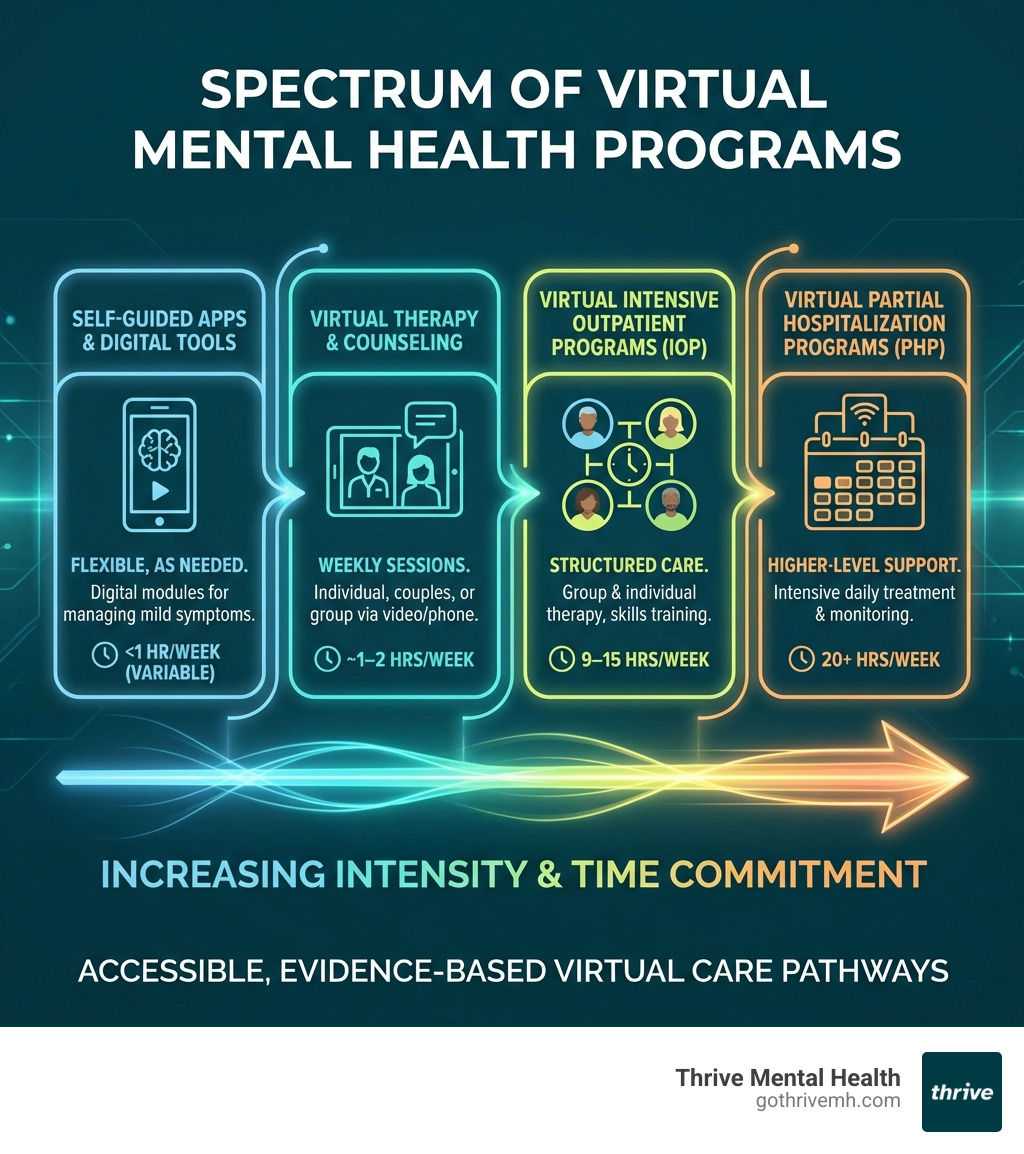
- Therapy & Counseling – Individual, couples, family, or group sessions via video or phone
- Psychiatry & Medication Management – Psychiatric evaluations, prescriptions, and ongoing monitoring
- Intensive Outpatient Programs (IOP) – 9–15 hours/week of structured group and individual therapy
- Partial Hospitalization Programs (PHP) – 20+ hours/week for higher-level support
- Self-Guided Digital Tools – Apps and online modules for managing mild symptoms
The mental health crisis is real. Thousands of people wait weeks or months for an appointment, only to find that weekly therapy isn’t enough. Traditional care often means rigid schedules, long commutes, and high costs. Virtual mental health programs remove those barriers—offering faster access, flexible scheduling, and evidence-based treatment that fits your life.
Research shows that virtual care works. Clients using online therapy platforms often see a 25% clinical improvement in just three sessions, and the majority find virtual therapy to be just as effective as in-person. Programs like myCompass and moodgym have proven results for reducing anxiety, depression, and stress. Virtual IOP and PHP programs deliver the same structured, intensive care as in-person treatment—but with the convenience of logging in from home.
I’m Nate Raine, CEO of Thrive Mental Health, and I’ve spent over a decade building technology-enabled healthcare solutions that bridge the gap between clinical outcomes and real-world access. At Thrive, we’ve integrated virtual mental health programs into our IOP and PHP offerings across Florida—helping thousands of people get the care they need without the wait.
What Types of Virtual Mental Health Programs Are There? [Not Just Weekly Therapy]
When we talk about virtual mental health programs, we’re not just referring to a weekly video chat with a therapist. The landscape of online mental health support is vast and varied, designed to meet diverse needs and levels of care. We offer a full spectrum of virtual options to ensure you get the right support, right when you need it.
Levels of Care:
Virtual mental health care spans a continuum, from self-help tools to highly structured, intensive programs:
- General therapy & counseling: This is what most people picture when they think of online mental health. It involves regular sessions with a licensed therapist to discuss personal challenges, develop coping strategies, and work towards personal growth.
- Psychiatry & medication management: For those who may benefit from medication, virtual psychiatry offers evaluations, prescriptions (for non-controlled substances), and ongoing monitoring by a qualified psychiatric provider.
- Intensive Outpatient Programs (IOP): These programs offer a higher level of structured support than traditional therapy. Virtual IOP typically involves 9-15 hours per week of group and individual therapy sessions.
- Partial Hospitalization Programs (PHP): Providing the highest level of virtual care, PHP programs are designed for individuals needing significant support, often 20 or more hours per week. They serve as a step-down from inpatient care or an alternative to hospitalization.
Conditions Treated:
Our virtual mental health programs are equipped to address a wide array of conditions, helping you find healing and stability from the comfort of your home. These include, but are not limited to:
- Depression
- Anxiety disorders (general anxiety, social anxiety, panic disorder, health anxiety, OCD)
- Post-Traumatic Stress Disorder (PTSD)
- Addiction and substance use disorders
- Bipolar disorder
- Trauma
- Grief and loss
- Family conflict
- Insomnia
- Perinatal mental health
- Chronic pain
General Therapy & Counseling
General therapy and counseling form the foundation of many virtual mental health programs. This can be a lifeline for individuals, couples, and families seeking support for a variety of concerns.
- Individual therapy: One-on-one sessions with a therapist to explore personal challenges, develop coping mechanisms, and foster self-understanding.
- Couples therapy: Sessions focused on improving communication, resolving conflicts, and strengthening relationships.
- Family therapy: Designed to address dynamics and issues affecting the entire family unit, helping members understand and support each other better.
- Grief and loss support: Specialized counseling to help individuals process bereavement and steer the complex emotions associated with loss.
- Evidence-based approaches (CBT, DBT, etc.): Our therapists use proven modalities like Cognitive Behavioral Therapy (CBT) to help you identify and change unhelpful thought patterns and behaviors, and Dialectical Behavior Therapy (DBT) for emotional regulation and interpersonal effectiveness. Programs like myCompass and moodgym, which are based on CBT and Interpersonal Therapy, have shown significant reductions in mild-to-moderate symptoms of anxiety, depression, and stress.
Psychiatry & Medication Management
For individuals whose mental health challenges may benefit from medication, virtual psychiatry offers accessible and integrated care.
- Psychiatric evaluation: A comprehensive assessment by a psychiatric provider to diagnose conditions and determine if medication is an appropriate part of your treatment plan.
- Medication prescription (non-controlled substances): Our qualified psychiatric providers can prescribe and manage medications, often integrating this with your ongoing therapy for a holistic approach. It’s important to note that prescriptions for certain controlled substances like opioids or benzodiazepines may require in-person visits or are not typically handled by virtual urgent care clinics.
- Ongoing monitoring: Regular check-ins to monitor medication effectiveness, manage side effects, and adjust dosages as needed. This ensures your treatment remains optimized for your well-being.
- Integrated with therapy for best results: We believe in a collaborative approach. Our psychiatric services work hand-in-hand with our therapy programs to provide comprehensive care that addresses both the psychological and biological aspects of mental health.
Structured & Intensive Virtual Programs (IOP/PHP)
Sometimes, weekly therapy isn’t enough to manage significant mental health challenges, but inpatient care isn’t necessary. This is where our structured and intensive virtual mental health programs—IOP and PHP—come in. These programs offer the robust support you need, with the flexibility of virtual access.
- Virtual IOP: 9–15 hours/week, group and individual sessions: Our Virtual Intensive Outpatient Program provides a structured treatment experience that typically involves 9-15 hours of therapy per week. This includes a mix of group therapy sessions, individual counseling, and family support, all delivered through a secure virtual platform. It’s ideal for those needing more intensive treatment and structure than individual or group therapy alone.
- Virtual PHP: 20+ hours/week, higher support: For those requiring an even higher level of care, our Virtual Partial Hospitalization Program offers 20 or more hours of therapeutic engagement per week. PHP is designed to provide comprehensive, multidisciplinary treatment, often serving as a bridge from inpatient care or an alternative to prevent hospitalization.
- Skill-building, relapse prevention, and real-time support: Both our IOP and PHP programs focus heavily on skill-building. You’ll learn practical strategies for emotional regulation, distress tolerance, interpersonal effectiveness, and mindfulness. A significant component is also dedicated to relapse prevention, equipping you with the tools to maintain your progress long-term.
- Who needs intensive care? Moderate to severe symptoms, relapse risk, or step-down from inpatient: These intensive programs are for individuals experiencing moderate to severe symptoms of depression, anxiety, trauma, addiction, or other mental health conditions. They are also highly beneficial for those at risk of relapse or as a structured step-down from inpatient treatment, providing a supportive environment for continued recovery.
Does Virtual Mental Health Care Actually Work? [Pros, Cons, and Real Results]
When considering any mental health treatment, effectiveness is paramount. We understand you want to know if virtual mental health programs truly deliver. The answer, backed by extensive research and our own clinical outcomes, is a resounding yes.

What the Data Shows:
The evidence overwhelmingly supports the efficacy of virtual mental health care:
- Up to 25% faster clinical improvement vs. waitlists: Studies show that clients engaging in online therapy platforms experience significant clinical improvement, with some platforms reporting a 25% clinical improvement in as few as three sessions. This is a crucial advantage, especially when traditional care involves long wait times.
- 80%+ patient satisfaction: The majority of clients find virtual therapy to be just as effective as in-person treatment, with high satisfaction rates often exceeding 80%.
- High engagement, lower dropout rates: The convenience and flexibility of virtual care often lead to higher engagement and lower dropout rates compared to traditional in-person settings. Programs like myCompass have been shown to significantly reduce mild-to-moderate symptoms of anxiety, depression, and stress, and improve work and social functioning in seven weeks. Similarly, moodgym has proven effective at reducing depression and anxiety symptoms.
The Benefits: Why More People Choose Virtual Care
The shift to virtual mental health isn’t just about convenience; it’s about breaking down barriers that have historically prevented people from getting the help they need.
- No travel—get help anywhere in Florida: One of the most significant advantages is the elimination of commute times and geographical limitations. Whether you’re in Miami, Orlando, Tampa, Jacksonville, or anywhere else in the Sunshine State, you can access our high-quality virtual mental health programs from the comfort of your home.
- Flexible scheduling, including evenings: Our virtual mental health programs are designed to fit into your busy life. We offer flexible scheduling, including evening options, so you don’t have to choose between work, family, and your mental health.
- Lower cost than in-person: While costs vary, virtual services can often be more affordable than traditional in-person therapy due to reduced overhead for providers and less time commitment (and travel costs) for clients.
- Private, stigma-free: Receiving care from your own private space can reduce the perceived stigma associated with seeking mental health support. It offers a discreet way to engage in treatment without public waiting rooms.
- Covered by major insurance (Cigna, Optum, Florida Blue, more): We work with major insurance providers like Cigna, Optum, and Florida Blue, making our virtual programs accessible and affordable for many.
The Limitations: What Virtual Programs Can’t Do
While virtual mental health programs offer incredible benefits, it’s crucial to understand their limitations. We believe in transparency and ensuring you get the most appropriate care for your situation.
[CALLOUT BOX] If you’re in crisis, call/text 988 right now. You are not alone.
- Not for emergencies or active self-harm: Virtual care is not designed for immediate mental health emergencies. If you are in crisis, experiencing active self-harm, or your safety is at risk, please call 988, 911, or go to your nearest emergency department. These situations require immediate, in-person intervention.
- Requires stable internet and private space: To ensure effective and confidential sessions, a reliable internet connection and a private, quiet space are essential. A connection speed above 10 mbps is recommended for smooth video calls.
- Some complex diagnoses may need in-person assessment: While virtual platforms can treat a wide range of conditions, some highly complex or severe diagnoses may benefit from, or even require, an initial in-person assessment to ensure the most accurate diagnosis and comprehensive treatment plan.
[TABLE] Virtual Therapy vs. In-Person Therapy
| Feature | Virtual Therapy | In-Person Therapy |
|---|---|---|
| Accessibility | Anywhere in Florida with internet, flexible hours, often evening options | Location-based, fixed office hours, travel required |
| Cost | Often lower, covered by major insurance (Cigna, Optum, Florida Blue, and more) | Higher, insurance coverage can vary |
| Privacy | Home-based, discreet, secure platforms | Public setting (waiting rooms), less anonymity |
| Intensity | IOP/PHP available virtually, custom to needs | All levels of care, but scheduling can be less flexible |
| Communication | Video, phone, chat, messaging, digital tools | Face-to-face only, in a physical office |
Costs, Insurance, and Privacy: What You Need to Know Before Starting Virtual Mental Health Care
Understanding the practicalities of virtual mental health programs—especially costs, insurance, and privacy—is essential before you begin your journey. We strive to make this process as clear and straightforward as possible.

Financial Facts:
- Subscription or per-session rates: Depending on the program and provider, virtual mental health services may be offered as a weekly or monthly subscription, or on a per-session basis. Our intensive programs (IOP/PHP) typically involve a structured payment plan covered by insurance.
- Most major insurance accepted (Cigna, Optum, Florida Blue, more): We are in-network with a wide range of major insurance providers, including Cigna, Optum, Florida Blue, and many more. This significantly reduces out-of-pocket expenses for our clients.
- Out-of-pocket options and free resources available: For those without insurance, or whose plans don’t cover virtual care, out-of-pocket payment options are available. Additionally, there are many free online resources and self-help tools (like moodgym or myCompass for mild symptoms) that can provide initial support.
Will My Insurance Cover Virtual Mental Health Programs?
Navigating insurance can be tricky, but we’re here to help. The good news is that most major insurance plans now recognize the value and effectiveness of virtual mental health programs.
- In-network with Cigna, Optum, Florida Blue, and more: We are proud to be in-network with many leading insurance carriers. This means your virtual IOP or PHP with Thrive is likely covered, similar to how an in-person program would be.
- Coverage in Florida: Our programs are specifically designed to meet the needs of Florida residents, ensuring that your insurance coverage applies to our services in your area.
- Check your benefits: Start benefits check We make it easy to understand your coverage. You can verify your insurance benefits in just two minutes, with no obligation. This quick check will give you a clear picture of what your plan covers.
Is My Data Safe? HIPAA, Encryption, and Your Rights
Your privacy and data security are paramount. We understand the sensitive nature of mental health information and employ robust measures to protect it.
- HIPAA-compliant platforms: All our virtual mental health programs operate on platforms that are fully compliant with the Health Insurance Portability and Accountability Act (HIPAA) and other relevant data privacy regulations like PIPEDA and FIPPA where applicable. This ensures strict standards for protecting your health information.
- Encrypted video and chat: Your virtual sessions, whether video, audio, or chat, are conducted over secure, encrypted networks. This means your conversations are confidential and protected from unauthorized access. For example, some platforms use encrypted links directly between you and your provider, and sessions are not recorded or stored on servers.
- Your privacy is protected—always: We store your personal information on dedicated, encrypted servers with protected networks, often SOC 2 certified, and your health records are kept private and secure. We also empower you with rights regarding your medical records and how they are shared. You can generally access your records and, in some cases, opt out of sharing with your primary care provider if you wish.
How to Start a Virtual Mental Health Program Today [3 Simple Steps]
Ready to take control of your mental well-being? Starting a virtual mental health program with us is designed to be straightforward and supportive. We’re here to guide you every step of the way.
- Learn more about Thrive’s Virtual IOP
- Explore PHP options
- See all Thrive services
Step 1: Assess Your Needs—Therapy, Psychiatry, or IOP?
The first step is understanding what level of support is right for you. This isn’t about being “bad enough”; it’s about finding the care that will be most effective.
- Self-assess symptoms: Reflect on your current mental health. Are you experiencing persistent sadness, overwhelming anxiety, difficulty functioning, or struggling with addiction? Consider the intensity and duration of your symptoms.
- Decide on support level: therapy, psychiatry, or intensive care:
- General therapy/counseling is great for processing emotions, developing coping skills, and addressing life stressors.
- Psychiatry is for when medication might be beneficial, alongside or instead of therapy.
- Intensive Outpatient Programs (IOP) or Partial Hospitalization Programs (PHP) are for those needing more structured, comprehensive support than weekly therapy can offer, often due to moderate to severe symptoms, a risk of relapse, or as a step-down from inpatient care.
Step 2: Get Matched with the Right Provider
Finding the right therapeutic fit is crucial for successful treatment. We take the guesswork out of the search.
- Matching questionnaire: Many virtual mental health programs, including ours, use comprehensive questionnaires to understand your specific needs, preferences, cultural background, and therapeutic goals. This helps us connect you with a therapist or psychiatric provider who specializes in your areas of concern.
- Choose based on specialty, experience, and fit: You’ll be matched with a qualified professional whose expertise aligns with your needs. This personalized approach ensures you’re working with someone who truly understands your challenges and can guide you effectively.
Step 3: Your First Appointment—What to Expect
Your initial virtual appointment should be a comfortable and positive experience.
- Easy online registration: Once matched, you’ll complete a quick and secure online registration process. We’ll provide all the necessary links and information.
- Tech setup help: We’ll ensure you have the technological requirements in place, including a stable internet connection and a device with video/microphone capabilities. If you need any assistance with setup, our support team is ready to help.
- Private, judgment-free first session: Find a quiet, private space where you feel comfortable. Your first session is an opportunity to get to know your provider, discuss your concerns, and begin outlining your treatment plan in a completely confidential and judgment-free environment.
Frequently Asked Questions about Virtual Mental Health Programs
Is virtual therapy as effective as in-person therapy?
Yes. For most conditions, virtual therapy is just as effective as in-person care—especially for anxiety, depression, and trauma. Research indicates significant clinical improvements, and the majority of clients report similar effectiveness compared to traditional therapy.
Can I get medication through a virtual mental health program?
Yes, if you see a Thrive psychiatrist or psychiatric nurse practitioner. Our qualified providers can conduct evaluations, prescribe non-controlled medications, and offer ongoing monitoring. Controlled substances may require in-person visits or are not typically handled by virtual clinics.
What if I’m in crisis or need immediate help?
Virtual programs are not for emergencies. If you are in crisis, experiencing active self-harm, or your safety is at risk, call or text 988 right now, call 911, or go to the nearest emergency room.
Does insurance cover virtual IOP or PHP in Florida?
Yes, most major plans (Cigna, Optum, Florida Blue, and more) cover Thrive’s virtual IOP/PHP for Florida residents. We recommend verifying your specific benefits for clarity.
How do I know if virtual care is right for me?
If you’re seeking flexible, private, and effective support, and you have a stable internet connection and a private space, virtual care is a strong option. If you have moderate to severe symptoms, or need more than weekly therapy, our virtual IOP and PHP programs could be a life-changing solution. Schedule a consult to discuss your needs and find out.
Conclusion: Don’t Wait—Get Real Help, Fast, with Virtual Mental Health Programs
The world of mental health support has evolved, and virtual mental health programs are leading the way in making effective, evidence-based treatment accessible to more people than ever before. No more waiting lists, no more daunting commutes, and no more stigma standing between you and your well-being. We’ve seen how these programs break down barriers, offering flexible, private, and powerful paths to healing.
At Thrive Mental Health, we are committed to delivering high-quality, expert-led virtual and hybrid IOP/PHP programs, complete with evening options, designed for people who need more than once-a-week therapy but less than inpatient care. We proudly serve clients across Florida, and our programs are covered by major insurance providers like Cigna, Optum, Florida Blue, and more.
Ready for support? Thrive offers virtual and hybrid IOP/PHP programs with evening options. Verify your insurance in 2 minutes (no obligation) → Start benefits check or call 561-203-6085. If you’re in crisis, call/text 988.
Related Reading:
How Virtual IOPs Cut Recovery Time by 50%—What the Data Shows