

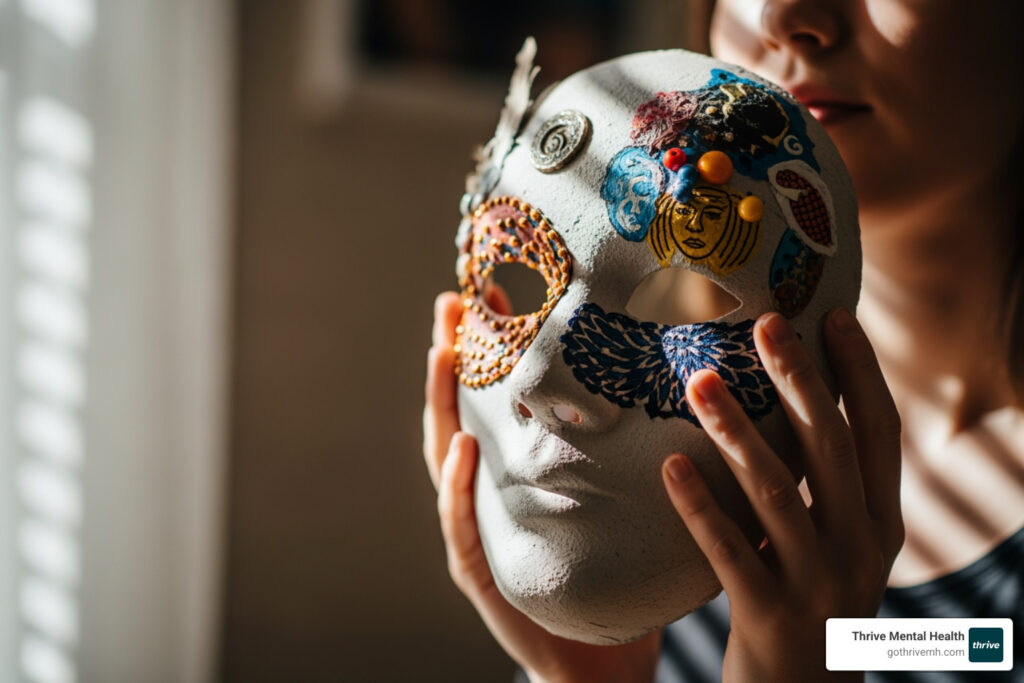
Art Therapy Mask Making: Turn Emotional Chaos into Clarity You Can See
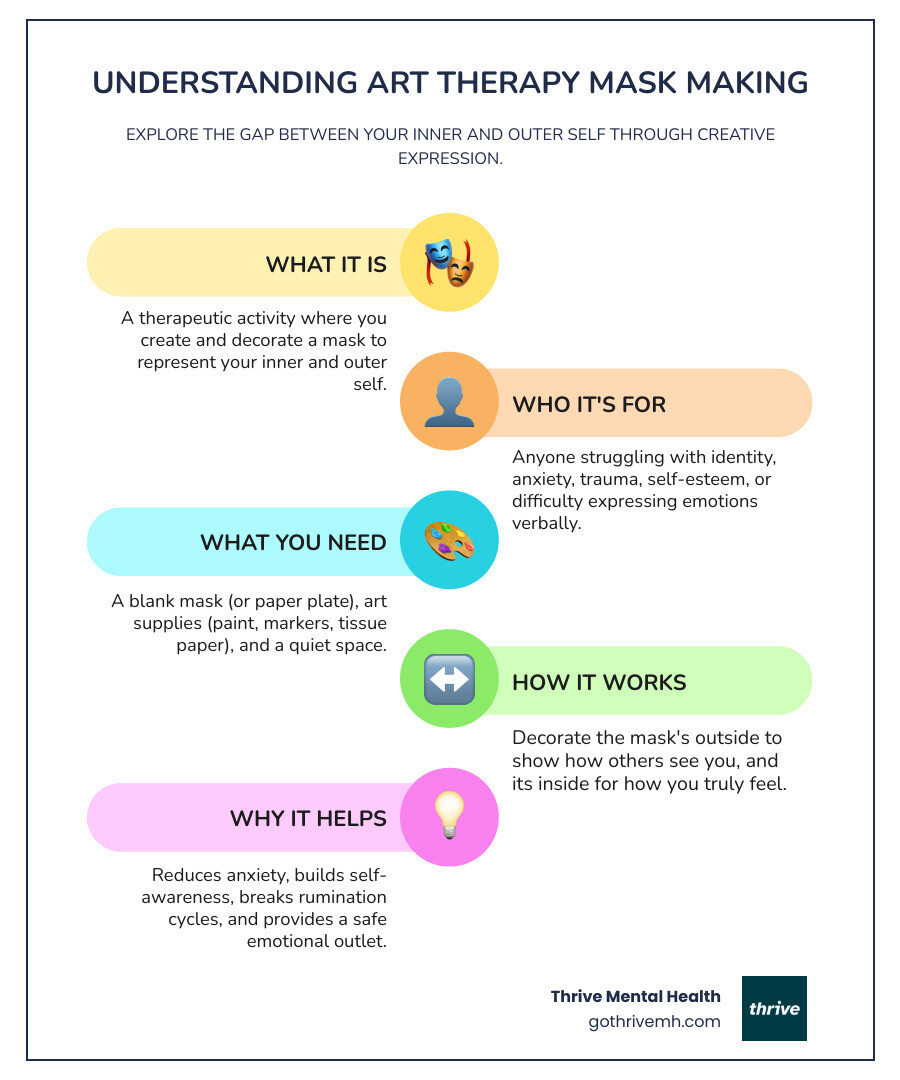
Art therapy mask making is a simple, high-impact way to get unstuck when talking isn’t working. You decorate a physical mask to show the difference between who you are on the inside and who you act like on the outside, then use that contrast to actually change how you cope, relate, and heal.
If you’re burned out, anxious, or carrying trauma but can’t find the right words in therapy, this gives you a faster, safer way in.
Quick Start: What You Get from Art Therapy Mask Making
| What It Is | A therapeutic activity where you create and decorate a mask to represent your inner and outer self |
| Who It’s For | People battling anxiety, trauma, identity struggles, shame, or who freeze up in talk therapy |
| What You Need | A blank mask (or paper plate), basic art supplies, and a quiet space |
| What You Do | Decorate the outside as the “you” the world sees; decorate the inside as how you really feel |
| What You Gain | Faster emotional insight, less rumination, lower anxiety, and a safe way to express what feels “unspeakable” |
Every day, you choose a version of yourself to put on: the competent coworker, the chill friend, the stable partner. Meanwhile, the real story, panic, numbness, anger, grief, stays buried.
Art therapy mask making forces those two worlds to meet.
In one inpatient program, a teenage boy, survivor of severe physical and sexual abuse, created a life-size “Alien” mask based on his favorite book. That mask became the bridge between silence and finally talking about what happened. He could point, describe, and externalize his pain without having to look anyone in the eye. That’s the power of this work.
If weekly talk therapy alone hasn’t been enough, mask making can speed up breakthroughs by giving your brain a different route to healing, especially when integrated into structured care like virtual IOP or PHP programs.
As Nate Raine, CEO of Thrive Mental Health, I’ve spent over a decade building evidence-based programs that actually move the needle for clients. In our Virtual IOP programs, we use tools like art therapy mask making alongside CBT, DBT, and psychiatry so driven professionals and young adults can stabilize faster without putting life completely on hold.
Art therapy mask making vocab to learn:
- What are some art therapy project ideas for group therapy settings?
- art therapy group activities
- art therapy interventions
In short: art therapy mask making gives you a direct, visual way to see where you’re hiding, where you’re hurting, and where you’re ready to grow, so you and your treatment team can actually do something about it.
Why Masks? The Psychology Behind This Powerful Healing Tool
Masks are far more than just decorative objects; they are ancient symbols deeply woven into human history and culture. For thousands of years, people have used masks in ceremonies, rituals, performances, and even for disguise. From the elaborate ceremonial masks of indigenous cultures to the theatrical masks of ancient Greece, they’ve always served as a means to explore identity, express emotions, and connect with something beyond the everyday self. This rich historical and cultural significance makes them incredibly potent tools in a therapeutic context.
In psychology, particularly within Carl Jung’s analytical framework, the concept of the “mask” takes on profound meaning. Jung introduced the idea of the persona, derived from the Latin word for “mask,” which represents the social face we present to the world, the carefully constructed image we want others to see. But just as there’s a front-facing mask, there’s also the shadow self, encompassing the parts of us we hide, repress, or deem unacceptable. This can include forgotten creativity, hidden fears, or even untapped potential. Art therapy mask making provides a unique opportunity to bring these hidden aspects to light.
The beauty of this process is its ability to free us from the mental and emotional clutter of self-judgment. When we engage in creative expression, especially with something as symbolic as a mask, we can bypass our usual defenses and allow our imagination to lead the way. As Harvard Medical School points out, using one’s imagination to create art can help us see our problems from a different perspective, contributing significantly to the healing process. This act of creation becomes a powerful and tension-releasing avenue for self-exploration and emotional expression, helping us assess whether our perceptions are accurate or truly serving us well.
If you’re curious about the broader applications of creative healing, we encourage you to explore the healing power of art therapy and how it can transform your mental well-being.
The Psychology of Art Therapy Mask Making
So, how exactly does putting glitter and paint on a molded face help us confront our deepest feelings? It all comes down to the unique psychological space that art therapy mask making creates. We often struggle to articulate complex emotions or aspects of our identity verbally. A mask offers a safe, symbolic container for these feelings.
This activity is fundamentally about exploring who you are, the parts you’re trying to show and the parts you’re trying to hide. By decorating the outside of a mask to represent how you believe others see you and the inside to reflect your true inner self, you create a tangible representation of this inner-outer dichotomy. This process helps us build self-awareness, allowing us to identify what parts of ourselves we show to others and what we keep private. Students, for instance, often begin to question what keeps them from showing their inner self, who they feel safe sharing it with, and how their outer self changes in different situations. This introspection can reveal whether one feels more authentic or anxious expressing one self over the other.
For individuals struggling with issues like self-esteem, peer pressure, identity, shame, or even trauma, the mask becomes a powerful, non-threatening canvas. It allows for the exploration of personality, the representation of metaphors in one’s life, and a safe way to uncover mental health challenges that might be too difficult to address directly with words. Expressive arts therapy, including mask making, has proven particularly useful for those looking to heal from past trauma, providing an alternative means to express deep-seated desires and emotions. For more on how art can aid in healing from difficult experiences, read about art therapy for trauma recovery.
The Proven Benefits of Creative Expression
The therapeutic benefits of engaging in creative activities like art therapy mask making are well-documented. It’s not just a pleasant pastime; it’s a legitimate pathway to improved mental health.
One of the most significant benefits is its ability to reduce anxiety and lower stress. A meta-study on art therapy’s effects on anxiety and depression found that it can help treat symptoms in the majority of patients, with four out of seven papers reporting significant post-treatment reduction. Furthermore, a study published in the Journal of Korean Medical Science demonstrated that mindfulness-based art therapy could significantly reduce feelings of depression and anxiety, and even physiological markers like blood pressure, in patients with Coronary Artery Disease (CAD).
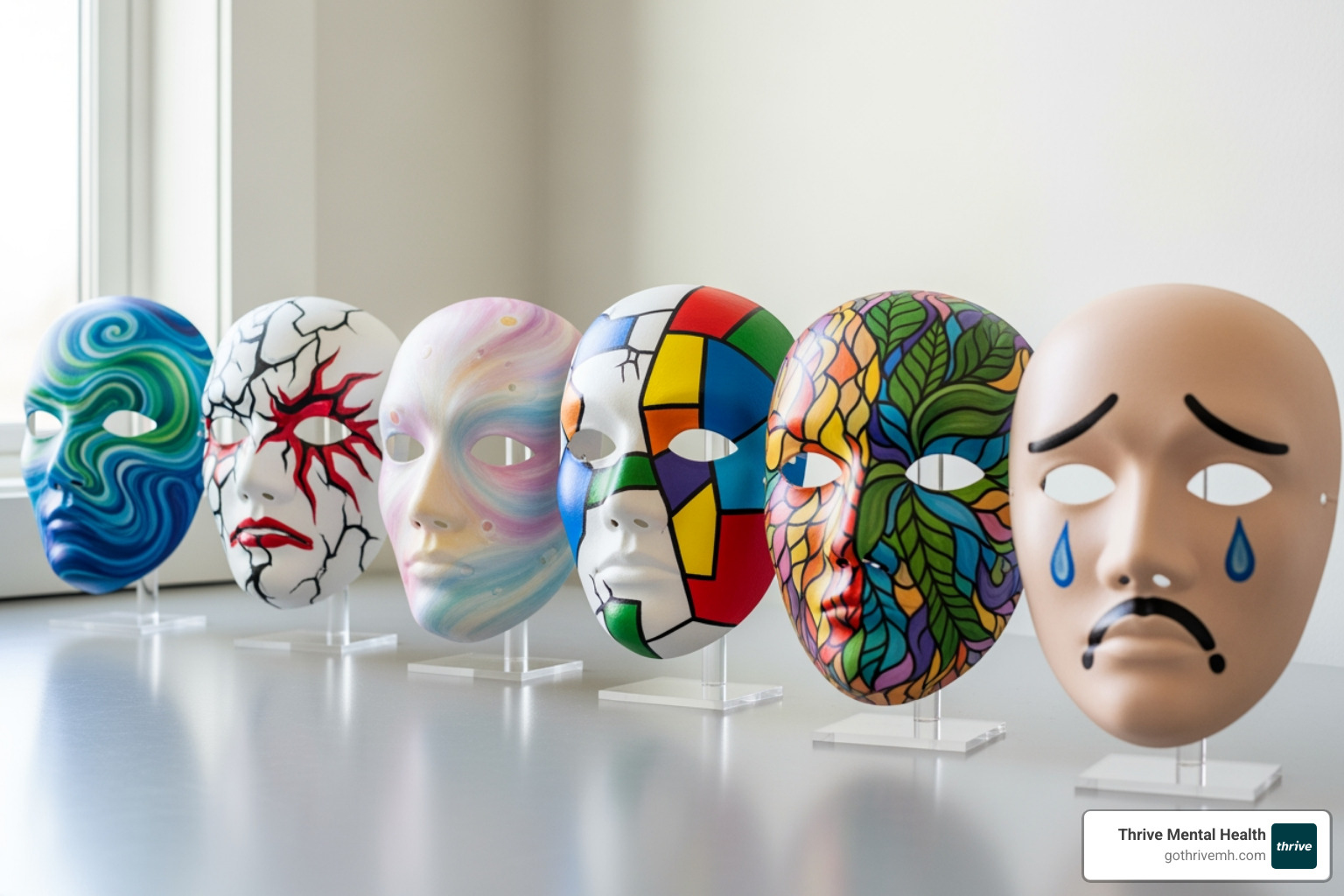
Art therapy offers an alternate mode of communication, which is invaluable for those who struggle with verbalizing their feelings. It can help center thoughts, breaking the often-debilitating cycle of rumination, that endless loop of negative thoughts. By engaging our senses and creativity, we can redirect our focus and gain perspective. This process can provide dialogue direction, ease nervous clients, and have an overall calming effect. Even simple art contemplation, like looking at photographs, has been shown to be beneficial for emotional health.
The American Journal of Public Health highlights that engagement with artistic activities, whether as a creator or an observer, can improve moods, emotions, and other psychological states. This helps us see that the benefits of art therapy extend beyond just the act of creation; they permeate our overall well-being. For deeper insights into how art therapy specifically addresses mood disorders, check out this research on evidence for art therapy’s effect on depression.
Your Mask-Making Toolkit: Get These 7 Simple Items to Start
Starting your art therapy mask making journey doesn’t require a studio full of expensive supplies. The beauty of this modality is its accessibility. You can begin with just a few basic items, many of which you might already have around your home. The focus is on the process and the self-expression, not on creating a museum-worthy masterpiece.
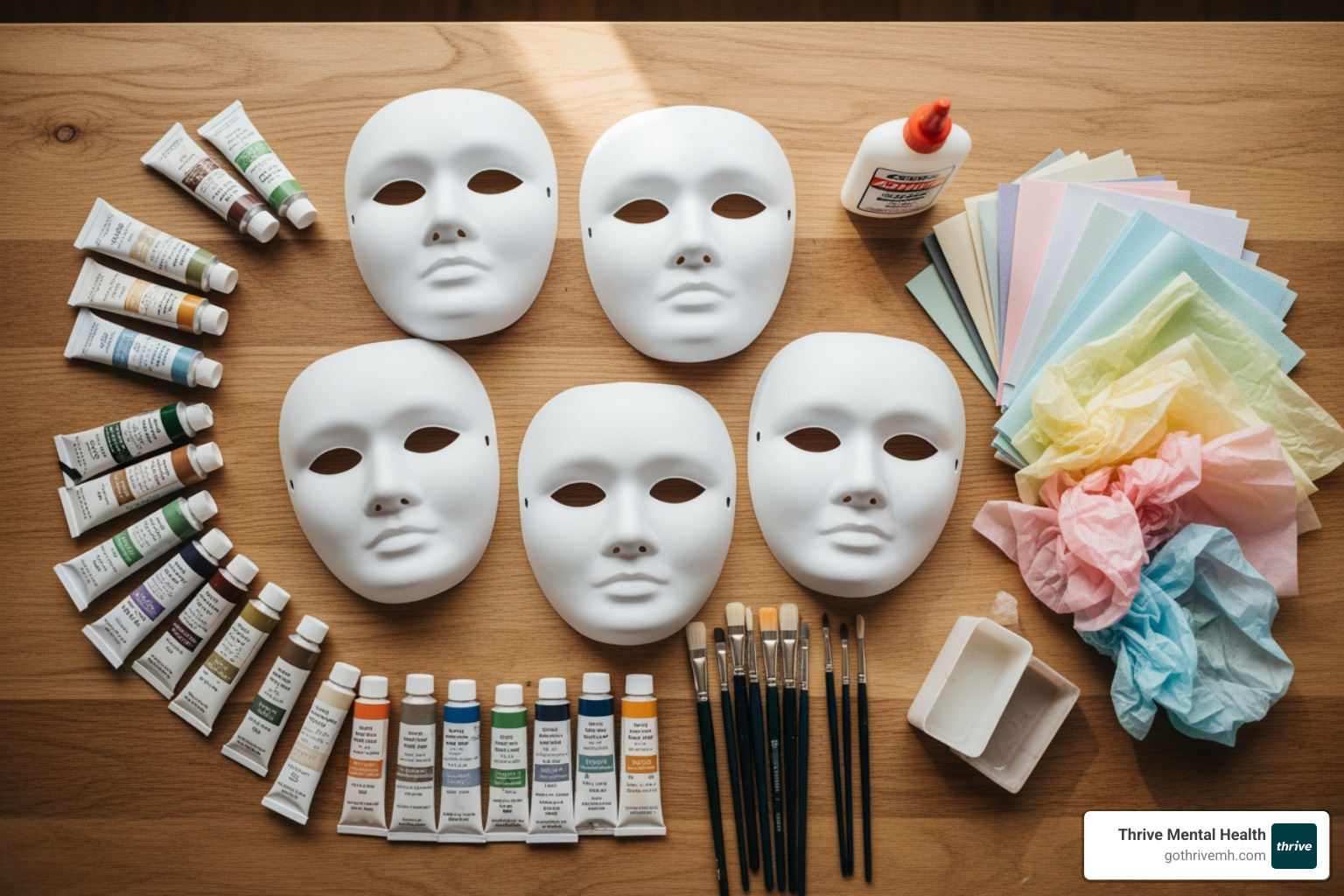
Essential Materials for Art Therapy Mask Making
To begin, you’ll need a base for your mask. We recommend starting with something simple and readily available.
- Blank Mask Forms: These are often made of plastic or paper mache and can be found at craft stores or online. They provide a sturdy, ready-to-decorate base.
- Plaster Strips: For a more customized fit, plaster cloth rolls (like those used for casts) can create a mask directly from your face (with help from a partner!). Just remember to apply Vaseline generously beforehand!
- Paper Plates or Bags: Don’t have a blank mask? No problem! A simple paper plate or even a paper bag can be cut and shaped into a mask form. This is especially great for children or quick exercises.
- Adhesives: Mod Podge is a fantastic all-in-one glue, sealer, and finish for lighter materials like tissue paper. For heavier embellishments, a strong craft glue or even a hot glue gun (with adult supervision) will do the trick.
- Scissors: Essential for cutting paper, fabric, yarn, and other decorative elements to fit your mask.
Decorative Supplies for Self-Expression
Once you have your mask base, the real fun begins with decoration. This is where your inner world gets to shine! Gather a variety of materials that appeal to you and allow for diverse textures and colors.
- Paints: Acrylic paints are versatile, dry quickly, and come in a wide range of colors. You can use brushes, sponges, or even your fingers to apply them.
- Markers & Colored Pencils: Great for adding fine details, words, symbols, or intricate patterns.
- Tissue Paper: Tears easily and can be layered with Mod Podge to create vibrant, translucent effects or interesting textures.
- Feathers: Add a whimsical, ethereal, or powerful touch.
- Sequins & Glitter: For sparkle and shine, representing joy, confidence, or even a desire to be seen.
- Magazine Cutouts: Words, images, and colors from magazines can be collaged onto your mask to convey complex ideas or emotions.
- Yarn & Fabric Scraps: Offer texture, softness, or a sense of being woven together.
- Found Objects: Small buttons, beads, natural elements like leaves or twigs, or even trinkets that hold personal meaning can be incorporated.
- Any Personal Items: There are no rules here! If an item holds significance for you, consider how it might be integrated into your mask to deepen its meaning.
The goal isn’t perfection, but authentic expression. Accept the process, and let your creativity flow!
A Step-by-Step Guide to Art Therapy Mask Making
Creating an art therapy mask is a deeply personal and often profound experience. While the physical steps are straightforward, the therapeutic intention behind each stage is what truly opens up its power. We’ll guide you through the process, focusing on how each action contributes to self-findy and emotional healing.
Step 1: Setting Your Intention
Before you even touch a paintbrush, take a moment to prepare your mind and space. Find a quiet spot where you won’t be disturbed. This is your sanctuary for self-exploration. We encourage you to let your imagination flow freely, without judgment or censorship. There is no “right” or “wrong” way to create your mask; the value lies in the process, not the artistic outcome.
You might start with a brief reflection exercise. Consider questions like:
- What feelings are present for me right now?
- What aspects of myself do I want to explore?
- What am I hoping to gain from this experience?
You could even write down some thoughts in response to prompts like, “I want…”, “I need…”, “I fear…”, “I wish…”, “I hope…”, “I expect…”, “I am…”, “I love…”. Don’t overthink it; just let the words come. This initial introspection helps to set the stage for a meaningful creative journey. The journey is the destination in therapeutic art activities.
Step 2: Creating the “Outer Self” Mask
This is the side of the mask that will represent the “face you show the world.” It’s the persona you present in daily life, at work, with friends, in public. This outer mask is often influenced by societal expectations, what you believe others want to see, or the image you’ve carefully cultivated.
As you decorate the front of your mask, think about:
 The Ultimate Guide to Art Therapy for Teenagers: Benefits ExplainedMental Health
- How do others perceive me?
- What qualities do I want to project?
- What emotions do I typically display outwardly?
- What “mask” do I wear to steer different situations?
Use colors, symbols, words, and textures to convey these aspects. Bright colors might represent a cheerful disposition, while a smooth, unblemished surface could symbolize a desire for perfection. A strong, bold design might show confidence, while intricate patterns could hint at a complex public persona. There’s no need to make it “pretty” if that doesn’t align with your outer self; authenticity is key.
Step 3: Revealing the “Inner Self” Mask
Now, turn the mask over. This is where you’ll explore the parts of yourself you keep hidden, your true feelings, secret fears, unfulfilled hopes, and authentic desires. This “inner self” is often the one that comes out when you’re alone, with your closest confidantes, or in moments of vulnerability.
As you decorate the back or inside of your mask, consider:
- How do I truly see myself, beneath the surface?
- What emotions do I often suppress or keep private?
- What are my deepest fears, dreams, or vulnerabilities?
- What parts of myself do I protect from the outside world?
This side of the mask often looks very different from the outer side, and that’s perfectly normal. It might be darker, more complex, or even more vibrant than the exterior. Use materials and colors that feel honest to your inner experience. You might use jagged lines for anger, soft textures for tenderness, or hidden words for unspoken truths. This is a space for radical honesty and self-acceptance.
From Art to Answers: How to Read Your Mask and Use It to Heal Faster
The moment your art therapy mask is finished, the real work starts. This isn’t “craft time”, it’s data. Your mask shows, in one glance, what usually takes weeks to tease out in talk therapy.
Questions That Turn Your Mask into Breakthroughs
Sit with both sides of your mask. Don’t rush. Then walk through questions like these (alone, or better, with a therapist or group):
- What does your outer mask say about the version of you other people think they know?
- What message do you think coworkers, friends, or family get from your outer mask, and what’s missing?
- What parts of you show up only on the inner mask, fears, anger, grief, hope, that almost no one sees?
- Which side do you actually like more? What does that say about how safe you feel being yourself?
- Where is your outer mask “lying” (or leaving things out) to stay acceptable, calm, or “fine”?
- What on your inner mask leaks out anyway, snappiness, shutdown, perfectionism, no matter how hard you try to hide it?
- What would realistically happen if you dropped your outer mask for a day and showed more of your inner world? What would you gain? What might you risk?
- If you never let your inner mask show, what do you lose long term, connection, energy, mental health?
- What would an “ideal” mask look like, outside and inside, if you felt safe, supported, and stable?
These answers guide treatment goals: where you need boundaries, where you need skills (like emotion regulation), and where shame or trauma is still running the show.
How to Aim Mask Making at Specific Problems
Art therapy mask making can be tuned to different issues instead of staying vague or “artsy.”
| Therapeutic Goal | How to Focus the Mask Exercise | How to Use It Afterward |
|---|---|---|
| Self-Esteem | Outer mask shows self-criticism or “not enough”; inner mask highlights strengths, values, and quiet wins. | Turn inner-mask strengths into a daily list or phone note; practice sharing 1-2 of them with safe people. |
| Grief & Loss | Mask represents the person or life you lost. Outer mask = “I’m okay”; inner mask = pain, love, and questions. | Use it in sessions as a grounding object during grief work or rituals to honor anniversaries. |
| Teen Identity & Peer Pressure | Outer mask = who they think they “have to” be; inner mask = actual interests, fears, identity. | In group, compare masks to show teens they’re not the only ones hiding; build new, healthier peer norms. |
| Trauma Recovery | Mask holds pieces of the story or emotions that feel too intense to speak. | Only with a trained therapist, use the mask to pace trauma work without overwhelming the nervous system. |
When You Should Not Do This Alone
Because art therapy mask making goes straight to the deep stuff, it can bring up more than you expect, especially if you have a history of trauma, self-harm, or intense mood swings.
Work with a licensed art therapist or clinical team if:
- You’ve survived physical, sexual, or emotional abuse.
- You’re having thoughts of self-harm or suicide.
- You dissociate, “lose time,” or feel unreal when you touch painful memories.
- Your symptoms are disrupting work, school, or relationships.
At Thrive Mental Health, our clinicians integrate mask making into structured IOP programs for adults and young adults across Florida. We accept major insurances like Cigna, Optum, and Florida Blue, and our team can help you verify your insurance benefits before you commit to anything.
If you’re curious how art therapy fits into a full treatment plan, you can also explore our article on the healing power of art therapy, which breaks down when creative approaches move the needle, and when you need a higher level of care.
FAQs: Art Therapy Mask Making People Actually Ask
Is art therapy mask making just “arts and crafts”?
No. It’s a targeted therapeutic tool. The mask becomes a visual map of your anxiety, trauma, and defenses. Therapists use it to quickly see patterns that might take weeks to explain with words.
How fast can mask making help with anxiety?
Many people feel calmer during and right after the activity because it pulls them out of racing thoughts. The deeper payoff comes when you discuss the mask in therapy, often leading to faster “aha” moments about what’s really driving your anxiety.
Can I do art therapy mask making at home without a therapist?
Yes, for self-reflection, stress relief, or exploring identity. Keep it gentle, and stop if you feel overwhelmed. If you have trauma, self-harm urges, or intense emotions, do this within a structured setting like an IOP or PHP instead of solo.
Is art therapy covered by insurance?
Often, yes, when it’s part of a licensed mental health program like Thrive’s virtual IOP for Florida residents. We work with major plans including Cigna, Optum, and Florida Blue. You can verify your insurance in a couple of minutes.
How is art therapy mask making used in virtual programs?
In virtual IOP/PHP, you gather simple materials at home, follow live therapist guidance on camera, then share and process your mask with the group or individually. It works surprisingly well online and pairs powerfully with skills-based therapies and psychiatry.
Your Next Step: Turn Your Mask into a Plan for Real Change
Art therapy mask making isn’t about creating something pretty to hang on the wall. It’s about seeing, in brutal clarity, the gap between the person you’re performing as and the person who’s actually hurting, and then doing something about it.
Used inside a structured program, that insight can translate into:
- Faster breakthroughs when talk therapy has stalled.
- Clearer goals for treatment (what you’re hiding, what needs healing).
- Less anxiety and rumination, because your pain finally has a place to go.
If you’re tired of feeling like “therapy isn’t working” or you suspect you need more than a weekly session, it’s time to level up your care.
Ready for support in Florida? Thrive offers virtual IOP programs with evening options available statewide. Verify your insurance in 2 minutes (no obligation) → Start benefits check or call 561-203-6085. If you’re in crisis, call/text 988.

This article is for informational purposes only and is not a substitute for individualized clinical advice or insurance verification.