






Beyond “Homework”, Your Toolkit for Real Emotional Control
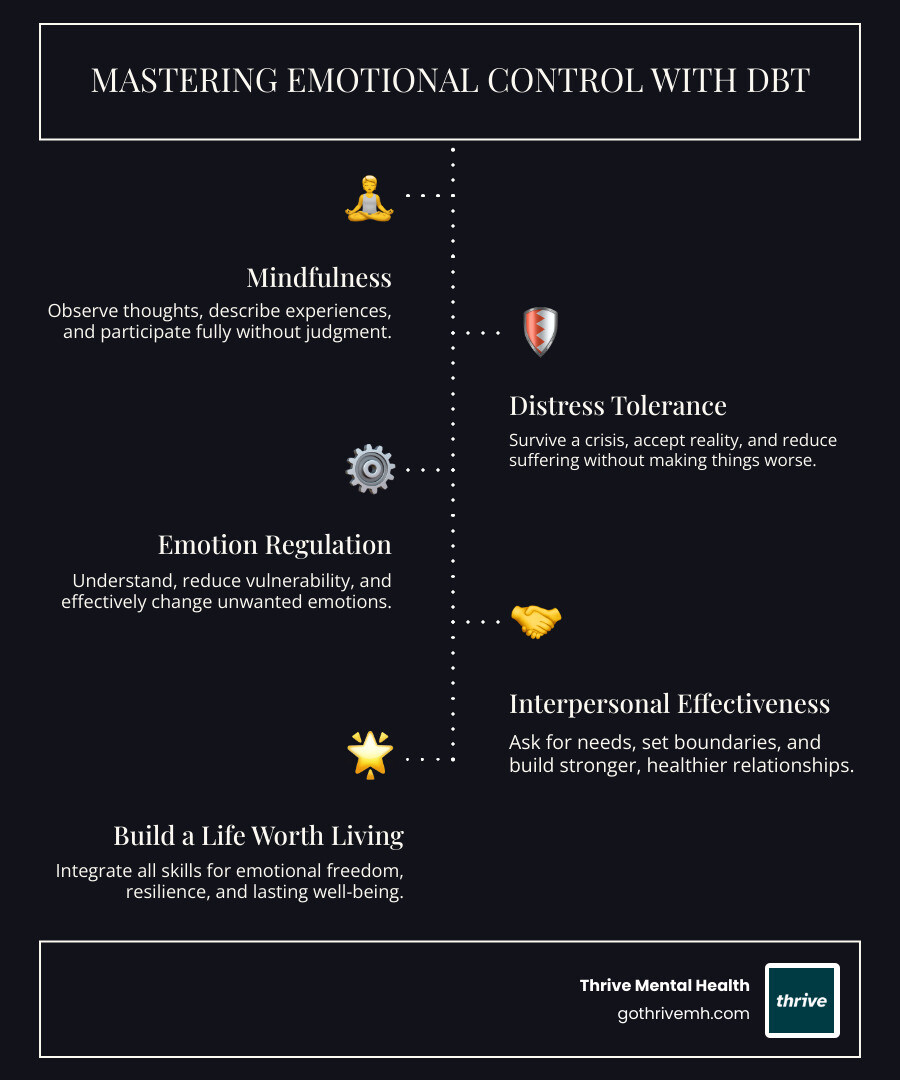
DBT worksheets are structured, easy-to-follow tools for practicing the core skills of Dialectical Behavior Therapy: mindfulness, distress tolerance, emotion regulation, and interpersonal effectiveness. They are not random paperwork or confusing clinical forms. They are clear, step-by-step guides that help you notice what you feel, choose how to respond, and build a life that actually feels worth living.
Instead of leaving therapy with vague ideas like “be more mindful” or “set better boundaries,” DBT worksheets walk you through exactly what to do:
- Track patterns, See what triggers emotional reactions with diary cards and chain analysis.
- Practice skills, Follow simple prompts for skills like STOPP, DEAR MAN, and Opposite Action.
- Build accountability, Track your progress and see what is improving over time.
- Reduce crisis behaviors, Use tools like Radical Acceptance to get through urges without making life worse.
- Improve relationships, Learn how to ask for what you need and set limits clearly and respectfully.
DBT is based on the biosocial theory: some people are born more emotionally sensitive, and when that sensitivity meets invalidating environments (like “you’re overreacting” or “just get over it”), intense emotions and impulsive behaviors can spiral. DBT adds dialectical principles on top of that: you can accept yourself fully and still work hard to change what is hurting you. Both can be true.
Worksheets are where that dialectic becomes real. They turn acceptance and change into concrete, repeatable actions. When you use them consistently, skills move from “things you talk about in therapy” to automatic responses you use during a fight with your partner, a stressful work meeting, or a lonely Friday night.
For driven professionals and young adults who need more structure than once-a-week therapy, DBT worksheets provide a practical roadmap to emotional control, especially when paired with higher level care like an Intensive Outpatient Program (IOP) or Partial Hospitalization Program (PHP).
I’m Nate Raine, CEO of Thrive Mental Health. Over the past decade, I’ve integrated DBT worksheets into our virtual IOP programs across Florida, helping thousands of clients consistently apply skills in real life and see measurable outcomes.
DBT worksheets further reading:
- how does dialectical behavioral therapy work
- dialectical behavior therapy components
- what does dialectical mean in dialectical behavior therapy
The 4 Core DBT Skills Your Worksheets Will Build
If you’re in crisis or struggling with thoughts of self-harm, call or text 988 now. You are not alone, and help is available 24/7.
DBT is a powerful, evidence-based approach proven to work for addiction, anxiety, depression, and trauma. At Thrive Mental Health, we integrate these skills into our virtual Intensive Outpatient (IOP) program, which is covered by many major insurance plans like Cigna, Optum, and Florida Blue. Our goal is to give you the tools to manage life’s challenges, with programs available across Florida.
DBT worksheets provide a structured way to learn and practice the four core skill modules, turning therapy insights into real-world habits. This is key for lasting change. For more on this, explore our complete guide to DBT treatments.
Mindfulness: How to Stay Grounded When Your Mind is Racing
Mindfulness is the foundation of DBT, teaching you to stay present without judgment. It helps you observe thoughts and feelings without getting swept away, allowing you to find your “Wise Mind”, the balance between emotion and reason.
DBT worksheets for mindfulness focus on:
- “What” skills: Observing, Describing, and Participating in the moment.
- “How” skills: Being Nonjudgmental, One-Mindful (focusing on one thing), and Effective (doing what works).
Practicing these skills helps you step back from overwhelming mental chatter. A States of Mind Handout is a great place to start.
Distress Tolerance: Survive a Crisis Without Making It Worse
Life is unpredictable. Distress tolerance skills help you cope with intense pain or urges when you can’t immediately change the situation. It’s about surviving a crisis without resorting to destructive behaviors.
Key distress tolerance skills in DBT worksheets include:
- Crisis Survival Skills: Use techniques like STOP and TIPP to rapidly calm your body and mind.
- Radical Acceptance: Acknowledge reality as it is, without judgment. Accepting what you can’t change reduces suffering and helps you move forward. It isn’t approval; it’s stopping the fight against reality.
- Self-soothing: Use your five senses to comfort yourself in tough moments.
For clients in our programs from Miami to Jacksonville, these worksheets offer concrete strategies to manage overwhelm and resist harmful impulses.
Emotion Regulation: Stop Letting Your Feelings Run the Show
Do your emotions feel like a runaway train? Emotion regulation skills help you understand, manage, and change unwanted emotional responses. This is vital for reducing emotional vulnerability and building a more balanced life.
DBT worksheets in this module guide you through:
- Understanding Emotions: Learn what your emotions do and identify common myths about them.
- Checking the Facts: Analyze if your emotional reaction fits the facts of a situation.
- Opposite Action: Act opposite to an unhelpful emotional urge. If anger makes you want to lash out, do something kind instead.
- PLEASE skills: Reduce your vulnerability to intense emotions by taking care of your body (managing Physical illness, Eating, Avoiding substances, Sleep, Exercise).
Clients in our programs, from Orlando to Tampa, use these worksheets to become the boss of their emotions.
Interpersonal Effectiveness: Ask for What You Need & Keep Your Self-Respect
Strong relationships are key to a life worth living. These skills teach you how to ask for what you need, say no, and resolve conflict while maintaining self-respect.
DBT worksheets provide frameworks for:
- DEAR MAN: A step-by-step guide for asking for what you want (Describe, Express, Assert, Reinforce, Mindful, Appear Confident, Negotiate).
- GIVE: Skills for keeping relationships healthy (Gentle, Interested, Validate, Easy Manner).
- FAST: Skills for maintaining self-respect (Fair, no over-Apologizing, Stick to values, Truthful).
Practicing these skills helps professionals and young adults in our programs build healthier connections and assert themselves confidently, from West Palm Beach to St. Petersburg.
Free Downloadable DBT Worksheets [Get Started Now]
DBT worksheets are your practice ground for applying therapeutic concepts to real life. They build accountability, track progress, and make DBT skills concrete and actionable, whether you’re in therapy or practicing on your own.

At Thrive Mental Health, our therapists use these tools to guide clients toward emotional mastery. Here are our Top 5 Must-Have DBT Worksheets for Beginners:
- DBT Diary Card: Your daily check-in for emotions, urges, and skill use.
- Chain Analysis Worksheet: Uncover the sequence of events leading to problem behaviors.
- STOPP Technique Worksheet: A quick crisis tool to prevent impulsive reactions.
- Check the Facts Worksheet: Challenge interpretations and align emotions with reality.
- DEAR MAN Worksheet: Master assertive communication to get your needs met.
Core Tracking & Analysis DBT Worksheets
Understanding your emotional patterns is the first step to change. These DBT worksheets provide the insight you need to know where and when to apply new skills.
- Diary Cards: A fundamental tool to track emotions, behaviors, and skill use. Consistent logging helps you see patterns, understand triggers, and measure the effectiveness of your practice. You can find a DBT Diary Card, Fillable with Skills Tracking to get started.
- Behavior Chain Analysis: A powerful problem-solving worksheet that breaks down problem behaviors into triggers, thoughts, and consequences. It helps you pinpoint exactly where to use a DBT skill to change the outcome. Use a DBT Behavior Chain Analysis Worksheet to become a detective for your own mind.
Top Distress Tolerance & Acceptance Worksheets
When you’re in an emotional storm, these DBT worksheets offer concrete ways to survive without making things worse.
- STOPP Technique: A quick strategy to interrupt impulsive reactions (Stop, Take a breath, Observe, Pull back, Proceed mindfully).
- TIPP Skills: Physically change your body’s chemistry to calm extreme emotions (Temperature, Intense Exercise, Paced Breathing, Paired Muscle Relaxation).
- ACCEPTS Skills: Distraction techniques to shift focus from overwhelming distress (Activities, Contributing, Comparisons, Emotions, Pushing away, Thoughts, Sensations).
- Radical Acceptance: Acknowledge reality without judgment to reduce suffering. This Radical Acceptance Worksheet guides you through the process.
- Urge Surfing: Observe cravings like waves, allowing them to pass without acting on them. This Urge Surfing Worksheet is especially useful for addiction recovery.
Essential Emotion Regulation & Interpersonal DBT Worksheets
These DBT worksheets empower you to control your emotional responses and improve your relationships.
- Opposite Action: Change unhelpful emotions by acting contrary to their urges. If fear makes you want to avoid, approach it instead. Practice with an Opposite Action Worksheet.
- Check the Facts: Our emotions are often driven by interpretations, not facts. This worksheet helps you challenge assumptions and see if your emotion fits reality. Use this Check the Facts Handout & Worksheet to practice.
- DEAR MAN: An essential skill for asking for what you want or saying no effectively, providing a clear method for assertive communication.
Regularly using these DBT worksheets will reduce emotional reactivity and improve your communication skills.
 Navigating Therapy Coverage: How Medical Insurance Can Help Your Mental HealthMental Health
How to Use Worksheets for Real Change (Not Just Busy Work)
DBT worksheets are most effective when they are flexible tools that bridge the gap between therapy and daily life, not rigid academic tasks. At Thrive Mental Health, our virtual and in-person programs across Florida emphasize making these tools work for you.

A therapist’s guidance is critical to ensure meaningful application. Our collaborative approach makes skills stick, turning abstract concepts into practical tools. Learn more about how DBT can improve mental health.
For Self-Help: Your Guide to Independent Practice
While professional guidance is ideal, DBT worksheets are powerful for independent practice.
- Set a routine: Consistency is key. Designate a specific time to work on your chosen worksheets.
- Start small: Pick one skill and practice it until you feel comfortable.
- Track progress: Use a diary card or journal to note when you use a skill and how it went.
- Be kind to yourself: Acknowledge your efforts. Learning new skills is challenging.
- Reflect: After completing a worksheet, reflect on what you learned and what was challenging.
In Therapy: Making Worksheets a Powerful Tool
In a structured DBT program, DBT worksheets are a cornerstone of treatment, providing invaluable data for personalized care.
- Reviewing diary cards: Sessions often start by reviewing your daily tracking to identify patterns, celebrate successes, and troubleshoot challenges.
- Using chain analysis: We collaboratively map out problem behaviors to pinpoint where a different skill could have been used.
- Role-playing skills: We use worksheet prompts to practice skills like assertive communication in a safe, guided environment.
- Collaborative approach: Our therapists in Orlando and Miami work through worksheets with you, ensuring the skills are custom to your life.
Overcoming Resistance: What to Do When You Hate “Homework”
It’s normal to feel resistance to worksheets. They can feel like a chore. Here’s how we help you overcome that hurdle:
- Normalize the feeling: We acknowledge that resistance is part of the process and reframe worksheets as tools for growth, not judgment.
- Reframe the purpose: Think of them as practice guides that build muscle memory for emotional skills.
- Get creative: Use color or drawings to make worksheets more engaging.
- Focus on relevance: We help you choose worksheets that address your current struggles and goals.
- Get feedback: We review worksheets together, offering encouragement and insights to ensure they are a springboard for reflection.
Our goal is to make DBT worksheets an empowering part of your healing journey, not a source of frustration.
Tailoring Worksheets for Specific Challenges [Adolescents, Trauma, Addiction]
One of DBT’s greatest strengths is its adaptability. The application of DBT worksheets can be custom to meet the unique needs of different people, which is critical in our virtual IOP programs for addiction, trauma, and depression.
DBT is highly effective for trauma-related emotion dysregulation. Our virtual programs across Florida are designed to help, revolutionizing PTSD care with virtual IOP and online DBT.
For Addiction Recovery: Breaking the Cycle of Urges & Cravings
Addiction is often driven by emotional dysregulation. DBT worksheets provide crucial tools to manage cravings and break destructive patterns.
- Urge Surfing: This worksheet teaches clients to observe cravings without acting on them, recognizing that urges are temporary.
- Pros and Cons: These worksheets help weigh the short-term gratification of substance use against the long-term consequences, strengthening commitment to recovery.
- Building a Life Worth Living: Worksheets also support clients in building a life with positive activities and healthy relationships as alternatives to substance use.
For our clients in Fort Lauderdale or Boca Raton, these custom DBT worksheets are essential for building the resilience needed for sobriety.
For Trauma Survivors: Regulating Overwhelming Emotions Safely
Trauma survivors often experience intense emotion dysregulation. DBT worksheets can help, but careful adaptation is crucial to avoid re-traumatization.
- Pacing is key: Therapists must introduce worksheets carefully, focusing on safety and stability.
- Avoid re-traumatization: The focus is on present-moment coping and regulation, not detailed recounting of traumatic events.
- Prioritize safety: Distress tolerance skills like grounding and self-soothing are prioritized to manage flashbacks and dissociation safely.
- Radical Acceptance: Worksheets on radical acceptance can help survivors acknowledge the past without it defining their future.
Our trauma-informed programs apply DBT worksheets with sensitivity and expertise to support healing without causing further distress.
For Adolescents: Making Skills Relatable and Engaging
Adolescents require DBT worksheets that are engaging and relatable to their lives.
- Use creative formats: We adapt worksheets with drawings, colors, or digital formats to make them more engaging.
- Connect skills to teen life: We modify language and examples to resonate with adolescent experiences like school stress, peer pressure, and social media.
- Simplify language: Complex jargon is simplified to make skills immediately understandable.
- Use teen-focused tools: Specialized tools like the Adolescent Diary Card are designed with age-appropriate tracking categories.
Our adolescent programs in West Palm Beach and Jupiter make skills relevant and engaging for younger clients.
Frequently Asked Questions about DBT Worksheets
What is the most important DBT worksheet?
The Diary Card is often considered the most crucial because it tracks daily emotions, urges, and skill use, which helps identify patterns. However, the “most important” worksheet truly depends on an individual’s specific goals.
Can you do DBT on your own with worksheets?
While DBT worksheets are great for self-help, they are most effective when supplementing professional treatment. Comprehensive DBT is a structured therapy, and guidance ensures you apply skills correctly. A program like a virtual IOP provides this expert support.
How do I get my DBT worksheets?
You can download many free DBT worksheets from reputable online sources, including the ones linked in this article. Therapists and official DBT programs, like those at Thrive, also provide worksheets from Marsha Linehan’s skills training manuals.
Your Next Step to Mastering Emotional Skills
DBT worksheets are more than paper, they are a structured path to emotional freedom and a more stable, fulfilling life. They provide the tangible practice needed to turn abstract therapy concepts into real-world skills. By integrating these tools, you build resilience, improve relationships, and gain control over your emotional world. Thrive Mental Health uses these evidence-based tools within our expert-led programs to help you achieve lasting change.
Ready for support? Thrive offers virtual IOP programs across Florida with evening options. Verify your insurance in 2 minutes (no obligation) → Start benefits check or call 561-203-6085. If you’re in crisis, call/text 988.

This article is for informational purposes only and is not a substitute for individualized clinical advice or insurance verification.