
Beyond the Acronym: Everything You Need to Know About IOPs

Navigating Your Mental Health: An Introduction to IOP
If you’re searching for answers about what is an IOP, here’s what you need to know right now:
An Intensive Outpatient Program (IOP) is a structured mental health treatment that provides:
- 9-15 hours of therapy per week (typically 3-5 days)
- Group and individual counseling at a treatment facility or virtually
- The ability to live at home and maintain work, school, or family responsibilities
- A middle ground between weekly therapy (too little) and inpatient care (too much)
IOPs treat depression, anxiety, trauma, substance use, and other mental health conditions with evidence-based therapies like CBT and DBT.
If traditional weekly therapy isn’t cutting it—but you’re not in crisis—you’re not alone. Thousands of people find themselves stuck in this gap: symptoms are worsening, but they don’t need (or want) to leave their lives behind for inpatient care.
That’s where IOPs come in.
An IOP offers intensive, structured treatment without requiring you to pause your life. You attend therapy sessions multiple times per week, get expert support, learn real coping skills, and then apply them immediately in your daily routine. It’s designed for people who need more than once-a-week check-ins but still want to sleep in their own bed, keep their job, and show up for their family.
But here’s the problem: most people have no idea what an IOP actually is—or whether it’s right for them. The mental healthcare system is full of confusing acronyms (IOP, PHP, PHP, ASAM), insurance barriers, and vague advice like “talk to your doctor.” Meanwhile, you’re left Googling at 2 a.m., trying to figure out if this is the help you’ve been looking for.
This guide cuts through the noise. We’ll explain what an IOP is, who it’s for, what happens during treatment, how it compares to other levels of care, and how to find (and pay for) a program that actually works. Whether you’re considering an IOP for yourself or helping a loved one, you’ll walk away with clarity—and a plan.
As Nate Raine, CEO of Thrive Mental Health, I’ve spent over a decade at the intersection of behavioral health, data science, and digital innovation, helping thousands of individuals access effective, evidence-based care through programs like IOPs. Understanding what is an IOP and how it fits into the broader mental health continuum is essential to getting the right level of support at the right time.
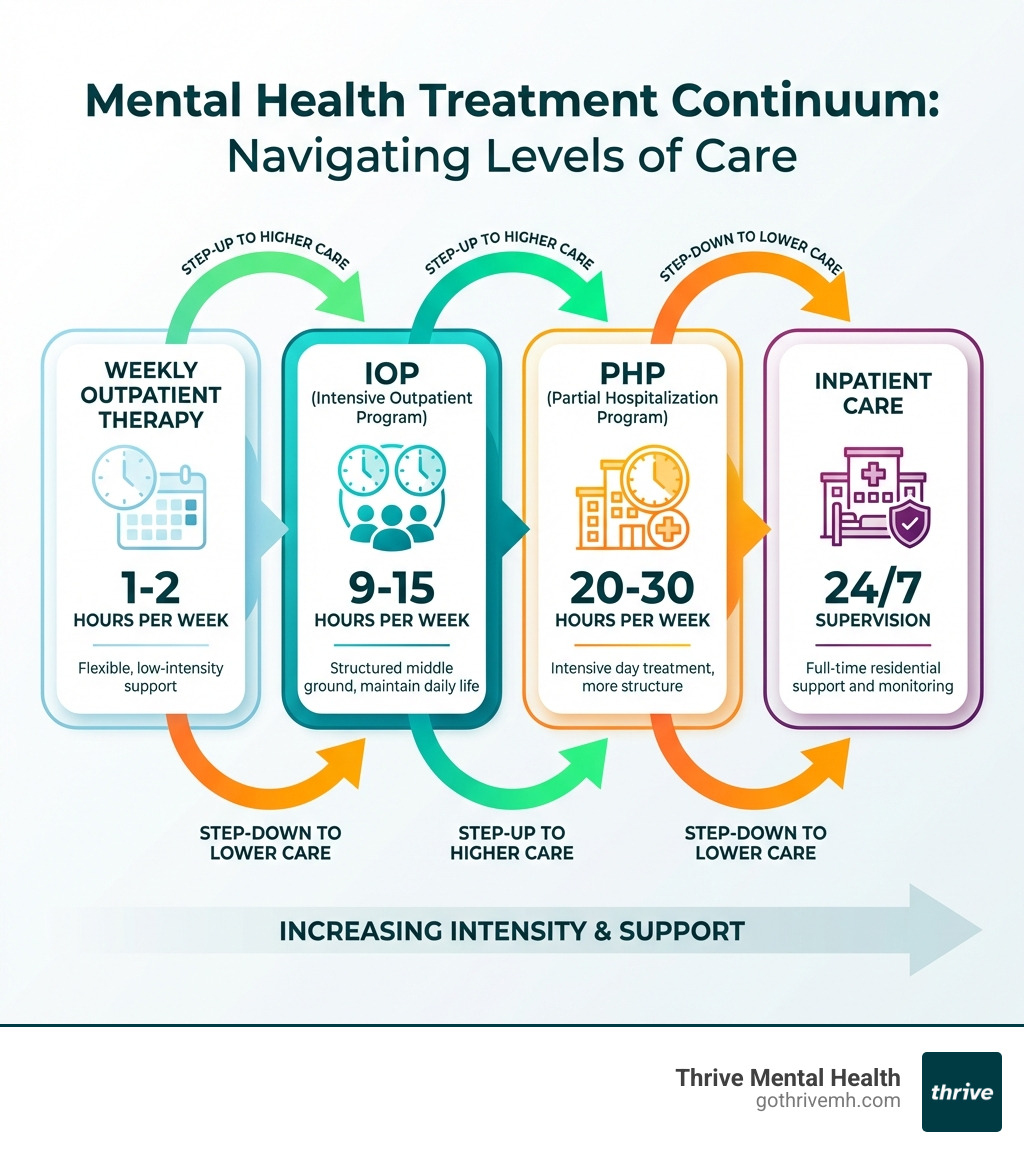
Basic what is an iop vocab:
- how do intensive outpatient programs work
- how long are intensive outpatient programs
- mental health intensive outpatient program requirements
Crisis Support Notice
If you or someone you know is in crisis or having suicidal thoughts, please call or text the 988 Suicide & Crisis Lifeline. Support is available 24/7, it’s free, and it’s confidential. You are not alone.
What is an IOP and Is It Right For You?

The journey to mental wellness is deeply personal, and finding the right level of support can feel like navigating a maze. An Intensive Outpatient Program (IOP) is a powerful option for many, offering a flexible yet robust path to healing. It’s about getting the targeted, evidence-based care you need without putting your life on hold. We believe that effective treatment should fit into your life, not force you to dismantle it.
A meta-analysis from 2014 suggests that IOP programs are often as effective as inpatient treatment for many individuals with alcohol or drug use disorders, highlighting their significant impact. This effectiveness extends to a wide array of mental health conditions, making IOPs a versatile and vital part of the modern mental health landscape. To learn more about the scientific backing, explore our Evidence-based IOP Complete Guide.
What is an IOP? A Clear Definition
At its core, an Intensive Outpatient Program (IOP) is a structured outpatient program designed to provide comprehensive mental health and/or substance use disorder treatment. Unlike inpatient care, where you live at a facility, an IOP allows you to attend therapy sessions during the day or evening and then return to your home and daily responsibilities. This model offers a unique balance: the intensity of focused treatment combined with the ability to practice new coping skills in real-world settings.
For adults, most IOPs include a minimum of 9 hours of services each week. This higher time commitment distinguishes it from traditional outpatient therapy (which might be one hour a week) and makes it a “step-up” for those needing more support. Conversely, it serves as a “step-down” from more restrictive environments like inpatient hospitalization or Partial Hospitalization Programs (PHPs), providing a crucial transition point back to independent living. The flexibility of an IOP is a major draw, allowing participants to maintain their jobs, continue their education, and manage family responsibilities while actively engaging in their recovery journey.
Who Needs an IOP? Key Signs and Requirements
How do you know if an IOP is the right fit for you? We often recommend considering an IOP if you find yourself in situations where:
- Weekly therapy isn’t bringing you relief: You’re consistent with your individual sessions, but your symptoms are persistent or worsening, and you need more intensive support to make progress.
- You’ve been discharged from an emergency department or higher level of care: After a crisis or inpatient stay, an IOP provides the necessary structure and support to stabilize and continue your recovery in a less restrictive environment.
- You need intensive care, but a Partial Hospitalization Program (PHP) isn’t the right fit: Perhaps a PHP’s time commitment (20+ hours per week) is too much for your current work or family schedule, but you still require more than standard outpatient care.
According to the National Alliance on Mental Illness (NAMI), individuals who benefit from IOPs are typically medically stable, have a supportive home environment, and are not at immediate risk of harming themselves or others. They are motivated for change and can manage daily tasks alongside their treatment schedule. An initial assessment with a qualified mental health professional is always the first step to determine the appropriate level of care. In Florida, we also offer specialized support through programs like IOP for Young Adults.
What Conditions Can an IOP Help Treat?
While IOPs initially gained prominence for treating substance use disorders, their scope has expanded significantly. Today, our IOPs in Florida are designed to address a wide range of mental health conditions, including:
- Depression: For individuals experiencing moderate to severe depressive symptoms that impact daily functioning. See our dedicated IOP for Depression page.
- Anxiety Disorders: Including generalized anxiety disorder, panic disorder, and social anxiety, when symptoms are significantly impairing.
- Bipolar Disorder: To help manage mood swings, develop coping strategies, and maintain stability.
- PTSD and Trauma: Providing a structured environment to process traumatic experiences and learn healthy coping mechanisms. More information can be found on our Trauma page.
- Substance Use Disorders: For those who don’t require medical detoxification or 24/7 supervision but need intensive support to achieve and maintain sobriety.
- Eating Disorders: Offering therapeutic interventions for individuals with eating disorders who are medically stable and can benefit from structured outpatient support.
- Dual Diagnosis: Treating co-occurring mental health and substance use disorders simultaneously.
- Personality Disorders: Providing consistent, specialized therapy to manage symptoms and improve interpersonal functioning.
IOP vs. Other Treatment Levels: Don’t Get Lost in the Acronyms

Understanding where an IOP fits within the larger mental health treatment landscape can be confusing. The American Society of Addiction Medicine (ASAM) criteria define different levels of care, guiding professionals in placing individuals in the most appropriate setting. We aim to clarify these distinctions so you can make an informed decision about your path to recovery. For a deeper dive into how IOPs compare to other options, check out our article on IOP vs PHP Mental Health.
[TABLE] Comparing Levels of Mental Health Care
| Level of Care | Hours Per Week | Living Situation | Best For |
|---|---|---|---|
| Inpatient/Residential | 24/7 | At the facility | Acute crises, medical detoxification, severe symptoms requiring continuous medical and psychiatric supervision. |
| Partial Hospitalization (PHP) | 20+ hours | At home | Significant symptoms needing daily structure, a step-down from inpatient care, or a step-up from IOP when more intensive daily support is required. Explore our Partial Hospitalization Program (PHP) page. |
| Intensive Outpatient (IOP) | 9-15 hours | At home | Moderate symptoms, a need for flexibility, a step-down from PHP, or a step-up from traditional outpatient therapy. Allows maintenance of daily responsibilities. |
| Standard Outpatient | 1-2 hours | At home | Mild symptoms, maintenance, ongoing support, or aftercare following more intensive treatment. |
This table illustrates that IOPs occupy a vital middle ground, offering more support than weekly therapy but less restriction than inpatient or Partial Hospitalization Programs. This flexibility is key to integrating recovery into your everyday life.
Inside an IOP: What to Expect From Your Treatment Journey
When you enroll in an IOP, you’re not just signing up for therapy sessions; you’re stepping into a comprehensive, supportive environment designed to foster lasting change. Our Florida-based programs blend various therapeutic approaches to address your unique needs. To get a detailed overview, read our guide on What to Expect in an Intensive Outpatient Program.
What are the typical components and therapies offered in an IOP?
An effective IOP weaves together multiple therapeutic threads to provide holistic care. You can expect a combination of:
- Group Therapy Sessions: This is often the cornerstone of an IOP. Group sessions provide a safe space to share experiences, gain perspective from peers, and practice new social and coping skills. Topics often include relapse prevention, emotional regulation, communication, and life skills.
- Individual Counseling: One-on-one sessions with a therapist allow for deeper exploration of personal issues, development of individualized coping strategies, and personalized goal setting.
- Family Therapy: When appropriate, family sessions help improve communication, address relational dynamics, and build a stronger support system at home.
- Medication Management: For many, medication is a crucial component of mental health stability. IOPs often include access to psychiatric care for evaluation, prescription, and ongoing management of medications.
- Psychoeducation: Learning about your condition, its triggers, and effective management strategies is empowering. These educational components help you understand the “why” behind your struggles and how to steer them.
- Complementary Therapies: Many IOPs integrate holistic approaches to support overall well-being. This can include mindfulness practices, yoga, art therapy, or other experiential activities.
We use a range of evidence-based therapies to ensure you receive the most effective treatment:
- Cognitive Behavioral Therapy (CBT): This therapy helps you identify and change unhelpful thinking patterns and behaviors. Learn more about Cognitive Behavioral Therapy.
- Dialectical Behavior Therapy (DBT): Focusing on mindfulness, emotional regulation, distress tolerance, and interpersonal effectiveness. Find more about Dialectical Behavior Therapy.
- Eye Movement Desensitization and Reprocessing (EMDR): An effective treatment for trauma and PTSD.
- Art Therapy: A creative outlet for expression and processing emotions. See how Art Therapy can help.
- Mindfulness-Based Relapse Prevention: Integrating mindfulness techniques to prevent relapse in substance use and mental health conditions.
What is the typical schedule and duration of an IOP?
The “intensive” in IOP refers to the number of hours and frequency of sessions. Most adult IOPs require a minimum of 9 hours of clinical services per week, often delivered in 3, 3-hour sessions, across 3-5 days per week. This structure allows for deep therapeutic work while still accommodating your daily life.
To make treatment accessible, many programs offer flexible scheduling, including morning or evening sessions. This means you can attend therapy before or after work, school, or childcare responsibilities.
The duration of an IOP is not one-size-fits-all; it’s custom to your individual needs and progress. While the length can vary, on average, most people stay in an IOP for approximately 12 weeks. Your treatment team will regularly assess your progress and adjust your plan as needed, ensuring you move through the program at a pace that supports your long-term recovery. Virtual IOPs, like those we offer, provide even greater flexibility, allowing you to participate from the comfort of your home anywhere in Florida. Learn more about our Virtual IOP options.
How does family involvement play a role in IOPs?
We understand that mental health and substance use challenges often impact the entire family system. That’s why family involvement is a crucial component of many IOPs. Family therapy sessions provide a safe and guided space for loved ones to:
- Improve Communication: Learn healthier ways to interact and express feelings.
- Understand the Condition: Gain education about the mental health or substance use disorder, reducing stigma and fostering empathy.
- Build a Stronger Support System: Equip family members with tools to support their loved one’s recovery and care for their own well-being.
- Heal Relationships: Address past conflicts and work towards a more harmonious and supportive home environment.
We believe that when the family heals, the individual’s recovery journey is often stronger and more sustainable. Our programs often include dedicated Family Therapy and Coaching Virtual IOP options to ensure comprehensive support.
The Practical Side of IOP: Costs, Insurance, and Finding a Program
Starting on an IOP journey is a significant step towards healing, and we want to make sure you have all the information to steer the practicalities. The benefits of an IOP are numerous, including its effectiveness, flexibility, and often more affordable cost compared to inpatient options. Find more about The Benefits of an Intensive Outpatient Program.
Does Insurance Typically Cover IOP Treatment?
This is a question we hear often, and the good news is: yes, many health insurance plans do cover IOP treatment. The Mental Health Parity and Addiction Equity Act (MHPAEA) of 2008 generally requires insurance companies to offer mental health and substance use disorder benefits at a level comparable to medical and surgical benefits.
However, coverage can vary based on your specific plan, whether the provider is in-network or out-of-network, and your co-pays and deductibles. We work with a variety of major insurance providers, including Florida Blue, Aetna, Cigna, and UnitedHealthcare, to make our programs accessible. We highly recommend verifying your benefits directly with your insurer or allowing us to assist you. Our dedicated page on Virtual IOP Insurance can help clarify many common questions.
Life After IOP: Why Aftercare is Non-Negotiable
Completing an IOP is a huge accomplishment, but it’s not the end of the journey—it’s a new beginning. Aftercare planning is crucial for maintaining the progress you’ve made and preventing relapse. We work with you to develop a robust aftercare plan that might include:
- Step-Down Care: Transitioning to a less intensive level of outpatient therapy or individual counseling.
- Support Groups: Continued engagement with peer-led groups like Alcoholics Anonymous (AA) or Narcotics Anonymous (NA) provides ongoing community and accountability.
- Alumni Programs: Many programs offer alumni networks to keep you connected to your treatment community.
- Relapse Prevention Strategies: Reinforcing the skills learned in IOP to identify triggers and steer challenging situations effectively.
The goal is to build a strong, sustainable recovery lifestyle that supports your long-term well-being.
How Can Someone Find an IOP Program Near Them?
Finding the right IOP program is about more than just location; it’s about finding a program that aligns with your needs, values, and insurance coverage. Here are our top tips:
- Online Search: Start with targeted searches like “IOP in Florida” or “Virtual IOP near me.” If you’re in Florida, you’ll find our local and virtual programs specifically designed to meet your needs. We’ve even put together an Adult IOP Near Me Guide to assist you.
- SAMHSA Treatment Locator: The Substance Abuse and Mental Health Services Administration (SAMHSA) offers a national treatment locator tool that can help you find programs in your area.
- Psychology Today Directory: This online directory allows you to filter by location, type of treatment, and insurance.
- Referrals: Ask your current therapist, doctor, or trusted mental health professional for recommendations. They often have insights into local programs that might be a good fit.
- Consider Virtual Options: Our Virtual Intensive Outpatient Programs offer the flexibility to receive high-quality care from anywhere in Florida, eliminating geographical barriers.
When researching programs, ask about their treatment philosophies, staff qualifications, specific therapies offered, scheduling flexibility, and how they handle aftercare.
Frequently Asked Questions about Intensive Outpatient Programs
Can I keep my job while attending an IOP?
Yes, IOPs are designed for flexibility. Many programs, especially virtual IOPs, offer evening or morning sessions so you can continue working, attending school, and managing family responsibilities while receiving intensive care.
Is a virtual IOP as effective as an in-person one?
Research shows that virtual IOPs have comparable outcomes to in-person programs for many individuals. They offer the same evidence-based therapies and expert-led groups but with added convenience, accessibility, and comfort, eliminating barriers like travel time and location.
What is the first step to enrolling in an IOP?
The first step is typically a confidential assessment with a clinical professional. They will evaluate your symptoms, treatment history, and personal goals to determine if an IOP is the right level of care for you and help you create a personalized treatment plan.
Ready for Real Support? Take the Next Step Today
An Intensive Outpatient Program (IOP) offers a powerful middle ground in mental healthcare, providing more structure than weekly therapy without the full disruption of inpatient care. It’s an effective, flexible solution for managing conditions like depression, anxiety, and trauma while maintaining your daily life. By combining individual, group, and family therapies, IOPs equip you with the skills and support needed for lasting recovery.
Ready for support? Thrive Mental Health offers virtual and hybrid IOP/PHP programs with evening options across Florida. Verify your insurance in 2 minutes (no obligation) or call 561-203-6085. If you’re in crisis, call/text 988.