





IOP Virtual: Seamless Care 2025
Why Virtual IOP is Revolutionizing Mental Health Care
IOP virtual programs are changing how people access intensive mental health treatment. Instead of daily clinic visits, you can get the same expert care from home.
A virtual Intensive Outpatient Program (IOP) provides 9-12 hours of structured therapy per week through secure video platforms. This includes individual, group, and family sessions, often with flexible evening and weekend scheduling. A typical program lasts 8-12 weeks.
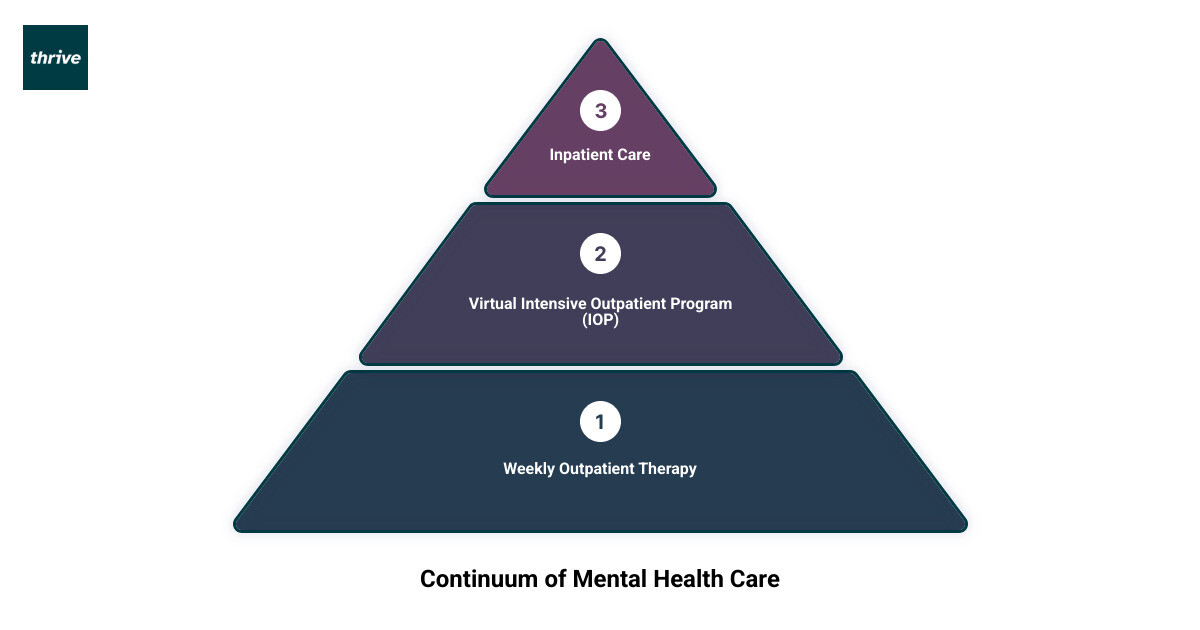
Virtual IOP is the ideal middle ground between weekly therapy and inpatient care. It’s designed for those who need more support than traditional therapy offers but want to maintain their job, family life, and daily routines. This includes:
- Individuals stepping down from residential or hospital care.
- Busy professionals and parents who need flexible scheduling.
- Anyone dealing with depression, anxiety, trauma, or substance use who needs intensive support.
Anna Green, LMHC, LPC, founder of Thrive Mental Health, notes that IOP virtual programs remove barriers to care for residents across Florida, achieving the same clinical outcomes as in-person treatment. Thrive’s Joint Commission accreditation confirms that virtual intensive care is both effective and safe.
Common iop virtual vocab:
What is an IOP Virtual Program?
An IOP virtual program bridges the gap when weekly therapy isn’t enough, but a full-time treatment center is too much. It delivers comprehensive, structured mental health treatment through secure telehealth platforms, right from the comfort of your home.
Virtual IOP is the ideal middle ground. It provides crucial support for managing conditions like depression, anxiety, or trauma, and serves as a structured step-down from higher levels of care like partial hospitalization. You get evidence-based treatment from licensed professionals without the commute, parking hassles, or time away from work and family.
How Does Virtual IOP Compare to In-Person IOP?
The core treatment and evidence-based therapies are the same whether you’re in a clinic or at home. The main difference is how you access care. Virtual programs offer unparalleled accessibility, eliminating geographic barriers. Scheduling flexibility with evening and weekend options makes it easier to balance treatment with life’s responsibilities. Many clients also find that learning coping skills in their home environment improves the therapeutic process.
While virtual IOP requires reliable internet and a private space, it often reduces indirect cost and stress associated with travel. The table below highlights the key differences.
| Feature | Virtual IOP | In-Person IOP |
|---|---|---|
| Accessibility | Available anywhere with internet connection | Limited to local facilities |
| Flexibility | Easier to balance with work and family | Requires dedicated travel time |
| Environment | Comfort and privacy of home | Clinical setting with fewer distractions |
| Cost | Lower indirect costs (no travel, parking) | Higher transportation and time costs |
What Does a Typical Week in Virtual IOP Look Like?
A typical week involves 9 to 12 hours of treatment spread across 3 to 5 days. This structure is designed to provide intensive support while fitting into your life. A standard program runs for 8 to 12 weeks.
Your schedule will include:
- Individual therapy: One-on-one sessions with your primary therapist.
- Group therapy: Connecting with peers in a supportive community.
- Family therapy: Sessions to improve communication and strengthen your home support system.
- Psychiatry and medication management: To address any underlying conditions that may benefit from medication.
This flexible structure allows you to build a foundation for long-term mental wellness without putting your life on hold. For more details, you can learn how virtual IOP works at Thrive.
Why Choose Virtual IOP? Pros and Cons
Virtual IOP virtual programs make intensive treatment more accessible than ever. By adapting to your life, they open doors that traditional programs often can’t. However, it’s important to weigh the advantages and potential challenges.
Key Benefits for Busy Lives
The primary benefits of virtual IOP revolve around flexibility and convenience:
- No Commute: Eliminates travel time, stress, and transportation costs.
- Flexible Scheduling: Evening and weekend options allow you to balance treatment with work and family commitments.
- Real-Life Skill Practice: Learn and apply coping strategies in your actual home environment, making them more effective.
- Consistent Support: High engagement rates because life’s minor disruptions (bad weather, car trouble) don’t derail your progress.
These advantages make it easier to commit to and complete treatment. You can read about virtual IOP benefits in more detail on our blog.
What Are the Drawbacks?
Virtual IOP isn’t a perfect fit for everyone. Consider these potential limitations:
- Tech Requirements: You need a reliable internet connection and a device with a camera.
- Need for Private Space: Sessions require a quiet, confidential area free from interruptions.
- Not for Crisis Situations: Virtual care is not suitable for individuals experiencing acute suicidal ideation, psychosis, or needing medical detox. These situations require immediate in-person care.
- Home Distractions: Your comfortable environment can also be full of diversions that may pull your focus.
- Self-Motivation: Success requires a commitment to showing up and engaging fully in the therapeutic work from home.
Who Qualifies for IOP Virtual Programs?
IOP virtual programs are for people who need more support than weekly therapy but don’t require 24/7 residential care. It’s designed for those who are motivated for change and can maintain their daily routines while engaging in intensive treatment.
To qualify, you generally need stable housing and a private space for sessions. You should be medically stable and not in an immediate crisis. Our programs are also equipped to support individuals with co-occurring disorders, addressing both mental health and substance use issues simultaneously.
Mental Health Conditions Treated in Virtual IOP
If you’re in crisis, call/text 988 right now. You are not alone.
Our IOP virtual programs use evidence-based therapies to treat a wide range of conditions. We’ve seen remarkable outcomes, with 93% of clients reporting significant improvements in depression symptoms and 90% seeing meaningful improvements in anxiety.
We provide comprehensive care for:
- Depression: Major depression, persistent depressive disorder, postpartum depression.
- Anxiety Disorders: Generalized anxiety, social anxiety, panic attacks.
- Trauma and PTSD: Specialized, trauma-informed care for single-event or complex trauma.
- Substance Use Disorders: An integrated approach that addresses addiction and underlying mental health issues.
- Other Conditions: We also treat OCD, eating disorders (in select states), bipolar disorder, self-harm, suicidal ideation, personality disorders, and more.
Is Virtual IOP Right for You?
Determining if IOP virtual is your next step begins with a confidential assessment with our clinicians. Our programs are designed for adults ages 18-64 who find their current coping strategies are no longer working.
You might be a good fit if you are:
- Stepping down from a PHP or residential program and need continued structure.
- Stepping up from outpatient therapy because you need more intensive support.
Our team will conduct a collaborative evaluation to understand your history, goals, and needs. This helps us create a personalized treatment plan that fits your life and provides the right balance of support and flexibility. The key is finding the right level of care to help you heal. Explore our Adult Virtual IOP offerings for more information.
Inside Virtual IOP: Treatment, Results, and Aftercare
Our IOP virtual program combines proven therapeutic methods with strong patient-provider connections and peer support to build a foundation for long-term recovery. It’s intensive mental health care, delivered with convenience and compassion.
What Therapies Are Used in Virtual IOP?
Our licensed clinicians use a variety of time-tested, evidence-based therapies, including:
 Buyer’s Guide: Best LA Art Therapy Painting Groups for 2025Mental Health
- Cognitive Behavioral Therapy (CBT): Helps identify and change negative thought patterns.
- Dialectical Behavior Therapy (DBT): Teaches skills in mindfulness, distress tolerance, emotion regulation, and interpersonal effectiveness.
- Acceptance and Commitment Therapy (ACT): Focuses on accepting difficult feelings while committing to a values-driven life.
- Motivational Interviewing: A collaborative approach to help you find your own motivation for change.
- Experiential Therapies: Includes art therapy, yoga, and mindfulness practices to facilitate insight and healing.
We focus on skills-based training to provide you with practical tools for daily life. Explore the full range of Thrive’s treatment modalities.
![Therapist and client connecting via screen. Alt: “iop virtual therapist connection”]
How Effective Is Virtual IOP?
Research and our own data confirm that IOP virtual programs are just as effective as in-person treatment. The numbers speak for themselves:
- 93% of clients report significant improvements in depression.
- 90% see substantial decreases in anxiety symptoms.
- 89% show marked improvement in managing self-harm behaviors.
A 2022 study in the International Journal of Eating Disorders found that virtual and in-person intensive programs delivered equally impressive results. Furthermore, 97% of our graduates feel hopeful about their future, and 96% feel confident in managing their symptoms, highlighting the lasting impact of virtual care.
What Happens After Virtual IOP?
Recovery is a lifelong journey, so aftercare is a critical part of our program. Your discharge plan is a personalized roadmap for maintaining your progress.
- Discharge Planning: Begins weeks before graduation, creating a custom plan with your therapist.
- Alumni Programs & Support Groups: Keep you connected to a supportive peer community for encouragement and accountability.
- Relapse Prevention: You’ll learn to identify warning signs and develop coping strategies for high-risk situations.
Continued support is key to lasting success. Research shows that participation in aftercare significantly improves long-term outcomes, demonstrating the importance of staying connected after treatment.
Insurance and Costs: What to Know for Virtual IOP
Navigating insurance and costs for an IOP virtual program shouldn’t be a barrier to care. The good news is that most insurance plans now cover virtual mental health services, and our team is here to help you understand your benefits.
Does Insurance Cover Virtual IOP?
Yes, most insurance plans cover IOP virtual programs. The Mental Health Parity Act requires insurers to provide the same level of coverage for mental health as they do for medical care. We are in-network with major providers like Cigna, Optum, and Florida Blue, which simplifies the payment process.
We do not accept Medicaid or Medicare. Our admissions team can quickly check your commercial benefits. We handle the verification process for you, check your insurance coverage now for a clear, no-obligation estimate of your benefits.
Accessing Virtual IOP in Florida
As a Florida-based provider, we make it easy for residents across the state to access virtual IOP. Florida has strong telehealth regulations and broad insurance coverage, including plans like Florida Blue. This means you get expert care that understands local contexts without the geographic barriers or traffic. We verify your benefits upfront to ensure there are no surprises, making quality IOP virtual care accessible where and when you need it.
Frequently Asked Questions about IOP Virtual Programs
Here are answers to the most common questions about IOP virtual programs to help you make an informed decision.
How effective is virtual IOP compared to in-person?
Virtual IOP is just as effective as in-person programs. Research and our own data show comparable or even better outcomes. At Thrive, 93% of clients report improved depression symptoms and 90% see anxiety improvements. Many clients feel more comfortable and engaged when participating from their own safe space.
What technology do I need for virtual IOP?
The requirements are simple: a reliable internet connection, a private space, and a device with a camera and microphone (like a smartphone, tablet, or computer). We use secure, HIPAA-compliant video platforms that are easy to use. Our support team can help you get set up.
How is my privacy protected in virtual group therapy?
Your privacy is our top priority. We use encrypted, HIPAA-compliant technology for all sessions. Additionally, all group members agree to strict confidentiality rules, creating a safe and trusting environment for sharing and healing, just as they would in an in-person setting.
What happens after I finish the program?
Graduation is not the end of your support. Your therapist will help you create a personalized aftercare plan, which often includes stepping down to weekly therapy. You will also have access to alumni support groups to stay connected with peers who understand your journey and can provide ongoing encouragement.
Can I use insurance for virtual IOP in Florida?
Yes. Most major insurance plans in Florida cover IOP virtual services. Thrive is in-network with many major insurers, including Florida Blue, Cigna, and Optum. Our admissions team can verify your benefits in minutes to give you a clear understanding of your coverage with no obligation.
Summary: IOP Virtual Programs, Intensive Care, Zero Commute
IOP virtual programs deliver intensive, evidence-based therapy directly to you, bridging the gap between weekly therapy and inpatient care. You get 9-12 hours of structured support each week, including individual and group sessions, while maintaining your job, family life, and daily routines. It’s mental health care that fits your life.
The virtual format allows you to learn and practice coping skills in your real-world environment, which improves long-term success. At Thrive Mental Health, our expert-led IOP virtual programs offer flexible scheduling, including evening options, to make healing accessible for residents throughout Florida.
Our results show that this model works: 93% of our clients see improvements in depression, and 90% report better anxiety management. Virtual IOP offers the structured support you need without the traditional barriers, making recovery more sustainable than ever.
Ready for support? Thrive offers virtual IOP with evening options. Verify your insurance in 2 minutes (no obligation) or call 561-203-6085. If you’re in crisis, call/text 988.
Internal Links:
- Virtual Intensive Outpatient Programs
- Intensive Outpatient Program (IOP)
- Virtual Therapy
- Virtual IOP Insurance
- The Benefits of Choosing Virtual IOP for Your Mental Health Needs

This article is for informational purposes only and is not a substitute for individualized clinical advice or insurance verification.