


What Is EMDR Therapy? How It Rewires the Teen Brain for Healing
EMDR therapy for teens is a science-backed treatment that helps adolescents process trauma, anxiety, and depression, often in 6-12 sessions. Unlike talk therapy, it doesn’t require teens to speak in detail about their trauma. Instead, it uses bilateral stimulation (eye movements, tapping, or sounds) to help the brain reprocess distressing memories.
If you’re watching your teen shut down or struggle with anxiety that talk therapy hasn’t touched, you’re not alone. When trauma gets “stuck,” it can feel impossible to move forward. EMDR helps the brain do what it’s designed to do: process what happened and heal. Research shows it can work quickly: after just six sessions, 61% of teens no longer met the criteria for major depression, and PTSD symptoms improved in up to 80% of cases. It’s recommended by the World Health Organization and the American Psychiatric Association for this reason.
At Thrive Mental Health, we integrate evidence-based therapies like EMDR therapy for teens into our virtual IOP programs across Florida to deliver measurable results. When your teen is hurting, waiting isn’t an option.
If you want to understand how higher-acuity care fits into your options, you can explore our Intensive Outpatient Program (IOP) and Partial Hospitalization Program (PHP), both of which can incorporate EMDR for teens who need more than once-a-week therapy.
Emdr therapy for teens basics:
- benefits of emdr therapy
- Is EMDR Right for Everyone? The Science Behind the Debate
- Bilateral Stimulation vs EMDR: What’s the Difference?
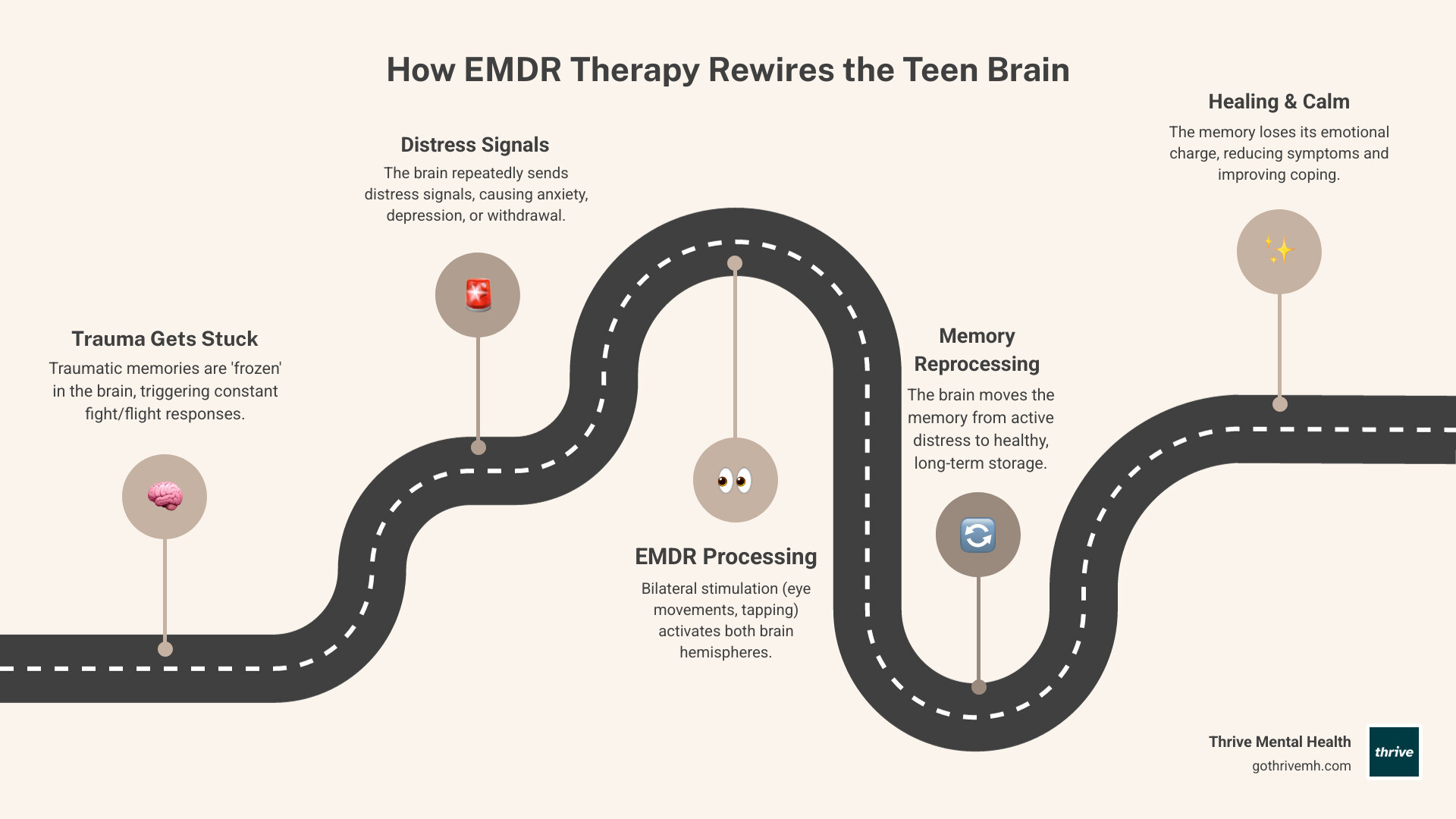
Eye Movement Desensitization and Reprocessing (EMDR) helps teens heal from traumatic experiences without extensive talking. Developed by Francine Shapiro, it’s based on the Adaptive Information Processing (AIP) model. This model suggests that trauma can overwhelm the brain, causing memories to get “stuck” in an unprocessed state, leading to flashbacks, anxiety, and depression.
EMDR therapy for teens uses bilateral stimulation (BLS), rhythmic, left-right stimulation like guided eye movements or tapping, to “unstick” these memories. This process is thought to activate the brain’s natural healing ability, similar to REM sleep. It helps move the memory from the brain’s emotional, reactive part to a more integrated, less distressing one. The goal isn’t to erase the memory but to neutralize its emotional charge, so it becomes a past event, not a present threat. The American Psychological Association highlights scientific research on EMDR for PTSD as an effective therapy, especially for those who struggle to verbalize trauma.
How EMDR Therapy Is Customized for Teens
EMDR is highly adaptable for the developing teenage brain. Therapists use this to their advantage:
- Creative BLS Methods: To keep teens engaged, therapists use creative methods like games, music, art, or tactile pulsars for bilateral stimulation.
- Focused Sessions: Sessions are structured to match a teen’s attention span, often broken into manageable segments to prevent overwhelm.
- Safety and Trust: Therapists prioritize building a safe, non-judgmental space, which is crucial for teens who may be hesitant about therapy.
- Teen-Friendly Language: Concepts are explained using relatable metaphors and language, empowering teens in their own healing journey.
EMDR Therapy for Teens: Results You Can Measure
The effectiveness of EMDR therapy for teens is backed by robust scientific evidence.
- Recognized by Global Health Authorities: The World Health Organization (2013) and the American Psychiatric Association (APA) give EMDR their highest recommendation for children and adolescents with PTSD.
- Up to 80% Reduction in PTSD Symptoms: Studies show dramatic decreases in PTSD symptoms. One study reported that after 8 sessions, 95.2% of participants no longer met the criteria for PTSD.
- Anxiety Scores Drop by 50%+: Research shows significant drops in anxiety scores, meaning less worry, panic, and distress.
- High Success Rates: EMDR often works when other therapies haven’t. In one study, 61% of teens with Major Depressive Disorder (MDD) no longer met the diagnostic criteria after just 6 weekly sessions.
We see these measurable improvements in our programs. To learn more, you can see how our Virtual IOP for teens works.
Is EMDR Therapy Right for Your Teen? Conditions It Treats
EMDR therapy for teens is versatile and effective for a wide range of conditions stemming from distressing life experiences. If your teen is struggling, EMDR might be the path they need, especially when paired with higher-support levels like IOP or PHP.

- PTSD and Trauma: EMDR is highly effective for both single-event trauma (e.g., an accident) and complex trauma (e.g., ongoing abuse or neglect). It helps process these memories to reduce symptoms. For more information on post-traumatic stress disorder, visit MedlinePlus Health Information.
- Anxiety and Panic Attacks: EMDR targets the underlying memories or beliefs fueling anxiety, desensitizing teens to triggers and reducing the intensity of panic attacks.
- Depression: Often linked to unprocessed trauma, depression in teens responds well to EMDR. One study found 61% of teens with major depression no longer met diagnostic criteria after six sessions.
- Phobias and Fears: Specific fears, like a fear of choking or heights, can be treated by reprocessing the initial distressing event that caused the phobia.
- Low Self-Esteem: EMDR helps reprocess foundational memories that created negative self-beliefs like “I’m not good enough,” replacing them with positive ones.
- Performance Anxiety: For teens debilitated by pressure in school or sports, EMDR can neutralize memories of past failures and build confidence.
- Grief and Loss: EMDR helps teens process the overwhelming pain of losing a loved one, allowing them to remember the person without intense, hindering distress.
If your teen lives in Florida and needs more than weekly therapy, EMDR can be integrated into structured care like our Virtual IOP for teens or PHP level support, depending on severity.
7 Proven Benefits of EMDR Therapy for Teens
Engaging in EMDR therapy for teens provides lasting benefits for well-being and resilience.
- Rapid PTSD Symptom Reduction: EMDR is known for its efficiency, often leading to fewer flashbacks, nightmares, and intrusive thoughts in a short time.
- Better Emotional Control: By reprocessing trauma, teens gain calmer, more measured reactions to stressors and learn to regulate their emotions effectively.
- Higher Self-Esteem: Replacing negative self-beliefs with positive ones fosters a healthier self-image and greater confidence.
- Less Anxiety and Panic: Addressing the root causes of anxiety leads to a significant reduction in general anxiety, social anxiety, and panic attacks.
- Relief from Depression: EMDR offers substantial relief for depression, especially when it’s linked to trauma, with some teens achieving total remission.
- Overcoming Long-Term Trauma Effects: EMDR helps resolve the pervasive, long-term effects of trauma on health, relationships, and life satisfaction.
- Faster Results Than Many Traditional Therapies: Studies show EMDR can achieve results faster than some traditional talk therapies, which is a major benefit for teens and families seeking relief.
Insurance should not be the barrier to getting these benefits. Many families in Florida cities like Tampa, Miami, Orlando, and Jacksonville use plans such as Cigna, Optum, and Florida Blue to help cover EMDR when it is part of an IOP or PHP. You can quickly verify your insurance benefits before committing to care.
What Happens in an EMDR Session? The 8-Step Roadmap
A typical EMDR therapy for teens session is a structured, collaborative process where the therapist guides your teen through eight phases. In IOP or PHP settings, these phases are often woven into a broader treatment plan that may also include skills groups, psychiatry, and family support.

- Phase 1: History & Treatment Plan: The therapist gets to know your teen, identifies target memories, and sets clear treatment goals.
- Phase 2: Preparation: This crucial phase focuses on building coping skills. Your teen learns stress-reduction techniques and identifies a mental “safe place” to ensure they feel in control during processing.
- Phases 3-6: Core Processing: This is the heart of EMDR. Your teen identifies a target memory and a negative belief associated with it. While holding the memory in mind, they engage in bilateral stimulation (e.g., eye movements). The goal is to desensitize the memory, reducing its emotional charge. Then, the focus shifts to installing a positive belief. Finally, a body scan ensures no lingering physical distress remains.
- Phase 7: Closure: At the end of each session, the therapist ensures your teen feels grounded and calm, providing strategies to use between sessions.
- Phase 8: Re-evaluation: Each new session starts by reviewing progress and assessing your teen’s current emotional state to guide the next steps.
In Thrive’s virtual and hybrid programs, EMDR may be delivered alongside skills-based groups (like DBT or CBT), which can help teens practice new coping tools between EMDR sessions.
How Parents Can Support Their Teen in EMDR Therapy
Your support is vital to your teen’s healing journey. Here’s how you can help:
- Be a Team with the Therapist: Maintain open communication to understand therapy goals and reinforce progress at home.
- Provide a Stable Home Life: A predictable, supportive environment creates a sense of safety as your teen processes difficult emotions.
- Respect Their Privacy: Don’t push for details about their sessions. EMDR is effective even without your teen verbalizing everything.
- Encourage Coping Skills: Gently remind your teen to use the grounding and relaxation techniques they learn in therapy.
- Celebrate Small Wins: Acknowledge and affirm their effort and progress. Small shifts are significant steps forward.
- Offer Non-Judgmental Support: Let your teen know you are there for them. Listen with empathy and be a consistent source of comfort.
For some families, stepping into an IOP or PHP that includes EMDR gives parents more structure and guidance. You can explore our Virtual IOP for teens to see how EMDR fits into a full treatment day.
EMDR Therapy vs. Traditional Talk Therapy: What’s the Difference?
When considering treatment for your teen, it’s helpful to understand how EMDR therapy for teens differs from traditional talk therapy, and when a more intensive setting, like IOP or PHP, might be the right fit.
- EMDR: Less Talking, More Processing: EMDR doesn’t require teens to talk through trauma in detail. Processing happens internally with guided bilateral stimulation, which is a relief for teens who find talking difficult or overwhelming.
- Traditional Talk Therapy: Focuses on Discussion: Approaches like Cognitive Behavioral Therapy (CBT) involve in-depth discussion of thoughts and feelings. This can be challenging for teens who struggle to articulate their experiences or find it re-traumatizing.
- EMDR: Often Faster Results for Trauma: EMDR is known for being efficient, often producing significant symptom reduction in fewer sessions than some other therapies. This speed is critical when a teen is in intense distress.
- Targeting the Brain’s Processing: EMDR directly targets how traumatic memories are stored in the brain, aiming to reprocess them. Talk therapies often focus on changing the thoughts and behaviors surrounding the memory.
- IOP/PHP Context: In an IOP or PHP at Thrive, EMDR can be combined with talk-based therapies, skills groups, and psychiatric care, giving teens multiple, coordinated ways to heal rather than choosing one approach over another.
- Both are Effective, but EMDR Offers an Alternative: The World Health Organization recommends both EMDR and Trauma-Focused CBT (TF-CBT) for teens with PTSD. The best choice depends on the individual. For teens resistant to talking, EMDR is an exceptionally powerful option.
To explore other therapeutic modalities, you can Read: Somatic Therapy vs. EMDR, What’s Best for Teens?. If your teen needs more support than once-a-week therapy, you can also review our IOP and PHP options to see what level of care fits their needs.
 Creative Reflections: How Art Helps Explore Mental HealthMental Health
How to Find a Qualified EMDR Therapist for Teens
Finding the right therapist is crucial for specialized treatments like EMDR therapy for teens. Here’s what to look for:
- EMDRIA Certified Therapists: The EMDR International Association (EMDRIA) offers certification that ensures a therapist has extensive training, consultation, and experience. This is the gold standard.
- Experience with Teens: Ask potential therapists about their experience working with adolescents and how they adapt EMDR for this age group to make it engaging and safe.
- Insurance and Accessibility: Mental health treatment should be accessible. Thrive Mental Health offers virtual and hybrid EMDR therapy for teens in Florida. Many insurance plans, including Cigna, Optum, and Florida Blue, cover EMDR when it is part of an evidence-based program like IOP or PHP. You can verify your insurance in 2 minutes with no obligation.
- Level of Care: If your teen is struggling with daily functioning, school avoidance, self-harm thoughts, or repeated hospital visits, once-a-week therapy may not be enough. Ask whether EMDR can be provided within an Intensive Outpatient Program or Partial Hospitalization Program.
- Find a Program: To find a therapist or program that suits your needs, you can explore our Virtual IOP for teens.
Thrive serves families across Florida cities like Tampa, Orlando, Miami, and Jacksonville through virtual and hybrid care, so your teen can access EMDR without long commutes.
Long-Term Results: What Teens Gain from EMDR Therapy
The goal of EMDR therapy for teens is to equip them with lasting tools for well-being.
- Lasting Symptom Relief: By reprocessing trauma at its root, EMDR provides durable relief from PTSD, anxiety, and depression, with gains often maintained for years.
- Stronger Coping Skills: Teens develop a robust toolkit of self-regulation strategies to manage stress and respond to challenges with resilience.
- Healthier Relationships: As teens heal, they often experience improved communication, trust, and the ability to form more secure bonds with family and friends.
- More Confidence and Hope: Replacing negative self-beliefs with positive ones empowers teens to pursue goals and look to the future with optimism.
- Lower Risk of Future Mental Health Issues: Addressing trauma early can significantly reduce the risk of chronic mental health problems in adulthood.
If you are unsure whether EMDR within an IOP or PHP is appropriate, you can start by checking your insurance benefits and speaking with our team about options in Florida.
FAQs: EMDR Therapy for Teens, What Parents Ask Most
How long does EMDR therapy take for teens?
Most teens see significant results in 6-12 sessions, though complex trauma may require more time. Many feel better after just a few sessions. Intensive options, like our IOP and PHP programs, can accelerate progress by combining EMDR with daily skills work and support.
Is EMDR therapy safe for teenagers?
Yes, EMDR therapy for teens is recognized as safe and effective by the World Health Organization and the American Psychiatric Association. It is a structured therapy, not hypnosis, and trained therapists ensure teens learn coping skills to feel safe and in control. In IOP and PHP, there is added structure and monitoring, which many parents find reassuring.
Does my teen have to talk about their trauma in detail?
No. A key benefit of EMDR is that it doesn’t require a detailed verbal account of the trauma. The focus is on internal processing with bilateral stimulation, which makes it less overwhelming for teens.
Is EMDR covered by insurance?
Yes, EMDR is an evidence-based treatment covered by many insurance providers, including major insurers like Cigna, Optum, and Florida Blue. Coverage often applies when EMDR is part of an IOP or PHP level of care. We recommend checking your specific plan, and you can easily check your benefits now through our website.
Can EMDR be done virtually?
Absolutely. Virtual EMDR is just as effective as in-person sessions when delivered by a trained clinician. We offer virtual and hybrid EMDR programs for teens in Florida, providing flexible and convenient care. You can learn about our Virtual IOP to see if it’s a good fit.
Is EMDR enough, or does my teen also need IOP or PHP?
It depends on severity. If your teen is missing school, struggling to function, or cycling through crisis, EMDR inside an IOP or PHP can provide more structure and support than weekly therapy alone. Our clinical team can help you decide what level of care is appropriate.
Where is EMDR available near me?
Thrive provides EMDR within virtual and hybrid programs serving cities such as Tampa, Orlando, Miami, and Jacksonville, as well as surrounding areas in Florida.
Summary: EMDR Therapy for Teens, A Faster Path to Healing
If your teen is struggling with trauma, anxiety, or depression, EMDR therapy for teens offers a powerful, evidence-based path to healing. This specialized approach helps their brain naturally process distressing memories, leading to rapid and lasting relief. Recognized by global health authorities, EMDR helps teens regain emotional control, boost self-esteem, and build a foundation for a confident future, often in weeks, not years.
At Thrive Mental Health, EMDR can be integrated into virtual and in-person IOP/PHP programs across Florida, including major metros like Tampa, Miami, Orlando, and Jacksonville. Many families use insurance plans such as Cigna, Optum, and Florida Blue to help cover the cost.
Whether your teen receives EMDR once a week or as part of an intensive program, the goal is the same: real relief, measurable progress, and a clear plan forward.
Ready for support? Thrive offers virtual IOP programs with evening options. Verify your insurance in 2 minutes (no obligation) → Start benefits check or call 561-203-6085. If you’re in crisis, call/text 988.

This article is for informational purposes only and is not a substitute for individualized clinical advice or insurance verification.