


What is Bilateral Stimulation and Why Does It Matter?
Bilateral stimulation is a therapeutic technique that uses rhythmic, alternating stimulation of both sides of the brain to help process difficult memories and reduce anxiety. Think of it as a gentle way to help your nervous system find balance when it feels stuck or overwhelmed.
Here’s what you need to know about bilateral stimulation:
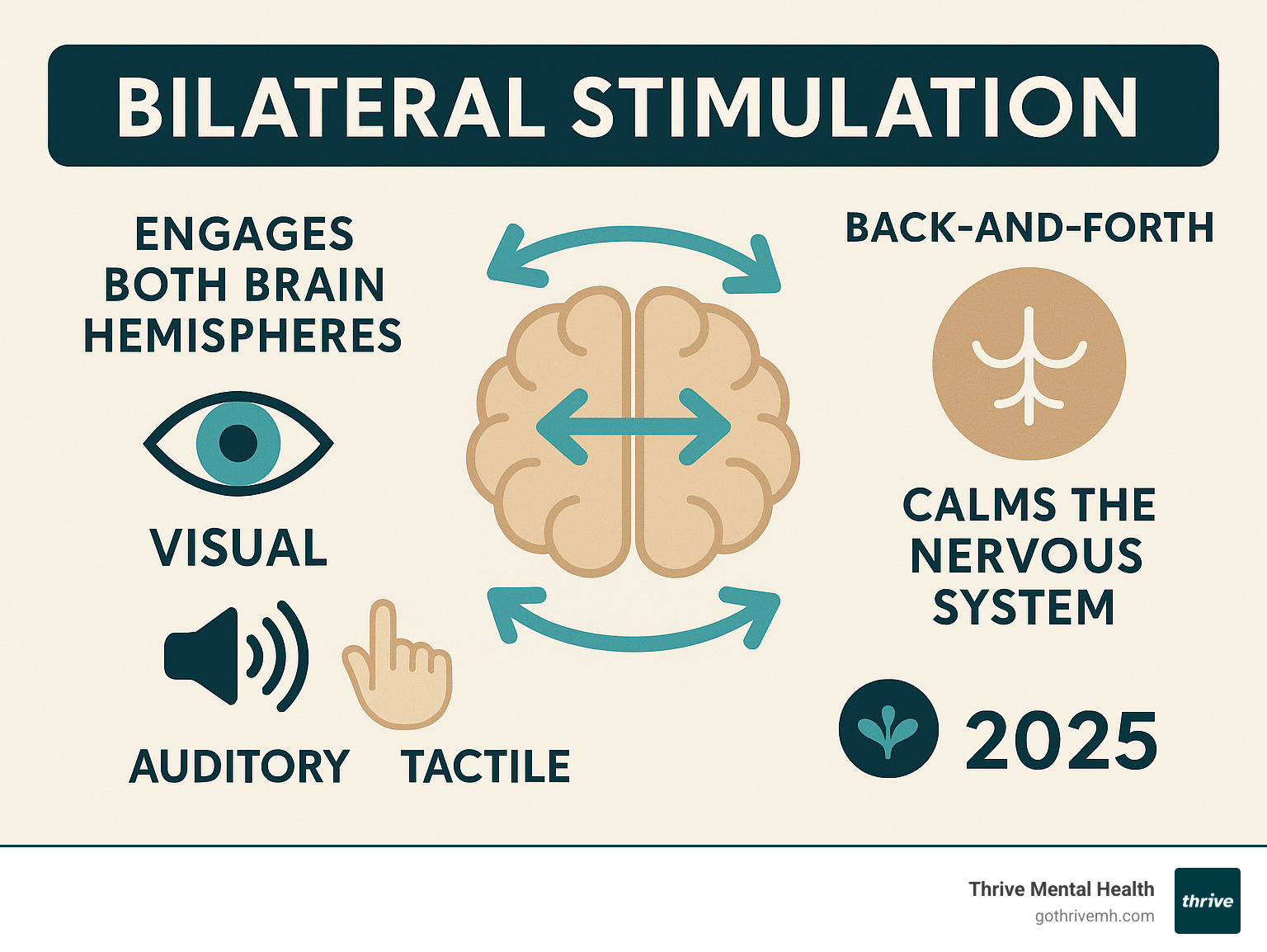
- What it is: Rhythmic, back-and-forth movements or sensations that engage both brain hemispheres
- Common types: Eye movements, alternating sounds, or gentle tapping on both sides of the body
- Primary use: Key component of EMDR therapy for trauma and anxiety treatment
- How it helps: Reduces emotional intensity of distressing memories and activates the body’s natural calming response
- Safety: Generally safe when used properly, but trauma processing should involve a trained therapist
You might already experience bilateral stimulation naturally, when you walk, your left and right feet create this alternating pattern. Research shows this simple back-and-forth motion can help transition your body from fight-or-flight mode to a more restful state, often within 30 seconds.
As CEO of Thrive Mental Health, I’ve seen how bilateral stimulation within EMDR therapy helps busy professionals across Florida break free from anxiety and trauma that’s been holding them back. My experience leading behavioral health innovation has shown me that this evidence-based approach offers real hope for those in Florida seeking flexible, effective mental health support.
Bilateral stimulation helpful reading:
What is Bilateral Stimulation and Its Role in EMDR Therapy?
When someone experiences trauma, their brain sometimes gets “stuck” trying to process what happened. At Thrive Mental Health, we see this often with our clients across Florida, distressing memories can feel frozen in time, causing ongoing anxiety, flashbacks, and emotional pain. That’s where bilateral stimulation becomes a game-changer, especially within Eye Movement Desensitization and Reprocessing (EMDR) therapy.
Think of EMDR therapy as helping your brain’s natural filing system get back on track. The Adaptive Information Processing model shows us that traumatic memories can become trapped in our nervous system, unable to move from “urgent” to “processed and filed away.” These stuck memories keep triggering our fight-or-flight response, even when we’re safe.
Bilateral stimulation helps break this cycle. During EMDR therapy, the rhythmic back-and-forth stimulation works alongside memory processing to help desensitize the emotional charge and reprocess the experience in a healthier way. It’s like giving your brain the tools it needs to finally complete the healing work it started. You can find more info about Eye Movement Desensitization and Reprocessing (EMDR) on our site.

How does bilateral stimulation work in EMDR?
Here’s where bilateral stimulation gets really interesting. During EMDR therapy, you’ll focus on a difficult memory while following rhythmic stimulation, maybe watching a light bar move back and forth or listening to alternating tones. This creates what therapists call “dual attention”, part of your mind stays with the past memory while another part stays present with the stimulation.
This dual focus actually taxes your brain’s working memory in a helpful way. When your mental processing power is divided, the traumatic memory loses some of its vividness and emotional punch. It’s like turning down the volume on a song that’s been playing too loudly in your head.
The real magic happens in your nervous system. Bilateral stimulation helps shift your body away from that chronic fight-or-flight response and toward the parasympathetic nervous system’s “rest-and-digest” mode. Many clients tell us they feel noticeably calmer, sometimes within minutes of starting the process.
This isn’t just relaxation, it’s actual reprocessing. The rhythmic stimulation helps reduce the emotional intensity tied to the memory while keeping you grounded in the present moment. We dive deeper into this process in our article on How EMDR Therapy Reduces PTSD Symptoms and Boosts Mental Health.
Why is it a key component of trauma treatment?
Bilateral stimulation targets trauma right where it lives in the brain. When something traumatic happens, your brain’s alarm system, particularly the amygdala and limbic system, can get stuck in overdrive. These emotional centers keep firing as if the danger is still present, even years later.
The beauty of bilateral stimulation is how it helps both sides of your brain work together again. By engaging both hemispheres, it encourages better communication between your emotional centers and your prefrontal cortex, the part responsible for logical thinking and emotional regulation. This integration is crucial for healing.
Instead of being overwhelmed by raw emotion when a memory surfaces, bilateral stimulation helps you access your thinking brain too. Clients often describe feeling like they can finally “think clearly” about what happened to them. The memory doesn’t disappear, but it loses its power to hijack their entire nervous system.
Research on EMDR’s effectiveness for PTSD shows just how powerful this approach can be. By helping people get “unstuck” from their trauma, bilateral stimulation opens the door to genuine healing and post-traumatic growth. For more insights on this journey, check out our guide From Trauma to Healing: Overcoming PTSD Disorder.
The Science Behind the Calm: How BLS Affects the Brain
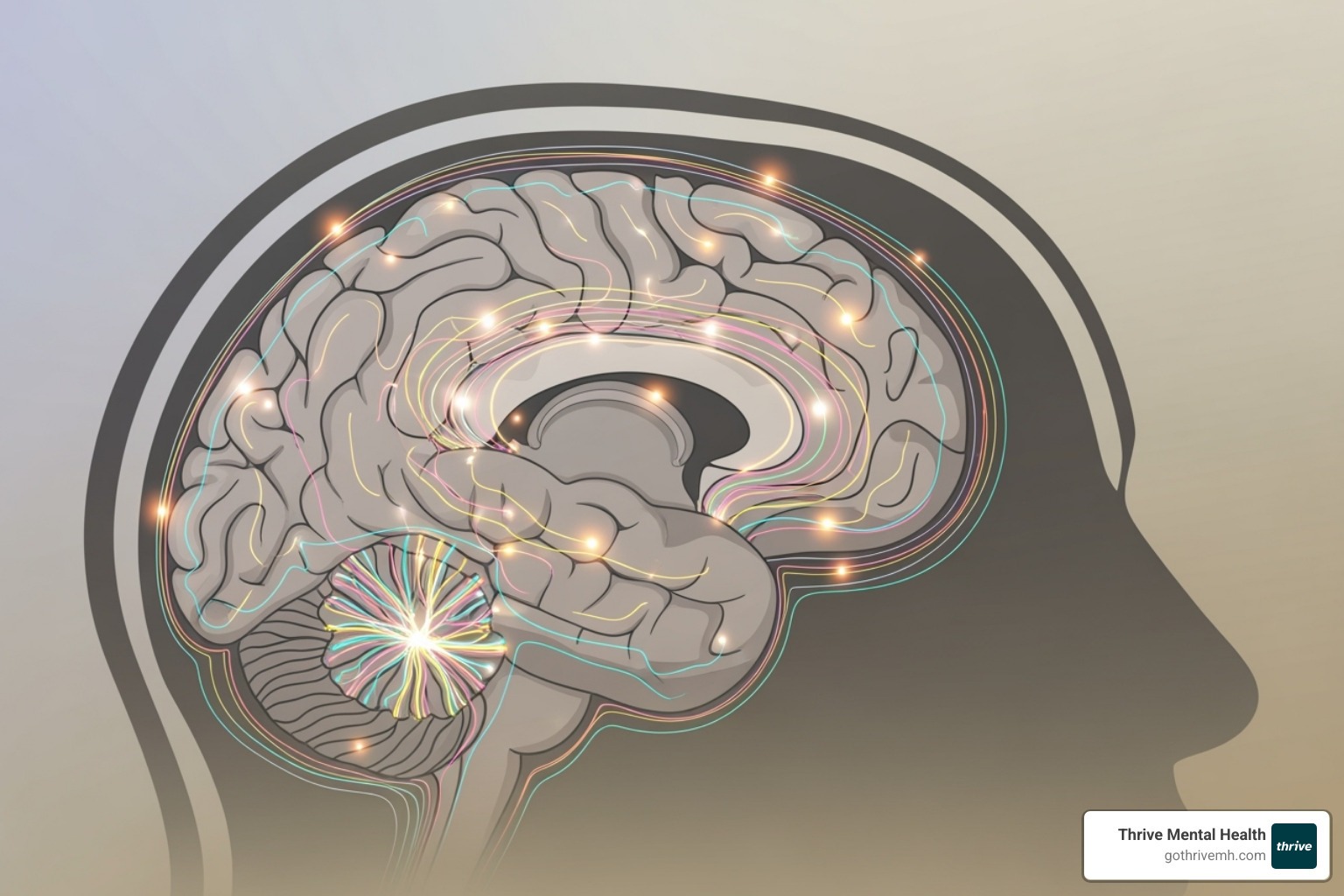
The calming power of bilateral stimulation isn’t just something we feel, it’s actually visible in brain scans and measurable through changes in our body chemistry. When you engage in BLS, your brain literally shifts into a different mode of operation, creating the neurological foundation for healing and peace.
Research using advanced brain imaging has revealed fascinating changes during bilateral stimulation. Scientists have found that BLS activates specific brain regions involved in memory processing, particularly areas like the right superior temporal sulcus. At the same time, it decreases activity in parts of the prefrontal cortex, the brain’s “control center” that works overtime when we’re stressed or anxious.
Think of your brain like a busy highway system. Trauma creates traffic jams and roadblocks that keep you stuck in cycles of distress. Bilateral stimulation acts like a skilled traffic controller, helping to redirect the flow and create new, smoother pathways. This process taps into neuroplasticity, your brain’s remarkable ability to rewire itself throughout your entire life.
But the changes go deeper than brain activation patterns. BLS actually influences your brain chemistry, boosting levels of feel-good neurotransmitters like serotonin and dopamine. These natural mood elevators help shift your nervous system from that jittery fight-or-flight state into the calmer rest-and-digest mode. Many people notice this transition happening within minutes, their breathing deepens, their shoulders relax, and that constant sense of being “on edge” begins to fade.
The research backing these effects is solid and growing. Studies show measurable reductions in stress reactivity, helping explain why bilateral stimulation has become such a valuable tool in trauma therapy. For a deeper dive into the brain’s response to BLS, you can explore Research on BLS and brain activation.
Neurological Benefits for Anxiety and Trauma
When anxiety and trauma take hold, your brain’s alarm system, the amygdala, often gets stuck in overdrive. It’s like having a smoke detector that goes off every time you make toast. Bilateral stimulation helps recalibrate this oversensitive system, teaching your brain to distinguish between real threats and false alarms.
This calming effect on the amygdala creates a ripple effect throughout your nervous system. As your internal alarm quiets down, your emotional regulation improves dramatically. You’ll likely notice that situations that once sent you spiraling now feel more manageable. That’s because BLS strengthens the neural pathways connecting your emotional centers with your reasoning brain, creating better communication between heart and mind.
The results often surprise people with their speed and intensity. Research on devices that provide alternating stimulation found significant reductions in the body’s stress response within just 30 seconds of use. Imagine feeling that shift from overwhelmed to centered in less time than it takes to brew a cup of coffee.
These neurological changes translate into real-world improvements in daily life. You might find yourself sleeping better, feeling more patient with loved ones, or approaching challenges with greater confidence. The increased feelings of well-being aren’t just temporary relief, they reflect genuine changes in how your brain processes stress and emotion.
For many of our clients in Tampa Bay, St. Petersburg, and across Central Florida, this neurological reset becomes the foundation for rebuilding their lives after trauma. The strengthened neural pathways create lasting resilience, not just temporary calm. For more on managing the emotional aftermath of trauma, see our article Understanding and Navigating the Emotional Landscape of PTSD.
Does the type of BLS used matter for effectiveness?
Here’s some good news: when it comes to bilateral stimulation, there’s no “one size fits all” approach, and research shows no significant difference in outcomes between different types of BLS. Whether you’re following a light bar with your eyes, listening to alternating tones through headphones, or feeling gentle vibrations through tactile devices, your brain responds similarly to the rhythmic, back-and-forth pattern.
What matters most is client preference and comfort. Some people find eye movements naturally soothing, it reminds them of the rapid eye movement that happens during healing sleep. Others prefer the discrete nature of tactile stimulation, especially if they’re easily distracted by visual input. Still others connect deeply with alternating sounds or bilateral music.
At Thrive Mental Health, our Florida-based therapists are trained to offer various options and often experiment with combining methods during treatment. We might start with a light bar and switch to tactile “buzzies” if a particular memory feels overwhelming. The beauty of having multiple options is that we can adjust not just the type of stimulation, but also the adjustable speed to match what feels right for you in the moment.
Therapist guidance plays a crucial role in this process. A skilled EMDR therapist will help you find the type and pace of BLS that keeps you in your “window of tolerance”, that sweet spot where you can process difficult material without becoming overwhelmed or shutting down completely. They might slow down the stimulation for particularly intense memories or speed it up when you’re feeling more stable.
The goal isn’t to find the “perfect” type of BLS, but rather to find what helps you feel most grounded and present during the healing process. For more on the various methods used in therapy, explore Exploring EMDR Therapy Techniques for Trauma Recovery.
Putting BLS into Practice: Types and Daily Techniques
The beautiful thing about bilateral stimulation is that you don’t need to be in a therapist’s office to experience its calming effects. Many of us naturally use forms of BLS in our daily lives without even realizing it. Think about how a good walk can clear your head after a stressful day, or how the rhythmic motion of knitting helps you unwind in the evening.
These everyday activities tap into the same principle that makes bilateral stimulation so effective in therapy, they help regulate our nervous system through gentle, alternating movements. By understanding how BLS works, you can intentionally incorporate these techniques into your routine for self-soothing, grounding, and general relaxation outside of formal therapy sessions.

Common Types of Bilateral Stimulation
In therapeutic settings, bilateral stimulation typically falls into three main categories, each offering unique benefits depending on your preferences and needs.
| Type of BLS | Examples | Typical Uses in Therapy |
|---|---|---|
| Visual | Eye movements following a light bar or therapist’s finger; alternating between two stationary points | Primary mode for EMDR processing; can be adapted for virtual sessions; often preferred for direct memory reprocessing |
| Auditory | Alternating tones through headphones; binaural beats; bilateral music with sounds that pan between ears | Useful for clients who find visual stimulation distracting; good for relaxation and self-soothing; can be incorporated into meditation routines |
| Tactile | Handheld pulsars or “buzzies” that vibrate alternately; alternating taps like the “butterfly hug”; tapping on alternating thighs | Often preferred by children or those who need a physical anchor; versatile for in-person or remote sessions; excellent for grounding and self-regulation |
Visual BLS involves following moving objects with your eyes, like a light bar moving back and forth, or simply looking between two points in a room. This is the classic form most people associate with EMDR therapy. Auditory BLS uses alternating sounds heard through headphones, creating a gentle back-and-forth audio experience. Tactile BLS involves physical sensations, like gentle tapping or vibrating devices that alternate between left and right sides of your body.
 Art Your Heart Out: Mental Health Activities You’ll LoveMental Health
What’s wonderful is that research shows no significant difference in outcomes between these types, it really comes down to what feels most comfortable and natural for you.
Simple Bilateral Stimulation Exercises for Daily Calm
The good news is you don’t need special equipment to harness the power of bilateral stimulation for daily stress relief. Here are some simple techniques you can try anywhere:
Walking or jogging is perhaps the most natural form of BLS. The alternating movement of your left and right feet creates that rhythmic pattern your brain loves. Next time you’re feeling overwhelmed, try taking a mindful walk and pay attention to the steady rhythm of your steps. Many of our clients in Florida find that a morning walk along the beach or through their neighborhood sets a calm tone for the entire day.
The butterfly hug is a gentle tactile technique that’s become incredibly popular for self-soothing. Simply cross your arms over your chest with your hands resting on opposite shoulders, like giving yourself a warm hug. Then gently tap your hands on your shoulders, alternating left and right in a steady rhythm. It’s discreet enough to do almost anywhere, even during a stressful meeting.
Drumming or playing an instrument naturally incorporates bilateral movement. Whether you’re tapping your hands to music, playing piano, or even just drumming your fingers on your desk, these alternating movements can help ground you when anxiety starts to build.
Alternate tapping is another simple option, just place your hands on your knees or thighs and gently tap alternately, left then right, in a consistent rhythm. It’s surprisingly effective for those moments when you need to center yourself quickly.
Listening to bilateral music tracks through headphones can create a soothing, balancing effect. Many apps offer sounds specifically designed with alternating left and right audio, perfect for winding down after a long day or helping with focus during work.
The key with any of these techniques is consistency. Even just a few minutes daily can make a real difference in your emotional regulation and overall sense of calm. While these self-care techniques are wonderful for general stress management, if you’re dealing with trauma or significant anxiety, working with a trained professional is always the most effective approach.
Is Bilateral Stimulation Always Safe? Risks and Considerations
Bilateral stimulation is generally safe and incredibly effective, but here’s the thing, it’s not something you want to dive into without proper guidance, especially when it comes to processing trauma. Think of it like learning to drive: you wouldn’t just hop behind the wheel without an instructor, right?
The importance of working with a trained therapist cannot be overstated. A qualified EMDR therapist has the skills to guide you through the process safely, ensuring you feel supported every step of the way. They know how to pace sessions, recognize when you need a break, and help you stay grounded if emotions become overwhelming.
While side effects are rare, bilateral stimulation can sometimes bring up intense emotions or cause temporary discomfort. In very sensitive cases, some people might experience dissociation, feeling disconnected from themselves or their surroundings. This is why professional guidance is so crucial, especially when you’re working through trauma.
If you’re in Florida and considering EMDR therapy, look for a clinician certified by the EMDR International Association (EMDRIA). You can verify their credentials on the EMDRIA website. At Thrive Mental Health, our expert-led teams across Tampa Bay, St. Petersburg, and Central Florida are specially trained to provide safe, effective EMDR therapy. For helpful guidance on this process, check out our article on Choosing the Right EMDR Therapist: Tips and Considerations.
When to Use and When to Avoid BLS
Knowing when bilateral stimulation is helpful, and when to be cautious, is essential for your safety and healing.
Bilateral stimulation works best when you’re ready to process trauma and the traumatic event has ended. It’s particularly effective if you find yourself stuck in patterns like reliving memories, feeling emotionally numb, or struggling with anxiety and PTSD. Many people find it works beautifully as an adjunct to talk therapy, helping them move past blocks that words alone can’t resolve. For general relaxation and grounding, self-administered techniques like the butterfly hug are usually safe for most people.
However, there are times when caution is needed. You should not use BLS during an ongoing traumatic event, safety and stability need to come first. If you have epilepsy or seizure disorders, consult your neurologist before trying visual stimulation techniques. People with severe dissociative disorders, untreated psychosis, or recent traumatic brain injuries should always work with a mental health professional to determine if BLS is appropriate.
Other contraindications include severe migraines or vestibular disorders (which eye movements might worsen), certain pregnancy complications, or having implanted medical devices like pacemakers when using electronic BLS equipment.
The bottom line? Discussing your specific needs and medical history with a mental health professional is the smartest way to determine if bilateral stimulation is right for your healing journey. Your safety and well-being should always come first.
Frequently Asked Questions about Bilateral Stimulation
Can I do bilateral stimulation on my own?
The short answer is yes, but with some important caveats! Think of bilateral stimulation like cooking, you can absolutely make yourself a sandwich, but you probably want a professional chef handling the five-course gourmet meal.
For general relaxation and grounding, self-administered bilateral stimulation is not only safe but highly encouraged. Simple techniques like the Butterfly Hug, alternating foot taps, or listening to bilateral sounds can work wonders for daily stress management. These gentle methods help shift your nervous system from that frazzled, fight-or-flight state into something much calmer, often within just a few minutes.
However, when it comes to processing significant trauma or deep-seated psychological issues, professional guidance becomes essential. EMDR therapy involves a carefully structured protocol that goes far beyond simple BLS exercises. A trained therapist creates what we call a “safe container”, they help you prepare for reprocessing, guide you through difficult memories, and ensure you can return to a grounded state afterward.
Attempting to process complex trauma on your own with bilateral stimulation can be like trying to perform surgery with a butter knife, it’s not just ineffective, it can potentially be overwhelming or even retraumatizing without the right support and framework. For those in Florida ready to explore trauma processing with professional support, our EMDR therapy program provides a safe and structured path to healing.
How long does it take for bilateral stimulation to work?
Here’s where bilateral stimulation gets really interesting, the effects can be surprisingly quick, depending on what you’re hoping to achieve.
For immediate calming or relaxation, many people report feeling a shift within just a few minutes. Some research even shows changes in as little as 30 seconds as your body transitions from that stressed-out fight-or-flight mode to a more peaceful state. Studies using mood assessments have found that bilateral stimulation can lead to better subjective mood almost immediately, with significant improvements in tension-anxiety, depression-dejection, anger-hostility, fatigue, and mental confusion.
When used for trauma reprocessing within EMDR therapy, it’s part of a longer journey. While some clients report feeling less distressed about a particular memory even after one session, the full benefits of processing and integrating traumatic experiences typically unfold over several sessions. EMDR therapy aims for lasting change, helping your brain permanently re-file those distressing memories so they no longer pack the same emotional punch.
Think of it this way: the immediate calming effects are like taking a deep breath, while the trauma processing is more like renovating your mental house, it takes time, but the results are transformative.
Is bilateral stimulation the same as hypnosis?
Not at all! While both involve focused attention, they’re actually quite different in how they work. The key difference lies in your level of awareness and participation.
With bilateral stimulation, particularly within EMDR therapy, you maintain what we call “dual awareness.” This means you’re fully awake and present, consciously aware of both the distressing memory or thought and the rhythmic stimulation happening simultaneously. You’re actively participating in the processing, not drifting off into a trance-like state. The goal is to help your brain process the memory while you remain firmly grounded in the present moment.
Hypnosis, on the other hand, involves guiding someone into a highly focused state of attention that’s often accompanied by deep relaxation, which can feel quite trance-like. While in this state, people may be more receptive to suggestion, but they’re not maintaining that conscious, dual awareness that’s so central to how bilateral stimulation works in EMDR.
Both are valid therapeutic techniques with their own benefits, but they operate through completely different mechanisms. It’s a bit like comparing a guided meditation to an active workout, both can be helpful, but they’re doing very different things for your mind and body.
Begin Your Healing Journey with Professional Guidance
Bilateral stimulation is truly a remarkable tool that demonstrates just how resilient and adaptable our brains can be. When used thoughtfully, it can significantly reduce anxiety and help process even the most challenging trauma. It’s like having a gentle reset button for your nervous system, one that’s been there all along, just waiting to be activated.
While simple BLS techniques like the butterfly hug or a mindful walk can work wonders for daily stress management, the real magic happens when bilateral stimulation is woven into structured, evidence-based therapy like EMDR. That’s where you get the full power of this approach, with the safety net of professional expertise guiding you through.
At Thrive Mental Health, we’ve seen how transformative this work can be. Our team understands that healing isn’t one-size-fits-all, which is why we offer both virtual and in-person intensive outpatient (IOP) programs designed specifically for adults and young professionals across Florida. Whether you’re juggling a demanding career in Miami or seeking support from a quiet town in the Panhandle, our flexible approach means expert-led care is always within reach.
We believe in meeting you where you are, literally and figuratively. Our evidence-based programs are custom to your individual needs, because your healing journey is uniquely yours. We’re not just here to help you get unstuck; we’re here to help you build the resilience and tools you need to truly thrive.
If you’re ready to explore how bilateral stimulation and EMDR therapy can support your path forward, we’d love to walk alongside you. Learn more about our EMDR program and find how we can help you reclaim your story and step into the life you deserve.

This article is for informational purposes only and is not a substitute for individualized clinical advice or insurance verification.