
Stuck in a Trauma Bond – Recognizing and Understanding the Cycle

Why You Can’t “Just Leave”
Crisis Disclaimer: If you are in crisis or considering self-harm, please call or text 988 to reach the Suicide & Crisis Lifeline. You are not alone, and help is available 24/7.
A trauma bond is a powerful emotional attachment to an abuser, forged through a destructive cycle of abuse and intermittent kindness. It’s why leaving feels impossible, even when you know the relationship is toxic. Unlike healthy love, trauma bonds are rooted in fear, power imbalance, and an addictive pattern of pain followed by relief.
Key characteristics of a trauma bond include:
- Intermittent Reinforcement: Unpredictable cycles of abuse and affection that create a strong psychological hook.
- Power Imbalance: One person maintains control through manipulation, threats, or dependency.
- Survival Attachment: The brain bonds to the abuser as a survival tactic, not out of genuine love or safety.
- Cognitive Dissonance: Justifying or rationalizing abuse to cope with the conflict between the harm they cause and the “love” they claim to feel.
- Isolation: The abuser cuts you off from friends and family, removing outside perspectives.
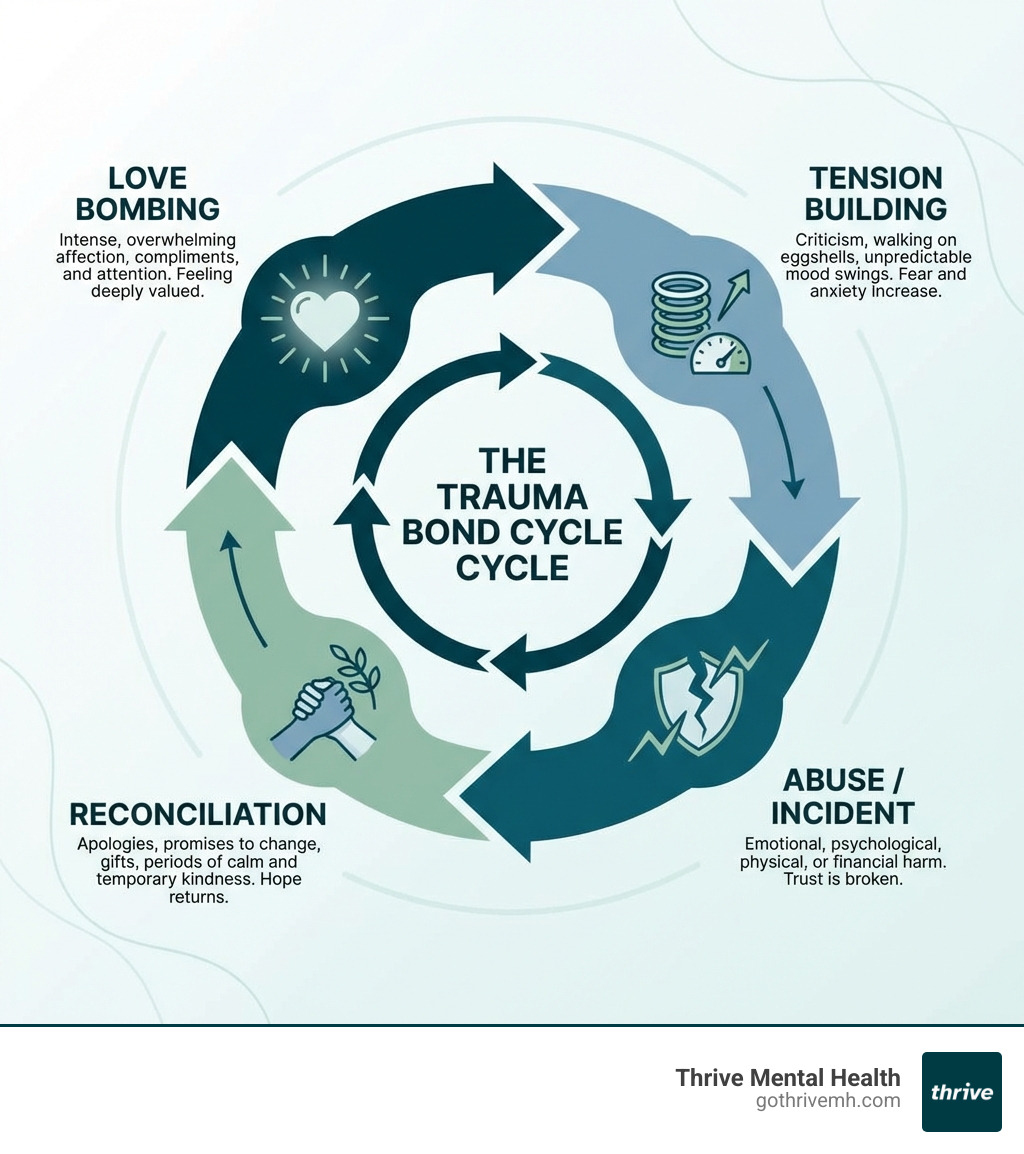
While sometimes confused with Stockholm Syndrome (which applies specifically to hostages), trauma bonds can form in any relationship with a power imbalance and abuse cycle—with romantic partners, parents, bosses, or cult leaders. This cycle of love bombing, tension, abuse, and reconciliation hijacks your brain chemistry, creating an addiction to the relationship itself. Understanding the mechanics of a trauma bond is the first step toward breaking free.
Explore more about trauma bond:
What is a Trauma Bond? The Science Behind the Unbreakable Feeling
At its core, a trauma bond is the emotional attachment a victim feels toward their abuser. It’s not a sign of weakness but a complex survival response that makes leaving feel impossible. Unlike healthy attachments built on trust and respect, trauma bonds are forged in an environment of fear, dominance, and unpredictability.
This dynamic is driven by several key factors:
- A Severe Power Imbalance: The abuser controls the victim, creating a dependency that makes escape feel out of reach.
- Intermittent Reinforcement: The abuser alternates between cruelty and kindness. This unpredictable pattern creates a powerful psychological hook, similar to a gambling addiction, where the victim craves the return of the “good times.”
- Cognitive Dissonance: Victims experience a mental conflict between the abuser’s harmful actions and their occasional kindness. To resolve this, they may rationalize the abuse (“It wasn’t that bad”) to maintain the bond.
- Survival Instinct: The brain’s survival mode can trigger a “fawn” response—appeasing the abuser to avoid harm. This creates an intense attachment as the victim seeks safety from the very person causing the danger.
| Feature | Healthy Attachment | Trauma Bond |
|---|---|---|
| Foundation | Mutual respect, trust, safety | Fear, power imbalance, unpredictability |
| Emotional State | Security, fulfillment, safety | Confusion, anxiety, fear, dependence |
| Communication | Open, honest, empathetic | Manipulation, gaslighting, blame-shifting |
| Motivation | Shared growth, genuine connection | Survival, addiction to intermittent rewards |
| Self-Perception | Valued, respected, autonomous | Loss of self, self-blame, feeling “broken” |
| Leaving | Difficult due to genuine loss | Feels impossible due to manipulation and fear |
How a Trauma Bond Hijacks Your Brain Chemistry
The grip of a trauma bond is neurobiological. The cycle of abuse and reconciliation hijacks your brain’s reward and stress systems.
- Attachment & Threat: When the source of comfort is also the source of danger, the brain struggles to separate the two, reinforcing the bond.
- Hormonal Addiction: During moments of kindness, the brain releases “feel-good” hormones like oxytocin and dopamine. This creates a neurochemical dependency, making the victim addicted to the highs of the reconciliation phase. You can learn more about the role of oxytocin in social bonding and its complex effects.
- Chronic Stress: Constant abuse lifts cortisol levels, keeping the body in a “fight-or-flight” state. This exhausts the victim, impairs clear thinking, and increases vulnerability to the abuser’s control.
- Amygdala Activation: The brain’s fear center (amygdala) becomes hyperactive, suppressing the logical parts of the brain and reinforcing survival responses like fawning or freezing.
Is It a Trauma Bond or Codependency?
While often confused, these are different dynamics.
- A trauma bond is defined by a cycle of abuse and a clear power imbalance. The attachment is rooted in survival.
- Codependency is an unhealthy pattern of relying on another person for self-worth, often by prioritizing their needs above your own. It doesn’t necessarily involve an abuse cycle.
The key difference is the presence of an abuser-victim dynamic with cycles of intermittent reinforcement. While codependent traits can make someone more vulnerable to a trauma bond, the two are not the same.
The 7 Stages of the Trauma Bond Cycle [Which Stage Are You In?]
Trauma bonds develop through a predictable cycle designed to establish control and dependency. Recognizing these stages is a powerful tool for breaking free.

- Love Bombing: The abuser showers you with intense affection, praise, and attention to quickly gain your trust. It feels like a fairytale, creating an idealized image of the relationship.
- Trust and Dependency: After being hooked by the love bombing, you develop deep trust and become emotionally dependent. The abuser may start isolating you from others, making them your primary source of validation.
- Criticism and Devaluation: The dynamic shifts. Praise turns to criticism, and affection is replaced with put-downs. You start blaming yourself, trying desperately to regain the initial affection.
- Manipulation and Gaslighting: The abuser uses tactics like gaslighting to make you doubt your sanity and perception of reality. They may also use blame-shifting to avoid accountability for their actions.
- Resignation and Giving Up: Exhausted from the emotional rollercoaster, you may feel hopeless and trapped. You might resign yourself to the situation, believing you deserve the abuse or can’t survive without the abuser.
- Loss of Self: Your identity erodes. You lose touch with your own interests, values, and friends. Your life begins to revolve entirely around appeasing the abuser and navigating the relationship.
- Emotional Addiction: The cycle of abuse and reconciliation becomes addictive. Any small act of kindness feels like a powerful reward, reinforcing the bond and conditioning you to endure the abuse in hopes of another “high.”
Red Flags You’re in a Trauma Bond:
- You constantly defend or make excuses for your partner’s hurtful behavior.
- You feel confused and question your own memory or sanity.
- You feel unable to leave, even though you know the relationship is destroying you.
- You’ve become isolated from friends and family.
- You’re always “walking on eggshells” to avoid conflict.
Who Is at Risk and What Are the Long-Term Consequences?
Anyone can form a trauma bond, but certain factors increase vulnerability. The long-term consequences can be devastating to your mental, emotional, and physical health.

Who is Most Vulnerable to a Trauma Bond?
Certain experiences can make you more susceptible:
- History of Childhood Abuse or Neglect: Unsafe early attachments can normalize abusive dynamics later in life.
- Insecure Attachment Styles: Anxious or avoidant attachment patterns can draw individuals toward familiar but unhealthy relationship dynamics.
- Financial or Social Dependence: Practical reliance on an abuser makes it harder to leave, while isolation removes outside support and perspective.
- Relationships with narcissistic partners: Narcissists excel at the manipulation, love bombing, and gaslighting that create powerful trauma bonds.
- Pre-existing Mental Health Conditions: Depression, anxiety, or a history of substance abuse can increase vulnerability.
How Trauma Bonds Manifest in Different Relationships
Trauma bonds aren’t limited to romance. They can form in any relationship with a power imbalance and abuse cycle:
- Romantic Partners: The most common context, often involving domestic violence and emotional abuse.
- Parent-Child Dynamics: A child’s total dependence on an abusive parent can create a profound and damaging bond.
- Workplace Abuse: A toxic boss who alternates between praise and criticism can foster trauma bonds with employees.
- Friendships: A manipulative friend who is intermittently kind can create a similar dynamic.
- Cults and Sex Trafficking: Extreme isolation and threat create intense, survival-based attachments to captors or leaders.
The Lasting Damage to Your Mental and Physical Health
The impact of a trauma bond extends far beyond the relationship itself:
- Low Self-Esteem: Victims often internalize the abuser’s criticism, leading to a shattered sense of self-worth.
- Complex PTSD (C-PTSD): Arises from prolonged, repeated trauma and includes symptoms like emotional dysregulation, relationship difficulties, and dissociation.
- Anxiety and Depression: The constant fear and emotional turmoil are major contributors to chronic anxiety and depression.
- Chronic Stress: A constant “fight-or-flight” state floods the body with stress hormones, leading to physical health issues like compromised immunity, digestive problems, and chronic pain.
- Difficulty in Future Relationships: Survivors may struggle to trust others or recognize healthy relationship patterns, sometimes leading to re-victimization.
Understanding these deep impacts is a critical step toward healing. For those in Florida, Thrive Mental Health offers comprehensive trauma care to help you reclaim your well-being.
How to Break a Trauma Bond [Your 5-Step Action Plan]
Breaking free from a trauma bond is a courageous journey. It requires acknowledging the truth, creating a plan, and seeking support. Though it feels impossible now, reclaiming your life is entirely possible.
Step 1: Acknowledge the Truth & Stop the Fantasy
The first step is to confront the reality of the abuse.
- Document the Abuse: Keep a journal of incidents. Writing down what happened and how you felt creates an objective record that counters gaslighting.
- Focus on Actions, Not Promises: Ground yourself in their consistent behavior, not their intermittent kindness or “future-faking.”
- Challenge Negative Self-Talk: The abuser’s voice often becomes your inner critic. Counter thoughts like “I’m so stupid” with “I am smart for taking steps to protect myself.”
- Accept the Relationship is Abusive: Let go of the hope that they will change. Acknowledging the harm is essential for moving forward.
Step 2: Create a Safety Plan
Your physical and emotional safety is the top priority. If you are in physical danger, plan your exit.
- Identify a safe place to go.
- Pack an emergency bag with essentials.
- Secure important documents and financial resources.
- Inform a trusted person about your plan.
- The National Domestic Violence Hotline (1-800-799-7233) offers confidential help 24/7.
Step 3: Go No-Contact & Manage Withdrawal
This is the most effective way to break the bond’s addictive cycle.
- Cut Off All Communication: Block them on all platforms—phone, social media, and email. Any contact can reignite the cycle.
- Prepare for Withdrawal: Breaking a trauma bond feels like detoxing. Expect anxiety, sadness, and intense cravings for the old dynamic. Remind yourself these feelings are temporary.
- Lean on Your Support System: Reconnect with trusted friends and family who can offer support and validate your experience.
Step 4: Rebuild Your Identity with Self-Care
Healing involves refinding who you are outside of the abusive dynamic.
- Reconnect with Hobbies: Re-engage with interests you abandoned or explore new ones.
- Set Firm Boundaries: Practice saying “no” and communicating your limits clearly in all relationships.
- Practice Self-Compassion: Engage in self-care activities like journaling or meditation. Treat yourself with the kindness you were denied.
Step 5: Get Professional, Trauma-Informed Help
You don’t have to do this alone. Professional guidance is critical for deep, lasting healing.
- Why Therapy is Essential: A trauma-informed therapist can help you process the abuse, challenge distorted thinking, and develop healthy coping skills.
- Effective Therapies: Evidence-based treatments like TF-CBT, DBT, and EMDR are highly effective for healing from trauma bonds and C-PTSD.
- Avoid Couples Counseling: This is dangerous in abusive relationships. Individual therapy is the only safe option.
- Find Expert-Led Programs: Thrive Mental Health offers virtual and hybrid IOP/PHP programs for trauma across Florida. We provide structured, evidence-based care and accept most major insurance plans, including Cigna, Aetna, and Florida Blue. Our virtual programs are also available to residents of California, Indiana, Arizona, and South Carolina. Learn more about our virtual IOP programs.
Frequently Asked Questions about Trauma Bonds
What’s the difference between a trauma bond and just a difficult relationship?
A trauma bond is defined by a cycle of abuse and a severe power imbalance. A difficult relationship has conflict but is built on a foundation of mutual respect and safety, which is absent in a trauma bond.
Can you love someone you’re trauma-bonded to?
The intense feelings can mimic love, but they are a survival response. The attachment is rooted in a psychological and chemical addiction to the cycle of abuse and reward, not genuine, healthy connection.
How long does it take to break a trauma bond?
There is no set timeline. Healing depends on the severity of the abuse, your personal history, and your support system. It’s a gradual process of grieving, rebuilding self-worth, and learning new patterns, which often requires professional guidance and patience.
If you’re in crisis, call or text 988 right now. You are not alone.
Take Back Your Life from a Trauma Bond
Recognizing you’re in a trauma bond is not a sign of failure—it’s a powerful survival instinct. This awareness is the first and most courageous step toward breaking the cycle. Healing is possible, and you have the right to a future defined by safety and self-worth, not fear. With the right support, you can reclaim your identity and your life.
Ready for support in Florida? Thrive offers virtual and hybrid IOP/PHP programs with evening options. Verify your insurance in 2 minutes (no obligation) → Start benefits check or call 561-203-6085. If you’re in crisis, call/text 988.