
What’s an IOP? Unpacking Intensive Outpatient Mental Health Care

When Weekly Therapy Isn’t Enough: Why You Need to Know About IOP Now
What does iop stand for in mental health? IOP stands for Intensive Outpatient Program—a structured, evidence-based level of mental health care designed for people who need more support than weekly therapy but don’t require 24/7 hospitalization.
Quick Answer:
- IOP = Intensive Outpatient Program
- Hours: 9–19 hours per week (typically 3–5 days)
- Format: Group therapy + individual counseling + skills training
- Best for: Moderate anxiety, depression, trauma, burnout, or substance use
- Key benefit: Get real results while keeping your job, school, or family life
If you’ve been going to therapy once a week and still feel stuck—or if you’re worried you need inpatient care but can’t put your life on hold—IOPs offer a middle ground that actually works.
You’re not alone. Research shows that 1.4 million people used IOP services in 2019, and that number has grown significantly since. IOPs have become a cornerstone of modern mental health care because they deliver measurable results without requiring you to check into a facility.
The reality: Weekly therapy isn’t always enough when you’re dealing with severe anxiety, persistent depression, trauma, or burnout that’s affecting your work, relationships, or daily functioning. But taking weeks off for inpatient treatment? That’s not realistic for most professionals, students, or parents.
IOPs solve this problem. They provide 9–19 hours of structured care per week—group therapy, individual sessions, skills training, and sometimes medication management—while you continue living at home, working, or attending school. Evening and virtual options make it even more accessible.
Here’s what sets IOPs apart:
- More intensive than outpatient therapy (1 hour/week) but less disruptive than inpatient care (24/7)
- Evidence-based therapies like CBT and DBT that teach you real skills
- Peer support from others facing similar challenges
- Flexibility to maintain your job, school, or family responsibilities
- Insurance coverage through most major plans (Cigna, Optum, Florida Blue, Aetna, UnitedHealthcare)
IOPs are designed for people who are motivated to get better, have a stable place to live, and need accountability and structure to make real progress. If that sounds like you, this guide will show you exactly how IOPs work, who they’re right for, and how to get started.
I’m Nate Raine, CEO of Thrive Mental Health, and over the past decade I’ve built and scaled evidence-based IOP and PHP programs across Florida. Throughout my career, I’ve seen how understanding what does iop stand for in mental health and how these programs work can be the turning point for people who’ve been struggling without the right level of support.
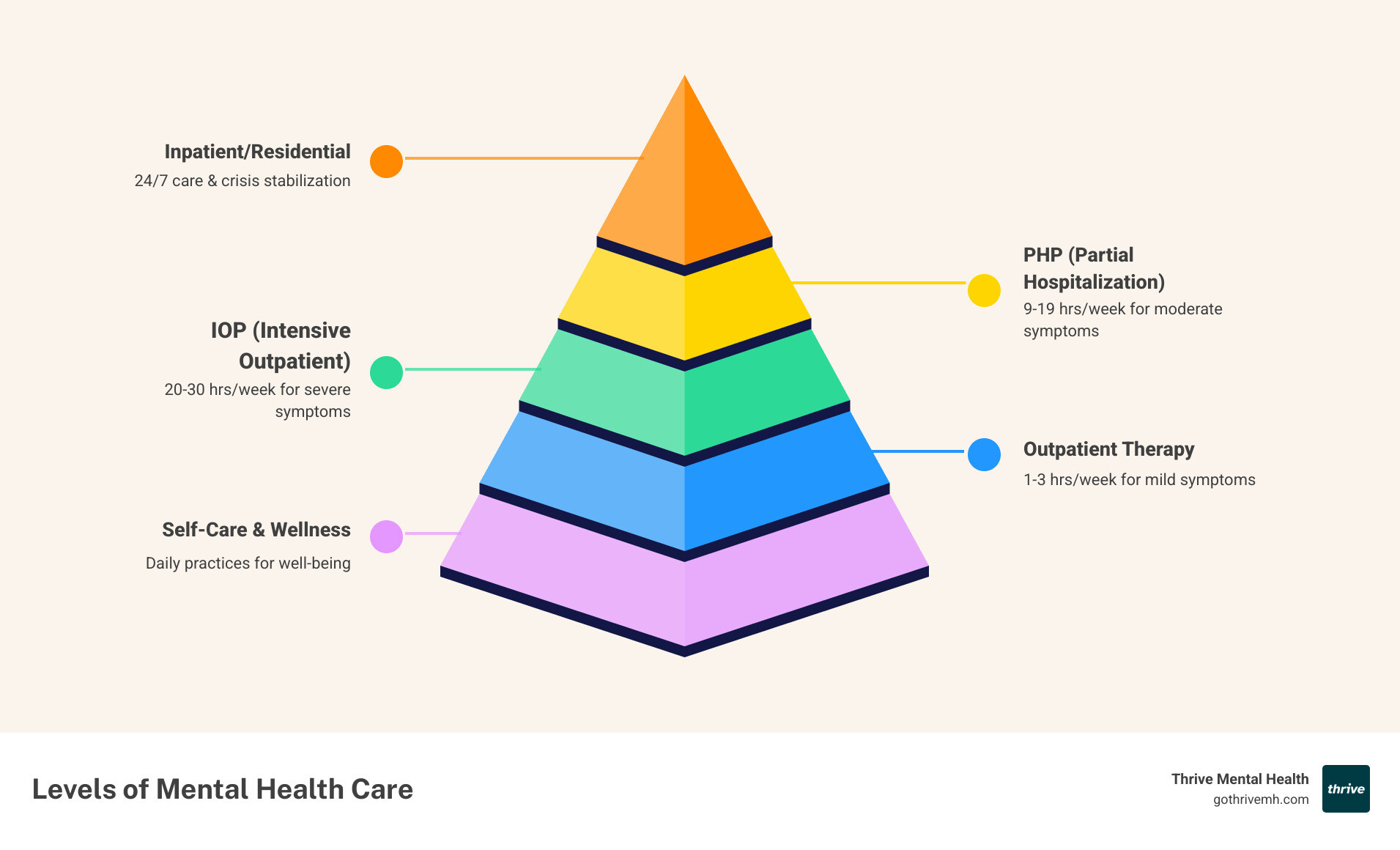
Basic what does iop stand for in mental health glossary:
What Does IOP Stand For in Mental Health? [Intensive Outpatient Program Explained]
When we talk about mental health care, acronyms can sometimes feel like a secret language. But when you hear “IOP,” we’re simply referring to an Intensive Outpatient Program. An IOP is a highly organized, structured, and evidence-based mental health treatment that offers a level of support far beyond traditional weekly therapy sessions, without requiring you to live at a facility. It’s designed to help you tackle significant mental health challenges head-on, providing the tools and strategies you need to thrive, all while maintaining your daily life and responsibilities.
At Thrive Mental Health, our Intensive Outpatient Program combines clinical expertise with flexible scheduling and a focus on measurable results. We understand that life doesn’t stop just because you need help, and an IOP is built around that reality. It’s a commitment to your well-being that fits into your schedule, not one that forces you to put your life on hold.
Why IOPs Work: The Middle Ground That Gets Results
Think of an IOP as the powerful sweet spot in mental health treatment. It’s the perfect “middle ground” for many individuals. On one hand, it’s a significant “step-up” from conventional outpatient therapy, which might involve one or two hours of therapy per week. If you’re finding that weekly sessions aren’t quite enough to manage your symptoms, provide adequate coping skills, or prevent a worsening of your condition, an IOP offers the intensified support you need.
On the other hand, an IOP serves as an excellent “step-down” option for those transitioning out of more restrictive environments like inpatient acute care or residential treatment. It provides a crucial bridge back to everyday life, helping you solidify new skills and strategies in a real-world setting. This gradual reintegration can be vital for reducing the risk of relapse and ensuring sustained recovery. The flexibility of IOPs means you can stay at home, keep your job, continue your education, and maintain family responsibilities while still receiving robust, professional help.
The concept of IOPs isn’t new; they rose to prominence in the 1980s, driven by a need for flexible, yet effective, treatment options—particularly for working professionals dealing with conditions like cocaine addiction who couldn’t afford to take extended time off. This historical context highlights one of the core strengths of IOPs: their ability to integrate intensive treatment with the demands of daily life. Today, they are a lifeline for people dealing with a wide range of mental health and substance use challenges. To learn more about this transformative approach, explore What’s an IOP?.
How Long Is an IOP? [Structure, Hours, and What to Expect]
The duration and structure of an Intensive Outpatient Program are custom to individual needs, but there are general guidelines to help you understand what to expect. Typically, an IOP involves engaging in therapeutic sessions for 9 to 19 hours per week. These hours are usually spread across 3 to 5 days a week, with each session lasting a few hours. For instance, many programs offer three 3-hour sessions each week.
This intensive schedule allows for deep therapeutic work, skill-building, and consistent support. At Thrive Mental Health, we offer various scheduling options, including morning, afternoon, and evening sessions, to accommodate your work, school, or family commitments. We also provide both virtual and in-person options across our locations in Florida, making it easier to integrate treatment into your life.
The total duration of an IOP can range from several weeks to several months, depending on your progress and clinical needs. While some programs may last a set period, like 90 days or more, the American Society of Addiction Medicine (ASAM) Criteria doesn’t specify a minimum duration, emphasizing personalized care. Your treatment plan will be regularly assessed, and the length of your program will be adjusted to ensure you receive the optimal level of care for your recovery journey. For a deeper dive into program length, check out our Intensive Outpatient Program Duration Guide.
IOP vs. PHP vs. Outpatient: Which Level of Care Is Right for You?
Navigating the landscape of mental health treatment can feel like deciphering a complex map. How do you know if an IOP is the right path, or if you need something more or less intensive? Understanding the differences between Intensive Outpatient Programs (IOP), Partial Hospitalization Programs (PHP), and traditional Outpatient Therapy is crucial for making an informed decision about your care.

Here’s a quick comparison to help clarify these distinct levels of care:
| Level | Hours/Week | Structure | Best For | Goal |
|---|---|---|---|---|
| Outpatient | 1–3 | 1:1 therapy | Mild symptoms, maintenance | Ongoing support |
| IOP | 9–19 | Group + 1:1 | Moderate symptoms, need more | Skills, stability, progress |
| PHP | 20+ | Group + 1:1, med | Severe symptoms, step-down care | Crisis stabilization |
- Outpatient Therapy: This is the least intensive option, typically involving one-on-one therapy sessions for 1-3 hours per week. It’s ideal for individuals with mild symptoms, those seeking ongoing support, or those transitioning from more intensive programs.
- Intensive Outpatient Program (IOP): As we’ve discussed, IOPs offer a higher level of care, ranging from 9 to 19 hours per week. They’re designed for individuals with moderate mental health or substance use challenges who need more structure and support than weekly therapy but don’t require 24/7 supervision.
- Partial Hospitalization Program (PHP): A PHP is the most intensive outpatient option, requiring 20 or more hours of participatory sessions per week, often 5 days a week for most of the day. It’s suited for individuals with severe symptoms who need a high level of structured care and medical oversight, but who can still return home safely in the evenings. PHPs are often used for crisis stabilization or as a direct step-down from inpatient care.
Choosing the right level of care is a deeply personal decision that should always be made in consultation with mental health professionals. They can conduct a comprehensive assessment to determine which program best fits your specific needs, symptoms, and life circumstances. We provide both IOP and PHP options at Thrive Mental Health, ensuring a seamless continuum of care as your needs evolve. For a detailed comparison, explore IOP vs PHP Mental Health.
Inside an IOP: What Actually Happens Each Day?
When you step into an Intensive Outpatient Program, whether virtually or in-person at one of our centers in Florida, you’re entering a dynamic and supportive therapeutic environment. An IOP isn’t just about showing up for sessions; it’s about active engagement, learning, and growth. You’ll find yourself immersed in a structured schedule focused on skill-building, processing emotions, and connecting with peers who understand what you’re going through.

Our goal is to equip you with practical tools to manage your mental health challenges in your daily life. This means engaging in evidence-based therapies, participating in meaningful discussions, and practicing new coping strategies. The supportive atmosphere, combined with professional guidance, creates a powerful space for healing and personal change. We believe in transparency, so you know exactly What to Expect in an Intensive Outpatient Program.
What Services Do IOPs Offer? [Full List]
At Thrive Mental Health, our IOPs are comprehensive, addressing a wide range of needs through various therapeutic modalities. Here’s a full list of the core services you can expect:
- Group Therapy: This is often the cornerstone of an IOP, comprising the majority of your weekly hours. Group sessions provide a safe space to share experiences, gain new perspectives, practice communication skills, and receive invaluable peer support. Topics often cover coping mechanisms, emotional regulation, relapse prevention, and interpersonal effectiveness.
- Individual Counseling: You’ll also have dedicated one-on-one sessions with a primary therapist. These sessions are crucial for addressing personal issues, developing individualized treatment goals, and delving deeper into specific challenges that might not be suitable for a group setting.
- Family Therapy and Coaching: Mental health challenges often impact the entire family system. Family therapy helps improve communication, resolve conflicts, and educate loved ones on how to best support your recovery.
- Skills Training (CBT, DBT): Our programs heavily use evidence-based psychotherapies like Cognitive Behavioral Therapy (CBT) and Dialectical Behavior Therapy (DBT). These therapies teach concrete skills for managing difficult emotions, challenging negative thought patterns, improving relationships, and building resilience. Other modalities like Motivational Interviewing (MI), 12-Step Facilitation, and the Matrix Model may also be integrated, especially for substance use disorders.
- Medication Management: For many, medication is a vital component of mental health stability. Our IOPs often include access to psychiatric evaluations and ongoing medication management with qualified prescribers to ensure your regimen is effective and optimized.
- Case Management: A dedicated case manager can help you steer practical aspects of your recovery, such as coordinating care, accessing community resources, and planning for aftercare.
Why Family Involvement Matters in IOPs
We cannot stress enough the critical role of family involvement in the success of an IOP. While your journey in an IOP is personal, the support (or lack thereof) from your home environment can significantly impact your progress. Family involvement isn’t about blaming; it’s about building a stronger, more informed support system.
When family members participate in therapy or educational sessions, they gain a deeper understanding of your condition, learn effective communication strategies, and become better equipped to support your recovery. This collaboration can help heal strained relationships, reduce conflict, and create a more stable and understanding home environment—all factors that are crucial for preventing relapse and fostering long-term well-being. A supportive home life is a powerful predictor of success in an IOP.
Is IOP Right for You? [Who Qualifies, Benefits, and What to Watch Out For]
Deciding if an Intensive Outpatient Program is the right fit for your mental health journey is a big step. It requires honest self-assessment and, ideally, a professional evaluation. Ask yourself: Am I motivated to make a change? Is my home environment stable enough to support my treatment? Do I need more structured support than weekly therapy, but not 24/7 care? Your answers can guide you toward the best decision.
Understanding the IOP Program Requirements and the Top Reasons to Consider an Intensive Outpatient Program can help clarify if this path is for you.
Who’s a Good Fit for IOP?
IOPs are not for everyone, but they are an ideal solution for a specific set of needs. You might be a good candidate for an IOP if you meet several of the following criteria:
- Stable Housing: You have a safe and stable living environment that supports your recovery and allows you to attend sessions consistently.
- Not a Danger to Self or Others: While you may be struggling, you are not in immediate crisis requiring 24/7 supervision or hospitalization.
- Motivated for Change: You are personally committed and motivated to actively participate in your treatment, attend sessions regularly, and apply the skills you learn. Strong personal motivation is a key predictor of success.
- Co-occurring Disorders: You are dealing with conditions such as depression, anxiety, trauma (like PTSD), burnout, or substance use disorders that require more than traditional outpatient support. IOPs are effective for dual diagnosis treatment, addressing both mental health and substance use issues concurrently.
- Needs More Than Weekly Therapy, But Not 24/7 Care: You’ve found that less intensive therapy isn’t sufficient, but you don’t need the round-the-clock medical or psychiatric supervision provided in inpatient settings. This also applies if you’re stepping down from a higher level of care like PHP or inpatient treatment.
Top 5 Benefits of IOPs
Choosing an IOP offers a multitude of advantages that can significantly impact your recovery. Here are the top 5 benefits we see at Thrive Mental Health:
- Flexibility: Keep Your Job, School, or Family Life: This is perhaps the most significant benefit. IOPs are designed to integrate into your life, not disrupt it. With morning, afternoon, and evening sessions, and virtual options, you can continue working, attending school, or caring for your family while receiving intensive treatment.
- Affordability: Lower Cost Than Inpatient: Generally, IOPs are considerably less expensive than inpatient or residential programs because you don’t incur the costs of 24/7 room and board. This makes high-quality, intensive care more accessible.
- Real-World Practice: Apply Skills Daily: Unlike inpatient care where you’re removed from your triggers, an IOP allows you to immediately apply the coping mechanisms and strategies you learn in your daily life. This real-time application helps solidify new behaviors and build confidence.
- Strong Support Network: You’ll build meaningful connections with peers who are facing similar struggles, fostering a sense of community and reducing feelings of isolation. This peer support, combined with guidance from our expert clinicians, creates a powerful safety net.
- Community Integration: IOPs help you maintain your connection to your community, friends, and family. This ongoing engagement is vital for long-term recovery, ensuring you don’t feel isolated or disconnected from the life you’re working to improve.
These benefits highlight why IOPs are a practical, effective, and sustainable choice for many seeking intensive mental health support. Dive deeper into The Benefits of an Intensive Outpatient Program.
How to Start and Pay for an IOP Program [Step-by-Step]
Starting an IOP program with Thrive Mental Health is designed to be as straightforward and supportive as possible. We understand that reaching out for help takes courage, and we’re here to make the process easy and confidential.
- Initial Contact & Assessment: Your journey begins with a confidential phone call or online inquiry. We’ll conduct an initial assessment to understand your needs and determine if an IOP is the appropriate level of care. This step is fast, judgment-free, and helps us tailor a plan specifically for you.
- Professional Evaluation: If an IOP seems like a good fit, you’ll undergo a more comprehensive evaluation with one of our clinicians. This ensures that the program aligns with your clinical needs and personal circumstances.
- Insurance Verification: We know that understanding costs and insurance coverage is a major concern. We work with most major insurance providers, including Cigna, Optum, Florida Blue, Aetna, and UnitedHealthcare. Our team can help you verify your benefits quickly and efficiently. You can often verify your insurance in 2 minutes directly on our website, with no obligation.
- Enrollment & Scheduling: Once everything is in order, we’ll guide you through the enrollment paperwork and help you set up your personalized treatment schedule, choosing between morning, afternoon, or evening sessions, and virtual or in-person options.
Finding the right program is crucial, and we encourage you to explore resources like Finding Quality IOP Programs Near Me: A Guide to empower your decision-making.
Virtual IOPs: Get Help Anywhere in Florida
The world has changed, and so has mental health care. At Thrive Mental Health, we pride ourselves on making evidence-based treatment accessible, wherever you are. Our Virtual IOP programs mean you can receive the same high-quality, intensive support from the comfort and privacy of your home, provided you are located in Florida.
Our virtual programs offer the same robust curriculum, expert clinicians, and peer support as our in-person options. This flexibility is a game-changer for many, eliminating barriers like transportation, childcare, and geographic distance. We also offer hybrid options, blending virtual and in-person components to best suit your needs. For those in South Florida, our Virtual IOP South Florida Guide provides region-specific insights.
What Happens After IOP? [Aftercare & Next Steps]
Completing an IOP is a significant achievement, but it’s not the end of your journey—it’s a new beginning. We firmly believe that comprehensive aftercare is essential for sustaining the progress you’ve made and preventing relapse. Our team works closely with you to develop a personalized aftercare plan that supports your long-term well-being.
Typical aftercare plans may include:
- Step-Down Plans: Transitioning to less intensive levels of care, such as traditional outpatient therapy or individual counseling sessions, to continue building on your progress.
- Support Groups: Connecting with alumni groups, 12-step programs (like Alcoholics Anonymous or Narcotics Anonymous), or other community support networks provides ongoing peer support and accountability.
- Continued Therapy: Maintaining regular individual or group therapy sessions to address emerging challenges and reinforce coping skills.
- Relapse Prevention: Developing a robust relapse prevention plan that identifies triggers and outlines strategies for maintaining sobriety and mental well-being.
Your aftercare plan is designed to be a seamless transition, ensuring you have continuous support as you fully reintegrate into your daily life. We’re committed to your success beyond the program, providing resources and guidance to help you steer life’s challenges with confidence. To learn more about this crucial phase, refer to What to Expect in an Intensive Outpatient Program.
FAQs: Intensive Outpatient Programs [2026]
How long does an IOP last?
Most IOPs run several weeks to a few months, based on your individual needs, progress, and clinical recommendations. Our programs are personalized, ensuring you receive the right amount of support.
Can I work or go to school during IOP?
Absolutely! IOPs are specifically designed for real life. We offer flexible scheduling, including morning, afternoon, and evening sessions, as well as virtual options, so you can continue with your work, education, or family responsibilities.
Does insurance cover IOP?
Yes, most major health insurance plans, including Cigna, Optum, Florida Blue, Aetna, and UnitedHealthcare, provide coverage for Intensive Outpatient Programs. We can help you verify your specific benefits quickly and confidentially.
What’s the difference between IOP and residential treatment?
The main difference is residency. IOP allows you to live at home and maintain your daily routine while attending treatment sessions. Residential treatment, on the other hand, involves 24/7 care where you live at a facility for the duration of your program.
Is virtual IOP as effective as in-person?
Yes, studies and our own experience at Thrive Mental Health show that virtual IOPs can be just as effective as in-person programs. They offer added convenience, privacy, and accessibility, making high-quality care available to more people in Florida.
Summary: What Does IOP Stand For in Mental Health? [Key Takeaway]
To reiterate, what does iop stand for in mental health? It stands for Intensive Outpatient Program—a proven, flexible, and affordable way to get real mental health results without putting your life on hold. If you’re struggling with moderate mental health challenges like anxiety, depression, trauma, burnout, or substance use, and you need more structured support than weekly therapy but not 24/7 inpatient care, an IOP could be your fastest, most effective path to recovery. It offers the intensive, evidence-based treatment you need, seamlessly integrated into your daily life.
Ready for support? Thrive offers virtual and hybrid IOP/PHP programs with evening options. Verify your insurance in 2 minutes (no obligation) or call 561-203-6085. If you’re in crisis, call/text 988.