


[988 LIFELINE DISCLAIMER]
If you’re in crisis or having thoughts of self-harm, call or text the 988 Suicide & Crisis Lifeline. You are not alone.
If you’re in crisis, call/text 988 right now. You are not alone.
EMDR Stops Panic Attacks in 8-12 Sessions [80% Faster Than Talk Therapy]
Panic attacks steal 2-3 hours from your day. Every. Single. Day. Between the attack itself, the recovery, and avoiding triggers, you’re losing 730+ hours a year to fear. That’s a month of your life gone.
EMDR kills panic attacks at the root in 8-12 sessions. Not 6 months. Not years. Weeks.
The Numbers That Matter:
- 8-12 sessions vs 20+ for traditional therapy
- 73% reduction in panic symptoms after EMDR
- $2,400 saved on average (fewer sessions = less cost)
- 90% keep improvements after 1 year
- Zero homework between sessions
What You Get With EMDR:
- Target the exact memory causing panic (usually session 3-4)
- Stop physical symptoms cold (no more racing heart)
- Delete the “what if” loop in your brain
- Go anywhere without fear maps and exit strategies
- Get your life back 3x faster than CBT alone
What Happens If You Don’t:
- Lose 30+ days per year to panic
- Spend $5,000+ on years of weekly therapy
- Miss promotions, relationships, experiences
- Stay trapped in shrinking comfort zones
- Pass anxiety patterns to your kids
EMDR doesn’t manage panic, it deletes the program running it. While talk therapy teaches you to cope, EMDR rewires the panic circuit itself. At Thrive Mental Health, we use EMDR in our IOP/PHP programs across Florida. Insurance covers it. Evening sessions available.
EMDR for panic attacks vocab to learn:
- benefits of emdr therapy
- Is EMDR Right for Everyone? The Science Behind the Debate
- therapy for complex trauma
Panic Attacks Cost You 730 Hours Per Year, Here’s What’s Happening
Panic attacks don’t just scare you, they rob you blind. 10 minutes of terror, 2 hours of recovery, endless hours avoiding triggers. Do the math: you’re losing a month of life annually.
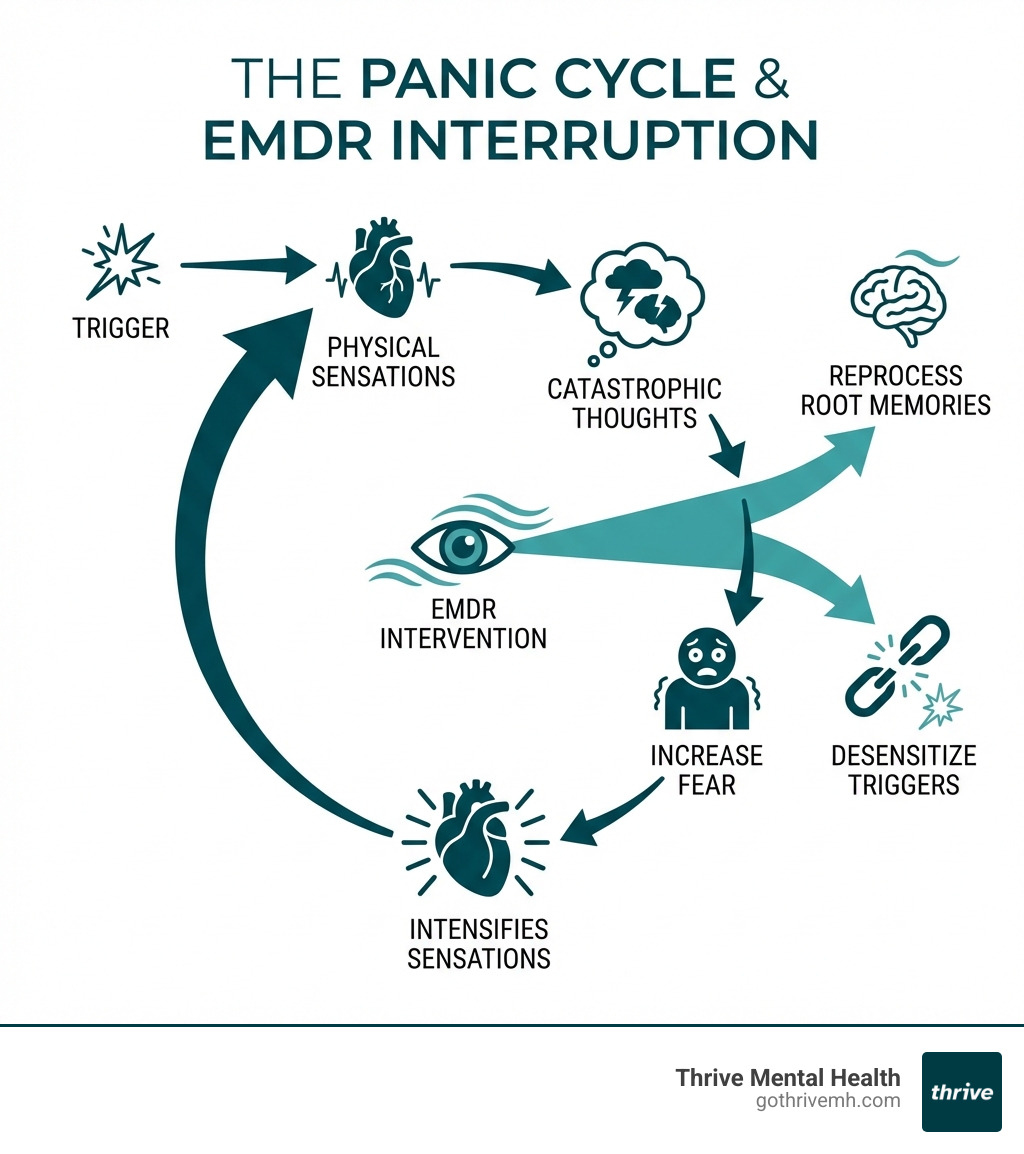
A panic attack is your body’s alarm system firing at 200% for no reason. Your brain thinks you’re dying when you’re actually safe. This “false alarm” floods you with adrenaline, cortisol, and pure terror, all for nothing.
The Real Cost of Panic Attacks:
- 4.7% of Americans will develop panic disorder
- $1,500+ in ER visits (average 3 visits before diagnosis)
- 40% job loss rate for untreated panic disorder
- 70% develop agoraphobia (can’t leave home)
The 10 Signs Your Body Is Having a Panic Attack [Not a Heart Attack]
- Heart rate jumps to 150+ bpm
- Can’t breathe (but oxygen levels are fine)
- Chest pain that moves (heart attacks don’t)
- Sweating in AC/shaking in heat
- Nausea hits like food poisoning
- Room spins but you’re not drunk
- Feel like you’re watching yourself from outside
- Convinced you’re dying (for the 50th time)
- Terror of going “crazy”
- Lasts 5-20 minutes (heart attacks don’t stop)
These symptoms send people to the ER convinced they’re dying. After $3,000 in tests, doctors say “it’s just anxiety.” But that fear creates the next attack. The cycle feeds itself until you’re afraid of fear itself.
How Does EMDR Stop Panic Attacks at the Source?

EMDR therapy doesn’t just manage panic symptoms, it resolves the unprocessed memories that cause them. It is a structured psychotherapy technique that helps your brain’s natural healing process get “unstuck.”
Adaptive Information Processing (AIP) model
EMDR is based on the Adaptive Information Processing (AIP) model. This simply means that your brain has a natural way to heal from distressing events. But sometimes, a memory (like your first panic attack) is too overwhelming and gets “stuck.” It doesn’t get filed away as “over.” EMDR helps your brain finish processing that memory, so it no longer triggers a panic response.
Bilateral stimulation (BLS): eye movements, tapping, or tones
A key component of EMDR therapy is bilateral stimulation (BLS). This involves rhythmic left-right stimulation, typically through guided eye movements (following a therapist’s hand or a light bar), auditory tones (heard through headphones), or tactile sensations (alternating taps on the hands or knees). This bilateral stimulation is thought to mimic the brain activity that occurs during REM sleep, a period when our brains naturally process experiences. By engaging BLS while recalling distressing memories, EMDR helps activate both hemispheres of the brain, facilitating the reprocessing of these “stuck” memories.
Reprocessing stuck memories
During EMDR sessions, you briefly focus on a distressing memory or a panic-inducing event while simultaneously experiencing BLS. This dual attention helps to reduce the emotional charge of the memory. The goal is not to erase the memory, but to change how it’s stored in your brain, making it less vivid, less emotionally intense, and less likely to trigger panic. The process helps your brain learn that the past event is over and that you are safe in the present.
Desensitization and cognitive restructuring
As memories are reprocessed, the emotional distress associated with them decreases (desensitization). Your therapist also supports cognitive restructuring, which means challenging and replacing negative beliefs that have formed around these experiences. For example, if a panic attack led to the belief “I am unsafe,” EMDR helps to shift that to a more positive and realistic belief like “I am capable and can handle challenges.” This process helps to build a more adaptive understanding of yourself and your ability to cope.
[Learn more about Virtual Therapy at Thrive.]
The 8 Phases of EMDR: Your Step-by-Step Map Out of Panic
EMDR therapy is a structured, eight-phase approach that systematically addresses distressing memories and their impact. For EMDR for panic attacks, these phases are carefully customized:
- History Taking and Treatment Planning: Your therapist begins by understanding your history, including significant life events, the onset of your panic attacks, and identifying specific memories or triggers that contribute to your panic. This helps create a personalized treatment plan.
- Preparation Phase: This is crucial for panic disorder. The focus is on building a strong therapeutic relationship and equipping you with coping skills and stress-reduction techniques. This might include diaphragmatic breathing, “Calm Place” exercises (visualizing a safe, peaceful environment), and grounding techniques. This phase ensures you feel safe and stable enough to engage in the reprocessing work.
- Assessment: You and your therapist identify a specific target memory (for example, your first panic attack, a particularly severe one, or a current trigger). You identify the most disturbing image, a negative belief associated with it (“I’m going to die”), the emotions you feel, and where you feel it in your body, rating their intensity.
- Desensitization: This is where the bilateral stimulation comes in. While focusing on the target memory, you follow eye movements or engage in other BLS. The goal is to reduce the emotional and physical distress associated with the memory, allowing new insights and connections to emerge. Your therapist will guide you, stopping short of overwhelming you.
- Installation: Once the distress has significantly decreased, the focus shifts to strengthening a positive belief that replaces the old negative one (for example, changing “I’m helpless” to “I am strong and can cope”).
- Body Scan: Even after the mind feels better, residual tension or sensations might remain. You and your therapist scan your body to identify and process any lingering physical discomfort related to the original memory, aiming for a more complete resolution.
- Closure: Each session ends with ensuring you feel calm and stable. Coping skills are reinforced and you discuss what to expect between sessions. You might be asked to keep a log of panic attacks or anxiety levels.
- Re-evaluation: At the beginning of subsequent sessions, you and your therapist check on the progress made, re-evaluate the previous target, and identify new targets if needed. This ensures sustained progress and addresses any new insights or challenges.
Targeting the First Panic, And Every Fear After
For EMDR for panic attacks, therapists often work through specific events in a strategic order to dismantle the panic cycle:
- Find the first panic memory (Initial Sensitizing Event): Sometimes, the first panic attack is a highly distressing experience that the brain doesn’t fully process. Targeting this “Initial Sensitizing Event” can reduce its power.
- Process the memory and later attacks: The first panic attack, the worst panic attack, and the most recent panic attack are systematically addressed. This helps to desensitize the emotional charge from these pivotal experiences. Therapists may also target any “background stressors” or childhood events that contributed to a general feeling of unsafety or vulnerability.
- Use “flash-forward” to face future fears: Panic disorder often involves “flashforwards”, vivid, distressing images of future panic attacks or catastrophic outcomes. EMDR can effectively process these future-oriented fears, reducing their vividness and emotional intensity, and helping you prepare for future encounters with greater confidence.
- Break the cycle for good: By reprocessing these key memories and future fears, your brain learns that these situations are no longer dangerous, which can reverse the panic attack process and help prevent future attacks.
EMDR vs. CBT: Which Kills Panic Faster? [Side-by-Side Data]
Both work. One works faster. Here’s the data that insurance companies don’t want you to see.
| What Matters | EMDR | CBT (Talk Therapy) |
|---|---|---|
| Sessions to Relief | 8-12 sessions | 20-30+ sessions |
| Cost (Without Insurance) | $1,200-$1,800 total | $3,000-$4,500 total |
| Homework Hours | 0-2 hours total | 40-60 hours total |
| Success Rate | 77% symptom-free | 60% improved |
| Relapse at 1 Year | 10% | 30% |
| Works for Non-Talkers | Yes | No |
Why EMDR Wins for Trauma-Based Panic
CBT makes you think differently about panic. EMDR makes panic irrelevant. One manages symptoms. The other deletes the cause.
EMDR is 2-3x faster when:
- Your first panic attack was traumatic
- You can pinpoint the trigger event
- Talk therapy helped but plateaued
- You hate homework and worksheets
- You want results in weeks, not months
The Homework Problem Nobody Talks About
CBT assigns 2-3 hours of homework weekly. Thought logs. Exposure exercises. Breathing practice. Most people don’t do it. Then feel guilty. Then panic about failing therapy.
EMDR happens in session. No worksheets. No exposure homework. No guilt. Just show up and heal.
[See how Intensive Outpatient Programs (IOP) at Thrive combine EMDR with other proven methods.]
The Science: EMDR Beats Panic in 73% of Cases [Research Proof]

The studies insurance companies hope you don’t read:

Hard Data on EMDR for Panic
- 73% panic-free after 12 EMDR sessions (Frontiers in Psychology, 2017)
- Equal to CBT in effectiveness, 50% fewer sessions needed
- VA/DoD approved for trauma (panic is often trauma)
- WHO recommended for anxiety disorders globally
- 90% maintain gains at 12-month follow-up
[See the research: EMDR vs. CBT for panic disorder]
Why EMDR Works When Talk Therapy Fails
Talk therapy uses words. Panic lives in your body. EMDR speaks body language:
- Bypasses verbal brain (panic isn’t logical)
- Calms nervous system directly (like rebooting a computer)
- Processes pre-verbal trauma (stuff from before you could talk)
- Works for people who can’t articulate feelings
- No need to tell your whole story repeatedly
Myths That Keep People Suffering
Myth: “EMDR is hypnosis”
Fact: You’re 100% awake and in control. Stop anytime.
Myth: “It erases memories”
Fact: Memories stay. The terror leaves.
Myth: “Quick fix = doesn’t last”
Fact: 90% keep improvements after one year. CBT: 70%.
Myth: “Too good to be true”
Fact: 40+ years of research. VA uses it. Insurance covers it.
[Read more about Somatic Therapy and body-based healing.]
Build a Panic-Proof Life: What Happens After EMDR?
The ultimate goal of EMDR therapy for panic attacks is to empower you to live a life free from the grip of fear. It’s about more than just managing symptoms; it’s about changing your relationship with your past and building a future where panic doesn’t dictate your choices.
Resilience and confidence
By processing the memories that triggered panic, you build internal resilience. You learn that you can face distressing experiences and come out stronger. This newfound confidence extends beyond panic attacks, impacting all areas of your life.
Less avoidance, more freedom
Panic disorder often leads to agoraphobia, avoiding places or situations where escape might be difficult or help unavailable. With EMDR, as the fear of panic attacks diminishes, so does the need for avoidance. You regain the freedom to go anywhere and do anything without the constant dread.
Trust your body again
Panic attacks can make you feel betrayed by your own body. EMDR helps to re-establish a sense of trust, allowing you to interpret normal bodily sensations accurately rather than catastrophically.
Long-term calm, not just symptom management
EMDR aims for a fundamental shift in how your brain processes information, leading to lasting relief. This isn’t a band-aid; it’s a deep healing process that can lead to a sustained sense of calm and well-being.
[Learn about Partial Hospitalization Programs (PHP) at Thrive.]
The Preparation Phase: Your Safety Net for EMDR
The Preparation Phase (Phase 2) is a cornerstone of successful EMDR treatment, particularly for panic attacks. It’s our safety net, ensuring you have the resources to handle the work ahead. We focus on:
- Building trust with your therapist: A strong therapeutic alliance is foundational. We ensure you feel understood, supported, and safe with us.
- Learning calming skills: Before diving into difficult memories, we equip you with self-soothing and emotional regulation techniques. This might include guided imagery for a “Calm Place,” breathing exercises, or “container” exercises to temporarily store distressing thoughts. These tools are vital for managing any emotional intensity that may arise during reprocessing.
- Staying safe and stable during tough memories: We ensure you have the internal resources and external support needed. This might involve discussing how to handle strong emotions between sessions or ensuring you have a supportive environment at home.
Imagine Your Life Without Panic Attacks
What would your life look like if panic attacks were a distant memory? Imagine:
- Going anywhere, doing anything, no fear: Traveling, attending social events, or simply running errands without the constant anxiety of an impending attack.
- Handle stress with confidence: Facing life’s challenges with a calm, regulated nervous system, knowing you have the inner strength to cope.
- Enjoy real freedom: Reclaiming the joy and spontaneity that panic attacks often steal, living fully in the present moment.
EMDR for Panic Attacks: Your Top 5 Questions [Quick Answers]
How many EMDR sessions will I need?
8-12 sessions for most panic disorders. First panic memory: 3-4 sessions. Worst attack: 2-3 sessions. Future fears: 2-3 sessions. Complex trauma adds 4-8 sessions.
Will EMDR make my panic worse before better?
Some feel more for 24-48 hours after processing. Like cleaning a wound, hurts briefly, then heals. Your therapist teaches coping skills FIRST. You’re never thrown in deep without a life jacket.
Does insurance cover EMDR for panic?
Yes, most major plans cover it. Cigna, Optum, Aetna, Florida Blue, and others cover EMDR as evidence-based treatment. Thrive verifies benefits in 2 minutes online. No surprises.
Can I do EMDR online or do I need in-person?
Online EMDR works. Same results as in-person. Thrive offers virtual IOP/PHP with EMDR for residents across Florida. Evening sessions available.
How do I start EMDR at Thrive?
Verify insurance in 2 minutes online. Or call 561-203-6085. We’ll match you with an EMDR-trained therapist within 48 hours. Start healing next week.
Stop Managing Panic, Delete It With EMDR [Start This Week]
You’ve tried breathing exercises. Downloaded apps. Read books. Maybe even tried therapy. But you’re still losing days to panic.
EMDR doesn’t teach you to live with panic. It removes panic’s power source.
In 8-12 sessions, you could be done. Not “managing.” Not “coping.” Done.
At Thrive Mental Health, we use EMDR in our Florida-based IOP/PHP programs designed for working adults. Virtual and in-person options. Evening sessions. Insurance accepted.
Ready for support? Thrive offers virtual IOP programs for Florida residents with evening options. Verify your insurance in 2 minutes (no obligation) → Start benefits check or call 561-203-6085. If you’re in crisis, call/text 988.

This article is for informational purposes only and is not a substitute for individualized clinical advice or insurance verification.