






Psychiatry: Ultimate 2025 Guide to Wellness
Understanding the Core of Mental Healthcare
Psychiatry is the medical specialty focused on diagnosing, treating, and preventing mental, emotional, and behavioral disorders. If you’re searching for clear answers about what psychiatry is and how it differs from psychology, here’s what you need to know:
Quick Answer: What is Psychiatry?
- Medical Specialty: Psychiatry is a branch of medicine, not just talk therapy.
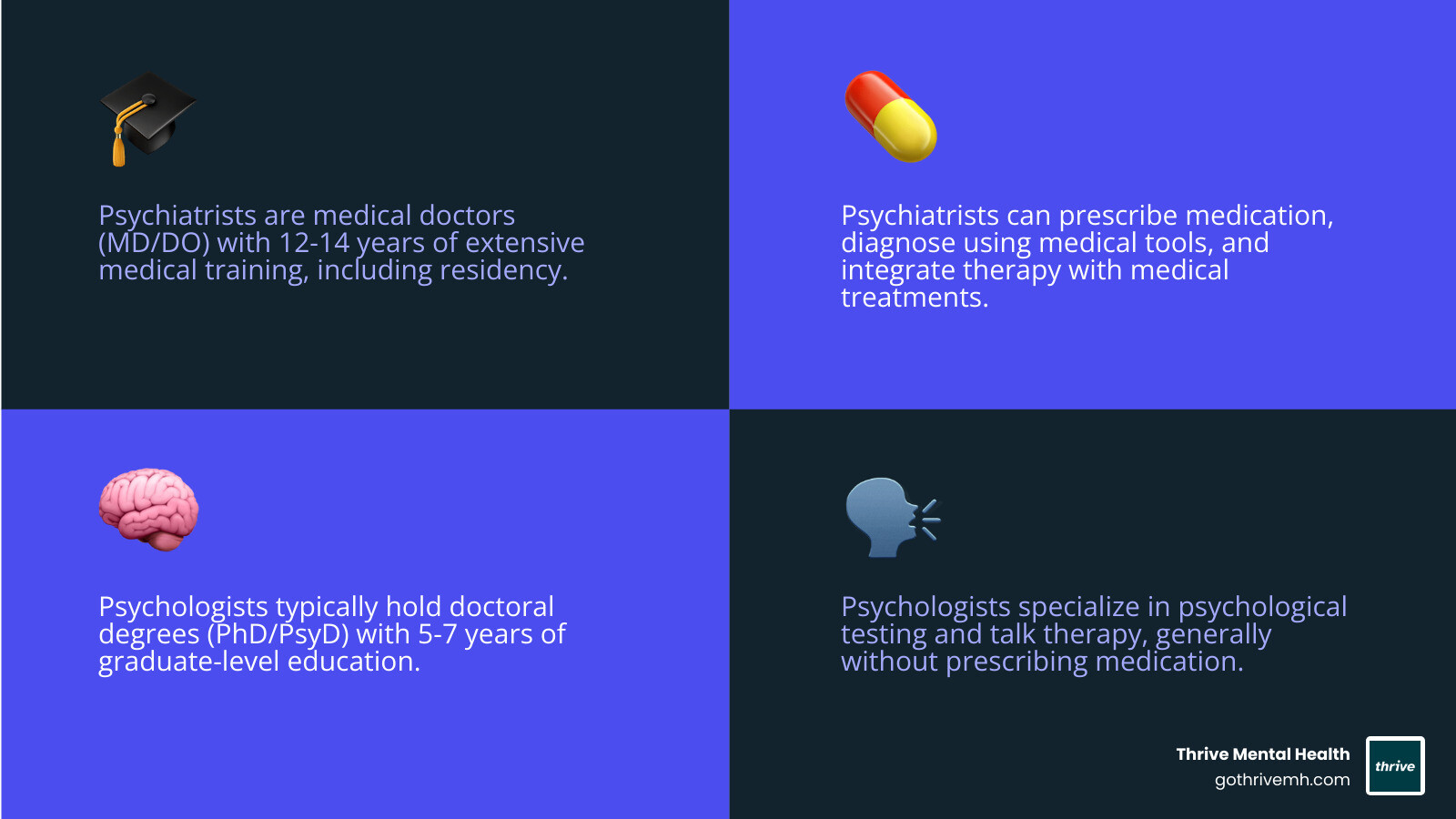
- Who Provides It: Psychiatrists are medical doctors (MD or DO) with 12+ years of training.
- Key Difference from Psychology: Psychiatrists can prescribe medication; psychologists typically cannot.
- Treatment Approach: Combines medication, therapy, and medical interventions.
- When You Need It: For severe symptoms, medication management, or when weekly therapy isn’t enough.
Approximately 1 in 5 adults in the U.S. experiences a mental illness each year. Yet confusion about who does what in mental healthcare keeps many from getting the right help. The distinction matters because half of all mental health conditions begin by age 14, and early, correct intervention can change a life’s trajectory.
Psychiatrists bring a unique medical lens to mental health. Because depression can stem from thyroid problems or anxiety from heart conditions, they are trained to see the whole picture, your mind and your body. At Thrive Mental Health, we integrate psychiatry into our evidence-based programs across Florida, ensuring every client receives personalized care that addresses both biological and psychological needs.
Psychiatry definitions:
Who Are Psychiatrists and What Do They Actually Do?
If you’ve ever wondered whether you need a psychiatrist versus a therapist, you’re not alone. Simply put: Psychiatrists are medical doctors (MD or DO) who specialize in mental health. They complete medical school and years of residency training in Psychiatry, the diagnosis, treatment, and prevention of mental disorders.
What truly sets psychiatrists apart is their medical lens. They understand the intricate mind-body connection, recognizing when depression might be a thyroid problem or anxiety could be linked to a heart condition. They see the whole picture: brain chemistry, genetics, life circumstances, and physical health.

Here’s what a psychiatrist does:
- Diagnosis: They conduct thorough evaluations using clinical interviews, medical history, and sometimes lab work to identify conditions from anxiety and depression to bipolar disorder, using criteria from the DSM-5-TR. A key step is ruling out physical causes for your symptoms.
- Treatment Planning: Based on the diagnosis, they create individualized plans that may combine medication, therapy, and lifestyle changes.
- Medication Management: As medical doctors, psychiatrists can prescribe psychiatric medications. They monitor your response, adjust dosages, and manage side effects to find the right fit. This is a key differentiator, as most psychologists and therapists cannot prescribe.
- Psychotherapy: Many psychiatrists also provide talk therapy. Often, they collaborate with therapists in an integrated care model, the psychiatrist manages medication while a therapist provides weekly counseling. This team approach is central to our virtual intensive outpatient programs at Thrive Mental Health.
Becoming a psychiatrist is a 12+ year commitment involving a bachelor’s degree, medical school, and a multi-year psychiatric residency. Many then pursue board certification and subspecialty fellowships in areas like Addiction Psychiatry, Child and Adolescent Psychiatry, or Geriatric Psychiatry.
| Mental Health Professional | Training/Education | Can Prescribe Medication? | Primary Focus |
|---|---|---|---|
| Psychiatrist | MD or DO + 4+ years residency | Yes | Diagnosis, medication management, medical oversight |
| Psychologist | PhD or PsyD (Doctoral) | No (few exceptions) | Psychotherapy, psychological testing |
| Psychiatric Nurse Practitioner (PMHNP) | Master’s or DNP (Nursing) | Yes (varies by state) | Medication management, psychotherapy |
| Licensed Clinical Social Worker (LCSW) | Master’s in Social Work (MSW) | No | Psychotherapy, case management, advocacy |
Psychiatrists work in various settings, from private practices and hospitals to community agencies and specialized treatment centers like those we operate across Florida. If you have insurance like Cigna, Optum, or Florida Blue, psychiatric services are typically covered, but it’s always wise to verify your benefits first.
The Diagnostic Process: How Psychiatrists Create a Path to Healing
Diagnosing mental health conditions isn’t a simple test; it’s a comprehensive investigation into you. Psychiatry uses the biopsychosocial model, which recognizes that your well-being is shaped by three interconnected forces:
- Biological factors: Your genetics, brain chemistry, and physical health. A psychiatrist investigates if a thyroid issue is mimicking depression or if a vitamin deficiency is affecting your mood.
- Psychological factors: Your thoughts, emotions, coping strategies, and past experiences like trauma. These internal patterns play a crucial role in your mental state.
- Social factors: Your relationships, support network, work environment, and cultural background. Social isolation or financial stress can significantly impact how you feel and function.
By examining these domains together, a psychiatrist doesn’t just diagnose a condition, they understand your condition in your context. To build this picture, they use several tools:
- Clinical Interviews: The foundation of diagnosis. Your psychiatrist listens to your symptoms, history, and life circumstances to understand your experience.
- Physical Exams and Lab Tests: This is where a psychiatrist’s medical training is essential. They may order blood work to rule out medical conditions that can cause or worsen psychiatric symptoms.
- The DSM-5-TR: The Diagnostic and Statistical Manual of Mental Disorders provides standard criteria for classifying conditions, ensuring consistency. However, it’s a guide, not a rigid rulebook, as diagnosis is an ongoing process informed by scientific research.
What to Expect During Your First Psychiatry Appointment
Your first appointment is a comprehensive evaluation, usually lasting 60-90 minutes. It’s an in-depth conversation, not a quick check-in. Expect to discuss:
- Your current symptoms: What you’re experiencing and how it affects your daily life.
- Your personal and family history: Previous diagnoses, treatments, and any family history of mental illness.
- Your goals for treatment: What does “better” look like for you? Your goals guide the treatment plan.
This first meeting is also about building a collaborative relationship. Your input and lived experience are vital. We also address practical matters like insurance. At Thrive Mental Health, we work with major providers like Cigna, Optum, and Florida Blue. Our team can help you verify your insurance benefits for our programs across Florida, so there are no surprises.
After the evaluation, your psychiatrist will create a personalized treatment plan. If you need more support than weekly therapy, our virtual intensive outpatient programs offer flexible, evidence-based care that fits your life.
Your Treatment Toolkit: Medications, Therapy, and Beyond
There is no single “silver bullet” for mental health. Real healing in Psychiatry comes from an integrated approach that addresses both brain chemistry and life circumstances.

Medication management can be life-changing. When brain chemistry is out of balance, medication helps restore it, creating a stable foundation for therapy and daily functioning. Psychotherapy (talk therapy) is where you do the deeper work of understanding patterns, developing coping skills, and rewiring how your brain processes thoughts and emotions.
For symptoms that don’t respond to medication and therapy alone, somatic therapies offer other options:
- Electroconvulsive Therapy (ECT): A safe and highly effective medical treatment for severe, treatment-resistant depression, conducted under anesthesia.
- Transcranial Magnetic Stimulation (TMS): A non-invasive procedure that uses magnetic fields to stimulate nerve cells in the brain. It’s particularly effective for depression and anxiety.
Common Psychiatric Medications and How They Work
Medications work by influencing neurotransmitters, the brain’s chemical messengers. A psychiatrist prescribes them to rebalance brain chemistry. For more details, the American Psychiatric Association Publishing is a great resource.
 Discover Nearby Neurodivergent Groups for SupportCoping Strategies
- Antidepressants (SSRIs, SNRIs): Used for depression and anxiety, they work by increasing levels of neurotransmitters like serotonin and norepinephrine to regulate mood.
- Anxiolytics (Anti-anxiety): Benzodiazepines provide rapid relief for panic but are typically used short-term due to dependence risk. Other non-addictive options are available for long-term use.
- Antipsychotics: Essential for managing symptoms of psychosis (hallucinations, delusions) in conditions like schizophrenia and bipolar disorder.
- Mood Stabilizers: Crucial for bipolar disorder, they prevent the extreme highs of mania and lows of depression. Lithium is a classic example.
- Stimulants: Used for ADHD, they improve focus and impulse control by increasing dopamine and norepinephrine.
Types of Psychotherapy Used in Modern Psychiatry
Medication addresses brain chemistry; psychotherapy addresses life patterns. At Thrive Mental Health, our programs are built on evidence-based therapies. You can learn more about our evidence-based therapies used in our Florida programs.
- Cognitive Behavioral Therapy (CBT): Helps you identify and change negative thinking patterns and behaviors. It’s highly effective for depression, anxiety, and PTSD.
- Dialectical Behavior Therapy (DBT): Teaches skills for managing intense emotions, tolerating distress, and improving relationships. It’s especially helpful for emotional dysregulation.
- Psychodynamic Therapy: Explores how unconscious patterns and past experiences shape your present life, helping you gain insight into recurring issues.
- Humanistic Therapy: A supportive, non-judgmental approach that empowers you to find your own path to healing and personal growth.
- Interpersonal Therapy (IPT): A time-limited therapy focused on improving your relationships and social functioning to reduce depressive symptoms.
Finding the Right Support: When to See a Psychiatrist
If you’re in crisis or having thoughts of self-harm, call or text 988 right now. You are not alone.
Recognizing you need specialized help is a courageous decision. There are clear signs that working with a psychiatrist could be the right next step.

Consider seeing a psychiatrist if you experience:
- Severe or persistent symptoms: Overwhelming sadness, anxiety, or intrusive thoughts that affect your daily life.
- Symptoms that aren’t improving: You’ve been in weekly therapy, but you’re still stuck or getting worse.
- A need for medication: You or your therapist believe medication could help, and you need an expert evaluation.
- Complex mental health conditions: Bipolar disorder, schizophrenia, or treatment-resistant depression often require psychiatric oversight.
- Possible physical causes: A psychiatrist can investigate if medical issues like thyroid problems are contributing to your symptoms.
Finding a Psychiatrist and Navigating Levels of Care
Start by talking to your primary care doctor for a referral. You can also use your insurance directory (e.g., Cigna, Optum, Florida Blue) or the APA Psychiatrist Finder to locate providers in Florida.
It’s also important to understand the different levels of care:
- Outpatient Care: The standard weekly or bi-weekly appointment with a psychiatrist or therapist.
- Intensive Outpatient Programs (IOP): For when weekly therapy isn’t enough. IOPs offer structured therapy for several hours, multiple days a week. At Thrive Mental Health, our virtual IOP programs provide this support flexibly, with evening options available.
- Partial Hospitalization Programs (PHP): The most intensive outpatient care, with treatment most of the day, several days a week. PHPs are an alternative to or step-down from inpatient hospitalization.
Navigating insurance can be a barrier. We make it simple to verify your insurance benefits in just two minutes. We accept major plans and provide clarity on your coverage so you can focus on healing.
If you’re unsure where to start, call us at 561-203-6085. We’ll help you find the right level of care.
Frequently Asked Questions about Psychiatry
What is the main difference between a psychiatrist and a psychologist?
The core difference is medical training. A psychiatrist is a medical doctor (MD or DO) who went to medical school and can prescribe medication. They are experts in the biological and medical aspects of mental health. A psychologist holds a doctorate (PhD or PsyD) and specializes in psychotherapy and psychological testing but typically cannot prescribe medication.
How much does a psychiatrist cost and does insurance cover it?
Costs vary, but psychiatric services are typically covered by health insurance, including major plans like Cigna, Optum, and Florida Blue. Mental health parity laws require most plans to cover mental healthcare like any other medical service. However, your copay, deductible, and network status will affect your final cost. We recommend you verify your insurance benefits before your first appointment, especially for care in Florida.
Can a psychiatrist do therapy?
Yes, absolutely. All psychiatrists are trained in psychotherapy. Some provide both talk therapy and medication management. However, it’s increasingly common for psychiatrists to focus on diagnosis and medication while collaborating with a therapist who handles the weekly counseling. This integrated model ensures you get expert care from both sides, medical and therapeutic. This is the approach we use in our Intensive Outpatient Programs at Thrive.
Conclusion: Taking the Next Step Toward Mental Wellness
Psychiatry is a vital medical field that offers a clear path to recovery by combining biological, psychological, and social treatments. From medication and psychotherapy to advanced somatic therapies, psychiatrists are uniquely equipped to address complex mental health needs. Recognizing you need support is a profound act of self-care. At Thrive Mental Health, we make this journey accessible and effective with flexible, expert-led virtual and in-person programs for those who need more than weekly therapy.
Ready for support? Thrive offers virtual IOP programs with evening options. Verify your insurance in 2 minutes (no obligation) → Start benefits check or call 561-203-6085. If you’re in crisis, call/text 988.

This article is for informational purposes only and is not a substitute for individualized clinical advice or insurance verification.