





Now Serving California, Florida, Indiana, Arizona & South Carolina 🌿

Thrive Earns Landmark Joint Commission Accreditation 🚀  Learn more

Pill Power: Your Guide to Effective Medication Management

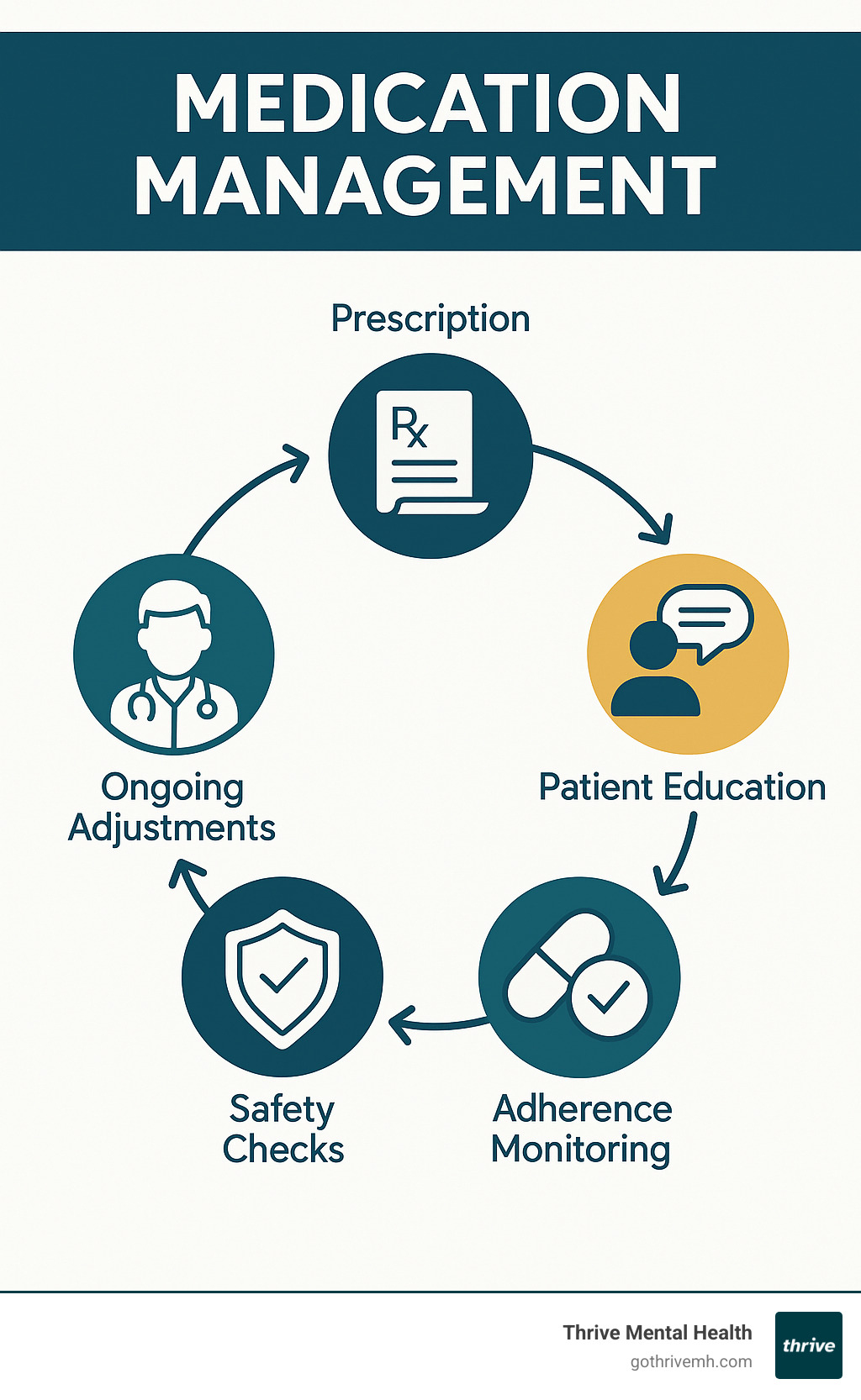
Medication Management

INTRO replaced with byline + 1,800w of psychiatric medication content <_io.TextIOWrapper name='‘ mode=’w’ encoding=’utf-8’>

By Anna Green, LMHC · Medically reviewed by Rebeca Da Silva De Goes, RMHCI · Updated June 2026

Psychiatric medication management is the ongoing clinical process of prescribing, monitoring, and adjusting medications for mental health conditions — depression, anxiety, bipolar disorder, ADHD, OCD, PTSD, and others. It’s a partnership between you, your prescriber (typically a psychiatrist, psychiatric nurse practitioner, or in some cases a primary care physician), your therapist, and your pharmacist. Done well, it makes the difference between medications that work and medications that get abandoned. This guide covers what psychiatric medication management actually involves, the common mental health medication classes and what to expect from each, how the 4-6 week adjustment window works, how online medication management compares to in-person, and how medication management integrates with therapy or higher-level care like IOP.

Key takeaway

Psychiatric medication management is not the same as “having a prescription.” It’s a structured clinical process of finding the right medication, the right dose, monitoring how it works for you, and adjusting as needed. About two-thirds of people need to try a second medication or combination before finding the right one — that’s not failure, that’s the process working.

Common psychiatric medications: what each class does

Mental health prescribers work with a defined set of medication classes, each targeting different neurotransmitter systems. Understanding which class your medication belongs to helps you anticipate what to expect, what side effects are common, and how long it typically takes to work.

Antidepressants (SSRIs and SNRIs)

The most-prescribed mental health medications. SSRIs (selective serotonin reuptake inhibitors) include sertraline (Zoloft), escitalopram (Lexapro), fluoxetine (Prozac), and citalopram (Celexa). SNRIs (serotonin-norepinephrine reuptake inhibitors) include venlafaxine (Effexor) and duloxetine (Cymbalta). Used for depression, generalized anxiety disorder, panic disorder, OCD, PTSD, and social anxiety.

Time to effect: 4-6 weeks for full therapeutic effect. Sleep, appetite, and energy often improve first; mood improvement typically lags by 2-3 weeks. For a detailed walkthrough of what to expect each week, see SSRI Timeline: Week by Week.

Common side effects: nausea and GI upset in the first 1-2 weeks (usually self-limiting), sexual side effects in 30-70% of people (often persistent), sleep disturbance, emotional blunting, weight changes. A 2018 review in JAMA Psychiatry found about 40% of first prescriptions for depression are changed within six months — most driven by tolerability rather than effectiveness.

Mood stabilizers

Used primarily for bipolar disorder and sometimes for treatment-resistant depression. Includes lithium, valproate (Depakote), lamotrigine (Lamictal), and carbamazepine. Lithium is the gold standard for bipolar I disorder and is the only psychiatric medication with strong evidence of reducing suicide risk.

Time to effect: Lithium requires 1-3 weeks to reach therapeutic blood levels, and dosing is adjusted based on regular blood tests. Lamotrigine requires a slow 4-6 week titration to avoid serious rash.

Required monitoring: Lithium needs blood level checks every 3-6 months (or more often during adjustment), plus kidney and thyroid function annually. Valproate needs liver function and platelet monitoring. This is non-optional — uncoordinated mood-stabilizer prescribing is genuinely dangerous.

Anti-anxiety medications (benzodiazepines and others)

Benzodiazepines — alprazolam (Xanax), lorazepam (Ativan), clonazepam (Klonopin), diazepam (Valium) — work rapidly for acute anxiety but carry significant risks of dependence and withdrawal. Most psychiatric prescribers now use them sparingly, typically for short-term bridging while an SSRI is taking effect, for acute panic attacks, or for specific situational anxiety.

Non-benzodiazepine anti-anxiety options include buspirone (BuSpar), hydroxyzine, and beta-blockers like propranolol for performance anxiety.

What to track: if you’ve been on a benzodiazepine for more than a few weeks, do not stop abruptly. Withdrawal can include seizures. Your prescriber will taper you gradually, often over weeks or months for long-term users.

Stimulants (for ADHD)

Methylphenidate-based (Ritalin, Concerta, Focalin) and amphetamine-based (Adderall, Vyvanse) stimulants are first-line for ADHD. Stimulants work quickly — usually within 30-60 minutes — and effects are felt acutely the day you take them. Non-stimulant alternatives (atomoxetine/Strattera, guanfacine/Intuniv, bupropion/Wellbutrin) take longer to work but don’t carry the same controlled-substance considerations.

Common monitoring: heart rate and blood pressure (cardiovascular safety), sleep quality, appetite, and weight. Stimulants are Schedule II controlled substances in the U.S. — your prescriber must see you regularly (typically monthly or quarterly) to continue prescribing, and there are state-specific quantity limits. For more on how ADHD medication management works via telehealth, see Online ADHD Medication Management in 2026.

Antipsychotics

Used for schizophrenia, schizoaffective disorder, bipolar with psychotic features, and as augmentation for treatment-resistant depression. Includes risperidone, olanzapine, aripiprazole, quetiapine, and second-generation drugs like brexpiprazole. Often have significant metabolic side effects (weight gain, blood sugar changes, lipid changes) that require ongoing monitoring.

Required monitoring: metabolic labs (fasting glucose, lipids), weight, and movement assessments (for tardive dyskinesia risk). The American Psychiatric Association publishes monitoring guidelines that prescribers follow as standard of care.

The 4-6 week adjustment window — what to expect

The hardest stretch of starting most psychiatric medications is the first 4-6 weeks. Side effects show up first; symptom relief shows up later. Many people feel worse before they feel better — a documented effect that NIMH notes can include increased anxiety, sleep disruption, and emotional flattening in the first weeks of an SSRI.

What good medication management looks like during this window:

  • A clear baseline. Before starting medication, document your current symptoms (PHQ-9 for depression, GAD-7 for anxiety) and sleep, appetite, energy, and sexual function. This gives you and your prescriber something to measure against.
  • Frequent check-ins. A first follow-up at 1-2 weeks (to catch tolerability issues), then 4 weeks (to assess early effect), then 8 weeks (to assess full effect) is standard. Monthly is the minimum during the adjustment phase.
  • Side effect tracking. Keep a brief daily log — even a 1-line note on energy, sleep, mood, and any new symptoms. Patterns matter more than any single day.
  • Crisis criteria defined upfront. Your prescriber should tell you exactly when to call before your next appointment: new or worsening suicidal thoughts, severe agitation, hypomanic symptoms, rare reactions like serotonin syndrome.
  • A second-medication conversation. If the first medication isn’t working at 8 weeks at a therapeutic dose, your prescriber should already be planning the next move — augmentation, switching, or combination.

If you’re getting prescribed a medication and then handed a 90-day supply with a “see you in three months” appointment, that’s not medication management — that’s a prescription handoff. The structured monitoring is what makes the difference.

Online and virtual medication management

Since 2020, online psychiatric medication management has become standard practice across most non-controlled medication categories. Published outcomes research shows telehealth psychiatric prescribing produces comparable clinical outcomes to in-person care for the majority of mental health conditions when delivered by a qualified prescriber.

What works well via telehealth:

  • Antidepressants, mood stabilizers, anti-anxiety (non-controlled), and antipsychotics — full prescribing and ongoing management is straightforward via video
  • Initial evaluations — comprehensive psychiatric assessment via video is well-validated
  • Routine follow-ups — 20-30 minute video check-ins for medication adjustments
  • Care coordination with a therapist and primary care via shared records

What requires more careful handling via telehealth:

  • Stimulants and other controlled substances. The federal DEA telehealth rules around controlled-substance prescribing have evolved since the COVID-era flexibilities. As of 2026, most states allow telehealth stimulant prescribing under specific conditions, but rules vary by state and your prescriber will know what applies. Some practices require at least one annual in-person visit for controlled substances.
  • Lithium and other medications requiring lab monitoring. Telehealth works for the visits, but you’ll need a local lab or home phlebotomy service for blood draws.
  • Crisis-level acute care. If you’re actively suicidal or in psychotic crisis, in-person psychiatric care (or emergency care) is the safer setting.

Online medication management is integrated into Thrive’s virtual IOP — your psychiatric prescriber, individual therapist, and group sessions all coordinate within the same treatment team, with shared records and care plans. This is meaningfully different from getting therapy from one platform and medication from another with no communication between them.

Medication management combined with therapy

For most mental health conditions, the strongest evidence supports combined treatment — medication plus psychotherapy — over either alone. A 2017 meta-analysis published in JAMA Psychiatry found that combined treatment for major depressive disorder produces significantly better outcomes than medication or therapy alone, with effects most pronounced for moderate-to-severe depression.

The combination works because medication and therapy target different parts of the same problem. Medication tends to address the biological substrate — the neurotransmitter changes that drive symptoms — while therapy addresses the patterns of thinking, behavior, and relationships that maintain the condition over time. Each makes the other more effective.

What good coordination between medication management and therapy looks like:

  • Shared treatment plan. Your prescriber and therapist agree on the working diagnosis, current goals, and how each treatment is contributing
  • Communication when things change. If your therapist notices new symptoms or significant changes between medication visits, that information reaches your prescriber — not just at the next quarterly check-in
  • Aligned timing for adjustment decisions. Medication changes are often made in dialogue with what’s coming up in therapy. Starting a difficult trauma processing phase is not the moment to also start a new SSRI
  • Integrated documentation. Both providers can see what the other is working on without you having to be the messenger

If your psychiatric prescriber and therapist are at different practices with no communication, you’re doing more coordination work than you should be. Programs like Thrive’s virtual IOP build this coordination into the structure.

Medication management inside an IOP or PHP

For people whose symptoms are severe enough that weekly outpatient sessions aren’t enough, an Intensive Outpatient Program (IOP) or Partial Hospitalization Program (PHP) offers a different model for medication management. With 9-12 hours of clinical contact per week (typical for IOP) or 20-30 hours (typical for PHP), the medication management process gets several things weekly outpatient care can’t:

  • Real-time side effect surveillance. Clinical staff see you multiple times per week. The side effects you’d forget to mention at a monthly check-in get noticed and asked about by IOP staff. This matters because the most common reason people stop psychiatric medication is unaddressed side effects, not lack of efficacy
  • Coordinated decision-making. Your prescriber, therapist, and group facilitators are on the same team, often meeting weekly to discuss treatment direction
  • Therapy that holds you through the adjustment window. The first 4-6 weeks of a new SSRI is the hardest stretch. IOP structure provides daily contact, group support, and skills coaching that make the window survivable
  • Faster medication adjustments. When changes are needed, they happen in days rather than the weeks-between-appointments of outpatient care

Read more about how medication and IOP work together for a deeper walkthrough, and see Virtual IOP Cost in 2026 for what insurance typically covers and self-pay ranges.

Switching medications safely

About two-thirds of people on psychiatric medication will at some point need to switch — because of side effects, partial response, or loss of effect over time. The switch itself is a clinical procedure that requires the same care as starting medication initially.

Common switching approaches:

  • Cross-titration. Reducing the dose of the current medication while gradually adding the new one. Standard for switching between SSRIs or between antipsychotics
  • Direct switch. Stopping one medication and starting another the next day. Sometimes appropriate within the same class with similar pharmacology
  • Washout period. Stopping the first medication, waiting (often 1-2 weeks), then starting the new one. Required when switching to or from MAOIs and in some other specific situations to avoid drug interactions like serotonin syndrome

The risk in switching is twofold: discontinuation symptoms from the medication you’re stopping (especially with SSRIs/SNRIs — physical symptoms like dizziness, nausea, “brain zaps,” and emotional symptoms like irritability), and re-emergence of the original symptoms during the gap. A good prescriber plans the switch with you, explains what to expect, and schedules a follow-up at the right time to assess how the transition went.

Do not switch psychiatric medications without prescriber guidance. Even when the new medication is meant to replace the old one, the timing, dose, and overlap matter for safety.

When medication isn’t working — the next move

If you’ve been on a medication at a therapeutic dose for 6-8 weeks and aren’t seeing meaningful improvement, that’s clinical data — not failure. The next move depends on the partial-response picture:

  • Dose increase. If you’ve had partial response at a lower dose, often the next step is increasing within the therapeutic range before changing medications
  • Augmentation. Adding a second medication that works on a different mechanism. Common augmentation strategies include adding bupropion (Wellbutrin) to an SSRI to address sexual side effects and add energy, or adding an atypical antipsychotic at low dose for treatment-resistant depression
  • Switching class. If an SSRI hasn’t worked, switching to an SNRI, mirtazapine, or bupropion targets different neurotransmitter systems
  • Reassessment of the diagnosis. Treatment-resistant depression sometimes turns out to be bipolar II depression (which needs a mood stabilizer, not just an antidepressant) or has an undiagnosed contributor like ADHD, thyroid dysfunction, or substance use
  • Higher level of care. If outpatient medication management has been tried over months without response, an IOP or PHP can provide the intensive coordination and additional treatment modalities that change the picture

One thing that’s NOT the right answer when medication isn’t working: stopping the medication on your own and “trying without.” If a medication is contributing some benefit but not enough, stopping it can produce a noticeable drop that complicates the picture for the next prescriber.

Understanding the Fundamentals of Medication Management

Mastering medication management basics makes the entire process easier. This section breaks down the core concepts, benefits, and team approach that makes it work.

What is Medication Management and Why Is It Important?

Think of medication management as your personal health GPS. It’s a complete system ensuring every medication you take—prescribed, over-the-counter, or supplemental—helps rather than hurts. With millions of Americans taking prescription drugs, preventable mishaps are common and costly. Effective management helps you avoid these issues by:

  • Optimizing therapeutic outcomes: Ensures your medications work as intended, which is vital when treating conditions like anxiety or depression.
  • Preventing adverse drug events: Catches and avoids harmful reactions between different drugs.
  • Reducing healthcare costs: Avoids expensive emergency room visits or hospital stays caused by medication errors.
  • Improving quality of life: Replaces confusion and overwhelm with confidence and control over your health.

To ensure safety, healthcare relies on the “5 Rights” of medication administration: right patient, right drug, right dose, right route, and right time. Embracing these principles leads to patient empowerment, turning you into an active partner in your wellness journey.

The Key Components of a Successful Plan

A successful medication management plan requires several key components working together.

  • Medication reconciliation: This is the foundation. Create a complete, accurate list of everything you take—prescriptions, OTC drugs, vitamins, and supplements. Bring this list (or the bottles themselves) to every appointment.
  • Comprehensive medication review: A healthcare professional reviews your entire medication list to check for appropriate dosing, timing, and potential interactions. It’s your chance to ask questions.
  • Personalized care plan: This plan is custom to your life, conditions, and goals. At Thrive Mental Health, we integrate these plans into our Florida-based programs to support your overall mental health journey.
  • Patient education: Understanding what each medication does, why you need it, and what side effects to watch for is empowering and improves adherence.
  • Ongoing monitoring and follow-up: Regular check-ins with your healthcare team allow for adjustments as your body and conditions change. The Agency for Healthcare Research and Quality (AHRQ) emphasizes this continuous approach as a partnership.

The Collaborative Care Team: Roles and Responsibilities

You are the most important person on your medication management team. Your active participation is key. Here are the other members:

  • You (The Patient): Keep your medication list updated, ask questions, and report side effects or concerns.
  • Caregivers: Often assist with organizing medications, tracking symptoms, and communicating with providers.
  • Physician/Prescriber: Provides medical expertise, diagnoses conditions, and prescribes the right medications. For mental health, this may be a psychiatrist or psychiatric nurse practitioner.
  • Pharmacist: Your medication safety expert. They check for interactions, explain how to take drugs properly, and answer questions.
  • Nurse: Often administers medications, monitors for reactions, and provides patient education and support.
  • Mental health professionals: Specialize in medications for conditions like anxiety, depression, and ADHD. At Thrive Mental Health, our team integrates medication with therapy for the best outcomes, a core part of our Vital Mental Health Services.

Practical Strategies and Tools for Success

Medication management doesn’t have to be a struggle. With the right strategies, you can turn a daily chore into a smooth, confident routine, just like you’ve mastered other complex parts of your life.

Creating and Maintaining Your Medication Routine

“Pill fatigue” is a real issue, causing up to 50% of people to take their medications incorrectly. You can avoid this by creating systems that fit your lifestyle.
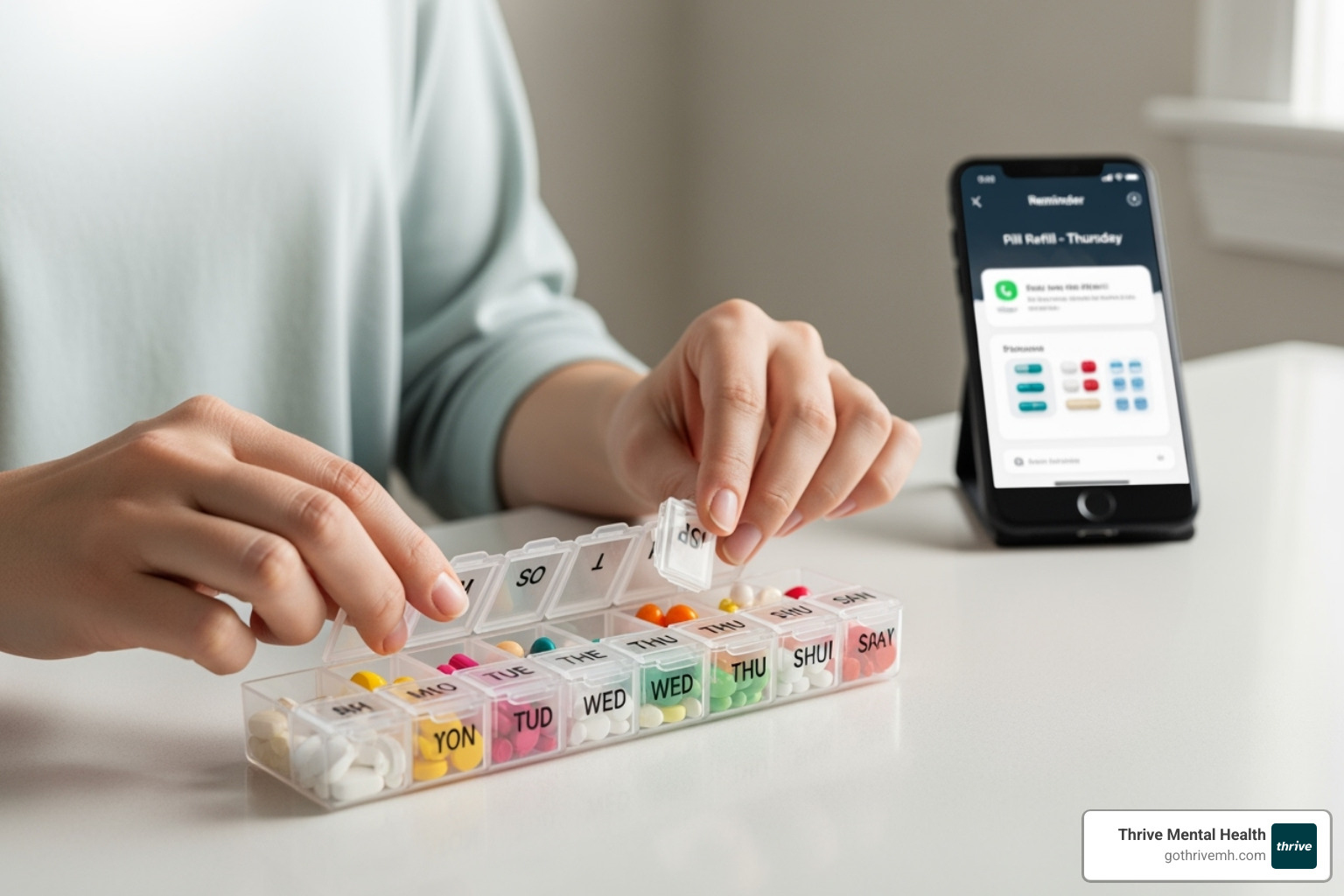
A person organizing pills in a weekly pill organizer, with a smartphone showing a reminder app in the background, set in a clean, minimalist home environment. - Medication Management

  • Use pill organizers: Weekly organizers with daily compartments eliminate guesswork and save time.
  • Maintain a medication list: Keep a current list of all prescriptions, OTC drugs, and supplements with you at all times. Share it with every healthcare provider.
  • Set digital reminders: Use smartphone alarms or dedicated apps to track doses, log side effects, and manage refills.
  • Link doses to daily habits: Take your medication with an established routine, like your morning coffee or brushing your teeth, to make it automatic.
  • Use visual cues: Keep medications (safely stored) where you’ll see them when it’s time to take them, but ensure they are out of reach of children and pets.

These strategies reduce the mental load and make adherence easier, freeing you to focus on your life.

Safe Medication Practices: Storage and Disposal

Proper storage and disposal are critical for medication safety and effectiveness.

  • Proper storage conditions: Most medications should be stored in a cool, dry place, not the bathroom, where heat and humidity can degrade them.
  • Childproofing: Store all medications out of reach and sight of children and pets, preferably in a locked cabinet.
  • Check expiration dates: Regularly check dates and dispose of expired medications, as they can lose potency or become harmful.
  • Keep original containers: These contain vital information like drug names, dosages, and instructions.
  • Safe disposal methods: Avoid flushing medications. Use local take-back programs, which many Florida pharmacies offer. If unavailable, the FDA guidance on drug take-back programs suggests mixing them with an undesirable substance (like coffee grounds), sealing them in a bag, and placing them in the trash.

Communicating Effectively with Your Healthcare Team

Open communication with your healthcare team is essential for effective care.

  • Prepare for appointments: Bring a list of all your medications (or the bottles themselves) and a list of questions.
  • Ask key questions: Understand the purpose, dosage, timing, and potential side effects of each medication. Ask what to do if you miss a dose and what substances (food, alcohol) to avoid.
  • Disclose everything: Be sure to tell your provider about all prescription drugs, OTC medications, and supplements you take to avoid dangerous interactions.
  • Report side effects promptly: Never stop taking a medication without consulting your doctor, but always report new or unusual symptoms.
  • Schedule an annual medication review: A yearly check-in with your doctor or pharmacist ensures your regimen is still appropriate for your current health needs.

For those seeking expert guidance, it’s helpful to understand The Benefits of Utilizing Mental Health Services that provide comprehensive support.

Overcoming Common Challenges and Special Considerations

Even with the best intentions, medication management can be challenging. Understanding common pitfalls is the best way to avoid them, as most medication errors are preventable.

Avoiding Common Medication Mistakes

Juggling daily responsibilities can make medication management feel like another chore. Here are common mistakes to watch for:
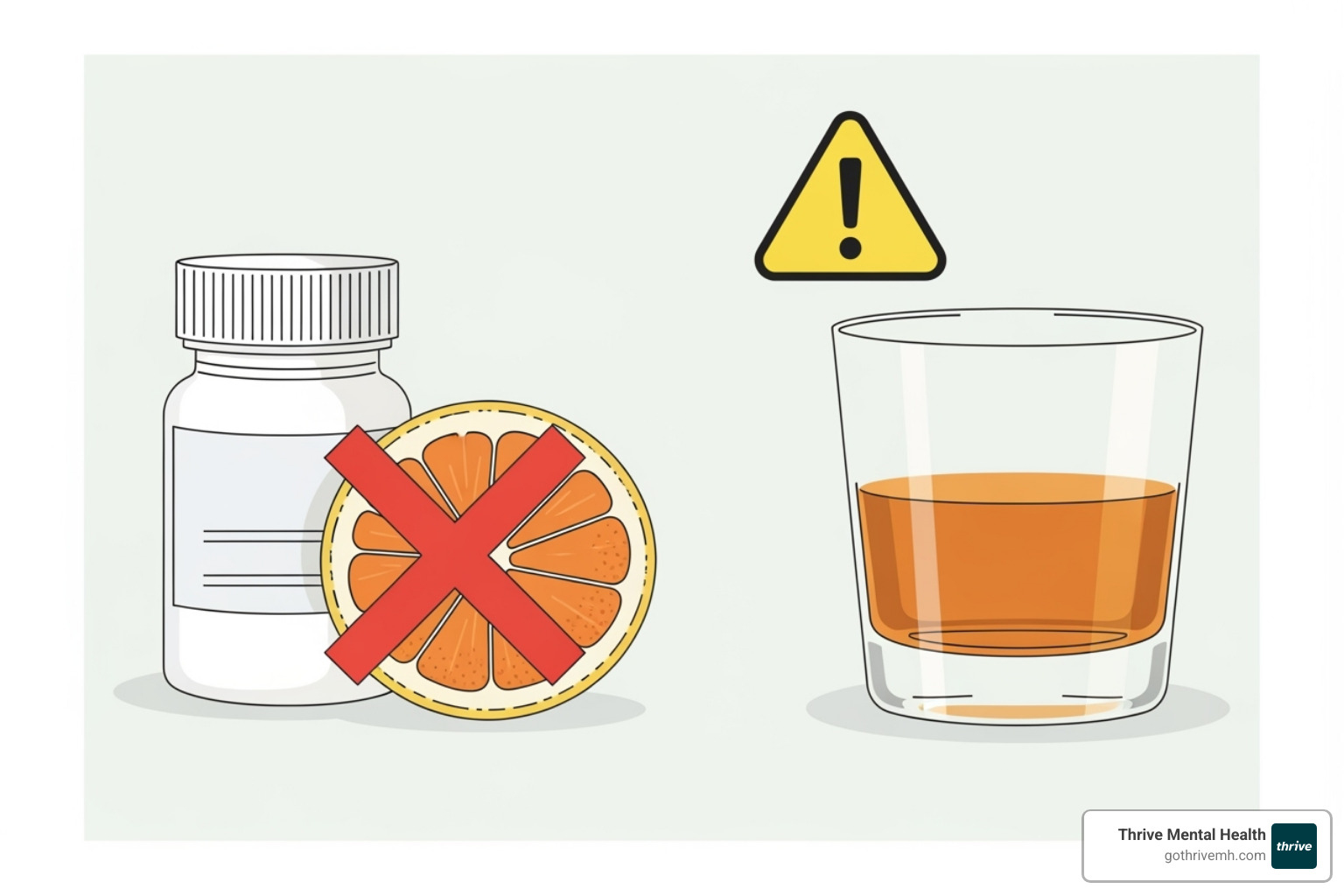
An illustration depicting various food and drug interactions, such as a grapefruit crossed out next to a pill bottle, or alcohol with a warning symbol. The style is clean and informative. - Medication Management

  • Polypharmacy: This term means taking five or more prescription drugs, which increases the risk of interactions. Schedule an annual medication review to ask your doctor if all are still necessary.
  • Pill fatigue: The overwhelming feeling from a complex medication schedule. Use tools like pill organizers and reminders to combat it.
  • Forgetting doses: This can reduce treatment effectiveness. Ask your pharmacist for a clear plan on what to do if you miss a dose—never double up without guidance.
  • Incorrect dosages: Always double-check the dose with your pharmacist. Only split pills if they are scored and you’ve been shown the proper technique.
  • Food and alcohol interactions: Seemingly harmless things like grapefruit juice or alcohol can interfere with medications. Ask your pharmacist about potential interactions.
  • Mixing medications: Never combine prescriptions, OTC drugs, or supplements without professional guidance.

Medication Management for Specific Populations

Different life stages and health conditions require unique medication management approaches.

  • Older adults: Face complex challenges due to taking multiple medications and age-related changes in how their bodies process drugs. The AGS Beers Criteria® for potentially inappropriate medication use in older adults is a key resource for identifying risky medications for seniors.
  • Patients with chronic conditions: Conditions like heart disease or diabetes require consistent, long-term medication adherence, even when symptoms aren’t present, to prevent complications.
  • Individuals with mental health conditions: Managing psychotropic medications for anxiety, depression, or bipolar disorder requires patience, as they can take weeks to work and may have initial side effects. Stigma can also be a barrier to adherence.

At Thrive Mental Health, we understand these challenges. Our virtual programs in Florida integrate psychiatric medication management with therapy, creating a sustainable plan that supports your overall wellness. This approach is detailed in our Comprehensive Guide to Behavioral Health Services.

Frequently Asked Questions about Medication Management

We hear many questions about medication management from our clients across Florida. Here are answers to the most common ones to help you feel more confident.

What is the role of a pharmacist in medication management?

Your pharmacist is an accessible medication expert and a crucial part of your safety net. They review prescriptions for correct dosages and dangerous interactions, contact your doctor if they spot an issue, and provide counseling on side effects and proper use. They can also recommend cost-effective generic alternatives, making them an invaluable ally in your medication management journey.

How can I ensure I’m taking my medications safely?

Safe medication use involves creating a protective system. Always follow the “5 Rights” (right patient, drug, dose, route, time). Keep a comprehensive, updated list of all medications, supplements, and OTC drugs to share with all providers. Use organizational tools like pill organizers and smartphone reminders to reduce errors and combat “pill fatigue.” Finally, ask questions until you understand your treatment, and contact your healthcare team if anything feels wrong.

Can medication management be done online?

Yes, and it’s revolutionizing mental health care. Telehealth allows for effective online medication management through secure video calls with licensed psychiatrists or psychiatric nurse practitioners. This is especially convenient for busy professionals. Your provider can diagnose conditions, prescribe most medications, and monitor your progress remotely. This approach integrates seamlessly with virtual therapy, which is a cornerstone of modern Mental Health Care Online and a key feature of our flexible programs at Thrive Mental Health.

Conclusion: Taking Control of Your Health Journey

A person with a calm and confident expression, looking at a neatly organized medicine cabinet or a digital medication tracker on a tablet. The setting is bright and serene. - Medication Management

Effective medication management is about taking control of your health, which is an incredibly empowering step. By understanding your medications, using practical tools, and communicating with your healthcare team, you become an active partner in your own well-being.

The strategies we’ve covered transform medication management from a source of stress into a seamless part of your routine. For busy professionals managing mental health, this is especially crucial. Your medications should support your goals, not complicate them.

At Thrive Mental Health, we see this change daily with our clients across Florida. Our programs integrate psychiatric medication management with comprehensive therapy, creating a foundation for lasting wellness. Proactive health management is about progress, not perfection.

Ready to take the first step toward optimized medication management and comprehensive mental health support? Explore our virtual intensive outpatient programs to start your journey with Thrive Mental Health. We’re here to provide the flexible, evidence-based care you need to thrive.