


Stressed Now? 15 Mental Health Art Activity Ideas That Lower Anxiety in 10 Minutes [No Art Skills Needed]
When Words Aren’t Enough
Mental health art activity refers to creative exercises like drawing, painting, sculpting, or collaging that help you process emotions, reduce stress, and explore your inner world without relying solely on words. These activities can be done independently for self-care or guided by a licensed art therapist as part of formal treatment.
Quick Answer: Top Mental Health Art Activities to Try Right Now
- Mandala Drawing, Create circular patterns to reduce anxiety and focus your mind
- Mindful Doodling, Draw with your eyes closed to bypass self-judgment
- Clay Sculpting, Use tactile work to ground yourself and express emotions physically
- Visual Journaling, Combine images and words to track your emotional journey
- Collage Making, Cut and paste images that represent your goals or current feelings
Sometimes, the words to describe how you feel just won’t come. For the nearly 40 million U.S. adults living with anxiety disorders, and many more struggling with depression or stress, finding an outlet can feel impossible.
This is where mental health art activities come in.
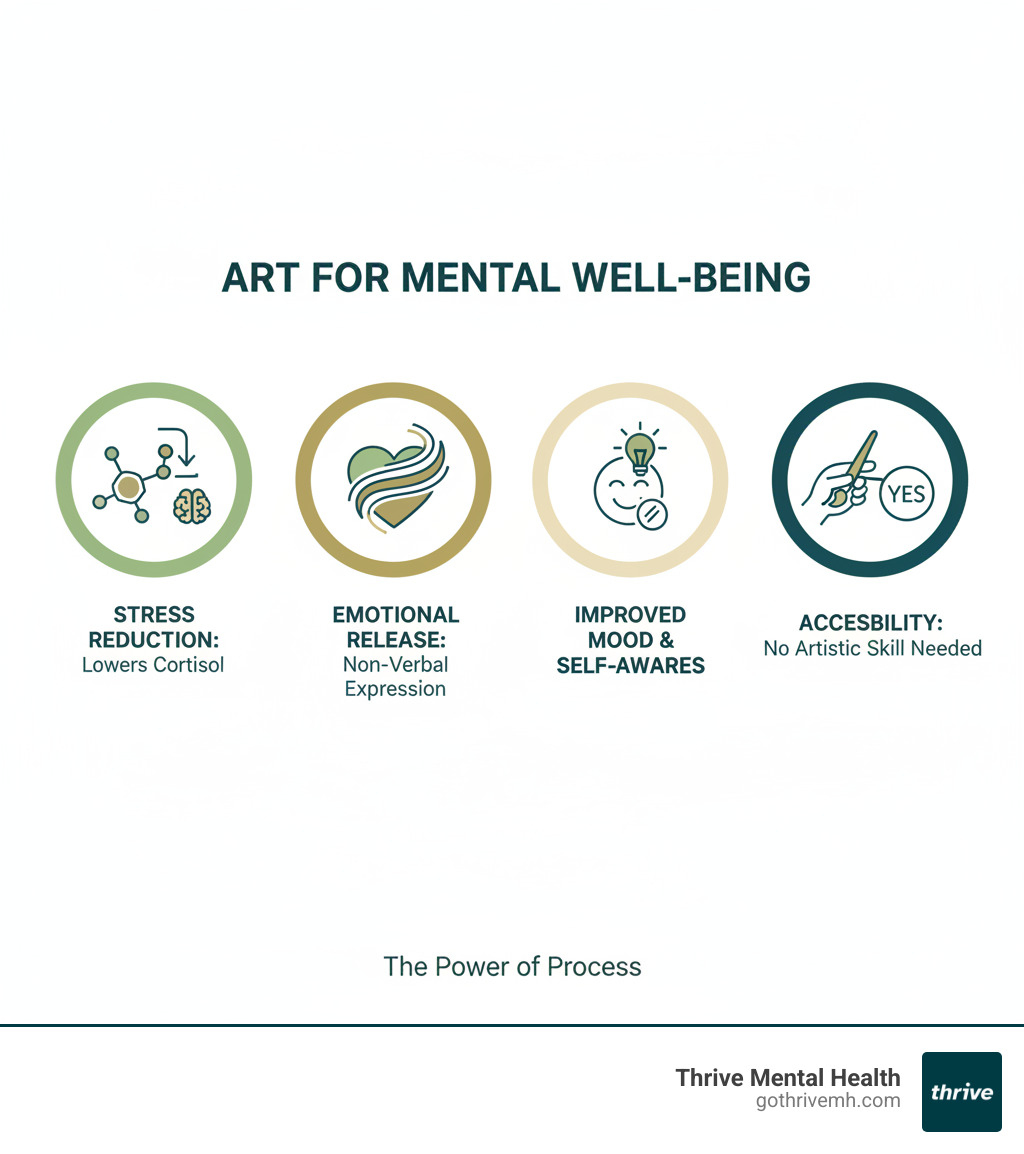
Art offers a non-verbal way to express what’s happening inside, no vocabulary required. Research shows that creative activities like mandala drawing can reduce negative emotions, while the process of making art can lower cortisol (your stress hormone) and create a sense of calm.
You don’t need to be “good at art.” The power is in the process, not the product.
At Thrive Mental Health, our licensed clinicians in Florida regularly integrate art therapy into care. In our experience, a mental health art activity can be a powerful complement to traditional therapy, offering a creative outlet when words fall short and helping you reconnect with yourself in a safe, manageable way.
Know your mental health art activity terms:
- Somatic Exercises to Improve Your Mental Health
- anxiety monster drawing
- arts and crafts for drugs and alcohol awareness
What is Art Therapy (and How is it Different from Just Doodling?)
You might think of art therapy as coloring or doodling, and while those activities can be therapeutic, true art therapy is a clinical mental health profession. It’s not just about making something pretty; it’s about healing.
The American Art Therapy Association defines it as an integrative profession that uses active art-making, psychological theory, and a psychotherapeutic relationship to enrich lives.
The Real Difference: It’s Not Just About the Crayons
What separates doodling from art therapy?
A licensed art therapist guides the work. These professionals have graduate-level training in both art and psychology. They create a safe space to explore difficult feelings and help you process what comes up during creation.
The focus is on process, not product. The therapeutic benefit comes from the act of making and the insights you gain, not from creating a masterpiece. In art therapy, there’s no “doing it wrong.”
It happens within a therapeutic relationship. Your art therapist helps you explore your artwork’s meaning and connect it to your mental health goals. This guided reflection is what makes it clinical treatment.
Art becomes a language when words fail. It offers a non-verbal way to process emotions, which is especially helpful for those dealing with trauma, grief, or overwhelming anxiety. You can externalize what’s inside without needing the perfect words.
Think of it this way: a mental health art activity at home is like a jog to clear your head, great for self-care. Art therapy is like working with a physical therapist to recover from an injury, it’s a targeted, professional intervention.
The practice dates back to 1942, when artist Adrian Hill coined the term after noticing how drawing helped him and fellow patients cope while recovering from tuberculosis.
Want to learn more about how this works in practice? Check out our article on Exploring the Healing Power of Art Therapy.
One important note: While art therapy is a powerful tool, it’s not a substitute for comprehensive mental health care. It works best as part of a broader treatment plan. If you’re struggling with serious mental health concerns, reach out to a qualified mental health professional to discuss what combination of treatments might work best for you.
15 Easy Mental Health Art Activity Ideas to Try Today
You don’t need to be an artist to benefit from a mental health art activity. These exercises are accessible, require no training, and can be done with simple materials. The focus is on the creative process, not the final product. Approach them with curiosity and see what works for you.
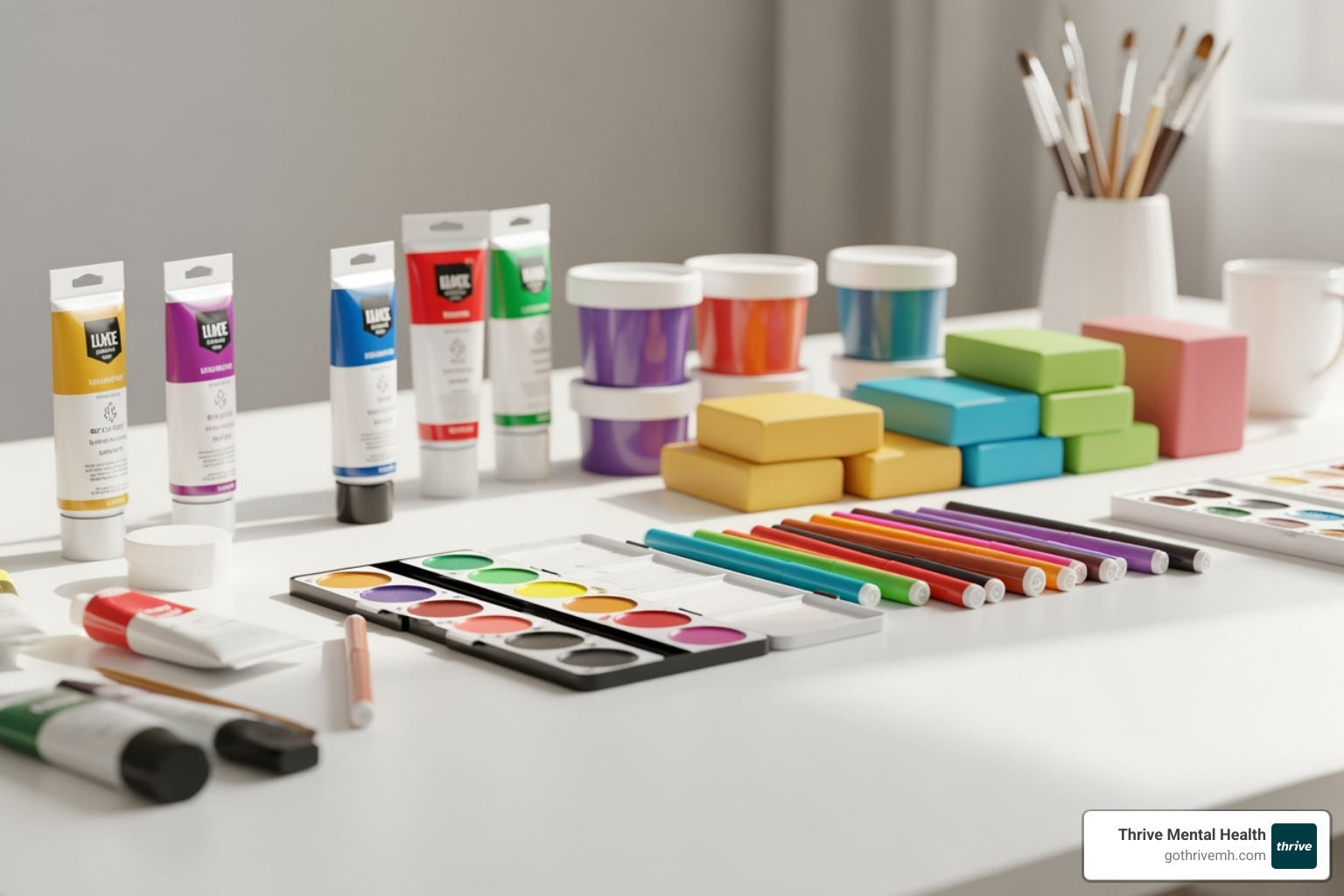
A Simple Mental Health Art Activity for Stress & Anxiety
These activities offer gentle ways to ground yourself and quiet racing thoughts.
Mandala drawing is a meditative practice using circular designs to focus attention. Studies show it can reduce negative emotions and anxiety. Simply draw a circle and fill it with patterns that feel right. For templates, see our Art Therapy Coloring Pages.
Mindful doodling is about letting your pen move without judgment, sometimes with your eyes closed to bypass your inner critic. It’s a form of meditation that gives your mind a gentle focus. All you need is paper and a pen. For more ideas, explore our Easy Mental Health Drawing guide.
Clay sculpting offers a tactile, grounding experience. The physical act of molding clay or Play-Doh can be a powerful metaphor for personal growth and is a key part of clay therapy. Try molding an emotion or just let your hands create. Find more ideas in our Therapeutic Art Activities article.
Painting to music lets your emotions flow onto the canvas. Choose a song that moves you and let your brush respond to the sound. The colors and strokes become a visual translation of your feelings. It’s pure abstract expression with no wrong way to do it.
Anxiety monster drawing helps you externalize anxiety by giving it a physical form. Instead of an overwhelming force inside you, it becomes something you can look at and gain distance from. This simple act of personification can help you feel more in control. Learn more in our Anxiety Monster Drawing guide.
Activities for Emotional Exploration & Self-Awareness
These activities create space for you to explore who you are.
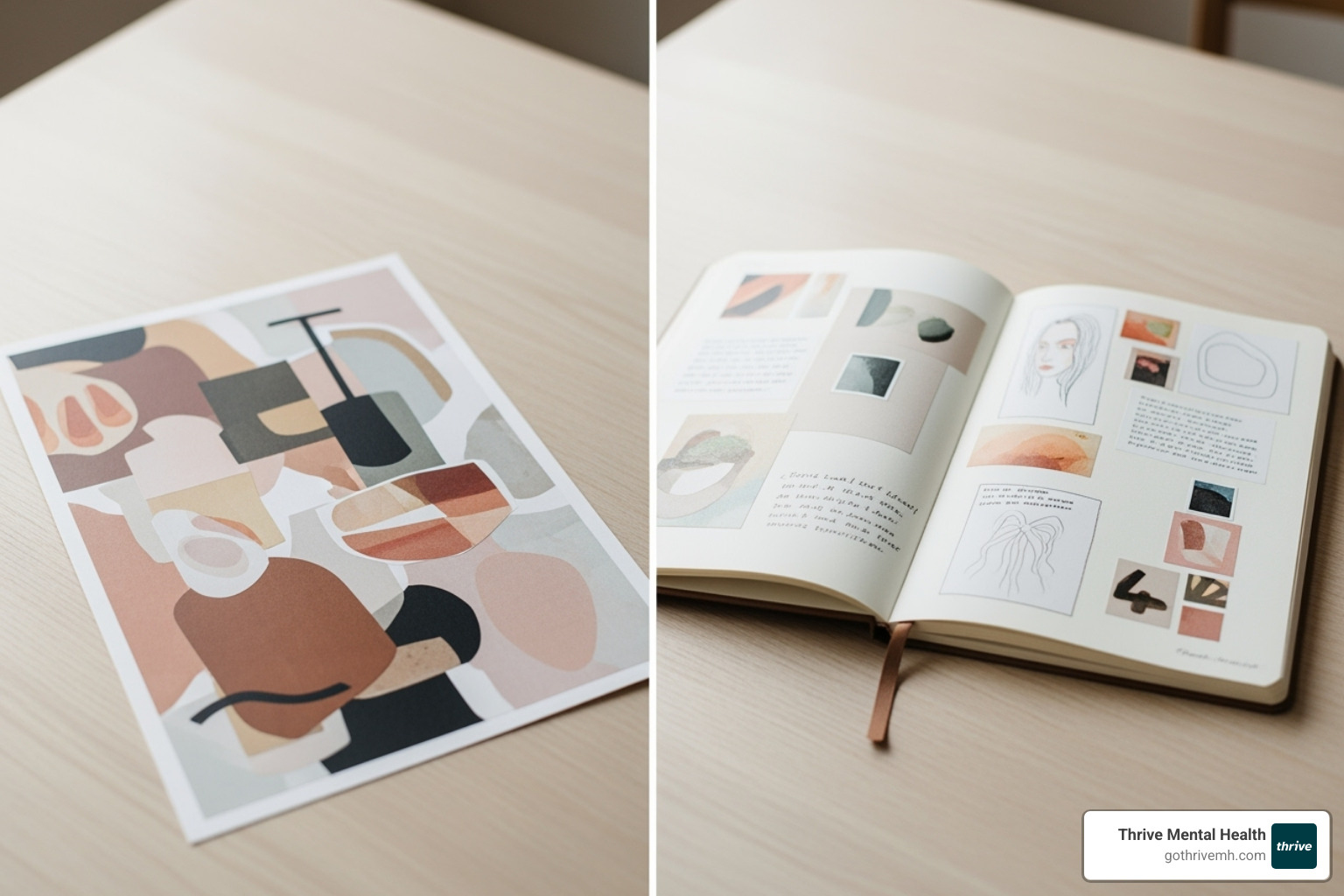
Visual journaling combines words and images to track your emotional journey. Unlike a traditional diary, it lets you express yourself with drawings, collages, or photos. It’s a forgiving practice with no rules. Learn how to start an art journal, and explore other Art Therapy Activities for Adults.
An emotions wheel helps you visualize your feelings. Draw a circle, divide it into sections, and assign each a color and an emotion (e.g., blue for sadness, yellow for joy). Fill it in to create a snapshot of your current emotional state. This is helpful for identifying feelings. See examples of representing emotions with color.
Mask making is a profound way to explore your public versus private self. Decorate the outside of a mask to show how others see you, and the inside to reveal how you truly feel. This is a common therapy tactic for exploring identity. Learn more in our article on Art Therapy for Low Self-Esteem.
Collage work is versatile. A vision board helps you visualize future goals, while a “Words to Live By” collage helps you honor your core values. Cut out images and words from magazines that speak to you and arrange them in a meaningful way. The Words to Live By activity is great for clarifying what matters most.
An emotional self-portrait is about expressing your inner landscape, not your outer appearance. Use colors, shapes, and lines to convey how you feel inside. The goal is honest expression, not accuracy.
A Creative Mental Health Art Activity for Processing Complex Feelings
These activities help you work through grief, trauma, and other complex emotions.

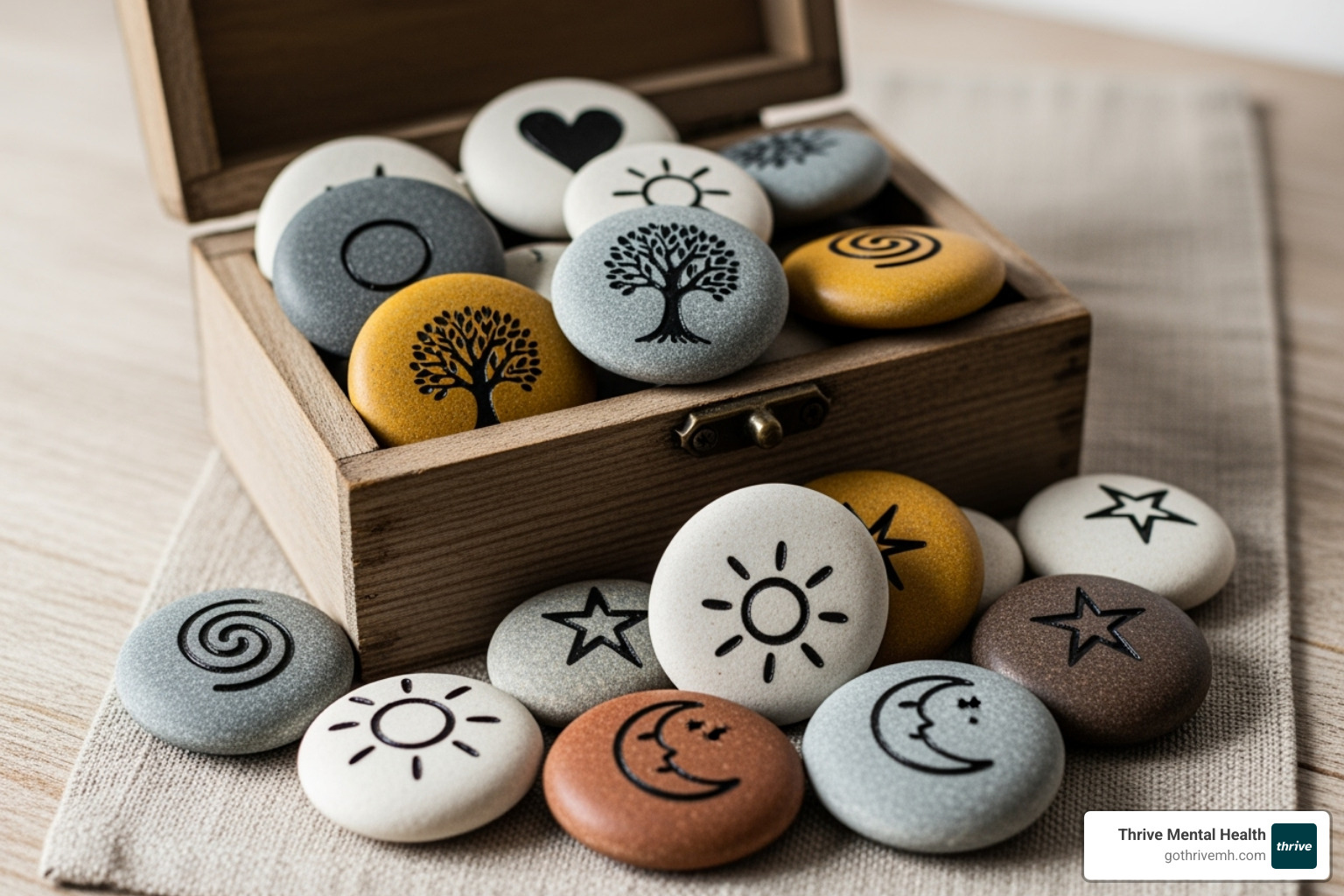
Story stones offer a gentle way into difficult narratives. Paint simple images on stones (a tree, a heart, a storm cloud) and use them to tell stories. This technique, used by therapists, allows for exploration through metaphor without the pressure of direct disclosure.
The unsent postcard is for things you wish you could say. Create a postcard with a visual on one side and an unsent message on the other. This self-discovery exercise provides emotional distance while allowing for complete honesty.
A memory box is a tangible way to honor memories or process loss. Decorate a box and fill it with meaningful objects, photos, or trinkets. It can become a self-care box for times of need that you can return to for comfort.
Dream catcher weaving combines meditative handwork with powerful symbolism. Originating in Native American culture, the process of weaving can be calming as you reflect on your hopes and dreams. Explore more ideas in our Grief Art Therapy Activities Guide.
The lighthouse is a metaphor for hope and guidance. When feeling lost, draw or paint a lighthouse to identify what provides stability and direction in your life. This activity helps you focus on your sources of strength.
Finding Professional Support & Insurance Coverage
While a mental health art activity is a great self-care tool, sometimes we need more support. If you’re feeling stuck, overwhelmed, or find that symptoms of anxiety or depression are interfering with your daily life, reaching out to a professional is a brave and important step.
When to Seek Professional Art Therapy
Consider professional help if you find it hard to put feelings into words, are processing trauma, or want to add a creative approach to your existing therapy. A licensed art therapist is a master’s-level clinician trained in both psychology and art. They use the creative process to help you work through specific mental health goals.
To find a qualified professional, look for credentials like Registered Art Therapist (ATR) or Board-Certified Art Therapist (ATR-BC). The Art Therapy Credentials Board has a directory to help you find a therapist.
Art Therapy in IOP and PHP Programs
At Thrive Mental Health, we integrate art therapy into our Florida-based Intensive Outpatient (IOP) program. This program offers structured support that’s more than weekly therapy but still flexible enough for your daily life.
Many of our programs are available through virtual therapy, and research confirms its effectiveness. Whether you’re in South Florida, Central Florida, or anywhere else in the state, our virtual and hybrid programs make care accessible. Art therapy can be woven into your treatment plan, providing creative support right where you are. Our evening programs make it possible to get support without putting your career on hold. Learn more about Integrating Art Therapy into Intensive Outpatient Programs in South Florida: A Closer Look.
Understanding Your Insurance Coverage
We know navigating insurance can be stressful. Thrive works directly with major providers, including Cigna, Optum, and Florida Blue, to make our programs accessible. Coverage varies by plan, so we encourage you to verify your insurance benefits with us. It’s fast, free, and gives you clarity on the cost of care.
Frequently Asked Questions about Mental Health Art Activities
Here are some common questions we hear about mental health art activity and art therapy:
What is the difference between art therapy and a mental health art activity?
Art therapy is a clinical practice led by a licensed therapist to address specific mental health goals. A mental health art activity is a self-guided creative exercise for general well-being and stress relief. It can be therapeutic but is not clinical treatment.
Do you need to be “good at art” to benefit from these activities?
Absolutely not. The goal is to focus on the creative process, not the final product. The benefits come from self-expression and mindfulness, regardless of artistic skill.
Can art therapy activities really help with anxiety?
Yes. Activities like mandala drawing and doodling can induce a meditative state of “flow,” which helps reduce the stress hormone cortisol. They provide a non-verbal outlet for anxiety and help build coping skills.
Can art therapy be done online?
Yes, research shows virtual art therapy is effective and accessible. You can work with a licensed therapist online or do self-guided activities at home to complement your care.
Are there specific art therapy activities for different age groups or mental health concerns?
Yes, activities are custom to age groups and specific concerns. For example, story stones help children explore narratives, while mask-making is powerful for adults exploring identity. A qualified art therapist customizes activities to meet your unique needs and goals.
{
  "@context": "https://schema.org",
  "@type": "FAQPage",
  "mainEntity": [
    {
      "@type": "Question",
      "name": "What is the difference between art therapy and a mental health art activity?",
      "acceptedAnswer": {
        "@type": "Answer",
        "text": "Art therapy is a clinical practice led by a licensed therapist to address specific mental health goals. A mental health art activity is a self-guided creative exercise for general well-being and stress relief. It can be therapeutic but is not clinical treatment."
      }
    },
    {
      "@type": "Question",
      "name": "Do you need to be "good at art" to benefit from these activities?",
      "acceptedAnswer": {
        "@type": "Answer",
        "text": "Absolutely not. The goal is to focus on the creative process, not the final product. The benefits come from self-expression and mindfulness, regardless of artistic skill."
      }
    },
    {
      "@type": "Question",
      "name": "Can art therapy activities really help with anxiety?",
      "acceptedAnswer": {
        "@type": "Answer",
        "text": "Yes. Activities like mandala drawing and doodling can induce a meditative state of "flow," which helps reduce the stress hormone cortisol. They provide a non-verbal outlet for anxiety and help build coping skills."
      }
    },
    {
      "@type": "Question",
      "name": "Can art therapy be done online?",
      "acceptedAnswer": {
        "@type": "Answer",
        "text": "Yes, research shows virtual art therapy is effective and accessible. You can work with a licensed therapist online or do self-guided activities at home to complement your care."
      }
    },
    {
      "@type": "Question",
      "name": "Are there specific art therapy activities for different age groups or mental health concerns?",
      "acceptedAnswer": {
        "@type": "Answer",
        "text": "Yes, activities are custom to age groups and specific concerns. For example, story stones help children explore narratives, while mask-making is powerful for adults exploring identity. A qualified art therapist customizes activities to meet your unique needs and goals."
      }
    }
  ]
}
Stop Overthinking, Start Creating
You’ve explored fifteen different mental health art activity ideas, each offering a doorway into self-expression when words feel inadequate. The power lies not in the final product, but in the act of creating itself.
Think of these activities as tools in your mental wellness toolkit. Some days, talking helps. Other days, you might find more relief in the quiet focus of drawing. Both approaches are valid and complement each other beautifully.
If you’ve been feeling stuck or overwhelmed, try one activity from this list. Give yourself fifteen minutes without judgment and see what emerges.
And if self-guided activities aren’t enough, professional support is available. Art therapy within a structured program like our Florida-based IOP can provide the expert guidance and comprehensive care to help you thrive.
Ready for support in Florida? Thrive offers virtual IOP programs across the state, with evening options available. Verify your insurance in 2 minutes (no obligation) → Start benefits check or call 561-203-6085. If you’re in crisis, call/text 988.

This article is for informational purposes only and is not a substitute for individualized clinical advice or insurance verification.