


Find Art Therapy Clinics in Jacksonville 2025: Breakthrough!
If Talk Therapy Isn’t Working, You Need More, How Art Therapy Breaks Through Walls
If you’re ready to move beyond talk therapy alone, it’s time to find mental health clinics in Jacksonville that combine art therapy and mental health programs.
Jacksonville faces a significant mental health challenge. Approximately 175,000 residents struggle with mental illness, that’s 1 in 5 adults. For many, traditional weekly therapy isn’t enough to break through deep-rooted trauma, anxiety, or depression, which contributes to high unemployment rates among those with mental health disorders.
Art therapy changes the game. When words fail, creative expression opens new pathways for healing. It’s not about being “good at art”, it’s about processing emotion through color, shape, and movement when talking feels too hard or too slow.
Research shows art therapy works because it engages your brain differently than verbal processing. It activates neuroplasticity, reduces cortisol (your stress hormone), and helps you process trauma stored in your body, not just your mind. While typical treatment can take time, combining art therapy with intensive programs like IOP or PHP can lead to faster, deeper results.
I’m Nate Raine, CEO of Thrive Mental Health, and I’ve spent over a decade building behavioral health programs that integrate evidence-based care with innovative modalities like art therapy. Helping you find mental health clinics in Jacksonville that combine art therapy and mental health programs means understanding what actually works, not just what sounds good on paper.
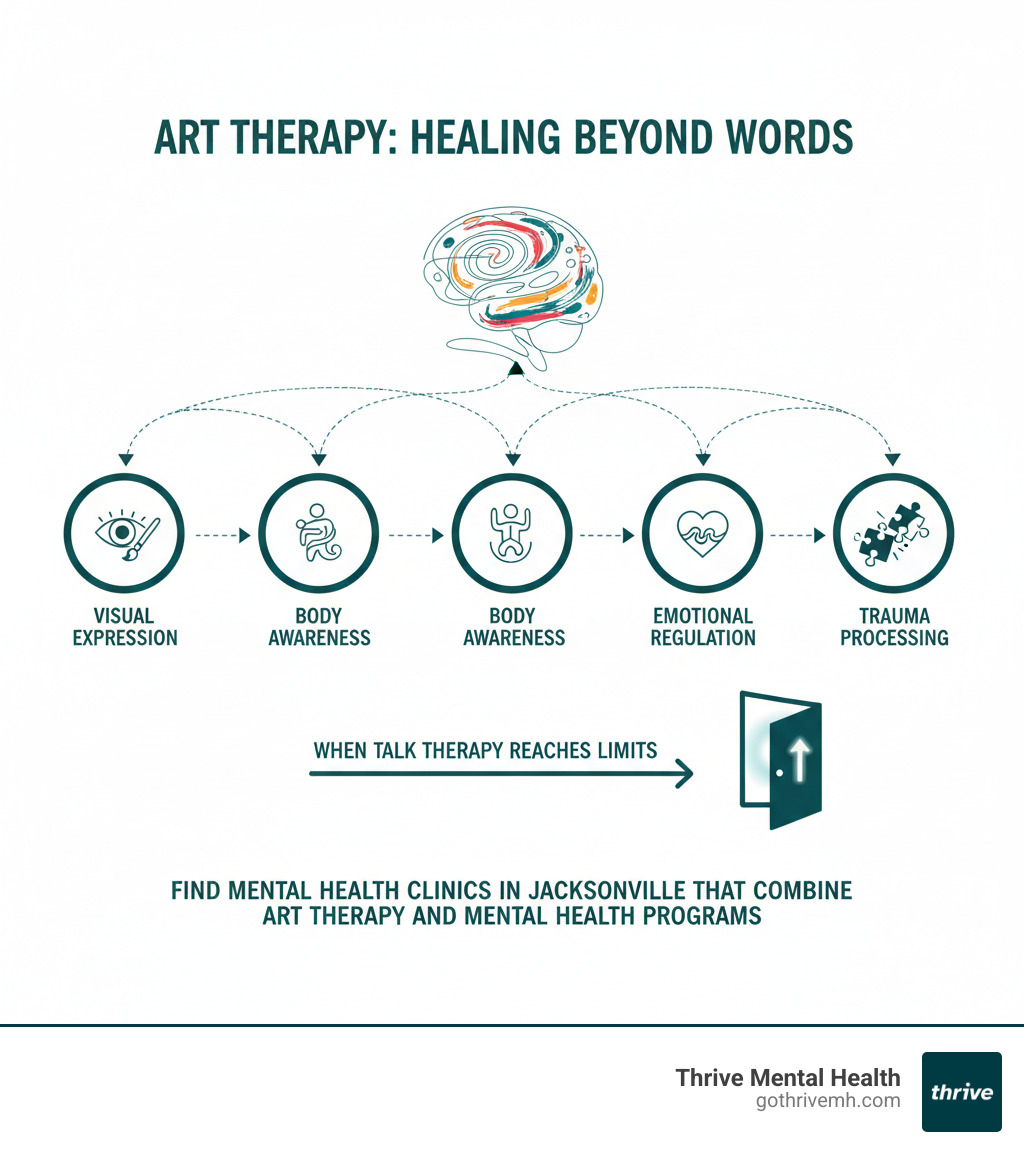
Find mental health clinics in Jacksonville that combine art therapy and mental health programs. terms to remember:
If you or someone you love is in crisis, there’s help available. Support is available for adults, kids and teens, and offered at no charge. If there is an immediate safety concern, call 911 or go to the nearest emergency room. Call 904.202.7900 or Text LIFE to 741741.
What Is Integrated Art Therapy? Why It Works Faster Than Talk Alone
Integrated art therapy is more than just doodling; it’s a powerful combination of creative expression and evidence-based mental health care. At Thrive, we’ve seen how this approach helps individuals build coping skills and achieve lasting change, often quicker than traditional talk therapy alone.
When you’re struggling with deep-seated emotions or trauma, words can feel inadequate. Art provides a safe, non-verbal outlet to explore feelings and experiences that are too painful to articulate. This process facilitates healing and self-expression, fostering a deeper understanding of your inner world. By blending creative and clinical techniques, such as combining art therapy with Cognitive Behavioral Therapy (CBT) and Dialectical Behavior Therapy (DBT), this approach leverages the power of creativity to accelerate the benefits of traditional mental health interventions.
Conditions Treated with Art Therapy at Thrive:
- Trauma & PTSD: Process overwhelming memories safely without needing to relive them verbally.
- Anxiety: The focused nature of art-making is deeply grounding, reducing racing thoughts.
- Depression: Creative expression combats hopelessness and provides a sense of accomplishment.
- Eating Disorders: Explore your relationship with food and body image in a non-judgmental space.
- Substance Use: A healthy outlet for cravings that helps process underlying emotional triggers.
- Grief & Loss: Express profound sadness or anger to mourn and find meaning.
- Stress from life transitions: Visually map out challenges and solutions to steer change.
The Science: How Art Therapy Rewires Your Brain for Recovery
It’s not magic; it’s neuroscience. Art-making actively triggers neuroplasticity, your brain’s ability to form new neural connections. When you engage in creative processes, you’re actively rewiring your brain.
Here’s how it works:
- Mind-Body Connection: The physical act of creating art helps establish a stronger mind-body connection, which is vital for individuals with trauma who often feel disconnected from their physical selves.
- Stress Reduction: Creative activities are proven to significantly reduce cortisol levels, the body’s primary stress hormone. This natural stress reduction calms the nervous system and is key to emotional regulation.
- Dopamine and Emotional Regulation: Art-making stimulates the release of dopamine, a neurotransmitter associated with pleasure and reward. This mood boost helps regulate emotions and empowers individuals with a sense of control.
- Non-Verbal Processing: For deep-seated trauma, art offers a critical pathway for symbolic expression, circumventing the need for direct verbal confrontation that can be re-traumatizing.
5 Reasons to Combine Art Therapy with Mental Health Programs
- Break through emotional blocks, faster: Art provides a direct channel to your subconscious, accessing emotions too complex for words and leading to quicker breakthroughs.
- Safe, non-verbal emotional release: Externalize internal turmoil without having to name or describe it, offering a safe distance from overwhelming emotions.
- Build real communication skills: Learn to interpret your own symbols and convey insights, enhancing both self-awareness and interpersonal communication.
- Lower anxiety and stress: The meditative nature of art-making promotes mindfulness and a sense of calm, providing an escape from rumination.
- Boost self-esteem and grounding: Completing an art piece provides a tangible sense of accomplishment, while the physical act anchors you in the present moment.
How to Find the Best Jacksonville Mental Health Clinic with Art Therapy, And Avoid Wasting Time
Searching for the right mental health clinic can be exhausting. When you’re ready to find mental health clinics in Jacksonville that combine art therapy and mental health programs, you need a clear roadmap. Here’s what actually matters: therapist credentials, program fit, and insurance coverage. Everything else is noise.
The best clinics don’t just offer art therapy as an add-on. They integrate it into evidence-based programs with structure and measurable results. That’s the difference between trying something and actually getting better.

Step 1: Pick the Right Program for Your Life
The structure you choose matters. Match the program intensity to where you actually are.
- Partial Hospitalization Programs (PHP): The most intensive outpatient option, running several hours a day, five days a week. It’s a bridge from inpatient care or a way to prevent it, offering structured group and individual therapy.
- Intensive Outpatient Programs (IOP): Serious support without taking over your day, typically three hours a day, three to five days a week. It’s ideal for those who need more than weekly therapy. Thrive offers evening IOPs for working professionals.
- Weekly Outpatient Therapy: Traditional one-on-one care. It works well for manageable symptoms or as a step-down from a more intensive program. If you’re not seeing progress, it may be time to level up.
- Virtual or In-Person: Virtual programs offer top-tier care from home, eliminating commutes and anxiety. In-person is better if you need face-to-face connection. Both are equally effective when done right.
Learn more about Thrive’s IOP and PHP programs
Step 2: Check Therapist Credentials, Don’t Settle for Less
Not everyone calling themselves an art therapist has the right training. Credentials matter.
Look for a Registered Art Therapist (ATR or ATR-BC), which signifies they’ve met rigorous standards from the Art Therapy Credentials Board. Board Certified (BC) is even better, indicating years of supervised clinical experience.
Also, ensure they have a mental health license like Licensed Mental Health Counselor (LMHC) or Licensed Clinical Social Worker (LCSW). This proves they are trained to diagnose and treat mental health conditions.
Finally, ask: Does this therapist have experience with my specific issue? A trauma-informed art therapist works differently than one specializing in anxiety. At Thrive, our therapists are highly qualified and know how to integrate art therapy for real results.
Step 3: Make Sure the Program Fits You
Even the best program won’t work if it’s not designed for your life.
- Young Professionals: You need evening or weekend options. Thrive offers flexible scheduling so you don’t have to choose between recovery and your job.
- Veterans & Military Families: You need therapists who understand the unique trauma of military service. Generic programs won’t cut it.
- LGBTQIA+: You need affirming care from therapists who understand identity-related stress and discrimination trauma, not just tolerance.
- New or Expectant Mothers: You need specialized support for postpartum depression or anxiety that addresses maternal mental health without judgment.
The right program meets you where you are and builds treatment around your actual life.
See Thrive’s virtual therapy options for Florida
What Does Art Therapy Cost in Jacksonville? [Table: Compare Your Options]
Healing shouldn’t come with financial surprises. The cost of art therapy in Jacksonville varies by program intensity and insurance coverage. The good news is that many mental health clinics in Jacksonville that combine art therapy and mental health programs accept major insurance plans like BlueCross BlueShield, United Healthcare, Aetna, Cigna, and Tricare, which dramatically reduces out-of-pocket costs.
Want to Know What Emotional Incest Means? Here’s HowMental HealthFor self-pay, individual sessions typically range from $125 to $150. More intensive programs like IOP and PHP cost more per week but often deliver faster, more comprehensive results.

| Program Type | Estimated Weekly Cost | Insurance Accepted? |
|---|---|---|
| Weekly Therapy (Art Therapy Included) | $100, $200 | Yes (most plans, including Florida Blue, Cigna, Aetna, Optum, Tricare) |
| Intensive Outpatient (IOP) | $350, $600 | Yes (Cigna, Aetna, Florida Blue, Optum, Tricare, and others) |
| Partial Hospitalization (PHP) | $800, $1,200 | Yes (most major plans, including Florida Blue, Cigna, Aetna, Optum, Tricare) |
These are estimated costs. Your actual costs depend on your specific insurance plan, deductible, and co-pay. Always verify your benefits directly to avoid unexpected bills.
How to Get a Real Cost Estimate, Before You Commit
Financial uncertainty shouldn’t keep you from getting help. Here’s how to get clear answers:
- Schedule a free consultation: Quality clinics like Thrive offer no-cost consultations to discuss your needs and get initial pricing information.
- Ask for a benefits check: Provide your insurance information, and the clinic’s team can tell you exactly what your plan covers.
- Explore sliding scale options: If you’re uninsured or underinsured, ask about income-based fees. Financial barriers shouldn’t stop your recovery.
- Verify insurance in 2 minutes (no obligation): Our online tool gives you a quick, clear answer about your coverage.
Don’t let cost concerns stop you. Quality art therapy programs are often more affordable than expected, especially with insurance. The investment in your mental health is essential.
FAQs: Art Therapy in Jacksonville, What People Ask Before Starting
It’s natural to have questions when considering art therapy. Here are the answers to what people in Jacksonville ask most often.
What art techniques are used in therapy?
Art therapy is flexible and adapted to your needs. Techniques can include painting, sketching, molding clay, collage, or digital art. The therapist adapts the medium to your comfort level and therapeutic goals. For example, clay can be grounding for trauma, while painting can help express complex emotions. The focus is always on expression, not perfection.
Do I need to be “good at art” to benefit?
No. Absolutely no artistic skill is required. This is the biggest misconception. Art therapy is about the process, not the product. A simple stick figure can be as therapeutically powerful as a detailed portrait. It’s about what you express and find, not your talent. Anyone can do it and see real results.
How does art therapy help with trauma or PTSD?
Trauma lives in the body, and talking about it can be re-traumatizing. Art therapy lets you process pain without words. You can express experiences symbolically at a safe distance, which circumvents the part of the brain that gets overwhelmed during verbal recall. The physical act of creating is also deeply grounding, helping you regain a sense of control and safety in the present moment.
Does insurance cover art therapy in Jacksonville?
Yes, many major insurance plans cover art therapy when it’s part of an integrated mental health program like IOP or PHP. This includes Florida Blue, Cigna, Aetna, Optum, and Tricare. However, coverage varies by plan. It is crucial to verify your benefits before starting treatment. At Thrive, we can verify your insurance in minutes with no obligation, so you know your exact costs upfront.
Can I do art therapy virtually?
Absolutely. Thrive offers virtual IOP programs that include art therapy, with evening sessions available to fit your schedule. You can access high-quality care from your home in Jacksonville or anywhere in Florida. Virtual therapy removes barriers like commutes and offers a private, comfortable setting for healing.
Read “How Virtual IOPs Cut Recovery Time by 50%” on the Thrive blog
When you’re ready to find mental health clinics in Jacksonville that combine art therapy and mental health programs, you deserve clear answers. Your next step is reaching out to see what’s possible.
Summary: Don’t Wait, Find Mental Health Clinics in Jacksonville That Combine Art Therapy and Mental Health Programs
If you’re feeling stuck, overwhelmed, or haven’t found lasting relief from traditional talk therapy alone, integrated art therapy could be the breakthrough you’ve been searching for. Find mental health clinics in Jacksonville that combine art therapy and mental health programs, many accept major insurance plans and offer flexible, accessible care that fits your life, including virtual options that bring healing directly to you.
Throughout this guide, we’ve explored how art therapy provides a powerful, non-verbal pathway to healing. It rewires your brain for recovery, offering unique benefits like faster emotional breakthroughs, stress reduction, and boosted self-esteem. Whether you’re processing trauma, managing anxiety, or working through depression, creative expression can open pathways that words simply cannot reach.
Jacksonville has resources custom to diverse needs. From specialized care for veterans and military families to LGBTQIA+ affirming support, from evening programs designed for busy professionals to dedicated services for new mothers, the right fit exists for you. The key is finding a clinic that doesn’t just offer art therapy as an add-on, but truly integrates it with evidence-based mental health programs for faster, deeper, and more sustainable healing.
Don’t underestimate the power of creative expression. You don’t need to be “good at art” to benefit. You just need to be willing to try something different when what you’ve been doing isn’t working.
We’ve covered the science behind why art therapy works, how to vet clinics and check credentials, what programs cost and how insurance covers them, and what to expect in your first sessions. Now it’s time to take action. Your breakthrough might be one phone call away.
Ready for support? Thrive offers virtual IOP programs with evening options. Verify your insurance in 2 minutes (no obligation) → Start benefits check or call 561-203-6085. If you’re in crisis, call/text 988.

This article is for informational purposes only and is not a substitute for individualized clinical advice or insurance verification.